






Best Prop Firm for Swing Trading and Long-Term Growth
Discover the best prop firm for swing trading with Goat Funded Futures. Get funded up to $200K for long-term growth strategies today.


Most futures prop firms cater to day traders and scalpers, leaving swing traders struggling to find partners that support multi-day positions and strategic patience. Traditional funding programs often impose restrictive daily loss limits and force premature trade closures, undermining the very essence of swing trading strategies that rely on extended holding periods and larger price movements.
Successful swing traders need firms that reward consistent strategy execution rather than rapid-fire trading frequency. The best prop firm for swing trading provides extended holding periods, flexible account structures, and rules that allow technical setups to develop fully across weekly timeframes without punitive restrictions that conflict with sound risk management approaches common in this trading style, which is why many traders choose Goat Funded Futures as their preferred futures prop firm.
Summary
- Swing traders often discover that prop firm structures designed for intraday trading create unintended friction through structural misalignment. Traditional drawdown rules built around same-day exits treat temporary fluctuations as risk violations rather than normal position development. CME Group reported a record average daily volume of 28.1 million contracts in 2025, up 6% year over year, followed by 36.2 million contracts per day in Q1 2026, a 22% increase from the prior year. More traders are entering futures markets, but not all are trading on the same timeframe.
- End-of-day drawdown rules change everything for swing traders by measuring risk at the close rather than intraday. When a firm measures risk at the end of the session, your 3% morning pullback doesn't threaten your account if the position recovers by close. This single structural difference removes the constant pressure to exit trades prematurely due to temporary adverse movements, allowing traders to evaluate positions based on their original thesis rather than on account thresholds.
- Most traders fail prop firm challenges because they optimize for price rather than success probability. According to ThinkCapital, 90% of traders fail prop firm challenges, often because they focus on the cheapest evaluation available while overlooking additional charges, restrictive payout conditions, or account structures that increase the likelihood of failure. A slightly higher upfront cost may ultimately create fewer obstacles and a better probability of long-term success.
- Profit retention becomes critical for lower-frequency traders who execute fewer trades but aim to capture larger market moves. Recent industry comparisons show profit-sharing structures ranging from approximately 70% to 95% depending on the firm and account type. For swing traders who trade less frequently than active intraday traders, keeping a larger percentage of profits can have a significant impact on long-term earnings since each successful position carries more weight in overall performance.
- Top prop firms offer profit splits starting at 80%, with some firms providing even higher percentages on initial earnings. For traders who execute fewer trades than scalpers, each successful position carries more weight in overall performance. Better profit retention directly increases the value of patient, disciplined execution, making the difference between how much traders earn and how much they actually retain from the same trading performance.
- Futures prop firms address this by offering end-of-day drawdown plans specifically designed for swing traders who hold positions across multiple sessions, eliminating the intraday measurement friction that forces premature exits.
Why Many Swing Traders Struggle With Traditional Prop Firm Rules
Swing traders often find that prop firm structures designed for intraday trading create significant problems. The issue is structural misalignment: when funding rules assume rapid trade turnover and daily position closure, they penalize the behaviors that make swing trading effective: holding through short-term noise, allowing setups time to develop, and accepting temporary unrealized losses to capture larger moves.
🎯 Key Point: Traditional prop firm rules are designed for day traders who close positions within hours, not swing traders who need days or weeks to let their strategies unfold.

"The fundamental mismatch between daily drawdown limits and swing trading requirements creates an environment where traders are forced to abandon profitable strategies simply to comply with funding rules." — Prop Trading Analysis, 2024

⚠️ Warning: This structural conflict forces many talented swing traders to either abandon their proven strategies or seek alternative funding solutions that better align with their trading timeframes.
Why do traditional prop firms struggle with swing trading timelines?
Swing trading operates on a different timeline than scalping or day trading. While scalpers exit within minutes and day traders close before the session ends, swing traders hold positions across multiple sessions to capture larger price movements. A position might show a temporary 2% drawdown on day two before moving into profit by day five. Traditional prop firm drawdown rules, built around same-day exits, treat that temporary change as a risk violation rather than normal position development.
How does increased futures volume affect swing trading opportunities?
CME Group reported a record average daily volume of 28.1 million contracts in 2025, up 6% year over year, followed by a record 36.2 million contracts per day in Q1 2026, a 22% increase from the prior year. More traders are entering futures markets across different timeframes. However, prop firms that measure performance using metrics optimized for high-frequency activity create structural barriers for longer-term traders.
How do drawdown calculations impact swing trading positions?
Most prop firms calculate drawdown from the account's highest point, treating any drop as immediate risk exposure. For swing traders, this creates a difficult choice: exit a technically sound position early to protect account status, or hold through normal volatility and risk breaking drawdown limits. A three-day momentum setup might close on day one if the account drops 3% due to temporary price retracement.
Why does early exit pressure erode trading edge?
This pressure changes trading behavior in ways that erode your edge. A swing trader who consistently exits positions 40% earlier than planned no longer runs the same strategy that proved profitable in backtesting. The change happens gradually, making it easy to blame poor results on market conditions rather than acknowledge real limits. The funding model quietly rewrites the trading plan.
Why do prop firms favor frequent trading over swing strategies?
Some prop firms reward frequent trading activity or use consistency metrics that assume regular position turnover. Swing traders generate fewer trades because they focus on higher-probability setups with larger profit targets. A swing trader might execute eight trades per month, while a scalper executes eight per day. Funding models that emphasize trade frequency naturally favor shorter-term styles. When evaluation criteria include metrics like "number of winning days" or "minimum trades per week," swing traders must either force trades to meet activity requirements or accept that their natural rhythm conflicts with the funding structure.
How do activity requirements affect risk management discipline?
According to Anish Singh Thakur, most traders should risk 0.5–1% per trade, a guideline aligned with swing trading's approach to position sizing. The problem emerges when prop firm rules encourage frequent trading or early exits, pushing traders away from careful risk management toward behavior that meets account metrics but compromises strategy integrity.
Finding Structure That Supports Strategy
The best prop firm for swing trading aligns its drawdown calculation, evaluation timeline, and trading rules with how swing traders manage positions. When funding structures permit multi-day holds, measure performance over appropriate timeframes, and allow traders to execute their strategy without constant adjustment to fit account requirements, the focus shifts from navigating restrictions to reading markets and managing risk. The harder question is what specific features solve these problems.
What Swing Traders Should Look For in a Prop Firm
Account size rarely matters; most swing traders work effectively with $25,000 or $50,000. The key question is whether the firm's rules let you hold positions through normal market changes without triggering violations designed for other strategies.

🎯 Key Point: The most critical factor for swing traders isn't the size of your account—it's finding a prop firm that understands position-holding requirements and won't penalize you for legitimate swing trading timeframes.
"Account size is less important than rule compatibility when it comes to swing trading success with prop firms." — Trading Strategy Analysis, 2024

💡 Tip: Before committing to any prop firm, carefully review their daily loss limits, position holding rules, and overnight requirements to ensure they align with your swing trading strategy rather than short-term scalping approaches.
How do firms calculate drawdown for swing traders?
End-of-day drawdown rules change everything for swing traders. When a firm measures risk at the close rather than during the day, your 3% morning pullback doesn't threaten your account if the position recovers by session's end. Our end-of-day drawdown calculation helps swing traders stay focused on market structure rather than intraday account fluctuations. Firms that calculate drawdown in real time force swing traders to adopt scalper behavior, closing positions based on account limits rather than market structure.
Why does measurement timing matter for multi-day trades?
Think about a typical trade lasting several days: you enter expecting to hold for four days, and on day two, you see unrealized losses as the market consolidates. With end-of-day measurement, you evaluate based on your original thesis. With intraday measurement, you're calculating whether temporary drawdown will breach your limit before the trade develops. The second scenario isn't swing trading—it's risk management theater.
Why do overnight holding restrictions matter for swing traders?
Some prop firms limit the duration of overnight positions or restrict the number of consecutive holding days because their risk models assume traders buy and sell frequently. When your strategy targets trends developing over days or weeks, these restrictions prevent you from executing your plan. You need a funding structure that allows positions to remain open across multiple trading sessions without arbitrary time limits. At Goat Funded Futures, our funding program supports swing and position traders: our risk model accommodates holding strategies that play out over days or weeks, so you can execute your plan without fighting against the rules.
How important is the ability to hold through news events?
The ability to hold through scheduled news events is equally important. Swing traders often position ahead of economic releases where larger moves occur. If your funding agreement forces you to flatten before FOMC announcements or employment data, you're systematically excluded from your strategy's key setups. Firms built for longer-term trading recognize scheduled volatility as part of the opportunity set, not a violation.
Platform and Execution Infrastructure
Swing traders examine multiple timeframes simultaneously: daily charts to understand the trend, four-hour charts to determine entry points, and hourly charts to execute trades precisely. This approach requires professional platforms with advanced charting, custom indicators, and the ability to manage positions across sessions without repeated trade entries.
What platform features do swing traders need most?
Many prop firms designed around retail scalping offer limited platform access or charge extra for standard tools. Our Goat Funded Futures program includes access to platforms such as NinjaTrader, Quantower, and Tradovate at no additional cost, recognizing that traders holding longer positions require sophisticated analysis tools rather than simplified mobile interfaces.
How do profit splits affect swing trading performance?
Profit splits and payout speed matter more when you trade less often. Executing two or three high-conviction setups per month means each winning trade represents a larger percentage of monthly performance. Retaining 80% to 100% of early profits, rather than 50%, directly affects whether your account grows or stagnates. Fast, predictable payouts let you realize gains without waiting weeks to access capital you've already earned. Even traders who find firms with the right structure often make critical errors during selection, errors that don't become obvious until they're funded and facing avoidable problems.
Related Reading
- Prop Trading Explained
- End Of Day Drawdown
- How Do Futures Prop Firms Work
- How Proprietary Trading Firms Work
- Swing Trading Futures
- Scalping Futures
5 Common Mistakes Traders Make When Choosing a Prop Firm
Many traders research trading strategies more thoroughly than the prop firm they'll trade with. A strong strategy can face serious problems unrelated to market performance when paired with a mismatched funding model.

This leads traders to pick firms based on marketing headlines rather than what works for trading. When comparing prop firms, traders often focus on the big numbers while missing the daily features that matter most.
1. Focusing Only on Account Size
Large account sizes attract attention because of their earning potential, but account size alone reveals little about the actual trading experience. A larger account with restrictive rules may prove less useful than a smaller account with a trader-friendly risk framework. For swing traders especially, the ability to execute a strategy consistently matters more than maximum buying power. Focusing solely on account size obscures the rules governing whether you can use that capital effectively.
2. Choosing Based Solely on Challenge Price
Choosing the cheapest available evaluation is a common mistake. Challenge fees are only one part of the total funding experience: some firms advertise low entry costs but offset them with additional charges, restrictive payout terms, activation fees, or account structures that increase the likelihood of failure. According to ThinkCapital, 90% of traders fail prop firm challenges, often because they optimize for price rather than success probability. A slightly higher upfront cost may ultimately create fewer obstacles and a better long-term success probability. The cheapest option is not always the lowest-cost path to funding.
3. Ignoring Payout Structures
Many traders review account details but overlook how profits are distributed, a costly oversight. How profits are shared directly affects how much of a trader's success translates into real earnings. Two companies might offer similar funding opportunities, but the amount traders keep varies significantly depending on payout rules. Over time, lower profit retention reduces the financial value of successful trading.
4. Overlooking Drawdown Mechanics
Few aspects of a prop firm have as much influence on daily trading decisions as drawdown rules. Yet many traders begin an evaluation without fully understanding how these rules work. Complex drawdown calculations affect position sizing, trade management, and risk exposure. Traders who discover the practical implications after joining often break rules, fail accounts, and feel frustrated. For swing traders, the consequences are particularly significant because normal trade development includes periods of short-term volatility.
5. Failing to Understand Funding Requirements
Funding programs have specific requirements beyond profitability: consistency metrics, trading-day requirements, payout eligibility conditions, and ongoing account obligations. Traders who don't understand these may pursue the wrong goal, altering their strategy to follow the rules rather than executing their plan.
The Hidden Consequences
What makes these mistakes particularly dangerous is that the effects are often indirect: a trader may not immediately recognize that the funding structure is influencing performance. Instead, the symptoms show up elsewhere: lower profit retention reduces the value of successful trades, complex rules increase the chance of accidental violations, unclear requirements create decision fatigue, restrictive account structures undermine strategy discipline, and additional fees increase the true cost of funding. Over time, these factors meaningfully impact results, even when the underlying trading strategy remains unchanged.
What should traders focus on when evaluating prop firms?
Instead of only looking at account size or challenge cost, experienced traders examine how the funding model affects execution. A prop firm should support a trader's process, not force constant adjustments to it. Most traders compare headline features across multiple websites, seeking the biggest numbers at the lowest price. As participation grows (with Prop Firm Hunters noting that over 100 prop firms are now operating), this approach becomes time-consuming and overlooks operational details that shape the actual trading experience.
How do the best prop firms eliminate common friction points?
Platforms like Goat Funded Futures remove common obstacles from the start, including activation fees, consistency rules on evaluations, and platform costs, while offering end-of-day drawdown plans designed for swing traders who hold positions across multiple sessions. The firms that create the best long-term results are often not those with the biggest headline numbers, but those whose rules, payouts, and funding structures enable traders to stay disciplined, manage risk effectively, and execute their strategy as intended. Understanding what you need from a prop firm requires first understanding what kind of trader you are.
Why Different Swing Traders Need Different Funding Paths
Not all swing traders start from the same place. A newer trader working toward consistency may benefit from structured evaluation accountability, while an experienced trader with a proven system may prioritize immediate capital access and faster payout cycles. The right funding structure supports execution at each stage of development.

🎯 Key Point: Your trading experience level should directly influence which funding path you choose - beginners need more structure, while veterans need more speed.
"The most successful funded traders are those who match their funding choice to their current skill level rather than their aspirations." — Prop Trading Research, 2024

💡 Tip: Honest self-assessment is critical - choosing a funding program that's too advanced for your current abilities often leads to account violations and wasted fees.
Newer Traders Often Need Structured Accountability
For traders developing their process, evaluations establish measurable goals, clear risk limits, and performance benchmarks that build discipline. A structured framework helps newer traders develop habits supporting long-term performance by establishing clear constraints. The evaluation shifts from proving ability to creating a repeatable process within boundaries designed to reward consistency.
Experienced Traders Prioritize Speed and Capital Access
Experienced traders prioritize speed, flexibility, and access to capital over lengthy evaluation processes. According to a Business Insider profile, trader Kane Simons earned approximately $1.9 million in prop firm payouts during 2024 after years of refining his futures trading process. His experience demonstrates how traders with established systems focus on scaling proven execution rather than repeatedly proving themselves through extended qualification stages.
Risk Management Frameworks Matter More Than Account Size for Some
Not every trader evaluates a prop firm based on speed or account size. Many swing traders prioritize risk management and predictable drawdown structures over aggressive scaling. Since swing positions remain open longer, clear account rules and fewer interruptions to position management matter more than larger headline capital. Our EOD drawdown plans are separate from intraday measurement structures, allowing swing traders to manage positions based on their original thesis rather than on temporary fluctuations at Goat Funded Futures.
Profit Retention Becomes Critical for Lower-Frequency Traders
Swing traders and lower-frequency traders benefit from profit-sharing structures that reward their fewer, larger trades. Holding positions for several days can significantly boost long-term earnings by preserving a larger percentage of profits. Industry comparisons show profit-sharing structures ranging from approximately 70% to 95% depending on the firm and account type, a difference that materially affects how much traders ultimately retain from the same trading performance. This matters only if the futures prop firms you're evaluating built their structures to support it.
What the Best Prop Firms Do Differently for Swing Traders
The best prop firms for swing traders create funding structures that match how swing traders manage positions. This means offering end-of-day drawdown calculations that measure risk at market close instead of penalizing temporary intraday changes, providing multiple funding pathways for different experience levels, and maintaining transparent rules.
🎯 Key Point: Elite prop firms understand that swing traders need different evaluation metrics than day traders, focusing on position management over scalping profits.

"The most successful prop firms for swing traders offer end-of-day drawdown calculations rather than real-time monitoring, recognizing that swing positions require breathing room during market hours." — Prop Trading Analysis, 2024
💡 Best Practice: Look for firms that offer scaling account sizes and flexible evaluation periods that align with swing trading timeframes of 2-10 days per position.

Swing-Friendly Firms vs Traditional Firms
- Drawdown calculation
- Swing-friendly firms: End-of-day only
- Traditional firms: Real-time monitoring
- Position hold time
- Swing-friendly firms: Up to 2 weeks
- Traditional firms: 24–48 hours max
- Evaluation period
- Swing-friendly firms: 30–60 days
- Traditional firms: 10–30 days
- Funding levels
- Swing-friendly firms: $25K–$200K+
- Traditional firms: $10K–$100K
Drawdown Structures That Match Position Holding Behavior
Swing traders hold positions across multiple trading sessions because market moves develop over days, not minutes. The strongest prop firms measure drawdown at the close of each trading day rather than continuously throughout the session, allowing traders to manage positions based on their original thesis instead of reacting to normal intraday volatility. Temporary intraday losses that recover by close don't trigger violations that force premature exits or account restrictions.
Multiple Entry Points for Different Experience Levels
Not every swing trader needs the same validation process. Some traders refining their edge benefit from structured evaluations that provide clear benchmarks and accountability. Others with years of documented performance need faster access to larger capital pools. Firms offering both evaluation-based and instant funding options let traders choose the path that best fits their current stage, rather than forcing them through a single, rigid qualification structure.
Transparent Rules Without Hidden Restrictions
Complexity creates friction. Swing traders holding multi-day positions need clarity on overnight holdings, weekend positions, news event trading, and drawdown calculations. Unclear rules force overly conservative decisions unrelated to market opportunity. Clear requirements eliminate guesswork and let traders focus on execution rather than interpreting rules.
Profit Splits That Reward Patient Execution
Swing traders often wait days or weeks for high-quality setups to fully develop. When those trades succeed, keeping a meaningful portion of the profits becomes critical. AquaFutures reports that top prop firms offer profit splits starting at 80%, with some firms providing higher percentages on initial earnings. Each successful position carries more weight in overall performance, making better profit retention directly increase the value of patient, disciplined execution.
Funding Models Built Around Trading Style, Not Just Account Size
The biggest difference lies in how companies organize their funding models. Traditional prop firms design a single program and expect all traders to change their strategies to fit it. The best firms do the opposite by creating multiple account types with different drawdown structures, holding period flexibility, and risk parameters. Our Goat Funded Futures platform offers end-of-day drawdown plans designed for swing traders who hold positions across multiple sessions, eliminating the intraday measurement friction that forces premature exits. Identifying which specific features support your trading approach is essential.
Related Reading
- Cheapest Prop Firm
- Prop Firm No Challenge
- Best Prop Firm For Beginners
- How To Choose A Prop Firm
- How To Pass A Prop Firm Challenge
- Best Prop Firm For Scalpers
How Goat Funded Futures Supports Swing Traders With Flexible Funding Options
Finding the best prop firm for swing trading comes down to one question: Does the funding model support the way you trade? Most firms build programs around a single evaluation structure and expect traders to adapt. Goat Funded Futures takes the opposite approach, offering multiple funding pathways designed to accommodate different trader needs.

Swing traders face unique challenges when selecting a prop firm. Traditional day trading evaluations impose strict daily drawdown limits and time constraints that conflict with the longer holding periods swing trading requires. Goat Funded Futures recognizes these challenges and provides flexible evaluation options aligned with swing trading strategies.
The firm's multi-pathway approach includes standard evaluations, instant funding options, and customizable account parameters that allow traders to choose the structure that best fits their trading style. This flexibility allows swing traders to focus on market analysis and position management rather than adapting their strategy to a rigid evaluation framework.

EOD Program
For swing traders, risk management flexibility often determines whether a funding structure works or creates unnecessary friction. Our EOD Program uses an end-of-day drawdown structure, providing a predictable framework for traders who prefer holding positions as setups develop. By focusing on end-of-day account performance, traders can spend more time evaluating market opportunities and less time reacting to intraday volatility unrelated to their original thesis.
Sprint Program
The Sprint Program provides traders with an alternative funding option featuring a clear structure and set rules. Traders can select an approach that matches their trading style rather than adapting their strategy to fit a single program design.
Instant Funded Program
Experienced traders with a proven process can access capital directly through the Instant Funded Program, bypassing traditional evaluation stages. According to Goat Funded Futures, swing traders can receive up to $250,000 in funding through this pathway, allowing them to focus on execution and scaling.
Pro Program
The Pro Program serves traders seeking larger investments and greater market exposure. It acknowledges that traders have varying needs.
Built Around Real Trading Behavior
Several features reduce operational friction. Our Goat Funded Futures program offers no activation fee, no mandatory buffer, and profit retention rewards successful traders with up to 100% profit share on their first $10,000. The transparent one-time fee structure eliminates multiple layers of charges. The rules are designed around real trading behavior, providing clear expectations that support disciplined execution and risk management. But choosing the right program is only half the equation.
Start Trading Futures Today with our Futures Prop Firm
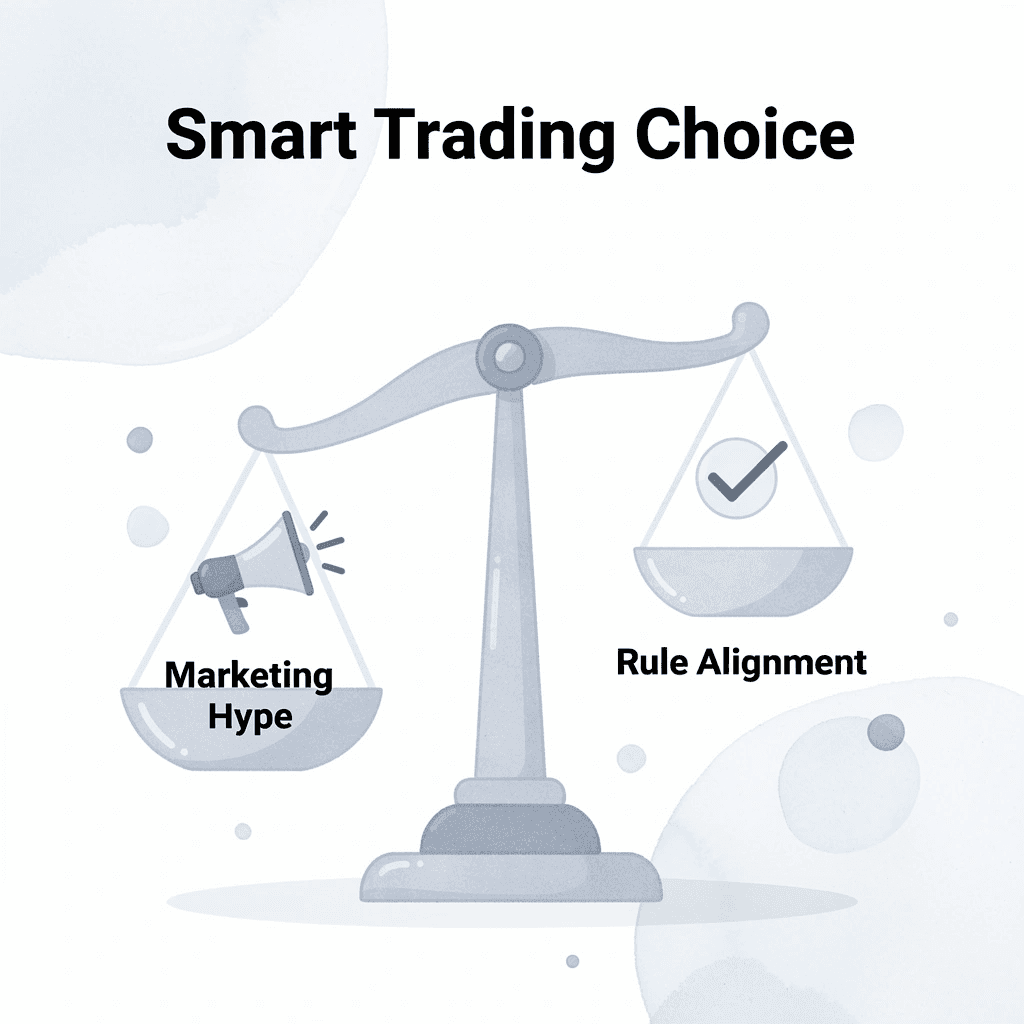
Execution separates traders who build consistent results from those who endlessly compare programs. The best prop firm for swing trading isn't the one with the most impressive marketing or largest account size, but rather the one whose rules align with how you manage positions, whose drawdown structure gives your trades room to develop, and whose payout terms reward the patient execution that swing trading demands.
🎯 Key Point: The right prop firm matches your trading style, not your ego—focus on rule alignment over account size.
Goat Funded Futures offers four distinct funding routes (EOD, Sprint, Instant Funded, and Pro) because different traders need different frameworks. Your first step isn't choosing the biggest account—it's identifying which structure matches your experience level, risk tolerance, and timeframe to prove your edge. An experienced trader with a documented system might skip evaluation through instant funding. A newer trader building discipline might benefit from the structured accountability of an evaluation program with clear benchmarks.
"Your success depends more on following your system than on adapting to restrictive intraday metrics." — Swing Trading Best Practices
Funding Routes Comparison
- EOD (End-of-Day)
- Best for: Position traders
- Key advantage: End-of-day drawdown calculation provides flexibility for longer holding periods and intraday volatility
- Sprint
- Best for: Quick evaluators
- Key advantage: Faster funding timeline with accelerated assessment cycles
- Instant Funded
- Best for: Experienced traders
- Key advantage: Skip the evaluation process and access capital immediately
- Pro
- Best for: Advanced strategies
- Key advantage: Maximum flexibility in trading style, risk approach, and execution methods
The firms that support multi-day holds, calculate drawdown at session close rather than tick-by-tick, and offer transparent fee structures without hidden activation costs exist now. You don't need to wait for perfect conditions or complete certainty about every program detail. Start with the funding path that reduces friction between your trading thesis and the firm's measurement framework. Focus your first evaluation or funded session on executing your edge cleanly within the drawdown parameters, not on gaming the rules or forcing trades to meet arbitrary benchmarks. Prop firms built for swing traders reward patience and disciplined position management—your success depends more on following your system than on adapting to intraday metrics.
💡 Tip: Start your first funded account focused on clean execution within drawdown limits—resist the urge to force trades just to meet activity requirements.

Related Reading
- Prop Firm Trading Strategy
- Prop Firm Risk Management
- Prop Firm Rules Explained
- Futures Prop Firm Comparison
- Best Prop Firms 2026
- Leeloo Trading Review
Be Great and get the App