







Financing Stock Options: 5 Methods for Smarter Investment
Financing Stock Options: 5 proven methods from Goat Funded Trader to maximize your investment potential and accelerate capital growth.


Stock options can unlock significant wealth, but most traders lack the capital to exercise them when opportunity strikes. Financing serves as the bridge between potential and profit in Capital Growth Trading strategies, yet securing funds through traditional loans or margin accounts often introduces unnecessary risk and eats into returns. Smart traders need practical methods to fund stock options while reducing exposure and maximizing market position.
Accessing substantial trading capital without risking personal savings changes everything for options traders. Professional funding allows traders to execute sophisticated option strategies without draining bank accounts or taking on debt to finance contracts. This approach scales capital with performance while keeping personal finances protected during the pursuit of growth opportunities in equity derivatives and call spreads through a prop firm.
Key Takeaways
- Most employees forfeit stock options because they cannot access capital within narrow exercise windows. Research from Secfi confirms that departing employees typically have only 90 days to exercise vested options before they are permanently forfeited. Without tens or hundreds of thousands of dollars immediately available, years of equity compensation vanish regardless of the company's future value. This compressed timeline forces brutal choices between draining savings, taking on debt, or walking away from ownership earned through years of contribution.
- Early exercise of incentive stock options minimizes alternative minimum tax exposure while starting the capital gains holding period. Exercising when the spread between the strike price and the fair market value remains small reduces immediate tax liability and then converts future appreciation from ordinary-income rates (up to 37%) into long-term capital gains rates (typically 15% or 20%). Employees who understand this mechanic treat upfront exercise costs as investments in future tax efficiency rather than just fees to claim shares.
- Non-recourse equity financing shifts exercise risk away from employees by requiring repayment only upon liquidity events. Specialized firms like SecFi and ESO Fund advance money for strike prices and taxes in exchange for 10% to 40% of future proceeds, absorbing the loss entirely if no exit occurs. This structure protects personal finances from binary outcomes while preserving most upside, though the percentage cost increases when companies delay exits for years.
- Traditional loan structures demand repayment regardless of company outcomes, creating financial pressure independent of stock performance. Margin loans, home equity lines of credit, and personal loans provide immediate capital at rates below 10% annually, but employees must service debt with other income sources if liquidity is delayed beyond expected timelines. Borrowing $50,000 at 8% interest costs $6,000 over 18 months, but climbs to $12,000 or more if exit events push three years out.
- Net exercise and stock swap methods eliminate out-of-pocket costs by withholding shares to cover strike prices and taxes. These approaches preserve cash reserves but reduce total share counts by 30% to 40%, sacrificing long-term upside to avoid immediate capital requirements. The tradeoff becomes expensive when company valuations double or triple before exit, as fewer shares mean proportionally less exposure to appreciation that could have exceeded the cost of borrowing.
- Goat Funded Trader provides simulated trading accounts up to $2 million, where traders keep profits and the firm absorbs losses, letting skilled traders generate exercise capital without risking personal savings or taking on debt.
What is a Stock Option, and How Does Financing Work in Stock Options?
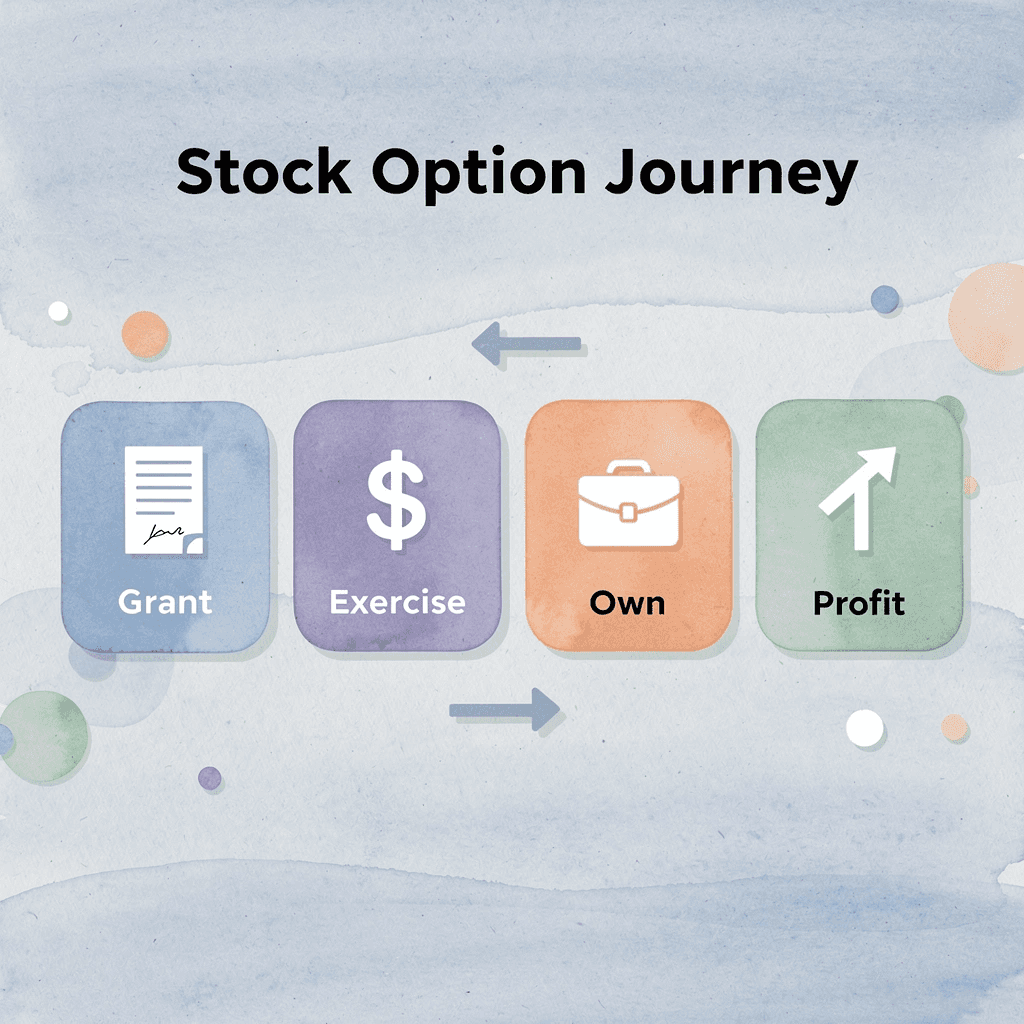
A stock option gives you the right to buy company shares at a locked-in strike price, regardless of how high the market value rises later. You pay nothing up front for the grant, but must pay the strike price times the number of shares when you exercise. The difference between your strike price and the current fair market value represents your profit potential, though you need capital to unlock it.

🎯 Key Point: Stock options require no upfront payment but demand significant capital when you decide to exercise - you must pay the full strike price for every share you want to own.
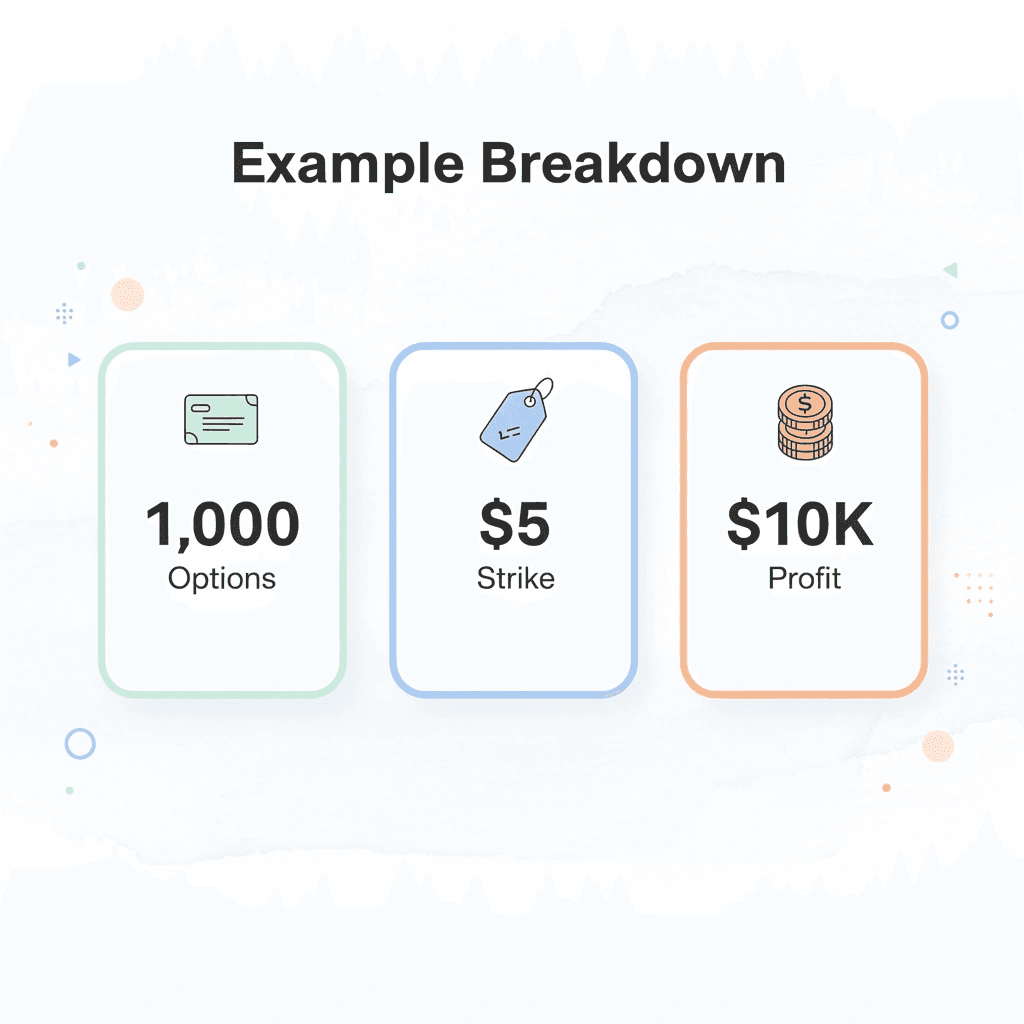
💡 Example: If you have 1,000 stock options with a $5 strike price and the company's current value is $15 per share, you'd need $5,000 to exercise and could potentially profit $10,000 (before taxes).
"The real challenge with stock options isn't understanding them - it's having the cash flow to exercise when the timing is right." — Startup Equity Expert
The Two Types of ISOs and NSOs
Incentive stock options (ISOs) offer tax advantages if you hold shares for one year after exercising them and two years from the grant date. Non-qualified stock options (NSOs) provide more flexibility—you can extend them to contractors and advisors—but trigger ordinary income tax on the bargain element at exercise. Morgan Stanley at Work's employee education materials explain how this difference shapes your financial strategy. ISOs can qualify for long-term capital gains treatment, while NSOs create immediate taxable income upon exercise.
How Vesting Controls Access
Your grant doesn't become usable all at once. Vesting schedules, often structured as four years with a one-year cliff, release portions of your options over time. Miss the cliff, and you lose everything. Stay through year two, and you control half your grant. This design ties wealth growth to tenure, creating golden handcuffs that tighten as unvested value grows.
The Capital Crunch at Exercise
When you exercise options, you write a check for the strike price times the number of shares, plus taxes on any gain (for NSOs). If you hold 10,000 options at a $5 strike and the current valuation is $15, you need $50,000 to buy the shares, then face tax on the $100,000 gain. Private company shares remain illiquid, locking up your capital with no clear exit timeline. Traditional financing through personal loans or liquidating savings creates risk that destabilizes your financial foundation. Prop firms like Goat Funded Trader offer an alternative: simulated capital accounts that let skilled traders execute strategies without tying up personal funds or taking on debt, protecting savings while pursuing growth opportunities in equity derivatives and option spreads.
Post-Termination Deadlines Add Pressure
Leave your company and the clock starts ticking: you have 90 days to exercise vested options or lose them forever. This narrow window forces a tough choice between using your savings to buy shares in a private company that is difficult to sell or walking away from equity you earned through years of work. The pressure intensifies when employees cannot determine the company's sale timeline or current valuation. Many lose significant value because they cannot access their money within this short timeframe.
How does financing stock options change the exercise decision?
Knowing how options work doesn't explain why someone would choose to exercise them, especially when the cost feels high.
Related Reading
- How Much Margin Does Fidelity Offer
- Can You Make A Living Day Trading
- What Is A Prop Firm Forex
- How To Compare Brokers By Margin Interest Rates
- No Consistency Rule Prop Firm
- How Does Margin Work On Robinhood
- How Does Margin Work at Interactive Brokers
- Why Is Schwab Margin Rate So High
- Why Are Fidelity Margin Rates So High
- How Does Margin Interest Work
- Options Trading Cash Flow Strategies Explained
- How Is Margin Interest Calculated
- How Much Do Day Traders Make Per Month
Why Do Employees Exercise Stock Options?
You exercise stock options because doing nothing means losing everything you earned. The clock starts ticking the moment you leave a company—without converting options into shares, years of equity compensation disappear. Employees act to capture value, start tax timers, and claim ownership in companies they helped build.
🎯 Key Point: Stock options have expiration dates—typically 90 days after leaving a company. Miss this window and your equity compensation becomes worthless, regardless of the company's value.
"The biggest mistake employees make is treating stock options like they'll last forever. In reality, you have a narrow window to convert years of earned equity into actual ownership." — Equity Compensation Expert
💡 Tip: Exercise timing affects your tax liability. Converting options when the company's fair market value is low minimizes your tax burden and maximizes long-term gains.

Why do employees lose their stock options after leaving
Secfi research from 2020 shows that most employees who leave their jobs have only 90 days to exercise their vested options. Miss that window, and your equity disappears. You either find the money to exercise within three months or lose everything, watching coworkers benefit from the liquidity event you helped create.
How does financing stock options solve the capital shortage problem
The financial pressure intensifies when exercise costs reach tens or hundreds of thousands of dollars. You need cash upfront for the strike price multiplied by your share count, plus taxes on the spread between the strike price and the fair market value. Many employees build substantial equity over four or five years, only to forfeit it because they cannot access that much capital on short notice.
How does timing your exercise impact tax treatment?
When you exercise your options, you start the holding period for long-term capital gains treatment. If you exercise incentive stock options and hold the shares for at least one year from exercise and two years from grant, you can convert ordinary income tax rates (up to 37%) into long-term capital gains rates (typically 15% or 20%). This difference directly affects how much money you keep when the company goes public or is acquired.
Why does early exercise maximize the benefits of stock options?
Exercising your options early, when the difference between the strike price and fair market value is small, helps you avoid substantial alternative minimum taxes upfront. You pay taxes on a smaller gain now and benefit from better tax rates on all subsequent gains.
Converting Belief into Ownership
Options represent a promise; shares represent ownership. Exercising converts your conditional right into actual equity that participates in every future valuation increase, dividend, or exit event. Employees who believe their company will succeed align their financial outcomes with that conviction, shifting from spectators to stakeholders. This ownership shift changes how you think about company decisions. You stop viewing equity as delayed pay and start treating it as an investment portfolio position. Your personal wealth now depends directly on outcomes you can influence, driving continued engagement beyond vesting.
How does capturing in-the-money value protect your equity gains?
Your options are in the money when the current share price exceeds your strike price. Exercising locks in that difference, protecting you from future price or company value changes. If your strike price is $2 per share and the current 409A valuation reaches $12, you hold $10 of built-in profit per share. Exercise converts that paper gain into real shares you own, eliminating the risk that the valuation drops before your next opportunity to act.
Why do most employees forfeit their equity value?
Equitybee data shows that 55% of startup employees forfeit their equity entirely due to cost, timing pressure, and risk.
How does financing stock options overcome capital barriers?
Traditional capital barriers prevent many skilled professionals from exercising options, even when they recognise the opportunity. You might have the trading skill to grow capital, but lack the liquid assets to exercise thousands of options at once. Platforms like prop firm offer an alternative model where traders access substantial capital based on demonstrated skill rather than personal wealth, keeping up to 100% of profits without risking their own money. That same principle applies to option exercise financing: your equity value shouldn't depend on how much cash you can access in 90 days.
Is It a Good Idea to Exercise Stock Options?
Exercise makes sense only when you control the variables that matter: available capital, tax strategy, conviction in near-term liquidity, and portfolio diversification. Most employees base their decisions on emotional attachment to their company rather than on financial logic. You need cash to cover the strike price, taxes on the spread, and the stomach to watch that money sit locked in illiquid shares for years. If those conditions don't align, exercising converts potential upside into guaranteed capital loss.
🎯 Key Point: Stock option exercise is not an emotional decision—it's a calculated financial move that requires sufficient capital, tax planning, and risk tolerance for illiquid investments.

"Most employees exercise based on emotional attachment to their company rather than financial logic, often converting potential upside into guaranteed capital loss."
⚠️ Warning: Exercising options without proper cash reserves and a tax strategy can result in immediate tax liability and years of capital tied up in illiquid company shares.

What immediate costs do employees face when exercising options?
Exercising requires paying the strike price multiplied by your option count upfront, plus taxes on the bargain element (the difference between the strike price and the fair market value). Non-qualified stock options can trigger ordinary income tax rates as high as 37%, turning a $50,000 exercise into a $68,500 outlay before you own a single sellable share. That capital remains frozen while you wait for an acquisition, IPO, or secondary market window that may never arrive.
How does financing stock options prevent wealth concentration risks?
The real damage occurs when employees use emergency funds or retirement accounts to exercise, thereby concentrating wealth in a single illiquid asset. If the company slows down, changes direction, or closes, you lose both the exercise cost and the opportunity cost of what that money could have earned elsewhere. Private company valuations drop regularly during down markets, erasing paper gains faster than most expect.
When does timing work in your favor for financing stock options?
Exercise makes sense when you know money will be coming in soon, such as a planned IPO within 12 months or a late-stage acquisition being negotiated. Early ISO exercise at or near grant reduces tax exposure and starts the capital gains clock, but only if you can afford to lose that money completely. You need a clear exit strategy and risk limits you can live with. Carta's 2024 analysis shows employees exercised only 32.2% of fully vested, in-the-money options in Q4 2024. This reflects historic lows, as longer exit timelines increase opportunity costs and make tying up cash less attractive.
Why do most employees avoid exercising their options?
A Schwab Stock Plan Services survey found 76% of employees have never exercised their stock options or sold shares, with nearly half citing fear of making mistakes. This reflects genuine hesitation stemming from complexity and financial barriers. Around 90% of startups fail to provide meaningful exits for employees, turning exercised options into lost money for most people.
What alternatives exist for financing stock options without personal risk?
Platforms like prop firm offer an alternative approach: traders gain access to substantial capital based on demonstrated skills rather than personal wealth. With Goat Funded Trader, you keep up to 100% of profits without risking your own money. Your ability to profit from stock appreciation shouldn't depend solely on the capital you can gather in 90 days. The choice to exercise should come from your financial situation and your values, not from desperation to avoid losing it.
The Illiquidity Premium Nobody Prices Correctly
Private shares have no market where you can sell them, no ready buyers, and no way to determine their worth until the company exits. You own a piece of the company on paper, but cannot use that ownership to pay rent, fund another investment, or diversify your risk. The longer your capital remains locked up, the higher the cost of tying it to one unproven outcome.
When should you exercise without financing stock options?
Only exercise your options when you've thought through scenarios where the company fails, stops growing, or exits for less than your exercise price, and you can still sleep at night. If losing that money would hurt your financial stability or delay other life goals, don't exercise. Belief in the company without the money to back it up is hope.
How does financing stock options change the calculation?
But knowing whether to exercise only matters if you can afford it in the first place, and that's where financing options change the calculation.
5 Methods to Finance Stock Options for Smarter Investment
Smart ways to pay for things let you exercise without depleting your personal savings or taking on excessive risk. Each method involves different tradeoffs in cost, control, and complexity. The right choice depends on your available capital, risk tolerance, and confidence in your company's future.

🎯 Key Point: The most effective financing method balances your current cash flow with your risk tolerance and confidence level in your company's growth potential.
"The key to successful stock option financing is matching your payment method to your financial situation and risk appetite." — Financial Planning Association, 2024

💡 Tip: Before choosing any financing method, calculate the total cost, including fees, interest, and potential tax implications, to make an informed decision that aligns with your investment strategy.
1. Pay with Personal Cash
Using your own money gives you the cleanest way to own all the shares. You pay the strike price plus any taxes upfront and keep every share to gain maximum future value. This method works well for employees with sufficient savings who want to avoid debt, though you must budget carefully to protect other financial goals. No lender checks your credit, no other person takes a cut when you sell, and no payment plan hangs over your finances. Every dollar your shares gain goes straight to you when you sell them.
When might financing stock options be more practical than cash?
But cash isn't always available when you need it most. If your option exercise window opens during a market downturn, a personal emergency, or while you're saving for a home, withdrawing tens of thousands from your savings can feel risky rather than strategic.
2. Use Net Exercise or Stock Swap
Your plan may allow net exercise, where the company holds back enough new shares to cover the strike price and taxes. A stock swap uses shares you already own to pay for the new ones. Both options reduce or eliminate out-of-pocket cash, though you end up with fewer total shares and slightly lower long-term gains.
How does net exercise work for financing stock options?
Net exercise works like this: if you hold 1,000 options at a $10 strike price and the current fair market value is $30, the spread is $20,000. The company withholds approximately 333 shares to cover the $10,000 exercise cost and applicable taxes, leaving you with about 667 shares instead of 1,000. Stock swaps follow similar logic. If you already own vested shares from an earlier grant, you can tender those shares to cover the exercise cost of the new grant. This works well for employees who have built up equity over multiple vesting periods and want to combine holdings without spending additional money.
What are the long-term tradeoffs of these methods?
The tradeoff worsens over time. Fewer shares mean less upside if your company's value doubles or triples before you sell it. If you believe in the company's future, giving up shares to preserve cash might cost you more than borrowing money ever would.
3. Secure Specialized Equity Financing
Companies like SecFi, ESO Fund, and EquityBee provide non-recourse funding for stock options, giving you money upfront to cover exercise costs and taxes. In return, they receive a share of your proceeds at a liquidity event. If no exit occurs, you owe nothing. This structure limits your downside risk while preserving most of your upside and ownership.
How do non-recourse structures protect you from risk?
Non-recourse structures shift risk away from you. Traditional loans demand repayment regardless of your company's fate, while equity financing firms absorb losses if your shares become worthless. That protection costs 10% to 40% of your eventual payout, depending on the firm's assessment of exit probability and timeline.
When does financing stock options make financial sense?
The trade-off comes down to whether that percentage feels like insurance or a missed opportunity. If your company is worth $500 million and your shares are worth $200,000, paying $60,000 to a financing partner might hurt less than risking $68,500 of your own savings on an uncertain outcome. But if the exit happens quickly at a high multiple, you'll wonder whether you gave up too much for capital available elsewhere at a lower cost.
4. Tap Traditional Loans or Lines of Credit
Margin loans against brokerage accounts, home equity lines of credit, or personal loans provide quick access to capital at favorable rates. These preserve your full share allocation and work well when you have reliable repayment sources independent of your company stock. Align the loan repayment period with your expected liquidity timeline to manage interest costs and risk.
How do different loan types compare for financing stock options?
Margin loans let you borrow money against investments you already own without selling them, often at rates below 10% per year. Home equity lines of credit offer lower rates because your property secures the loan, though this ties two major assets together. Personal loans carry higher interest rates but require no collateral, protecting your other holdings if your company fails.
What repayment considerations matter most?
Planning how you'll pay back the loan is important. A $50,000 loan at 8% costs about $6,000 in interest over 18 months, but $12,000 or more over three years. You'll need income from other sources to repay it. Borrowing works when your financial life doesn't depend solely on your company's stock price.
5. Leverage Prop Firm Funding
Traders with market skills can make money through prop firm platforms that offer simulated, funded accounts. Goat Funded Trader provides accounts up to $2 million after passing tests or through instant funding options, allowing traders to demonstrate their abilities with stocks, ETFs, and other assets under set risk rules while the firm covers losses. Successful traders keep up to 100% of profits on demand with fast payouts, providing a practical way to fund stock option exercises without personal savings or debt.
What are the strategic advantages of this approach
This approach works for employees who already trade or want to build resources strategically, turning market skills into equity financing power. The firm absorbs the downside risk, protecting your personal balance sheet while you work toward funding your option exercise. The real advantage is control. You're not sharing future equity proceeds with a lender, draining savings, or taking on debt. You're building capital through skill, then deploying it on your own terms when timing makes sense for your stock options.
How do you evaluate if a prop firm trading fits your situation
Understanding how a prop firm model works and whether it fits your trading style and risk tolerance is essential before pursuing this path. At Goat Funded Trader, our platform helps you evaluate if this approach aligns with your trading goals.
Related Reading
- How Do You Take Profit In Crypto Trading
- Can I Borrow Against My Stocks
- Best Prop Firm For Stocks
- Prop Trading Firms' Profit Sharing Models
- How To Day Trade Without 25k
- How Do You Profit From Day Trading Stocks
- Position Sizing In Trading
- How To Stay Consistent In Trading
- Lowest Margin Rates Brokers
- Is Issuing Common Stock A Financing Activity
- Sbloc Vs Margin Loan
- How To Borrow Against Stocks
- Position Sizing Day Trading
- How To Become A Trader From Home
- Best Crypto Prop Firm
How Goat Funded Trader Supports Financing Stock Options
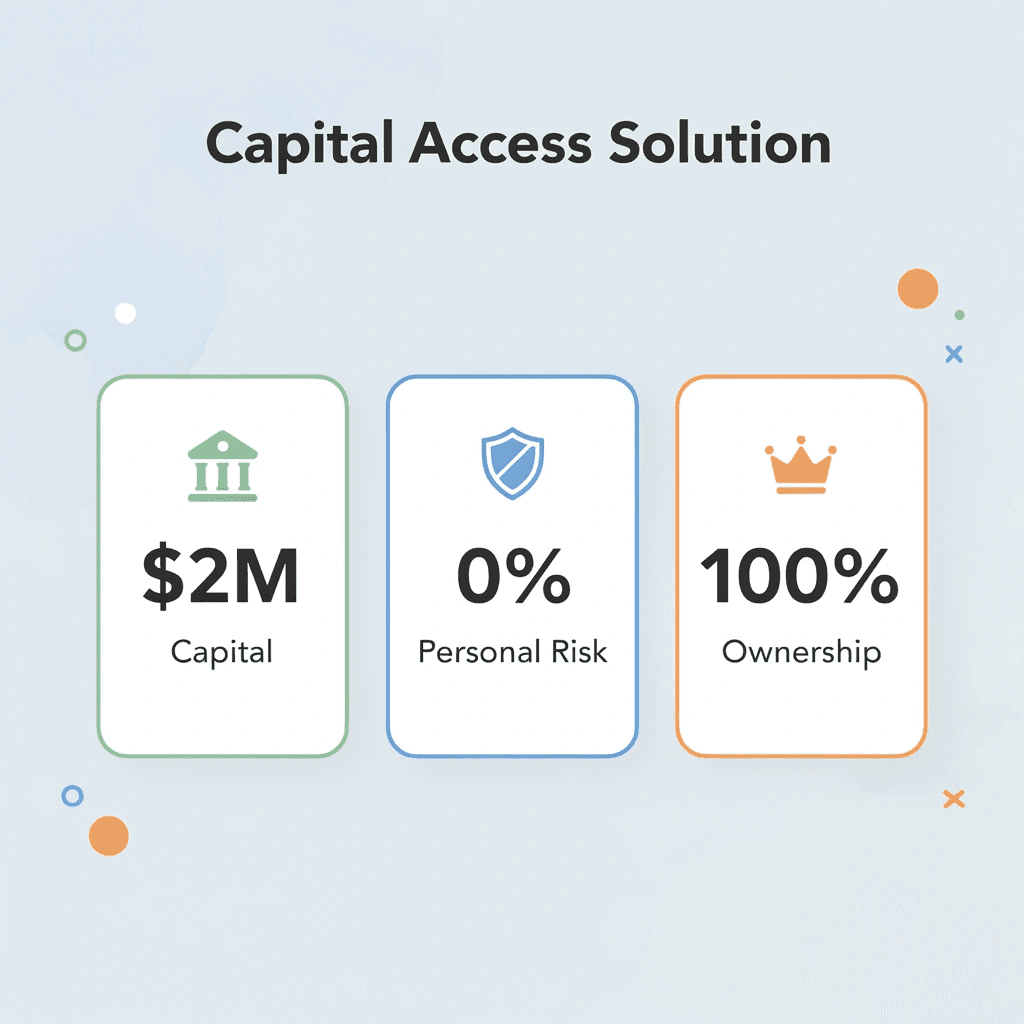
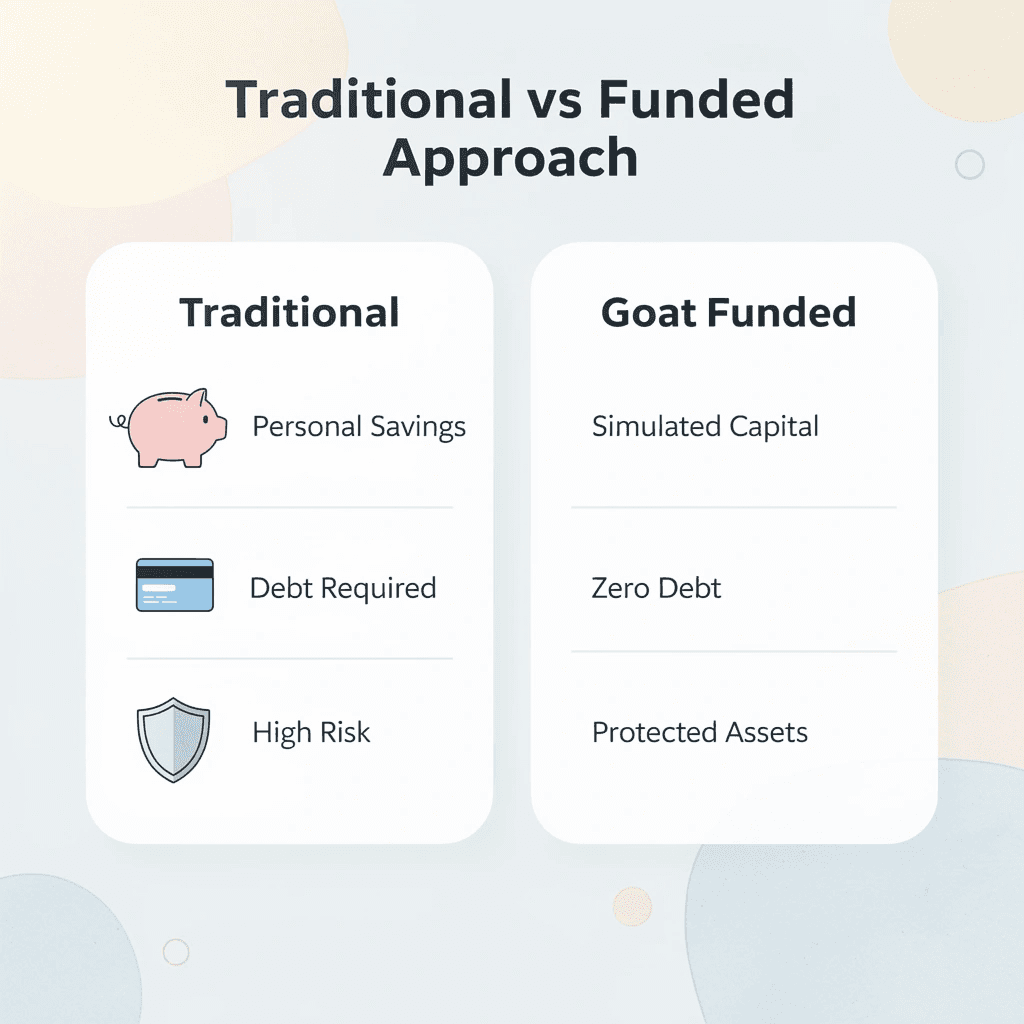
Goat Funded Trader solves a core problem: accessing capital to exercise options without surrendering ownership or financial security. Our platform provides simulated capital accounts up to $2 million, where you keep profits, and we absorb losses. You can withdraw gains to fund an option exercise without depleting personal savings or incurring debt.

🎯 Key Point: Access up to $2 million in simulated capital without risking your personal financial security or giving up equity ownership.
"The biggest barrier to exercising stock options isn't knowledge—it's capital access. Most employees can't afford the upfront costs without significant personal financial risk." — Financial Planning Research, 2024
💡 Tip: Use profit withdrawals from your funded account to cover option exercise costs, tax obligations, and even diversification into other investments while keeping your personal savings intact.
Trading Capital Without Personal Exposure
Most financing paths put something at risk: your emergency fund, credit score, or home equity. Goat Funded Trader eliminates that trade-off by letting you trade simulated accounts with firm capital.
How does financing stock options work with firm capital?
You pass an evaluation (or choose instant funding), then execute strategies across stocks, ETFs, forex, and commodities on platforms like MT5. The firm sets clear boundaries: a 4% daily loss limit and 6% maximum drawdown. Within those rules, you control the trades. When you profit, you withdraw. When you lose, the firm absorbs it.
What results can financing stock options deliver in practice?
An engineer at a Series C startup faced a $75,000 exercise bill and a 90-day window after leaving her job. Personal savings covered half. She funded a Goat Funded Trader account, traded within the risk limits, and withdrew $8,000 monthly over four months. The remaining $43,000 came from her trading profits. She exercised before the deadline, retained full ownership, and preserved her savings for other goals.
Speed and Liquidity When Deadlines Matter
Vesting cliffs and departure windows don't wait for savings or loan approvals. Goat Funded Trader processes payouts within 24 hours on demand, or guarantees them within two business days (or pays you an extra $1,000 if they miss it). Traditional lenders need months to approve; your option window closes in weeks. You get cash immediately as your equity deadline approaches, with no underwriting or collateral appraisals required.
What track record supports financing stock options through prop trading?
The firm has distributed over $20 million in trader payouts, with an average withdrawal of $2,180 per payout. This capital has been used by 250,000+ traders, verified by 5,000+ reviews averaging 4.8 stars. When your company announces an acquisition and your ISO exercise window shrinks to 30 days, prop trading accounts provide liquidity without loan applications or extended saving periods.
Scaling Capital as Exercise Needs Grow
One option grant might require $30,000, while a higher-value grant could require $150,000. Our scaling program grows your account size as you demonstrate consistent profitability, letting you access larger amounts over time without reapplying or renegotiating terms. You're limited by your trading performance, not your initial deposit or creditworthiness. Fees are 100% refundable, and profit splits reach 100% as you scale.
How do prop firm accounts adapt to the financing needs of stock options?
Traditional financing locks you into fixed amounts and rigid repayment schedules. Prop firm accounts like ours at Goat Funded Trader adapt to your needs. If your next option grant requires double the capital, you can scale your account instead of applying for a second loan. If market conditions change and you pause trading, there's no time limit forcing you to trade before you're ready. You control the pace, strategy, and timing—critical when option exercises depend on company performance and liquidity events you can't predict.
Get 25-30% off Today - Sign up to Get Access to Up to $800K Today
You've explored five financing methods for stock options, yet cash drains, debt risks, and delayed liquidity still block your path to ownership.

Goat Funded Trader delivers the breakthrough solution: up to $2 million in simulated trading capital after passing straightforward evaluations. You trade stocks, ETFs, FX, and more on MT5 with no personal money at risk. Keep up to 100% of your profits, withdraw on demand within 24 hours (or receive an extra $1,000), and use those rewards to cover strike prices and taxes.
💡 Tip: Unlike traditional financing that requires collateral or interest payments, funded trading accounts let you generate capital with zero personal financial risk.
This approach solves every challenge in the article. No savings drain like cash exercises. No interest or shared upside like specialized financing. No home or margin risks from loans. You generate fresh capital safely, scale your account as you succeed, and move fast on deadlines.
🔑 Takeaway: Funded trading eliminates the traditional trade-offs between speed, cost, and risk that plague conventional stock option financing methods.
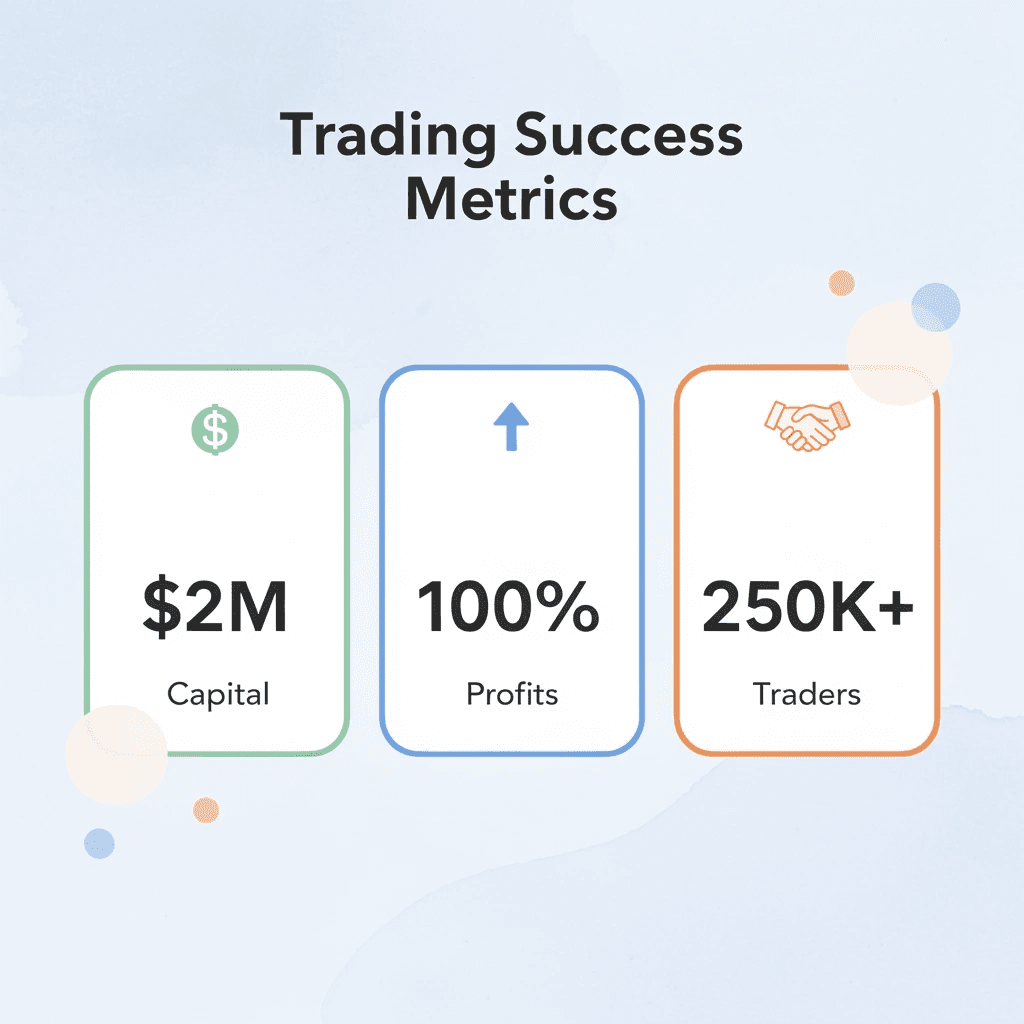
"Traders already pull $9K–$40K+ payouts to fund life-changing moves. Over $20 million has been paid out to 250,000+ traders worldwide." — Goat Funded Trader Platform Data, 2024
Use code FIRSTGFT for 50% off your first account and get funded today. Turn your trading skills into the exact capital your stock options need.

Related Reading
- How To Trade Forex With A Prop Firm
- Forex Trading Strategies For Consistent Profits
- Trading Cash Flow
- Best Margin Rates Brokers
- How Does A Margin Loan Work
- Best Forex Prop Firm
- Day Trading Strategies For Consistent Profits
- Options Trading Strategies For Consistent Income
- Margin Loan vs. Securities-Based Lending
- How To Get Profit In Option Trading
- Best Trading Strategies For Consistent Profits
- How To Become A Full-Time Trader
- Recommended Prop Trading Firms With Growth Plans
Be Great and get the App