







10 Best Margin Rate Brokers You Should Know in 2026
Best Margin Rates Brokers 2026: Goat Funded Trader reveals top 10 brokers with the lowest margin rates. Compare spreads, leverage & fees now.
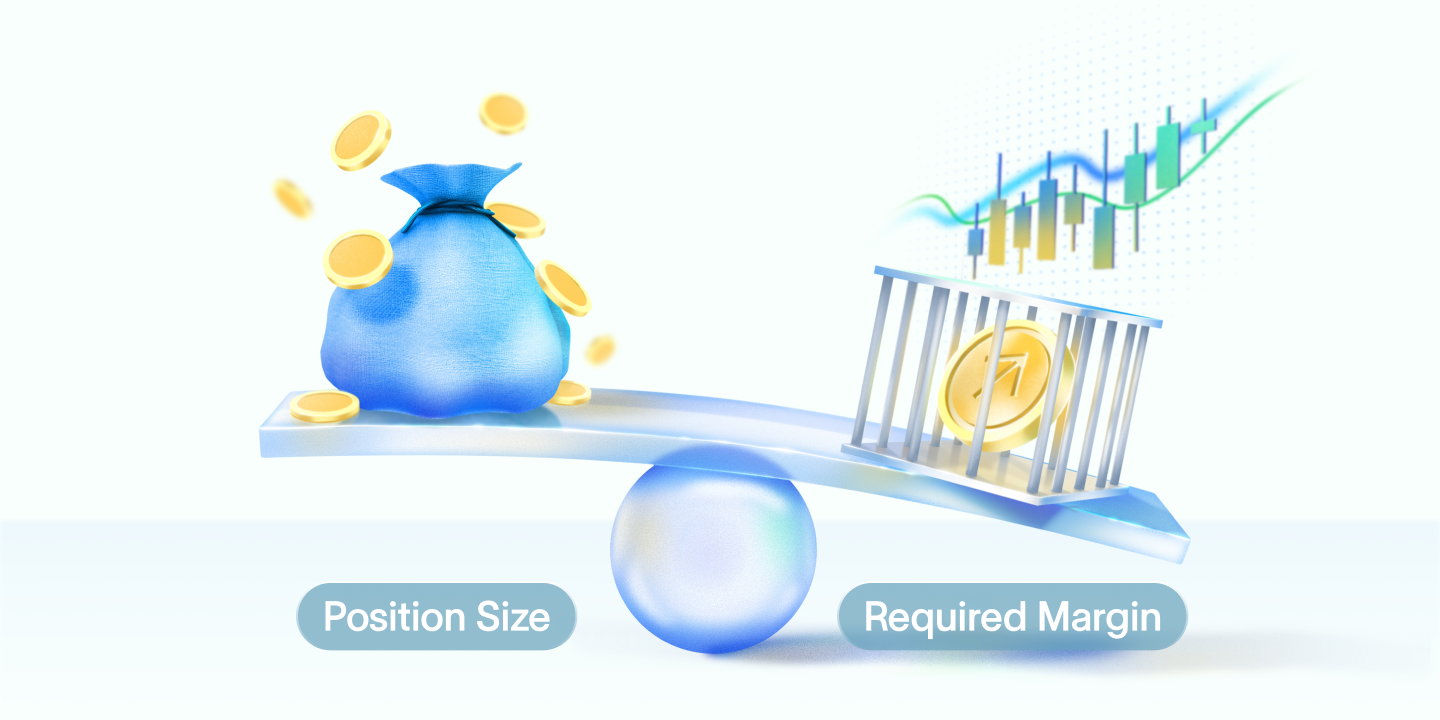

Every trader pursuing Capital Growth Trading faces a fundamental choice that directly impacts their bottom line: which broker offers the most competitive margin rates without sacrificing execution quality or reliability? When borrowing capital to amplify positions, even a fraction of a percentage point in interest costs can mean the difference between profitable trades and watching gains evaporate into financing fees. Smart traders cut through marketing noise to find brokers that deliver the lowest borrowing costs, best leverage options, and most transparent fee structures.
Traditional brokers charge margin interest that accumulates over time, creating ongoing costs that eat into profits. Alternative funding sources eliminate these interest charges entirely by providing capital upfront in exchange for profit sharing. Traders can execute their strategies without accumulating debt or worrying about margin calls affecting their psychology and performance when they partner with a prop firm.
Summary
- Margin interest eats into returns through daily compounding that most traders drastically underestimate. A $50,000 debit balance at 10% generates $5,000 in annual interest charges, and brokers calculate this cost every single day using a 360-day year before posting monthly bills. Even short-term positions accumulate charges that turn winning trades into break-even outcomes, especially when you factor in taxes and slippage on top of the borrowing cost.
- Trader literacy around margin mechanics remains shockingly low across the industry. A 2015 FINRA-linked investor survey showed that only 15% of margin traders correctly answered a basic question about how margin works, compared to 31% of non-margin traders. This knowledge gap leads investors to borrow without understanding how interest compounds or how quickly maintenance requirements trigger forced liquidations during market downturns.
- Broker margin rates vary widely by balance tier, not just by the advertised headline number. Platforms like Interactive Brokers offer rates as low as 4.83% for balances over $1 million, while smaller accounts at the same broker or competitors like Robinhood can face rates between 10% and 12%. The tier structure you qualify for determines your actual cost, and most traders compare only the base rates without checking where their expected borrowing level actually falls.
- U.S. margin debt reached $1.22 trillion in March 2026, up 38.7% year over year, according to FINRA data. This surge demonstrates how widespread the use of leverage has become, but it also reveals the growing collective interest burden that traders carry. When markets reverse, this debt doesn't disappear; it continues accruing charges while portfolios decline and margin calls force sales at the worst possible prices.
- Calculation methods create hidden cost differences that compound over time. Brokers using a 360-day year versus 365 days, or those that net cash balances against margin debits before calculating interest, produce meaningfully different annual costs on the same borrowed amount. A seemingly minor formula variation can translate to hundreds of dollars in extra charges annually on six-figure positions, yet most comparison tools ignore these mechanics entirely.
- Goat Funded Trader addresses this by providing simulated capital after evaluation, giving traders access to up to $2M, offering profit splits up to 100%, and eliminating margin interest entirely, since no personal borrowing occurs.
What Is Margin Interest in Trading, and How Does It Work?
Margin interest is the daily cost you pay when you borrow money from your brokerage to trade securities. Your broker charges interest on the borrowed balance regardless of whether your positions make money or lose money. This interest compounds before posting to your account each month, reducing your profits or worsening your losses.

🎯 Key Point: Margin interest is charged daily on your borrowed balance, regardless of whether your trades are profitable or not.
"Margin interest compounds daily and can significantly impact trading profitability, making it essential for traders to understand this cost before using leverage." — Financial Trading Analysis

💡 Example: If you borrow $10,000 from your broker at 8% annual interest, you'll pay approximately $2.19 per day in margin interest - and this cost continues every single day until you repay the borrowed amount.
How margin loans actually work
You open a margin account and meet the initial requirement, typically 50% of your equity under Regulation T. For a $10,000 stock position, you deposit $5,000 and borrow the rest. Your existing portfolio serves as collateral, allowing you to control larger positions with less capital. As long as your account equity remains above the maintenance threshold (often 25–30%), you keep the borrowed funds. Interest accrues daily on the settled debit balance, and you reduce the loan by depositing cash or selling positions.
The calculation that catches traders off guard
Brokers calculate interest daily using this formula: (Borrowed amount × Annual rate) ÷ 360 × Number of days. They apply tiered rates, with smaller accounts paying higher percentages than six-figure balances. Robinhood's margin rates can reach around 12% per year for smaller balances, while larger accounts often drop below 7%. The rate compounds daily before monthly billing, and brokers adjust their base rates in response to market conditions, sometimes without notice. Traders often underestimate how quickly daily compounding accumulates, especially when positions move against them.
Why do the costs vary so dramatically?
Competitive platforms like Interactive Brokers or Robinhood offer the lowest margin tiers, while traditional firms charge more for smaller accounts. Your rate depends on your average daily debit balance, and the spread between low-tier and high-tier rates can mean thousands of dollars annually on the same borrowed amount. Most traders compare execution fees and overlook the margin schedule until the first statement arrives.
The leverage trap nobody warns you about
Borrowed money amplifies both losses and gains, while interest accrues even as your portfolio declines. A market downturn reduces your equity, triggering a margin call that forces you to add cash or sell assets at unfavorable prices. Brokers can liquidate positions without warning if equity drops too low, leaving you responsible for any remaining debt. U.S. margin debt reached $1.22 trillion in March 2026, up 38.7% year over year, according to FINRA data analyzed by Advisor Perspectives. That surge reflects the growing interest burden when markets shift, and traders realize their profits were never fully theirs to keep.
What hidden costs do best margin rates brokers charge?
Interest isn't the only cost traders overlook when opening a margin account.
What Is the Difference Between Margin Interest and Margin Requirements?
Margin interest charges you for borrowing money, while margin requirements determine how much money you must keep in your account to hold positions open. Interest drains your account as a recurring cost, calculated daily on your debit balance and posted monthly. Requirements act as guardrails, forcing you to deposit more cash or face liquidation when your equity ratio drops below broker thresholds.

💡 Tip: Margin interest compounds daily, so even small borrowed amounts can become expensive over time. Monitor your debit balance regularly to avoid unexpected charges.
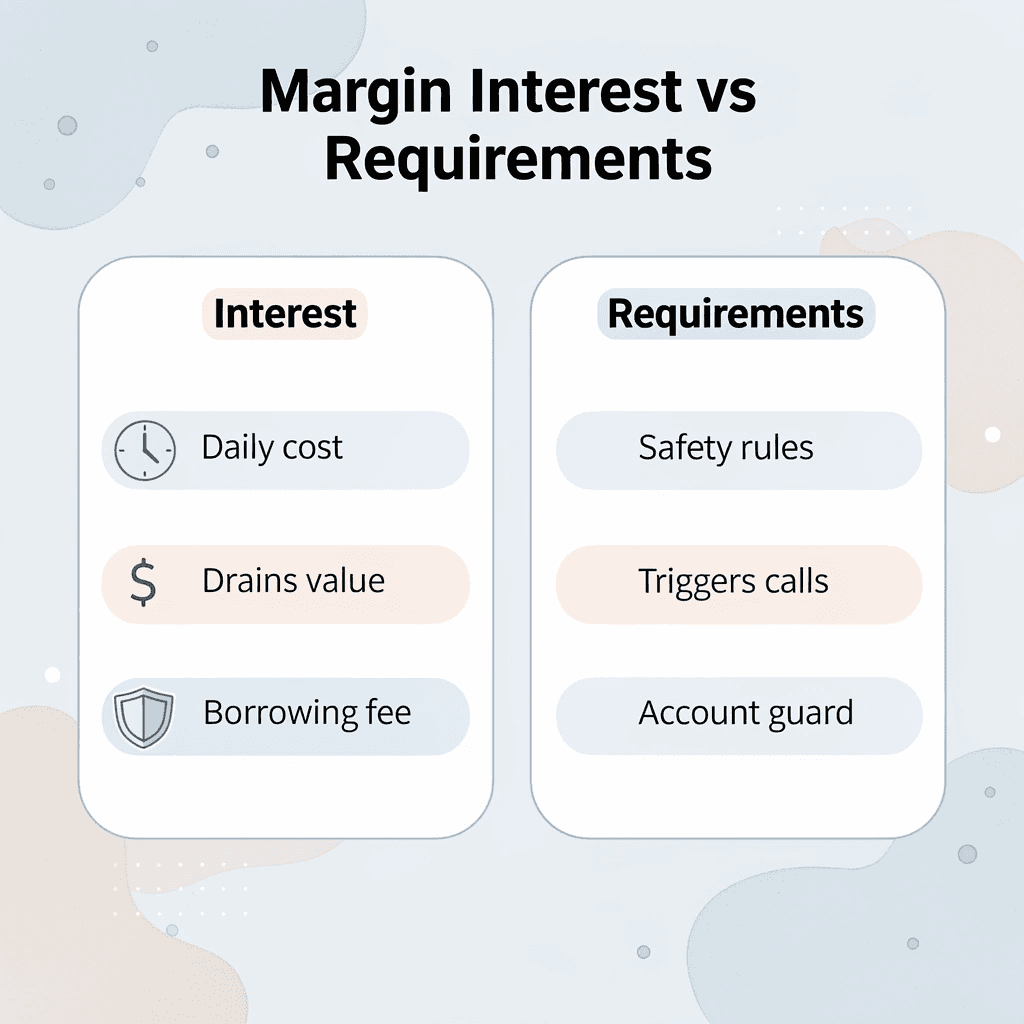
"Margin interest is calculated daily and can significantly impact returns, especially during volatile market periods when positions may be held longer than anticipated." — Financial Industry Regulatory Authority
🔑 Takeaway: While margin requirements protect you from excessive losses, margin interest is the ongoing cost of leverage that can erode profits even on winning trades.

Initial Requirements Set Your Leverage Ceiling
When you open a margin position, Regulation T demands you fund at least 50% of the purchase price yourself. Buy $30,000 in stock; you must deposit $15,000 upfront and borrow the rest from your broker. Brokers often impose stricter house requirements on volatile securities, sometimes demanding 60% or more. Breaking this rule blocks the trade.
Maintenance Requirements Trigger Forced Action
After your purchase, the maintenance margin monitors your equity percentage relative to the current market value. Most brokers enforce a 30% minimum. If your $30,000 position drops to $18,000 while you owe $15,000, your equity falls to $3,000 (16.7%), triggering an immediate margin call. The broker demands fresh capital or securities to restore compliance. Ignore it, and they sell your holdings at lower prices without your approval.
How does margin interest accumulate regardless of market performance?
Margin interest accrues daily regardless of market direction. A $15,000 loan at 10% annual interest costs about $4.11 each day, compounding over time and reducing net returns even when your trades succeed. Keep that position for six months, and you pay over $740 in interest alone. Margin calls force you to sell at the worst possible time, locking in losses that dwarf interest costs.
What alternatives exist to traditional margin trading structures?
Platforms like Goat Funded Trader bypass this system by giving traders practice money rather than loans. Our program lets traders demonstrate their skills through testing, then access up to $2M in funding, with profit splits up to 100% and withdrawals whenever needed. No borrowed money means no interest charges, no margin calls, and no forced sales during market downturns.
Can you truly escape the costs of leverage completely?
But even if you eliminate interest completely, the question remains: can you truly escape the costs of leverage, or do they shift elsewhere?
Related Reading
- Financing Stock Options
- No Consistency Rule Prop Firm
- How Much Do Day Traders Make Per Month
- How Does Margin Work at Interactive Brokers
- How Does Margin Work On Robinhood
- How Much Margin Does Fidelity Offer
- How Does Margin Interest Work
- What Is A Prop Firm Forex
- Can You Make A Living Day Trading
- How Is Margin Interest Calculated
- Why Are Fidelity Margin Rates So High
- How To Compare Brokers By Margin Interest Rates
- Options Trading Cash Flow Strategies Explained
- Why Is Schwab Margin Rate So High
Can Margin Interest Be Avoided?
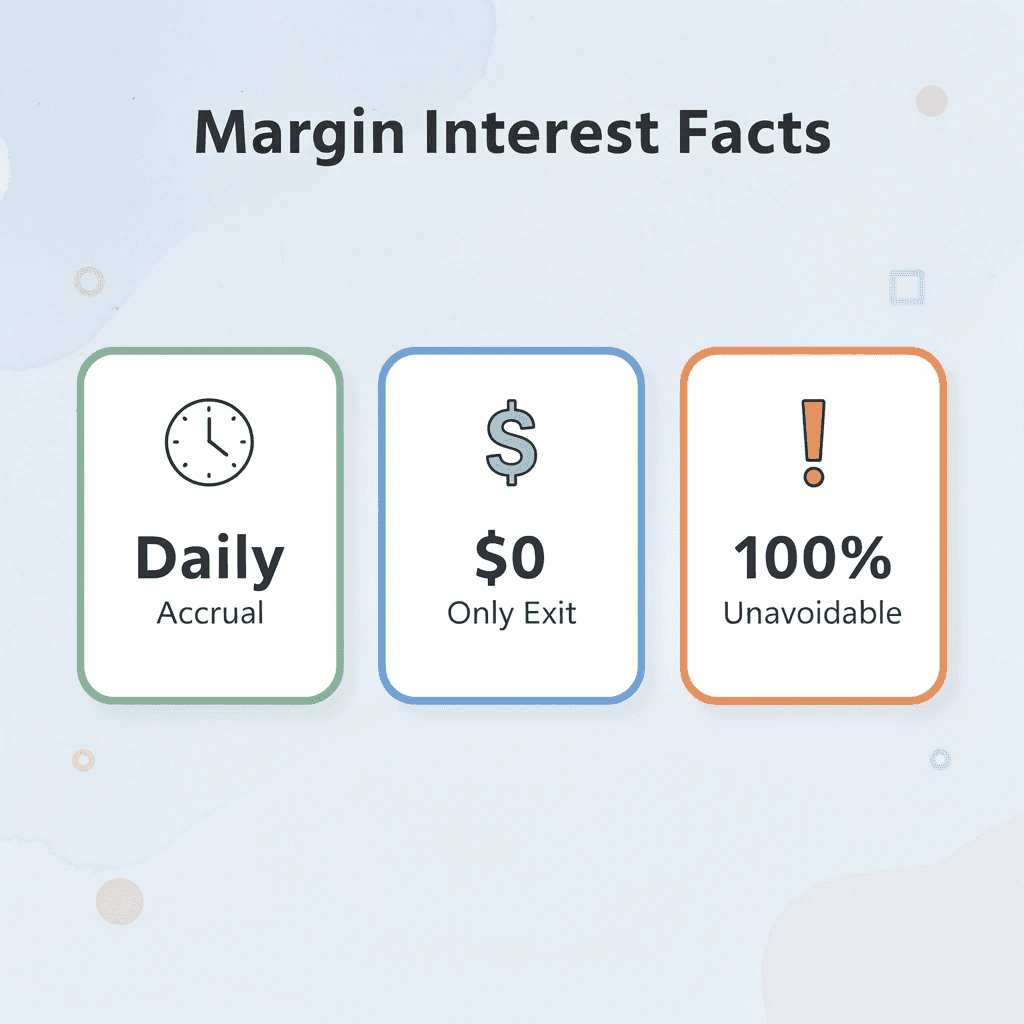
Margin interest cannot be avoided once you borrow in a margin account. It accrues daily on any money you owe and represents the direct cost of using leverage. The expense disappears only when the loan balance reaches zero.

🎯 Key Point: The moment you use borrowed funds in your margin account, you're committed to paying daily interest charges until you repay the full amount.
"Margin interest accrues daily on outstanding balances, making it one of the most immediate and unavoidable costs of leveraged trading." — Financial Industry Analysis, 2024
⚠️ Warning: Many traders underestimate how quickly daily margin interest can compound, especially during extended holding periods or market downturns.
Why can't traders simply avoid margin interest through timing?
Traders convince themselves they can avoid margin interest through short holds, timely sales, or switching to low-rate platforms. This view ignores how interest compounds daily and applies regardless of trade outcomes or market direction. Your broker lends money secured by your securities, and interest accrues daily on the debit balance using a 360-day year. Sales or deposits reduce principal only after settlement; any remaining balance triggers charges. Brokers post interest monthly, and it compounds, turning small loans into steady drags on performance.
How do the best margin rates brokers compare in real costs?
A 2015 FINRA-linked investor survey, analyzed in an SEC staff working paper, showed that only 15% of margin traders correctly answered a basic question about how margin works, compared with 31% of non-margin traders. Broker rate comparisons in 2026 reveal standard margin rates at major firms ranging from 5% to over 11% for typical balances, with many retail accounts facing 10%+ tiers. A $50,000 debit at 10% generates $5,000 in annual interest, a fixed drag that short-term trades rarely outrun after taxes and slippage.
When does the margin interest stop being charged?
Margin interest stops only when your account shows a zero or credit balance. Sell positions, add cash, or transfer securities to eliminate the loan. Until then, the clock keeps running. This hard stop forces traders to treat borrowed funds as a temporary, expensive tool rather than permanent capital. Use margin solely for ultra-short-term opportunities where expected gains exceed daily interest by a wide margin, and pay down debit balances immediately after sales.
How do the best margin rates of brokers' alternatives eliminate interest costs?
The familiar approach locks traders in a cycle of borrowing, paying interest, and hoping gains exceed costs. What starts as a manageable $200 monthly fee can grow into thousands yearly, erasing the advantage leverage was supposed to provide.
Platforms like Goat Funded Trader offer an alternative by providing simulated capital, eliminating the need for traders to risk their own money or manage margin requirements. Our platform lets traders prove their skills through evaluation, then access up to $2M in funding with profit splits reaching 100% and on-demand withdrawals, eliminating daily interest calculations.
What discipline prevents marginal costs from spiraling?
Calculate exact daily interest before every margin trade, watch your debit balance closely, and use cash when uncertain. This discipline transforms margin from a hidden cost into a controllable choice. Compare tiered rates and move larger balances to brokers with the lowest brackets if you must borrow, but understand that even the best rate costs you money daily while you carry a balance. But knowing the cost is only half the battle; the real question is which brokers offer the lowest rates when you need them most.
10 Best Margin Rate Brokers You Should Know in 2026
Choosing the right margin broker depends on balancing cost, platform quality, and your trader profile. Some brokers reward large balances with institutional-grade rates, while others keep entry barriers low for smaller accounts. The ten brokers below represent the most competitive options across different investor profiles in 2026, from mobile-first simplicity to professional-grade execution.

🎯 Key Point: The best margin broker for you depends on your account size, trading frequency, and platform preferences rather than just the lowest rates.
"Margin rates can vary by as much as 3-4 percentage points between brokers, making broker selection a critical factor in trading profitability." — Financial Industry Analysis, 2026

⚠️ Warning: Always verify current margin rates and minimum balance requirements before opening an account, as these can change frequently based on market conditions.
1. M1 Finance
M1 Finance stands out as a top choice for cost-conscious investors who value automated investing combined with affordable borrowing. It blends commission-free trading with a unique "pie"-based portfolio system, allowing seamless margin use for long-term growth strategies. Its promotional and standard low rates address the pain of high interest eating into returns.
Key Features
- Margin rate as low as 3.99% through a limited-time promotion (standard: 5.65%–5.90%, subject to eligibility).
- Borrow up to 50% of portfolio value instantly.
- No minimum to maintain margin once eligible (typically $2,000+ equity).
- Integrated into automated "pie" rebalancing for hands-off leverage.
- Competitive compared to traditional brokers' double-digit rates.
- Daily interest calculation with transparent tracking.
- Supports stocks, ETFs, and other eligible securities.
- High utilization flexibility without forced sales in normal conditions.
- Promo opt-in locks a discounted rate for 12 months.
- Low overall platform fees enhance net margin benefits.
Best For
Long-term investors and passive portfolio builders who want low-cost leverage without active trading complexity.
Pros
Extremely competitive rates, user-friendly automation, no commissions, strong for buy-and-hold with occasional borrowing.
Cons
Margin not available in retirement or custodial accounts; promotion-dependent for the absolute lowest rate; limited advanced trading tools.
Accessibility
Web and mobile app; easy online application; available to U.S. residents with standard funding.
2. Robinhood

Robinhood offers one of the most accessible entry points into margin trading, with competitive tiered rates that beat many legacy brokers, especially for moderate balances. Its mobile-first design solves the frustration of clunky platforms while keeping borrowing costs predictable.
Key Features
- Tiered rates starting at 5% for balances up to $50K, dropping to 3.95%+ for very large balances.
- A gold subscription unlocks full margin access.
- Instant borrowing against eligible holdings.
- Transparent daily interest billing.
- Lower than many competitors for smaller-to-mid debit balances.
- Supports stocks, ETFs, and options on margin.
- No account minimum beyond Gold requirements.
- Real-time margin monitoring in the app.
- Competitive with IBKR Lite for casual users.
- Frequent rate adjustments tied to benchmarks for fairness.
Best For
Beginners and mobile traders seeking simple, low-cost leverage.
Pros
User-friendly app, low entry barriers, attractive tiered pricing, and commission-free core trading.
Cons
Limited research depth; Gold subscription adds a monthly fee; fewer advanced order types.
Accessibility
Primarily a mobile app with web support; quick digital signup for U.S. users.
3. Interactive Brokers Pro

Interactive Brokers Pro caters to serious traders with industry-leading low rates, particularly for larger loans, thanks to its tiered benchmark-plus structure and global reach. It directly tackles high-cost pain points for active and professional users.
Key Features
- Rates starting around 5.12%+ (benchmark +1.5% or lower for higher tiers).
- Significant discounts for balances over $100K–$1M+.
- Blended rate calculation across tiers.
- Access to 150+ global markets on margin.
- Advanced margin calculator tool.
- Portfolio margin options for qualified accounts.
- Competitive cash interest offsets borrowing costs.
- Low commissions complement margin savings.
- High leverage availability with risk tools.
- Transparent real-time interest tracking.
Best For
Active, high-volume, and international traders need the lowest possible rates.
Pros
Among the lowest rates overall are powerful platforms (TWS), extensive assets, and volume discounts.
Cons
Steeper learning curve; Lite version has higher rates; best for experienced users.
Accessibility
Desktop, web, and mobile; professional-grade but open to retail with approval.
4. Interactive Brokers Lite
IBKR Lite offers a simplified experience with still-competitive rates compared to traditional brokers, making sophisticated margin accessible without full Pro complexity.
Key Features
- Rates around 6.12%+ (benchmark +2.5%), higher than Pro but low vs. peers.
- Same global market access as Pro.
- Fixed pricing for casual traders.
- Easy switch between Lite/Pro.
- Robust risk management tools.
- Supports a wide range of securities on margin.
- Daily interest transparency.
- No minimum activity requirements.
- Strong for U.S. and international stocks/ETFs.
- Offsets with competitive cash yields.
Best For
Casual investors want low rates without advanced platform demands.
Pros
Simpler than Pro, solid rates, broad access, reliable execution.
Cons
Higher rates than Pro; fewer volume discounts.
Accessibility: Same platforms as Pro; straightforward for U.S. and eligible international users.
5. Tastytrade (formerly TastyWorks)

Tastytrade excels for options-focused traders with reasonable margin rates and powerful tools tailored to active strategies, helping control costs in high-frequency environments.
10 Key Features
- Tiered rates starting around 11% for small balances, down to 8%+ for large ones.
- Portfolio margin up to 6.7:1 leverage for qualified users.
- Strong options and futures margin support.
- Real-time margin monitoring.
- Low base commissions enhance overall value.
- Risk-based margin calculations.
- Educational resources on margin use.
- Supports complex strategies.
- Competitive for active derivatives traders.
- Clear tiered structure for predictability.
Best For
Options and futures traders need leverage with advanced analytics.
Pros
Excellent trading platform, low options fees, portfolio margin, and strong education.
Cons
Higher base rates than top low-margin specialists; focused on active trading.
Accessibility
Desktop and mobile apps; U.S.-focused with quick approval for margin.
6. E*TRADE
E*TRADE provides reliable margin access through its tiered structure, appealing to investors who prioritize established platforms and comprehensive research tools while effectively managing borrowing costs. Its rates, though higher than those of ultra-low-cost specialists, remain competitive with those of traditional full-service brokers and include flexible tiers that reward larger balances.
Key Features
- Tiered rates starting at approximately 11.45%–12.45%, depending on debit balance (e.g., $50K–$99,999 tier).
- Base rate around 9.95%, with spreads increasing as balance size increases.
- Borrow up to 50% of eligible equity per Regulation T.
- Real-time margin monitoring and calculators.
- Supports stocks, options, and ETFs on margin.
- Daily interest accrual with monthly billing.
- Portfolio margin potential for qualified accounts.
- Integration with the powerful Power E*TRADE platform.
- No minimum beyond standard equity requirements.
- Transparent disclosures and educational margin resources.
Best For
Investors seeking a full-service experience with robust tools alongside margin borrowing.
Pros
Strong research and education, user-friendly platforms, reliable execution, and good customer support.
Cons
Higher rates than low-margin leaders for smaller balances; tiered structure favors larger loans.
Accessibility
Web, mobile app, and desktop platforms; a straightforward online application for U.S. residents.
7. Fidelity

Fidelity offers margin trading with a tiered rate schedule that becomes more attractive for substantial debit balances, combined with exceptional research and retirement account options. It addresses cost concerns for larger portfolios while providing extensive support.
Key Features
- Base rate of 10.575% with tiers from 11.825% (small balances) down to 7.50% (over $1M).
- Significant discounts for high-balance borrowers.
- Up to 50% initial margin on eligible securities.
- Advanced margin calculator and risk tools.
- Supports a wide range of assets, including stocks, ETFs, and options.
- Daily interest calculation and clear tracking.
- House maintenance requirements are often around 30%.
- Integration with robust research and planning tools.
- Portfolio margin availability for eligible traders.
- Competitive for long-term investors with larger accounts.
Best For
Investors with larger portfolios who value research depth and comprehensive services.
Pros
Excellent tools and education, strong customer service, tiered savings on big balances, and retirement account compatibility.
Cons
Higher rates for smaller debit balances; more suited to established investors.
Accessibility
Full suite of web, mobile, and Active Trader Pro desktop; easy digital signup.
8. Charles Schwab

Charles Schwab delivers solid margin capabilities with tiered pricing that improves with balance size, backed by its vast resources and investor-focused ecosystem. It helps mitigate high borrowing costs by offering competitive structures for mid- to large-sized users.
Key Features
- Base rate around 10.00%, with effective rates ranging from 11.825% to lower tiers (e.g., 10.075%+ for $250K+).
- Tiered reductions based on debit balance.
- Standard 50% initial margin requirement.
- Robust margin requirement lookup tools.
- Broad asset support on margin.
- Daily accrual with monthly charges.
- Integration with the thinkorswim platform for advanced users.
- Educational resources on margin risks and strategies.
- Flexible for stocks, ETFs, options, and more.
- Strong risk management features.
Best For
Investors who appreciate comprehensive banking and investing integration with margin access.
Pros
Trusted brand, excellent platforms (including thinkorswim), good support, tiered rate benefits.
Cons
Rates are higher for smaller loans compared to specialists; learning curve for advanced tools.
Accessibility
Web, mobile, and desktop platforms are widely available to U.S. investors with standard approval.
9. Vanguard
Vanguard emphasizes long-term investing and offers margin options at reasonable rates, which are especially appealing to buy-and-hold investors seeking occasional leverage without aggressive trading. Its structure prioritizes cost efficiency aligned with its low-fee philosophy.
Key Features
- Base rate of 9.50% with effective rates starting around 10.00%–11.50% by tier.
- Discounts for higher loan balances (call for $500K+ offers).
- Up to 50% borrowing on eligible securities.
- Focus on margin for long-term portfolio enhancement.
- Transparent interest calculations.
- Supports core Vanguard funds and other eligible assets.
- Risk disclosures and management tools.
- Competitive for passive investors.
- Lower overall platform costs complement margin use.
- Strong emphasis on investor education.
Best For
Long-term, cost-conscious investors use margin sparingly for portfolio growth.
Pros
Low overall fees, strong focus on passive investing, reliable service, and competitive for larger balances.
Cons
Less ideal for active day traders; rates are not the absolute lowest for small loans.
Accessibility
User-friendly website and app; available to brokerage clients with margin approval.
10. Ally Invest

Ally Invest rounds out the list with attractive tiered margin rates that drop significantly for larger balances, and it integrates seamlessly with its banking services for convenient money management. It targets users seeking competitive borrowing alongside everyday banking.
Key Features
- Tiered rates from 11.25% (small balances) down to 6.75% for $1M+.
- Clear balance-based reductions.
- $2,000 minimum equity for margin eligibility.
- Borrow against stocks, ETFs, and options.
- Daily interest with straightforward billing.
- Integration with Ally banking for easy transfers.
- Online tools for margin monitoring.
- Supports self-directed trading strategies.
- Competitive for mid-to-large debit users.
- No-commission core trading enhances value.
Best For
Investors who want integrated banking and investing with scalable margin costs.
Pros
Strong tiered discounts, banking partnership, a user-friendly platform, and competitive for bigger loans.
Cons
Higher starting rates for very small balances; more retail-focused than pro platforms.
Accessibility:
Web and mobile apps; quick online process for U.S. customers with linked banking.
Detailed Comparison of All 10 Brokers
- M1 Finance
- Starting/lowest margin rate: 3.99% (promo)
- Best tier rate: ~5.65–5.90%
- Best for: Passive long-term investors
- Key strength: Ultra-low cost + automation
- Main drawback: Promo-dependent, limited tools
- Robinhood
- Starting/lowest margin rate: ~5.05%
- Best tier rate: Lower for large balances
- Best for: Beginners & mobile traders
- Key strength: Simple & accessible
- Main drawback: Subscription needed for full access
- Interactive Brokers Pro
- Starting/lowest margin rate: ~5.33%
- Best tier rate: Lower for high volume
- Best for: Active & international traders
- Key strength: Lowest rates for pros
- Main drawback: Steep learning curve
- Interactive Brokers Lite
- Starting/lowest margin rate: ~6.33%
- Best tier rate: Competitive
- Best for: Casual users
- Key strength: Simplified IBKR
- Main drawback: Higher than Pro
- Tastytrade
- Starting/lowest margin rate: ~8.00%+
- Best tier rate: Portfolio margin available
- Best for: Options/futures traders
- Key strength: Advanced derivatives tools
- Main drawback: Higher base for small balances
- E*TRADE
- Starting/lowest margin rate: ~11.45%
- Best tier rate: ~10.45%+
- Best for: Full-service research users
- Key strength: Robust tools
- Main drawback: Higher cost for small loans
- Fidelity
- Starting margin rate: 10.575%
- Best tier rate: 7.50% ($1M+)
- Best for: Research-focused investors
- Key strength: Tiered savings on large accounts
- Main drawback: Costly for small debit balances
- Charles Schwab
- Starting/lowest margin rate: ~10.375%+
- Best tier rate: Lower at scale
- Best for: Integrated banking/investing users
- Key strength: thinkorswim platform integration
- Main drawback: Not the lowest overall rates
- Vanguard
- Starting/lowest margin rate: ~10.00%+
- Best tier rate: Better on large balances
- Best for: Long-term passive investors
- Key strength: Low-fee philosophy
- Main drawback: Less suited for active trading
- Ally Invest
- Starting/lowest margin rate: 11.25%
- Best tier rate: 6.75% ($1M+)
- Best for: Banking + investing combo users
- Key strength: Strong tiered rate drops
- Main drawback: Higher entry rates
Important Note: Margin rates are variable and tiered by debit balance. Always verify the latest details directly on each broker’s official website, as they change with market conditions. Margin trading involves significant risk of loss and is not suitable for all investors. Consider your experience, risk tolerance, and financial situation carefully. But even the lowest rate means nothing if you don't know how to compare brokers on the metrics that actually affect your bottom line.
Related Reading
- How Do You Profit From Day Trading Stocks
- Best Prop Firm For Stocks
- Lowest Margin Rates Brokers
- Sbloc Vs Margin Loan
- Can I Borrow Against My Stocks
- How To Day Trade Without 25k
- Position Sizing Day Trading
- How To Stay Consistent In Trading
- How To Become A Trader From Home
- How To Borrow Against Stocks
- Prop Trading Firms' Profit-Sharing Models
- Is Issuing Common Stock A Financing Activity
- Best Crypto Prop Firm
- How Do You Take Profit In Crypto Trading
- Position Sizing In Trading
How to Compare Brokers by Margin Interest Rates
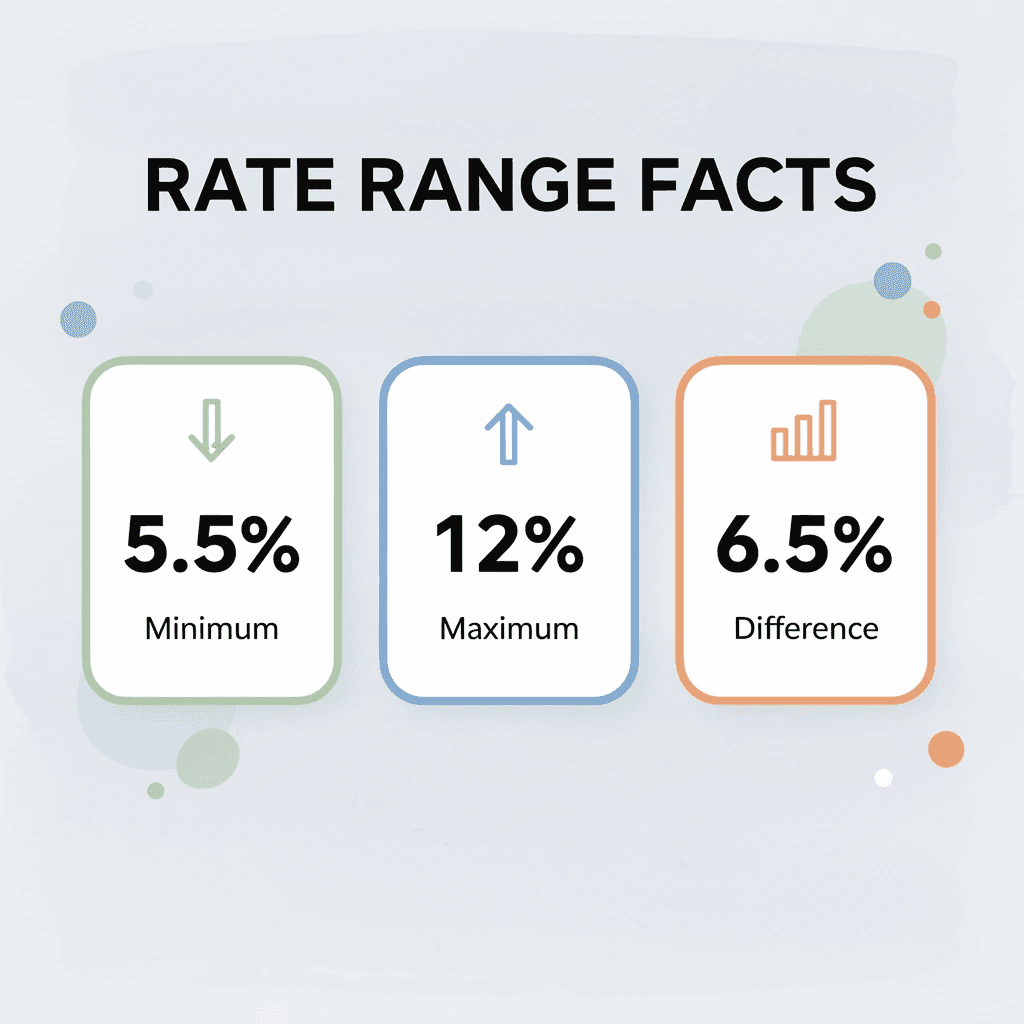
Comparing brokers means examining the tier structure that determines borrowing capacity, the way they calculate costs, and how those costs fit into your total trading expenses. Margin rates range from 5.5% to 12% across major brokers, but the rate you qualify for depends on your balance. The difference between a 360-day and 365-day calculation, or whether your cash balances offset margin debits, compounds over time and converts a small rate advantage into hundreds of dollars saved or lost.

🎯 Key Point: The tier structure is crucial — your borrowing amount determines which rate bracket you fall into, making balance requirements just as important as the advertised rates.
"Margin rates can vary by as much as 6.5 percentage points between brokers, with tier structures creating significant cost differences for traders with different account balances."

⚠️ Warning: Don't focus only on the lowest advertised rate — check the minimum balance required to qualify and whether daily interest calculations use a 360-day or 365-day year, as this affects your actual costs.
Look at the Rate That Matches Your Balance
Most brokers publish tiered schedules where rates drop as your debit balance increases. A platform advertising 6% might charge 11% on the first $10,000 and apply that lower rate only above $100,000. Request the full tier table, identify the bracket that matches your expected balance, and then compare that specific rate across brokers. A broker with a higher advertised base rate may cost less at your borrowing level if the tier breaks favor mid-size accounts.
Check How They Calculate Daily Interest
Brokers divide the annual rate by either 360 or 365 days, then multiply by your debit balance and the number of days that have passed. That five-day difference compounds significantly when borrowing five or six figures. Some platforms combine positive cash balances against your margin debt before calculating interest, reducing your effective borrowing cost. Ask for a sample calculation or run your own scenario using the broker's published formula to compare whether a slightly higher nominal rate with a 365-day year and cash combining costs less than a lower rate with a 360-day calculation and no offsets.
Weigh Maintenance Requirements and Call Policies
A broker offering low rates but requiring a 40% maintenance margin instead of the standard 30% forces you to hold more capital, limiting your trading capacity and increasing the risk of margin calls during periods of volatility. Review the maintenance threshold, call speed, and whether the broker allows time to deposit cash or forces immediate liquidation. Stricter policies often accompany competitive rates because the broker manages risk more carefully. If your strategy involves holding leveraged positions through short-term drawdowns, a slightly higher rate with flexible maintenance terms may cost less in forced sales and missed recoveries than the cheapest rate with rigid rules.
How do total trading costs affect the best margin rates by brokers' selection?
Interactive Brokers offers rates as low as 5.83% for balances over $1 million, but execution quality and commission structure matter as much as borrowing cost. A broker charging 7% with zero-commission trades and tight spreads can deliver better net returns than one charging 5.5% while taking an extra cent per share on fills or charging $5 per trade.
Calculate your expected annual margin interest, multiply your average trade count by the commission, and estimate slippage based on the platform's routing and liquidity. The total cost picture determines profitability, not any single line item.
What alternatives exist to traditional margin trading?
Regular margin accounts tie your money to borrowing costs, tier structures, and maintenance thresholds that fluctuate with market conditions. Platforms like Goat Funded Trader eliminate that friction by providing simulated capital after you pass an evaluation, allowing you to trade with up to $2M without interest accruing on borrowed funds or margin calls closing positions prematurely. You focus on performance and profit splits up to 100%, not on managing debt or comparing rate schedules.
Related Reading
- Best Forex Prop Firm
- Best Margin Rates Brokers
- Margin Loan vs. Securities-Based Lending
- How Does A Margin Loan Work
- How to Become a Full Time Trader
- How To Trade Forex With A Prop Firm
- Forex Trading Strategies For Consistent Profits
- Options Trading Strategies For Consistent Income
- How To Get Profit In Option Trading
- Day Trading Strategies For Consistent Profits
- Trading Cash Flow
- Recommended Prop Trading Firms With Growth Plans
- Best Trading Strategies For Consistent Profits
6 Smart Strategies to Manage Margin Interest Efficiently
Managing margin interest efficiently means controlling borrowing costs before they control your account. Smart traders treat margin interest like any other trading expense: calculate it upfront, reduce exposure, and structure trades to prevent financing costs from accumulating.

🎯 Key Point: The most successful margin traders view interest as a measurable cost that must be factored into every position, not an afterthought that erodes profits.
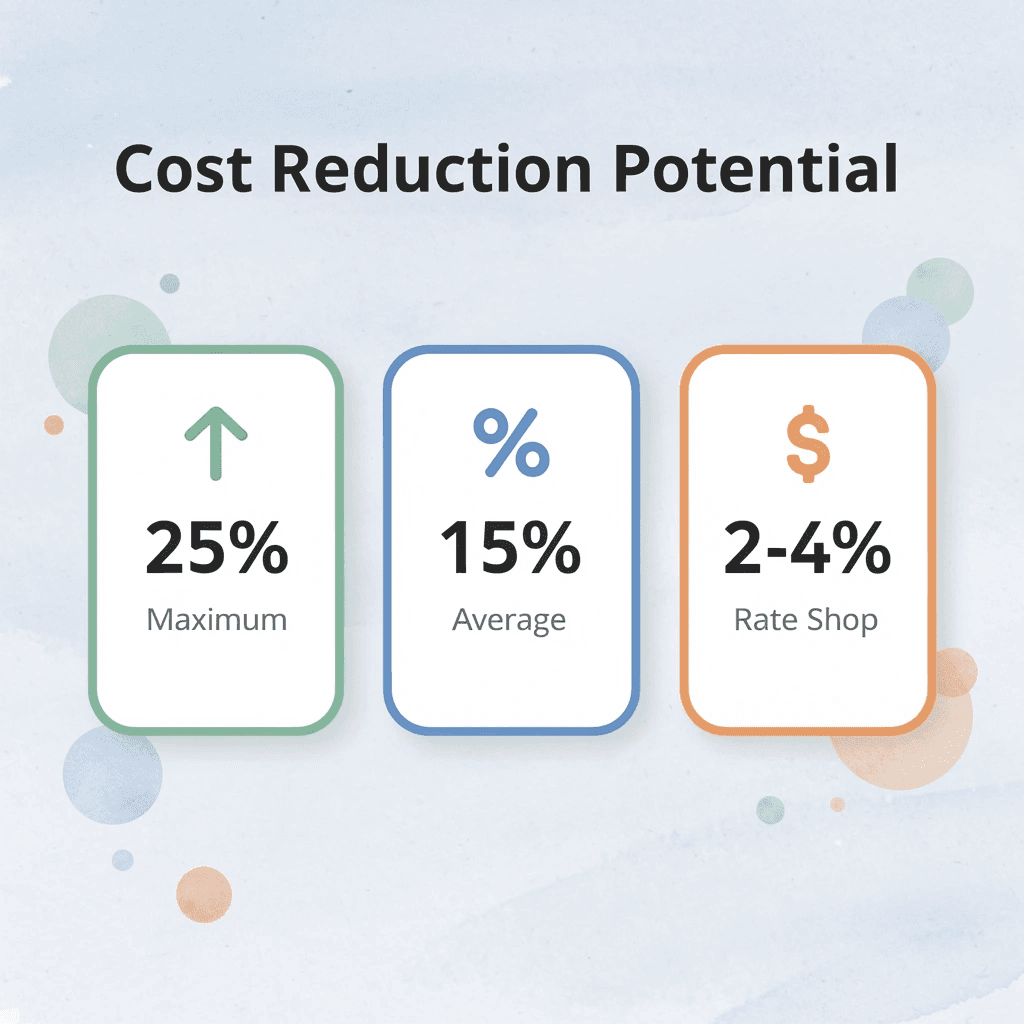
"Effective margin management can reduce borrowing costs by 15-25% through strategic position sizing and timing." — Financial Trading Institute, 2024
⚠️ Warning: Ignoring margin interest calculations can turn profitable trades into net losses, especially in volatile markets where positions may be held longer than anticipated.
1. Select Brokers with the Lowest Tiered Rates
Brokers set different margin rates based on how much you borrow, with larger loans receiving lower percentages. In 2026, M1 Finance offers rates as low as 3.99%, Interactive Brokers around 5.33% for Pro accounts, and Robinhood near 5.05%, while traditional firms charge 10% or higher for smaller amounts. Compare rates before trading and check them quarterly, as base rates shift with market conditions.
2. Limit Borrowing to Short-Term Trades Only
Interest accrues daily on your total debt, causing costs to grow quickly over weeks or months. Use margin only for trades you plan to finish within a few days, where you expect to make enough money to cover daily interest, slippage, and taxes. Close your positions once you reach your goals and immediately use your profits to pay down the loan.
3. Maintain Conservative Leverage and Strong Equity Buffers
Borrowing the maximum allowed increases the risk of margin calls that force sales at unfavorable prices. Fund 70-75% of positions with your own capital and borrow only 25-30% to lower daily interest and maintain equity well above broker minimums. Set personal equity alerts above broker requirements and monitor them daily. This buffer absorbs volatility and prevents forced liquidations.
4. Pay Down Debit Balances Aggressively After Every Sale
When you sell something, the money automatically reduces your margin loan. You can also make extra cash deposits to pay it down faster. Check your account daily and move any extra cash or profits directly against the debt. Don't use borrowed money to start a new position. Paying down the loan regularly reduces the daily interest calculation and may move you into a lower-rate tier, protecting your profits.
5. Diversify Collateral and Use Stop-Loss Discipline
A concentrated portfolio on margin amplifies single-stock risk and triggers margin calls more quickly when holdings decline. Spread positions across uncorrelated assets so a decline in one area doesn't threaten the entire account's equity ratio. Pair this with strict stop-loss orders placed at entry to exit losing trades before they erode equity and increase borrowing costs.
What alternatives exist when the best-margin brokers become too expensive?
When retail margin interest becomes too expensive to scale your trading, prop firm funding offers a strong alternative. Goat Funded Trader tests traders through challenges and provides funding to qualifying accounts up to $800,000 (or more in advanced tiers) with no personal capital at risk. Traders demonstrate consistency on practice accounts with set drawdown limits, then receive real profit splits—often 80–100% on successful performance while the firm covers capital costs. This setup lets skilled traders control large positions, capture significant gains, and grow without paying ongoing margin interest on borrowed money.
How should traders approach margin interest as a business expense?
Learn these strategies and turn margin interest from an unavoidable expense into a predictable business cost. Track every borrowed balance daily, calculate interest before each trade, and manage borrowed money with appropriate care.
How Goat Funded Trader Helps Traders Manage Margin Interest Efficiently
You enter a leveraged trade expecting strong returns, but weeks later, the biggest drain on your account is margin interest on borrowed capital. The longer the trade stays open, the more financing costs erode profits while pressure builds from maintenance requirements and possible margin calls. Our Goat Funded Trader account eliminates these concerns by providing capital without the burden of personal margin interest.

🎯 Key Point: Margin interest can silently erode your trading profits over time, especially on long-term positions where financing costs compound daily.
💡 Tip: With Goat Funded Trader, you trade with firm capital rather than your own borrowed funds, which means no personal margin interest charges eat into your potential returns.

Eliminates Daily Interest Costs Completely
Traditional margin accounts charge interest on borrowed money from day one. Goat Funded Trader eliminates this by providing approved traders with simulated capital of up to $2 million after they pass the evaluation. You trade the firm's money on its platform without personal debt, eliminating interest charges entirely while retaining up to 100% of profits through add-on options. A trader who previously borrowed $50,000 at 8% paid over $4,000 annually in interest; with Goat Funded Trader, that same trader can control much larger amounts with clean payouts and no carrying costs.
Removes Margin Call and Liquidation Pressure
Margin requirements force you to sell when equity drops, compounding losses and adding interest charges. Goat Funded Trader replaces this with clear, fixed risk rules: a 4% maximum daily loss and a 6% overall maximum loss. You can focus on your strategy within these boundaries without worrying about equity ratios or surprise calls. Our firm absorbs simulated losses, so your personal capital stays safe. Traders shift from constantly monitoring their accounts and making emergency deposits to disciplined execution that scales reliably.
Provides Massive Scale Without Personal Capital Risk
Brokers limit leverage and raise interest on larger debts, restricting growth. Goat Funded Trader provides immediate access to substantial simulated accounts after evaluation, with the ability to scale up to $2 million as performance improves. You prove consistency once, then control professional capital while earning 80-100% profit splits—operating at sizes previously available only through expensive margins, without personal loans or interest.
Delivers Fast Payouts That Preserve Gains
Margin interest runs continuously, even on profitable positions, reducing net returns before withdrawal. Goat Funded Trader offers paid-on-demand rewards guaranteed within 24 hours, or the firm pays an extra $1,000. Standard payouts arrive in two business days with the same bonus guarantee. Withdraw via bank transfer, crypto, Skrill, or local methods without personal margin drag. This speed locks in profits that would otherwise shrink daily due to retail margins.
Supports Flexible Trading Without Compounding Costs
Goat Funded Trader lets you trade the news and hold positions over the weekend with unlimited trading periods. You can run your full strategy on MT5 with tight spreads and up to 1:100 leverage, capturing larger moves without the interest penalties that force early exits in personal margin accounts.
Scale Your Trading Business Profitably
Retail margins become more expensive and riskier at scale. Goat Funded Trader's scaling program rewards consistency with larger capital allocations while maintaining a zero-interest structure and high profit splits. Traders build sustainable income streams with 100% refundable evaluation fees and loyalty rewards. Visit Goat Funded Trader, choose your account size, and start trading simulated capital with real rewards and zero borrowing costs. Your path to interest-free leverage begins with one evaluation.
Get 25-30% off Today - Sign up to Get Access to Up to $800K Today
You're not trying to borrow money cheaply—you're trying to grow capital faster without risking your own funds or hitting broker-imposed limits that cap your potential.

🎯 Key Point: Professional trading capital without the traditional barriers or risks.
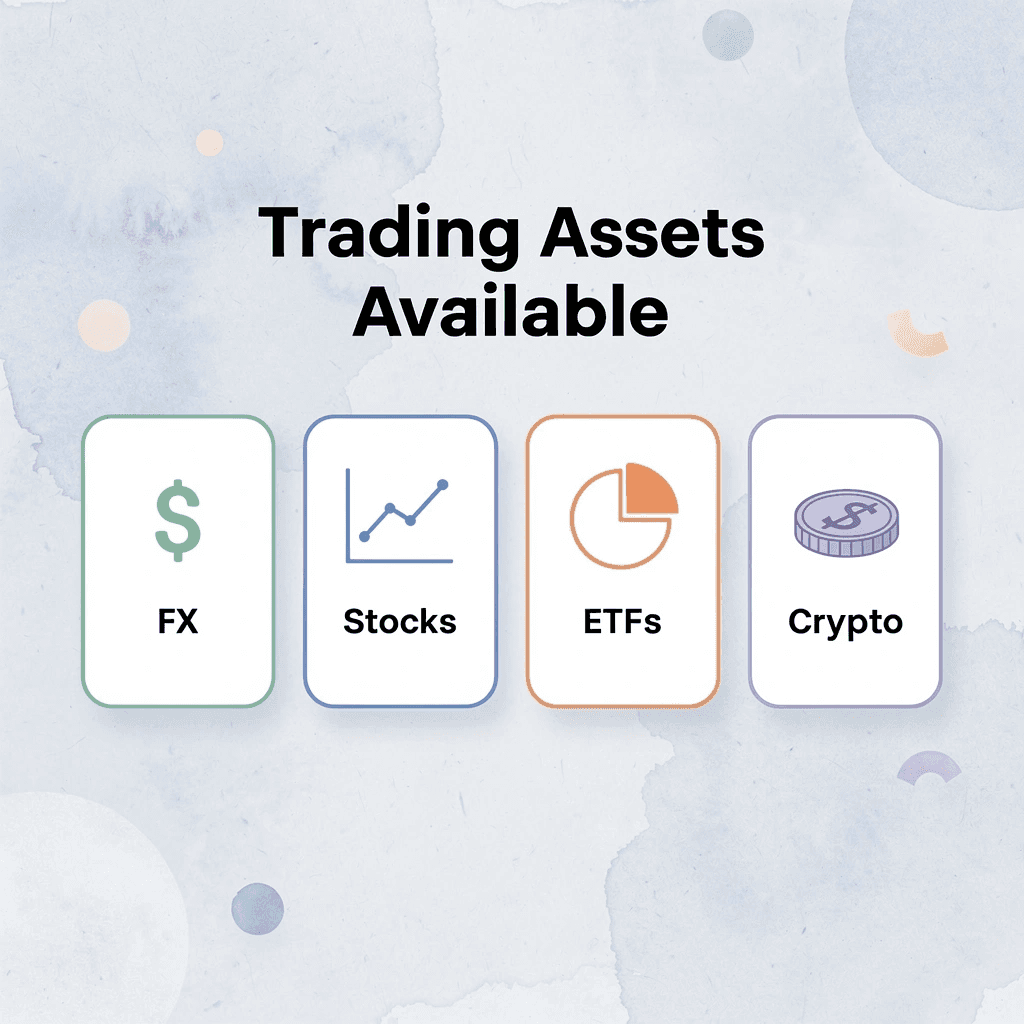
Goat Funded Trader gives you up to $2M in simulated capital after passing a straightforward evaluation. Trade FX, stocks, ETFs, and crypto pairs on MT5 with up to 1:100 leverage, keep 80-100% of your profits, and withdraw on demand or bi-weekly. No margin interest builds up, and no personal capital sits exposed. Our Reward Guarantee pays you within 24-48 hours or adds $1,000 to your payout.
"$2M in simulated capital with 80-100% profit retention and 24-48 hour payout guarantee." — Goat Funded Trader, 2024
Use code FIRSTGFT for 50% off your first account and gain instant access after signing up. Click Get Funded and start trading with massive simulated capital.
🔑 Takeaway: Access up to $800K in trading capital with 25-30% off promotional pricing.
Be Great and get the App