







Is Issuing Common Stock a Financing Activity? What to Know
Is issuing common stock a financing activity? Goat Funded Trader explains cash flow classifications and accounting rules every trader needs to know.
.jpg)

When companies need capital to expand operations, fund research, or acquire assets, they face a fundamental question: how do we raise the money without drowning in debt? Capital Growth Trading strategies often involve understanding how businesses raise capital through equity rather than loans, with issuing common stock as one of the primary financing activities available. This process qualifies as a financing activity on the cash flow statement because it directly changes the company's capital structure by bringing in external funds from investors.
Understanding these financing mechanisms helps traders recognize how equity announcements affect stock prices and company valuations. Companies use stock issuance to strengthen their balance sheets, fund growth initiatives, and reduce reliance on debt financing. Traders who grasp these fundamentals can better anticipate market reactions to financing announcements and make more informed decisions when working with a prop firm.
Summary
- The U.S. IPO market raised $66.8 billion through 347 offerings in 2025, representing a 54% increase from 2024, according to Stout's IPO Trends report. This surge demonstrates how companies turn to equity issuance for growth capital when market conditions favor it, choosing permanent capital over debt obligations that create repayment pressure.
- Proper cash flow classification prevents dangerous misinterpretations of a company's health. When stock issuance proceeds appear in the financing section rather than in operating activities, investors can immediately distinguish between companies that generate cash from core operations and those dependent on repeated capital injections to cover operational shortfalls.
- Equity financing delivers an average ROI of $3.27 per dollar by reducing financial risk through debt service elimination. Companies maintain healthier balance sheets without the bankruptcy risks associated with fixed loan payments, allowing leaders to pursue long-term strategies during downturns, when debt-heavy competitors face covenant violations or restructuring.
- Corporate wellness participation rates below 30% indicate negligible health outcomes, mirroring how undercapitalized trading accounts force conservative position sizing, limiting returns even when market analysis proves correct. The constraint operates identically whether the capital shortage stems from personal funds or corporate debt loads.
- Stock issuance creates permanent capital that never demands repayment, freeing every dollar for growth instead of debt service. This structural advantage lets management focus on strategic horizons rather than quarterly obligations, though it introduces dilution challenges that determine whether growth actually materializes for existing shareholders.
- Goat Funded Trader provides simulated trading capital accounts up to $2 million, allowing traders to access larger positions without personal financial risk, with profit splits up to 100% based on performance, similar to how equity financing provides companies with capital without debt burdens.
What is the Issuance of Common Stock, and How Does It Work?
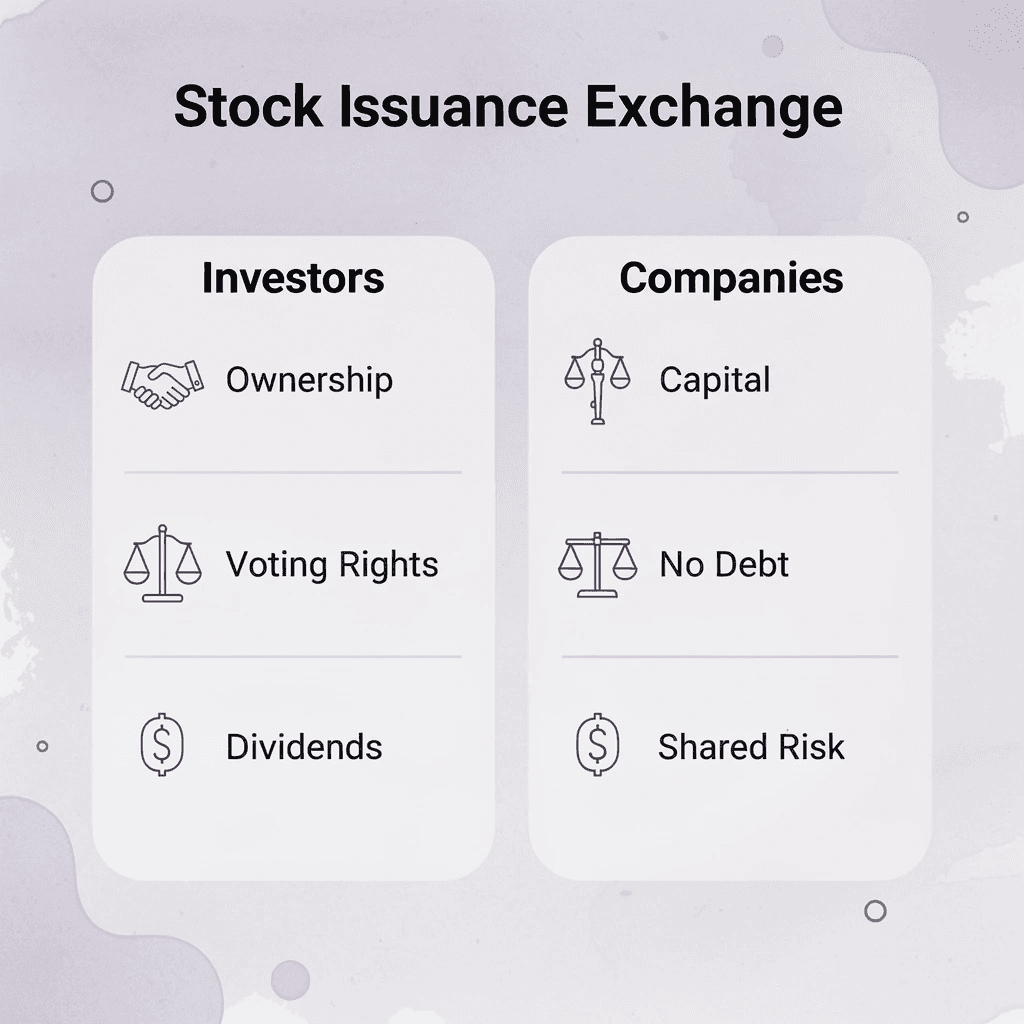
When a company issues common stock, it creates and sells shares of ownership to investors in exchange for capital. Investors become partial owners with voting rights and opportunities to earn returns through dividends or stock price appreciation. This process enables businesses to grow and raise capital without borrowing from banks.

🎯 Key Point: Common stock issuance represents a fundamental way for companies to raise capital while giving investors ownership stakes and potential returns through both dividend payments and capital appreciation.
Equity Investment Overview
- What investors get
- Ownership shares
- Voting rights
- Dividend potential
- What companies get
- Capital funding
- No debt obligations
- Shared business risk
- Key benefits
- Growth financing
- Investor participation
- Flexible capital structure

"Equity financing through common stock allows companies to raise capital without taking on debt obligations, making it a preferred method for growth-stage businesses." — Corporate Finance Institute
💡 Example: When a tech startup issues 1,000 shares at $50 per share, it raises $50,000 in capital while giving investors ownership percentages based on their share quantities and potential returns through future dividends or stock price appreciation.
How Companies Create and Sell Shares
When a business issues common stock, it sells ownership stakes to investors seeking exposure to future growth. Each share represents proportional ownership and typically includes voting rights on major corporate decisions such as electing board members or approving mergers. Unlike preferred stockholders, who receive priority during liquidation, common shareholders rank last if the company fails. However, when a company performs well, common shareholders benefit most, as stock prices and dividend payouts rise. In 2025, the U.S. IPO market delivered 347 IPOs, a 54% jump from 2024, raising $66.8 billion in gross proceeds according to Stout's IPO Trends report.
Recording the Transaction
Accountants record issuance at fair value, typically the cash proceeds received. They credit the common stock account for the par value amount and additional paid-in capital for any excess. When shares are exchanged for non-cash assets or services, record those at fair market value. Issuance costs reduce net proceeds in equity rather than being expensed immediately.
Different Paths to Raise Capital
Companies pursue initial public offerings to enter public markets, follow-on offerings to sell additional shares, or private placements for select investors. IPOs suit growing firms ready for regulatory compliance, while private placements offer quicker access with fewer hurdles. Rights offerings allow existing shareholders to buy additional shares at a discount, preserving their ownership stakes. These options provide tailored paths based on capital needs, growth stage, and tolerance for public scrutiny.
How does issuing common stock as a financing activity compare to trading strategies?
Traders balance risk, capital, and possible reward in every position—a tradeoff companies face when issuing stock, weighing dilution against growth. Goat Funded Trader applies this philosophy to trading capital, providing simulated accounts of up to $2M, allowing traders to access substantial capital without personal risk and earn profit splits of up to 100% based on performance. This mirrors equity issuance: access to capital without debt, with rewards tied directly to results.
What Shareholders Actually Get
People who own common stock receive voting rights on company decisions, possible dividends from profits, and the opportunity to benefit as the company grows in value. Limited liability protects your personal assets, limiting your risk to the amount you invested. Trading on exchanges provides shareholders with liquidity, allowing them to sell shares whenever they want, unlike private equity investments that tie up capital for years. But here's what most people miss: issuing shares solves the money problem but creates a different challenge that determines whether real growth happens.
Related Reading
- Can You Make A Living Day Trading
- How Is Margin Interest Calculated
- Options Trading Cash Flow Strategies Explained
- No Consistency Rule Prop Firm
- How Does Margin Work at Interactive Brokers
- How Much Margin Does Fidelity Offer
- How To Compare Brokers By Margin Interest Rates
- What Is A Prop Firm Forex
- How Does Margin Interest Work
- How Much Do Day Traders Make Per Month
- Why Are Fidelity Margin Rates So High
- Why Is Schwab Margin Rate So High
- How Does Margin Work On Robinhood
- Financing Stock Options
Why is Issuance of Common Stock Important?
Companies that issue common stock access money that never needs repayment. Unlike loans, equity financing eliminates monthly interest and principal payments, freeing cash for growth and strengthening the balance sheet permanently. This allows leaders to focus on long-term strategy rather than short-term survival.
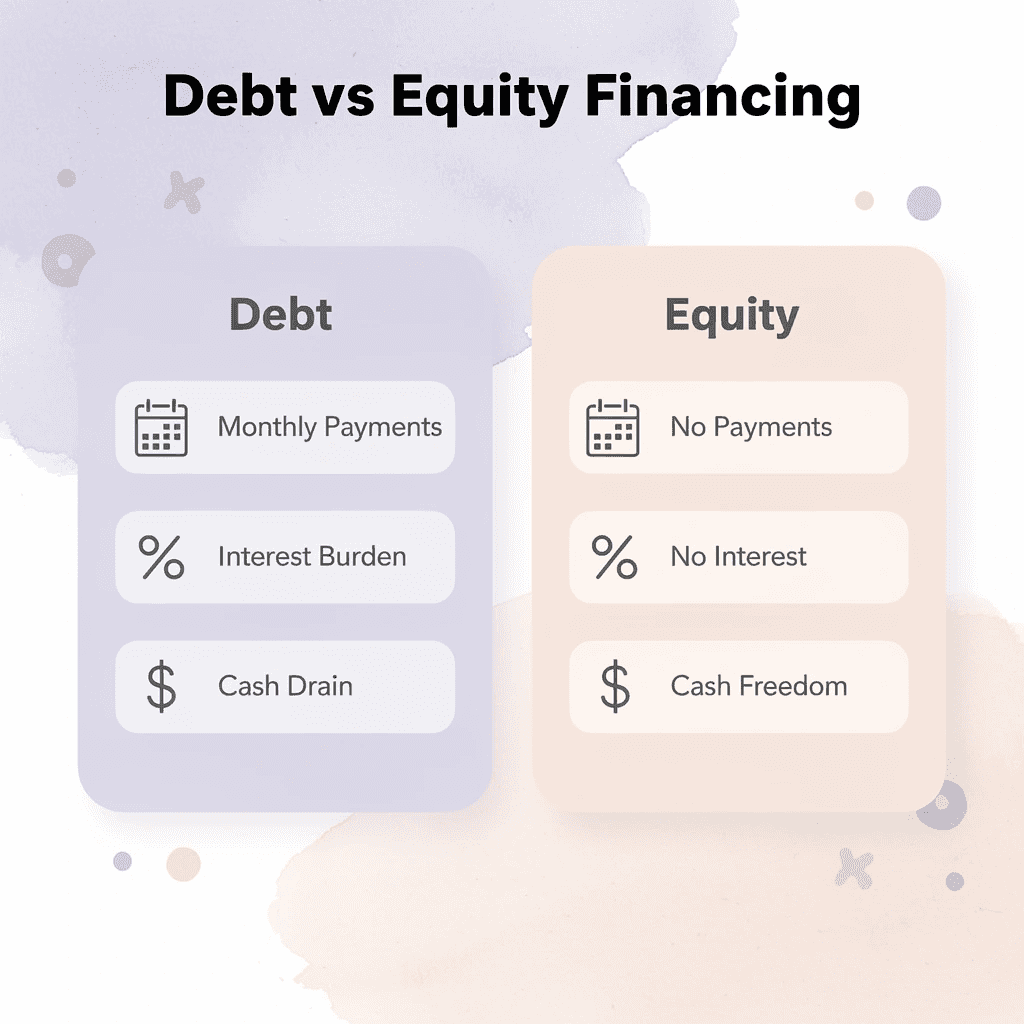
🎯 Key Point: Equity financing through common stock issuance provides permanent capital that strengthens your company's financial foundation without creating debt obligations.
"Equity financing eliminates the cash flow burden of debt service, allowing companies to reinvest 100% of their operating cash flow into growth initiatives." — Corporate Finance Institute

💡 Tip: Smart companies use common stock issuance during growth phases when they need substantial capital for expansion, acquisitions, or R&D investments without compromising their debt-to-equity ratio.
Reduces Financial Risk and Leverage
Issuing equity lowers debt ratios and removes bankruptcy risk associated with fixed obligations. Stronger balance sheets attract future lenders and partners, enabling bolder decisions like entering new markets or acquiring other companies. This approach preserves control during downturns, when debt-heavy firms face strict loan terms or are forced into restructuring. Without required repayments, leaders can focus on strategic moves instead of mandatory payments.
Attracts Top Talent and Strategic Partners
Stock issuance allows companies to offer equity-based compensation that attracts skilled employees and advisors. When employees own a stake in the company, they work harder because their success is directly tied to the company's performance. This approach motivates teams and brings in outside expertise without requiring upfront cash. Investors contribute their networks and guidance alongside capital, helping companies reach new markets faster and develop new ideas. Companies build stronger relationships this way than they can with borrowing alone, turning funding into shared ownership in which all parties have an incentive to succeed together.
How does issuing common stock enhance market visibility and credibility
When a company issues stock to the public or makes a large private sale, it signals maturity and confidence to customers, suppliers, and industry peers. This visibility helps secure better vendor deals, attract talented workers, and command higher valuations. Strict disclosure requirements build trust and improve operations, enhancing reputation in ways that create more organic growth opportunities than private companies can access. According to Morgan Stanley, the S&P 500 is expected to reach 6,500 by the end of 2025, reflecting sustained investor confidence in equity markets and the value of public market participation for growth-focused companies.
How does capital access parallel trading business growth
Traders face a similar challenge when building sustainable trading businesses: personal capital limits position sizes and forces conservative strategies that cap returns. Our Prop firm removes that constraint by providing simulated trading capital accounts of up to $2M, enabling traders to access larger positions without risking personal funds while maintaining profit splits of up to 100%. The model mirrors equity financing's core principle: reducing risk while increasing access to capital and reward potential.
Supports Long-Term Value Creation and Flexibility
Issuing stock broadens ownership and raises capital for long-term growth. Companies gain freedom to pursue high-potential projects without pressure from lenders demanding immediate profits. A solid shareholder base signals stability, attracting new investors and enabling future funding on better terms. But knowing these benefits doesn't answer the bigger question: where does this deal fit when you're tracking how money moves through a business?
Is Issuing Common Stock a Financing Activity?
Many leaders make a critical mistake by classifying the issuance of common stock as operating cash because fresh funds hit the bank account. This misreading inflates operational strength and leads to flawed sustainability decisions. Issuing common stock is a financing activity.

🎯 Key Point: Common stock issuance qualifies as financing because it raises capital from owners and changes the equity structure. Proceeds appear under financing inflows on the statement of cash flows, separating owner funding from operations and asset purchases to clarify how the company sustains its capital base.
"Common stock issuance represents a fundamental change in ownership structure and must be properly classified as a financing activity to maintain accurate cash flow analysis." — Financial Accounting Standards
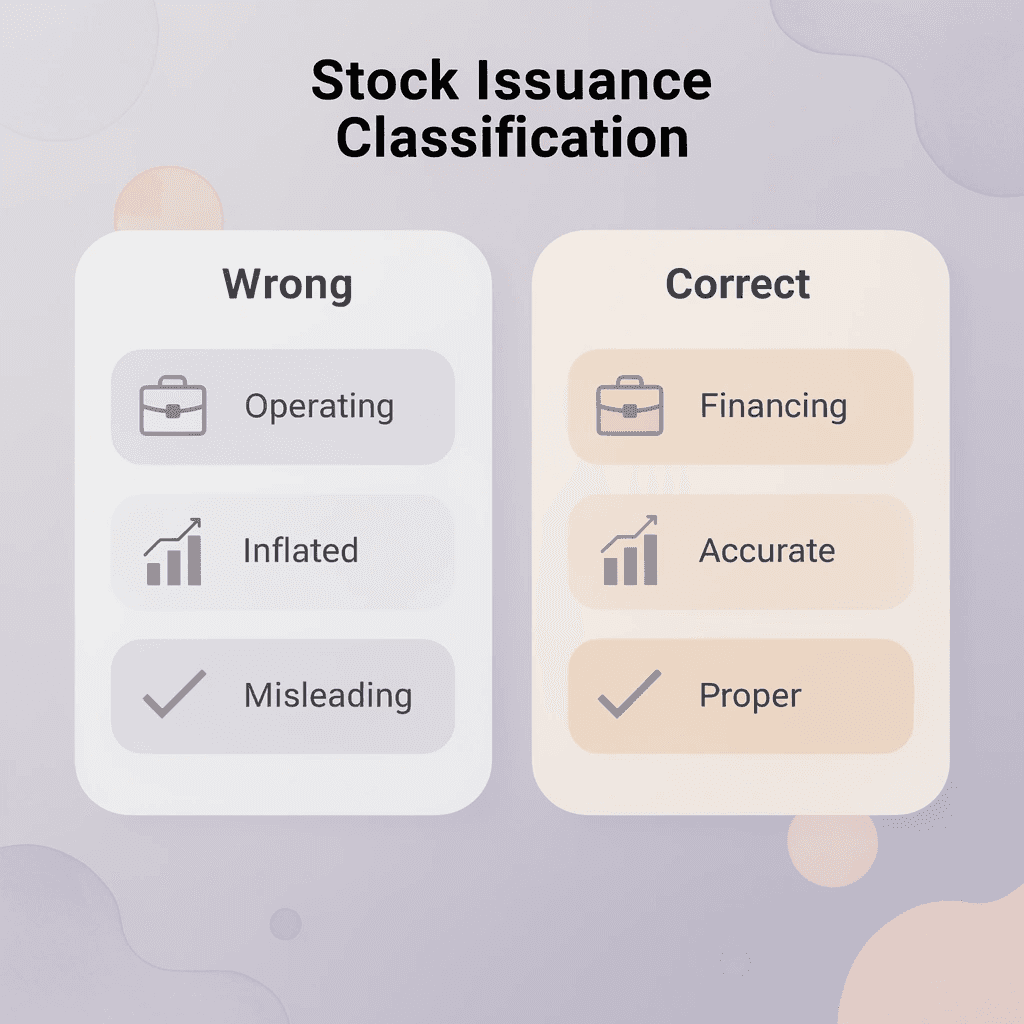
⚠️ Warning: Misclassifying equity transactions as operating activities can lead to misleading financial analysis and poor investment decisions. Always ensure proper categorization for accurate cash flow reporting.
Why does proper classification protect investor decision-making
Issuing common stock is a financing activity because it raises funds from owners rather than operations. The cash inflow appears in the financing section of the statement of cash flows, separated from revenue and operational earnings. This distinction protects investors from confusing owner contributions with internally generated performance.
How does misclassifying issuing common stock as a financing activity impact financial analysis?
Teams misread cash flow statements by confusing equity issuance with operating cash flows, leading to flawed decisions about business sustainability. Fresh capital arrives without immediate repayment, appearing as self-generated funds, but issuing common stock changes ownership claims and raises capital from equity holders rather than customers or core operations. Misclassifying stock proceeds as operating cash distorts free cash flow metrics and misleads investors about genuine profitability.
What are the three main categories that separate cash flows?
PwC Viewpoint defines three classes of cash flows: operating activities (cash generated by the business itself), investing activities (buying and selling assets), and financing activities (transactions with lenders and owners). This structure keeps a company's ability to generate cash from core operations visible and measurable, independent of external funding decisions.
Why does proper classification matter when issuing common stock is a financing activity?
When money from stock sales goes into financing rather than operations, analysts can see whether a business supports itself or needs repeated injections. Mixing these categories hides risk. Strong operating cash flow shows efficiency and market demand, while relying on stock sales to cover operational shortfalls signals dependency and potential distress. Proper classification reveals this difference instantly.
What are the consequences when companies misclassify financing activities?
Companies that incorrectly reclassify financing items as operating items face investor penalties, including lower valuations and increased scrutiny. One study of SEC-allowed reclassifications found widespread errors in equity-related flows. Corrected statements showed clearer differences, improving prediction accuracy for future performance. Experienced investors view proper classification as a sign of financial discipline.
How does proper classification help traders manage capital effectively?
Traders managing money face a similar challenge. Just as companies must keep owner funding separate from operational earnings, prop firm traders distinguish between personal capital risk and the performance of funded accounts. Traditional trading mixes personal equity with operational results, making it difficult to isolate skill from capital constraints. Our funded accounts eliminate that confusion by providing external capital while tracking pure trading performance, much like how financing activities isolate owner contributions from business operations.
What challenges do companies face in executing these transactions?
The real question is how companies execute these deals without causing valuation problems or shareholder disagreement.
Key Steps Involved for Issuing Common Stock
Companies raise money by issuing common stock through a series of critical decisions and legal steps that convert corporate approval into investor-owned equity. Each action directly affects how the company is valued, whether it meets regulatory requirements, and whether shareholders trust it. The process begins with board approval and concludes with updated financial records, with crucial middle steps determining whether the stock offering will succeed.

🎯 Key Point: The stock issuance process requires meticulous planning and regulatory compliance at every stage to ensure investor confidence and market success.
"Proper execution of stock issuance procedures can mean the difference between a successful capital raise and regulatory penalties that damage company reputation." — Corporate Finance Institute, 2024

⚠️ Warning: Skipping any step in the stock issuance process can lead to legal complications, SEC violations, and loss of investor trust that takes years to rebuild.
Authorize Additional Shares
The board of directors and shareholders vote to increase authorized shares by amending the company's articles of incorporation. This legal limit defines how many ownership units the business can create and sell. Without sufficient authorized shares, issuance cannot proceed. Leaders assess the current capital structure, the potential impact of dilution, and future funding needs to set a limit that supports growth while protecting current owners. Authorization permits the issuance of shares when needed, but does not create shares.
Decide on Offering Type and Strategy
Executives choose between private placements for select investors, initial public offerings for broad market access, or follow-on offerings for established public companies. Private routes move faster with fewer disclosures but limit liquidity, while public paths demand transparency and cost more but unlock larger capital pools. According to Renaissance Capital (2025), U.S. IPOs raised $66.8 billion through 347 offerings, a 54% increase from 2024, demonstrating how public market appetite shifts with economic conditions. The decision aligns with the company's stage, valuation goals, and cash timeline.
Engage Advisors and Build the Team
Companies hire investment bankers, lawyers, accountants, and other specialists to handle valuation, document preparation, compliance, and marketing. Underwriters assess market conditions, structure the deal, and often commit capital in firm-commitment offerings, in which they purchase shares and resell them to investors. A strong team reduces risks, improves pricing accuracy, and builds investor confidence. Weak advisors create valuation gaps that leave money on the table or deter investors through incomplete disclosures.
Prepare and File Regulatory Documents
Teams compile detailed information, including financial statements, risk factors, use of proceeds, and management backgrounds. For public offerings, this leads to an S-1 registration filed with the SEC. Regulators review the materials for completeness and accuracy, often requesting changes that add weeks to the timeline. Companies that rush the process risk delayed approvals or investor lawsuits when undisclosed risks materialize.
Conduct Due Diligence and Marketing
Underwriters and advisors thoroughly check operations, finances, and risks to verify claims in offering documents. The company then markets the offering through roadshows or targeted presentations to gauge interest and adjust pricing. Strong marketing converts interest into commitments and achieves better valuations. Weak presentations signal uncertainty and drive investors toward competitors with clearer growth narratives.
How does capital access affect trading strategies?
Traders face a similar challenge when building capital for their strategies. Most use their own money to start, risking personal savings to demonstrate profitability before accessing larger amounts.
That limit forces them to trade smaller positions than their skill allows, reducing profits even when they read markets correctly. Platforms like Goat Funded Trader remove this friction by providing simulated capital accounts of up to $2 million, allowing traders to focus on execution rather than fundraising while keeping 100% of profits after evaluation phases. Raising capital through stock issuance only matters if companies price shares correctly and close the deal without last-minute collapses.
Related Reading
- How Do You Take Profit In Crypto Trading
- How To Stay Consistent In Trading
- How Do You Profit From Day Trading Stocks
- How To Borrow Against Stocks
- Lowest Margin Rates Brokers
- How To Become A Trader From Home
- Can I Borrow Against My Stocks
- Prop Trading Firms' Profit-Sharing Models
- Position Sizing In Trading
- Sbloc Vs Margin Loan
- Best Prop Firm For Stocks
- Position Sizing Day Trading
- Best Crypto Prop Firm
- How To Day Trade Without 25k
How Goat Funded Trader Supports Smarter Trading and Investment Decisions
Traders who understand financing activities gain market awareness beyond technical charts. When companies issue common stock, they signal growth intentions, capital needs, and leadership confidence—developments that ripple through stock prices and investor sentiment. Goat Funded Trader transforms that knowledge into execution capability by providing simulated capital accounts that eliminate personal financial risk while maintaining professional trading standards. Traders can respond to financing developments and market shifts using institutional-level resources rather than watching opportunities pass from undercapitalized positions.

🎯 Key Point: Understanding financing activities gives traders a significant edge in predicting market movements and stock price reactions before they happen.
"Professional trading standards with simulated capital accounts allow traders to respond to market opportunities without the personal financial risk that limits most retail investors." — Goat Funded Trader Platform
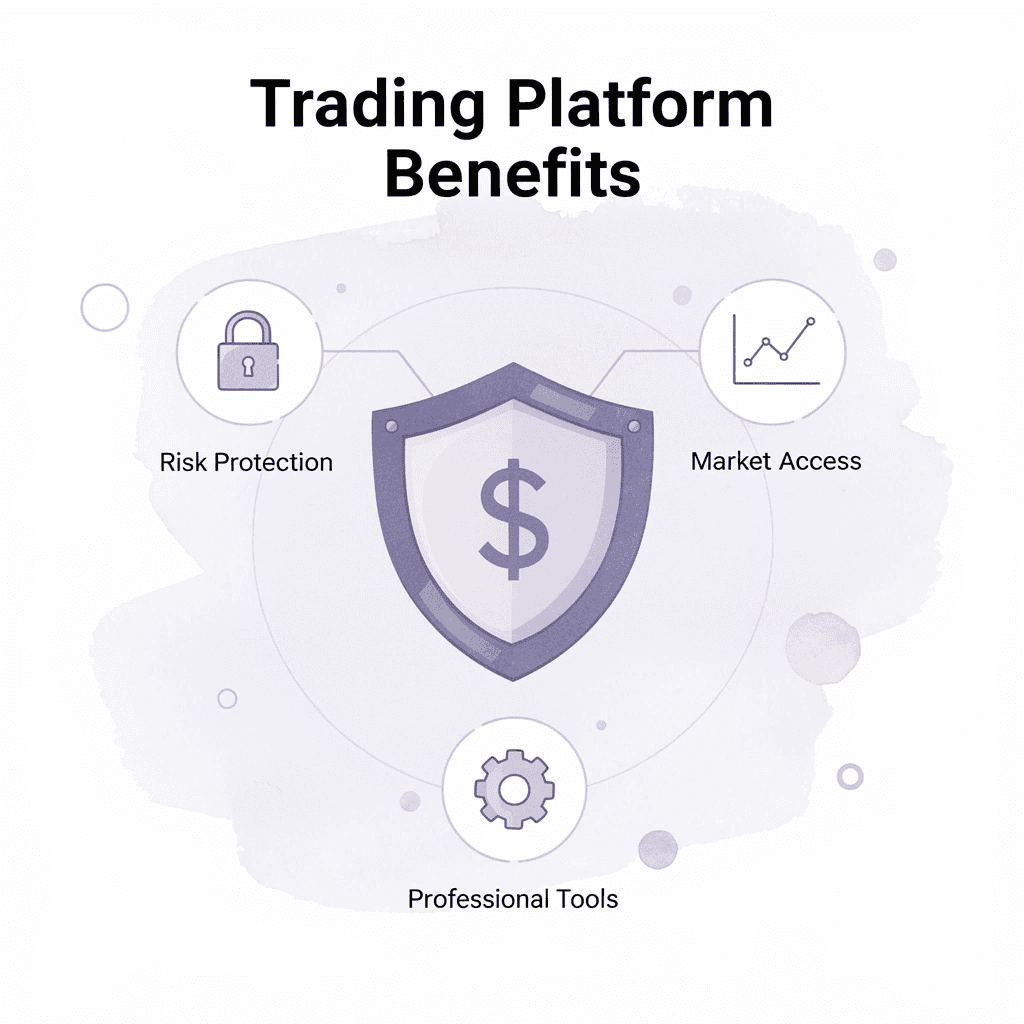
💡 Tip: Focus on common stock issuances as they often signal major company developments that can create trading opportunities across multiple timeframes.
Capital Access Without Personal Liability
Self-funded traders face the same pressure distortion that debt creates for corporate balance sheets. Every position carries personal financial consequences that cloud judgment during volatile moves. A trader with $10,000 at risk hesitates on high-conviction setups because losses hit savings accounts directly, preventing disciplined execution. Goat Funded Trader removes that friction by providing simulated accounts to traders in more than 100 countries. Traders pay a refundable evaluation fee, then execute without liability for losses while keeping profits. This mirrors how equity financing frees companies from repayment obligations, allowing focus to return to strategy rather than survival.
Scaling Flexibility That Mirrors Equity Growth
Companies issue common stock to raise permanent capital without fixed repayments or dilution timelines. Goat Funded Trader mirrors this flexibility by offering accounts that scale to $2 million with no expiration dates and profit splits up to 100%. Traders manage substantial positions across Forex, crypto, indices, and commodities without the repayment stress or capital dilution that limits self-funded accounts. Position sizing remains consistent, long-term planning becomes viable, and strategy execution no longer bends to personal cash flow constraints.
Transparent Performance Tracking and Fast Payouts
Misclassifying equity raises as operating cash flow obscures true dependence on funding and distorts financial health assessments. Goat Funded Trader counters this lack of clarity with guaranteed reward structures and on-demand withdrawals. Traders receive profits within 24 hours, or the platform pays an additional $1,000. Withdrawals are processed bi-weekly or faster via bank transfers, crypto, or local payment methods. This transparency enables traders to track performance and make data-driven decisions about reinvestment, scaling, or strategy adjustments without uncertainty about capital availability.
Disciplined Frameworks and Professional Tools
Like accounting standards that separate financing from operations, Goat Funded Trader enforces clear parameters that build trading discipline. Daily loss limits of 3%, maximum drawdowns of 6%, and news trading permissions create boundaries that improve decision quality. The proprietary dashboard delivers real-time insights across devices with tight spreads and zero commissions on index trades. Traders execute on stocks, ETFs, and crypto using institutional-grade infrastructure. Accessing capital and tools matters only if traders sustain performance long enough to compound gains into meaningful income.
Related Reading
- Best Forex Prop Firm
- Best Margin Rates Brokers
- Margin Loan vs. Securities-Based Lending
- How Does A Margin Loan Work
- How to Become a Full Time Trader
- How To Trade Forex With A Prop Firm
- Forex Trading Strategies For Consistent Profits
- Options Trading Strategies For Consistent Income
- How To Get Profit In Option Trading
- Day Trading Strategies For Consistent Profits
- Trading Cash Flow
- Recommended Prop Trading Firms With Growth Plans
- Best Trading Strategies For Consistent Profits
Get 25-30% off Today - Sign up to Get Access to Up to $800K Today
You risk your own money on every trade, mess up your personal cash flow, and stay stuck with tiny position sizes while better-funded traders move ahead with confidence.

Goat Funded Trader gives you up to two million dollars in simulated capital so you can trade without touching your personal money, without repayment pressure, and without mixing your finances and trading performance.
🎯 Key Point: You pay a one-time fully refundable fee, then trade the firm's simulated account on the MT5 platform across forex, stocks, indices, and crypto. Losses stay with Goat Funded Trader while you keep up to 100 percent of the profits. Your personal money stays protected, your decisions become sharper, and you execute high-conviction trades without hesitation.
"Traders using Goat Funded Trader have already received over twenty million dollars in rewards, with more than two hundred fifty thousand funded accounts." — Goat Funded Trader Performance Data
Performance Metrics Overview
- Total payouts
- $20+ million distributed
- Funded accounts
- 250,000+ accounts
- Average payout
- $2,180 per payout
- Payout timeframe
- 24 hours
- Withdrawal range
- $9,000 – $40,000
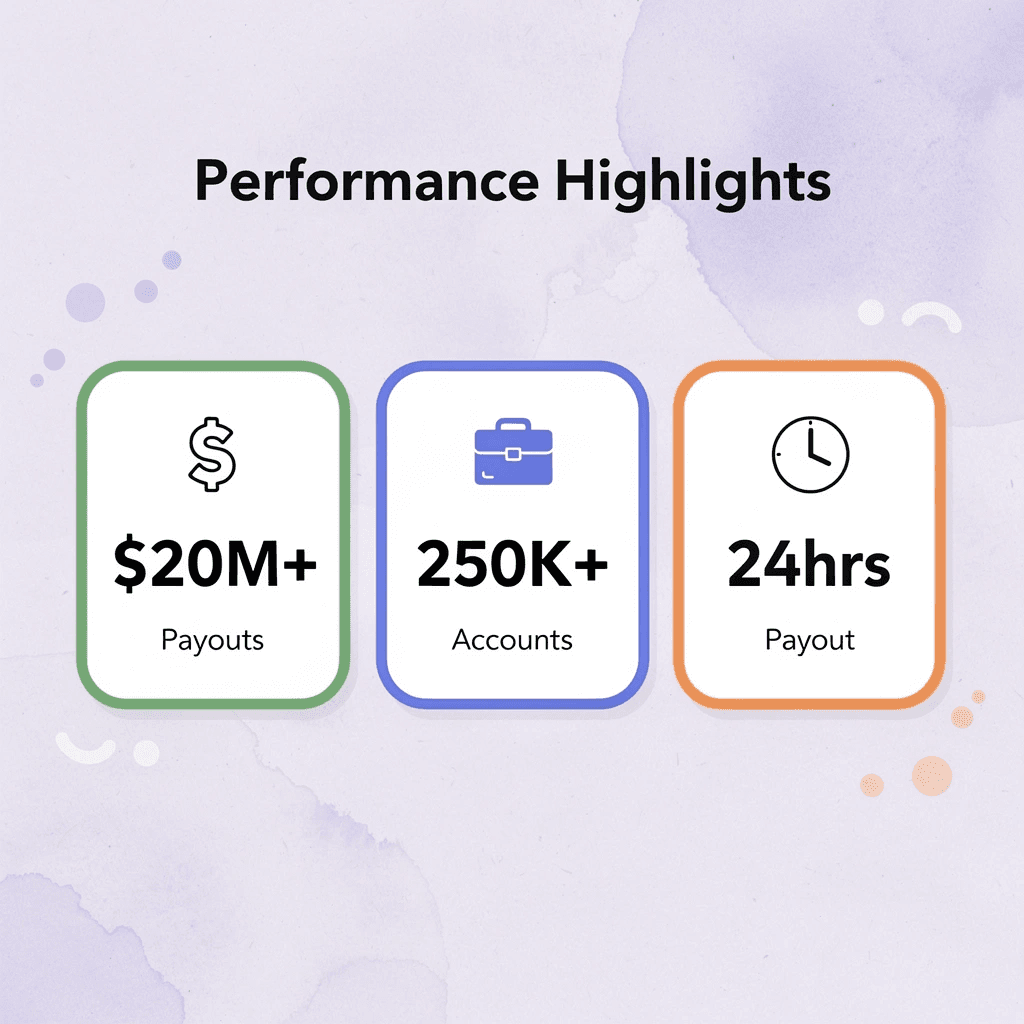
Payouts arrive within 24 hours, or the firm pays you an extra one thousand dollars. Many traders report consistent withdrawals between nine thousand and forty thousand dollars after growing their accounts.
🔑 Takeaway: If you continue trading only with your own limited money, you will keep second-guessing every setup, limit your growth, and miss the compounding results that properly structured funding delivers.

💡 Tip: Use code FIRSTGFT for 50% off your first account. No credit card required, your fee is 100% refundable, and you get instant dashboard access after signing up. Click here to get funded at Goat Funded Trader and start trading with the capital and mental clarity you deserve.
Be Great and get the App