







7 Key Metrics to Review When Backtesting Day Trading Strategies
Discover the 7 essential metrics to review when backtesting day trading strategies for smarter, data-driven trading decisions.


You run an intraday idea in the Best Trading Simulator, and the results look flawless on paper, but the real market greets you with slippage, hidden transaction costs, and sudden drawdowns. Backtesting day-trading strategies with clean historical data, realistic tick simulation, and honest performance metrics such as win rate, average trade, equity curve, and max drawdown helps separate genuine edges from curve-fitting rules.
Want to pinpoint winning setups, cut drawdowns, and turn backtest numbers into steady live profits? Read on for practical steps—walk forward testing, Monte Carlo stress checks, sensible position sizing, and forward testing—that make intraday strategies more robust.
To accelerate that progress, Goat Funded Trader offers a prop firm program that funds traders who demonstrate their edge in fair simulated challenges, providing capital and a clear path to scale strategies that have survived rigorous testing while limiting personal drawdown risk.
Summary
- Backtesting is the de facto first step for most traders: 80% use it to evaluate strategies before risking live capital, so simulation quality and strict chronological testing are nonnegotiable.
- A majority of backtests do not survive live markets, with over 70% of backtested strategies failing when applied to live trading, which makes out-of-sample testing and walk-forward analysis essential.
- Disciplined validation measurably improves outcomes, with one study showing a 30% average uplift in profitability from rigorous testing and 80% of traders reporting higher confidence after systematic backtesting.
- Execution assumptions matter more than headline returns. Ignoring transaction costs can lead to roughly a 30% overestimation of profitability, so model partial fills, queue position, and stepped commissions rather than a single slippage number.
- Treat statistical checks as gates, not ornaments, for example, requiring a 95% confidence threshold for resampling tests and maintaining objective sizing rules like a 2:1 risk-to-reward ratio to keep scaling decisions mechanical.
- Reproducibility and operational controls prevent silent failure modes, so archive datasets, code versions, seeds, and trade logs for fast audits and simulate scaling scenarios with configurable capital levels, including tests that mirror multi-million dollar allocations.
- This is where Goat Funded Trader's prop firm fits in: it funds traders who demonstrate their edge in fair simulated challenges and provides a clear path to scale while limiting personal drawdown risk.
What is Backtesting, and How Does It Work?

Backtesting is the practical rehearsal of a trading plan, running your entry, exit, and risk rules on historical intraday and end‑of‑day data to measure how the approach would have performed under real market conditions. You feed rules into clean data, run a chronological trade simulation, and evaluate the results with risk and robustness checks before risking real capital.
How does a backtest actually reproduce real trading?
When we run a trade-by-trade simulation, we treat the past as a strict referee: only information available at that timestamp can drive a decision; orders respect realistic fills; and simulated commissions and slippage are applied. Critical steps include sourcing high-quality tick or minute data, coding unambiguous entry and exit logic, simulating order types and latency, and running the system forward in time so you never peek at future bars. Think of it as running a flight simulator for trading, where instrument behavior, execution friction, and pilot error are all modeled so you can learn without crashing.
What should I measure to assess the reliability of a backtest?
The failure point is believing raw return alone proves an edge. Instead, inspect risk-adjusted metrics and stability tests: Sharpe or Sortino ratios, maximum drawdown, profit factor, expected return per trade, and time-on-market for day-trading strategies—layer in out-of-sample testing, walk-forward analysis, and parameter sensitivity checks to spot overfitting. Run Monte Carlo resampling of trade sequences to see how fragile returns are under different streaks. If performance collapses with small parameter shifts or minimal added slippage, the system has likely learned noise rather than signal.
Who relies on backtesting, and what does this mean for your next steps?
Most traders handle initial validation through repeated historical runs because it’s familiar and low cost, but the trade-off shows up when they try to scale or commercialize that edge. This challenge appears across independent quants and retail traders: uncertainty about whether to keep a profitable method private or commercialize it, and confusion about how robust the evidence must be before licensing or pitching to funds. That anxiety matters because commercial partners and prop programs require documented out-of-sample evidence, stress tests, and reproducible rules far beyond a single good-looking equity curve.
Why does disciplined backtesting actually pay off?
According to IG International, 80% of traders use backtesting to evaluate their strategies before live trading. In 2022, this widespread adoption underlines backtesting as the de facto first step in assessing any system before risking capital. Applied correctly, it also reduces predictable mistakes and helps you tune risk controls, which explains why rigorous demo work shortens the path to consistent performance.
Most familiar workflows break down when you try to scale them, and that hidden cost matters.
Most traders run ad hoc demo accounts and track results in spreadsheets because it requires no new tools and gets the job done early on. But as position sizes, rule complexity, and timeframes increase, that approach fragments results and hides rule drift.
Platforms like Goat Funded Trader centralize simulated prop accounts, enforce consistent risk rules across tiers, and provide fast, auditable performance reports, which compresses iteration time and preserves the reproducibility that funders and scaling programs demand.
How much downside protection can backtesting provide?
When applied with discipline, backtesting materially reduces downside exposure, as supported by IG International's 2022 finding on loss reduction, which emphasizes that methodical demo work and realistic simulation of slippage and costs should be nonnegotiable for day trading strategies. The practical result is you catch rule flaws and unrealistic assumptions long before they cost real money.
It’s exhausting when a strategy looks perfect in-sample but fails live, and that emotional hit has a pattern.
This pattern appears consistently when traders optimize parameters to fit historical noise, then feel betrayed by underperformance in forward trading; the root cause is overfitting combined with poor protocol for out-of-sample testing. Build a discipline: reserve multi-year out-of-sample windows, require stable performance across different markets and volatility regimes, and treat demo track records as the minimum evidence for scaling before moving to live size.
A short analogy to keep you honest
Treat backtesting like rehearsal recordings for a musician: a polished demo helps you learn the song, but the crowd, acoustics, and fatigue on stage expose weaknesses that never showed up in the studio. If you want a reproducible live performance, you must practice in conditions that mimic the real show.
What to do next, practically
Start with a clean dataset and one crisp rule set, simulate with realistic costs, then iterate only after passing out-of-sample and robustness checks. Capture each run with versioned reports so you can show funders or prop programs a reproducible history. That discipline is the difference between stories of lost opportunity and repeatable scaling.
That apparent finish line is deceptive, because the next question reveals the deeper reasons this process matters.
Related Reading
- Best Trading Simulator
- Is Swing Trading Profitable
- Is Copy Trading Profitable
- Is Crypto Trading Profitable
- Is Options Trading Profitable
- Is Day Trading Profitable
- Are Crypto Trading Bots Profitable
- What Is Backtesting in Trading
- Where Can I Practice Day Trading
- Where Can I Practice Forex Trading Risk-Free?
- How Much Money Do You Need To Start Trading Stocks
- What Is Leverage In Trading
- Is Algorithmic Trading Profitable
- How Much Money Do You Need To Start Trading Options
- What Is The Most Profitable Trading Strateg
- What Is Leverage In Crypto Trading
- How Much Money Do You Need To Start Trading Futures
Why is Backtesting Your Day Trading Strategy Important?
Backtesting matters because it separates confident, repeatable decisions from wishful thinking, and it creates the documented evidence you need before you scale size or risk. Treated as an experimental discipline, it removes the emotional guesswork from intraday decisions and shows you exactly where a plan will break as conditions change.
How do you know a positive curve isn’t just luck?
Treat every backtest like a pre-registered experiment. Require minimum trade counts, declare parameters and rejection criteria before you run anything, and correct for multiple tests so you do not mistake a one-off win for an edge. A 2025 analysis by FX Replay, which shows a 30% average increase in profitability, demonstrates that disciplined testing produces measurable uplift. Still, that uplift only matters if the test design prevents data mining and post hoc adjustments.
What execution gaps quietly break demo results?
Execution is the usual silent killer: queue position, partial fills, exchange fees, and microstructure slippage are not optional details. This pattern appears across both algorithmic and discretionary intraday traders: strategies that ignore fill quality and order mechanics look good on clean bars, but collapse when real order placement and latency come into play. Model fills against order book snapshots or use sampled tick-level fills to estimate realistic slippage, and treat execution as part of the hypothesis you must validate, not an afterthought.
Most traders validate ideas in spreadsheets because they are familiar and fast, which works well early on. As position size, rule complexity, and the need for reproducible proof grow, those informal workflows fragment—reports scatter, rule drift appears, and scaling becomes risky. Platforms like Goat Funded Trader centralize simulated prop accounts, enforce consistent risk rules across tiers, and produce auditable performance records with simulated capital allocations up to $2M, enabling traders to iterate faster while preserving the reproducibility required by funders and scaling programs.
How do you protect a strategy against regime shifts and surprise volatility?
You need targeted stress tests, not just more in-sample runs. Run grouped tests across volatility regimes, market microstructure environments, and calendar events; bootstrap trade sequences to see how streaks change outcomes; and build simple regime detectors to switch sizing rules rather than search for a one-size-fits-all parameter.
According to FX Replay, 80% of traders who backtest their strategies report improved confidence in their trading decisions. In 2025, disciplined validation increases conviction—but that confidence should come with complex stop rules and revalidation triggers tied to regime indicators.
How should a backtest live inside your trading process?
Treat a backtest as a version-controlled artifact: archive datasets, parameter files, and trade logs; tag every run with the hypothesis you tested and the decision rule for retiring or scaling the method. If you change a parameter, run a new, labeled experiment, and keep the old results for comparison.
That discipline reduces the exhaustion traders feel when a favored setup “suddenly stops working,” because you can point to dated, reproducible runs that justify a change in sizing or a pause in live scaling. Think of it like software releases: every live change needs a changelog, rollback criteria, and a stress checklist.
That last point matters emotionally as much as technically, because loss and second-guessing drive traders to overtrade or chase the next bright idea. The following section outlines a few metrics that catch these failure modes early, and you will wish you had tracked them before your next real-money step.
7 Key Metrics to Review When Backtesting Day Trading Strategies
Read these metrics as diagnostic tools, not trophies: they tell you where a system will survive, where it will fail, and how to size trades so your edge can endure real market stress. Focus on stability across time, how metrics interact under different volatility regimes, and whether a result is statistically meaningful before you trust it with scaled risk.
1. Expected Return
This figure estimates the average profit or loss per trade by multiplying each outcome by its probability and summing the products. In day trading, where positions close within hours, a positive expectancy signals that repeated executions should yield net profits over time, even accounting for losing setups. It serves as the bedrock for assessing whether the method generates sufficient edge to overcome commissions and slippage typical of high-frequency trading.
2. Profit Factor
Calculated as total profits from winning trades divided by total losses from losing trades, this ratio measures how efficiently a strategy generates returns relative to its losses. Readings above 1 indicate overall gains, with readings around 1.5 or higher suggesting robust performance in which rewards meaningfully exceed risks. For intraday systems with numerous quick positions, a substantial profit factor indicates effective capital utilization, making it easier to compare setups and assess viability amid transaction costs.
3. Average Win Compared to Average Loss
Expressed as the ratio of typical profitable outcomes to typical unprofitable ones, this comparison indicates whether successful trades sufficiently outweigh failures. Ratios of 2:1 or better allow strategies to remain profitable despite win rates below 50%, emphasizing the value of capturing larger moves while limiting downside. In fast-paced day trading, this asymmetry supports longevity by rewarding patience on favorable setups and strict control on adverse ones.
4. Reward-to-Risk Ratio
This assessment divides potential profits by potential losses for each setup, often targeting 1.5:1 or higher to compensate for imperfect accuracy. It ensures that anticipated upsides justify the risk, enabling net growth even with moderate success rates. Day traders rely on favorable ratios to maintain discipline, as they directly influence position sizing and help offset the uncertainties of short-term price swings.
5. Win Rate
This percentage represents the share of trades that close profitably out of all attempts and provides a glimpse into reliability, but it requires context from payoff magnitudes. Rates around 50-60% can suffice when paired with strong asymmetries, whereas lower rates require larger rewards to sustain progress. In intraday contexts, it sets expectations for streak management and psychological resilience during inevitable losing sequences.
6. Sharpe Ratio
This risk-adjusted measure divides excess returns over a safe benchmark by return volatility, rewarding consistent performance over erratic highs. Values above 1 are acceptable for day-trading simulations, with higher values indicating more efficient compensation for volatility. It helps differentiate smooth equity growth from volatile paths that might erode confidence during live application.
7. Maximum Drawdown
Measuring the largest percentage decline from an equity peak to a trough during the test period, this indicator highlights the most significant potential capital retreat. Lower percentages, ideally under 20-30%, suggest better preservation and quicker recoveries, crucial for maintaining composure in real-time day trading. It prepares traders for adverse stretches, ensuring the strategy aligns with individual tolerance for temporary setbacks.
What common trader behaviors hide as “edge” in the numbers?
This pattern appears across discretionary and automated traders, where reliance on feel and manual tracking masks parameter hopping and selective reporting. The familiar workflow is spreadsheets and mental note-taking, which works well early but fragments as you add rules, symbols, or higher frequency; the hidden cost is inconsistent reporting and stealthy rule drift that only shows up when you try to scale. Traders feel exhausted because they must mentally reconcile conflicting metrics each day, and that fatigue is where small mistakes compound.
Most teams manage that complexity with ad hoc spreadsheets because they are familiar, but as trade counts and instruments grow, version control breaks down. Audit trails disappear, leading to wasted iterations and lost credibility. Platforms like Goat Funded Trader centralize simulated prop accounts, enforce consistent risk rules across tiers, and produce auditable, timestamped performance reports, compressing iteration time while keeping proof of skill reproducible for scaling decisions.
What are the red flags that should force a reset?
Pause when metrics lose coherence across timeframes, when walk‑forward performance collapses relative to in-sample, or when small increases in slippage flip profitability. If infrequent outsized wins drive your equity curve, or if drawdowns take longer to recover than your psychological tolerance allows, treat those as nontechnical signals to revalidate assumptions. Require multi‑regime testing, and insist on a minimum number of trades across different volatility days before claiming stability.
When you combine these checks into a routine, you stop trading on hope and start trading on repeatable evidence, which is the only way to scale responsibly and keep your nerve when losses arrive.
That simple-looking report you just generated might be lying to you in a way that only one more test can expose.
How to Backtest Your Day Trading Strategies
Treat backtesting like an experimental protocol: define the exact failure modes you will tolerate, then design tests that try to break the strategy before you ever risk scaled capital. Focus your work on execution realism, parameter stability, and a clear go‑live checklist so your demo results translate into reproducible performance under pressure.
How do you stress the execution assumptions?
Reconstruct the market at the order-book level and run fills against realistic order types, not just bar-close prices. Model partial fills, time-in-queue, and the behavior of limit versus market orders on fast bars; then escalate slippage in controlled steps until the edge disappears. That gives you a slippage tolerance curve you can use to set minimum tick liquidity requirements and latency caps, rather than guessing at a single slippage number.
Which experimental designs expose fragile parameters?
Use nested walk-forward splits and block resampling to preserve streak structure while testing multiple parameter combinations, then visualize parameter heatmaps to identify knife-edge settings that depend on a single lookback. For context, some backtests publish headline performance.
For example, "The strategy achieved a 15% annual return over the backtest period", reported by Unger Academy. Still, that number only matters if it holds across many rolling windows and under realistic slippage. If your heatmap shows narrow islands of profitability, that is not an edge; it is a curve fit waiting to fail.
What sizing rules protect you when markets change?
Build conditional sizing that reacts to metric stability, not gut. Define objective triggers that cut size when rolling expectancy, edge confidence, or skew of trade returns cross predefined thresholds. Simulate capital paths under worst-case scenarios and set automatic sizing floors to ensure that a single regime shift does not exceed your risk tolerance. Think of scaling like tuning a car: you increase speed only after confirming that the brakes, tires, and balance all perform as intended under load.
Most teams validate setups in spreadsheets because it is familiar and fast. That works early, but as rules multiply and trades accumulate, reports fragment, parameters drift, and audit trails vanish, slowing iteration and hiding when a model stops working. Platforms like Goat Funded Trader centralize simulated prop accounts, enforce consistent risk rules across tiers, and provide timestamped performance records with configurable simulated capital, enabling traders to iterate faster while maintaining an auditable chain of evidence for scaling decisions.
How do you decide the final go‑live gate?
Create a short, strict checklist you must pass before increasing real size: out-of-sample stability across at least three volatility regimes; execution tests showing fills meet the slippage tolerance curve under live conditions; automated monitoring and kill switches; and a reproducible audit package containing datasets, parameter versions, and trade logs.
Also, examine drawdown mechanics rather than just peak-to-trough numbers, because the pattern of losses matters for recovery planning; for a concrete reference point, "The maximum drawdown was 10% during the backtest", reported by Unger Academy, which is useful only when paired with the distribution and duration of those losses.
What operational changes reduce human error and emotional drift?
This challenge appears across both discretionary and systematic shops: manual calculations and ad hoc execution invite errors as market speed and complexity increase. Automate signal detection, order placement templates, and post-trade logging so that the moment a rule changes, you have versioned evidence and the ability to roll back. Automation reduces friction in consistent rule application and reduces the temptation to override a system during streaks, where many otherwise valid strategies collapse.
A final test is simple and visceral: pressure-test the system like bridge engineers do, by running simulated heavy loads, sudden shocks, and repeated cycles to observe fatigue points. If critical parts fail quietly under repeated stress, you have time to reinforce them in demo, not in a funded drawdown.
But the real reason this discipline matters is not technical; it is human, and that makes the next section impossible to skip.
Related Reading
- What Is Leverage In Futures Trading
- How To Learn Stock Trading For Beginners
- What Is Leverage In Forex Trading
- How Does After-Hours Trading Work
- How Does Pre-Market Trading Work
- Does Robinhood Allow Day Trading
- Best Practices for Backtesting Trading Strategies
- How to Set Stop Loss and Take Profit in Trading
- Stop Loss Day Trading
- What Is Take Profit in Trading
- Take Profit vs Stop Loss
- What Is Stop Loss in Trading
- Backtesting Trading Strategies
- Free Backtesting Trading Strategies
- Options Trading For Beginners
- Apps to Practice Day Trading
- How to Practice Day Trading Without Money
Common Pitfalls When Backtesting Day Trading Strategies and How to Avoid Them
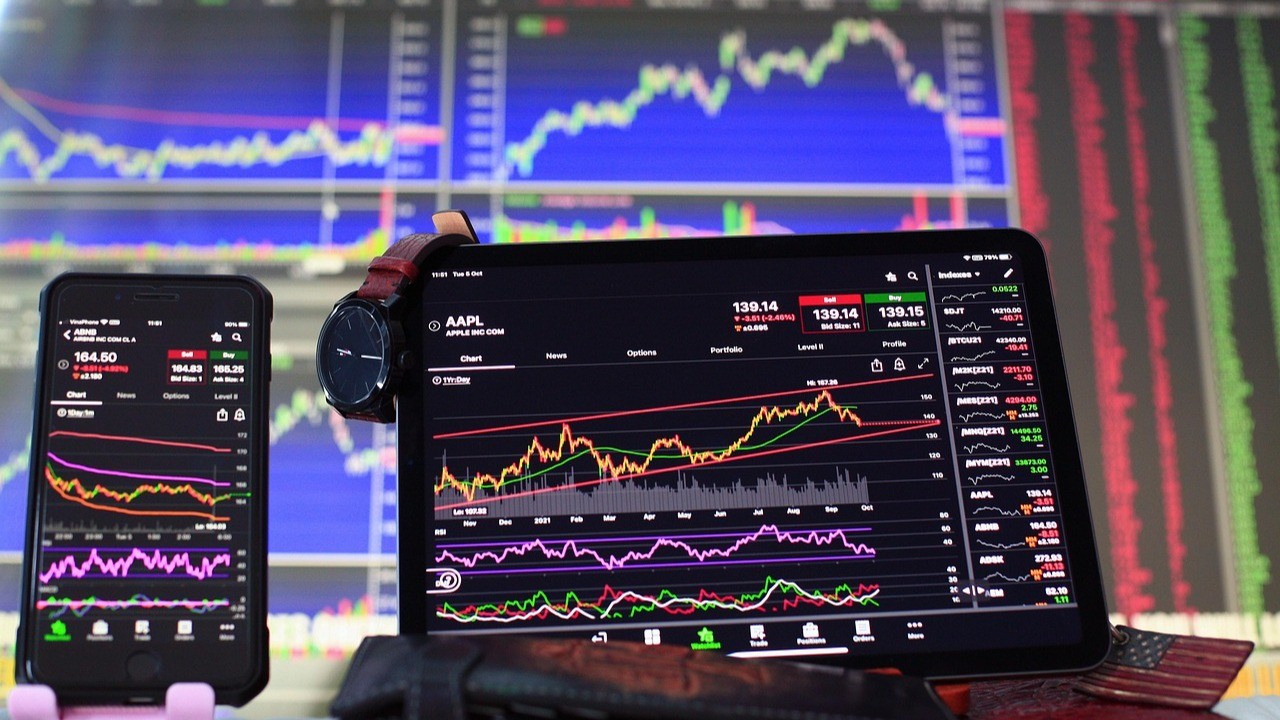
You avoid common backtesting traps not by hoping your code is honest, but by turning validation into a repeatable operational routine: pre-registered hypotheses, adversarial stress tests, live shadowing, and immutable data provenance, so you catch fragile rules before they touch capital. Do that, and you turn optimistic simulations into credible evidence you can scale.
How do you guard against false positives from endless tweaking?
Treat every optimization like a clinical trial, then lock the protocol. Pre-register the hypothesis, cap the number of independent parameter families you test, and apply multiple-testing controls to measure signal, not noise.
Practically, that means publishing a single-file experiment that names the lookbacks, entry logic, and exit rules before you run the sweep, then rejecting any post-hoc parameter changes unless you create a new labeled experiment. This pattern reduces the temptation to celebrate isolated pockets of performance and provides funders and reviewers with a clear audit trail they can trust.
How do you expose human hesitation and real-time judgment costs?
This challenge appears across both discretionary and automated setups: entries that appear obvious in hindsight become ambiguous in real time, and hesitation, missed confirmations, or partial fills reduce realized edge. Run a 30-day shadow phase in which signals execute in a simulated account, with the trader required to annotate every missed or altered trade within 15 minutes.
Then measure the participation rate and the percent change in realized win rate relative to backtest expectations. If your participation rate is low or your missed-trade notes cluster around a handful of recurring reasons, treat that as an execution tax and bake it into your sizing and threshold rules.
What microstructure and cost tests actually matter beyond a single slippage number?
Model trading costs as dynamic rather than fixed. Replay order-book snapshots while randomly varying queue position and spread, and run stepped commission schedules that mirror the brokers you will use. Because small costs compound rapidly in high-turnover systems, LuxAlgo Blog warns, "Ignoring transaction costs can result in a 30% overestimation of strategy profitability", a reminder to model spreads, fees, and stepped commissions explicitly rather than relying on a flat slippage assumption.
Most teams handle validation with spreadsheets and one-off demo runs. That works early, but as instruments, parameters, and trade frequency increase, records fragment, revalidation slows, and hidden regressions take longer to detect. Platforms like Goat Funded Trader centralize simulated prop accounts, provide timestamped performance exports, and enforce consistent risk rules across account tiers, compressing iteration time while keeping a reproducible audit trail you can present when scaling.
When should you stop optimizing and start putting capital at risk?
You stop when out-of-sample durability beats headline performance. That is why StarQube reports "Over 70% of backtested strategies fail when applied to live trading", underscoring the need for strict go-live gates: minimum trade counts across independent volatility regimes, cross-asset checks where applicable, and at least one multi-week funded or shadow run that matches backtest metrics within tolerance. If any of those gates fail, retire or simplify the rule instead of squeezing more parameters out of it.
How do you keep the pipeline honest after deployment?
Instrument the whole stack. Use dataset versioning with checksums to prove which feed produced each result, run daily distribution checks using a simple divergence metric to detect data drift, and automate revalidation when the signal distribution shifts beyond a predefined threshold. Combine that with routine adversarial scenarios, such as sudden liquidity withdrawal or delayed exchange timestamps, so your monitoring rules trip before minor issues snowball into a busted live edge.
How do you account for the emotional cost and behavioral drift?
Force transparency and small experiments: require a no-blame log for discretionary overrides, run blinded A/B tests on rules so traders cannot correlate feel with outcome, and enforce cooldown periods after significant drawdowns to avoid reactive parameter changes. These practices reduce fatigue and second-guessing that consistently erode otherwise valid systems.
What’s the last line of defence that most teams skip?
Make reproducibility non-negotiable: archive raw tick snapshots, the exact code version, parameter files, and the simulation seed. If someone claims a past run showed X, you should be able to re-run it in under an hour and get the same trades. That discipline turns stories into evidence and keeps you honest when the temptation to chase better-looking historical results appears.
The frustrating part? Speed and scale expose a single operational blind spot that can erase months of gains.
Related Reading
- Best Automated Trading Platform
- Best Paper Trading Platform
- Best Stock Trading Simulator
- Best Copy Trading Platform
- Best App For Day Trading
- Best Day Trading Platform For Beginners
- Best Software for Backtesting Trading Strategies
- Best Chart Trading Platform
- Best App for Backtesting Trading Strategies
- Best Stock Trading Platform For Beginners
- How To Practice Day Trading
- Best Automated Trading Platform
- Best Trading Simulator Free
- Best Forex Trading Platform
- Best Crypto Trading Simulator
- Best Futures Trading Platform
- Best Trading Simulator App
- Best Options Trading Simulator
- Best Options Trading Platform
- Best Futures Trading Simulator
Get 25-30% off Today - Sign up to Get Access to Up to $800K Today
When I watch traders run backtests on day-trading strategies only on tiny demo accounts, it feels like testing brakes in an empty lot and then expecting them to hold on a mountain road. The familiar shortcut of small demos hides execution, slippage, and sizing risks that emerge when you try to scale, so you need a reproducible bridge from lab results to funded size. If you want to stop guessing, consider platforms like Goat Funded Trader, which offer a realistic trading simulator and simulated funding paths to validate execution and sizing before committing real capital.
Be Great and get the App