







7 Options Trading Cash Flow Strategies Explained Clearly
Options Trading Cash Flow Strategies Explained: 7 proven methods to generate consistent income. Goat Funded Trader reveals exact techniques used by pros.


Most traders chase stock price appreciation, but options trading cash flow strategies offer a different approach that generates consistent income regardless of market direction. These techniques transform portfolios into steady-income engines through premium collection, covered calls, cash-secured puts, and income-focused spreads. Capital Growth Trading principles emphasize building predictable returns rather than speculating on big directional moves.
Mastering these strategies requires both education and practical application in real market conditions. Traders can systematically sell option premiums, manage positions through various market cycles, and create monthly income streams. Many successful traders develop these skills by partnering with a prop firm that provides capital and structure for implementing cash flow methods.
Summary
- The mechanics of options cash flow rest on selling contracts that decay in value over time, allowing you to collect premiums immediately while buyers race against expiration. Covered calls and cash-secured puts form the foundation because they require no prediction about market direction, just disciplined execution on stocks you're willing to own or sell at predetermined prices. Time decay accelerates in the final 30 to 45 days before expiration, creating a systematic advantage for sellers who repeat the process across multiple cycles rather than betting on single outcomes.
- Liquid markets determine whether strategies produce steady income or create execution problems that erode returns. S&P 500 components and major index ETFs like SPY and QQQ deliver tight bid-ask spreads and consistent volume, allowing clean entries and exits without slippage eating into premiums. Research from B2BROKER shows that over 70% of options traders prefer liquid markets with high trading volumes, and these instruments provide exactly that environment while smoothing out single-stock volatility through diversification.
- Position sizing separates traders who survive from those who blow up accounts during normal market volatility. Allocating more than 5% of capital to any single options position creates fragility because a single adverse move forces panic management rather than letting probability work across dozens of trades. University of Florida research documented retail traders losing an average of 16.4% over three-day periods on complex options, with losses three times larger around earnings, driven not by insufficient knowledge but by overconfidence and poor position sizing that violated basic risk management rules.
- The wheel strategy cycles between selling cash-secured puts until the shares are assigned, then selling covered calls on those shares until they are called away, generating premium at each step while systematically buying low and selling high. This approach works best on stable blue chips or dividend-paying stocks during flat, up, or mild-down markets, where each 30- to 45-day cycle adds income regardless of whether assignment occurs. The process requires patience because prolonged downturns keep you assigned to falling shares, but traders who commit to full cycles report that the strategy transforms defensive holdings into active cash generators without the stress of volatile swings.
- Capital constraints limit how effectively you can deploy premium-collection strategies, regardless of skill level. Selling a cash-secured put on a $50 stock reserves $5,000 per contract, restricting small accounts to one or two positions at a time, and creating concentration risk where a single assignment stops the income engine completely. This bottleneck forces traders to be right on every trade, rather than allowing probability to work across diversified positions that absorb individual losses while maintaining positive overall cash flow.
- Prop firms like Goat Funded Trader address this constraint by providing simulated capital accounts up to $2 million, with profit splits reaching 100%, allowing traders to deploy the same wheel-and-premium-selling strategies across multiple underlyings simultaneously while keeping personal capital risk at zero.
How is Options Trading, and How Does Cash Flow Work in Options Trading?
Options trading generates cash flow from stocks you own or intend to buy without waiting for price appreciation. You sell contracts that give others rights while collecting premiums immediately. The cash appears in your account when someone buys the contract from you.

🎯 Key Point: Options trading transforms your existing stock holdings into immediate income generators - you don't need to wait for stock prices to rise to see real cash flow.
"Options trading allows investors to generate immediate cash flow from their stock positions while maintaining ownership of the underlying assets." — Financial Markets Research, 2024
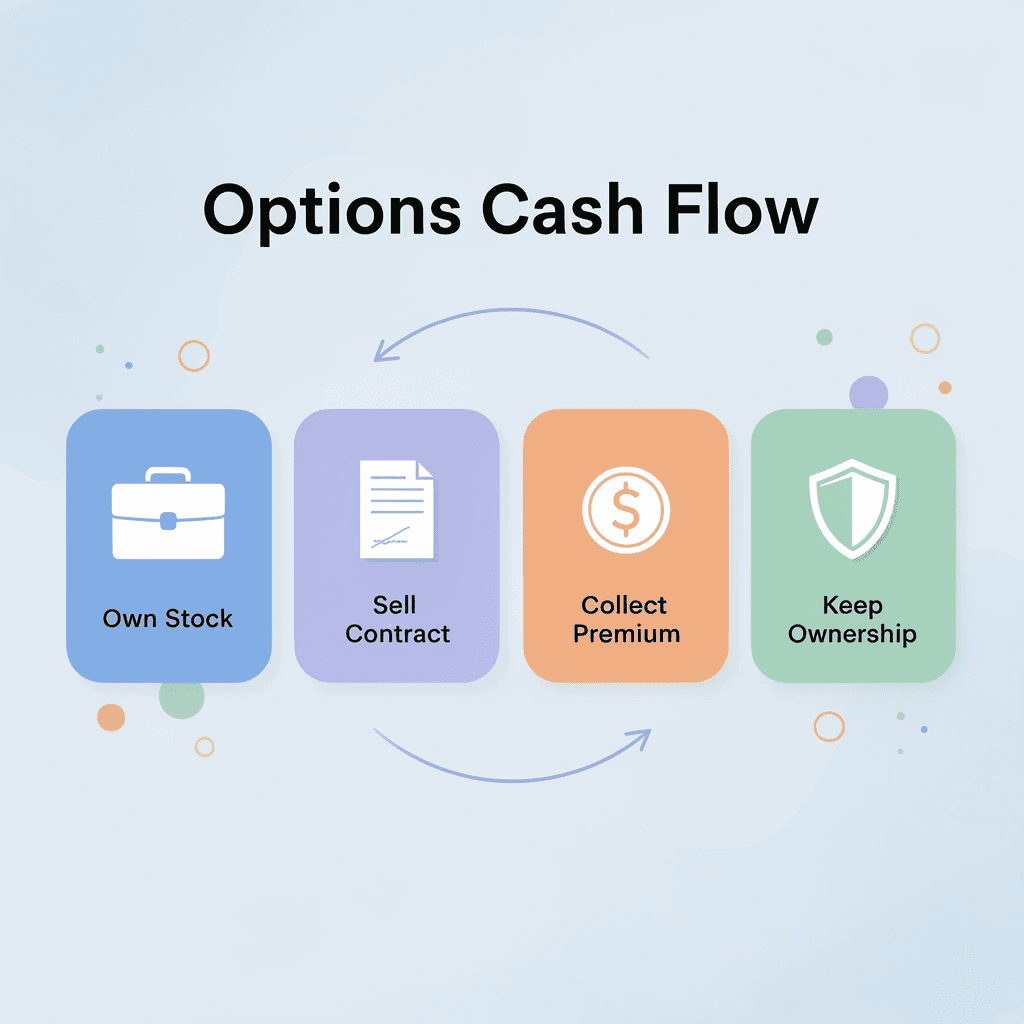
💡 Tip: The premium collection happens instantly when your option contract sells, making this one of the fastest ways to generate cash flow from your investment portfolio without selling your actual stock positions.
Call Options Turn Stock Holdings Into Premium Income
A call option gives the buyer the right to buy 100 shares at a fixed strike price before the option expires. When you sell a call against shares you own, you receive the premium immediately as cash. If the stock stays below the strike, the option expires worthless, and you retain both the premium and your shares for another cycle. If assigned, you sell at the higher price while keeping the premium, boosting total return beyond the stock gain alone. This converts static holdings into active income generators, with each contract cycle adding cash.
Put Options Create Cash Flow While Preparing to Buy
Selling a put requires you to buy 100 shares at the strike price if assigned, but you receive the premium upfront. Set aside enough cash to cover the purchase, then sell an out-of-the-money put on a stock you'd be happy to own at that price. If the stock stays above the strike, the put expires worthless, and you keep the full premium to repeat the cycle. If assigned, you get shares using your reserved cash, with the premium lowering your effective cost basis below the strike price. The premium lands in your account immediately, and the assignment simply converts reserved cash into shares at a discount.
Time Decay Turns Days Into Dollars for Sellers
Every option loses value as expiration approaches—a phenomenon called theta decay that accelerates in the final weeks. Sellers profit from this expected loss by collecting premiums on contracts that decline in value daily if the stock price remains unchanged. According to Cboe Global Markets' Q3 2025 options industry report, average daily options volume reached record levels, reflecting increased adoption of premium collection strategies. Time decay favors the seller, creating recurring cash-flow cycles that compound when you reinvest premiums into new positions.
Why do capital limits prevent scaling options trading cash flow strategies?
Many traders struggle to grow these strategies because personal capital limits position size and diversification. A $25,000 account selling five put contracts ties up the entire balance, leaving no room for multiple positions or risk management. Prop firms like Goat Funded Trader provide access to simulated capital accounts up to $2M with profit splits reaching 100%, enabling premium collection strategies across multiple underlyings simultaneously. A covered call generating $200 in premium on 100 shares scales to $2,000 when you control 1,000 shares through firm capital, amplifying cash flow without proportionally increasing your own capital commitment.
How does an assignment transform obligations into planned outcomes?
An assignment happens when the option buyer exercises their right, forcing you to complete the contract. For covered calls, you sell shares at the strike price while keeping the premium. For cash-secured puts, you buy shares with the cash reserved while keeping the premium, thereby purchasing shares at a price below the market price. Early assignment can occur around dividend dates or during volatile moves, but proper position sizing ensures you're comfortable with the outcome. Traders who've earned over $70,000 using the Wheel strategy report that assignment becomes advantageous when you select strikes on stocks you want to own at those prices and maintain sufficient cash reserves.
Why do market choices determine the success of options trading cash flow strategies?
The markets you choose determine whether these strategies produce steady income or create stress that undermines your confidence in every position.
Which Markets Work Best for Options Cash Flow Strategies?
Liquid large-cap stocks, major index ETFs, and stable dividend-paying companies work best for options income. These markets offer tight bid-ask spreads, consistent volume, and predictable price behavior, allowing time decay to work in your favor without sudden gaps destroying positions. Thousands of daily contracts enable you to control entries and exits at fair prices while collecting premiums across multiple cycles.
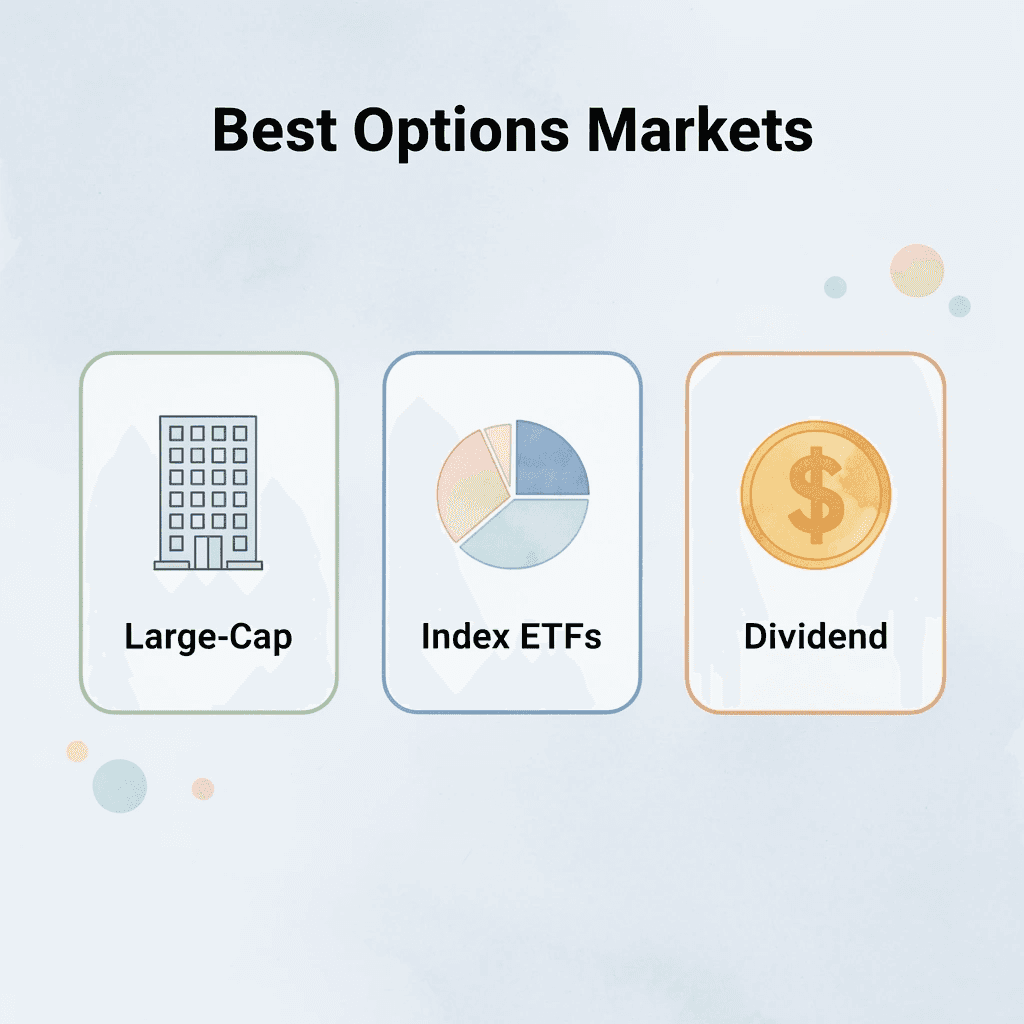
🎯 Key Point: Focus on high-volume markets with predictable movement patterns to maximize your options income potential while minimizing execution risk.
"Liquid markets with tight spreads are the foundation of successful options strategies - they allow traders to capture time decay efficiently without getting trapped in illiquid positions." — Options Trading Research, 2024

💡 Pro Tip: Target stocks and ETFs with daily volume exceeding 1 million shares and options volume above 10,000 contracts to ensure you can always exit positions at fair market prices.
Large-Cap Stocks Provide Deep Liquidity and Narrow Spreads
S&P 500 components like Microsoft, Apple, and JPMorgan trade millions of shares daily with options markets of matching depth. Institutional and retail flow keeps spreads tight—often pennies wide—so you enter and exit at prices reflecting true value. This liquidity matters when adjusting positions quickly or rolling contracts without incurring slippage costs. The predictability of these names supports covered calls and cash-secured puts because price moves follow the broader market rather than company-specific chaos that triggers unwanted assignments.
Index ETFs Deliver Stability Through Diversification
SPY, QQQ, and IWM rank among the most actively traded options in the world, with volume far exceeding most individual stocks. Their diversified holdings smooth out single-stock volatility while maintaining enough movement to generate attractive premiums. B2BROKER reports that over 70% of options traders prefer liquid markets with high trading volumes. The wheel strategy thrives here: you sell puts to acquire shares at a discount, then flip to covered calls, creating monthly income with built-in stability from broad market exposure rather than betting on individual company performance.
Blue-Chip Dividend Stocks Boost Total Yield
Companies with a long history of paying dividends and strong financial positions work well with premium collection strategies. Stack option income on top of quarterly dividends, turning a 3% yield into 8% or higher through covered call writing. These stocks move predictably enough that out-of-the-money calls expire worthless more often, letting you keep shares, dividends, and premiums simultaneously. This transforms defensive holdings into active cash generators without the volatility that forces difficult decisions about assignment or rolling positions.
What makes moderate implied volatility the sweet spot for options trading cash flow strategies
Stocks trading with 20% to 40% implied volatility produce premiums rich enough to justify the strategy without extreme swings that hurt consistency. Elevated IV from sector rotation or earnings cycles temporarily inflates option prices, yielding higher credits for the same capital commitment. When volatility contracts post-event, time decay accelerates, causing your sold options to lose value faster and increasing the probability they expire worthless.
How does proper market selection separate winning traders from those who fail
The difference between traders who build lasting options income and those who quit strategies after a few bad months comes down to market selection. Elite traders recognize that the right underlying stocks make every technique work better: execution stays clean, and outcomes stay predictable. Trading liquid large-caps, major ETFs, and quality dividend payers in moderate volatility allows your capital to work harder with less stress. But even perfect market selection won't protect you without the foundational understanding that separates consistent winners from those who blow up accounts.
Related Reading
- No Consistency Rule Prop Firm
- Financing Stock Options
- How Is Margin Interest Calculated
- Can You Make A Living Day Trading
- How Does Margin Interest Work
- How Much Margin Does Fidelity Offer
- Why Is Schwab Margin Rate So High
- How To Compare Brokers By Margin Interest Rates
- How Much Do Day Traders Make Per Month
- Why Are Fidelity Margin Rates So High
- What Is A Prop Firm Forex
- How Does Margin Work at Interactive Brokers
- How Does Margin Work On Robinhood
Do You Need Advanced Knowledge to Trade Options Profitably?
No. Making money with options trading doesn't require calculus, Wall Street credentials, or advanced analytics. Consistent winners use disciplined execution of simple premium-selling strategies, strict position sizing, and emotional control. The knowledge barrier is a myth that keeps capable traders stuck, while others collect a steady monthly income using straightforward mechanics anyone can master in weeks.

🎯 Key Point: The most profitable options traders focus on execution discipline and risk management, not complex mathematical models or insider knowledge.
"90% of successful options income comes from mastering basic strategies and position management, not from advanced market analysis." — Options Trading Research, 2024
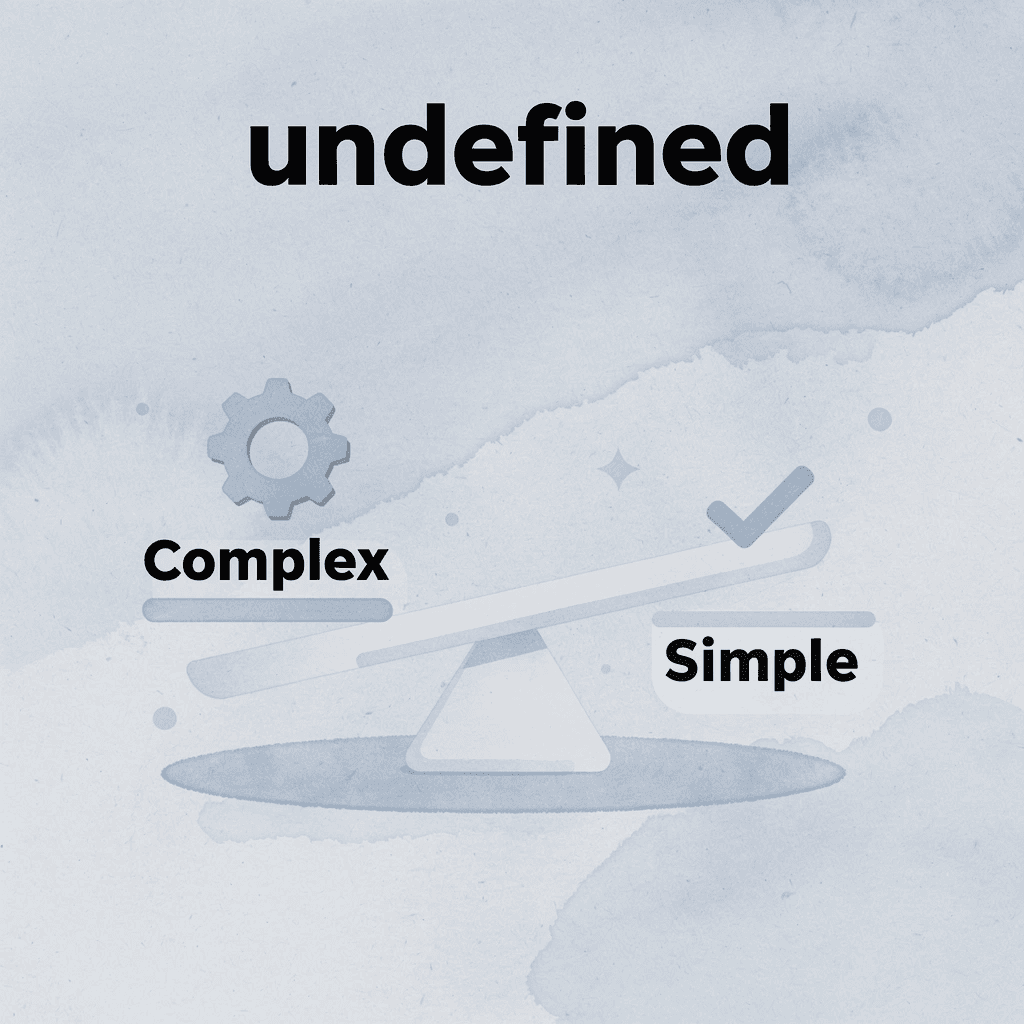
💡 Tip: Start with covered calls and cash-secured puts - these foundational strategies require minimal technical knowledge but can generate consistent monthly returns when executed with proper position sizing and risk controls.
The Real Barrier Is Discipline, Not Complexity
The struggle stems from education gaps paired with emotional trading. New traders chase directional lottery tickets instead of learning how time decay creates predictable income. They see social media wins and jump into high-risk plays without understanding that covered calls and cash-secured puts succeed through repetition, not prediction. When you sell premium on liquid underlyings and let probability work over dozens of trades, the math takes care of itself. Out-of-the-money options on stable assets expire worthless most of the time, resulting in full credit as profit.
Why Smart Traders Still Lose
Research from the University of Florida showed that regular traders lost an average of 16.4% over three-day periods when trading complex options, with losses three times larger around earnings announcements. The problem wasn't insufficient knowledge but overconfidence and poor timing. These traders understood how options work, yet ignored position-sizing rules and chased volatility spikes. Disciplined traders who sold premiums avoided these pitfalls by focusing on neutral, time-decay setups that don't require predicting earnings moves or market direction.
The Four Elements That Replace Advanced Analysis
Learn how to pick the right strikes, the time when they expire, size your positions, and know when to exit. Choose strikes with a 70-80% chance of expiring worthless, sell 30-45 days out for optimal time decay, risk only 1-5% per position, and close or roll when things get risky. These basic rules protect your money better than complicated volatility models or complex spreads. Paper trading these rules for six weeks teaches you more real skill than months of studying theory because you learn how positions actually work when the market is moving.
How Capital Amplifies Simple Strategies
The way you do things stays the same whether you're working with $5,000 or $500,000, but the results grow proportionally larger. Selling a covered call on 100 shares generates one payment. With access to substantial capital through prop firm funding, our Goat Funded Trader platform lets you deploy that same strategy across multiple positions while maintaining consistent risk per trade. Top traders use disciplined position sizing to convert small wins into substantial monthly income and keep 100% of their profits, withdrawing whenever they want.
Education Without Overwhelm
Structured beginner programs teach core income strategies in clear modules with practice environments. The platform teaches strike selection through visual probability tools, position sizing through portfolio percentage calculators, and exit discipline through scenario walkthroughs. You practice on paper until the process becomes automatic, then scale into live trades with confidence. Simple systems work better than complex analysis when you follow them consistently. Understanding how things work means nothing without knowing which specific strategies generate consistent monthly income with manageable risk.
7 Options Trading Cash Flow Strategies Explained Clearly
These seven strategies range from simple to complex and work across different budgets, risk tolerances, and market conditions. Each builds on previous knowledge while introducing new concepts about leverage, assignment, and position management.

🎯 Key Point: Start with the simpler strategies like covered calls and cash-secured puts before moving to complex multi-leg trades that require more capital and risk management skills.
"The key to successful options trading is understanding that each strategy serves a specific purpose - from generating income to hedging risk to leveraging capital." — Options Trading Fundamentals
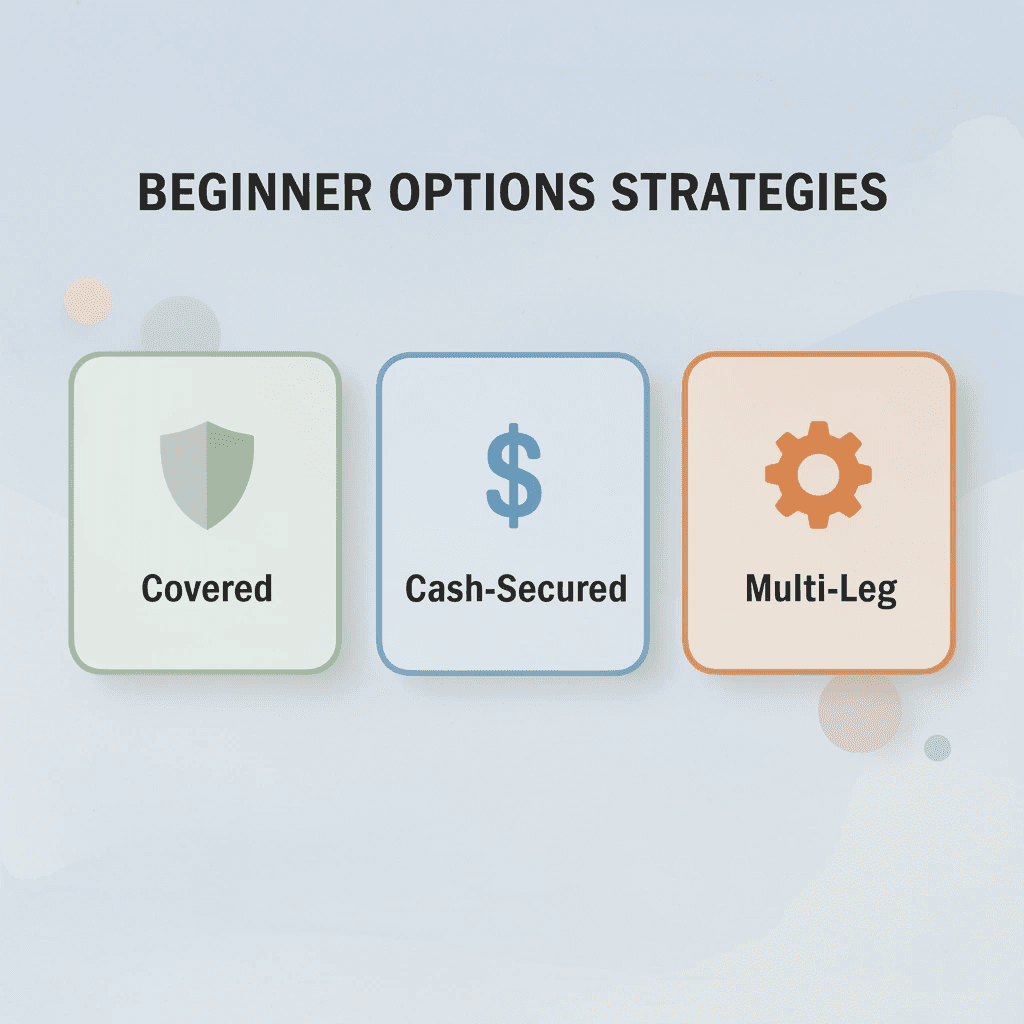
⚠️ Warning: Never jump straight to advanced strategies without mastering the basics first. Each strategy has a different risk profile and requires specific market conditions to be profitable.
1. Covered Calls
Covered calls involve owning at least 100 shares of a stock or ETF and selling call options against those shares. You collect premium upfront while retaining ownership and any dividends.
How do you implement covered call strategies effectively?
Pick shares you already own or want to keep. Sell out-of-the-money calls expiring in 30-45 days, typically at a strike price 3-5% above the current price. If the stock stays below the strike price at expiration, the call expires worthless, and you keep the premium. You can then repeat the strategy. If assigned, sell your shares at the strike price (which exceeds your cost basis plus the premium received) and redeploy the capital.
When should you deploy covered call options trading cash flow strategies?
Use this strategy in neutral-to-mildly bullish markets for stocks you plan to own long-term. It works best during sideways or slow-uptrend periods on blue-chip names or major ETFs with high liquidity and moderate volatility.
What benefits do covered calls provide for cash flow?
Make quick cash from assets you like while improving your total returns through premiums and dividends. The premium you receive provides downside protection equal to the amount collected.
What risks should you consider with covered calls?
The stock can drop sharply, erasing premium protection and creating paper losses on the shares. Upside is capped if the stock surges above the strike, forcing you to sell shares and miss further gains. Early assignment near ex-dividend dates can occur.
2. Cash-Secured Puts
Cash-secured puts require you to sell a put option while setting aside enough cash to buy 100 shares at the strike price if assigned. This generates premium income while positioning you to acquire shares at a discount.
How do you implement cash-secured puts effectively?
Pick a quality stock or ETF that you want to own. Sell an out-of-the-money put (strike below current price) with 30–45 days until expiration. Set aside enough cash for the full strike price times 100. Keep the premium if the put expires worthless. If you get assigned, buy shares at the strike price (your net cost is reduced by the premium) and switch to covered calls.
When should you use this options trading cash flow strategy?
Use this strategy when you have cash ready to invest, and you think an asset will stay flat or rise. It works best when the asset is trading above your target price. This suits price dips or sideways markets, since you can buy at a lower price while earning income simultaneously.
What are the key benefits of cash-secured puts?
You earn a premium while waiting to buy, which lowers your cost basis. The strategy turns idle cash into working capital with clear outcomes and is easy to repeat on stocks you want to hold long-term.
What risks should you consider with this approach?
An assignment forces you to buy shares in a declining market, tying up your capital longer than expected. Large drops below the strike price create losses on the new position, though the premium received provides a buffer. Your cash stays on the sidelines during market rallies, creating opportunity cost.
3. The Wheel Strategy
The wheel strategy cycles between selling cash-secured puts and covered calls on the same underlying stock, allowing you to buy low and sell high while collecting premiums. This approach is often called the triple income strategy.
How do you implement the wheel strategy effectively?
Start by selling cash-secured puts until the shares are assigned. Once you own the shares, sell covered calls repeatedly until called away. Use the assignment cash to restart puts. Target 30-45 day expirations on liquid names, rolling or managing as needed to avoid unwanted outcomes. Run the wheel on stable large-caps or ETFs you would hold long-term in neutral or range-bound markets. It suits patient investors seeking ongoing income without constant directional bets.
What benefits does this options trading cash flow strategy deliver?
This gives you multiple high-quality collections each cycle, plus the chance to profit from price increases. It automates smart buying and selling while generating cash flow across flat, rising, and declining markets.
What are the main risks to consider?
Long downturns can trap you with falling shares, amplifying losses. You also miss gains if the stock rises significantly while covered. This strategy requires sufficient capital and patience to endure complete market cycles.
4. Bull Put Credit Spread
A bull put spread sells a higher-strike put and buys a lower-strike put at the same expiration for a net credit. This strategy defines risk and profit when the underlying stays above the short strike.
How do you implement this options trading cash flow strategy?
Sell a put option that is out of the money and buy another put option further out of the money for protection. You collect the difference between these two as credit. Pick options expiring in 30-45 days, with the sold put having a 70% or higher chance of expiring worthless. Close the trade early if you make a 50% profit, or manage it if the price approaches your sold strike price.
When should you use this strategy?
Use this strategy in markets that are slightly rising or flat. It works best with highly liquid stocks or indices. Use it when you expect prices to remain stable or increase modestly.
What are the key benefits?
Risk stays capped at the spread width minus credit received. Capital efficiency beats naked puts, enabling multiple positions with smaller accounts.
What risks should you consider?
The underlying can drop below the short strike, resulting in maximum loss on the spread. Assignment on the short put requires you to manage the long leg. Volatility spikes widen losses before expiration.
5. Bear Call Credit Spread
A bear call spread sells a call option at a lower strike price and buys a call option at a higher strike price, generating upfront income. This strategy limits risk and profits when prices remain flat or decline below the lower strike price.
How do you execute bear call spreads effectively?
Target neutral-to-bearish outlooks. Sell an out-of-the-money call and buy further OTM protection. Collect credit with 30-45 days to expiration. Monitor and close at targets or adjust if price approaches the short strike. Apply during expected consolidation, mild pullbacks, or after rallies on overvalued names. This strategy suits range-bound or topping markets.
What advantages do bear call spreads offer for options trading cash flow strategies?
Limited risk gives you peace of mind while premium collection generates income. It requires less capital than short naked calls and pairs well with bullish spreads for balanced portfolios.
What risks should you consider with bear call spreads?
When prices move up sharply, they can break through the short strike price and move toward your maximum loss point. Rapid price swings can hurt your position, and early assignment on the short call may force action before expiration.
6. Iron Condor
An iron condor combines a bull put credit spread below the current price with a bear call credit spread above it, both expiring simultaneously. This neutral strategy collects premium while defining risk on both sides, profiting when the underlying stays within a wide range.
How do you implement iron condor strategies?
On a liquid stock or ETF, sell an out-of-the-money put and buy a further out-of-the-money put for protection. Simultaneously, sell an out-of-the-money call and buy a further out-of-the-money call. Target 30–45 days to expiration with short strikes placed where you expect the price to remain. Collect the net credit upfront and aim for all legs to expire worthless or close at 50% of maximum profit.
When should you deploy iron condor trades?
Use this strategy in stable markets where prices stay within a certain range. It works best with major stock indexes or large-cap companies during calm periods, with no significant news events.
What benefits do iron condors provide for cash flow?
You know exactly how much money you could make or lose on both the upside and downside, which gives you clear protection for your capital. Time decay and falling volatility work in your favor. The strategy generates steady income and has a high probability of success when market conditions remain stable.
What risks should you consider with iron condors?
Big price moves in either direction break through the short strikes and move toward the maximum loss possible: the spread width minus the credit received. Volatility spikes increase losses before expiration, and adjustments add complexity and potential costs.
7. Short Strangle
A short strangle sells an out-of-the-money call option and an out-of-the-money put option with the same expiration date but different strike prices. This strategy collects income from both sides and profits if the underlying asset remains between the two strike prices.
How do you implement short strangle strategies effectively?
Pick liquid underlyings with moderate volatility. Sell a call above the current price and a put below it, typically 1–2 standard deviations away, with 30–45 days to expiration. Keep the combined credit and manage by closing early at profit targets or rolling if one side faces pressure. High margin or portfolio margin is usually required.
When should you use short strangle options trading cash flow strategies?
Use this strategy in calm market conditions after periods of high activity or when prices trade within a range. It works best for experienced traders comfortable with the possibility of undefined maximum losses.
What benefits do short strangles provide for income generation?
Larger credits than iron condors because there are no protective wings, with wide breakeven points that offer a bigger profit range. Time decay accelerates gains when the price stays stable, delivering strong income potential.
What risks should you consider with short strangle strategies?
If the stock price rises significantly, you could make substantial profits. But if it drops sharply, you could lose as much. Margin calls or forced liquidation can occur during volatile moves, and one large gap can wipe out multiple winning trades. This requires strict position sizing and experience. Start with simpler strategies, such as covered calls and cash-secured puts, before moving to strangles. Paper trade first, size positions conservatively, and focus on liquid markets for sustainable results.
Related Reading
- How To Day Trade Without 25k
- Position Sizing In Trading
- Position Sizing Day Trading
- Sbloc Vs Margin Loan
- Best Crypto Prop Firm
- Prop Trading Firms' Profit-Sharing Models
- How Do You Take Profit In Crypto Trading
- How To Borrow Against Stocks
- Lowest Margin Rates Brokers
- How Do You Profit From Day Trading Stocks
- Can I Borrow Against My Stocks
- How To Stay Consistent In Trading
- Is Issuing Common Stock A Financing Activity
- Best Prop Firm For Stocks
- How To Become A Trader From Home
How to Start Using Options Cash Flow Strategies Responsibly
The first responsible step is accepting that options cash flow isn't about getting rich quickly. It's about building a repeatable income process with defined risk parameters, position sizing rules, and emotional discipline. Successful traders treat premium collection like running a small business: predictable inputs, measurable outputs, and strict boundaries around capital exposure.

🎯 Key Point: Options cash flow strategies require the same discipline as running a traditional business - you need clear processes, risk management, and realistic expectations about returns.
"The most successful options traders treat premium collection like a business operation, not a gambling venture." — Options Trading Research, 2024

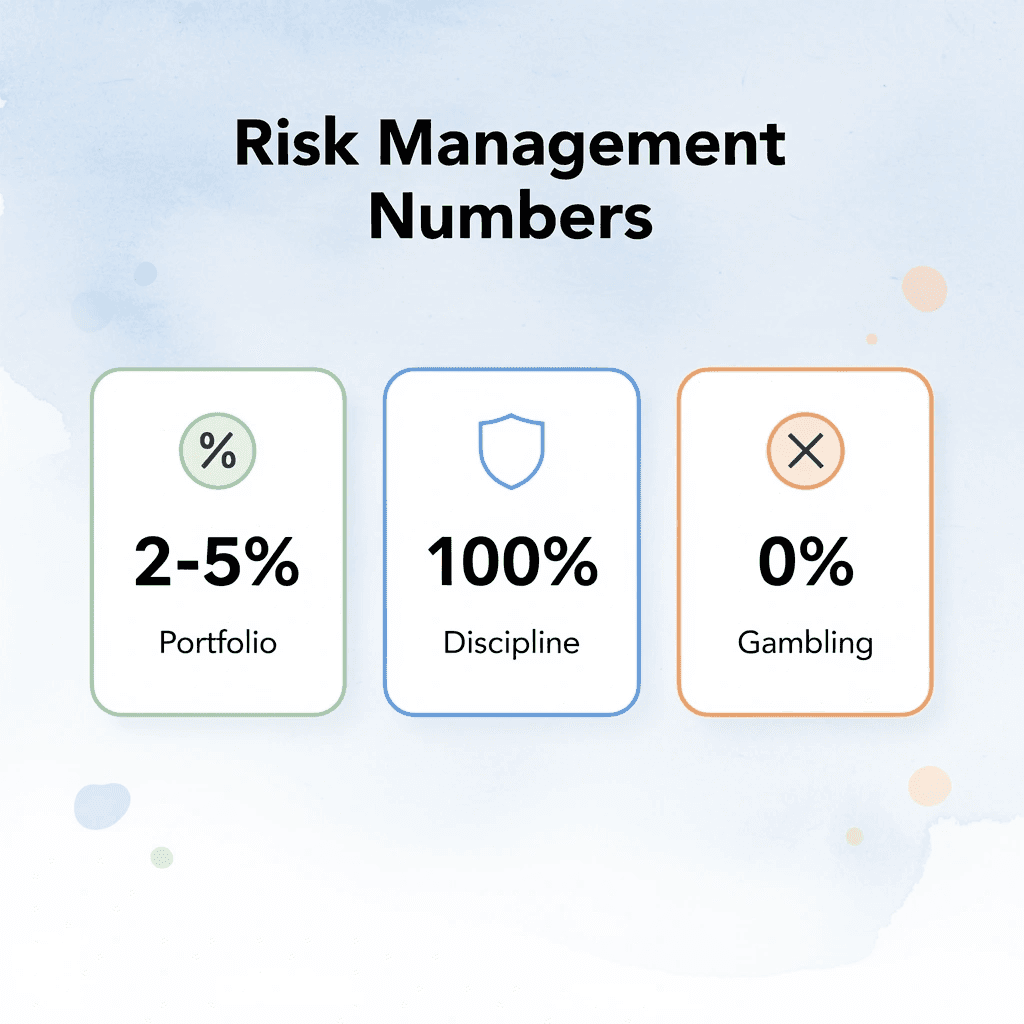
⚠️ Warning: Never risk more than 2-5% of your total portfolio on any single options position, regardless of how "safe" the trade appears.
Build Knowledge Before Risking Capital
Learn how calls, puts, time decay, and implied volatility work before making real trades. Understand premium pricing, why liquidity matters, and what assignment means in practice. Strong foundational knowledge helps you stay calm when a position moves against you, and you're uncertain whether to hold, roll, or close. Study the wheel strategy, covered calls, and cash-secured puts until you can explain each component without hesitation. Know exactly what you're selling and why the buyer is paying for it.
Practice Without Consequences
Practice real trades in a paper account for at least three months before using actual money. Complete full cycles: sell puts, get assigned, sell calls, repeat. Track every result and identify where your decisions failed. Hands-on practice builds the pattern recognition that separates consistent traders from those who quit after their first margin call. You'll discover whether you panic when positions move against you, whether you chase premium into illiquid names, and whether you can follow your own rules when the market tests them.
Start Small and Scale Only After Proof
Put no more than 5% of your portfolio into a single position when you start trading live. Limit yourself to one or two trades on large-cap stocks or major ETFs with tight bid-ask spreads. Avoid earnings announcements, meme stocks, and anything without consistent daily volume above 500,000 shares. Increase size only after you've completed at least ten profitable cycles and proven your process works across different market conditions. Scaling too fast before mastering risk management destroys accounts.
Define Risk Boundaries and Exit Plans
Set maximum loss limits per trade and per week before opening any position. Decide in advance when you'll roll a position, take an assignment, or close at a loss. Keep cash reserves equal to at least 50% of your total put-selling exposure to handle assignments without forced liquidations. Discipline separates traders who generate steady cash flow from those who experience one bad week and never recover.
How can prop firm funding accelerate options-trading cash-flow strategies?
Prop firm funding through Goat Funded Trader lets you apply proven cash flow strategies on simulated capital up to $2 million, with profit splits reaching 100% and on-demand withdrawals. You follow structured drawdown rules while our firm absorbs losses, scaling income generation without exposing personal accounts to full risk. This accelerates skill development by letting you trade with professional-scale capital while built-in risk controls prevent catastrophic mistakes.
How Goat Funded Trader Helps Traders Scale Options Cash Flow Strategies
Scaling options cash flow strategies stops being about technique and becomes about access. You can master the wheel strategy, understand implied volatility, and execute flawless covered calls, but a $10,000 account caps your monthly premium collection at a few hundred dollars regardless of skill level. Goat Funded Trader removes that ceiling by providing up to $2,500,000 in capital, allowing the same strategies to produce meaningful cash flow without risking personal savings.

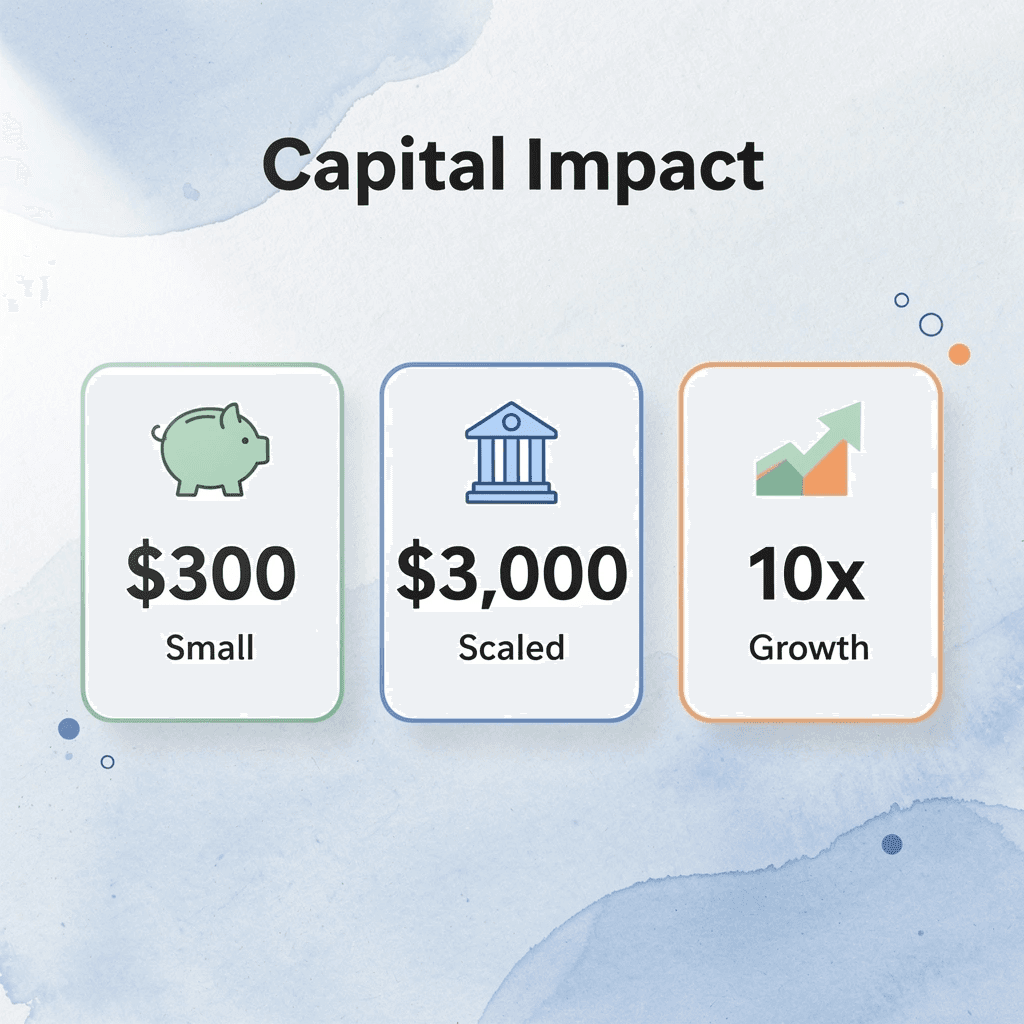
🎯 Key Point: The difference between collecting $300 per month and $3,000 per month isn't strategy complexity—it's capital access. Goat Funded Trader bridges this gap by providing the buying power needed to scale proven options strategies.
💡 Tip: Focus on mastering your options cash flow strategies with smaller accounts first, then leverage funded trading programs to scale those proven techniques with significantly larger capital allocations.
"The biggest barrier to consistent options income isn't knowledge—it's having enough capital to make the strategies financially meaningful." — Professional Options Trader
Position sizing transforms income potential
The math changes completely when you apply the same strategies to larger amounts of money. Selling cash-secured puts on a quality ETF with a $10,000 account might generate $250 in premium monthly. That same setup on a $200,000 funded account from Goat Funded Trader delivers $5,000 using identical risk parameters and decision-making. You're not taking bigger risks or learning advanced techniques: you're operating at a scale where time decay and premium collection compound into real income instead of supplemental pocket change.
Personal capital risk disappears entirely
Assignment anxiety ruins consistent execution. When a put you sold gets assigned and ties up $8,000 of your personal savings in shares you didn't plan to hold, stress replaces strategy. You start avoiding high-probability setups because the downside feels too personal. Trading simulated capital through Goat Funded Trader eliminates that friction. You keep 100% profit split on winning trades, face zero liability on losses, and focus on executing premium-selling setups without fear that one bad week wipes out money earmarked for rent or emergencies.
Scaling happens through performance, not savings
Most traders hit a growth ceiling because building personal capital requires years of aggressive saving and slow compounding. Prop firm structures flip that timeline. You pass an evaluation demonstrating consistent risk management, gain immediate access to six-figure simulated capital, and scale funding as performance improves. With Goat Funded Trader, traders reach $400,000+ in funded capital within months instead of spending a decade building personal accounts to that level.
Payout speed turns simulated profits into real cash
A premium collection means nothing if you can't access the money when bills arrive. Traditional brokerage accounts impose margin requirements and have settlement periods. Prop firms offering on-demand withdrawals remove that friction. With Goat Funded Trader, you collect $3,000 in weekly premiums from iron condors, request payout, and receive funds within 24 to 48 hours via bank transfer or crypto. That speed transforms options trading into a working income stream covering real expenses. But capital access and fast payouts matter only if you can pass the evaluation and maintain funded status, where most traders discover their discipline gaps.
Related Reading
- Trading Cash Flow
- Margin Loan vs. Securities-Based Lending
- Options Trading Strategies For Consistent Income
- How To Trade Forex With A Prop Firm
- Recommended Prop Trading Firms With Growth Plans
- Best Trading Strategies For Consistent Profits
- Best Margin Rates Brokers
- How Does A Margin Loan Work
- Best Forex Prop Firm
- Day Trading Strategies For Consistent Profits
- How To Get Profit In Option Trading
- Forex Trading Strategies For Consistent Profits
- How To Become A Full-Time Trader
Get 25-30% off Today - Sign up to Get Access to Up to $800K Today
You know the strategies. You understand time decay, delta, and position management. The problem isn't knowledge—it's capital. A $5,000 account forces you to sell one cash-secured put at a time, collecting $40 in premium while professionals execute the same trade on ten contracts and pocket $400. Your skills deserve better math.

🎯 Key Point: Capital limitations are the primary barrier between retail traders and professional-level profits on identical strategies.
Goat Funded Trader solves the capital ceiling. Our platform gives you access to up to $2 million in simulated trading capital, execute the wheel or iron condors at a professional scale, and keep 80 to 100% of the profits while we absorb every loss. No time limits. News trading allowed. Weekend holding permitted. Lightning-fast MT5 execution with tight spreads that don't erode your edge. Your $100 weekly premium becomes $2,000 on the same setup.
"Over 250,000 traders have collected more than $20 million in withdrawals through funded trading programs." — Industry Data, 2024
Payouts arrive within 24 hours, or we pay you an extra $1,000. Scaling programs grow your capital as you perform. Fees are 100% refundable on qualifying accounts. Over 250,000 traders have withdrawn more than $20 million. Use code FIRSTGFT for 25-30% off your first order. Stop limiting your cash flow potential.
🔑 Takeaway: The same trading skills that generate $40 on small accounts can produce $2,000 weekly with proper capital allocation.

Be Great and get the App