






Compound Trading For Beginners: A Detailed Guide for 2026
Compound trading for beginners made simple. See how to reinvest profits, size trades, and manage risk in this 2026 guide. Start here.


You've opened a trading account, made a few winning trades, and now you're wondering how to turn those small gains into something meaningful. Most beginners in day trading margin accounts struggle with the same question: how do you transform modest profits into substantial wealth without taking reckless risks? This article reveals the power of compound trading, a strategy in which you reinvest your profits to achieve exponential growth over time, allowing you to build your account systematically while managing risk and working toward long-term financial freedom.
Starting with limited capital can feel restrictive, especially when margin requirements and account minimums hold you back from implementing a proper compounding strategy. Goat Funded Trader offers traders access to substantial capital without risking their own money, giving them the resources to practice compounding techniques with real market conditions. Their prop firm model provides the financial backing you need to reinvest profits consistently, letting you focus on developing the discipline and trading psychology required for sustainable account growth.
Summary
- Compound trading creates exponential growth by reinvesting profits immediately to increase position sizes on subsequent trades, transforming consistent percentage returns into accelerating dollar amounts over time. The frequency of compounding determines how quickly accounts expand.
- The mechanism that accelerates growth through reinvested profits also magnifies every misstep, turning manageable setbacks into account-threatening declines when discipline slips or markets turn volatile. Reverse compounding erases progress fast because a 10% gain followed by a 10% loss doesn't return you to breakeven since the loss operates on the enlarged balance.
- Traders sabotage compounding by reinvesting recklessly, abandoning plans during slow patches, or skipping protective measures that prevent catastrophic losses. According to trading research, 90% of traders lose money, often because they scale exposure too aggressively before proving their edge holds across different market conditions.
- The S&P 500 rallied 23% in 2024, yet individual traders experienced wildly different results depending on timing, sector exposure, and risk management during volatile stretches. This variability underscores why relying on ongoing profitability makes compound trading feel unreliable, turning potential long-term gains into frustrating plateaus or reversals that shake confidence.
- Limiting exposure per trade to a tiny fraction of your total balance protects progress from single setbacks that could reverse weeks of careful work. A common guideline involves risking no more than one or two percent on any individual position, adjusting dynamically as your account changes size.
Goat Funded Trader addresses the limited capital barrier by providing simulated trading accounts up to $2M, with profit splits reaching 100%, allowing traders to practice compounding mechanics with substantial balances and built-in risk safeguards, including a 3% maximum daily loss and a 6% overall maximum loss, while protecting personal savings.
What is Compound Trading, and How Does It Work?
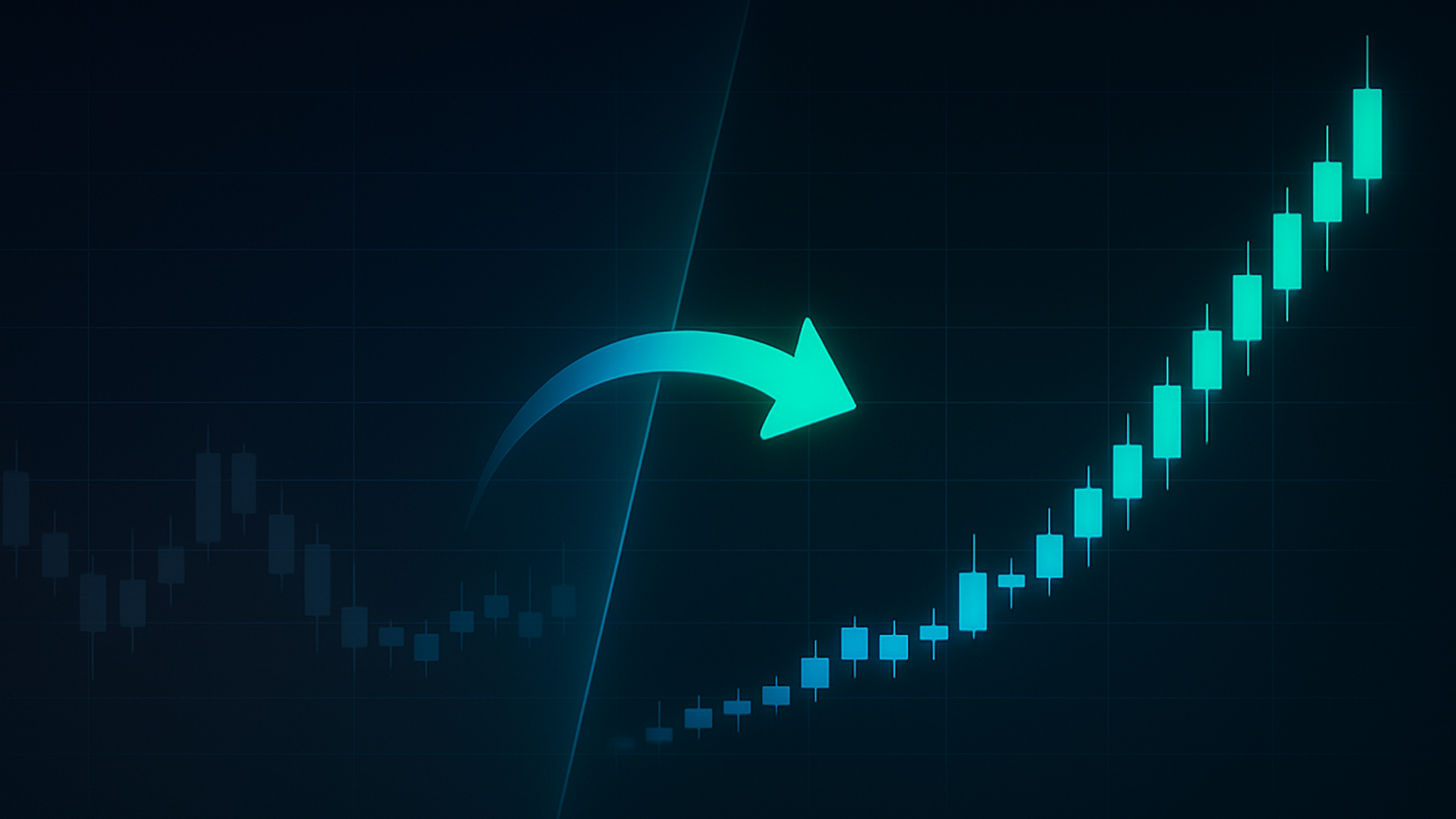
Compound trading means reinvesting your gains immediately to increase position size on the next trade, creating exponential growth through repeated cycles. Instead of withdrawing profits after each win, you fold them back into your account balance so the next trade operates with more capital. This turns consistent percentage returns into accelerating dollar amounts over time, allowing modest accounts to grow substantially without adding external funds.
The mechanics are straightforward:
- Execute a trade according to your plan
- Close it profitably
- Let that profit expand your available capital for the next opportunity
If you risk 2% per trade on a $5,000 account, your next position after a 5% gain would be based on $5,250, naturally scaling your dollar risk and reward while maintaining the same percentage exposure. This cycle repeats with each successful trade, progressively enlarging your capacity without changing your risk discipline or requiring fresh deposits.
Daily Versus Monthly Compounding in Trading
Daily compounding integrates every session's earnings immediately, so each morning you trade with the prior day's accumulated balance. This frequency accelerates momentum because profits start generating additional returns without delay, but it also means setbacks hit harder since your enlarged balance amplifies both gains and losses. Many traders find this pace exhilarating yet demanding, requiring vigilant monitoring and strong emotional control when the market turns against them.
Monthly compounding gathers earnings throughout the period before folding them into the account at the cycle's end, creating a more measured rhythm that appeals to those still building consistency. It cushions short-term volatility since your position sizing remains stable across the month, giving you breathing room to refine execution without the pressure of recalculating risk daily. Beginners often start here because it delivers solid cumulative growth while reducing the immediate psychological weight of every single trade outcome.
How Frequency Shapes Growth
Frequency determines how quickly your account compounds. More frequent compounding intervals produce noticeably faster results because earnings begin working for you sooner, creating additional layers of growth that accumulate across market cycles. A trader compounding daily will see their balance expand faster than one compounding monthly, assuming identical win rates and profit targets, because each gain immediately contributes to the next trade's potential.
Yet speed carries cost. The same acceleration that builds accounts rapidly also exposes you to quicker drawdowns when trades go wrong, demanding ironclad risk protocols and the emotional steadiness to stick with your plan when minor setbacks impact your enlarged balance.
Many participants wrestle with this tension, caught between the desire for rapid growth and the psychological strain of watching their progress evaporate in a single bad session, which is why partial reinvestment strategies often prove more sustainable than pure compounding for those still developing discipline.
Leveraging Prop Capital for Compounding
The traditional approach keeps most traders stuck in a cycle where margin requirements and limited capital prevent them from implementing proper compounding mechanics. Prop firm offers simulated trading capital accounts up to $2M, giving you the resources to practice compounding techniques with real market conditions, and profit splits up to 100% without risking your personal funds.
Their model provides the financial backing needed to reinvest profits consistently, letting you focus on developing the discipline and trading psychology required for sustainable account growth rather than worrying about depleting your own savings.
But understanding the mechanics is only half the equation; the real question is why traders choose this path in the first place.
Related Reading
- How Much Money Is Required For Commodity Trading
- How Does Margin Trading Work
- What Is Compound Trading
- Is Stock Trading Profitable
- Can I Borrow Money To Invest In Stocks
- Can You Day Trade With A Cash Account
- How Much Money Do You Need To Trade Full-time
- Carry Trade Forex
- How To Get Investors For Trading
- How To Start Swing Trading
- How To Pass Prop Firm Evaluation
Why Do Traders Use Compound Trading?

Traders adopt compound trading because it transforms consistent execution into exponential account growth without requiring constant capital injections from external sources. By reinvesting each win immediately, you convert reliable percentage gains into progressively larger dollar amounts, letting your proven edge work on an expanding base rather than starting from the same balance every cycle.
This approach resonates deeply with those who recognize that modest monthly returns, when compounded across quarters or years, deliver outcomes that dwarf what simple withdrawal strategies can achieve, turning disciplined trading into a genuine wealth-building engine.
Exponential Growth Without External Funding
The math behind compound trading creates a snowball effect that accelerates returns far beyond the linear addition of profits. A 5% gain on $10,000 adds $500, while the same percentage on $15,000 yields $750, and on $25,000 it produces $1,250, all without changing your strategy or risk parameters.
This multiplication happens because each cycle's profit becomes part of the working capital for the next trade, generating returns on returns in a way that flat-balance approaches simply cannot replicate.
Overcoming the Personal Capital Bottleneck
Many traders find themselves stuck in a frustrating loop where limited personal capital prevents meaningful compounding from taking hold, forcing them to either risk too much per trade or accept painfully slow growth. Prop firms address this bottleneck by providing simulated trading capital of up to $2M, allowing you to practice compounding mechanics with substantial balances and profit splits up to 100% while protecting your personal savings.
This structure removes the barrier between disciplined execution and exponential results, allowing the compounding cycle to generate life-changing outcomes on a timeline that personal accounts could never match.
Building Discipline Through Reinvestment
Compound trading naturally pushes you toward steadier habits because the strategy thrives on repeated modest wins instead of high-stakes gambles chasing quick windfalls. It rewards sticking to a tested plan with controlled risk per trade, discouraging impulsive moves that could erase weeks of prior progress and instead highlighting the value of patience and routine.
The focus shifts from short-term excitement to long-term process, fostering psychological resilience that supports career longevity and more predictable results even when markets turn volatile.
Experienced traders credit this mindset with building stronger emotional control, as the structure encourages regular review of performance, adherence to risk rules, and avoidance of decisions driven by fear or greed. The larger your balance grows through reinvested gains, the more you appreciate how a single reckless trade can undo months of careful work, which naturally reinforces the discipline required to sustain compounding over extended periods.
Maximizing Capital Efficiency
Compound trading makes the most of whatever starting amount you already have on hand, eliminating the constant need to add fresh money from personal savings or other sources. Profits stay inside the account and immediately fuel larger future positions, allowing the entire balance to work harder without external top-ups that might strain personal finances or limit other opportunities.
This efficiency attracts market participants who prefer sustainable growth with limited initial resources, especially in unpredictable environments where repeatedly depositing more capital feels risky or impractical.
Scalability Through Built-In Risk Control
As the account balance enlarges through reinvested gains, you gain flexibility to increase position sizes or trade frequency in proportion while still applying the same careful risk controls. This built-in scalability opens doors to higher absolute rewards without changing the underlying strategy, letting the same proven edge deliver greater impact over time while providing a buffer during temporary setbacks, making the overall approach both practical and rewarding for serious long-term traders.
What are the Biggest Risks in Compound Trading?

The mechanism that accelerates growth through reinvested profits also magnifies every misstep, turning manageable setbacks into account-threatening declines when discipline slips or markets turn volatile. Each loss shrinks your base, forcing you to generate larger percentage gains just to recover, while the psychological weight of trading with accumulated profits tempts you toward emotional decisions that compound small errors into catastrophic outcomes. Understanding these vulnerabilities before you start separating hopeful beginners from traders who survive long enough to benefit from exponential growth.
Reverse Compounding Erases Progress Fast
Winning trades build your balance incrementally, but losing streaks attack the entire accumulated base at once, creating an asymmetry that catches unprepared traders off guard. A 10% gain followed by a 10% loss doesn't return you to breakeven because the loss is applied to the enlarged balance, leaving you slightly behind where you started.
String together three or four losing trades during choppy conditions, and months of careful compounding vanish in days, demanding recoveries of 30% or more just to restore what you had.
The Downside of Compounding Volatility
Sharp market swings during news releases or economic data drops trigger this reverse effect with brutal efficiency. Consecutive stop-outs during volatile windows erase equity faster than steady wins can rebuild it, especially when position sizes have grown through prior success.
Without adjustments like tighter risk controls or avoiding high-volatility periods entirely, the compounding cycle reverses direction, turning what felt like reliable expansion into a steep decline that tests your resolve and forces you to question whether the strategy itself is flawed.
Psychological Strain Intensifies With Larger Stakes
The constant focus on reinvesting every dollar creates pressure to trade more frequently than your plan allows, especially when short-term results disappoint, and impatience builds. Traders chase setups outside their proven criteria or increase trade frequency, hoping to accelerate the cycle, introducing unnecessary exposure that erodes edge over time.
Winning streaks breed overconfidence, making you feel invincible and tempting you to deviate from risk rules, while losing streaks trigger panic or revenge, leading you to ignore stops and take lower-quality setups in a rush to "make it back" quickly.
The Psychology of Absolute Risk
Larger absolute position sizes amplify this emotional volatility because the stakes feel elevated even when your percentage risk stays constant. A 2% loss on a $50,000 account stings harder than the same percentage on $5,000, even though the risk discipline remains identical.
Many traders find it harder to stay detached precisely because dollar amounts matter more, leading to impulsive choices that compound small mistakes into account-ending disasters. Without clear rules to protect against these emotional reactions, the psychological spiral becomes the real killer, not the market itself.
Trading Capital Without Personal Risk
Most traders wrestle with this tension using personal capital, where every loss feels like it threatens their financial security and every win tempts them to push harder. Prop firms solve this by providing simulated trading capital of up to $2M, with profit splits reaching 100%, allowing you to practice compounding mechanics and build psychological resilience without risking your savings.
This structure removes the fear-driven decision-making that destroys personal accounts, allowing you to develop the emotional steadiness required for sustainable compound growth while protecting the capital you need for life outside trading.
Unpredictable Returns Stall Momentum
Compounding delivers exponential results only when positive outcomes occur with reasonable consistency, but real markets exhibit fluctuating performance influenced by policy shifts, global events, and changes in sentiment that no backtest can fully anticipate. Flat periods or outright losses interrupt the reinvestment cycle, stalling progress for weeks or months despite sound analysis and disciplined execution.
The strategy cannot guarantee steady advancement, which means you must endure drawdowns without withdrawing funds or altering your plan prematurely, a test of patience that many participants fail when external pressures mount.
The Fragility of Market-Driven Gains
According to Morgan Stanley Insights, the S&P 500 rallied 23% in 2024, yet individual traders experienced widely different outcomes depending on timing, sector exposure, and risk management during volatile periods. This variability underscores why relying on ongoing profitability makes compound trading feel unreliable, turning potential long-term gains into frustrating plateaus or reversals that shake confidence and force difficult decisions about whether to persist or abandon the approach entirely.
But the real danger isn't just losing money, it's losing years of disciplined effort in a single catastrophic week.
Is Compound Trading Suitable for Beginners?

Many believe compound trading is the ultimate shortcut for beginners to turn modest accounts into serious wealth overnight by simply reinvesting every win.
The truth challenges this exciting myth; while the power of reinvesting gains creates exponential growth in theory, real-world trading data reveals that the vast majority of new traders lose money before they ever reach that stage. Studies show only about 1 percent of day traders stay consistently profitable over five years or more, with 72 percent posting net losses in a single year, according to Quantified Strategies Day Trading Statistics 2026.
Yet this reality opens an empowering path forward. Once you build a solid foundation of skills and discipline, compound trading becomes a game-changing tool that turns steady, small profits into impressive long-term results, fueling genuine enthusiasm to grow your trading journey the smart way rather than chasing quick riches.
Why New Traders Get Seduced by the Promise
The appeal hits hard because compound trading feels like the solution to limited capital, offering a path to serious wealth without requiring large deposits or waiting years for slow accumulation. Starting with $1,000 and imagining it growing to $10,000 through reinvested wins creates excitement that overshadows the unglamorous work of mastering chart patterns, entry timing, and position sizing.
This narrative shift from gambling for quick scores to building sustainable momentum resonates deeply with people tired of feeling stuck in jobs they dislike, making the strategy feel both achievable and empowering when reality demands far more preparation than enthusiasm.
The focus on letting profits work harder also encourages thinking beyond next week's rent, drawing in those who crave financial independence through trading rather than traditional employment. Compounding rewards, sticking to tested plans with controlled risk per trade, creating the illusion that discipline alone guarantees results without acknowledging how rare true consistency actually is among people still learning to read market behavior.
The Brutal Reality Behind Beginner Failure Rates
Studies paint a clear picture that contradicts the optimistic marketing around quick compounding success. According to Quantified Strategies Day Trading Statistics from 2026, only about 1 percent of day traders stay consistently profitable over five years or more, with 72 percent posting net losses in a single year. A detailed Brazilian study found only around 3 percent of active day traders stayed profitable long enough to earn above minimum wage, while broader data from Taiwan exchanges showed fewer than 1 percent achieved reliable gains after fees over extended periods.
FINRA data reinforces this challenge, reporting that even among those who survive the first few months, only about 13 percent manage consistent profits beyond six months. These numbers show how rare sustained success is without years of practice, meaning beginners who rush into full compounding often accelerate their path to account depletion rather than wealth building because losses compound just as aggressively as wins when you lack the edge to tip the odds in your favor.
When Compounding Actually Makes Sense for You
Compound trading suits you only after proving consistent modest returns over several months while managing risk strictly through demo accounts or small real-money trades. If you already show reliable edge with tested strategies and maintain emotional control during losing streaks, then gradually adding reinvestment can accelerate progress without incurring excessive risk. This measured approach lets you build confidence and skills so that when you do activate full reinvestment, the strategy actually works in your favor, rather than amplifying early mistakes that wipe out months of effort in days.
Developing Skill Without Personal Risk
Most newcomers still learning chart patterns, psychology, or market behavior make more sense focusing on simple trading first and holding off on heavy compounding. The traditional path forces you to risk personal savings while building these skills, creating financial and emotional pressure that sabotages learning.
Prop firms solve this by providing simulated trading capital of up to $2M, with profit splits reaching 100%, allowing beginners to practice compounding mechanics with substantial balances and real market conditions while protecting personal funds. This structure removes the fear of depleting your own savings, allowing you to develop the discipline and psychological resilience required for sustainable compound growth on a timeline that personal accounts could never support.
The real question isn't whether compounding works, but whether you've earned the right to use it yet.
Related Reading
- Day Trading Minimum Balance
- Options vs Margin Trading
- Leverage Trading Stocks
- Margin Trading Strategies
- Instant Funding Prop Firm Rules
- Margin Account Requirements
- Futures Trading Margin Requirements
- Ea To Pass Prop Firm Challenge
- Carry Trade Strategy
- How To Make Money Trading Stocks
- How To Become A Funded Trader
- How Do Funded Trading Accounts Work
How to Start Compound Trading as a Beginner

Choosing your starting capital and setting realistic targets forms the foundation of any compounding approach that lasts beyond a few lucky trades. Beginners often succeed by committing an amount they can afford to leave untouched for months, typically a few thousand dollars that won't disrupt rent, groceries, or emergency reserves.
Pair this with modest monthly growth objectives in the low single digits, which keep expectations grounded and prevent the reckless position sizing that destroys accounts when traders chase unrealistic percentage gains to compensate for small balances.
This planning aligns your efforts with how exponential growth actually works, where consistent small returns multiply dramatically across quarters without requiring heroic wins every week. Unrealistic targets push you toward overleveraged trades and emotional decisions, but achievable benchmarks build confidence and prevent the burnout that ends most compounding attempts before they gain momentum.
Build and Verify Your Trading Approach Thoroughly
Selecting a strategy you genuinely understand and can execute consistently matters more than finding the perfect indicator setup or chasing complex algorithms. Focus on methods that deliver reliable, incremental profits across markets you already follow, whether using chart patterns, price action, or simple technical signals.
Rigorous backtesting on historical price data confirms whether your plan delivers steady outcomes across various market conditions, from trending markets to choppy sideways action. This verification step uncovers weaknesses early, enabling refinements that boost reliability and help you avoid deploying unproven tactics that erode your growing balance during live market challenges.
Decide on Your Profit Reinvestment Approach
Outlining how you handle earnings determines the pace of growth while balancing safety against your current skill level. Options range from putting every dollar back into the account for maximum acceleration to starting with partial reinvestment, such as half of profits, or even holding off entirely at first to gain experience.
A thoughtful policy lets you tailor the process to your comfort level and market conditions, preventing overcommitment that might turn manageable setbacks into account-threatening declines. Many new traders begin conservatively, building skills and confidence before shifting to full reinvestment, preserving capital while still benefiting from the multiplying effect that defines this trading style.
Accelerating Growth Without Financial Fear
Most traders wrestle with this balance using personal capital, where every reinvested dollar feels like it threatens their financial security and every withdrawal tempts them to abandon the compounding cycle prematurely. Prop firms solve this by providing simulated trading capital of up to $2M, with profit splits reaching 100%, allowing you to practice full reinvestment mechanics with substantial balances and real market conditions while protecting your personal funds.
This structure removes the fear of depleting your own savings, allowing you to develop the discipline and psychological resilience required for sustainable compound growth on a timeline that personal accounts could never support.
Establish Position Sizing and Strong Risk Safeguards
Limiting exposure per trade to a tiny fraction of your total balance protects your progress from single setbacks that could reverse weeks of careful work. A common guideline involves risking no more than one or two percent on any individual position, adjusting dynamically as your account changes size. Combine this with favorable reward setups, such as aiming to gain at least twice what you risk, so winners naturally outweigh occasional losers over time without requiring an unrealistic win rate.
These controls ensure that even a string of losses leaves enough capital intact for recovery and continued growth, preventing the reverse compounding spiral that destroys accounts faster than steady wins can rebuild them. Without them, larger positions that come with a bigger account can quickly erase hard-earned gains, but consistent application turns volatility into a manageable factor rather than a threat to your compounding journey.
Common Mistakes Traders Make in Compound Trading, and How to Address Them
Traders sabotage compounding by:
- Reinvesting recklessly
- Abandoning plans during slow patches
- Skipping the protective measures that prevent catastrophic losses
These errors feel minor in the moment but accumulate into account-destroying habits, especially when emotional pressure builds and market conditions shift unexpectedly. Fixing them requires deliberate adjustments to how you scale exposure, set expectations, and enforce risk discipline across every trade cycle.
Overcompounding Destroys More Accounts Than Losing Streaks
Pushing every dollar of profit back into larger positions without pausing to assess consistency creates fragile growth that collapses the instant volatility spikes. Your balance expands quickly during favorable stretches, but a single bad week can erase months of progress because your enlarged positions amplify losses faster than steady wins ever built them. 90% of traders lose money, often because they scale exposure too aggressively before proving their edge holds across different market conditions.
Counter this by increasing position size only after hitting predefined milestones, such as three consecutive profitable months or a specific win rate threshold. Keep risk fixed at one to two percent of your current balance and review performance weekly, adjusting thoughtfully rather than reacting to short-term results. This measured approach lets compounding work without turning every trade into a threat that could reverse weeks of disciplined execution.
Unrealistic Expectations Turn Patience Into Panic
Chasing exponential gains within weeks pushes you toward overleveraged trades and impulsive decisions when results lag behind fantasy projections. The pressure to "catch up" fuels overtrading during choppy markets or revenge actions after losses, ignoring that real account growth builds gradually through repeated modest wins rather than heroic home runs.
Set achievable targets, such as consistent monthly returns in the low single digits, and treat trading as a patient process focused on quality setups over quantity. Track every trade in a journal to stay grounded, emphasizing long-term discipline over short-term thrills so compounding actually delivers the outcomes you want instead of burning you out before it takes hold.
Skipping Risk Management Turns Growth Into Reversal
Trading without stop-loss orders or balanced position sizing transforms every setup into a potential account killer, especially as your balance grows through reinvested profits. Minor drawdowns that should bounce back quickly instead snowball into devastating declines because unchecked losses compound faster than wins ever did, forcing you to restart from a weakened base with shattered confidence.
Most traders wrestle with this using personal capital, where every unprotected trade feels like it threatens their financial security and every loss tempts them to abandon protective rules entirely. Prop firms solve this by providing simulated trading capital of up to $2M, with built-in safeguards such as a 3% maximum daily loss and a 6% overall maximum loss, plus profit splits reaching 100% and on-demand withdrawals via Skrill or crypto.
Building Instinctive Capital Protection
This structure forces disciplined risk management while letting you practice compounding mechanics with substantial balances and real market conditions, building the habits required for sustainable growth without risking your personal savings.
Cap exposure at one to two percent per trade and deploy stops on every position to limit downside automatically. Structured environments with enforced risk controls teach you to protect capital instinctively, turning volatility into a manageable factor rather than a constant threat that derails your compounding journey before it gains traction.
But fixing these mistakes only matters if you have the capital to apply the lessons properly in the first place.
Get 25-30% off Today - Sign up to Get Access to up to $800K Today

Starting compound trading as a beginner in 2026 means learning to grow your account steadily by reinvesting profits while keeping risks in check. The biggest challenge for new traders is starting with limited personal capital, which makes it hard to see meaningful compounding effects without taking on dangerous position sizes that can lead to big losses early on.
Scaling Compounding with Built-In Guardrails
That's where Goat Funded Trader steps in as a smart solution. Goat Funded Trader provides access to simulated funded accounts, letting beginners trade with much larger capital, up to $2 million in some scaling paths, without risking their own money beyond a one-time evaluation fee.
This setup lets you apply compounding principles on a meaningful scale right away: reinvest your simulated profits to grow the account balance while following strict built-in risk rules, such as a 3% max daily loss and a 6% overall drawdown. These controls help prevent the overcompounding and poor risk management mistakes that wipe out small personal accounts.
Flexible Funding for Professional Compounding
With no time limits on challenges, no minimum trading days in many models, and flexible paths including instant funding options to skip evaluations entirely, you can focus purely on consistent, rule-based trading that supports true compounding over time. Profit splits start at 80% and can reach up to 100% on demand or with add-ons, so you keep the majority of what you earn, and payouts are fast, with on-demand rewards processed in as little as 24 hours or a guaranteed 2 business days.
If you're ready to start compounding like a pro in 2026 without the barrier of small starting capital, sign up with Goat Funded Trader today to explore the models, grab current promotions like 50% off for new customers with code FIRSTGFT or limited-time 40% off plus BOGO deals, and get access to funded trading that matches beginner-friendly compounding strategies perfectly.
Related Reading
- Cheapest Funded Trader Program
- Supply And Demand Trading Strategy
- How To Backtest A Trading Strategy
- Best Leverage Trading Platforms
- Best Option Trading Strategy
- Best Funded Trading Programs
- Pros And Cons Of Margin Trading
- Prop Firm Instant Funding No Consistency Rule
Be Great and get the App