






7 Best Leverage Trading Platforms You Should Know in 2026
Best leverage trading platforms in 2026: compare fees, leverage limits, security, and trading tools to find the right platform for you.


Picture this: you're ready to multiply your trading power, but the sheer number of leverage trading platforms leaves you paralyzed by choice. Day trading margin requirements vary wildly between brokers, and one wrong move could drain your account faster than a market flash crash. This guide cuts through the noise to help you select and sign up for the ideal leverage trading platform in 2026, amplifying profits with confidence while dodging risky pitfalls that trap inexperienced traders.
What if you could access substantial capital without risking your own money while you learn the ropes? Goat Funded Trader offers a prop firm solution that puts professional trading capital in your hands once you demonstrate your skills. Instead of gambling your savings on high-leverage positions, you can prove your strategy works, scale up with their funding, and keep a significant share of the profits you generate.
Summary
- Leverage trading platforms amplify both gains and losses symmetrically, compressing the timeline between entry and total liquidation to seconds during volatile periods. 70% of retail investor accounts lose money when trading CFDs, a statistic that reflects how amplification mechanics favor platforms over participants when discipline falters.
- Fee structures multiply with leverage because you're moving larger notional values, turning small percentages into meaningful drains on profitability. A platform charging 0.05% taker fees looks competitive until you realize ten daily trades at 10x leverage on $50,000 positions cost you $250 per day in fees alone, or $5,000 monthly before you've made a single profitable prediction.
- Regulatory oversight determines whether you can recover funds if something goes wrong, making it a baseline filter before you evaluate anything else. Traders often underestimate how regulation directly affects dispute-resolution capabilities and fund-recovery options in leveraged trading, focusing instead on advertised features without considering what happens when platforms fail.
- Deep order books prevent slippage that turns a calculated entry into an unexpected loss before your position even opens. Traders seek high liquidity to ensure better execution and lower slippage, critical for precise entry and exit points in leveraged positions, because a 0.5% slippage on a 20x position erases 10% of your margin instantly.
- Margin calls convert temporary drawdowns into permanent losses by monitoring your equity tick by tick and automatically closing positions when adverse price movement pushes your balance below maintenance thresholds. This mechanism treats every dip as a potential catastrophe, ignoring whether your thesis remains valid or the move represents normal market noise.
Goat Funded Trader addresses this by providing simulated trading accounts up to $2M where liquidation hits the firm's capital instead of your savings, letting you trade with full leverage exposure while keeping up to 100% of profits and withdrawing earnings within two business days.
What are Leverage Trading Platforms, and How Do They Work?

Leverage trading platforms are digital exchanges that let you control positions far larger than your account balance by borrowing capital directly from the platform. You post a fraction of the total trade value as collateral, and the platform supplies the rest, amplifying both your potential gains and your exposure to loss. These systems operate through automated margin accounts, real-time risk monitoring, and instant liquidation triggers that protect the platform from your account going negative.
The core mechanism revolves around margin ratios. If you select 10x leverage, your $1,000 deposit controls a $10,000 position. Every 1% price move in your favor generates $100 profit, but the same 1% against you erases $100 of your capital. Platforms constantly calculate your equity, and if it falls below a maintenance threshold, they close your position automatically before you can intervene. This speed protects them, but it can wipe out your margin in seconds during volatile swings.
How Margin Accounts Function
When you open a leveraged trade, the platform requires an initial margin deposit, often just 1% to 10% of the notional value, depending on the asset and leverage selected. The borrowed portion never leaves the platform's control. It exists only as accounting entries that let you participate in price movements as if you owned the full position.
Your unrealized profit or loss updates tick by tick, and the platform's risk engine monitors whether your remaining equity stays above the maintenance margin floor.
The Liquidation Trapdoor
Automatic liquidation mechanisms in leveraged products can trigger rapid forced closures during sharp market moves, crystallizing losses before traders can react. This isn't a safety net. It's a trapdoor that snaps shut the moment your equity crosses a calculated threshold, leaving no room for recovery or strategic adjustment.
Platforms display liquidation prices upfront, but market gaps or flash crashes can push you past that level in milliseconds, turning a manageable drawdown into total loss.
Execution and Funding Structures
Platforms use matching engines to pair your order with counterparties, often acting as the clearing house for perpetual futures or contracts for difference. These instruments don't expire like traditional futures, so you can hold positions indefinitely, but you'll pay funding rates and rollover fees that accrue every few hours based on the difference between contract price and spot price. Those costs erode returns quietly, especially if you hold through multiple funding cycles expecting a reversal.
Some exchanges offer up to 100x leverage on certain cryptocurrency pairs, compressing the margin requirement to less than 1% of position size. At that ratio, a 1% adverse move liquidates your entire deposit. The appeal lies in stretching limited capital across bigger opportunities, but the symmetric amplification of losses means you can lose your entire margin deposit in a single adverse swing before you finish reading a news headline.
Why Skilled Execution Demands More Than High Ratios
The real question isn't how much leverage a platform offers. It's whether the structure rewards your skill or just magnifies your mistakes. Most platforms give you borrowed capital and a liquidation timer, but they don't reduce the personal risk you shoulder when testing a new strategy or navigating unfamiliar volatility.
Traders seek to generate meaningful returns from modest starting capital without requiring massive bankrolls, yet the traditional model forces you to risk your own funds to prove your edge.
Scale Your Skills, Not Your Risk
Prop firm approaches this differently. Instead of amplifying your personal capital through borrowed leverage, it gives you access to simulated trading accounts up to $2M once you demonstrate consistent skill. You trade with the firm's capital, keep up to 100% of the profits, and withdraw earnings at any time.
The structure separates your ability to execute from the size of your savings, letting you focus on strategy rather than survival. When liquidation risk sits with the firm's capital instead of your rent money, you can trade with the discipline that high leverage demands but rarely receives.
Related Reading
- How Much Money Is Required For Commodity Trading
- How Does Margin Trading Work
- What Is Compound Trading
- Is Stock Trading Profitable
- Can I Borrow Money To Invest In Stocks
- Can You Day Trade With A Cash Account
- How Much Money Do You Need To Trade Full-time
- Carry Trade Forex
- How To Get Investors For Trading
- How To Start Swing Trading
- How To Pass Prop Firm Evaluation
What are the Different Types of Leverage Trading?
.jpeg)
Each leverage type operates through distinct mechanisms that determine how your capital gets amplified, how risk accumulates, and which markets you can access. Margin leverage borrows funds directly from your broker against collateral, while derivatives use contracts to control larger positions without traditional loans.
Fixed ratios lock you into constant multipliers, variable systems adjust exposure dynamically, and embedded products bake amplification into the instrument itself. The structure you choose shapes everything from liquidation speed to cost accumulation.
Margin Leverage Trading
Margin leverage deposits a fraction of your position's total value as collateral while your broker supplies the rest, letting you control $10,000 with perhaps $2,000 at 5:1. Leverage ratios are measured as the ratio of total assets to equity capital, a calculation that determines how much exposure you carry relative to what you actually own.
Managing Margin and Liquidation Risks
Brokers monitor your equity constantly, and when adverse moves push you below maintenance thresholds, they issue margin calls demanding additional funds or automatically close positions to prevent debt. Interest accrues on borrowed amounts, and volatile swings can trigger liquidation before you finish processing what went wrong.
This method suits traders executing short- to medium-term strategies in relatively stable conditions, where you can manage position sizes and maintain adequate buffers. Regulatory caps often limit retail ratios to curb excessive risk, so review broker policies carefully and align usage with personal financial reserves that can absorb sudden drawdowns.
Fixed Leverage Trading
Fixed leverage applies a fixed ratio, such as 10:1 or 20:1, to every position regardless of market conditions, offering predictability in exposure calculations from the outset. You know exactly how much capital each dollar commands, which simplifies planning for repetitive strategies in equities or basic derivatives.
The Risks of Static Rigidity
The consistency appeals to those building foundational skills, as it eliminates the need for ongoing ratio adjustments and lets you focus on execution mechanics rather than dynamic risk recalibration.
Rigidity becomes a liability during volatility spikes, where the static multiplier amplifies losses faster than anticipated, without built-in safeguards. You must manually scale down position sizes or exit early to stay within your comfort zones, and pair this approach with strict stop-loss protocols. Experienced traders often find it limiting compared to adaptive alternatives, emphasizing the need to backtest strategies against historical data before committing real capital.
Variable Leverage Trading
Variable leverage adjusts ratios automatically or manually based on factors like current volatility, asset liquidity, or trade parameters, optimizing risk exposure in real time. Brokers may lower multipliers during turbulent periods or for larger positions, helping prevent abrupt liquidations while still allowing higher amplification in calmer conditions.
This flexibility supports sophisticated strategies across multiple asset classes, responding to evolving dynamics rather than remaining locked in place.
The Complexity of Adaptive Leverage
The adaptive nature promotes better capital preservation by reducing overexposure when conditions deteriorate, yet it introduces complexity in forecasting exact outcomes and requires constant monitoring of the platform.
Traders benefit from enhanced control that aligns leverage with their evolving risk appetite, but they must understand the broker's adjustment algorithms to avoid surprises. It proves particularly valuable for active participants who refine approaches through ongoing analysis, balancing potential rewards against the need for vigilant oversight.
Derivatives Leverage Trading
Derivatives rely on contracts like futures, options, or CFDs to gain amplified exposure without directly borrowing funds, where a small initial margin or premium controls a much larger notional value of the underlying asset. Exchanges define standardized terms, allowing you to speculate on price directions with built-in multipliers that can reach significant levels based on contract specifications. This approach excels in commodities, indices, or currencies, offering opportunities to hedge or profit from directional moves efficiently.
Navigating High-Stakes Volatility
Risks stem from time-sensitive contracts and daily settlements, where small underlying shifts can rapidly erode the entire margin, potentially leading to a total loss of the initial outlay. It demands deep knowledge of expiration dates, implied volatility, and maintenance requirements, as positions may not be suitable for long-term holds.
Seasoned participants often combine it with technical analysis for precision, but novices should start small and prioritize education to navigate the high-stakes environment responsibly.
Forex Leverage Trading
Forex leverage focuses on currency pairs in the foreign exchange market, where exceptionally high ratios, such as 1:100, let traders control substantial notional amounts with minimal capital. Brokers facilitate this through margin accounts tailored to pair volatility and trade volume, enabling round-the-clock speculation on global economic shifts without owning the currencies outright. The mechanism suits those capitalizing on minor pip movements that become meaningful at scale.
This form carries unique challenges due to 24/5 market hours and sensitivity to geopolitical or interest-rate news, which can trigger swift swings and force margin adjustments. Regulations vary widely by region, with stricter limits in some areas to protect retail participants from outsized losses. Successful application hinges on robust risk protocols, including position sizing limits and awareness of rollover costs, making it ideal for disciplined traders who treat it as part of a diversified approach rather than a standalone tactic.
Firm Capital, Personal Protection
Most platforms give you borrowed capital and a liquidation timer, but they don't reduce the personal risk you shoulder when testing a new strategy or navigating unfamiliar volatility. Traders seek to generate meaningful returns from modest starting capital without requiring massive bankrolls, yet the traditional model forces you to risk your own funds to prove your edge.
Prop firm approaches this differently by giving you access to simulated trading accounts up to $2M once you demonstrate consistent skill, letting you trade with the firm's capital, keep up to 100% of the profits, and withdraw earnings on demand. The structure separates your ability to execute from the size of your savings, letting you focus on strategy rather than survival, while liquidation risk rests with the firm's capital rather than your rent money.
But knowing which leverage type fits your strategy only matters if you understand what those amplified positions will actually cost you.
What Fees Should I Be Aware of When Choosing a Leverage Trading Platform?

Many traders chase platforms promising sky-high leverage and rock-bottom entry costs, assuming those are the only numbers that matter for big gains. Those bargain rates often mask recurring and hidden charges that quietly erode even winning trades, especially when you amplify positions with borrowed money. Leverage accounts for over 80 percent of trades on major centralized exchanges, yet studies and platform data consistently show that most retail participants lose money, often because overlooked fees turn small edges into steady losses.
The good news? Once you understand every fee in advance, you gain the power to select a platform that truly fits your style. This knowledge lets you protect your capital, reduce unnecessary drag on profits, and approach leverage trading with fresh confidence that keeps you in the game longer.
Trading Fees on Every Entry and Exit
Every time you open or close a position, the platform charges you based on whether you add or remove liquidity. Makers post limit orders that sit in the order book and typically pay lower rates, while takers execute market orders that consume existing liquidity and face higher fees. A $10,000 position at 10x leverage means you're moving $100,000 in notional value, so even that 0.05% taker fee extracts $50 per round trip.
The Hidden Cost of Volume
Active traders executing twenty positions a day watch $1,000 disappear weekly in fees alone, regardless of whether the market moved in their favor.
Volume-based VIP tiers can significantly reduce these rates, but reaching those thresholds requires a consistent volume that new traders rarely achieve. Using limit orders wherever timing allows keeps you in the maker category and preserves capital for actual trading instead of feeding the exchange. The difference between 0.02% and 0.05% might seem trivial, but over hundreds of trades, it compounds into the gap between breakeven and steady profit.
Funding Rates That Compound Quietly
Perpetual futures contracts don't expire, so exchanges use funding rates to anchor the contract price to the underlying spot market. Every eight hours, traders on one side pay traders on the other based on which direction dominates. When sentiment turns bullish, longs pay shorts; in bearish conditions, the flow reverses. This isn't a fee the platform collects. It's a direct transfer between position holders, but it still hits your account balance every cycle.
The Silent Cost of Funding
A 0.01% rate per eight-hour interval sounds negligible until you hold a leveraged position for days or weeks. Three payments daily mean 0.03% per day, which becomes 0.9% over a month on a static position. Apply that to a $50,000 notional trade, and you're paying $450 monthly just to keep the position open, even if the price never moves.
Traders holding against prevailing sentiment during volatile periods sometimes face rates spiking to 0.1% or higher per interval, turning what looked like a smart contrarian bet into a bleeding cost center. Monitoring funding history before entering and choosing shorter holds during expensive periods keeps this silent drain from eroding your edge.
Borrowing Interest on Margin Positions
Leverage means borrowing capital, and platforms charge interest or rollover fees on that borrowed portion. Spot margin accounts and certain futures setups apply these costs every few hours, with rates fluctuating based on asset demand and market conditions. The fee accrues continuously, so a position you planned to hold for a quick scalp becomes expensive if the market stalls and forces you to wait.
The Compounding Cost of Rollovers
A modest 0.02% rollover fee every four hours becomes 0.12% daily, or roughly 3.6% monthly. On a 10x leveraged position, that interest can exceed your expected profit if the price moves sideways instead of trending. Comparing exact rollover schedules across platforms before committing capital reveals which exchanges penalize longer holds and which offer more forgiving terms.
Factoring these costs into your break-even calculations and favoring shorter time frames or lower leverage during high-rate periods prevents interest from quietly erasing gains you thought were locked in.
Liquidation Penalties
When your margin balance falls below the maintenance threshold, the platform automatically closes your position to prevent further loss. Most exchanges add a liquidation fee on top of the standard trading charge for that forced exit, and in extreme cases, you lose your entire initial margin plus the penalty itself. Because leverage narrows the distance to liquidation, this extra charge accelerates total wipeout faster than you expect. A 0.5% to 1% liquidation fee on a large notional position feels devastating when stacked on top of the collateral you just lost.
Defending Your Capital
The smartest traders study each platform's exact liquidation rules, insurance fund protections, and fee percentages before funding an account. Conservative leverage ratios, tight stop-loss orders, and regular margin monitoring keep you far from the danger zone where one bad tick triggers an irreversible exit.
Treating liquidation as a failure mode to avoid rather than a risk to manage transforms how you size positions and set alerts, preserving capital for the next high-probability setup instead of handing it to the exchange as penalty revenue.
Turning Hidden Fees Into Controlled Variables
Platforms often trap traders by advertising low entry costs while burying the recurring charges that compound with every hour you hold a position. Most retail participants lose money on leverage trades not because they lack skill, but because overlooked fees turn small edges into steady losses.
Understanding every cost upfront gives you the power to select exchanges with transparent schedules, use limit orders to minimize trading fees, and plan position duration around funding and rollover cycles. That knowledge transforms fees from a hidden adversary into a manageable variable you control through disciplined execution and platform choice.
But knowing what leverage costs only matters if you know which platforms actually deliver the tools, liquidity, and reliability your strategy demands.
7 Best Leverage Trading Platforms You Should Know in 2026
1. Binance

Binance remains a powerhouse in leveraged crypto trading thanks to its unmatched trading volume and extensive suite of derivatives products. It caters to both novices and seasoned professionals, offering seamless access to perpetual and delivery futures across hundreds of pairs while maintaining strong liquidity to minimize slippage even during volatile periods.
Key Features Include
- Up to 125x leverage on futures contracts for amplified market exposure
- Over 635 futures markets covering a wide array of cryptocurrencies
- Integrated TradingView charts and advanced order types for precise execution
- Copy trading and bot functionalities to automate strategies
- Low maker/taker fees with volume-based discounts and BNB payment reductions
- Comprehensive proof of reserves and margin insurance fund for added security
- API access supporting high-frequency and algorithmic trading needs
2. Bybit
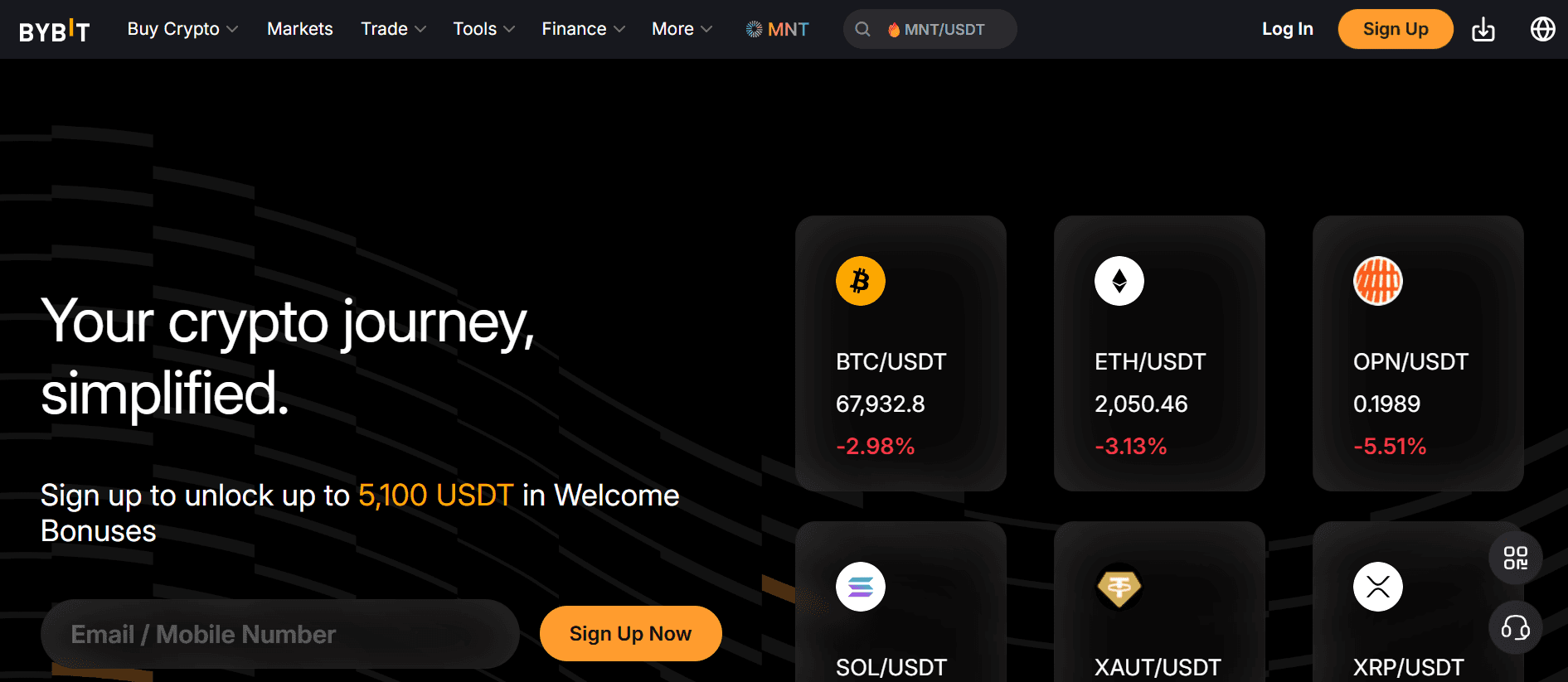
Bybit excels as a derivatives-focused exchange ideal for futures enthusiasts seeking flexibility across multiple asset classes. Its platform combines user-friendly design with professional-grade tools, including support for stocks, forex, and commodities, as well as crypto, all while delivering competitive leverage and low costs.
Key Features Include
- Up to 100x leverage on futures (with options for higher via MetaTrader 5 integration)
- More than 600 futures markets spanning crypto, traditional finance instruments, and beyond
- Advanced AI-powered tools and TradingView charting for in-depth analysis
- Copy and bot trading options plus full API connectivity
- Ultra-low fees starting at industry-leading maker/taker rates
- EU licensing and proof of reserves to enhance user trust
- MetaTrader 5 access for traders preferring familiar desktop environments
3. OKX
OKX stands out for its all-in-one ecosystem that serves traders of every skill level through robust margin and derivatives offerings. The platform provides transparent data and educational resources, making leveraged trading more approachable while supporting high leverage on diverse contracts.
Key Features Include
- Up to 125x leverage available on futures, perpetuals, and options
- Built-in analytics dashboard and dedicated learn section for leveraging education
- Pre-built trading bots and custom automation for strategy execution
- Competitive fees with VIP tier reductions for active users
- Demo account for risk-free practice of leveraged positions
- Pre-market futures trading with lower initial leverage for new listings
4. MEXC

MEXC is recognized for offering some of the lowest fees in the industry, alongside exceptionally high leverage, making it appealing to cost-conscious traders exploring altcoins and futures. Its extensive market selection and zero-maker-fee model help maximize profitability on frequent trades.
Key Features Include
- Up to 200x leverage (with select pairs reaching 500x) on perpetual futures
- Over 800 futures markets, including many niche and emerging tokens
- Zero maker fees and ultra-low taker rates for efficient trading
- Copy trading compatibility directly within futures markets
- $100 million protection fund and proof of reserves for security
- Demo trading account loaded with virtual funds for testing strategies
- Fast sign-up process with support for hedge and cross-margin modes
5. Bitget

Bitget shines with its focus on leverage tokens and copy trading, making it accessible for intermediate users who want simplified exposure to high-leverage positions without constant manual management. Strong liquidity and a generous protection fund further bolster its reputation.
Key Features Include
- Up to 125x leverage on futures alongside 10x on margin trading
- More than 530 futures markets, plus over 150 margin tokens for spot leverage
- An advanced copy trading system to mirror successful traders automatically
- Self-insurance fund exceeding $500 million for enhanced protection
- Deep liquidity pools that support large-volume orders with minimal slippage
- API integration and TradingView charts for technical analysis
- Proof of reserves and high-security standards tailored for derivatives users
6. Gate.io
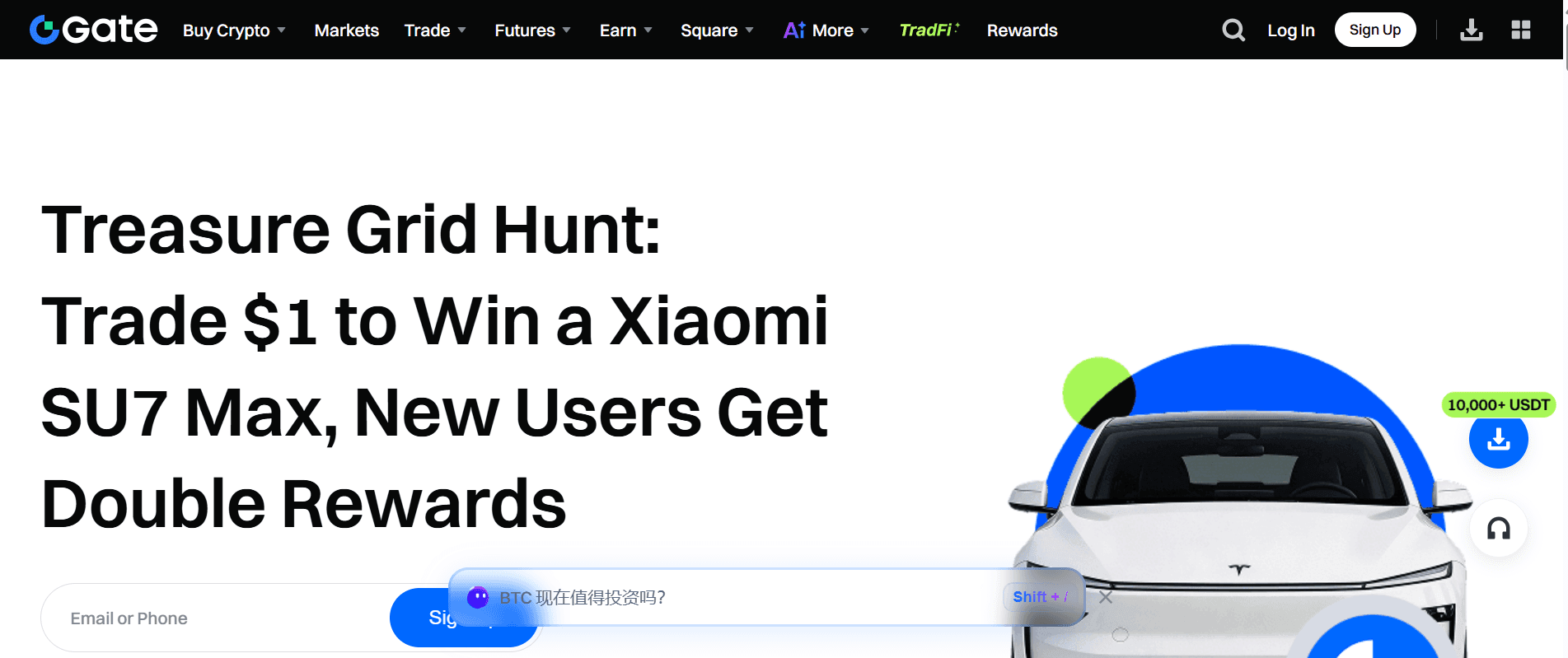
Gate.io is a versatile, all-in-one platform favored by traders seeking broad altcoin exposure and solid leveraged derivatives trading. It supports a wide selection of perpetual contracts and integrates useful automation features while emphasizing security through proven reserve transparency and risk management options.
Key Features Include
- Up to 125x leverage on USDT-margined and BTC-margined perpetual contracts
- Over 590 trading pairs with more than 450 futures markets available
- Competitive futures fees starting around 0.02% maker and 0.05% taker, with VIP discounts
- Advanced copy trading with slippage protection and performance tracking
- Multiple trading bots, including grid and CTA strategies for automated leveraged positions
- Proof of reserves, insurance mechanisms, and a unified trading account with cross-margin support
- Demo trading mode, hedge mode, and advanced order tools like TWAP and futures calculator
7. KuCoin

KuCoin appeals to users who value extensive altcoin listings and flexible futures trading in a user-friendly environment. The platform balances accessibility for intermediates with professional-grade leverage tools, including automated bots and hedge capabilities across numerous perpetual contracts.
Key Features Include
- Up to 100x leverage on major perpetual futures contracts (with adjustments per pair)
- Around 570 tradable futures contracts covering a wide range of cryptocurrencies
- Futures trading fees are typically at 0.02% maker and 0.06% taker, with volume-based reductions
- Cross-margin mode that shares collateral efficiently across positions
- Hedge mode allows simultaneous long and short positions for risk management
- Futures grid bots and other automation tools for leveraged strategies
- Robust risk controls, including stop-loss/take-profit, insurance fund, and API support for advanced trading
But access to powerful platforms only matters if you know how to match their features to your actual trading style and risk tolerance.
Related Reading
- Day Trading Minimum Balance
- Options vs Margin Trading
- Leverage Trading Stocks
- Margin Trading Strategies
- Instant Funding Prop Firm Rules
- Margin Account Requirements
- Futures Trading Margin Requirements
- Ea To Pass Prop Firm Challenge
- Carry Trade Strategy
- How To Make Money Trading Stocks
- How To Become A Funded Trader
- How Do Funded Trading Accounts Work
How to Choose the Best Leverage Trading Platforms for Your Goals

You start by defining what you're actually trying to accomplish, not by chasing the highest multiplier advertised on a homepage. If your goal is building a steady income through daily scalps in liquid forex majors, you need tight spreads, fast execution, and minimal funding costs, not 200x leverage on obscure altcoins.
If you're testing a new strategy on crypto futures, prioritize simulation environments and isolated margin modes that let you fail cheaply as you refine your approach. The platform becomes a tool that fits your method, not a constraint that forces you into trades your strategy never intended.
Match Regulation to Your Risk Appetite and Location
Regulatory oversight determines whether you can recover funds if something goes wrong, making it a baseline filter before you evaluate anything else. Platforms licensed by the CFTC or the SEC in the United States, or by equivalent bodies such as the FCA in the UK or ASIC in Australia, undergo regular audits and maintain segregated client accounts, reducing the risk of mismanagement during volatile periods.
If you're trading with significant capital or holding positions overnight, that oversight becomes essential because it governs dispute-resolution processes and fund-recovery mechanisms in the event of platform failures.
The Hidden Cost of Unregulated Leverage
Unregulated exchanges sometimes offer higher leverage ratios or lower fees, but they operate without the safety nets that protect your margin during liquidity crises or technical outages. Traders often underestimate how regulation directly affects dispute-resolution capabilities and recovery options in leveraged trading, focusing instead on advertised features without considering what happens when things break.
Verify the platform's licensing status in your specific region before depositing funds, because cross-border regulations can leave you without recourse if the exchange operates outside your jurisdiction's enforcement reach.
Prioritize Liquidity Over Leverage Limits
Deep order books prevent slippage that turns a calculated entry into an unexpected loss before your position even opens. Traders seek high liquidity to ensure better execution and lower slippage, critical for precise entry and exit points in leveraged positions, because a 0.5% slippage on a 20x position erases 10% of your margin instantly.
Platforms with thin volume on your chosen pairs force you to accept worse fills during volatile periods, undermining the entire reason you selected that leverage ratio in the first place.
Liquidity: The Core of Efficient Execution
Check historical depth charts and average spreads during peak and off-peak hours, not just current snapshots that look healthy when markets are calm. A platform might advertise hundreds of trading pairs, but if the one you need shows wide bid-ask spreads and sparse order flow, you'll pay hidden costs through poor execution that no fee discount can offset.
Strong liquidity also supports smoother operations during news-driven spikes, enabling timely entries and exits that preserve capital in margin-based trades when seconds determine whether you hold or get liquidated.
Evaluate Risk Controls That Match Your Discipline Level
Isolated margin modes limit losses to the collateral assigned to a specific trade, preventing one bad position from draining your entire account when multiple setups run simultaneously. Cross-margin options share your balance across all open trades for capital efficiency, but they also mean a single liquidation can cascade into others if you haven't sized positions conservatively.
Mechanical Safeguards for Disciplined Trading
Beginners benefit from isolated setups that enforce strict boundaries, while experienced traders managing correlated positions might prefer cross-margin flexibility paired with manual stop-loss discipline.
Built-in tools like automatic stop-loss triggers, trailing stops, and real-time margin calculators help maintain the discipline that leverage demands but rarely receive. Platforms offering hedge mode, where you can hold simultaneous long and short positions on the same pair, let you lock in profits or protect against reversals without closing your primary trade. These features prove their value in moments when emotion overrides logic, providing mechanical safeguards that execute your plan even when fear or greed would otherwise override it.
Calculate Total Cost Across Your Expected Trade Volume
Fee structures multiply with leverage because you're moving larger notional values, turning small percentages into meaningful drains on profitability. A platform charging 0.05% taker fees looks competitive until you realize ten daily trades at 10x leverage on $50,000 positions cost you $250 per day in fees alone, or $5,000 monthly before you've made a single profitable prediction.
Funding rates on perpetual contracts add another layer, with 0.01% every eight hours becoming 0.9% monthly on static positions, a cost that compounds silently while you wait for your thesis to play out.
Aligning Platform Costs With Strategy
Compare maker-taker spreads, funding schedules, rollover charges, and any inactivity or withdrawal penalties against your actual trading frequency and typical hold duration. Platforms with clear, competitive structures often reward active users through volume-based rebates or native token discounts that reduce costs as you scale.
By calculating these impacts upfront, you avoid selections that appear attractive on leverage alone but prove expensive in practice, preserving more of your edge for actual market gains instead of feeding it to the exchange.
Trading Strategy, Not Survival
Most platforms hand you borrowed capital and expect you to survive long enough to generate trading fees, but they don't reduce the personal risk you shoulder when testing unproven strategies or navigating unfamiliar volatility. Prop firm approaches this differently by giving you access to simulated trading accounts up to $2M once you demonstrate consistent skill, letting you trade with the firm's capital, keep up to 100% of the profits, and withdraw earnings on demand.
The structure separates your ability to execute from the size of your savings, letting you focus on strategy rather than survival, while liquidation risk rests with the firm's capital rather than your rent money.
Related Reading
- Cheapest Funded Trader Program
- Supply And Demand Trading Strategy
- How To Backtest A Trading Strategy
- Compound Trading For Beginners
- Best Option Trading Strategy
- Best Funded Trading Programs
- Pros And Cons Of Margin Trading
- Prop Firm Instant Funding No Consistency Rule
Risks of Trading With Leverage Trading Platforms, and How to Address Them
Leverage trading platforms amplify every market movement against you just as aggressively as they multiply favorable swings, creating a structural imbalance where a 5% adverse shift on 20x leverage erases your entire margin before you process what happened. The real danger isn't the multiplier itself but the compressed timeline between entry and liquidation, where volatility spikes or unexpected news events trigger forced exits that lock in losses permanently.
Margin Calls Convert Temporary Drawdowns Into Permanent Losses
Platforms monitor your equity tick by tick, and when adverse price movement pushes your balance below the maintenance threshold, they issue margin calls demanding immediate deposits or automatically close positions to protect their capital. This mechanism treats every dip as a potential catastrophe, ignoring whether your thesis remains valid or the move represents normal market noise.
A well-researched trade can get liquidated during a brief shake-out, preventing you from participating in the recovery you predicted because the platform's risk engine prioritizes its survival over your strategy.
Securing Your Equity Buffer
Counter this by maintaining equity buffers at least 50% above minimum requirements, giving positions room to breathe through volatility without triggering automated exits. Set personal stop-loss levels tighter than platform liquidation points, letting you control the exit on your terms rather than accepting forced closure at the worst possible moment.
Review margin requirements across different market conditions, because platforms often raise thresholds during news events or volatile sessions, catching traders off guard when their previously safe positions suddenly approach danger zones.
Overnight Funding Costs Erode Profitable Setups Silently
Every hour you hold a leveraged position accrues borrowing charges or funding fees that compound into significant drains when trades extend beyond your planned timeframe. The problem intensifies during consolidation periods, where price stalls and you're paying daily fees while waiting for directional movement that may never arrive.
What looked like a 3% gain on paper becomes a 1% loss after accounting for three weeks of accumulated funding, turning patience from a virtue into a liability that steadily bleeds capital.
Factoring in the Cumulative Cost
Calculate break-even points that include all carrying costs before entering any position, ensuring your profit target exceeds not just the spread but the cumulative fees you'll pay if the trade takes the maximum expected duration to resolve. Favor shorter holding periods whenever your strategy allows, because fees that seem negligible over eight hours become crushing over thirty days.
Compare funding schedules across platforms and allocate capital to venues offering lower overnight rates, especially if your edge relies on multi-day holds, where cost differences compound into meaningful performance gaps.
Slippage During Volatility Multiplies Execution Risk
Thin order books or sudden price gaps cause your entry or exit to execute far from the intended level, and leverage multiplies that distance into an oversized impact on your margin. A 0.3% slippage on a 50x position means 15% of your capital vanishes before the trade even starts working, eroding your edge faster than any fee structure.
Platforms can't guarantee fills at specific prices during fast markets, leaving you exposed to whatever liquidity exists when your order hits the book, often at levels that invalidate your original risk-reward calculation.
Execution Quality Over Advertised Spreads
Avoid trading during scheduled news releases or low-liquidity windows when spreads widen and depth evaporates, because the leverage you're using turns minor execution variance into account-threatening losses. Use limit orders instead of market orders whenever timing permits, accepting that you might miss a move rather than accepting catastrophic slippage that destroys your position before it begins.
Test execution quality during volatile periods with small sizes before committing full capital, because advertised spreads during calm markets tell you nothing about what you'll actually pay when it matters most.
Leverage Prop Firm Funding as an Effective Solution
Prop firm funding models shift the capital burden away from the individual trader, supplying simulated accounts that allow full leverage exposure without personal financial liability for drawdowns.
Built-in risk limits and professional oversight replace the unlimited downside of retail margin accounts, letting skilled participants focus purely on performance while the firm absorbs any losses. This structure directly neutralizes the amplification, liquidation, and fee-erosion risks outlined earlier by removing the trader’s own money from the equation.
The Goat Funded Trader Advantage
Goat Funded Trader delivers this approach through a streamlined process in which participants pass simple challenge phases to access funded accounts offering up to 1:100 leverage across forex pairs, stocks, ETFs, and crypto. With rules capped at a 3 percent daily loss and 6 percent overall maximum, no time restrictions, and the ability to scale to $800K in capital alongside profit splits reaching 100 percent, the program lets traders operate with high leverage in a controlled environment.
Fast on-demand payouts and a guarantee of rewards within two business days further reinforce reliability, making it a natural fit for anyone seeking to trade leverage responsibly without risking personal capital.
But even perfect risk management won't help if you're leaving money on the table by not acting on what you now understand about leverage's true costs and alternatives.
Get 25-30% off Today - Sign up to Get Access to up to $800K Today
The platforms you've just reviewed give you borrowed capital and liquidation timers, but they don't solve the fundamental problem every skilled trader faces: proving your edge requires risking personal funds you might not have, and the psychological weight of trading your rent money distorts the very discipline that leverage demands. You can study order flow, master risk ratios, and build a profitable system, yet still find yourself limited by account size or paralyzed by fear when volatility spikes and your margin balance drops toward the danger zone.
Access High Capital, Keep High Profits
Goat Funded Trader eliminates that constraint entirely by giving you access to simulated trading capital up to $800,000 without requiring you to deposit thousands of dollars you can't afford to lose. You choose a customizable challenge or opt for instant funding, pass it at your own pace with no minimum profit targets in the first phase and zero time limits, then receive a funded simulated account where you trade using up to 1:100 leverage on MT5 with your favorite strategies.
Profitable Freedom, Minus the Pressure
You keep up to 100% of the profits through flexible split structures, and payouts arrive within two business days, backed by a $500 penalty if the firm misses that window. Over 98,000 traders have already collected more than $9.1 million in real rewards, proving the model works when you bring consistent execution to capital that isn't yours to lose.
The structure rewards skill instead of punishing learning curves. You can trade news events, hold positions over weekends, and execute without the rigid profit targets or countdown clocks that turn other evaluation programs into stress tests rather than skill assessments. When liquidation risk rests with the firm's simulated capital rather than your savings account, you execute with the clarity that high leverage requires, but retail psychology rarely endures.
Disciplined Growth with Ultimate Flexibility
Rules capped at 3% daily loss and 6% maximum drawdown keep you disciplined without feeling arbitrary, and the absence of time pressure lets you wait for setups that match your edge rather than forcing trades to meet artificial deadlines.
Whether you prefer the flexibility of challenge-based progression or want to start trading immediately through instant funding options, Goat Funded Trader lets you focus on leveraging your skills instead of worrying about hidden rules, delayed payouts, or platforms that profit more from your failures than your successes. Ready to trade leverage with real freedom and better conditions?
Sign up today to get access to up to $800,000 in simulated funding and enjoy 25 to 30% off your first plan, because the only thing standing between you and serious capital is the decision to stop risking your own money to prove what you already know you can do.
Be Great and get the App