






How to Become a Trader From Home in 10 Steps: A 2026 Guide
How to become a trader from home in 2026 with Goat Funded Trader's proven 10-step guide. Start your trading career today with expert strategies.
.jpg)

Financial independence through Capital Growth Trading has never been more accessible, yet many aspiring traders struggle with where to begin. Setting up a home trading operation requires more than just opening a brokerage account. Success depends on developing the right workspace, mindset, and strategies that separate profitable traders from those who quit within months. The path forward involves mastering both technical skills and emotional discipline.
Practicing trading skills without risking personal capital offers a strategic advantage for beginners. This approach allows new traders to focus on developing consistent strategies and building confidence before committing their own funds. Many successful home traders start by demonstrating their abilities through evaluation processes that provide access to professional-level resources. Aspiring traders can explore these opportunities through a prop firm that specializes in funding qualified candidates.
Summary
- Trading from home requires between $500 and $2,000 to start in 2026, not the tens of thousands most people assume. According to industry data, 90% of retail traders begin with less than $10,000, and the average entry point is around $1,000. Small accounts force the exact habits that build long-term success: tight stop-losses, one-percent risk rules, and disciplined position sizing. Large starting capital often leads to oversized bets early on because the emotional weight of each trade feels smaller, whereas a $500 account, where every trade matters, trains better instincts than a $50,000 account, where carelessness goes unpunished for months.
- Retail traders now account for 20 to 25% of total U.S. equity activity, peaking near 35% during volatile sessions, according to analysts at J.P. Morgan and Barclays. Retail inflows into U.S. stocks surged 53% year over year, hitting record levels in 2025. This isn't a temporary spike driven by meme stocks or pandemic boredom, but rather reflects sustained participation enabled by accessible technology, zero-fee execution, and the realization that home-based trading delivers autonomy that traditional employment never will. The infrastructure exists, the tools are free, and the capital gap is closed for those willing to prove their edge.
- Remote work infrastructure already exists in millions of households, with 34.6 million working Americans now operating remotely and three times as many remote jobs as in 2020. High-speed internet, collaboration tools, and proven productivity systems that support Zoom calls and spreadsheets also support TradingView and order entry platforms. Extending existing home office setups to trading requires no new overhead, just intention. The laptop used for remote work also runs trading platforms, and the desk supporting corporate tasks enables market participation without additional investment.
- Most traders fail because they enter markets without understanding how they function. Industry analysis shows that 90% of traders lose money, and the primary cause is entering markets without proper education and preparation. Beginners skip foundational learning because it feels slow, watching a few YouTube videos before opening accounts and trading based on hunches. This approach produces predictable results: early, costly mistakes that drain capital before real learning begins. Dedicated education isn't optional preparation but the filter that separates those who survive from those who fund everyone else's profits.
- Evaluation programs with structured risk parameters demonstrate that traders who follow consistent processes can prove their abilities without risking personal capital, with some programs showing pass rates as high as 92%. This data shows that participation occurs through disciplined execution rather than gambling, and that clear rules combined with proper risk management yield reproducible results. The structure rewards systematic approaches over emotional reactions, aligning incentives around process quality rather than short-term gains.
- Goat Funded Trader addresses the capital barrier by providing simulated trading capital of up to $2M once traders pass their evaluation, allowing them to earn profit splits of up to 100% without risking personal savings, while adhering to clear drawdown rules that help develop professional trading habits.
Who is a Trader, and What Does It Mean to Become a Trader?
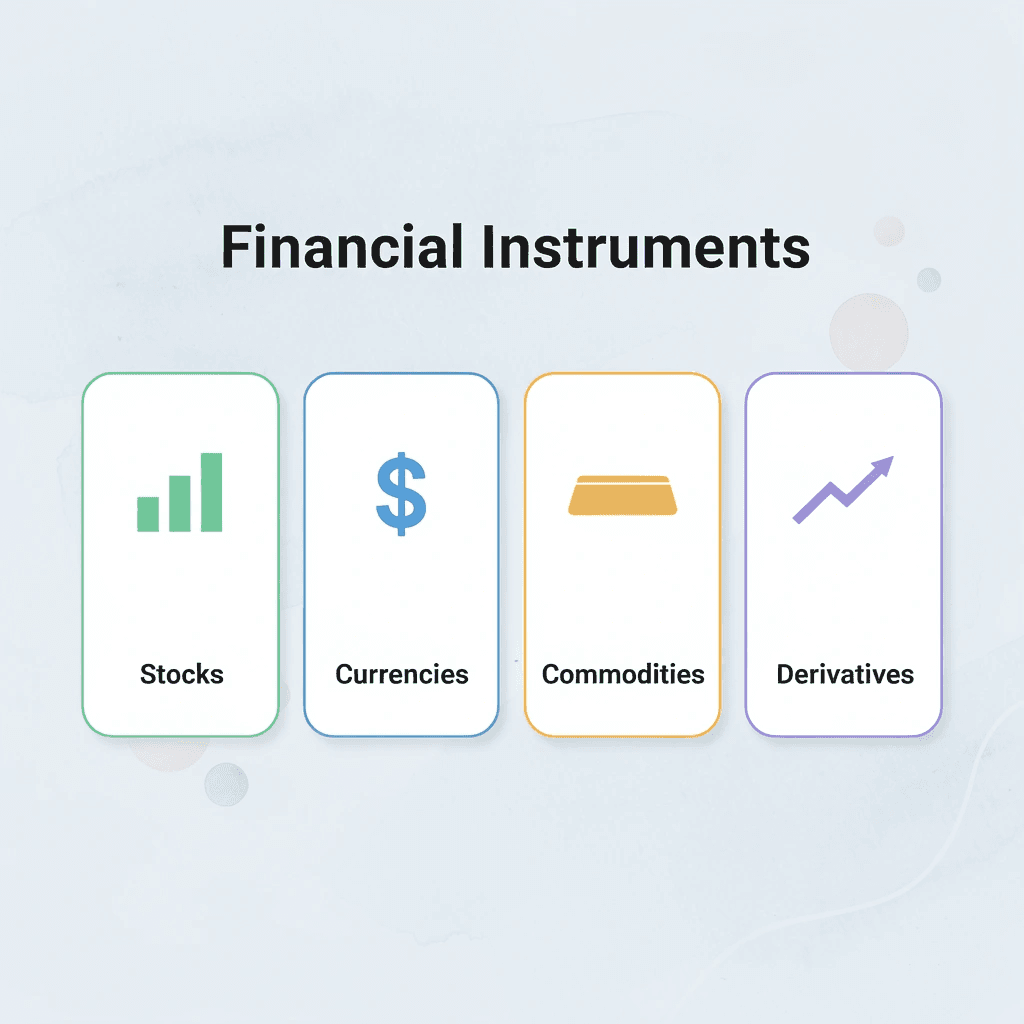
A trader buys and sells financial instruments like stocks, currencies, commodities, or derivatives to profit from price changes. This role demands sharp analysis, strict risk management, and emotional control. Becoming a trader means shifting from passive hoping to active decision-making, treating each trade as part of a statistical edge rather than a gamble.

🎯 Key Point: Successful trading requires treating each position as part of a systematic approach rather than relying on luck or emotions.
"Trading is not about being right or wrong; it's about making money when you're right and minimizing losses when you're wrong." — Professional Trading Wisdom
💡 Tip: The transition from casual investor to professional trader involves developing disciplined habits around risk assessment, position sizing, and market analysis.
What Sets Traders Apart from Investors
Traders profit from market volatility by timing moves around daily or weekly changes using leverage, short selling, and technical indicators to capitalize on quick shifts. Investors build positions over years based on company fundamentals or economic growth. Trading requires constant monitoring and rapid adaptation to convert market movements into profit through precise entries and exits.
Core Skills Required to Trade Effectively
Strong analytical ability helps traders read price action, volume, and indicators to identify high-probability setups. Risk management ensures they never risk more than a small percentage of capital per trade. Emotional regulation prevents fear or greed from overriding the plan. Technical skill with trading platforms and fundamental market knowledge completes the toolkit for consistent execution.
Different Types of Traders in the Markets
Day traders open and close positions within the same session to avoid overnight risk. Swing traders hold positions for several days to capture larger price swings. Scalpers execute dozens or hundreds of small trades for minimal gains throughout the day. Institutional traders work for banks or funds with substantial capital, often hedging corporate risks or exploiting market inefficiencies. Each style suits different personalities, time commitments, and risk tolerances.
What does it really mean to commit to trading as a profession?
Becoming a trader means committing to a job where your results depend directly on your skill, process, and mindset. You take full responsibility for outcomes, build a tested edge through practice, and treat every loss as a lesson for improvement. Evaluation programs with structured risk parameters show a 92% pass rate, proving that traders who follow consistent processes can demonstrate their abilities without risking their own capital.
How to become a trader from home without capital barriers?
Most people who want to become traders face a money problem unrelated to their trading ability. You might have discipline, a working strategy, and emotional control, but building a real trading account from nothing takes years. Prop firms like Goat Funded Trader solve this by providing simulated trading capital up to $2M after you pass their test. You can then earn profits and keep up to 100% of your gains without risking your own money. This removes the barrier that historically prevented skilled traders from getting their opportunity. But why are so many people choosing this path now?
Related Reading
- What Is A Prop Firm Forex
- Why Are Fidelity Margin Rates So High
- How Is Margin Interest Calculated
- No Consistency Rule Prop Firm
- How Much Do Day Traders Make Per Month
- How Does Margin Work On Robinhood
- Can You Make A Living Day Trading
- Financing Stock Options
- How Much Margin Does Fidelity Offer
- How Does Margin Interest Work
- How Does Margin Work at Interactive Brokers
- Options Trading Cash Flow Strategies Explained
- Why Is Schwab Margin Rate So High
- How To Compare Brokers By Margin Interest Rates
Why Are More People Choosing to Trade From Home in 2026?
Technology removed the gatekeepers. Retail traders now access institutional-grade platforms, zero-fee execution, and real-time global market data from any location with an internet connection. 34.6 million working Americans work remotely, creating infrastructure that doubles as trading setups without additional investment. This combination transforms spare bedrooms into profit centers and eliminates the false choice between career stability and market participation.
"34.6 million working Americans work remotely, creating the perfect infrastructure for home-based trading without additional setup costs." — Vena Solutions, 2024
🎯 Key Point: The convergence of remote work infrastructure and democratized trading technology has created an unprecedented opportunity for individuals to trade professionally from home without sacrificing their primary income source.

💡 Tip: Your existing home office setup for remote work likely already includes everything needed for trading: high-speed internet, multiple monitors, and a quiet environment for focused decision-making.
The Commute Tax Nobody Talks About
Every hour spent in traffic is an hour you can't spend analyzing charts, refining entries, or responding to market-moving news. Commuting drains time, focus, and capital through gas, parking, and the mental tax of rushing between obligations. Home-based traders reclaim those hours for pre-market preparation or post-session reviews, aligning their sharpest thinking with volatility windows. You also control the environment: multiple monitors, ergonomic setup, and zero interruptions during critical execution moments—advantages offices never provided.
Infrastructure Already Built
Remote work became normal in home offices years ago. High-speed internet, collaboration tools, and proven productivity systems exist in millions of households. The laptop running Zoom calls also runs TradingView. The desk supporting spreadsheets supports order entry platforms. There are now three times as many remote jobs as in 2020, making basic infrastructure for serious market participation standard rather than exceptional.
Capital Barriers Collapse
Brokerages eliminated commissions, and platforms deliver professional charting, backtesting, and risk calculators at zero cost. The biggest shift is access to trading capital without personal risk. Traditional paths required years of saving to build a meaningful account size. Prop firms like Goat Funded Trader provide simulated capital of up to $2M once you pass the evaluation, allowing you to earn profit splits of up to 100% without risking your savings. This removes the longest barrier between skill development and income, transforming home setups into launchpads for professional-scale participation.
Global Markets, Local Control
Time zones stop mattering when you trade from home. Asian sessions, European opens, and US market hours all become accessible without relocating. News breaks at 3 a.m.? You're at your desk. Earnings surprises during lunch? No need to leave the office or explain to a manager. Traders respond instantly to opportunities rather than watching them pass during meetings or commutes. Operating costs disappear simultaneously: no professional wardrobe, daily lunches, or parking fees. Those savings go directly into trading capital or living expenses.
Retail Influence Reaches Critical Mass
Retail traders made up 20-25% of total U.S. stock activity in 2025, with peaks near 35% during volatile sessions, according to analysts at J.P. Morgan and Barclays. Retail money flowing into U.S. stocks jumped 53% year-over-year, hitting record levels. This surge reflects the appeal of user-friendly technology, zero-fee execution, and the autonomy that home trading offers compared to traditional employment. But none of that matters without sufficient starting capital, right?
How Much Money Do You Need to Start Trading From Home?
You need between $500 and $2,000 to start trading from home in 2026, not the tens of thousands that people assume. This capital enables proper position sizing, emotional learning through real market conditions, and practice in risk management without catastrophic exposure. The exact amount depends on your chosen market and strategy, but the barrier to entry is psychological, not financial.

🎯 Key Point: The biggest obstacle to starting home trading isn't your bank account—it's overcoming the misconception that you need massive capital to begin learning and practicing real market skills.
"The barrier to entry for home trading is psychological, not financial—most successful traders started with modest amounts between $500-$2,000 rather than large capital reserves." — Trading Psychology Research, 2024
💡 Tip: Start with the minimum amount that allows you to feel real market emotions without risking money you can't afford to lose. This sweet spot creates authentic learning conditions while protecting your financial stability.
The Capital Myth That Stops Beginners
The idea that trading requires substantial capital stems from outdated practices of large financial institutions and Wall Street imagery. Fee-free competition between brokers and platforms eliminated these barriers years ago. Forex and crypto brokers accept deposits as low as $100, while micro and nano contracts let you control risk to fractions of a pip. Leverage and fractional position sizing mean your account size determines your risk per trade, not your ability to participate.
Most Traders Start Small and Learn Through Controlled Exposure
According to Goat Funded Trader, 90% of retail traders start with less than $10,000, and the average starting amount is around $1,000. Small accounts force you to develop the habits that build long-term success: tight stop losses, one percent risk rules, and disciplined position sizing. Large starting capital often leads to oversized bets early on because each trade feels less emotionally significant. A $500 account where every trade matters teaches better instincts than a $50,000 account where carelessness goes unpunished for months.
How much capital do different trading strategies require?
Swing traders can succeed with $500 to $2,000 by capturing moves that last several days, using wider stops and making fewer trades each week. Day traders in forex or futures can start with around $1,000 using micro contracts, which let them risk $5 to $10 per trade. Scalpers need closer to $2,000 because frequent entries demand tighter spreads and faster execution. Matching your capital with your strategy's time horizon and risk profile ensures every trade teaches you something without jeopardizing your survival.
How can prop firms help you become a trader from home?
Traditional trading requires risking your own money to prove your edge, creating a painful loop: you need capital to learn, but learning costs capital through early mistakes. Traders using prop firm platforms like Goat Funded Trader bypass this friction by accessing simulated capital after passing an evaluation, letting them trade larger positions without personal financial risk. This shifts the learning question from "how much can I afford to lose?" to "can I prove consistent profitability?" – fundamentally changing the psychology of skill development.
Building From What You Have Today
Start with money you can afford to lose completely without affecting rent, food, or other obligations. Prove your edge on a demo account first, then move to a small live account where you learn from real emotions.
Profits grow when you risk 1% or less per trade and reinvest your gains. Markets reward good process over starting size: discipline multiplies modest capital faster than a poorly managed account shrinks. Your first $500 isn't meant to generate income—it's tuition for learning how you react to real money on the line, how stop losses feel when they trigger, and whether your strategy holds up when emotions enter the equation.
What do you actually do once your trading account is open?
But having the money is only the beginning. What do you do with it once your account is open?
How to Become a Trader From Home in 10 Steps
Trading from home requires structured education, a tested strategy, disciplined risk management, and access to capital that grows with your skill. Each step builds on the last, creating repeatable execution that compounds over time.

🎯 Key Point: The most successful home traders follow a systematic approach rather than jumping directly into live markets with real money.
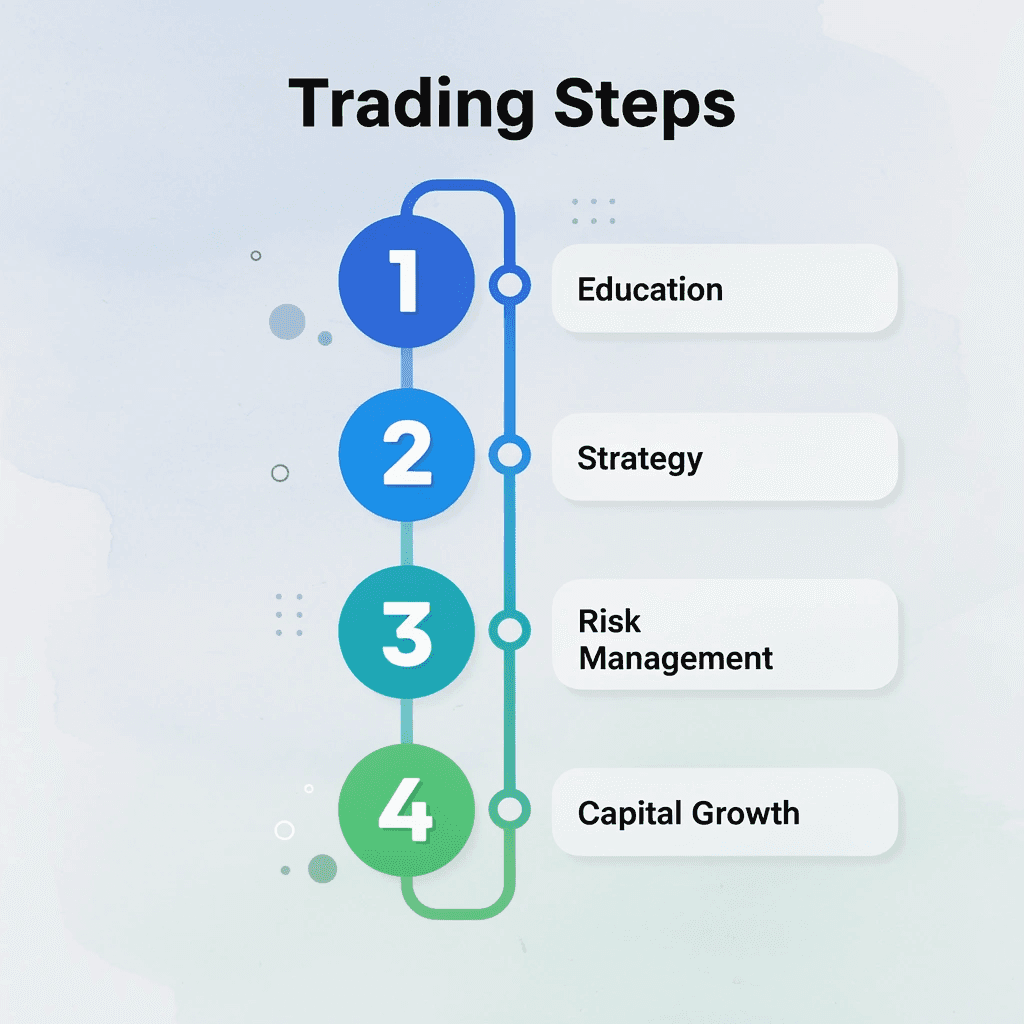
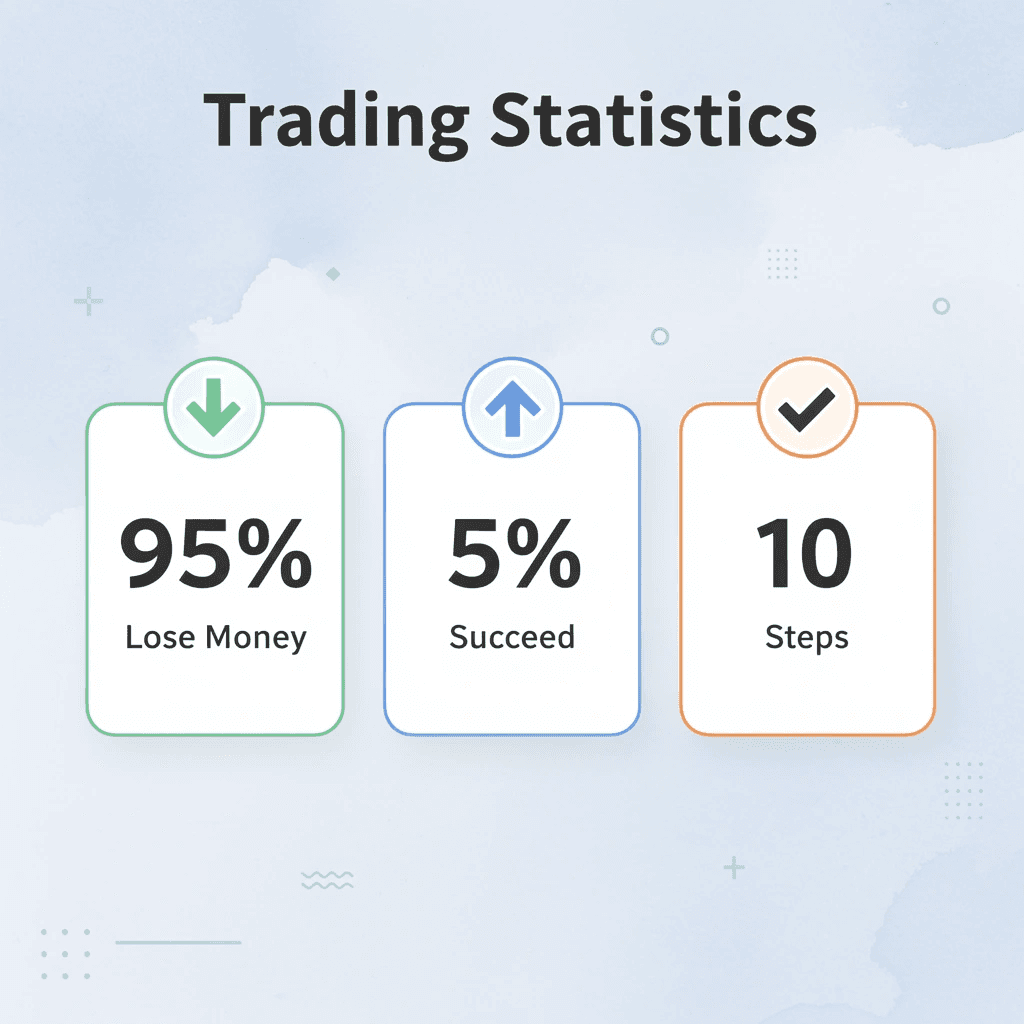
"95% of day traders lose money, but those who follow a structured 10-step process have significantly higher success rates." — Financial Industry Research, 2024
💡 Tip: Never skip the education phase - even experienced investors need to learn home trading specifics like platform tools, tax implications, and workspace optimization.
Step 1: Commit to Serious Education First
Spend focused time learning market basics before risking any money. Study price movement, support and resistance, order flow, and economic releases. Use free or low-cost resources such as Investopedia, BabyPips for forex, or platform tutorials. Spend at least three months building this foundation to understand the market rather than guessing. This prevents costly early mistakes and builds the knowledge base every successful home trader needs. Most beginners skip this step because it feels slow, instead watching a few YouTube videos, opening an account, and trading on hunches. Education isn't optional preparation; it's the filter that separates those who survive from those who fund everyone else's profits.
Step 2: Choose Your Trading Style and Market
Decide on the approach that fits your schedule and personality: day trading for intraday action, swing trading for multi-day positions, or scalping for quick moves. Pick one liquid market, such as major forex pairs, large-cap stocks, or micro futures. Your available time, risk tolerance, and daily routine determine long-term consistency.
Why does focusing on one market improve your trading success?
Focusing on one thing early prevents you from learning too many things at once and lets you become proficient in one area. A day trader who studies ES futures for six months will outperform someone who switches between crypto, stocks, and forex every few weeks. Your brain needs to practice the same thing repeatedly in one area to spot trading setups faster than the market changes.
Step 3: Build a Dedicated Home Trading Workspace
Set up a professional environment free from household distractions. Use a reliable computer, high-speed internet, multiple monitors if possible, an ergonomic chair, and good lighting. Organize charts, news feeds, and execution windows for quick access. Treat this space as a dedicated office with set trading hours. The right setup boosts focus, reduces errors during volatile periods, and supports sustained concentration. Physical separation creates mental separation: when you sit down in that chair, your brain knows it's time to execute, not browse or multitask.
Step 4: Select and Open an Account with a Reliable Broker
Look into regulated brokers that offer low or zero commissions, fast execution, and strong platforms. Compare mobile access, charting tools, and customer support. Complete the application, verify your identity, and fund the account with an amount that matches your chosen market and risk rules.
Why does broker technology matter when learning how to become a trader from home?
A good broker removes technical issues so you can focus on making decisions rather than dealing with platform limitations. Slippage on entries, delayed order fills, or slow mobile apps cost money when markets move fast. Test the platform in demo mode before adding money. If execution feels slow or charts lag during news releases, switch brokers. Your edge depends on technology that works with you, not against you.
Step 5: Master Your Trading Platform Inside Out
Spend weeks learning the platform in demo mode. Master placing orders, setting stops and limits, reading charts, applying indicators, and accessing real-time data. Customize layouts to your preferences and practice executing trades smoothly. Platform fluency eliminates hesitation during live sessions and turns technology into a seamless extension of your strategy.
Most traders underestimate this step and jump into live trading, only to struggle with order types. The first time you accidentally place a market order instead of a limit order during a volatile session, you'll lose more than the cost of two weeks in demo mode. Muscle memory matters: your hands should know where every button is before real money enters the equation.
Step 6: Develop and Backtest a Clear Trading Strategy
Create a detailed plan that defines the exact entry and exit rules, stop-loss placement, and position sizing for your chosen market and style. Backtest across different market conditions using historical data and refine until it shows a positive edge. This transforms random guesses into repeatable processes.
Consistent execution of a tested plan separates profitable home traders from those who chase emotions or tips. Backtesting reveals whether your edge exists across bull markets, bear markets, and choppy sideways action. If the strategy fails in historical data, it will fail in live markets; fix it before funding the account.
Step 7: Practice Extensively on a Demo Account
Practice your strategy in a simulated trading environment for several months until you achieve consistent results that match your backtests. Write down every trade in a journal, review your mistakes daily, and make changes only when data supports them. Demo practice builds execution speed, emotional strength, and confidence without risking real money.
How does demo trading prepare you to become a trader from home?
Think of this phase as your trading apprenticeship, where habits form before you use real money. The goal is consistency, not perfection. Can you follow your rules for 100 trades without making changes? Can you take a stop loss without revenge trading? Can you sit out low-probability setups when bored? These behaviors determine whether you survive the move to live trading.
Step 8: Implement Strict Risk Management Rules
Limit every trade to no more than one percent of your account balance at risk. Set hard stop losses on every position and maintain maximum daily and weekly loss thresholds. Review your risk journal after each session to confirm adherence. This discipline protects your capital during losing streaks and allows your edge to compound over time.
Why does proper risk management separate successful traders from gamblers?
A trader who risks five percent per trade will blow up after a normal 20% drawdown. A trader who risks 1% per trade survives the same drawdown with 80% of their capital intact and continues executing trades. The emotional discipline required to follow these rules separates professionals from gamblers.
Step 9: Transition to Small Live Trading and Maintain a Trading Journal
Fund your account with a small amount that aligns with your tested risk rules, and trade the smallest positions possible. Write down every trade with your reasoning, outcome, and emotional response. Review your journal weekly to identify patterns and accelerate improvement.
This shift from demo to real money strengthens your mindset and translates theoretical knowledge into real results. Real losses affect your brain differently than demo losses: your heart rate rises, you doubt your setups, and feel tempted to skip stop losses or double positions to recover losses faster. The journal captures these reactions so you can identify which emotions undermine your execution and build defenses before losses compound.
Step 10: Leverage Prop Firm Funding
Once you prove you can trade consistently with your small live account, you can use proprietary trading firms to access much larger amounts of money without risking more of your own cash. You pay a one-time evaluation fee, meet clear profit and risk goals in a practice challenge, and then trade the firm's funded account while keeping most of the profits.
How does prop firm funding multiply your earning potential?
This multiplies your earning potential and removes the capital ceiling that holds many home traders back. A $2,000 account earning 10% monthly returns generates $200, while the same strategy on a $ 200,000-funded account generates $ 2,000. Prop firms let you trade at the scale your skill deserves without risking your savings or waiting years to grow a small account.
What makes Goat Funded Trader a strong option for home traders?
Goat Funded Trader is a strong choice for traders ready for this stage. It offers funded accounts up to $800,000 after passing their Classic or No Time Limit 2-Step evaluation challenges. Traders pay an evaluation fee, demonstrate skill under realistic drawdown rules, then trade the firm's capital with profit splits up to 95% (or 100% with add-ons). The structure rewards consistent execution over gambling, matching the disciplined approach you developed through the previous nine steps. Getting funded is only the beginning. What happens after you pass the evaluation and start trading real capital changes everything about how you approach each session.
Related Reading
- How To Stay Consistent In Trading
- Is Issuing Common Stock A Financing Activity
- Position Sizing Day Trading
- How Do You Profit From Day Trading Stocks
- How To Borrow Against Stocks
- How To Day Trade Without 25k
- Sbloc Vs Margin Loan
- Best Prop Firm For Stocks
- Position Sizing In Trading
- Can I Borrow Against My Stocks
- How Do You Take Profit In Crypto Trading
- Lowest Margin Rates Brokers
- Best Crypto Prop Firm
- Prop Trading Firms' Profit-Sharing Models
How Goat Funded Trader Helps Traders Excel in Their Career From Home
Getting funded solves the money problem but introduces a new challenge: trading someone else's money changes how you think. You're accountable to rules, drawdown limits, and performance expectations that didn't exist with a personal account. That shift forces you to develop professional habits, systematic execution, and emotional discipline faster than any personal account could. The structure isn't a limitation—it's the framework that separates consistent earners from perpetual strugglers.
🎯 Key Point: Trading with funded capital accelerates your development by forcing professional discipline and systematic execution under real performance pressure.
"The structure isn't a limitation—it's the framework that separates consistent earners from perpetual strugglers." — Professional Trading Reality
💡 Tip: Embrace the accountability structure of funded trading as your fastest path to developing the professional habits that lead to long-term success.

Access Without the Years of Grinding
Small accounts trap skilled traders in a frustrating loop. You execute a perfect setup, properly risk 1%, and walk away with $8. Do that fifty times, and you've made $400 while burning hundreds of hours analyzing charts. Goat Funded Trader removes that ceiling by offering up to $2M in simulated trading capital after you pass our evaluation. The same perfect setup on a $200,000 account generates $2,000 instead of $8. You're executing the same strategy with the same risk management, but our capital amplifies every correct decision into meaningful income.
Risk That Doesn't Follow You Home
Personal money creates emotional interference that destroys objectivity. A $300 loss on your own account feels different at 11 PM when you're thinking about rent or groceries. Goat Funded Trader absorbs that psychological weight entirely. You trade simulated capital, follow clear rules (3% daily loss limit, 6% maximum drawdown), and walk away from losses without personal financial consequences. The firm takes the downside while you keep the upside through profit splits, reaching 100% profit split with add-on options. That separation lets you treat losing trades as data points instead of financial emergencies, which is how professional traders think.
Flexibility That Matches Real Life
Strict evaluation deadlines create a false sense of urgency that doesn't reflect real trading skill. A strong trader needing three weeks to find five quality setups faces pressure to enter marginal trades under arbitrary time limits. Goat Funded Trader eliminates that pressure with no time limits on challenges, permission to trade through news events, and the ability to hold positions over weekends. You develop at your natural pace, wait for genuine edges, and build the patient discipline required for long-term success.
How does the scaling system help you become a trader from home?
Most prop firms fund you once and leave you stuck at that level, regardless of performance. Our scaling program at Goat Funded Trader grows your account to $2 million with consistent results. You start with manageable capital, prove your process works, and gradually access a larger size as your track record builds. This progression creates a clear career path from beginner to elite performer without requiring multiple new evaluations or starting over.
Why does payout structure matter for home traders?
But getting access to capital only matters if you can take out the profits you make, and that's where payout structures separate real opportunities from empty promises.
Related Reading
- Best Forex Prop Firm
- Best Margin Rates Brokers
- Margin Loan vs. Securities-Based Lending
- How Does A Margin Loan Work
- How to Become a Full Time Trader
- How To Trade Forex With A Prop Firm
- Forex Trading Strategies For Consistent Profits
- Options Trading Strategies For Consistent Income
- How To Get Profit In Option Trading
- Day Trading Strategies For Consistent Profits
- Trading Cash Flow
- Recommended Prop Trading Firms With Growth Plans
- Best Trading Strategies For Consistent Profits
Get 25-30% off Today - Sign up to Get Access to Up to $800K Today
You've built your knowledge, set up your workspace, mastered your platform, tested your strategy, and practiced with discipline. Yet one obstacle remains: limited personal capital that slows progress and exposes every mistake to real financial pain. Trading tiny positions means watching larger opportunities pass by while risking your own savings.

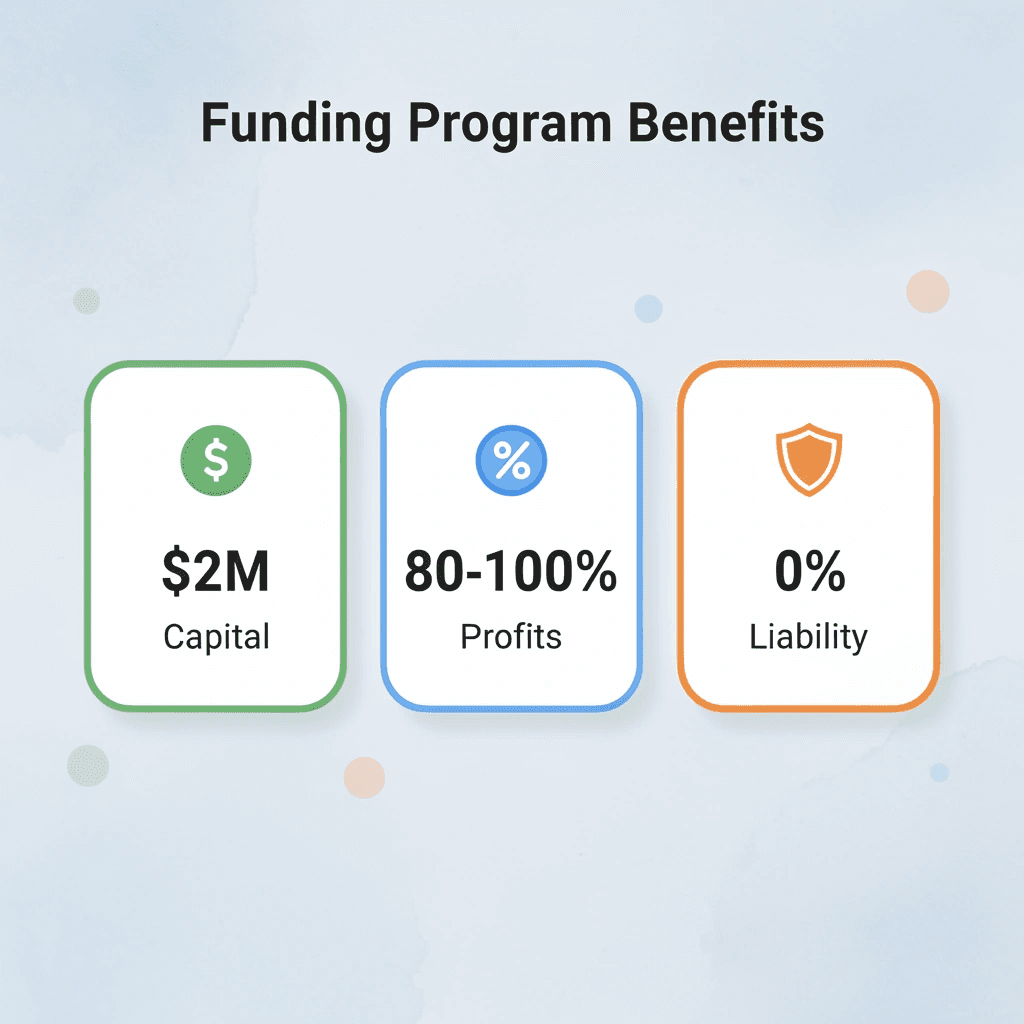
Our Goat Funded Trader program gives you access to up to $2 million in simulated capital after passing simple evaluations. Trade our firm's money on MT5 with your proven strategy, keep 80 to 100% of profits (with add-on), and face zero liability for losses. Our scaling program grows your account based on results, while our Reward Guarantee delivers payouts in 2 business days or pays you an extra $1,000.
Start now with 50% off your first account using code FIRSTGFT at checkout. No credit card required for the evaluation, one-time 100% refundable fee, and unlimited time to complete the challenge. Visit Goat Funded Trader, choose your account size, and become a funded trader today.
Be Great and get the App