






8 Best Stock Trading Platforms for Beginners
Best Stock Trading Platform For Beginners: Learn which 8 brokers deliver real trade simulations and funded account tips from Goat Funded Trader to build smart habits.
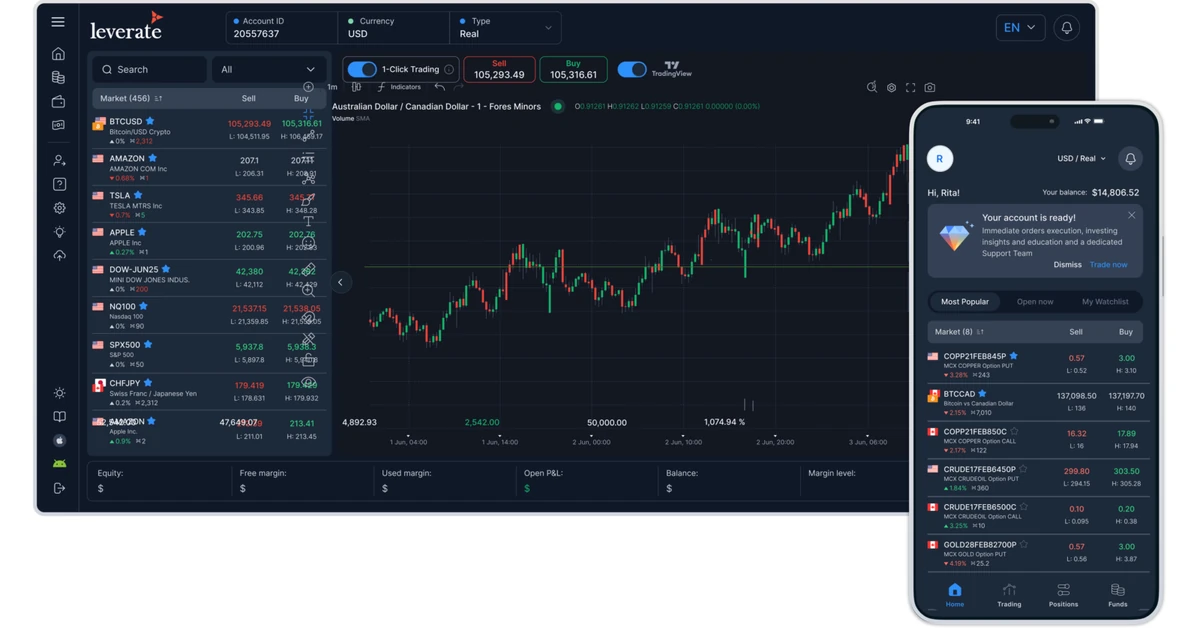

Trading platforms combine live market data with tools to simplify decision-making, yet navigating features and fees can be overwhelming. A clear interface, intuitive order types, and commission-free trades form the backbone of a reliable system, while access to the Best Trading Simulator enables users to build confidence before risking real capital. Virtual practice in a risk-free environment lays the groundwork for informed, strategic investments.
Robust research tools and detailed charts further empower traders to hone their skills and manage risk effectively. Integrating demo accounts with real-time insights enables a gradual, controlled transition to live trading. Goat Funded Trader's prop firm offers funded accounts and clear guidelines to help scale trading strategies with reduced initial risk.
Summary
- Platform execution materially affects outcomes. Because approximately 70% of trades are executed through electronic trading platforms, routing logic, latency, and fill handling directly affect slippage and overall performance.
- Simulation realism drives learning versus illusion: platforms with demo accounts see a 50% higher retention rate among new users, whereas simulations that lack time-and-sales replay and randomized execution noise teach unrealistically perfect fills.
- Charting and visual workflows shape decision-making. 75% of traders prefer platforms with advanced charting tools, and chart-trading adoption has increased by about 40% year over year, which has driven the push toward in-chart order placement and replay engines.
- Mobile UX matters for beginners because 80% of beginner investors use mobile apps for trading, making a clean, responsive mobile experience often more important than desktop bells when forming early habits.
- Objective measurement prevents false confidence, so track metrics such as expectancy per trade, average R, max drawdown, and streak lengths, and run transition experiments of roughly 100 live-simulated trades with bootstrapped confidence intervals to identify structural mismatches.
- Scaling practice reveals hidden costs, since small accounts rarely force strict position sizing or drawdown rules, and practicing at a realistic scale, for example, with simulated funded accounts up to $2,000,000, makes enforced caps and progressive gates necessary training scaffolding.
- This is where Goat Funded Trader's prop firm fits in: it provides funded-style simulated accounts up to $2,000,000, with scenario-based drawdown rules and faster cash-out mechanics, so traders can rehearse realistic position sizing and withdrawal discipline before risking live capital.
What is a Stock Trading Platform, and Why Is It Important?
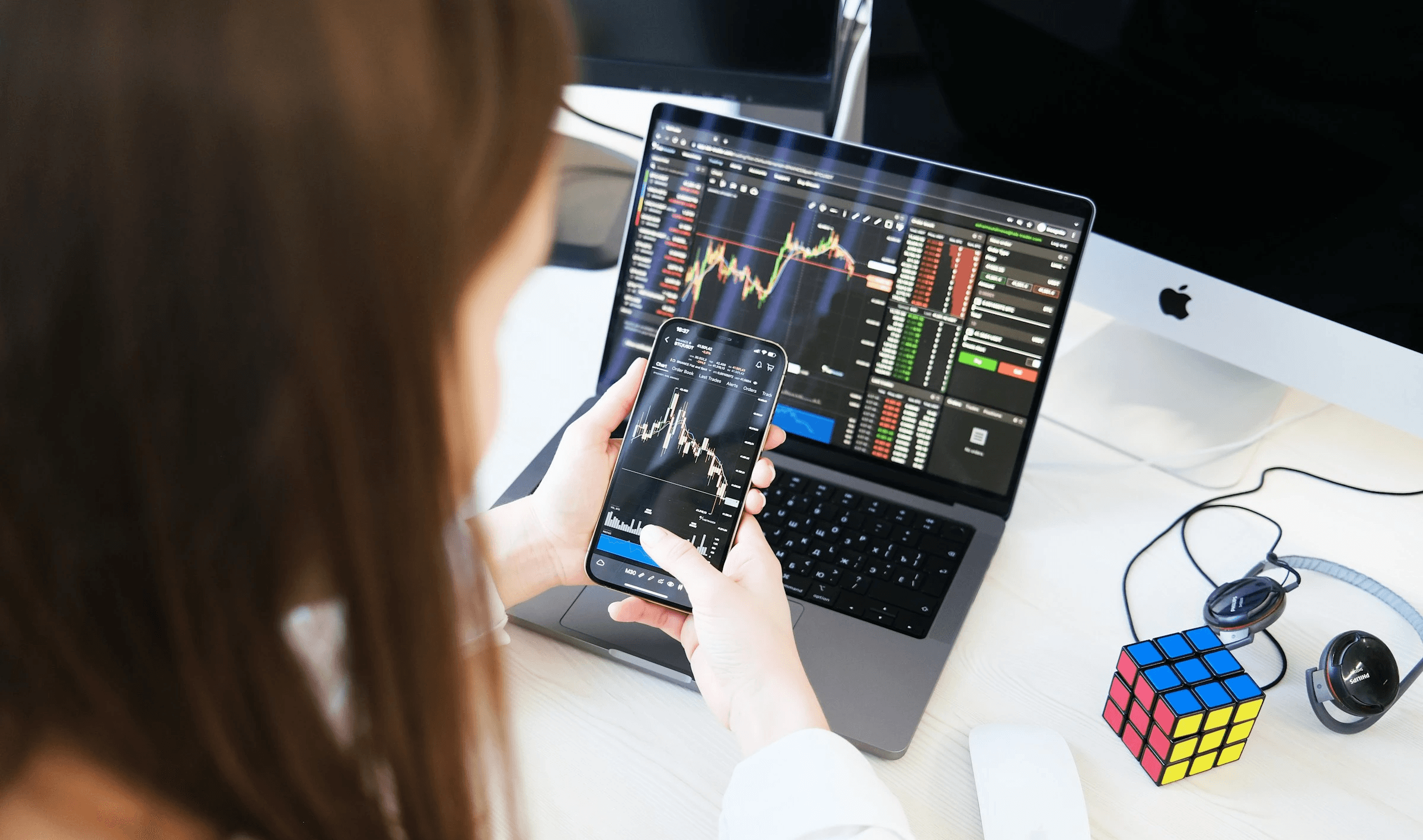
A stock trading platform is the tool that helps change an idea into a trade. The platform’s speed, data, and risk controls play a big role in whether that idea successfully turns into a trade or becomes a costly mistake. If the interface design and underlying technology are strong, traders can learn, adjust, and grow effectively. On the other hand, poor design makes it difficult for users to work with the software, distracting them from improving their skills. If you're considering a prop firm, our Goat Funded Trader provides a great environment for growth.
What can a platform actually do for you?
This important question points out key features. A good platform offers real-time quotes, multiple order types, customizable charts, risk controls for each position, and the ability to practice without risking real money. These features are critical because they enable traders to practice decision-making, test their sizing rules, and establish a consistent routine that helps them distinguish luck from skill.
Why does execution quality change outcomes so much?
The invisible costs of trading are found here. Platforms route orders, match liquidity, and decide how fills happen. About 70% of trades are executed through electronic trading platforms, according to Swoop US (2025). This routing logic directly affects slippage and fill rates. In real-life trading, small differences in speed or order handling can add up over many trades. So, the platform is not just a neutral tool but an important part of the performance equation.
What do beginners repeatedly struggle with?
New traders often face a common pattern of struggles: choice paralysis, unexpected fees, and missing tax paperwork distract from essential tasks. Emotional control and risk rules frequently get neglected as a result. Many beginners tend to prioritize low commissions and a user-friendly interface, since per-trade costs can feel punitive. Also, clear and accessible documentation helps reduce anxiety during tax season. Furthermore, the lack of a safe place to practice with realistic capital and limited leverage leads to weak discipline under real stress.
Why Simulated Scale Matters More Than People Expect?
Most traders start small because they can't access large amounts of capital, which makes sense. However, there is a hidden cost to this approach. When you scale with small accounts, you often do not have to follow the strict position sizing and drawdown rules that are necessary when the stakes get higher. Platforms like Goat Funded Trader step into that gap by offering simulated prop‑trading funded accounts up to $2M, fast on‑demand payouts, and a large community of traders. This gives users a way to practice the discipline crucial to success when trading larger sums.
How does mainstream access change the rules?
Market access is no longer limited to a small group, which changes what a platform must provide to keep learners up to date. According to Swoop US, in 2025, over 50% of retail investors use online trading platforms. This widespread use raises expectations for strong onboarding, reliable execution, and built-in learning paths. Without these features, new traders might end up chasing signals instead of mastering the process.
What is the importance of platform choice?
A trading platform is like the cockpit of a plane: clear and easy-to-read instruments help a pilot fly smoothly, while confusing gauges or slow responses can cause stress, quick mistakes, and bad habits. Similarly, choosing the right trading platform is critical. It affects not only technical features but also the development of sound trading habits.
What hidden mechanics drive every trade?
That comfortable sense of control is only surface deep. What follows shows the hidden mechanics that drive every trade.
How Does a Stock Trading Platform Work?

At a deeper level, a trading platform integrates streamed market data, the visible order book state, execution algorithms, and risk limits. These parts determine whether your decisions are executed smoothly. How these factors work together ultimately determines whether your advantage remains strong when you press the buy or sell button.
How does live market data shape your experience?
Market feeds come in different levels, from basic quote snapshots to full depth of book and time-and-sales tick data, and each level affects how you can act. Full-depth feeds show bid and ask liquidity layers, helping you identify short-term imbalances. On the other hand, lighter feeds offer lower latency and cost, but at the expense of visibility.
This tradeoff is important because many beginners feel overwhelmed by indicators and chart overlays. That overload often leads traders to chase noise rather than sticking to their rules. The consistent pattern shows that when traders focus their signals on a small, repeatable set, execution discipline improves significantly. For those looking to optimize their trading strategies, our prop firm provides support and resources to help you achieve your goals.
Why are charting interfaces taking center stage?
User interfaces now do more than just show numbers; they allow you to interact with the order book and place trades directly on candles or volume bars. This changes how decisions are made. According to a 2025 finding by Amra And Elma LLC, 75% of traders prefer platforms that offer advanced charting tools. This explains why platforms are investing heavily in visual, trade-in-chart workflows rather than text-only ticket panes. At the same time, chart trading platforms have seen a 40% increase in user adoption over the past year. This trend encourages providers to include replay engines and order-book visualizers, making practice feel more like actual live conditions.
What makes order execution feel opaque to many traders?
The issue usually comes from business logic that users can't see, not from technical details. Factors such as internalization, routing choices, and whether a platform routes orders to market makers or public exchanges further compound this confusion. This leads to distrust and confusion. As a result, traders often develop strategies based on demo fills they see; when they start live trading, they encounter different slippage patterns. The result is a recurring failure: simulated fills that don't reflect real slippage models lead to poor sizing habits and ineffective stop placement.
How do demo accounts benefit beginners?
Most beginners start by practicing on simple demo accounts, and that approach works because it teaches mechanics and timing. But as trade frequency and position size grow, those demos break down. Fills become idealized, leverage behavior is softer, and risk rules are easy to ignore. Platforms like Goat Funded Trader address this gap by providing large simulated accounts, strict scenario-based drawdown enforcement, and faster cash-out mechanics. Traders find that practicing at scale helps them enforce position sizing and consistency before real capital is at stake.
How close can simulation get to the real market?
A good simulation uses three important components, repeated at scale: a real-time and sales stream, an order-book model that shows how liquidity drops, and random execution noise to ensure fills are not always perfectly predictable. Most practice accounts fail because they use static or predictable fills. A useful solution is to manage realistic fills during practice. For instance, creating sessions in which the average fill is worse than the quoted price ensures your risk management rules are tested properly before you increase your position size.
What should you expect from APIs and automated strategies?
APIs change the game by enabling automated execution. However, they also introduce new rules, such as rate limits, message sequences, and required kill switches for out-of-control algorithms. If builders overlook these rules, logic errors can lead to significant losses within seconds. The responsible platform provides sandboxed API keys, simulated rate limits, and circuit breakers that activate during account-level drawdowns. This way, automated systems can be tested under stress without hurting the real market.
How does platform security and integrations affect everyday risk?
Incorporating third-party analytics, brokerage bridges, or social features simplifies operations but also increases risk through OAuth tokens and webhook endpoints. A practical way to handle this is to apply the principle of least privilege for third-party access, implement detailed token revocation, and maintain audit logs that link every external call back to a user action. This ensures that a single integration failure does not compromise the entire account.
What role does practice play in trading success?
Think of the platform as a training ground that can either strengthen your process or let bad habits grow. The difference depends on how transparently the platform shows failure, adheres to simple risk rules, and reveals the mechanics of execution. That one uncomfortable truth about practice versus live trading is not the end of the story; it's exactly where the next choices are most important.
What sources can enhance your trading knowledge?
There are many sources that can help improve your trading knowledge. One great place to start is Investopedia. It contains extensive information on various topics in finance and trading.
Related Reading
- Best Trading Simulator
- Is Swing Trading Profitable
- Is Copy Trading Profitable
- Is Crypto Trading Profitable
- Is Options Trading Profitable
- Is Day Trading Profitable
- Are Crypto Trading Bots Profitable
- What Is Backtesting in Trading
- Where Can I Practice Day Trading
- Where Can I Practice Forex Trading Risk-Free?
- How Much Money Do You Need To Start Trading Stocks
- What Is Leverage In Trading
- Is Algorithmic Trading Profitable
- How Much Money Do You Need To Start Trading Options
- What Is The Most Profitable Trading Strateg
- What Is Leverage In Crypto Trading
- How Much Money Do You Need To Start Trading Futures
8 Best Stock Trading Platforms for Beginners
Each of these eight brokers is suitable for beginners, but they serve different goals and preferences: some focus on teaching and support, while others make mobile trading easier or link investing to everyday banking. I’ll explain who each platform serves, what to watch for, and a helpful tip to help you choose the option that best fits how you want to learn and trade.
1. Charles Schwab

Charles Schwab is a strong choice for new investors. It offers a complete set of tools and resources to make it easier to start investing in the stock market. With a perfect 5.0/5 rating, this broker offers no minimum deposit, free stock and ETF trades, and options fees of just 65 cents per contract. Schwab is known for its helpful educational content and dependable support. This makes it ideal for everyday users who want to build confidence without spending much or dealing with unnecessary confusion.
Key features
- Access to advanced trading tools from a merged partner, which improves functionality for all skill levels.
- Mobile and web updates that provide easy and user-friendly navigation.
- Special services for investors with larger portfolios.
- A large collection of learning materials, including articles, videos, and online classes.
- The ability to buy fractional shares of stock starting at $5.
- Excellent help from customer representatives.
- A variety of account types, including retirement and family options.
2. Fidelity

Fidelity excels at helping beginners set and achieve their financial goals. It has easy planning tools and helpful educational resources. With a perfect score of 5.0 out of 5, it requires no initial funding, charges nothing for equity deals, and sets option prices at 65 cents each. Many young users like this platform for its creative account options and many learning resources that help newcomers develop smart, long-term strategies.
Key Features
- Great tools for market analysis and on-the-go access.
- Excellent resources for learning and gaining knowledge.
- Many years of reliable support for clients.
- Ability to purchase stock fractions starting at one dollar.
- Special hub with guides, visuals, recordings, and interactive events.
- Personalized tools to help outline individual money goals.
- 24/7 support from experts.
3. E*TRADE

ETRADE offers a strong mobile experience that's ideal for beginners who want to trade easily on the go. It includes useful features such as practice simulations. The app has a 5.0/5 rating, with no entry fees, free stock trading, and 65-cent option costs. Users appreciate its intuitive app design and detailed information from a reliable financial group*, helping new traders learn as they trade.
Key Features
- Great lists for tracking investments.
- Easy to use on mobile devices.
- Quality insights from a top financial institution.
- Clear layout on both desktop and mobile versions.
- Better tools for derivative and futures trading.
- Detailed reviews from connected experts.
- Flexible options for graphing data.
4. Merrill Edge

Merrill Edge is a great choice for beginners who want to learn about stocks. Its unique storytelling tools make complicated data interesting and easy to understand. Rated 4.5 out of 5, there are no startup costs, free share swaps, and options for just 65 cents per trade. The platform is known for its high-quality original research and rewards for loyal users, making it a friendly place for those developing their research skills.
Key features
- Unique overviews of portfolios and market trends.
- Exceptional in-house studies and data.
- No-cost transactions for securities.
- Leading instruments for analysis.
- Incentives for account holders.
- Well-structured learning sections.
- Curated materials created internally.
5. Interactive Brokers

Interactive Brokers offers beginners a way to invest internationally through user-friendly apps that let you buy fractional shares and easily navigate borders. With a 5.0 out of 5 score, it requires no upfront cash, provides free stock handling, and offers options priced at 65 cents. It is recommended for its extensive customization options and ease of exploring global opportunities, making it a strong choice for those looking to invest beyond local assets.
Key features
- Lots of options for customizing the interface.
- Support for trading in foreign exchanges.
- Useful apps made for individual use.
- A tool for buying parts of stocks.
- Features for derivative trading.
- Easy access to international stocks.
- A clear and simple operational design.
6. Fidelity Investments

Fidelity offers a welcoming environment for newcomers seeking safer, income-focused investments, including government securities, corporate debt, and certificates of deposit. They have one of the largest selections of fixed-income options. It holds a perfect 5.0 out of 5 rating, requires no opening deposit, offers free stock and ETF trades, and charges 65 cents per options contract. This broker is well-respected for its clear access to thousands of bonds, with no extra markups on many new issues. Plus, it provides solid research and guidance that helps beginners understand lower-risk options without feeling overwhelmed.
Key Features
- Vast inventory exceeding 100,000 individual bonds, including Treasuries and municipals.
- Zero commissions on new-issue Treasuries and many secondary trades.
- Competitive pricing with no hidden markups on numerous products.
- Dedicated fixed-income specialists providing free advice.
- User-friendly bond search and ladder-building tools.
- Commission-free bond ETFs for simplified exposure.
- Excellent educational materials on fixed-income basics.
7. J.P. Morgan Self-Directed Investing

J.P. Morgan Self-Directed Investing offers a simple, hassle-free experience that is great for beginners who want a quick setup and an easy connection between investing and daily banking. This is especially helpful for those who already bank with Chase. Rated 4.5 out of 5 overall, it has no minimum deposit requirement and charges no fees for stock trades; options cost 50 cents per contract. The platform is praised for its clean interface, which looks like familiar banking tools. This design makes transfers easy and provides a single view of finances, which helps reduce confusion for new users starting small.
Key Features
- Intuitive design focused on ease and minimal clutter.
- Direct integration with Chase banking for instant transfers.
- Consolidated dashboard showing both banking and investment balances.
- Straightforward stock and ETF trading without complexity.
- Basic yet reliable research and alerts for newcomers.
- No account fees or minimums to get started.
- Mobile app that feels like an extension of daily banking.
8. Ally Invest

Ally Invest provides a simple, straightforward approach that is especially friendly for beginners. The platform has a clean layout with few complex options and direct links to high-yield banking services. It gets a high score of around 4.0 out of 5 in expert reviews. There is no minimum deposit needed for self-directed trading; it charges zero commissions on stock and ETF trades; and it has a low options fee of just 50 cents per contract. This broker is recommended for its easy setup, quick transfers between Ally Bank accounts, and a focus on simplicity, while offering solid support. It is ideal for beginners who want to invest in stocks without extra stress.
Key Features
- Straightforward web and mobile platforms that are easy to use and require little learning.
- Direct connection to Ally Bank for fast, fee-free transfers between savings and investing.
- A single dashboard that shows combined banking and investment balances.
- Zero commissions on U.S. stocks, ETFs, and many mutual funds.
- Low-cost options trading at $0.50 per contract.
- Helpful basic research tools, screeners, and educational articles designed for new or passive investors.
- 24/7 customer support via quick chat, phone, and email.
What should beginners consider when choosing a trading platform?
A quick analogy to keep you honest: choosing a beginner platform is like picking a bike for learning to ride. You want training wheels that reduce risk, but you also need a frame that can handle real roads once you remove them. The first choice may seem simple, but what many overlook when picking a platform matters much more once they start making and living with trades.
Related Reading
- What Is Leverage In Futures Trading
- How To Learn Stock Trading For Beginners
- What Is Leverage In Forex Trading
- How Does After-Hours Trading Work
- How Does Pre-Market Trading Work
- Does Robinhood Allow Day Trading
- Best Practices for Backtesting Trading Strategies
- Backtesting Day Trading Strategies
- How to Set Stop Loss and Take Profit in Trading
- Stop Loss Day Trading
- What Is Take Profit in Trading
- What Is Stop Loss in Trading
- Backtesting Trading Strategies
- Free Backtesting Trading Strategies
- Options Trading For Beginners
- Take Profit vs Stop Loss
- Apps to Practice Day Trading
- How to Practice Day Trading Without Money
Key Features to Look For in a Stock Trading Platform as a Beginner

The single most useful test for a beginner is whether a platform helps build repeatable habits, rather than focusing only on looks at the start. Focus on three things: realistic practice that teaches proper sizing, feedback that shows how choices affect outcomes, and workflows that create strict rules, stopping reliance on luck.
How realistic is the simulation?
This part becomes especially important when traders increase their size; simulated fills should shift from being purely theoretical to a key factor that either supports or undermines your rules. Look beyond a simple paper account; ask whether the platform replays time-and-sales, models order-book depletion, and adds randomized execution noise so fills vary like in real markets. If the simulation always yields perfect fills, risk management will be overlooked in favor of optimism. Think of it like sports: practicing with a lighter ball builds coordination, but only resistance training prepares you for the intensity of a match.
Does the platform enforce disciplined risk habits?
If the aim is consistency, choose systems that make discipline the default. Look for mandatory position-size limits, progressive account gates that require hitting performance goals before increasing buying power, and required stop or daily-loss rules during practice. These limits are not punitive; they serve as training supports that prevent lucky streaks from becoming bad sizing habits as size increases.
Can progress be measured fairly?
Confidence without measurement is like bluffing. The platform must provide trade-level attribution, not just profit-and-loss numbers. Expect metrics such as expectancy per trade, average risk-reward ratio, maximum drawdown curves, deviation from your stated plan, and streak statistics that indicate behavioral bias. Automatic tagging, exportable CSVs, and visual filters can change vague feelings of improvement into measurable trends that you can act on.
What are the drawbacks of demo accounts?
Most beginners start with demo accounts because they feel safe and familiar. That familiar approach works early, but it hides a cost: practice stays small and idealized, so habits fail when real size arrives. Solutions like Goat Funded Trader give traders access to large, simulated, funded accounts of up to $2 million, with strict scenario-based drawdown enforcement and fast, on-demand payouts. This lets traders practice the exact sizing and cash-out discipline they will need at scale.
How tightly does the platform close the feedback loop?
When feedback is slow, bad habits can become ingrained. The faster and more specific the review cycle, the quicker improvement happens. Look for features like end-of-day reconciliation, which captures pre-trade intent versus actual execution. Automated journaling prompts can encourage a written thesis, while replay tools allow traders to review fills against the order book. Platforms that connect replay with automated alerts for plan deviations create a short feedback loop that can be improved on every week.
What community and mentorship features matter?
New traders often face challenges because of complexity and hidden fees, which can reduce motivation and lead to dropouts. Important community features include moderated trade reviews, the ability to share replays with coach comments, and verified mentor sessions. These allow you to compare strategies with experienced traders without copying their risk profile. Peer leaderboards are only helpful if they are anonymized and paired with attribution; otherwise, they may encourage showmanship rather than discipline.
Why is design important in trading platforms?
A study by Tradingsim reports that 85% of beginner traders value user-friendly interfaces in trading platforms. It's also important to know that having practice available can change behavior. A finding by Tradingsim shows that platforms with demo accounts have a 50% higher retention rate among new users.
What metrics should I look for in trading platforms?
That feels complete until you notice how many platforms hide the one metric that actually shows improvement.
How to Check the Effectiveness of a Stock Trading Platform
To measure effectiveness, run focused tests that compare what a platform promises to what it really delivers in live situations. Then, judge the results by solid metrics, not just impressions. Begin with controlled experiments to check execution quality and reliability. Also, add ongoing monitoring for latency and outages. Finally, use trade-level attribution to determine if your process or the platform is producing results.
How do I test execution quality beyond the headline numbers?
Conduct head-to-head fill tests at realistic sizes and times of day. Treat the slippage distribution as the primary signal. When identical orders were placed across platforms for 60 trading days, the average gives some insight, but the extremes are more important. A few bad fills during volatile times can erase a week's worth of small gains. It is crucial to capture per-trade price improvement, fill latency, and the percentage of fills at or better than the quoted price. Lastly, compare these distributions rather than relying on averages.
What monitoring catches reliability problems before they become disasters?
Synthetic monitoring is better than just waiting for a real outage. It helps track script order placements, market data snapshots, and cancellations in real time across regions. It also logs mean time to recovery and failed-fill rates. Traders can become frustrated when platforms lag or crash during significant price movements. By tracking uptime, mobile packet loss, and queuing delay, you can get an early warning that a platform may fail under heavy stress. Consider how our prop firm provides robust monitoring solutions to enhance your trading experience.
How do I validate that a simulator reflects real market behavior?
To validate a simulator, look for three key components and verify each: a realistic time-and-sales replay, an order-book model that shows liquidity depletion, and randomized execution noise to ensure fills vary. Next, do a transition experiment: trade a small live sleeve that is similar to your simulated sizing for 100 trades. Compare the profit-and-loss (P&L) paths using bootstrapped confidence intervals. This method helps you determine whether the differences you notice are noise or indicate a structural mismatch.
What metrics prove you are improving, not just lucky?
Focus on expectancy per trade, average R, maximum drawdown curves, streak lengths, and how much you stray from your pre-trade rules. It's important to tag every trade with what you meant to do and what actually happened. Exporting weekly reports that show how often you followed your plan can be very telling. Behavioral gaps become clear when you measure how well you stuck to your plan; this accountability is what helps good platforms turn practice into a consistent edge.
Why is relying on demo accounts insufficient?
Most traders test their strategies using demo accounts and anecdotal app performance, which feels comfortable and easy. While this method works at first, it becomes insufficient as the size or frequency of trades goes up. Demo accounts do not reflect important routing issues, fill changes, or simulated liquidity differences that can add up to actual losses. Platforms like Goat Funded Trader offer large simulated funded accounts, strict drawdown rules in certain scenarios, and replayable fills that simulate real slippage. This setup provides traders with a controlled bridge that requires discipline before they risk more money; consider using a prop firm to enhance your trading experience.
Which user-facing features actually change behavior?
Prioritize tools that make feedback faster. Features such as placing orders directly on charts with replayable fills, automatic end-of-day checks, and built-in trade journals that require a plan before trading are very important. Charting is crucial for making decisions; research shows that Amra And Elma LLC, 2025: "60% of trading platform users cite charting capabilities as a key factor in their platform choice." Platforms that create workflows based on charts help users act quickly and follow rules, rather than being driven by impulse. Visual trading has become very popular; according to Amra And Elma LLC, 2025: "Chart trading platforms have seen a 40% increase in user adoption over the past year." This increase shows that vendors' user-experience choices now significantly shape habits formed during practice.
What experiments should you run before committing real capital?
Run A/B tests with fixed blocks of trades, changing only the order type or routing preferences. Collect at least 50 fills per variant to detect significant differences. Test stop behavior by creating stress scenarios in which fills are designed to be negative, then check whether your position-sizing rules still apply. Treat each experiment like a small clinical trial: set clear success criteria in advance, run it blind if you can, and use bootstrapping to estimate confidence in the results.
What should you consider about costs?
You want proof, not promises. The next consideration is how costs affect access to larger practice sizes.
Get 25-30% off Today - Sign up to Get Access to Up to $800K Today
We know most beginners prefer friendly, easy-to-use trading apps so they can learn without feeling overwhelmed. This sensible choice often means your sizing, execution habits, and withdrawal discipline aren’t tested at realistic levels, much like practicing piano on a toy keyboard. Platforms like Goat Funded Trader offer funded-style simulated accounts, up to $800k with no minimum targets, no time limits, triple paydays, profit splits up to 100 percent, a two-day payment guarantee with a penalty for late payments, customizable challenges or instant funding, and a 25 to 30 percent starter discount. This allows you to practice real-sized routines and get reliable payouts without risking your own cash.
Related Reading
- Best Automated Trading Platform
- Best Paper Trading Platform
- Best Stock Trading Simulator
- Best Copy Trading Platform
- Best App For Day Trading
- Best Day Trading Platform For Beginners
- Best Software for Backtesting Trading Strategies
- Best App for Backtesting Trading Strategies
- Best Stock Trading Platform For Beginners
- How To Practice Day Trading
- Best Automated Trading Platform
- Best Trading Simulator Free
- Best Forex Trading Platform
- Best Crypto Trading Simulator
- Best Futures Trading Platform
- Best Trading Simulator App
- Best Options Trading Simulator
- Best Options Trading Platform
- Best Futures Trading Simulator
Be Great and get the App