






10 Best Apps to Practice Day Trading in 2026
10 Best Apps to Practice Day Trading in 2026—test strategies with paper trading, charts & real-time data first.
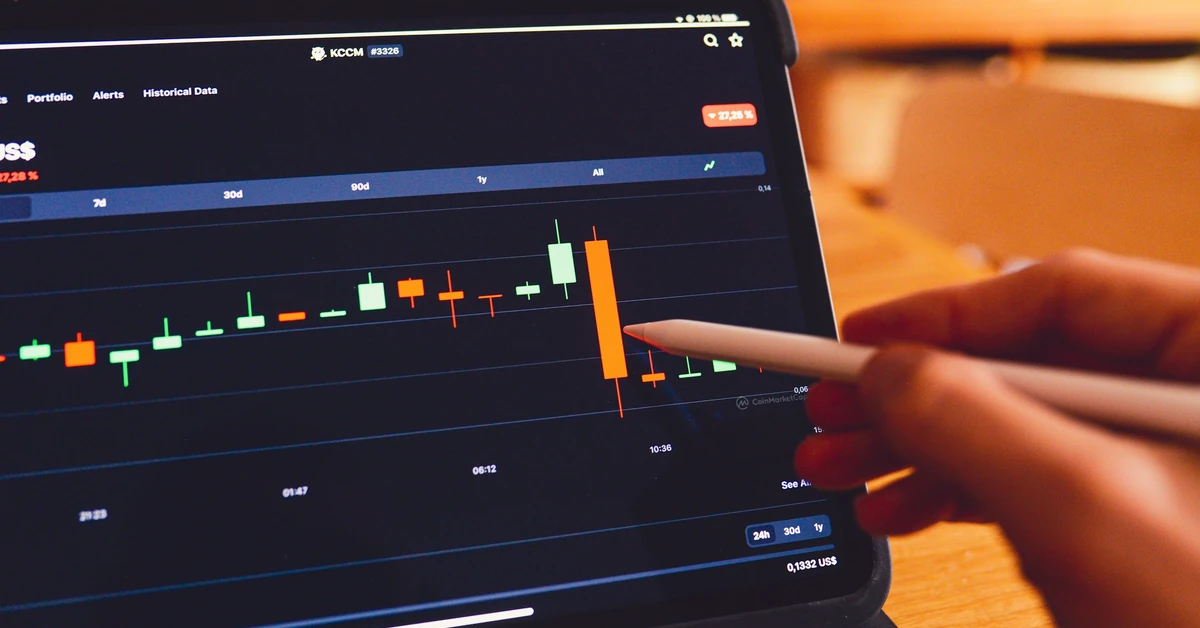

Consider watching a fast-moving chart and hesitating to pull the trigger because a single mistake could cost real money. The Best Trading Simulator and the top apps to practice day trading let you run paper trades with real-time market data, charting tools, order types, backtesting, market replay, and trade journals so you can refine entries, exits, and risk rules without losing cash.
Want to test strategies, build a watchlist, and track performance before you trade for real? This guide shows which practice trading apps work best, how to use demo accounts and virtual trading to master day-trading skills risk-free, and how to unlock funded accounts to scale real profits without evaluations.
To bridge practice and live capital, Goat Funded Trader offers a prop firm solution that moves you from simulated to funded accounts, allowing you to scale real profits while keeping risk low and skipping lengthy evaluation steps.
Summary
- Real trading friction matters: over 90% of traders lose money when they first start, and simulators that model commissions, slippage, partial fills, and latency can cut early-stage losses by up to 50%.
- Practice is common and can move the needle; over 50% of new traders use simulator apps, and simulated trading can improve performance by up to 30% when rehearsal matches live constraints.
- Simulators can inflate confidence without consequences. 85% of users reported increased confidence using demo apps, yet only about 10% of traders remain consistently profitable after transitioning from a simulator.
- Structure your sessions as graded drills: aim for 10 to 20 repeatable trades before increasing capital, and follow the view of 90% of successful traders who recommend at least six months of simulator practice before going live.
- Operational and security readiness matter as much as strategy, because inconsistent workflows and sloppy app permissions contribute to failure, and roughly 80% of traders fail within the first year of trading with real money.
- Features separate useful practice from misleading practice, insisting on four core capabilities at a minimum: configurable slippage and commission settings, advanced order types with partial-fill behavior, session-based risk rules, and detailed performance analytics that flag rule breaches.
- This is where Goat Funded Trader's prop firm fits in: it addresses the rehearsal-to-live gap by replicating funded constraints and operational workflows for traders moving from simulated practice to live accounts.
What is a Day Trading Simulator App, and How Does It Work?

Day trading simulator apps give you a place to rehearse trade execution, risk rules, and position sizing with a realistic market context, so you can iterate without losing capital. Use them like structured practice: stress the same rules you will face under a funded challenge, and treat simulated PnL as feedback, not a guarantee.
How closely do simulators match live execution?
This mismatch appears across entry-level apps and broker demos: many platforms present idealized fills and ignore the small delays, slippage, and partial fills that cost real money in real trades. That gap creates a false sense of preparedness and leaves traders surprised when they migrate to live accounts. Think of it like training on a driving range where the ball always lands on the green, then arriving at a links course with wind and rough; the muscle memory is only half right.
Why does realism matter for results?
Practical impact is simple and stark. Over 90% of traders lose money when they first start trading, according to TrendSpider Learning Center, which shows novice error rates are very high and that training environments must meaningfully reduce those early mistakes. When a simulator models commissions, realistic slippage, order types, and latency, you learn discipline under friction, not just strategy in a vacuum.
Who benefits most from these apps?
Beginners use simulators to build order mechanics and emotional control; experienced traders use them to validate new indicators and time-of-day tweaks without risking capital. This pattern is consistent: low-fidelity practice helps until it no longer does, and the failure point is usually when you scale position size or change execution speed. If you plan to qualify for a funded account or trade larger sizes, prioritize platforms that let you rehearse exactly those constraints.
What features separate useful practice from misleading practice?
Look for four things: configurable slippage and commission settings; advanced order types and partial-fill behavior; session-based risk rules that enforce position limits and drawdown caps; and robust performance analytics that record runups, maximum drawdown, win rate per setup, and trade-by-trade heat maps. Also, insist on the same workflow your funded program uses, because rehearsal is only helpful when the rules and telemetry match the stage at which you will be judged.
Most traders typically start with free broker demos or phone apps for convenience.
That works early on, but the hidden cost shows up when you try to scale: inconsistent risk enforcement, limited capital, and different execution mechanics create surprises that undo months of practice. Platforms like Goat Funded Trader provide a different bridge, offering large simulated capital up to $2M, enforced risk rules and position sizing, in-house MT5 integration, a clear scaling pathway, and fast payout workflows, so traders rehearse under the same constraints they will face when qualifying and getting funded, compressing trial-and-error into focused iterations.
Do simulators actually improve trading skills?
Evidence and experience agree that disciplined practice moves the needle when the simulator enforces real constraints, not when it smooths them away. Day trading simulators can reduce the risk of losing money by up to 50%, according to the TrendSpider Learning Center, meaning choosing tools that replicate real-world execution lowers early-stage losses and shortens the path to consistency.
How should you structure simulator sessions to get real learning?
Treat sessions like drills with one objective each, for example: entry timing under 2x average spread, holding through a volatility spike, or scaling to a target size while staying within a daily loss cap. Measure the behavior that matters to your funding rules, track consistency week over week, and only increase simulated capital after you hit repeatable metrics for at least 10 to 20 similar trades. That constraint-based progression forces habits, not just lucky runs.
A quick image to keep you honest: a high-fidelity simulator is a rehearsal stage that replicates the cue, lighting, and props of opening night, while a low-fidelity app is karaoke; both feel fun, but only one gets you performance-ready.
Something about practice looks safe until you learn which parts of the rehearsal were illusions.
Related Reading
- Best Trading Simulator
- Is Swing Trading Profitable
- Is Copy Trading Profitable
- Is Crypto Trading Profitable
- Is Options Trading Profitable
- Is Day Trading Profitable
- Are Crypto Trading Bots Profitable
- What Is Backtesting in Trading
- Where Can I Practice Day Trading
- Where Can I Practice Forex Trading Risk-Free?
- How Much Money Do You Need To Start Trading Stocks
- What Is Leverage In Trading
- Is Algorithmic Trading Profitable
- How Much Money Do You Need To Start Trading Options
- What Is The Most Profitable Trading Strateg
- What Is Leverage In Crypto Trading
- How Much Money Do You Need To Start Trading Futures
Is It Safe to Use Day Trading Simulator Apps?

Yes. Day trading simulator apps can be safe, but safety depends on two things: the platform’s technical hygiene and the way you use it. If you select apps with strong authentication and treat simulated runs as controlled experiments, you keep your data and discipline intact; if you share live credentials or treat virtual wins as reality, you create real risk.
How might apps expose my personal data?
This risk manifests as misconfigured permissions, unencrypted logs, and broad data retention policies. In practice, we see a pattern across mobile and web demos: apps request more access than they need or retain operational logs long enough for a compromised device to reveal trading preferences and account metadata.
That exposure turns a lost phone or a malware infection into more than an inconvenience, because your strategy, hints, and contact details become assets for attackers. Look for explicit statements about encryption in transit and at rest, and prefer services that publish third‑party audits or compliance attestations.
Can simulators make my behavior riskier?
Yes, they can, if you do not design friction into practice. When we coached traders through a 12‑week simulator program, the predictable pattern was this: confidence rose fast as users optimized for virtual PnL, and many increased position sizes before establishing consistent risk metrics. According to Three Investeers Blog, 85% of users reported an increase in confidence when using day trading simulator apps, a 2025 result that highlights how confidence gains are real but can inflate risk tolerance unless you add stress tests and accountability into practice.
Are simulators worth using early on?
Yes, they speed learning when used correctly. The 2025 findings from Three Investeers Blog indicate that 70% of beginners found day trading simulators helpful in understanding market dynamics, underscoring that structured rehearsal accelerates skill acquisition for new traders, provided the platform enforces constraints that matter to your funding pathway. That means using a simulator to practice specific rules, then validating those habits under controlled pressures before scaling up.
What technical steps actually cut the danger?
Practical steps reduce both digital and behavioral risk. Use unique, strong passwords stored in a password manager, enable two‑factor authentication, and avoid giving demo apps write access to live brokerage accounts or APIs. Keep your trading device up to date, enable full disk encryption, and avoid using public Wi‑Fi without a trusted VPN. If you must integrate tools, prefer read‑only API keys and segregate demo data from live credentials. Finally, check the privacy policy for data retention windows and opt out of unnecessary telemetry when possible.
Most people start with free convenience, which makes sense, but there is a hidden cost: inconsistent security and mismatched workflows compound as you scale, leading to surprises and sometimes data leakage. Platforms that centralize rehearsal and compliance, while enforcing consistent risk rules and audited access, remove that friction. Solutions like Goat Funded Trader are an example of that bridge, because they align rehearsal, security, and the operational workflow you will actually be judged on, keeping practice and real‑world qualification synchronized.
One practical habit I recommend: run a staged progression with checkpoints, for example, 30 days of consistent metrics at small sizes, a forced cooling period after two consecutive rule breaches, and a public trade journal shared with a coach. This creates simulated consequences without real capital loss and breaks the habit of treating demo profits as entitlements.
That sounds reassuring, but which features actually separate a secure, discipline‑building app from one that simply inflates your confidence?
What are the Key Features of Effective Day Trading Simulator Apps?

A top simulator goes beyond replay and charts; it creates reproducible stress and measurable progression so you know which behaviors scale and which collapse under pressure. You want tools that let you inject noise, enforce the exact risk rules you will be judged on, and measure the human responses that turn a lucky streak into a habit.
How do you force realism without teaching bad habits?
Make the app enforce constraints, not just display them. Good simulators include configurable drawdown limits, required position sizing templates, forced cooling periods after rule breaches, and simulated margin calls that remove the safety net of endless restart buttons. Those features prevent users from optimizing for virtual PnL and instead reinforce the discipline that matters when the stakes are real.
What testing tools validate a setup before you scale?
Look for time-compressed replay, walk-forward testing, and Monte Carlo scenario injectors that randomize fills, slippage, and news shocks so you see outcome ranges, not a single curated run. A useful replay mode will let you speed up, slow down, and step through fills with realistic partial executions and latency toggles, so your entry timing, scaling plan, and exit rules survive messy conditions. Think of it like a flight simulator that can introduce turbulence, engine faults, and ATC delays on demand, then record how you corrected.
How should a simulator track trader behavior, not just PnL?
The best platforms instrument behavior: automatic trade tagging by setup, metrics for rule violations, streak detection for size creep, heatmaps of hold times, and expectancy per setup. When we enforced these signals in coached programs, traders stopped blaming randomness and began fixing specific leaks, for example, reducing rule breaches by changing their post-entry scaling method. Concrete flags—two rule violations in five trades trigger a mandatory review—turn psychology into actionable data.
What integrations and automation capabilities matter?
APIs and sandboxed strategy runtimes matter because modern edge is driven by automation and repeatability. Prefer platforms that offer isolated MT5 integration for testing expert advisors, read-only live data hooks, and a tactical API for replaying order flow. That way, you can validate hotkeys, GUI order tickets, and execution logic under the same latency and handling that will exist during funded challenges.
Most traders use familiar shortcuts when practicing, and that usually works early on. The hidden cost appears when those shortcuts let bad habits compound as you scale, creating unexpected rule breaches or platform surprises. Platforms like Goat Funded Trader provide a different path: large simulated capital with enforced risk mechanics, in-house MT5 integration, and a payout/workflow model that mirrors the funded environment, compressing friction and aligning practice with the exact criteria you will be evaluated against.
How should progression be structured so that practice turns into qualification?
Build practice into graded challenges that require consistency, not one-off runs. That is why “90% of successful traders recommend using a simulator for at least 6 months before trading with real money.” Progression should mandate multi-week checkpoints, increasing capital only after repeated metrics are met, and include forced cool-downs to prevent escalation after wins. These rules create a calibrated path from rehearsal to funded readiness.
Why add community, audits, and payout simulation?
Practice that hides outcomes from others breeds secrecy and fragile confidence. Public leaderboards, coach review queues, and auditable session logs create accountability. Simulating the payout and withdrawal workflow before you qualify helps you identify operational details that trip people up, such as identity verification steps, minimum hold periods, and scaling windows. These small frictions matter when real payouts are on the line.
Over time, a simulator should feel like a gym with measured lifts, not an arcade with infinite lives; the right tools turn repetition into durable skill, and the wrong ones only inflate confidence.
That solution sounds final, but the next part reveals which specific apps actually deliver on these tests and which only pretend to.
10 Best Simulator Apps to Practice Day Trading in 2026
You want practical, platform-specific ways to rehearse for a funded challenge, not just tinker. Below, I give one or two high-leverage tactics for each app so you can map practice to the exact risk rules, position sizes, and performance signals that matter when you scale.
1. TradingView

TradingView is a leading charting platform with a powerful simulation tool, ideal for day and swing traders who prioritize technical analysis.
Key Features
- Bar Replay mode for historical data playback and manual trade simulation.
- Advanced charting with hundreds of indicators and drawing tools.
- Customizable layouts and multi-timeframe analysis.
- Community-driven ideas and scripts for strategy inspiration.
- Smooth integration of long/short position marking during simulations.
Why Choose It
Its intuitive interface feels natural and responsive, making it perfect for extended practice sessions. While the full Bar Replay requires a paid Essential plan (about $16.95/month after a 30-day trial), it's a worthwhile investment, as many traders already use TradingView for live charting. Starting here builds familiarity and discipline through manual result tracking.
2. eToro

eToro provides an excellent demo environment for newcomers to day trading, replicating a real brokerage setup where you can place trades across various assets using virtual funds.
Key Features
- $100,000 in virtual currency for risk-free practice.
- Access to stocks, ETFs, cryptocurrencies, and more on desktop and mobile.
- Real-time market conditions simulation with order placement.
- Social trading tools like CopyTrader to follow experienced traders.
- Easy toggle between virtual and live accounts.
Why Choose It
Perfect for beginners who want hands-on experience with actual brokerage mechanics, including mobile trading and community learning, without any financial exposure. The smooth platform transition prepares you well for live trading, and the generous virtual balance supports extended practice sessions.
3. thinkorswim (by Charles Schwab)

thinkorswim remains a top-tier choice for serious day traders, with its paperMoney simulator delivering professional-grade tools and real-time data in a highly customizable environment.
Key Features
- Unlimited virtual funds with real-time simulated market data.
- Support for stocks, options, futures, forex, and cryptocurrencies.
- Advanced charting, hundreds of indicators, and strategy testing.
- Detailed performance tracking and trade analysis.
- Available on desktop and mobile apps.
Why Choose It
As a benchmark platform for active traders, it offers unmatched depth for testing complex strategies. While there's a learning curve due to its power, the identical interface to live trading (via Schwab account or 30-day Guest Pass) makes it ideal for building skills that transfer directly to real markets.
4. TradeStation

TradeStation caters to dedicated active traders with a fully integrated free simulator that mirrors its live brokerage experience, emphasizing precision and backtesting.
Key Features
- Real-time data with unlimited virtual dollars.
- Practice across stocks, options, and futures.
- Complete order execution simulation identical to live trading.
- Advanced backtesting and strategy development tools.
- Built-in profit/loss tracking for simulated trades.
Why Choose It
The exact match between the simulator and the live interface eliminates surprises when going live, while robust tools support algorithmic and technical day-trading approaches. It's a smart choice if you plan to use TradeStation as your broker, ensuring a smooth transition from practice to real capital.
5. Moomoo

Moomoo delivers a modern, mobile-optimized paper-trading platform that welcomes new and active traders, blending accessibility with solid market coverage.
Key Features
- Free paper trading with real-time quotes and virtual funds.
- Support for stocks, ETFs, options, futures, and select international markets.
- Advanced charting and Level 2 data in simulation.
- Mobile-first interface with desktop support.
- Performance monitoring and trade history.
Why Choose It
Tailored for younger or mobile-focused day traders, it offers an intuitive experience and occasional incentives, such as free stock bonuses for new users. The crossover appeal between beginner-friendly features and active trading tools makes it versatile for building confidence quickly.
6. NinjaTrader

NinjaTrader delivers a professional-grade simulation environment tailored for futures and forex day traders, offering a smooth transition between practice and live execution on its fast platform.
Key Features
- Dedicated Simulated Trading mode with an identical interface to live trading.
- Real-time data feeds and advanced order types, including stops and targets.
- Customizable charts, indicators, and strategy development tools.
- Support for futures, forex, and stock simulation.
- Detailed performance tracking with profit/loss reporting.
Why Choose It
If your focus is on day trading futures, NinjaTrader provides an unmatched, realistic simulation experience with near-instant execution and low slippage. The platform's speed and precision help build muscle memory for order placement, making it a top pick for active traders who want consistency when moving to real accounts.
7. Interactive Brokers (IBKR)

Interactive Brokers offers one of the most comprehensive paper-trading experiences, allowing practice across a wide range of global markets and instruments in a highly realistic brokerage environment.
Key Features
- Unlimited virtual funds with access to stocks, options, futures, forex, and more.
- Full replication of the Trader Workstation (TWS) platform tools and analytics.
- Advanced order types, Level 2 quotes, and risk management features.
- Global market access for diverse day trading strategies.
- Performance analytics and trade journaling.
Why Choose It
It's ideal for serious day traders seeking depth and variety without restrictions—practice any security the broker offers, making it perfect for testing complex strategies. The seamless transition to live trading on the same powerful platform is a significant advantage for those planning to go pro.
8. Webull

Webull provides a sleek, mobile-friendly simulator that's excellent for beginners and active traders who want quick, real-time practice without complexity.
Key Features
- Unlimited virtual funds with easy toggle to paper trading mode.
- Real-time quotes, advanced charting, and Level 2 data.
- Support for stocks, ETFs, options, and crypto simulation.
- Customizable watchlists and technical indicators.
- Mobile-first design with desktop support.
Why Choose It
Its intuitive app makes it simple to practice on the go, helping new day traders get comfortable with order entry and market monitoring. The combination of free tools and realistic execution suits those transitioning from learning to active strategies.
9. MarketWatch Virtual Stock Exchange

MarketWatch's game-style simulator turns practice into an engaging experience, perfect for beginners or groups looking to learn through competition and fun challenges.
Key Features
- Customizable games with set rules, time periods, and participants.
- Virtual portfolio tracking with real-time (or delayed) market data.
- Ability to invite friends or join public contests.
- Basic charting and news integration.
- Leaderboards and performance rankings.
Why Choose It
This platform excels at introducing day-trading concepts in a low-pressure, interactive way—ideal for building foundational knowledge or competing with peers. It's especially valuable for younger or novice traders who benefit from gamification to stay motivated.
10. HowTheMarketWorks

HowTheMarketWorks offers an education-focused simulator that teaches market basics through realistic practice, contests, and community features.
Key Features
- Free entry with virtual funds for stocks, ETFs, and more.
- Real-time pricing and portfolio management tools.
- Option to create or join custom games and challenges.
- Built-in lessons on investing principles.
- Detailed trade history and performance reports.
Why Choose It
If education is your priority alongside practice, this tool stands out for its straightforward interface and emphasis on learning. It's an excellent choice for beginners who want structured guidance and friendly competition without being overwhelmed by advanced features.
Why this focus on rules and scaffolding matters now
Over 50% of new traders use simulator apps to practice day trading before investing real money. Goat Funded Trader (2026) shows how common simulator use is among beginners, which means many of you already have the tools, but not always the discipline to use them correctly.
How much better can rehearsal make you?
Simulated trading can improve trading performance by up to 30%. Goat Funded Trader (2026) frames that improvement as conditional on structured practice that matches real constraints, not on casual demo fiddling.
Status quo disruption: why the familiar approach stops scaling
Most traders practice on a single convenient app and assume success will transfer, which is understandable given its simplicity and low friction. That familiar approach breaks down when you try to scale, because inconsistent risk enforcement and mismatched workflows create surprises, for example, unexpected margin calls or order types that behave differently live. Solutions like Goat Funded Trader provide large simulated capital, explicit scaling pathways, enforced risk rules, and in-house MT5 integration so rehearsal happens under the same operational conditions you will be judged on, compressing iteration time and reducing avoidable mistakes.
A short methodological rule to pick from these apps
If your plan is to qualify for funded capital, pick one primary simulator to match your execution workflow, a secondary app for stress testing unusual scenarios, and a public game for accountability; commit to that trio for 90 days before changing tools, because switching platforms too often creates fragmented learning that hides repeated mistakes.
A vivid analogy to keep you honest
Think of the apps as rehearsal rooms: some have good acoustics but the wrong sheet music, others give you the right orchestra cues but no conductor; the goal is to practice in the room that matches opening night, not the one that simply sounds pleasant.
That next step is the hardest and most revealing, and it will change how you think about every drill you just ran.
Related Reading
- What Is Leverage In Futures Trading
- How To Learn Stock Trading For Beginners
- What Is Leverage In Forex Trading
- How Does After-Hours Trading Work
- How Does Pre-Market Trading Work
- Does Robinhood Allow Day Trading
- Best Practices for Backtesting Trading Strategies
- Backtesting Day Trading Strategies
- How to Set Stop Loss and Take Profit in Trading
- Stop Loss Day Trading
- What Is Take Profit in Trading
- What Is Stop Loss in Trading
- Backtesting Trading Strategies
- Free Backtesting Trading Strategies
- Options Trading For Beginners
- Take Profit vs Stop Loss
- How to Practice Day Trading Without Money
How to Transition From a Day Trading Simulator App to Real Money Trading?

Treat the move to real money as a controlled experiment: convert simulator habits into repeatable checklists, run a staged, rule‑bound live trial, and measure process adherence before you scale. Do not let one good day or a high virtual equity curve dictate size; you want evidence that your rules hold when money is on the line.
What exactly should your first live rehearsal look like?
Run a capped, graded trial of 20 to 40 real trades with three rules, no exceptions: fixed entry criteria, predeclared exit plan, and an immutable stop. Log every fill, execution time, and slippage in a single spreadsheet immediately after each trade. Only move to the next size step after 10 consecutive trades that meet your process criteria, and force a 48-hour cooldown after any rule breach. This compresses learning into a measurable sample so you learn from the trade mechanics and your reaction to real losses, not from luck.
How do you lock down order hygiene so execution does not betray your plan?
Treat the order ticket like a preflight checklist. Before every entry, confirm these fields: order type, maximum acceptable slippage, size expressed as a percentage of current equity, and the exact stop price. Use limit entries for planned setups and market or stop-market only for emergency exits, and log partial fills as events requiring immediate review. Calculate slippage per trade as the fill price minus the theoretical entry price, and aim to keep that metric stable; rising slippage is an early warning that your edges will not survive scaling.
How do you inoculate yourself against emotional size creep?
This pattern appears repeatedly: wins raise confidence, confidence inflates size, and rules get ignored. When we coached traders through focused live rehearsals, the consistent failure pattern was two or three small wins followed by a size jump that led to quick losses. The fix is simple and precise: use micro-habits: a 60-second breathing pause before order entry, a ten-minute post‑trade journal entry limited to facts and a single lesson, and a rule that you cannot increase size until you complete 10 compliant trades. Think of it like a pilot using a checklist in turbulence; the repeated ritual keeps you steady when the pressure rises.
Most traders fund an account after a good demo run, and that makes sense; it feels like progress. What they miss is the operational and emotional tax that shows up under live conditions, which explains why only 10% of traders are consistently profitable after transitioning from a simulator. That 2023 comment highlights the hidden cost: rehearsals that omit execution friction, compliance steps, and payout workflows simply defer failure. Platforms like Goat Funded Trader provide a bridge by enforcing the same risk rules you will face when qualifying, giving large simulated capital with in‑house MT5 integration and a replicated payout workflow, so you practice both tradecraft and the operational steps that trip people up.
What operational checks do you need to rehearse before treating live results as reliable?
Run the paperwork and payout checklist before you rely on income from trading. Complete KYC details, link and verify a withdrawal method, and perform a small withdrawal to validate identity and bank routing. Keep tax-ready PnL exports by date and instrument, and timestamp every session to reconcile exchange reports quickly. Practicing the payout path reduces friction and anxiety when the first real profit is on the line, because you will already know how long the mechanics take and what proofs your bank or broker requires.
How should you judge whether to scale or pause?
Measure process fidelity first, outcomes second. Define success as a rolling window in which your trade‑by‑trade rule compliance exceeds your threshold, the expectancy per trade is positive, and the realized drawdown remains within your pre-declared maximum for at least three consecutive weeks. If rule compliance slips, stop trading and run a two‑day forensic review of the last 15 trades.
The goal is not to chase net profit; it is to create evidence that your system behaves the same with real money as it did in rehearsal. That discipline is the difference between early wins that stick and early wins that vanish, which is why the risk is real: 80% of traders fail within the first year of trading with real money. That 2023 user comment underlines how common the collapse is when the process does not carry over.
Which small practices compound fastest for long-term survival?
Keep one public accountability signal, a simple metric others can see, like weekly rule compliance percentage or month‑to‑date maximum drawdown, and share it with a mentor or small group. Automate what you can: time‑stamped exports, automated slippage calculation, and a fixed review template that forces you to name the single largest mistake each week. These modest habits shrink the emotional cost of losing and turn mistakes into repairable data.
Most of this feels familiar until you scale; that is, where the hidden differences show up and where a different rehearsal environment pays off.
The moment you think you are ready, you will discover the one operational wrinkle you forgot to practice.
Get 25-30% off Today - Sign up to Get Access to Up to $800K Today
You’ve put the hours into paper trading and day trading simulator apps; don’t let that practice stall as another demo score. Platforms like Goat Funded Trader give you a funded bridge with simulated accounts up to $800K, no minimum targets or time limits, customizable challenges or instant funding, up to 100% profit splits on triple paydays, a two day payment guarantee with a $500 penalty for late payouts, and current sign‑up discounts of 25 to 30 percent, so if you’re ready to move from practice apps to paid funding, sign up today.
Related Reading
- Best Automated Trading Platform
- Best Paper Trading Platform
- Best Stock Trading Simulator
- Best Copy Trading Platform
- Best App For Day Trading
- Best Day Trading Platform For Beginners
- Best Software for Backtesting Trading Strategies
- Best Chart Trading Platform
- Best App for Backtesting Trading Strategies
- Best Stock Trading Platform For Beginners
- How To Practice Day Trading
- Best Automated Trading Platform
- Best Trading Simulator Free
- Best Forex Trading Platform
- Best Crypto Trading Simulator
- Best Futures Trading Platform
- Best Trading Simulator App
- Best Options Trading Simulator
- Best Options Trading Platform
- Best Futures Trading Simulator
Be Great and get the App