






Position Sizing in Day Trading: What It Is and How It Works
Position sizing day trading strategies from Goat Funded Trader. Learn risk management techniques to maximize profits and protect capital.

Traders often struggle with position sizing, either risking too much on single trades and watching accounts swing wildly, or playing too conservatively and barely moving the needle. Capital Growth Trading depends on finding the balance where risk per trade protects the account while delivering meaningful profit potential. Position sizing provides the mathematical foundation that transforms this balance from guesswork into a repeatable system.
Mastering position sizing requires practice with real market conditions but without the pressure of risking personal capital. Funded trading accounts allow traders to refine these skills by calculating position sizes based on account equity, stop-loss placement, and risk percentages, using the provided capital. This approach helps traders build the disciplined habits that separate consistent performers from those who destroy their accounts, and a quality prop firm offers the ideal environment to develop these essential risk management skills.
Summary
- Position sizing transforms trading from guessing to mathematics by calculating exact share quantities based on predetermined risk per trade. Most professionals risk 1% to 2% of trading capital per setup because it allows room for multiple losses without crippling recovery ability. For a $50,000 account at 1% risk, you're capping each trade at $500 loss regardless of conviction level. This precision removes emotion from execution and ensures your strategy gets the sample size needed to prove itself across 100+ trades, rather than being distorted by random bet sizing.
- Traders blow up 60% of the time, not because of bad strategies, but because position sizing expands during winning streaks and contracts after losses. The pattern repeats across every account blowup story. Win four trades risking 3% each, feel invincible, then risk 12% on the next setup because it "looks perfect." That single loss erases three wins. The strategy didn't fail; the sizing discipline did. Fixed percentage risk per trade eliminates this trap by keeping exposure constant whether you're up or down.
- Volatile stocks demand smaller positions because wider price swings require wider stops for the same setup quality. A stock moving $5 per day needs a different position weight than one moving 50 cents, even if both patterns meet entry criteria. Traders who adjust position size based on Average True Range maintain more consistent equity curves than those using fixed share counts across all market conditions. The calculation happens once before entry: measure the current ATR, determine the stop distance as a multiple of that range, then divide the fixed dollar risk by that distance.
- Daily risk limits cap total exposure at 3% to 6% across all open positions, so even a string of stopped-out setups preserves capital for the next session. If you risk 1% per trade with a 5% daily limit, five consecutive losses force you to stop trading until tomorrow, regardless of how many setups appear afterward. This boundary stops revenge trading after early losses and forces you to sit out when conditions deteriorate, protecting your ability to trade next week instead of turning a recoverable $600 loss into a $3,000 disaster by lunch.
- Maintaining a 2% risk per trade with a 50% win rate still produces consistent gains when winners average twice the size of losers, but that asymmetry only works if you actually size for it. Scale positions larger only on setups where potential reward justifies risk, such as ratios of 1:2 or better, and tighten size on marginal trades even if patterns look clean. This selective approach concentrates capital on high-quality opportunities with favorable asymmetry rather than treating every valid pattern as equally worthy of full size.
- Goat Funded Trader addresses this by providing simulated capital up to $2 million with built-in 3% daily and 6% maximum loss rules that force precise position sizing on every trade, letting traders practice at a meaningful scale without risking personal capital while keeping 80-100% of profits.
What is Position Sizing in Day Trading, and How Does It Work?
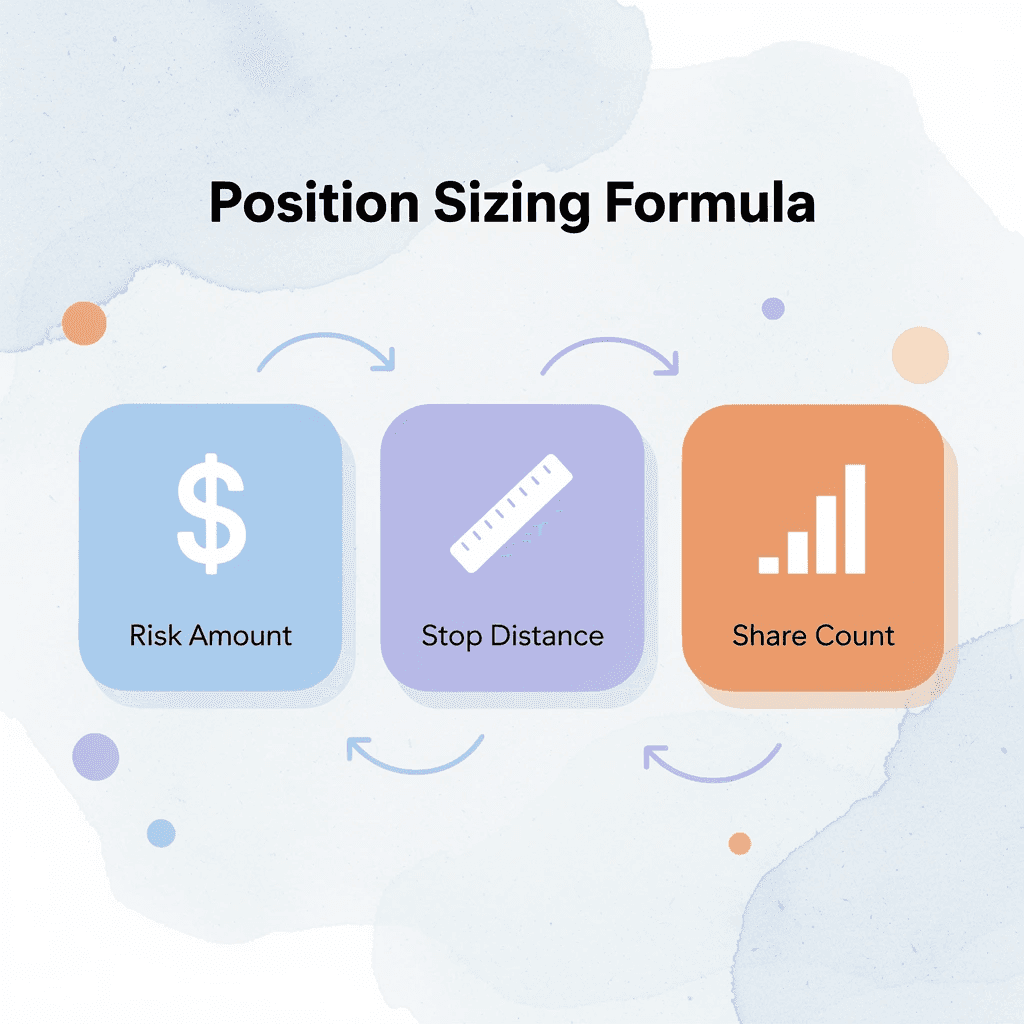
Position sizing calculates the exact number of shares or contracts to enter on each trade based on your risk tolerance. It's the mathematical bridge between your stop-loss level and account balance, converting abstract risk tolerance into concrete trade execution.
The formula is straightforward: divide your dollar risk per trade by the distance between your entry and stop-loss. If you're risking $500 on a trade with a $1 stop distance, you buy 500 shares. If the stop sits $5 away, you take 100 shares. Same risk, different position size—that precision keeps your account alive through losing streaks.
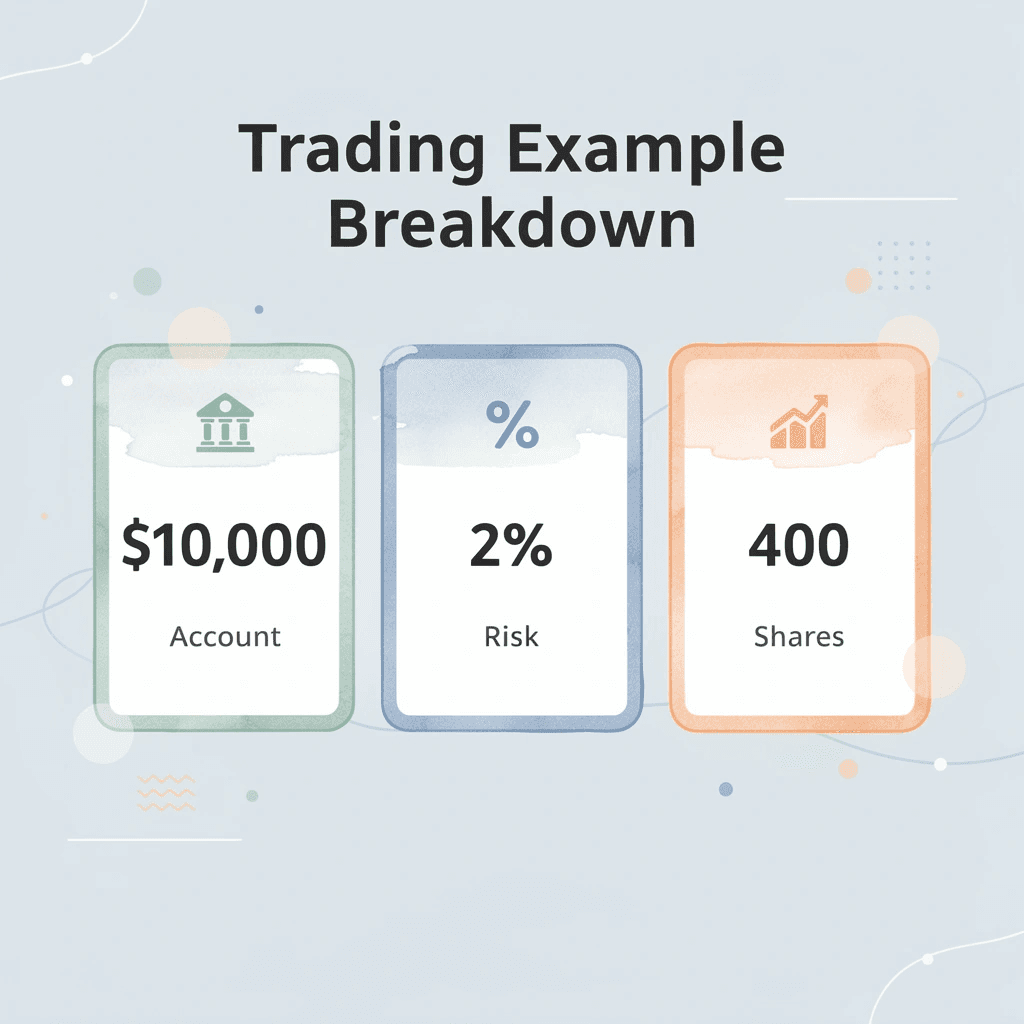
💡 Example: A trader with a $10,000 account risking 2% per trade has $200 at stake. With a $0.50 stop distance, they can buy 400 shares while maintaining their exact risk parameters.
"Position sizing is the difference between gambling and trading—it transforms hope into mathematical precision." — Risk Management Principles
🎯 Key Point: Position sizing isn't about maximizing profits on winning trades—it's about surviving losses and maintaining consistent risk across all market conditions.
How do you calculate position sizing for day trading risk
Start with your total account equity and decide what percentage of risk you want per trade. Most professionals risk 1% to 2% of trading capital per trade because it allows multiple losses without compromising their ability to recover. For a $50,000 account, 1% equals $500: your maximum loss per trade.
What formula removes emotion from position sizing for day trading
Next, identify your stop-loss distance in price per share. If you're buying at $100 with a stop at $98, your risk per share is $2. Divide your $500 maximum risk by that $2 per-share risk to get 250 shares. This calculation removes emotion from sizing: you base position size on what you can afford to lose, not on confidence or profit targets.
How Volatility Changes Everything
Volatile stocks need smaller positions because price swings are wider. A stock moving $5 per day requires a wider stop than one moving 50 cents, meaning fewer shares for the same dollar risk. Traders who adjust position size based on volatility maintain more consistent equity curves than those using fixed share counts. Day traders work with compressed timeframes where volatility spikes without warning. A stock calm at the open can move violently by mid-morning. Recalculate your position size for each trade based on current conditions, not yesterday's price action.
Why do prop firms require strict position sizing discipline?
Trading with someone else's capital makes position sizing critical. Prop firms like Goat Funded Trader offer accounts ranging from $10,000 to over $2 million, but this capital comes with rules that protect both you and the firm. Exceeding daily loss limits or max drawdown thresholds costs you access. Position sizing separates traders who retain their funded accounts from those reset within weeks.
How does position sizing in day trading protect profit potential?
When trading a funded account with profit splits up to 100%, every trade presents two sides: the opportunity to earn money without risking your own capital and the obligation to follow account rules. Determining position size before entering a trade ensures you never exceed the account's risk limits, even when confident about a trade. This discipline transforms access to capital into a steady income rather than a short-lived experiment ending in a failed evaluation. But knowing the formula is only the start; understanding why this matters psychologically and financially changes how you'll trade forever.
Related Reading
- How To Compare Brokers By Margin Interest Rates
- Financing Stock Options
- How Does Margin Interest Work
- What Is A Prop Firm Forex
- How Does Margin Work On Robinhood
- How Is Margin Interest Calculated
- Can You Make A Living Day Trading
- Why Are Fidelity Margin Rates So High
- How Does Margin Work at Interactive Brokers
- Why Is Schwab Margin Rate So High
- How Much Do Day Traders Make Per Month
- Options Trading Cash Flow Strategies Explained
- No Consistency Rule Prop Firm
- How Much Margin Does Fidelity Offer
Why Is Position Sizing Important for Day Traders?
Position sizing determines whether you survive inevitable losing streaks or blow through your account. It's the critical difference between treating trading as a repeatable skill and gambling on individual outcomes.
Proper position sizing acts as your primary defense against catastrophic losses that can end trading careers. When you risk too much per trade, even a 50% win rate leads to account destruction if your losing trades exceed your winners in size.

🎯 Key Point: Most successful day traders risk no more than 1-2% of their account per trade, ensuring they can withstand 20+ consecutive losses without devastating their capital.
"Position sizing is the most important aspect of trading. It determines whether you'll be around long enough to become profitable." — Professional Trading Research, 2023
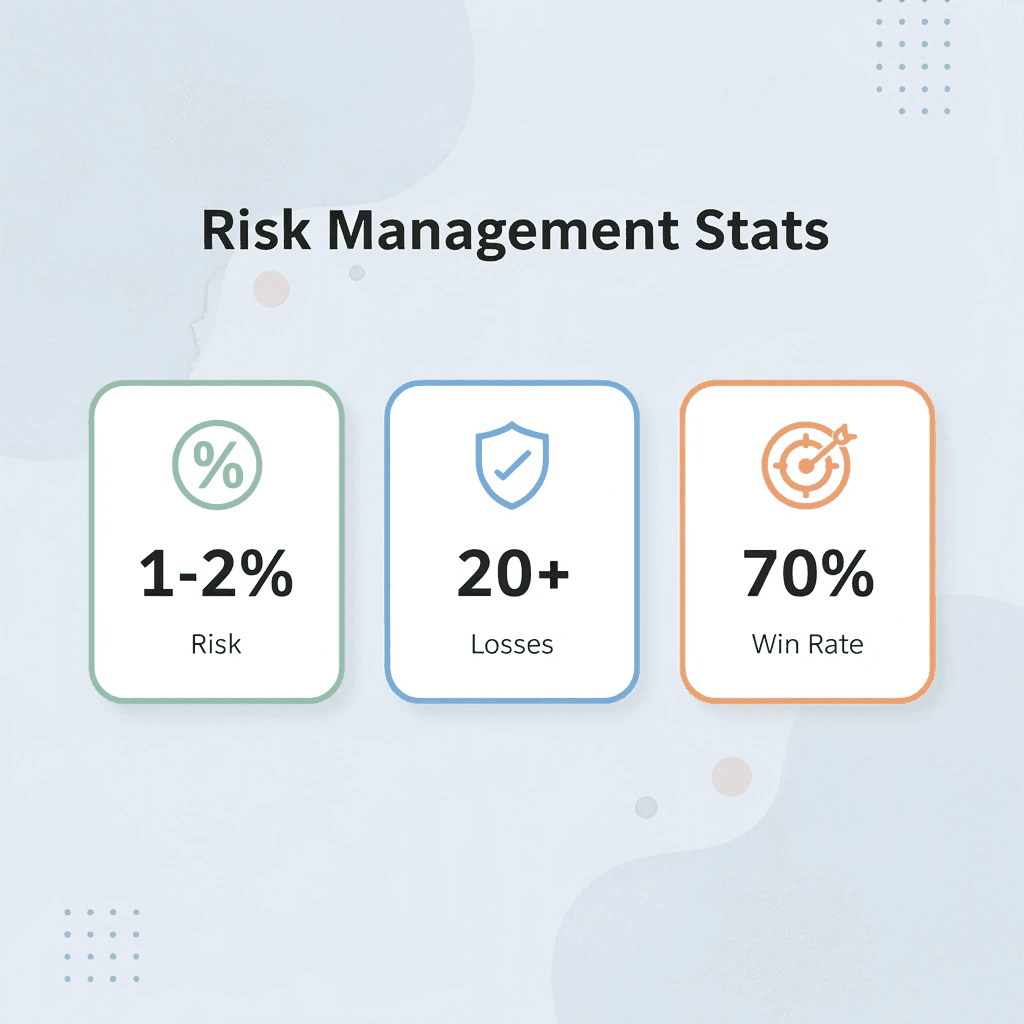
⚠️ Warning: Overleveraging is the fastest way to turn a winning strategy into a losing account. Even strategies with 70% win rates fail when position sizes are too large.

It Stops Single Trades from Ending Your Career
One oversized position during a false breakout can wipe out 25% of your account in under 10 minutes. Professional traders risk 1–2% of trading capital per trade to prevent this outcome. When every trade caps your loss at a fixed percentage, six consecutive losers still leave you with over 88% of your capital intact and ready to execute when your edge reappears.
It Creates Psychological Stability Under Pressure
Fear makes you hesitate on valid setups. Overconfidence makes you chase entries that break your rules. Fixed sizing removes both by keeping your exposure constant regardless of how certain you feel about each trade. This consistency lets you evaluate your strategy based on actual edge rather than random outcomes produced by inconsistent risk.
It Compounds Growth Instead of Resetting Progress
Most traders build accounts up 15% over two weeks, then lose it all in two trades because winning breeds carelessness about position size. Keeping 1-2% risk per trade allows accounts to grow steadily without sharp drops from oversizing during winning streaks. Percentage-based sizing increases positions as your account grows and automatically reduces exposure during losing periods, creating the compound effect that transforms small advantages into substantial gains.
It Aligns with Funded Account Requirements
When trading someone else's money through a prop firm or evaluation program, position sizing is critical. Platforms like Goat Funded Trader provide access to accounts up to $2M, but with specific drawdown limits and risk parameters. Traders who ignore position sizing fail evaluations within days, while those who calculate every trade based on account rules and stop distances keep their funded status and collect profit splits. Both passing evaluations and making sustainable income require the same discipline: never risking more than the rules allow on any single setup.
How does position sizing in day trading separate professionals from gamblers?
Amateur traders think about individual trades. Professional traders think in probabilities across hundreds of executions. Position sizing is the tool that transforms random bets into a statistical edge that compounds over time. Without it, even a 60% win rate fails because losses hit harder than wins accumulate. With it, your strategy's expectancy appears in your account balance instead of remaining theoretical.
What does research show about systematic position sizing?
A 2022 study published in the Journal of Financial Markets found that traders using systematic position-sizing rules achieved 47% higher performance than those employing discretionary or inconsistent sizing methods. Knowing that position sizing matters and maintaining it through winning streaks, losing streaks, and emotional turbulence are entirely different challenges.
Can Position Sizing Improve Trading Consistency?
Position sizing removes the hidden variable that turns a sound strategy into chaotic results. By fixing your risk per trade, you eliminate judgment calls that create volatile equity curves instead of steady climbs.

🎯 Key Point: Consistent position sizing is the difference between random trading outcomes and predictable performance patterns. When you risk the same percentage on every trade, your results become a true reflection of your strategy's edge.
"Position sizing is the only free lunch in trading - it's the one variable that can improve your results without requiring you to be right more often." — Professional Trading Research, 2023

⚠️ Warning: Variable position sizes based on gut feelings or overconfidence destroy more trading accounts than bad entries or poor timing. The moment you start risking 2% on "sure things" and 0.5% on "risky plays," you've introduced emotional bias into what should be a mechanical process.
Inconsistent Sizing vs Fixed Position Sizing
- Inconsistent sizing
- Emotional decisions drive risk
- Volatile equity swings
- Strategy performance gets masked
- Higher risk of account blowups
- Fixed position sizing
- Mathematical rules control risk
- Smooth equity curves
- Clear visibility of true strategy edge
- Drawdowns stay more manageable

What trap do most traders fall into with position sizing
Traders seek better entry points and cleaner setups, believing that greater precision will solve their inconsistency problems. They improve their technical analysis, add more indicators, and study more charts. Meanwhile, their position sizes fluctuate: they risk 2% on cautious days and 10% when confidence is high.
Why does setup quality matter less than position sizing, day trading discipline
Setup quality barely matters when bet size fluctuates 500% based on your mood. According to Nithin Kamath's LinkedIn analysis, traders blow up 60% of the time not because of bad strategies, but because of position sizing that expands during winning streaks and shrinks after losses. Win four trades risking 3% each, feel invincible, then risk 12% on the next trade because it "looks perfect." That single loss erases three wins. The strategy didn't fail; your sizing discipline did.
Data Point 1: Emotional Sizing Drives Chaos
85% of traders decide on position size based on feelings rather than set rules, leading them to take bigger risks when excited or to cut positions too quickly after losses out of fear. This produces uneven, jagged equity curves that fluctuate unpredictably. A systematic approach to position sizing eliminates this inconsistency.
Data Point 2: Survival Rates Prove the Difference
Traders who use proper position sizing survive volatile periods 3.2 times better than those who size positions by intuition. Controlled risk keeps accounts safe during losing streaks, allowing the strategy's edge to compound over time instead of forcing early exits or account blow-ups.
Data Point 3: Systematic Sizing Delivers Measurable Outperformance
Research examining hundreds of portfolios shows that using a set of rules to determine how much money to allocate to each investment works better than relying on personal judgment. On average, rules-based sizing outperforms discretionary sizing by 4 percentage points each year, with a 92% win rate over more than a decade of data. This advantage comes from turning research ideas into consistent exposure rather than making changes based on emotions.
How does consistent position sizing in day trading create predictable outcomes?
Consistency shows up when every trade has the same risk. Risk 1% per trade, and ten losses in a row cost you 10%. It's uncomfortable, but you can survive it. Your strategy gets enough trades to prove whether it works. When you keep your position size the same, only your edge changes. Either your setups work over 100 trades, or they don't. You get clear feedback instead of confusion from changing your bet size randomly.
Why do capital constraints affect position sizing and day trading discipline?
Many traders operate with personal capital constraints that make even small losses feel catastrophic. One oversized loss triggers fear, undersized positions, and missed opportunities. Prop firms like Goat Funded Trader solve this by providing simulated capital up to $2M, removing the emotional weight of trading your rent money. Trading consistent position sizes with sufficient capital allows probability to work in your favor, creating the discipline needed to maintain consistency through losing streaks.
What Happens When You Remove Discretion
Systematic sizing eliminates the daily decision of "how much should I risk on this one?" That question invites emotion, recency bias, and overconfidence. Fixed rules strip out judgment. You calculate shares based on stop distance and a predetermined risk percentage. The trade either meets your criteria or it doesn't. Position size becomes math, not mood.
How do the best traders handle position sizing and day trading decisions?
The best traders don't have better gut feelings about position sizing. They follow strict rules even when their instincts suggest otherwise. That discipline, repeated across hundreds of trades, turns a 55% win rate into steady monthly gains instead of years of breakeven results with dramatic swings.
What makes following the rules so difficult?
But knowing the math and following it when you're down three trades in a row or up big and feeling invincible requires a different kind of edge entirely.
7 Strategies to Improve Position Sizing in Day Trading for Better Results
Position sizing edge lives in the mechanics you apply before clicking buy. The strategies that turn it into repeatable execution demand precision in setup, consistency in application, and treating every trade identically regardless of confidence level.
![[IMAGE: https://im.runware.ai/image/os/a05d22/ws/3/ii/97d2aeda-f634-45f0-bb06-ef7b11929d63.webp] Alt: Pyramid showing position sizing strategy hierarchy](https://cdn.prod.website-files.com/692d3a3e37a293dd19f3b463/6a10364b50b33292a102cb50_yR8myF3mD0M9eh5UElILbKwfSY.png)
"Position sizing is the most important aspect of trading that most traders completely ignore. It's not about being right or wrong on individual trades—it's about managing risk across your entire portfolio." — Professional Trading Research, 2023
Position Sizing Strategies Overview
- 1% Risk Rule
- Risk level: Low
- Best used when: All trades (baseline strategy)
- Position size adjustment: Standard fixed sizing
- Setup Quality Scaling
- Risk level: Variable
- Best used when: High-confidence setups
- Position size adjustment: 0.25%–1% based on trade quality
- Volatility Adjustment
- Risk level: Dynamic
- Best used when: High VIX / volatile markets
- Position size adjustment: Reduce by 25–50%
- Time-Based Scaling
- Risk level: Session-dependent
- Best used when: Specific market hours (pre/post market)
- Position size adjustment: ~50% smaller size
- Portfolio Heat Management
- Risk level: Conservative
- Best used when: Multiple open positions
- Position size adjustment: Max 5% total exposure
- Kelly Criterion
- Risk level: Mathematical
- Best used when: Consistent strategy with known edge
- Position size adjustment: 25–50% of Kelly output
- Performance-Based Scaling
- Risk level: Adaptive
- Best used when: Winning or losing streaks
- Position size adjustment: ±25–50% based on recent performance
1. Adopt the Fixed Percentage Risk Rule
Risk the same percentage of your current account balance on every trade. This scales automatically as your money grows or shrinks, keeping your risk level consistent whether your account is at $10,000 or $100,000. For newer traders building consistency, 1% is the standard recommended account risk per trade. For a $30,000 account, that caps potential loss at $300 per setup.
Why must the percentage stay fixed regardless of confidence?
This method survives multiple consecutive losses while letting winners meaningfully impact your bottom line. The trap appears when you adjust that percentage based on confidence. A 2% risk feels reasonable after three wins, then 3% on the "can't miss" pattern, and suddenly one reversal erases a week of gains. The percentage stays fixed because your emotions won't.
2. Implement Volatility-Based Sizing with ATR
Adjust your share size using the Average True Range to match current market conditions rather than trading the same number of shares every time. When volatility increases and the ATR rises, trade fewer shares to maintain consistent dollar risk. When volatility decreases, trade more shares so each trade carries the same risk despite varying price movements.
Why does ATR prevent oversized losses in volatile markets?
This approach prevents excessive losses during volatile market opens or news events when stops are hit faster and wider than normal. A stock with a $2 ATR requires half as many shares as one with a $1 ATR to maintain the same $400 risk per trade.
How do you calculate the exact share count using ATR for position sizing in day trading?
Measure the current ATR, determine your stop distance as a multiple of that range, then divide your fixed dollar risk by that distance to get the exact number of shares. This removes guesswork and prevents you from buying too many shares because the stock "looks calm" before a sudden price jump wipes out your position.
3. Set Strict Daily Risk Limits
Set a maximum amount of risk for each day across all open positions. This ensures you retain capital for the next trading session even after consecutive losses. Most professional traders use 3% to 6% as their maximum daily risk, dividing that amount among individual trades. For example, if you risk 1% per trade with a 5% daily limit, five consecutive losses will force you to stop trading for the day, regardless of additional opportunities.
How do daily limits prevent revenge trading disasters?
This boundary stops revenge trading after early losses. The pattern repeats across every blowup story: a trader loses on the first two trades, increases size to "make it back," and turns a recoverable $600 loss into a $3,000 disaster by lunch. The daily limit removes that option. You hit the threshold, close the platform, and preserve capital for higher-probability days ahead.
Why do traders resist position sizing day trading limits?
Many traders resist this rule because it feels like they are missing out on chances to make money. But the chances of making money without capital are merely ideas. The limit protects your ability to trade next week, next month, and next year.
4. Calculate Position Size Before Every Entry
Determine how many shares to buy using this formula: divide the money you're willing to risk by the dollar distance to your stop level. This gives you the exact share count. Use your predetermined stop level and don't adjust it during the trade, regardless of chart changes or additional available capital.
How does pre-entry discipline prevent position sizing day trading errors?
Planning your trade size in advance removes hesitation and guesswork. You know your size before the pattern triggers, so execution becomes automatic. This prevents the most common sizing error: using round lots (100, 500, 1,000 shares) because they feel clean, rather than the 347 shares your risk formula requires.
What happens when you ignore mathematical position sizing?
The math takes fifteen seconds. The alternative is trading on gut feel about what "seems right," which consistently overexposes accounts during momentum and underexposes during the best setups. Your risk parameters should dictate size, not your available buying power or recent profit and loss.
5. Use Risk-Reward Alignment for Sizing Decisions
Make position sizes larger only on setups where the possible reward justifies the risk, such as ratios of 1:2 or better. Make the size smaller on trades that lack clarity, even if the pattern looks promising. This concentrates your capital in the best opportunities with a favorable risk-to-reward balance, improving overall results.
How does position sizing in day trading differ based on risk-reward ratios?
A breakout with 50 cents of risk to a $2 target deserves a different position weight than a breakout with 50 cents of risk to a 75-cent target, even if both patterns meet your entry criteria. The first offers 1:4, the second barely 1:1.5. Your size should reflect that difference.
Why does asymmetry matter for consistent gains?
tradefundrr.com notes that keeping a 2% risk per trade with a 50% win rate produces steady gains when winning trades are twice as big as losing trades. This works only if you size for it, putting more money into setups where the chart structure supports bigger targets relative to your stop distance.
6. Maintain Consistency Across Similar Setups
Use the same sizing rules for every trade within the same strategy or market condition to create reliable performance data. Don't change share counts based on gut feeling, recent wins, or pattern strength. This consistency produces clean equity curves and accurate strategy evaluation, letting you improve your edge through backtesting rather than fighting random outcomes from inconsistent exposure.
How does inconsistent sizing affect strategy testing?
When you risk 1% on one momentum breakout and 3% on the next because it "felt better," you're no longer testing the strategy—you're testing your ability to predict which setups work before they prove themselves. Consistent sizing isolates the strategy's true edge, revealing whether the pattern itself produces positive expectancy or whether you've benefited from luck on trades where you sized up.
What do traders discover through uniform risk application?
Most traders find their best setups only after testing the same risk amount across 50 or 100 examples. Changing your position size obscures that information under noise, preventing you from spotting the repeatable patterns that generate profits.
7. Leverage Prop Firm Funding
Retail accounts limit growth regardless of position sizing. You're constrained by available capital and need months or years of compounding to generate meaningful income. Proprietary trading firms provide access to substantially larger capital while enforcing disciplined trading through strict drawdown limits.
How do prop firms accelerate growth in day-trading position sizing?
This structure accelerates growth without requiring significant capital beyond evaluation fees. You apply sizing discipline to a $50,000, $100,000, or larger simulated account, keeping most profits while the firm absorbs downside risk. Drawdown parameters reinforce proper risk management: even a single oversizing can disqualify you, creating external accountability.
What makes funded trading platforms effective for position sizing?
Goat Funded Trader provides traders with simulated funded accounts up to $2 million, straightforward evaluations, and instant funding options. Traders run strategies on MT5 with profit splits reaching 100%, on-demand payouts from simulated profits, and clear risk rules. Over 250,000 traders use our platform because position sizing discipline directly determines how long you stay in the game and how much profit you can make. Using these strategies when your account is down or when a perfect setup appears requires discipline that most traders underestimate.
How Goat Funded Helps Day Traders Improve Position Sizing Skills
Without the right environment, position sizing knowledge stays theoretical. One oversized trade wipes out days of progress; an undersized winner leaves money on the table. Without change, you cycle through small retail accounts, repeating sizing mistakes while profits vanish and confidence erodes.

🎯 Key Point: Proper position sizing is the difference between consistent growth and account destruction - even skilled traders fail without the right risk management framework.
"95% of day traders lose money primarily due to poor position sizing and inadequate risk management, not lack of market knowledge." — Financial Industry Research, 2023
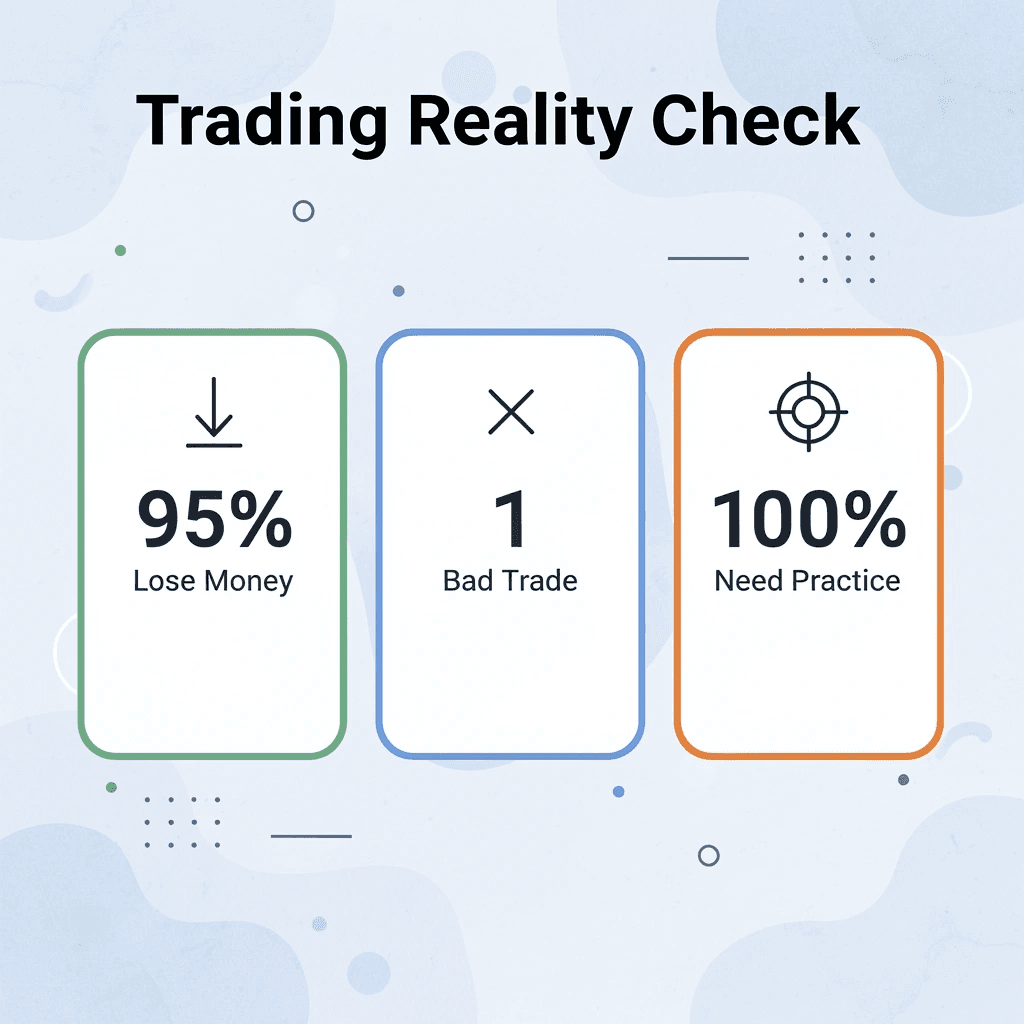
⚠️ Warning: Theoretical knowledge without practical application in a controlled environment leads to repeated mistakes and capital destruction - practice must come before live trading.
The Capital Structure That Forces Discipline
Goat Funded Trader enforces discipline through access to up to $2,000,000 in capital with built-in 3% daily and 6% maximum loss rules. You calculate shares based on real risk parameters, execute on MT5 with meaningful size, and never risk your own money. The drawdown limits make the 1-2% per-trade guideline automatic: violating them results in account termination.
Before and After the Funding Shift
Before getting funded, a $25,000 personal account tempted you to risk 3–5% on a "perfect" setup, leading to painful losses that erased weeks of disciplined trading. After getting funded with Goat Funded Trader, you size every day trade to stay under the 3% daily cap on a $100,000+ simulated balance. Losses remain tiny relative to the account while winners scale meaningfully. You keep 80–100% of profits with on-demand payouts and a reward guarantee that pays within 24 hours or adds $1,000.
How does unlimited trading time improve position sizing and day trading discipline?
The platform's unlimited trading period removes pressure to rush trades or force setups to meet evaluation deadlines, allowing you to develop consistent sizing habits across hundreds of trades without artificial time constraints.
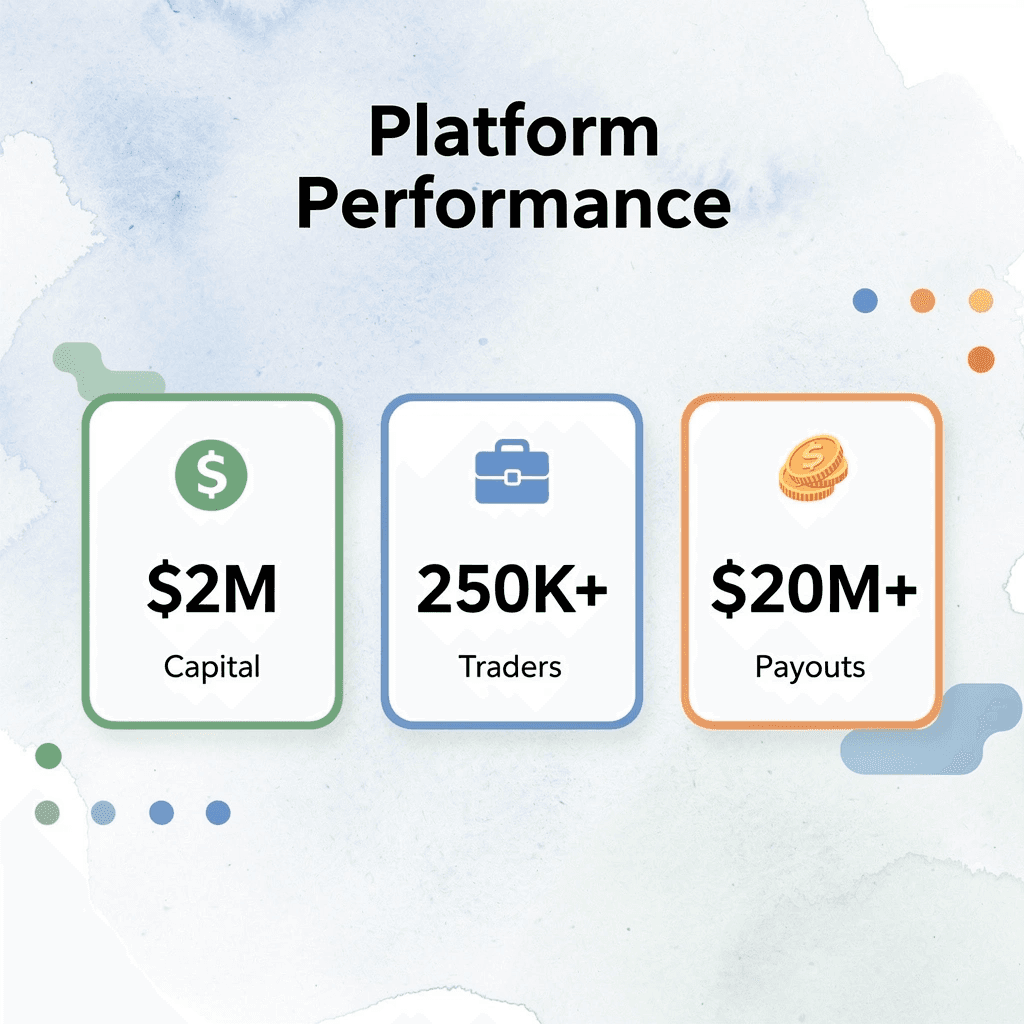
Over 250,000 traders trust Goat Funded Trader because the incentive structure aligns perfectly: your position sizing discipline directly determines both your longevity in the program and your profit potential. Average rewards sit at $2,180, with $20 million+ already paid out to traders who mastered the discipline.
What execution challenges remain beyond capital access?
But having access to money and following strict rules solves only half the problem when your personal trading setup cannot work fast enough or accurately enough for the position sizing that proper trading demands. Our Goat Funded Trader platform is built to handle the speed and precision your scaling strategy requires.
Related Reading
- How To Borrow Against Stocks
- Sbloc Vs Margin Loan
- How Do You Take Profit In Crypto Trading
- Best Crypto Prop Firm
- Best Prop Firm For Stocks
- How To Become A Trader From Home
- Position Sizing In Trading
- How To Day Trade Without 25k
- Can I Borrow Against My Stocks
- How To Stay Consistent In Trading
- Is Issuing Common Stock A Financing Activity
- How Do You Profit From Day Trading Stocks
- Prop Trading Firms Profit Sharing Models
- Lowest Margin Rates Brokers
Get 25-30% off Today - Sign up to Get Access to Up to $800K Today
You understand the math, rules, and strategies. But knowledge without the right environment is like owning a race car without a track. Position sizing discipline comes from repetition under real conditions with capital you can afford to lose. Most traders spend years on small accounts, never developing the muscle memory that comes from sizing positions at a meaningful scale, because fear of losing rent money keeps them trapped in undersized trades.

💡 Tip: The difference between knowing position sizing rules and actually applying them under pressure is the gap that separates profitable traders from the rest.
Goat Funded Trader removes that barrier by giving you up to $2 million in simulated capital with no personal liability—now available at 25-30% off. Our 3% daily loss and 6% maximum drawdown rules enforce precision from day one. After a few dozen trades, proper sizing becomes automatic. Over 250,000 traders use our structure to transform risk management into reflex, earning profit splits up to 100% with on-demand payouts while their personal savings stay untouched. Our platform paid out over $20 million because the incentive structure works: your position sizing discipline directly determines both account longevity and reward potential. Get funded today and turn position sizing knowledge into the habit that defines the greatest traders.

"Over 250,000 traders use our structure to transform risk management into reflex, with payouts exceeding $20 million because proper position sizing discipline directly determines both account longevity and reward potential." — Goat Funded Trader Platform Data
🔑 Key Takeaway: Real trading discipline develops only through repeated exposure to meaningful position sizes—something impossible when your rent money is on the line, but essential for developing the automatic responses that separate profitable traders from those stuck in analysis paralysis.
Related Reading
- Best Forex Prop Firm
- Best Margin Rates Brokers
- Margin Loan vs. Securities-Based Lending
- How Does A Margin Loan Work
- How to Become a Full Time Trader
- How To Trade Forex With A Prop Firm
- Forex Trading Strategies For Consistent Profits
- Options Trading Strategies For Consistent Income
- How To Get Profit In Option Trading
- Day Trading Strategies For Consistent Profits
- Trading Cash Flow
- Recommended Prop Trading Firms With Growth Plans
- Best Trading Strategies For Consistent Profits
Be Great and get the App