






What is TP in Trading, and How Does It Work?
Learn what TP in trading means and how it works to help you make informed trading decisions and manage risk effectively.

Picture this: you've just watched your trade soar into profit, only to see those gains evaporate because you held on too long. Understanding what TP (take profit) means in trading can be the difference between capturing wins and watching them slip away. If you've ever wondered how professional traders consistently bank their profits while you're still guessing when to exit, or if you're exploring what is a funded account is and how successful traders use risk management tools, this guide will show you how to effortlessly set and hit TP levels in trades, lock in consistent profits, and trade with discipline minus emotional stress.
That's where Goat Funded Trader comes in. As a prop firm that provides traders with capital, they understand that mastering take-profit orders isn't just about technical knowledge; it's about having the right environment and support system to build those skills. When you trade with clear profit targets and proven exit strategies, you shift from hoping for wins to planning for them. Goat Funded Trader's structured approach helps you develop that mindset while giving you the resources to practice and perfect your TP placement without risking your own money.
Summary
- Traders using predetermined exit orders achieved 34% better risk-adjusted returns than those making discretionary exit decisions, according to research from the Journal of Behavioral Finance (2023). The difference wasn't skill or market knowledge. It was removing emotion from the moment that matters most. When you decide your profit target during calm analysis rather than mid-trade when adrenaline spikes, you protect yourself from the greed that turns winning positions into losses.
- Fixed take-profit levels force accountability that discretionary exits never do. You can't move the goalposts mid-trade without consciously overriding your system, which creates friction and increases the likelihood of impulsive decisions driven by fear or greed. This structure matters especially when managing multiple positions across different instruments, where that predictability helps prevent overexposure and keeps risk calculations accurate.
- A take-profit order doesn't guarantee profit because it only executes if the price reaches your target level. If the market reverses before reaching that point, the order remains inactive while your position loses value. The tool removes the discipline problem of defining exits in advance, but it doesn't solve the prediction problem of knowing where the price will actually go. These are separate challenges that traders often conflate.
- Win rate matters less than the ratio between average wins and average losses. You can be wrong 60% of the time and still profit if your winners are consistently larger than your losers. This math only works when you take profit orders to enforce those larger wins by preventing you from closing early out of fear or holding too long out of hope for just one more percentage point.
- Partial profit-taking addresses the psychological struggle of knowing when to exit positions. Closing 40% at a conservative target and letting 60% run toward an aggressive one locks in guaranteed profit while maintaining exposure to extended moves. Taking some profit early reduces stress, which can lead traders to override their plans, turning single all-or-nothing bets into evidence-based decisions that allow you to collect gains at multiple levels rather than gambling on perfect timing.
- Goat Funded Trader provides simulated funded accounts up to $800K, where traders can practice take-profit discipline on larger positions without risking personal capital. It offers flexible evaluation paths with no strict time limits and fast payouts, supporting consistent execution of structured exit strategies.
What is TP in Trading, and How Does It Work?

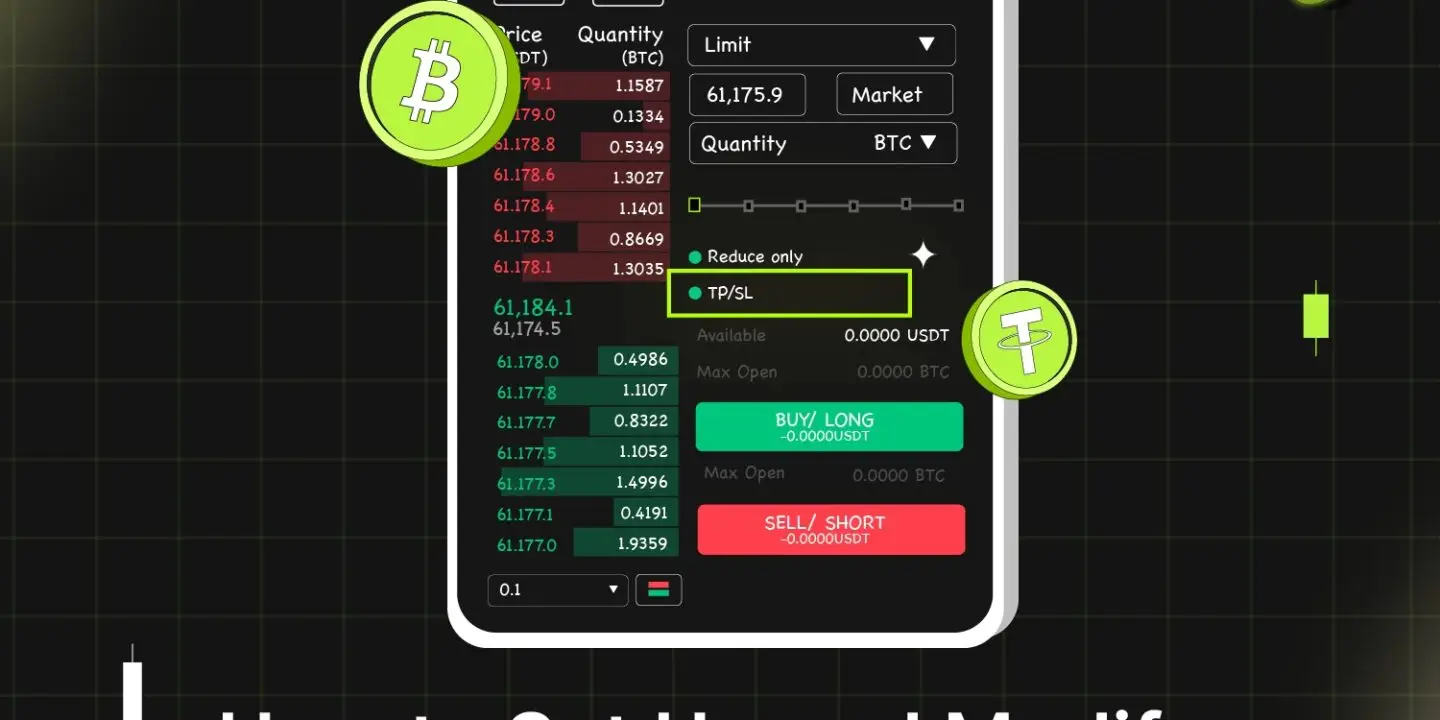
A Take Profit order closes your position automatically when the market reaches your predetermined profit target. It's a limit order designed to lock in gains without requiring you to monitor the screen; it executes when the price touches or exceeds your specified level in your favor. For long positions, you set TP above your entry price; for shorts, below it. This isn't about hoping you'll remember to exit at the right moment. The order sits on the platform, waiting. When price action reaches that level, the system triggers a closure, whether you're online, asleep, or away from your desk. The mechanism eliminates the human delay between recognizing an opportunity and acting on it, which matters more than most traders admit when volatility spikes or reversals occur quickly.
The Discipline Problem Most Traders Won't Admit
The hardest part of trading isn't finding entries. It's walking away when you're up. I've watched traders turn winning positions into losses because they couldn't define success in advance. They moved targets higher as price climbed, convinced the trend would continue forever, only to watch profits evaporate when momentum shifted. The emotional pull to squeeze out one more percentage point overrides logic every time unless you build a structure that enforces your original plan.
Take Profit orders solve this by making your exit strategy non-negotiable. You decide your profit target during analysis, when you're calm and rational, not during the trade when adrenaline and greed cloud judgment. According to research from the Journal of Behavioral Finance (2023), traders using predetermined exit orders achieved 34% better risk-adjusted returns than those making discretionary exit decisions. The difference wasn't skill or market knowledge. It was removing emotion from the moment that matters most.
How the Mechanics Actually Work
Setting a TP involves choosing a specific price level based on your analysis. If you buy a forex pair at 1.2000 and aim for a 50-pip gain, you set your TP at 1.2050. The platform monitors price movement continuously. When the bid price (for long positions) or ask price (for short positions) reaches or passes through your target, execution happens automatically at that level or better. Most brokers allow you to attach a TP during initial order entry or add it afterward, often pairing it with a stop-loss in a bracket order.
The "or better" part matters. If price gaps through your level due to news or thin liquidity, you might get filled above your target on a long position or below it on a short. Slippage works in your favor here, unlike with stop-losses where it typically hurts. This asymmetry creates an edge, especially in volatile markets where prices can jump several ticks in a single update.
Why Fixed Targets Beat Discretionary Exits
Traders who rely on "feel" to close positions consistently underperform structured approaches. The pattern surfaces across forex, futures, and equity markets: when exit decisions are made in real time without predetermined rules, consistency disappears. Some trades get closed too early out of fear. Others run too long out of greed. The average outcome drifts toward mediocrity because each decision reflects the emotion that dominates at that moment.
Fixed TP levels force you to define what "enough" means before capital is at risk. This creates accountability. You can't move the goalposts mid-trade without consciously overriding your system, which creates friction and increases the likelihood of impulsive decisions. That friction is valuable. It gives you a split second to ask whether you're adjusting based on new information or just reacting to price movement that triggers anxiety.
Platforms like a prop firm make this discipline even more critical. When you're trading funded capital with specific risk rules and profit targets, discretionary exits can violate account parameters faster than you realize. Traders who pass evaluations typically use TP orders not just for profit protection but to demonstrate they can follow a plan consistently, which is exactly what funding programs reward when they scale accounts or approve payout requests.
The Risk-Reward Framework That Actually Matters
A TP order only makes sense within a broader risk-reward calculation. If your stop-loss represents a 1% account risk and your TP sits at a level that would deliver 2% gain, you've built a 1:2 risk-reward ratio. This math determines whether your strategy can survive losing streaks. Win rate doesn't matter as much as the ratio between average wins and average losses. You can be wrong 60% of the time and still profit if your winners are consistently larger than your losers.
The mistake happens when traders set TP based on round numbers or arbitrary percentages rather than market structure. A 100-pip target sounds clean, but if resistance sits at 80 pips and your analysis shows price typically stalls there, you're setting yourself up for failure. Effective TP placement uses support and resistance zones, Fibonacci extensions, moving averages, or pattern projections. The target should reflect where price is likely to pause or reverse based on how the market actually behaves, not where you wish it would go.
Multiple Exits and Partial Profit Taking
Some traders split their TP strategy across multiple levels. Close half the position at a conservative target, let the remainder run toward a more aggressive one. This approach captures guaranteed profit while maintaining exposure to extended moves. If you enter long at $50 with a $52 first target and $55 second target, you lock in gains at $52 even if the price reverses before reaching $55. The psychological benefit is real: taking some profit early reduces stress and makes it easier to hold the remaining position through normal pullbacks.
Trailing stops offer another variation, adjusting your exit level dynamically as the price moves in your favor. But standard TP orders remain fixed, which provides clarity. You know exactly what you're aiming for and can calculate position size accordingly. When you're managing multiple positions across different instruments, that predictability helps prevent overexposure and keeps risk calculations accurate. But knowing how to set these levels is one thing, and knowing where they actually work in live market conditions is something else entirely.
Related Reading
- What Is a Funded Account
- What Is A Prop Firm Account
- What is Scalping in Trading
- Perpetual Futures Example
- Cfd Leverage
- What is Arbitrage Trading
- Prop Firm Regulation
- How To Read Candlesticks
- Hanging Man Candlestick
- What Is Drawdown In Trading
- What Is Fomo In Trading
- Mt4 Vs Mt5
- One Step Prop Firm Challenge
- Instant Funding Rules
Practical Examples of Implementing a TP in Trading

TP orders remove guesswork from exits and promote structured trading. They create predefined expectations, support favorable risk-reward setups (like 1:2 or better), and free up attention for other opportunities. Common methods include fixed percentages, technical levels (support/resistance or Fibonacci), trailing mechanisms, or scaling out positions partially.
Breakout Trade with Percentage-Based TP
When a stock breaks above $80 resistance after consolidating in a bullish flag pattern, the setup appears clean. Volume confirms. Momentum indicators align. You enter long, expecting continuation. Now comes the part that separates funded traders from those who blow evaluations: defining your exit before emotion takes over.
Place your stop-loss 4% below entry at $76.80. That's your maximum risk, the amount you're willing to lose if the breakout fails and price reverses. Calculate position size based on this risk level to keep exposure within account rules. Then set your TP at $88, a 10% gain that sits near prior resistance where the price has historically stalled. This creates a 1:2.5 risk-reward ratio. Risk $3.20 per share to make $8.00. The math works if you're right more than 28% of the time.
The broker executes automatically when the price touches $88. No watching charts. No second-guessing whether to hold for more. The decision was made during analysis, when logic prevailed. During the trade, when the price climbs to $86 and pulls back to $83, you don't panic or manually close because the TP order enforces your original plan. That structure protects you from yourself.
Forex Trade Using Support and Resistance for Scaled TP
EUR/USD bounces from 1.0850 support with bullish confirmation and positive euro data. You enter long with a 40-pip stop at 1.0810, accounting for minor wicks while protecting capital. Instead of a single fixed target, you divide the position into thirds and set multiple TP levels based on the technical structure.
First TP at 1.0900 sits near minor resistance, 50 pips away. Second at 1.0950 targets the next key level, 100 pips out. Third at 1.1020 reaches for an extended target based on measured move projections, 170 pips from entry. When the price reaches 1.0900, the platform automatically closes one-third of your position. You book an early profit and immediately move your stop to breakeven on the remaining lots. Risk disappears. The worst outcome now is breaking even on two-thirds while banking gains on one-third.
Traders often struggle to know when to exit positions, leading to over-holding during reversals. This scaling method addresses that directly. You lock in something guaranteed while maintaining exposure if momentum persists. When the price reaches 1.0950, another third closes. Move the stop to 1.0920 to protect accumulated profit on the final piece. If the price reverses before hitting 1.1020, you still captured gains at two levels rather than watching everything evaporate by holding for perfection. The psychological shift matters more than the math. Taking partial profits early reduces the stress that can lead traders to override their plans. You're not gambling on a single outcome anymore. You're collecting evidence that your analysis worked while staying positioned for the full move if conditions support it.
Futures Trade with Trailing TP in Volatile Markets
Crude oil breaks below the $75 support on supply news. You're short at market with a 1.5-point stop at $76.50, defining your maximum loss per contract. Instead of a fixed TP, you use a trailing stop that adjusts dynamically as the price moves in your favor. No predetermined exit level exists yet because you want to capture as much of the trend as the market will give you.
Price drops to $73.50, a 2-point gain from entry. Now activate the trail. Set it 1 point behind the current price, placing your exit trigger at $74.50. As the price continues falling, the trail follows. New low at $72.50 moves your exit to $73.50. Another drop to $71.00 adjusts it to $72.00. The exit level only moves down, never up. If the price reverses and hits the trailing stop, say at $72.00, the position closes automatically, locking in the gain from the $75 entry to the $72 exit.
This method maximizes upside in strong trends without capping potential through fixed targets. The risk is that a static TP returns less profit during reversals than a dynamic TP, but in commodities where trends can extend far beyond initial projections, the trade-off favors flexibility. You're not guessing where resistance might appear. You're letting price action itself determine when momentum exhausts.
Programs like a prop firm reward disciplined execution. When you're trading funded capital with specific drawdown limits and profit targets, trailing stops demonstrate you can protect gains while pursuing maximum returns within risk parameters. Traders who pass evaluations typically use these mechanisms not only for profit protection but also to demonstrate consistent adherence to structured plans, which unlocks scaling opportunities and payout approvals.
When Technical Levels Override Round Numbers
The amateur sets TP at 100 pips because it's clean. The professional sets it at 87 pips because that's where the 61.8% Fibonacci extension sits, where the 200-period moving average intersects, and where prior swing highs created resistance three times in the past month. Market structure doesn't care about your preference for round numbers. Price reacts to levels at which supply and demand previously intersected.
If your analysis shows resistance at 80 pips but you set TP at 100 pips, hoping the price will push through, you're ignoring probability. Most moves stall at technical levels. Setting targets beyond them means watching price approach your level, reverse at the resistance you identified, and stop you out as it retraces. You were right about the setup and wrong about the exit, which feels worse than being wrong about the entry.
Calculate targets based on chart patterns, measured moves, or historical price behavior. If a bullish flag projects a move equal to the flagpole height, that's your baseline. If support-turned-resistance sits 15% below that projection, adjust downward. Better to capture 85% of the theoretical move with high probability than aim for 100% and miss entirely. But even perfect technical placement doesn't guarantee the order fills, and that gap between theory and execution is where most education stops.
Does TP Guarantee A Profit?

No. A take-profit order doesn't guarantee profit because it only executes if the price reaches your target level. If the market reverses before reaching that point, the order remains inactive while your position loses value. Setting TP creates a plan, not a certainty. The guarantee lies in execution discipline, not market cooperation. This distinction matters more than most traders acknowledge. You can place a perfectly calculated TP at a logical resistance level, supported by Fibonacci extensions and volume analysis, yet still see the price stall 10 pips short of the target before reversing. The order never triggers. Your unrealized gain evaporates. The tool performed as expected by waiting at the specified level, but the market didn't deliver the required price action to trigger it.
When Price Action Refuses to Cooperate
Markets don't care about your profit targets. They move in response to constantly shifting supply, demand, sentiment, and liquidity flows. A TP order represents your hypothesis about where the price will travel, but hypotheses fail regularly in live trading. The currency pair you bought at 1.3000 with a 1.3080 target might rally to 1.3075, pause as sellers emerge, then reverse back through your entry before you manually close the position. The psychological trap arises when traders confuse having an exit plan with a guaranteed profitable outcome. The order is visible on the platform in your open positions panel, creating a false sense of security. It appears you've already captured the gain, as the target price is displayed. But until the bid or ask touches that level and execution happens, you hold an open position exposed to every price swing the market throws at you.
Traders often report frustration at watching positions approach TP levels multiple times without triggering, only to reverse and hit their stop-loss instead. This pattern surfaces when targets sit at clear technical levels that many other participants also use to place orders. As prices approach, liquidity dries up as everyone tries to exit simultaneously, and momentum stalls just short of the level. You were right about direction and the technical setup, but wrong about the precise distance the price would travel before exhaustion.
Slippage and Gap Risk in Volatile Conditions
Even when the price reaches your TP level, execution isn't always guaranteed at that exact price. During high volatility or major news releases, the price can gap through your target without filling your order. This occurs most often in forex pairs during weekend gaps and in commodity futures after unexpected supply announcements. You set TP at $75.00 on crude oil. The market closed Friday at $75.50 and opened Monday at $74.20 following weekend geopolitical news. Your order was never fulfilled because the price exceeded it.
Brokers typically disclose in their terms that TP orders are not guaranteed during extreme market conditions. According to eToro's trading documentation (2024), limit orders, including take-profit orders, may experience delays or non-execution when liquidity disappears or the price moves too rapidly for the platform to match them. This isn't a flaw in the tool. It reflects the reality that all orders depend on counterparty availability and market depth at execution.
The asymmetry works in your favor more often than against you. Positive slippage (getting filled at a better price than your target) happens when momentum carries the price through your level with force. You aimed for 1.2050 on a long position, but strong buying pushed through to 1.2058 before your order matched. You captured an extra 8 pips. However, your order may not fill if price gaps or moves occur in discrete jumps rather than continuous ticks.
The Difference Between Setting and Reaching
A TP order solves the discipline problem of defining your exit in advance. It doesn't solve the prediction problem of knowing where the price will actually go. These are separate challenges that traders often conflate. You can execute disciplined trading by setting logical targets based on solid analysis and still lose money if your directional bias is wrong or your timing is off.
The real edge comes from combining TP with probability-based thinking. If your analysis suggests a 70% chance price reaches your target based on historical patterns at similar setups, you accept that three out of ten trades won't hit TP. Your risk-reward ratio and position sizing must account for this reality. Setting a 1:3 risk-reward doesn't guarantee you'll collect that 3R gain on every winner. It means when you do win, the payoff compensates for the losses where the price never reached your target.
Most traders fail evaluations not because they don't use TP orders, but because they size positions assuming every TP will fill. They calculate potential returns based on hitting targets 100% of the time, then blow past drawdown limits when market reality delivers a string of reversals before the target. Programs like prop firms reward traders who demonstrate an understanding of this distinction. Passing evaluations requires demonstrating that you can set logical targets, manage risk when those targets are missed, and maintain positive expectancy across a series of trades rather than betting everything on individual outcomes.
Why Stop-Loss Pairing Matters More Than You Think
A TP without a stop-loss is a plan without a backup. The order defines where you'll exit if everything goes right, but it offers zero protection if everything goes wrong. Price can move against you indefinitely while your TP sits untouched above current market levels, waiting for a rally that never comes. I've seen traders hold losing positions for days, even weeks, because they had a TP set and convinced themselves the market would eventually reach it. The position turned into a hope trade, not a planned trade.
Pairing TP with SL creates boundaries. Your maximum loss is defined. Your target gain is specified. The outcome falls somewhere between those two levels based on which order triggers first. This framework transforms trading from gambling (undefined risk, undefined reward) into probability management (known risk, known potential reward, with an uncertain outcome). The math becomes calculable. You can determine whether your strategy has positive expectancy before risking capital.
The mistake happens when traders set TP at ambitious levels to improve their risk-reward ratio on paper, then place stops so tight that normal volatility triggers them before the price has room to develop. A 1:5 risk-reward looks impressive in your trading journal, but if your win rate drops to 15% because stops are too close, the strategy bleeds capital. Effective TP placement balances ambition with realism, targeting levels that the price can reasonably reach within the instrument's timeframe and volatility characteristics.
Execution Depends on Market Structure, Not Your Wishes
The order sits on the platform as a conditional instruction. When the market price equals or exceeds your TP level, trigger execution. But "market price" isn't a single number. It's a constantly updating stream of bids and asks that can move in jumps, especially in less liquid instruments or during off-hours trading. Your TP at 1.2050 may never fill if the price jumps from 1.2048 to 1.2052 in a single update, depending on how your broker handles limit order matching.
This technical reality matters more in certain markets than others. Major forex pairs during the London or New York sessions typically have sufficient liquidity that price moves in small increments, giving your TP order multiple chances to execute. But exotic pairs, small-cap stocks, or futures contracts outside regular trading hours can jump in larger increments. Your order waits at a price level that never technically exists in the order book, so execution never happens despite the price moving through that zone.
Understanding this shifts how you set targets. Round numbers attract orders from many participants, creating liquidity clusters. Setting TP at exactly 1.2000 means competing with hundreds of other orders at that level. Price might approach, stall as all those orders absorb buying pressure, then reverse before yours fills. Placing your target slightly before the obvious level (1.1995 instead of 1.2000) increases fill probability because you're ahead of the crowd, though you sacrifice a few pips of potential gain. But knowing where to set these levels matters only if you understand how different market conditions affect what's actually achievable.
7 Effective Methods Traders Use to Set Take Profits

Effective TP placement depends on reading market structure, not wishful thinking. Traders who consistently pass funded evaluations use technical frameworks that identify where price naturally stalls or reverses, then position targets slightly ahead of those zones. The methods below reflect how professionals convert analysis into actionable exit levels that balance probability with reward potential.
1. Support and Resistance Levels / Swing Points
Price memory exists. Markets return to levels where significant buying or selling occurred previously, creating zones where momentum shifts. These aren't arbitrary lines. They represent price points where institutional orders clustered, where hedging activity concentrated, and where psychological round numbers attracted attention. When you place TP near these areas, you're positioning ahead of predictable behavior rather than hoping the price continues indefinitely.
The execution detail matters. For long positions, set the TP slightly below the resistance level rather than at it. If resistance is at 1.2000 following three prior rejections, set your target at 1.1995. You're ahead of the crowd, trying to exit at the obvious level. Those five pips matter less than the increased probability your order fills before selling pressure builds and reverses price. The same logic applies to shorts, where you target just above support levels to capture the move before buyers step in.
Swing points work because they mark the boundaries of recent price action. The high of yesterday's rally on a 4-hour chart shows where sellers previously overwhelmed buyers. Targeting that level assumes similar dynamics will recur, which is more often accurate than random price projections. This isn't a prediction. It's pattern recognition applied to repeating market behavior.
2. Higher Time Frame Extremes (Daily, Weekly, Monthly Candles)
Institutional traders don't operate on 5-minute charts. Their orders reflect daily and weekly perspectives, so those time-frame highs and lows carry weight that smaller intervals miss. When you're trading on a 15-minute chart but referencing yesterday's high as your TP, you're aligning with the broader context that actually moves markets. Intraday noise becomes less relevant when your exit acknowledges the bigger picture.
This creates an edge in range-bound conditions. If a currency pair oscillates between 1.0850 and 1.0950 on the daily chart, entering long near the bottom with TP near the top captures the full range move. You're not guessing. You're trading the established boundaries until something breaks them. Most traders fail because they set targets based on the time frame they're watching, ignoring that price respects levels visible to participants trading larger capital over longer horizons.
The challenge surfaces when ranges break. A weekly high that held for months becomes meaningless after a breakout, yet traders still reference it out of habit. Effective use requires updating your reference points as market structure evolves, rather than anchoring to outdated levels simply because they're visible on the chart.
3. Candlestick Patterns Signaling Exhaustion
A shooting star at resistance tells you something. Buyers pushed the price higher, sellers overwhelmed them, and the candle closed near its low. That pattern doesn't guarantee reversal, but it signals weakening momentum at a level where you already expected resistance. Placing TP just before where such patterns typically form protects profit before confirmation arrives. You exit while buyers still dominate, not after sellers prove they've taken control.
Hammer candles at support work inversely. The long lower wick indicates sellers drove the price down, and buyers aggressively reclaimed it. If your short position approaches support where hammers formed previously, tighten your TP. The pattern indicates that buying pressure is concentrated there, making further downside less likely. You're reading price action clues that reveal shifting momentum before it fully reverses your position.
The mistake happens when traders wait for pattern confirmation. By the time the shooting star completes, and the next candle opens lower, your opportunity to exit near the high has passed. Effective TP placement anticipates these formations by looking at where they have historically appeared, positioning exits ahead of the signal rather than reacting after it forms.
4. Technical Indicators (RSI, MACD, Volume)
RSI above 70 doesn't mean "sell immediately." It means the recent move extended beyond typical levels, increasing the likelihood of a pullback or consolidation. If your long position approaches TP while RSI climbs into overbought territory, that confluence validates your target. You're exiting, with momentum indicators confirming what the price structure already suggested. The combination reduces false signals that plague single-method approaches.
MACD divergence adds another layer. Price makes a new high, but MACD fails to confirm, showing weakening momentum beneath the surface. When this divergence appears near your TP level, it reinforces the decision to close rather than hold for more. Volume analysis completes the picture. Declining volume during a rally toward your target warns that fewer participants support the move, making reversal more likely before you capture full gains.
Traders typically risk 1-3% per trade to maintain sustainable position sizing across multiple setups. This risk framework determines how aggressively you can set TP levels. Tighter risk allows wider targets because a single winner compensates for multiple small losses. Indicators help identify where those wider targets remain realistic rather than optimistic.
5. Fibonacci Retracement Levels and Multi-Target Scaling
Fibonacci extensions project, where the price might travel after completing a retracement. The 1.272 and 1.618 levels mark zones where moves often exhaust based on mathematical ratios that appear throughout financial markets. These aren't magic numbers. They're reference points where enough traders place orders that liquidity concentrates, creating self-fulfilling behavior. Your TP at the 1.272 extension captures profit where others also exit, increasing fill probability.
Scaling across multiple Fibonacci levels solves the single-exit dilemma. Close 40% at the 1.272 extension, another 30% at 1.618, and let the final 30% target 2.0 or beyond. This structure locks in guaranteed profit early while maintaining exposure if momentum extends. The first exit removes pressure. You've already won. The remaining position becomes a free trade, where even a break-even on the final portion still delivers positive results.
The failure mode appears when traders scale out too aggressively, closing 80% at the first target and leaving insufficient size to benefit from extended moves. Balance matters. Keep enough exposure on later targets that hitting them meaningfully improves overall trade performance, but take enough early that missing the final target doesn't erase gains from the portions that filled.
6. Economic Calendar and News Event Awareness
High-impact news creates volatility that temporarily invalidates technical analysis. Central bank decisions, employment reports, and inflation data move prices in ways that ignore support, resistance, and indicator signals. If your TP sits 50 pips away but NFP releases in two hours, you face a choice. Tighten the target to capture profit before uncertainty spikes, or close entirely and re-enter after the dust settles.
Most funded traders choose the first option. They adjust TP closer to the current price before scheduled events, accepting smaller gains in exchange for certainty. Programs like prop firm reward this risk management because they demonstrate that protecting capital matters more than maximizing every trade. The trader who consistently takes 30 pips before news beats the one who aims for 50 pips but gets stopped out when volatility explodes in the wrong direction.
In low-volatility periods between major announcements, wider TPs become feasible. Price moves in cleaner trends without sudden reversals driven by data surprises. Referencing the economic calendar daily isn't optional. It's the difference between setting realistic targets based on expected market conditions and placing orders that ignore scheduled events that are likely to disrupt your setup.
7. Multiple Time Frame Analysis (MTFA)
The daily chart shows resistance at 1.2100. The 4-hour chart reveals a bullish flag targeting 1.2080. The 1-hour chart just broke above 1.1980 with strong momentum. Which level do you target? MTFA answers by starting with the highest time frame to identify the dominant context, then refining with lower intervals. Your TP is set at 1.2080 because the 4-hour pattern projection sits below daily resistance, providing a realistic target that respects both the immediate setup and broader structure.
This top-down approach prevents the mistake of setting ambitious targets based on short-term momentum while ignoring longer-term obstacles. The 15-minute chart might suggest 100 pips of upside, but if the daily chart shows major resistance 60 pips away, you're setting yourself up for disappointment. MTFA forces you to acknowledge all relevant context before committing to an exit level.
The discipline required here separates consistent traders from those who chase every setup. You might see a perfect entry on the 5-minute chart, but if the 1-hour and 4-hour charts show you're trading into resistance, you either skip the trade or set a much tighter TP than the lower time frame suggests. This filtering mechanism improves win rates by selecting setups where multiple time frames align and exiting when all relevant perspectives agree the move will likely stall. But knowing these methods is meaningless if you can't recognize when conditions warrant adjusting them entirely.
Related Reading
- Pass Ftmo Challenge
- Prop Firms That Use Mt5
- Best Prop Firms For Forex
- Best Prop Firms In Uae
- Proprietary Trading Firms In India
- Best Prop Firms In Nigeria
- Halal Prop Firm
- Best Prop Firms In South Africa
- Best Prop Firms In Uganda
- Best Prop Firms For Futures Trading
- Best Prop Firms For Options Trading
- Best Prop Trading Firms Malaysia
- Prop Trading Firms Singapore
Tips For Using TP Effectively in Trading

Setting a TP level isn't the hard part. Keeping it there when price moves against you, or holding your plan when momentum tempts you to chase more, separates traders who pass evaluations from those who repeat them. Effective TP use demands more than technical placement. It requires emotional discipline that most traders underestimate until their account proves otherwise.
Adjust Position Size to Accommodate Wider Targets
When your analysis identifies a TP 150 pips away, rather than the usual 50, your first instinct might be to keep the position size unchanged to maximize potential profit. That's backward. Wider targets mean prices have more room to move, increasing the likelihood that your stop-loss will be hit before your target is reached. If you maintain the same lot size, you're risking the same dollar amount for a move that's statistically less likely to complete.
Calculate position size based on your stop-loss distance, not your profit target. A 40-pip stop with 2% account risk allows a larger position size than a 120-pip stop with the same risk tolerance. When targeting distant levels, your lots decrease proportionally to keep dollar risk constant. This math protects you from the common trap in which a losing trade with oversized lots erases gains from three smaller winners. The position becomes right-sized for the volatility and distance your setup requires.
The psychological benefit matters as much as the math. Smaller position size reduces the emotional weight of watching the price fluctuate between entry and target. When you're not overexposed, normal pullbacks feel manageable instead of threatening. You stick to your plan because the stakes remain within your comfort zone, even if the trade takes longer to develop than shorter-term setups.
Avoid Moving TP During Active Trades
Price climbs 80 pips toward your 100-pip target. Momentum looks strong. The next resistance sits another 50 pips higher. Moving your TP to capture that extra distance feels logical in the moment, but it violates the principle that made your original target valid. You set that level during analysis, when you were objective, using technical structure and probability to determine where the price was likely to stall. Now you're adjusting based on hope and recent momentum, neither of which improves your edge.
The pattern plays out predictably. Traders shift TP higher as price approaches, convinced the trend will extend. Price reaches the original target, pauses as expected, then reverses before hitting the new level. What should have been a completed winner becomes a smaller gain or even a loss if reversal momentum carries through the original entry. The discipline failure compounds because it reinforces the wrong lesson. Instead of trusting their analysis, traders conclude they should have moved the target even further, perpetuating the cycle.
Stick with your original TP unless new technical information emerges that genuinely changes the setup. A breakout through a resistance level you didn't anticipate, a volume surge indicating institutional participation, or a news event shifting fundamentals might justify an adjustment. But price simply moving in your direction isn't new information. This confirms that your analysis is valid, which means your target should perform as well.
Review and Refine TP Strategy Across Multiple Trades
A single trade tells you almost nothing about whether your TP placement works. You might set a perfect technical target and still lose if timing was off or an unexpected event reversed momentum. The edge appears across dozens of trades where patterns emerge. Are you consistently getting stopped out just before the price reaches your targets? That suggests stops are too tight or entries need refinement. Are targets getting hit easily with significant room left before reversal? You're leaving profit on the table by being too conservative.
Track every trade with specifics. Entry price, TP level, where price actually topped or bottomed, and whether your target filled. After 20 trades, calculate the percentage that reached TP versus those that reversed beforehand. If only 40% of your targets fill, something's wrong with either target placement, entry timing, or stop-loss positioning. If 90% fill occurs at the current price, you're underestimating the likely move distance.
Most funded traders fail because they treat each trade as an isolated event rather than as a data point in a larger system. Programs like prop firm reward consistency across evaluation periods, not individual trade heroics. Passing requires demonstrating that you can refine your approach based on results, adjusting TP placement as you learn which technical levels hold versus which are blown through in your chosen markets and timeframes. The trader who reviews performance weekly and adjusts targets based on evidence outperforms the one who repeats the same mistakes because they never analyze what's actually happening.
Match TP Timeframe to Your Trading Style
Scalpers targeting 5-10 pips need TP levels that reflect immediate support and resistance on 1-minute or tick charts. Swing traders holding positions for days should reference the daily and weekly structure, not intraday noise. The mismatch happens when traders set targets based on the wrong timeframe for their holding period. You enter a 4-hour setup planning to hold for two days, but place TP at the next 15-minute resistance 30 pips away. Price hits that level in three hours, closes your position, then continues another 80 pips over the next day exactly as the 4-hour pattern projected.
Your TP timeframe should match or exceed your analysis timeframe. If you're trading daily chart patterns, reference weekly highs and lows for targets. If you're running 15-minute breakouts, use a 1-hour or 4-hour structure to identify where the move is likely to exhaust. This alignment ensures your exit strategy operates on the same time horizon as your entry logic, preventing premature exits driven by shorter-term fluctuations that don't matter to your actual trade thesis.
The failure mode surfaces most clearly in trending markets. Traders enter solid swing setups but use day-trading TP levels because they're impatient or uncomfortable holding overnight. They capture 20% of the move, then watch from the sidelines as price delivers the full 100% they originally expected. The analysis was right. The patience was wrong. Your TP placement reveals whether you actually believe your own thesis or just want quick validation.
Combine Fixed and Trailing Elements for Optimal Flexibility
Pure fixed targets work until they don't. Strong trends blow through your TP level and keep running, leaving profit on the table. Pure trailing stops work until they don't. Choppy markets trigger your trail on normal retracements, closing positions before the real move develops. Combining both methods captures the benefits of each while mitigating their individual weaknesses.
Set your initial TP at a conservative technical level that's highly probable to hit. When the price reaches halfway to that target, activate a trailing stop on a portion of your position. If you entered with three lots, take one lot off at 50% of the move to target, then trail the second lot while leaving the third aimed at the original TP. This structure guarantees some profit even if the price reverses from the midpoint, while maintaining exposure to capture the full move if momentum persists.
The psychological shift matters more than the mechanical execution. You've already won by taking partial profit. The pressure disappears. The remaining position becomes a free trade where even breakeven feels acceptable because you've already banked gains. This mental state prevents you from making impulsive decisions when prices pull back normally, exactly when most traders panic and close manually, missing the continuation they originally anticipated. But even perfect technical execution breaks down if you can't recognize when market conditions demand abandoning your plan entirely, and that's where most education about TP stops short of what actually matters when real capital is at risk.
Get 25-30% off Today - Sign up to Get Access to Up to $800K Today
Mastering TP in trading helps you lock in gains automatically and stay on course without second-guessing every price move. But even with a great TP strategy, many traders struggle to scale up because personal capital limits risk exposure, and emotional pressure can lead to closing winners too early or holding losers too long.
That's where Goat Funded Trader steps in as a smart solution. Goat Funded Trader provides access to simulated funded accounts up to $800K (with scaling potential even higher), letting you apply your TP rules on much larger positions while keeping personal risk low. Their setup removes common frustrations around capital constraints: no minimum profit targets in some models, no strict time limits on challenges, and flexible payout options, including on-demand rewards with up to 100% profit split on certain add-ons. Join over 98,000 traders who have already withdrawn more than $9-13 million in real rewards. Payouts come fast, often within 2 business days, backed by a guarantee (with penalties for any delays in qualifying cases). You can pick customizable evaluation challenges or jump straight into instant funding paths that fit your style.
Ready to trade bigger, protect your wins with reliable TP execution, and get paid consistently without tying up your own money? Sign up today for access to up to $800K in simulated capital, plus current discounts of 25-50% off challenges.
Related Reading
- Surgetrader Vs Ftmo
- Best Prop Trading Firms For Stocks
- Bulenox Vs Apex
- Prop Firms That Allow Ea
- Prop Firms In Ghana
- Take Profit Trader Vs Topstep
- Ftmo Vs Topstep
- Topstep Vs Apex
- My Forex Funds Vs Ftmo
- Prop Trading Firms Toronto
- Balance-Based Drawdown Prop Firms
Be Great and get the App