






Can You Make a Living Day Trading Full-Time in 2026?
Can You Make a Living Day Trading? Goat Funded Trader reveals the reality of 2026, profit requirements, and proven strategies to succeed full-time.


The dream of quitting your job to trade full-time sounds appealing until you start asking the hard questions about income stability, trading capital requirements, and whether your skills can actually generate consistent profits. Capital Growth Trading demands more than just understanding chart patterns and market trends. It requires a realistic assessment of your financial needs, risk tolerance, and the discipline to execute a proven strategy day after day. Understanding the financial realities of making a living through day trading means calculating how much capital you need and grasping the profit margins that separate successful traders from those who burn through their accounts.
Traders who want to test their strategies without risking their entire savings need a practical solution that doesn't require a massive upfront capital commitment. Funded accounts let traders prove their trading plan works in real market conditions while building the consistent track record needed to trade with confidence. This approach helps determine if full-time day trading can genuinely support your lifestyle before committing your own money. For traders ready to test their skills with proper funding, partnering with a reputable prop firm provides the capital and structure needed to evaluate trading potential safely.
Summary
Key Takeaways
- Only 1% of day traders achieve predictable positive returns after accounting for fees and commissions, according to research from the University of São Paulo and FGV School of Economics. The 99% failure rate stems primarily from poor risk management, undercapitalized accounts that force oversized positions, and the emotional pressure of trading with personal savings. Most traders abandon proven strategies during normal variance swings because their capital structure cannot absorb standard drawdowns.
- Successful day traders earn between $3,000 and $12,000 monthly on average, with ZipRecruiter's 2026 data showing a mean annual income of $96,774 or roughly $8,064 per month. This figure aggregates institutional traders, prop firm performers, and the small percentage of retail traders who survived the learning curve. Account size multiplies every percentage gain into actual dollars, creating a harsh reality in which a disciplined 2% monthly return on $5,000 yields only $100, while the same performance on $100,000 generates $2,000.
- Pattern day trader rules require $25,000 minimum equity for anyone executing four or more day trades within five business days in a margin account. This regulatory threshold forces traders with smaller accounts to hold positions overnight or reduce trade frequency, killing momentum strategies that depend on multiple intraday entries and exits. Cash accounts avoid the flag but face settlement delays that prevent rapid capital redeployment, creating friction that limits execution speed.
- Win rate alone reveals nothing about profitability without examining reward-to-risk ratios and expectancy calculations. A trader winning 40% of positions can outperform someone with a 70% win rate if average winners are three times larger than average losers. Industry data shows that tracking expectancy weekly (average win multiplied by win rate, minus average loss multiplied by loss rate) separates the rare profitable traders from those burning capital while feeling busy.
- Capital structure determines whether skill translates into sustainable income or cycles of hope and frustration. Traders starting with $10,000 to $25,000 accounts can only risk $100 to $250 per trade under proper 1% protocols, amounts too small to cover living expenses, even with solid performance. As bills accumulate and account pressure mounts, most abandon their risk rules and start betting 5% or 10% per position, which, statistically, guarantees eventual ruin regardless of strategy quality.
- Goat Funded Trader provides simulated trading capital of up to $2 million after evaluation, allowing traders to execute strategies with professional position sizing while the firm absorbs downside risk and offers profit splits reaching 100% on certain plans.
What is Day Trading, and How Does It Work?
Day trading means buying and selling financial instruments within a single trading session and closing all positions before the market closes. You profit from small price changes occurring in minutes or hours rather than months. Unlike long-term investors, you focus on short-term momentum, volume spikes, and technical patterns rather than fundamentals.

🎯 Key Point: Day traders never hold positions overnight, making it fundamentally different from swing trading or position trading strategies.
"Day trading requires you to make quick decisions based on technical analysis rather than company fundamentals." — Trading Education, 2024
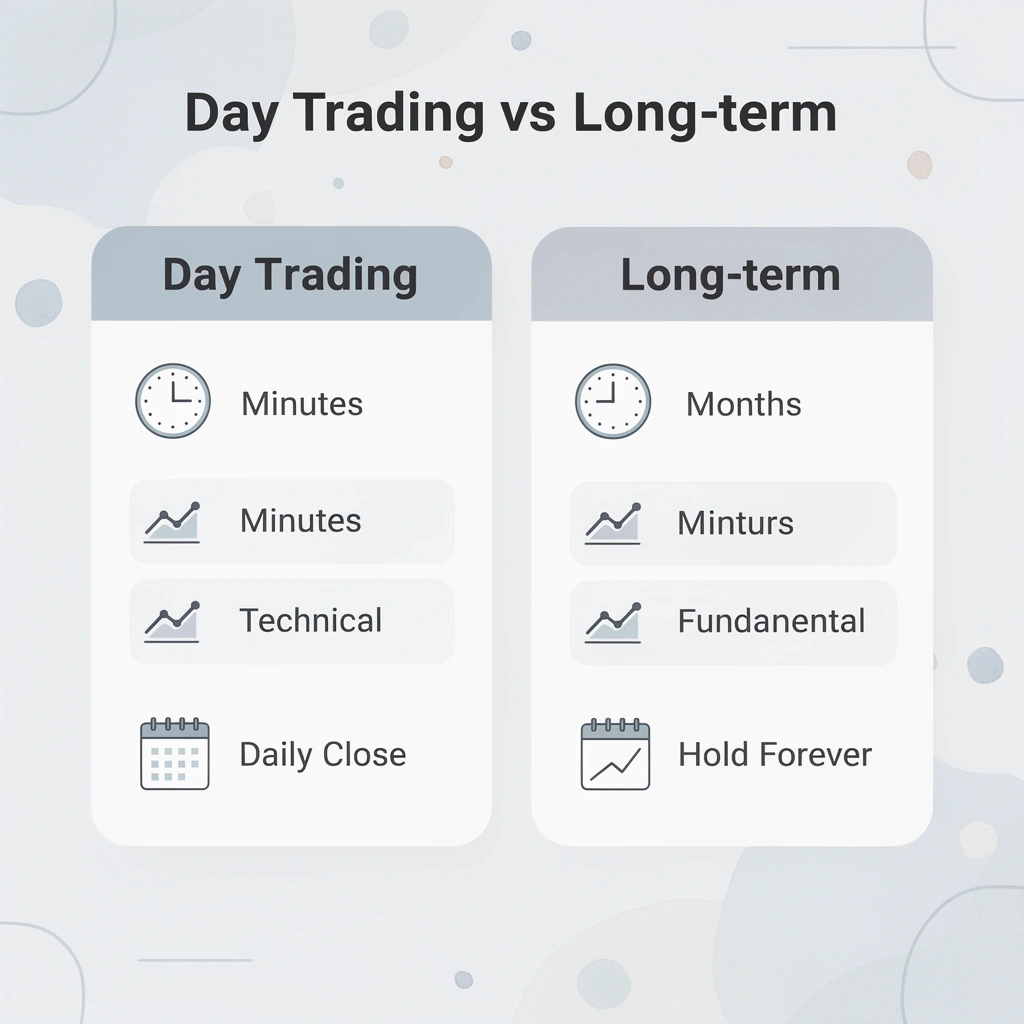
💡 Example: A day trader might buy 100 shares of a stock at $50.25 at 10:30 AM and sell them at $50.75 by 2:15 PM, capturing a $50 profit from the $0.50 price movement in just under 4 hours.
The Mechanics of Intraday Trading
You begin each morning searching for stocks or forex pairs with unusual activity: earnings announcements, sector news, or volume surges above normal levels. During market hours, you monitor live price action across multiple timeframes, waiting for setups matching your strategy.
How do you execute trades when opportunities arise?
When a stock breaks through a resistance level on rising volume, you enter a position with a predetermined profit target and a tight stop-loss. Level 2 quotes show real-time order flow, revealing where buyers and sellers cluster. Every trade closes before 4 p.m. ET to avoid overnight risk and settlement complications.
What trading styles can you make a living day trading with?
Most traders execute between five and fifty trades daily, depending on their strategy. Scalpers take dozens of tiny profits, holding positions for seconds or minutes. Momentum traders ride strong directional moves for larger gains, staying in trades for one to three hours. Breakout specialists wait for technical patterns to resolve, then act when price clears key levels with expanding volume. All approaches share one rule: close everything before the bell.
The Infrastructure That Separates Amateurs from Professionals
Success requires more than a laptop and a brokerage account. You need a fast computer with at least 16GB RAM, multiple monitors showing real-time charts, and reliable high-speed internet to prevent lag during critical moments.
Direct-access brokers offering hotkey execution and low-latency fills matter more than commission savings. Stock scanners filter thousands of securities based on criteria such as relative volume above 2x average, price movement of 3% or more, and tight bid-ask spreads. News feeds and alert systems keep you ahead of catalysts that move markets in seconds.
How important is psychological discipline when you make a living day trading?
The mental demands are equally important. You must stay focused for long periods while controlling your urges when the market moves quickly.
Winners use a written plan, prepare before market open, and review every trade in a journal. Emotional discipline matters more than natural intelligence because markets punish quick decisions faster than they reward smart thinking.
Why Capital Requirements Shape Your Entire Approach
FINRA rules define pattern day traders as anyone executing four or more day trades within five business days in a margin account, provided those trades exceed 6% of total activity during that period. Pattern day traders must maintain a minimum equity of $25,000.
Cash accounts avoid this flag but face settlement delays that prevent rapid redeployment of capital. The real challenge is maintaining enough buying power to size positions meaningfully while respecting strict 1% per-trade risk limits.
How do prop firms help you make a living day trading
Old ways of trading force you to choose between risking substantial personal capital or trading with position sizes too small for meaningful income. Prop firms like Goat Funded Trader provide simulated trading capital up to $2M after you pass evaluation challenges.
You execute your strategy while the firm absorbs downside risk, earning profit splits up to 100% on successful trades. This eliminates the primary barrier preventing skilled traders from scaling: the need to risk tens of thousands of their own capital to trade at a professional size.
Can you make a living day trading with just mechanics and capital
But knowing the mechanics and having the money gets you halfway there. The real question is whether those pieces turn into a consistent monthly income.
How Much Money Do Successful Day Traders Make per Month on Average?
Successful day traders typically earn between $3,000 and $12,000 per month, though this varies significantly based on account size and consistency. According to ZipRecruiter's 2026 salary data, the average annual income for day traders in the United States is $96,774, or roughly $8,064 monthly. This figure includes institutional traders, prop firm performers, and retail traders who made it through the learning curve, but it hides the reality that most retail traders with small accounts see much lower returns or consistent losses.
🔑 Key Takeaway: The $8,064 monthly average represents successful traders who survived the initial learning phase, not the majority who struggle with profitability.
"The average annual income for day traders in the United States is $96,774, or roughly $8,064 monthly." — ZipRecruiter, 2026
⚠️ Reality Check: These figures include institutional traders and prop firm performers with substantial backing, making the numbers misleading for typical retail traders starting with smaller accounts.
Institutional Traders
- Monthly Earnings: $15,000+
- Success Rate: High
Prop Firm Traders
- Monthly Earnings: $5,000-$20,000
- Success Rate: Moderate
Retail Traders (Small Accounts)
- Monthly Earnings: $500-$3,000
- Success Rate: Low

Why Account Size Determines Your Ceiling
Your trading capital multiplies every percentage gain into actual dollars. A disciplined 2% monthly return on a $5,000 account delivers $100, barely covering platform fees and data subscriptions. That same 2% on a $100,000 account generates $2,000, enough to cover living expenses in many markets. Traders who need income most urgently often lack the capital required to generate meaningful monthly cash flow, even with solid win rates and risk management.
How do pattern day trader rules affect whether you can make a living day trading?
Most traders with accounts under $25,000 face pattern day trader restrictions that limit round-trip transactions within five business days, forcing them to hold positions overnight or trade less frequently. This constrains momentum strategies, which depend on same-day buying and selling. Traders managing $50,000 or more face no such restrictions and can capitalize on intraday price changes without regulatory constraints.
What separates top performers from struggling traders?
Top performers at prop firms or managing six-figure personal accounts earn $15,000 to $30,000 monthly through scaled position sizing and high-probability setups. A scalper trading liquid large-cap stocks like NVDA enters on volume surges with tight 0.5% stops, exits at 1% to 1.5% gains across five to eight trades daily, and nets $600 to $1,200 on a $75,000 account after commissions.
A momentum trader waits for confirmed breakouts following economic releases, sizes positions at 1% risk, rides 3% to 5% moves through the morning session, and builds these into $5,000 to $9,000 during profitable months.
Why do capital structure differences matter when you make a living day trading?
The difference between these outcomes and the struggling retail trader isn't skill alone—it's capital structure. When you risk your own savings on every trade, a single bad week can trigger emotional decisions that destroy months of progress.
Research from stockstotrade.com reveals that only 1% of day traders earn positive abnormal returns net of fees.
How do prop firms change the trading equation?
Most traders start small and build slowly, hoping to survive long enough to reach meaningful size. Losses and stalled progress create emotional pressure: revenge trading after a bad loss wipes out weekly gains, and the cycle repeats until the account runs dry or the trader quits.
Prop firms like Goat Funded Trader flip this model by providing simulated trading capital up to $2 million after traders pass evaluation challenges. Our platform lets you execute your strategy while we absorb downside risk, earning profit splits up to 100% on successful trades with on-demand payouts.
Can you make a living day trading without risking personal capital?
This removes the barrier that prevents skilled traders from growing: the need to risk tens of thousands of personal savings to trade at a professional level. When monthly income depends on performance rather than personal capital available, the path from $1,000 to $8,000 months becomes about improving your edge, not waiting years to save.
But knowing average earnings and understanding capital dynamics only answers part of the question: whether those numbers translate into sustainable full-time income depends on factors most traders discover too late.
Related Reading
- How Does Margin Work On Robinhood
- How Much Do Day Traders Make Per Month
- How Much Margin Does Fidelity Offer
- How To Compare Brokers By Margin Interest Rates
- How Is Margin Interest Calculated
- How Does Margin Interest Work
- No Consistency Rule Prop Firm
- Options Trading Cash Flow Strategies Explained
- Financing Stock Options
- Why Are Fidelity Margin Rates So High
- How Does Margin Work at Interactive Brokers
- Why Is Schwab Margin Rate So High
- What Is A Prop Firm Forex
Can You Make a Living Day Trading Full-Time in 2026?
Yes, but only if you treat it like a job based on how well you perform, with strict systems, not a flexible side job. Full-time day trading requires tested strategies, emotional discipline, sufficient capital to survive losing periods, and consistent execution during both winning and losing streaks. Most who fail confuse early luck with real, lasting skill.

🎯 Key Point: Day trading success depends on treating it as a professional business with rigorous performance standards, not a casual income experiment.
"Most day traders lose money consistently because they confuse short-term gains with sustainable trading expertise." — Financial Industry Research, 2024

⚠️ Warning: Early profits can create dangerous overconfidence that leads to larger position sizes and riskier trades before your strategy is truly proven.
Why Most Traders Never Reach Full-Time Viability
The path from occasional wins to consistent income collapses when emotions override rules. According to Quantified Strategies Statistics, 90% of day traders lose money not because of a lack of intelligence, but because they trade without a proven edge, risk too much per position, and abandon their system after a few bad days. The market rewards execution consistency and punishes improvisation.
What hidden costs prevent traders from making a living day trading?
Commissions, spreads, and slippage drain accounts daily, while overtrading after wins or revenge trading after losses accelerates losses. Without a statistical edge verified across thousands of trades, probability ensures your capital shrinks faster than you can replace it with new deposits.
How quickly do profitable day traders lose their edge?
A University of California-linked analysis shows that only 13% of day traders remain consistently profitable after six months. Initial wins from luck or market trends fade as traders face varied conditions, overtrade, and let emotions override rules, converting early promise into rapid drawdowns.
A 15-year Taiwan market research study found that less than 1% of day traders consistently earn positive returns after fees over time. Most who appear successful early eventually face periods where their edge disappears, and without rigorous adaptation and risk limits, their capital vanishes before reaching full-time stability.
What do recent studies reveal about day trading income potential?
BrokerChooser's 2025 trader analysis revealed 52% of day traders had net losses for the year, while only 36% made more than $5,000. Daily friction and inconsistent execution prevent the steady income needed for full-time living, leaving most to supplement losses rather than replace salaries.
Capital Structure Determines Income Potential
You need $50,000 to $100,000 in liquid capital to generate livable income while maintaining 0.5% to 1% risk per trade. Smaller accounts force oversized positions that trigger emotional decisions and account-ending drawdowns. Larger accounts let you scale into positions, absorb losing streaks, and compound gains without constantly withdrawing for living expenses.
Prop firms remove the barrier of risking personal savings by providing simulated capital after passing an evaluation. Our platform lets skilled traders access six-figure buying power without the emotional weight of risking their mortgage payment on each position.
The Hidden Lifestyle Costs Nobody Mentions
Full-time trading requires 8 to 10 hours daily for market preparation, execution, and post-session review. You must cover health insurance, self-employment taxes, and living expenses during periods of poor trading performance. Every grocery bill, car payment, and utility cost depends directly on your trading results, with no guaranteed income to fall back on.
What daily routines separate professional traders from gamblers?
Successful traders build routines that stop tilt: detailed journals tracking entries, exits, and emotional states; daily loss limits that halt trading before small mistakes compound; rigorous backtesting and adaptation to changing volatility without chasing moves. This discipline separates professionals from gamblers, but it requires self-accountability that most people avoid in traditional jobs.
Why do skill and discipline alone fail most traders?
Skill and discipline only matter if the underlying structure supports them, and that's where most traders discover the gap between effort and outcome.
Factors That Influence Day Trading Profitability
Two traders following identical setups can end the year with opposite results because capital size, risk discipline, market conditions, and psychological control shape outcomes more than strategy alone. These variables compound either in your favor or against you, explaining why some traders steadily grow their accounts while others cycle through hope and frustration.

🎯 Key Point: Your trading capital determines your position-sizing flexibility and your ability to weather drawdowns. A trader with $50,000 can risk $500 per trade at 1% risk, while someone with $5,000 risks only $50 - limiting profit potential and creating pressure to overtrade.
"Risk management is the single most important factor in trading success - more important than entry signals, market analysis, or even timing." — Professional Trading Research, 2024

Success Factor
- High Impact: $25,000+ allows proper position sizing
- Low Impact: Under $5,000 forces overleverage
Risk Per Trade
- High Impact: 1-2% maximum risk maintained
- Low Impact: 5%+ risk destroys accounts quickly
Psychological Control
- High Impact: Consistent execution regardless of emotions
- Low Impact: Revenge trading after losses
Market Conditions
- High Impact: Adapts strategy to volatility changes
- Low Impact: Same approach in all conditions
⚠️ Warning: Even perfect technical analysis fails when combined with poor risk management. The most common mistake is risking 3-5% per trade instead of the recommended 1-2%, turning inevitable losing streaks into account-destroying disasters.

Trading Capital and Account Size
Your account size determines how much money you make from every percentage gain, making capital the main income multiplier in day trading. A trader with $100,000 can risk $1,000 per trade under standard 1% protocols and capture meaningful profits from small intraday moves, while someone starting with $5,000 risks only $50 per position and needs near-perfect execution to cover costs.
Larger accounts provide breathing room during drawdowns, allow diversified positions across multiple setups, and support scaling without violating pattern day trader rules or forcing overleveraged entries. Smaller accounts create psychological pressure that leads to overtrading, premature exits, and desperate decision-making, turning manageable losses into spirals that destroy accounts.
Risk Management Discipline
Strict risk protocols protect capital during losing streaks that hit every trader. Professional day traders limit exposure to 1% or less per trade, enforce daily loss caps at 2-3% of total equity, and maintain predefined stop-loss levels based on technical structure rather than hoping prices reverse. According to research from the University of São Paulo and FGV School of Economics, 97% of day traders lose money, with poor risk management accelerating losses through oversized positions, ignored stops, or revenge trading. Consistent application of these rules converts a positive expectancy strategy into a reliable monthly income rather than account erosion.
Trading Strategy and Edge
Your chosen strategy and its statistical edge determine how often you capture profits compared to losses across different market conditions. Scalping high-volume stocks for 0.5–1% moves multiple times daily requires different execution than momentum plays on breakouts with 1:2 risk-reward targets; switching between approaches without proper testing destroys consistency.
A validated system with a 55%+ win rate and a favorable reward-to-risk ratio produces steady results. Backtesting over thousands of trades, forward-testing in live conditions, and refining based on detailed journals separate strategies that deliver monthly gains from those that fail under real slippage and commissions.
How does market volatility affect day trading income potential?
Daily and weekly volatility expands or contracts price ranges, affecting what traders can capture intraday. High-volatility periods occur during economic news releases, earnings reports, or significant world events. These periods create wider price swings and more opportunities for momentum or breakout strategies. Traders can increase profits during these times by adjusting their position sizes.
Quiet markets where prices stay in a narrow range are harder for most day traders. These conditions lead to lower win rates and smaller average profits, making it difficult to cover trading costs. Successful traders adjust their focus and strategies to match current market conditions rather than forcing trades when conditions are unfavorable.
Why does capital structure matter more than skill for trading success?
Most traders believe skill alone determines their monthly results, but capital structure matters equally. Risking personal savings to build a large account creates emotional pressure that alters decision-making and amplifies mistakes.
As losses grow and drawdowns eat into living expenses, even disciplined traders face the choice between abandoning their edge or depleting their capital. Our Goat Funded Trader program provides simulated capital of up to $2M, removing personal financial risk while allowing traders to focus on performance, with profit splits up to 100% and on-demand payouts that convert skill into income without the capital barrier that stops most traders before they gain traction.
But even with proper capital and risk protocols in place, one factor determines whether traders sustain profitability or cycle through months of inconsistency: psychology.
Related Reading
- Sbloc Vs Margin Loan
- How To Borrow Against Stocks
- How To Stay Consistent In Trading
- Prop Trading Firms' Profit-Sharing Models
- Position Sizing In Trading
- How Do You Take Profit In Crypto Trading
- How To Become A Trader From Home
- Can I Borrow Against My Stocks
- Position Sizing Day Trading
- Is Issuing Common Stock A Financing Activity
- Best Crypto Prop Firm
- Lowest Margin Rates Brokers
- Best Prop Firm For Stocks
- How Do You Profit From Day Trading Stocks
- How To Day Trade Without 25k
How to Make a Living and Remain Profitable as a Full-Time Day Trader
Making a living as a full-time day trader means treating trading like a business with clear performance goals. You need repeatable processes, strict risk controls, and emotional discipline to follow your plan during both winning streaks and losing periods. Profitability comes from executing high-probability setups consistently, managing position sizes to survive inevitable losing periods, and growing gradually as your account grows.

🎯 Key Point: Successful day trading requires the same systematic approach and disciplined execution as any other profitable business venture.
"The difference between successful traders and those who fail is that successful traders treat trading as a business, not as gambling." — Professional Trading Research, 2023

⚠️ Warning: Many new traders focus on quick profits instead of building sustainable systems - this approach leads to account depletion within the first 6 months.
Track Performance Metrics That Actually Matter
Win rate alone doesn't indicate profitability. A trader winning 40% of trades can earn more than one winning 70% if their average winning trade is three times larger than their average losing trade. Calculate your reward-to-risk ratio on every trade by dividing your profit targets by your stop-loss distance. Review your expectancy weekly (average win multiplied by win rate, minus average loss multiplied by loss rate) to confirm your edge remains positive. If expectancy drops below zero for two consecutive weeks, stop trading and identify what changed in your execution or market conditions.
Protect Capital During Drawdowns
Every trader experiences losing periods. Set a rule to stop trading for the day if you lose 2% of your account. If you lose money three days in a row, cut your position sizes in half until you start winning again. This prevents losses from compounding, which can devastate accounts when traders increase risk to recover losses.
Separate Trading Income from Living Expenses
Take profits once a month, but only after your account reaches a stable baseline that supports your position sizes. Keep six months of expenses in a separate savings account so you never trade with rent money or feel pressured to force trades when good setups aren't available. This separation removes the psychological weight that turns disciplined traders into desperate gamblers.
Use Prop Firm Capital to Reduce Personal Risk
Many traders risk their own money trying to build accounts large enough to generate meaningful income. A $10,000 account forces traders to risk $100 per trade under proper risk management, which is too small to cover living expenses even with solid win rates.
As account pressure mounts, traders abandon their 1% risk rule and bet 5% or 10% per position, which, statistically, guarantees eventual ruin. Platforms like Goat Funded Trader provide access to simulated capital up to $800,000 after passing evaluation challenges, enabling traders to execute strategies with proper position sizing while the firm absorbs downside risk and offers profit splits up to 100% on certain plans.
Why does capital structure determine if you can make a living day trading?
The difference between traders who make a living and those who deplete accounts has nothing to do with strategy quality and everything to do with whether their capital structure allows them to survive long enough for their edge to compound.
How Goat Funded Trader Helps Traders Remain Profitable as Full-Time Day Traders
Making money as a full-time day trader depends on three main parts: having enough capital to size positions correctly, using risk controls that stop you from making emotional decisions, and having payout systems that help with cash flow management. Even skilled traders struggle without these fundamental pillars. The difference between traders who build sustainable careers and those who lose their accounts usually isn't about how good their trading strategy is—it's about whether their trading setup supports them to keep trading over the long term.
🎯 Key Point: The most profitable traders focus on building sustainable systems rather than chasing perfect strategies.
"The difference between successful and failed traders usually isn't strategy quality—it's whether their setup supports long-term trading sustainability."
💡 Tip: Before going full-time, ensure you have all three pillars: adequate capital, proven risk management, and reliable cash flow systems.
Success Pillar: Adequate Capital
- Why It Matters: Proper position sizing
- Without It: Forced to overtrade
Success Pillar: Risk Controls
- Why It Matters: Prevents emotional decisions
- Without It: Account blowups
Success Pillar: Payout Systems
- Why It Matters: Maintains cash flow
- Without It: Can't pay bills

Capital Access Without Personal Risk
Traders often deplete their savings during losing periods, forcing them to abandon strategies that worked before bad luck reverses. According to industry research, 90% of day traders lose money, primarily because small accounts force them to take oversized positions, leading to emotional decisions and premature exits. Prop firms like Goat Funded Trader address this by providing simulated capital of up to $2 million, subject to a one-time, refundable fee. You trade without personal financial risk, protecting your emergency fund and mortgage payments from losing days.
Profit Splits That Support Real Income
Keeping only 20% to 30% of your gains makes it mathematically impossible for most traders to earn a full-time living. A trader who makes $10,000 monthly in profits but keeps $3,000 after splits cannot cover living expenses, let alone invest in professional development. Goat Funded Trader offers up to 90% profit split with add-ons reaching 100%, meaning a trader earning $10,000 keeps $9,000 or more. This converts solid performance into money you can live on, rather than watching most of your profits go to the firm.
Risk Controls That Build Consistency
Most traders get stuck because they cannot grow beyond small accounts, caught in a cycle of excessive leverage and emotional decisions. Goat Funded Trader sets clear limits (4% daily loss, 6% overall loss) while allowing news trading and weekend holding. This creates structure without artificial constraints, protecting the funded account and training professional trading habits. The structure enforces discipline when emotions run high and prevents the impulsive decisions that destroy accounts during losing streaks.
Fast Payouts That Maintain Cash Flow
Waiting weeks for withdrawals disrupts living expenses and creates anxiety that bleeds into trading decisions. Goat Funded Trader delivers rewards within 24 hours or pays an extra $1,000, with a standard 2-business-day guarantee through bank transfer, crypto, or other methods. Cash flow certainty lets you trade with the calm focus required for consistent execution, rather than forcing trades to cover bills.
The question isn't whether you can trade well; it's whether your capital structure lets you survive long enough for your edge to compound into real income.
Related Reading
- Best Forex Prop Firm
- Margin Loan vs. Securities-Based Lending
- Trading Cash Flow
- Options Trading Strategies For Consistent Income
- How To Trade Forex With A Prop Firm
- Best Margin Rates Brokers
- Best Trading Strategies For Consistent Profits
- Day Trading Strategies For Consistent Profits
- How To Get Profit In Option Trading
- How To Become A Full-Time Trader
- Forex Trading Strategies For Consistent Profits
- Recommended Prop Trading Firms With Growth Plans
- How Does A Margin Loan Work
Get 25-30% off Today - Sign up to Get Access to Up to $800K Today
Tired of dreaming about full-time day trading while your small personal account gets wiped out by normal drawdowns, forcing you to stay stuck in your day job? Another year passes with your skills unused, your savings drained, and financial freedom out of reach.
⚠️ Warning: Small personal accounts create a vicious cycle where normal market volatility becomes account-ending risk, keeping profitable traders trapped in employment.

Goat Funded Trader eliminates that struggle. Our prop firm provides access to up to $2 million in simulated trading capital through a simple one-time challenge or instant funding option. You trade with professional-size positions using your proven strategies and keep up to 100% of profits generated, without risking your own savings.
"Access to up to $2 million in simulated trading capital with 100% profit retention transforms small-account traders into professional-scale operators." — Goat Funded Trader, 2024
It directly solves the biggest problems covered in this article. You no longer face capital pressure that limits your position sizing. Instead, you trade large accounts with proper 0.5-1% risk per trade, turning consistent small edges into full-time income. Our firm's clear rules—4% maximum daily loss and 6% overall drawdown—build the discipline you need for long-term profitability while allowing news trading, weekend holding, and unlimited trading time with no hidden restrictions. Payouts arrive fast: on-demand withdrawals within 24 hours (or an extra $1,000 for delay), with standard rewards in 2 business days.
🎯 Key Point: Professional risk management rules (4% daily, 6% total drawdown) create the structure needed for sustainable trading success.

Traders move from emotional stress and tiny, inconsistent returns to confident, scaled full-time trading. They generate reliable monthly income, scale their accounts through our built-in program, and finally live the lifestyle they want without constant fear of blowing up their personal capital.
Before Funding
- Small account stress
- Personal risk exposure
- Limited position sizing
- Inconsistent returns
After Funding
- $2M simulated capital
- Zero personal risk
- Professional-scale trades
- Reliable monthly income
Ready to make a living day trading full-time in 2026? Use promo code FIRSTGFT for 50% off your first account as a new customer. Pay a one-time 100% refundable fee with no credit card required. Pass the straightforward challenge and unlock your funded account to trade with real size and peace of mind.
🔑 Takeaway: The 50% discount with code FIRSTGFT plus 100% refundable fees eliminates financial barriers to accessing professional trading capital.
Be Great and get the App