






How Does Margin Work on Robinhood? All You Need to Know
How Does Margin Work on Robinhood? Goat Funded Trader explains requirements, risks, and strategies to maximize your trading potential safely.


Margin trading on Robinhood promises amplified returns, but borrowing money to invest can quickly become a double-edged sword for traders pursuing Capital Growth Trading strategies. Many traders jump into margin accounts without understanding how interest charges accrue, how maintenance requirements work, or what triggers margin calls that force the sale of positions at the worst possible time. Understanding Robinhood's margin system, actual fees, and common pitfalls helps protect accounts from costly mistakes.
While grasping margin mechanics is essential, many traders benefit from practicing these concepts with reduced personal risk to accelerate their learning. Developing margin trading skills and testing strategies becomes more effective when using firm capital rather than personal savings. This approach allows traders to learn proper position sizing with borrowed funds and build necessary discipline before applying margin strategies in personal accounts with a prop firm.
Summary
- Margin trading transforms modest market moves into significant portfolio swings, but the math cuts both ways. If you deposit $25,000 and your broker extends another $25,000, a 10% price increase on the full $50,000 position delivers a $5,000 gain, a 20% return on your equity minus interest costs. The same 10% drop wipes out $5,000 of your capital, leaving you with $20,000 in equity but still owing the full $25,000 loan plus accruing interest that compounds daily until repayment.
- Brokers require you to maintain minimum equity levels, usually 25% to 30% of total position value, at all times. When losses push your account below this maintenance margin, you receive a margin call demanding additional cash or securities. Failure to meet it triggers forced liquidation, where the broker sells your holdings, often during volatile periods when prices are unfavorable, to restore compliance without prior notice.
- Only 15% of margin traders answered a basic question about how margin works correctly in a 2018 SEC survey, compared to 31% of non-margin traders. This literacy gap means beginners who activate the margin often misunderstand the product they're using. In 2021, FINRA fined Robinhood $70 million and required restitution because the platform provided misleading information about margin trading, leading thousands of customers to suffer losses due to unclear risks and erroneous calls.
- Robinhood calculates maintenance requirements per security based on risk factors rather than applying a flat 25% rule across all holdings. Volatile stocks or concentrated positions carry maintenance demands up to 100%, forcing you to hold dollar-for-dollar equity against the position value and eliminating leverage entirely. Traders report sudden disappearances of buying power when Robinhood adjusts these requirements on individual securities mid-session, with one position shifting from 30% to 70% maintenance overnight due to volatility spikes.
- Robinhood charges tiered interest on settled margin balances starting at 12% annual interest for amounts up to $50,000, with rates declining to 3.95% for balances exceeding $50 million. Interest accrues daily and bills monthly regardless of whether your trades gain or lose, adding an ongoing expense that compounds against your returns. Gold subscribers receive the first $1,000 of margin interest-free, but anything beyond that threshold carries the full rate.
- Goat Funded Trader addresses this by providing simulated capital accounts up to $2 million without requiring you to borrow against your own equity or pay interest on positions, letting you trade with the firm's capital allocation rather than a loan secured by your portfolio.
What is Margin Trading, and How Does It Work?
Margin trading lets you borrow money from your broker to buy securities, using your existing investments as collateral. You put up a portion of the purchase price—typically 50% under federal regulations—and the broker lends you the rest. This amplifies your buying power, allowing you to control larger positions than your cash alone permits. When trades move in your favor, profits scale up. When they move against you, losses compound at the same pace, and you still owe the full loan amount plus interest.

🎯 Key Point: Margin trading is essentially leveraged investing—you're using borrowed funds to amplify both your potential gains and potential losses.
"Under federal regulations, investors typically must put up at least 50% of the purchase price when buying securities on margin." — SEC Investor Guidelines

💡 Example: If you have $5,000 in cash and want to buy $10,000 worth of stock, margin trading allows you to borrow the additional $5,000 from your broker, using your existing portfolio as collateral.
Margin Trading Component
- Initial Margin
50% minimum down payment required - Maintenance Margin
25% minimum equity you must maintain - Margin Call
Demand to add funds when equity falls too low - Interest Charges
Cost of borrowing money from a broker

Opening a margin account
You start by applying for margin approval through your broker, which requires a minimum deposit of $2,000 and a review of your trading experience and financial standing. With margin, your broker lends you money using your holdings as collateral. Once approved, you can use borrowed money to buy investments, though your broker sets limits based on your account balance.
How leverage magnifies outcomes
Leverage turns small market changes into big swings in the portfolio. A $25,000 deposit with $25,000 in broker credit controls $50,000 worth of stock. A 10% price increase delivers a $5,000 gain—a 20% return on your equity, minus interest costs. The same 10% drop wipes out $5,000 of your capital, leaving $20,000 in equity while you still owe the full $25,000 loan. According to Charles Schwab, the 50% initial margin requirement sets the baseline for most equity purchases, but real risk emerges when market volatility erodes your equity below the maintenance threshold.
Maintenance margin and forced liquidation
Brokers require you to maintain a minimum equity of 25% to 30% of your total position value at all times. When losses push your account below this maintenance margin, you receive a margin call for additional cash or securities. Failure to meet it triggers forced liquidation, where your broker sells holdings without warning, often during volatile periods at unfavorable prices. A single gap-down day can trigger liquidation before your thesis plays out—the timing of forced sales, not trade quality, determines the outcome.
Interest costs and break-even pressure
Borrowed money builds up daily interest that compounds until you pay back the loan. Rates vary based on your broker and the amount you borrow, adding a fixed cost to every trade.
A stock must rise not only to cover market risk but also to pay interest expense. The longer you hold a position, the higher the total costs, which can turn small gains into break-even or losing trades.
Capital.com points out that some contracts require as little as 5% margin, which amplifies both possible returns and borrowing costs relative to position size. You're no longer asking if the stock will rise, but whether it will rise fast enough to exceed the cost of borrowing.
What happens when margin trades go wrong, and how can you avoid personal debt risk?
Most traders discover how margin works after watching a single bad trade spiral into a painful loss. The real question isn't whether margin works—it does, precisely as designed.
The question is whether you can manage how fast losses accelerate, maintain the discipline to cut positions before margin calls arrive, and afford the cost of borrowing while you wait for the market to move your way.
Platforms like Goat Funded Trader offer an alternative: access to simulated capital accounts up to $2M without personal debt risk, letting you trade with substantial buying power while preserving your own savings.
What Are the Margin Requirements on Robinhood?
Robinhood enforces three layers of margin requirements: a $2,000 minimum portfolio value to unlock margin access, a 50% upfront deposit per Regulation T, and ongoing equity buffers of 25% to 100% depending on security volatility and concentration. These thresholds shift in real time as positions move; falling below them triggers restricted buying power or automatic liquidation.

🎯 Key Point: Your margin requirements aren't static — they fluctuate based on your portfolio composition and market volatility, meaning today's buying power could be tomorrow's margin call.
"Margin requirements of 25% to 100% create dynamic risk thresholds that adjust based on security volatility and portfolio concentration." — Utah State University Digital Commons, 2021

⚠️ Warning: Falling below maintenance requirements can trigger automatic liquidation of your positions without warning, potentially locking in losses during volatile market conditions.
Requirement Type: Minimum Portfolio
- Threshold: $2,000
- Purpose: Unlock margin access
Requirement Type: Initial Deposit
- Threshold: 50%
- Purpose: Regulation T compliance
Requirement Type: Maintenance Buffer
- Threshold: 25%-100%
- Purpose: Ongoing risk management

The $2,000 Minimum Entry Barrier
Before Robinhood grants margin access, your account must have $2,000 in total value or 100% of the security's purchase price, whichever is lower. This FINRA-required minimum ensures you have sufficient funds at risk before borrowing. If you drop below $2,000 while carrying borrowed funds, you face immediate margin call risk. The platform calculates this threshold using cash plus eligible securities, excluding crypto holdings. If your portfolio drops to $1,950 while you owe $500 in margin, Robinhood can liquidate your positions to comply with regulations before you can deposit additional funds.
Initial and Maintenance Requirements That Shift by Position
Regulation T sets initial margin at 50%, meaning you put up half the purchase price while borrowing the rest. A $10,000 stock purchase requires $5,000 of your own money and $5,000 in borrowed capital.
Maintenance requirements work differently: Robinhood calculates them for each security based on risk factors rather than using a flat 25% rule across all holdings. Volatile stocks or concentrated positions carry a maintenance requirement of up to 100% for concentrated positions, forcing you to hold dollar-for-dollar equity against the position value and eliminating leverage entirely.
How does Robinhood calculate maintenance requirements for different positions?
A $20,000 position at 70% maintenance requires $14,000 in equity. If your account equity drops to $13,500, you receive a margin call demanding immediate deposits or sales.
Robinhood adjusts maintenance requirements for individual securities during the trading day, causing sudden disappearances of buying power. A single position might shift from 30% to 70% maintenance overnight based on volatility spikes or liquidity changes, draining available margin across your entire account.
The platform sums each position's requirement to calculate your total maintenance obligation. A single high-requirement holding can consume buying power you thought was available for other trades.
Interest Costs and Pattern Day Trader Constraints
Robinhood charges tiered interest on settled margin balances starting at 12% annual interest rate for amounts up to $50,000, declining to 3.95% for balances over $50 million. Interest accrues daily and is billed monthly regardless of trading performance.
Gold subscribers get the first $1,000 margin interest-free; amounts beyond that incur the full rate. If you're flagged as a pattern day trader by making four or more day trades within five business days, you need $25,000 in portfolio value (excluding crypto) to continue day trading on margin—a FINRA rule that halts trading until you meet this requirement.
How do prop firms compare to traditional margin trading?
The traditional margin model ties trading capacity to personal debt risk and variable requirements that shift without warning. Platforms like prop firms offer an alternative: access to simulated capital accounts up to $2M without borrowing against your own equity or paying interest. Our funded trader accounts let you trade with firm capital rather than a loan secured by your portfolio.
You trade with the firm's capital rather than a loan secured by your portfolio, eliminating the risk of cascading liquidation when maintenance requirements spike on leveraged personal accounts.
Related Reading
- Can You Make A Living Day Trading
- How Much Do Day Traders Make Per Month
- How Much Margin Does Fidelity Offer
- How To Compare Brokers By Margin Interest Rates
- How Is Margin Interest Calculated
- How Does Margin Interest Work
- No Consistency Rule Prop Firm
- Options Trading Cash Flow Strategies Explained
- Financing Stock Options
- Why Are Fidelity Margin Rates So High
- How Does Margin Work at Interactive Brokers
- Why Is Schwab Margin Rate So High
- What Is A Prop Firm Forex
Is Margin Trading on Robinhood Good for Beginners?
Margin trading on Robinhood is not good for beginners. Quick access to borrowed money, low education requirements, and automatic selling of positions allow inexperienced traders to amplify losses faster than they can learn from mistakes. You need proven trading discipline and a deep understanding of risk before borrowing against your positions—qualities beginners have yet to develop.
🎯 Key Point: Margin trading amplifies both gains and losses, making it a high-risk strategy that can quickly wipe out a beginner's account before they develop the necessary skills and emotional control.

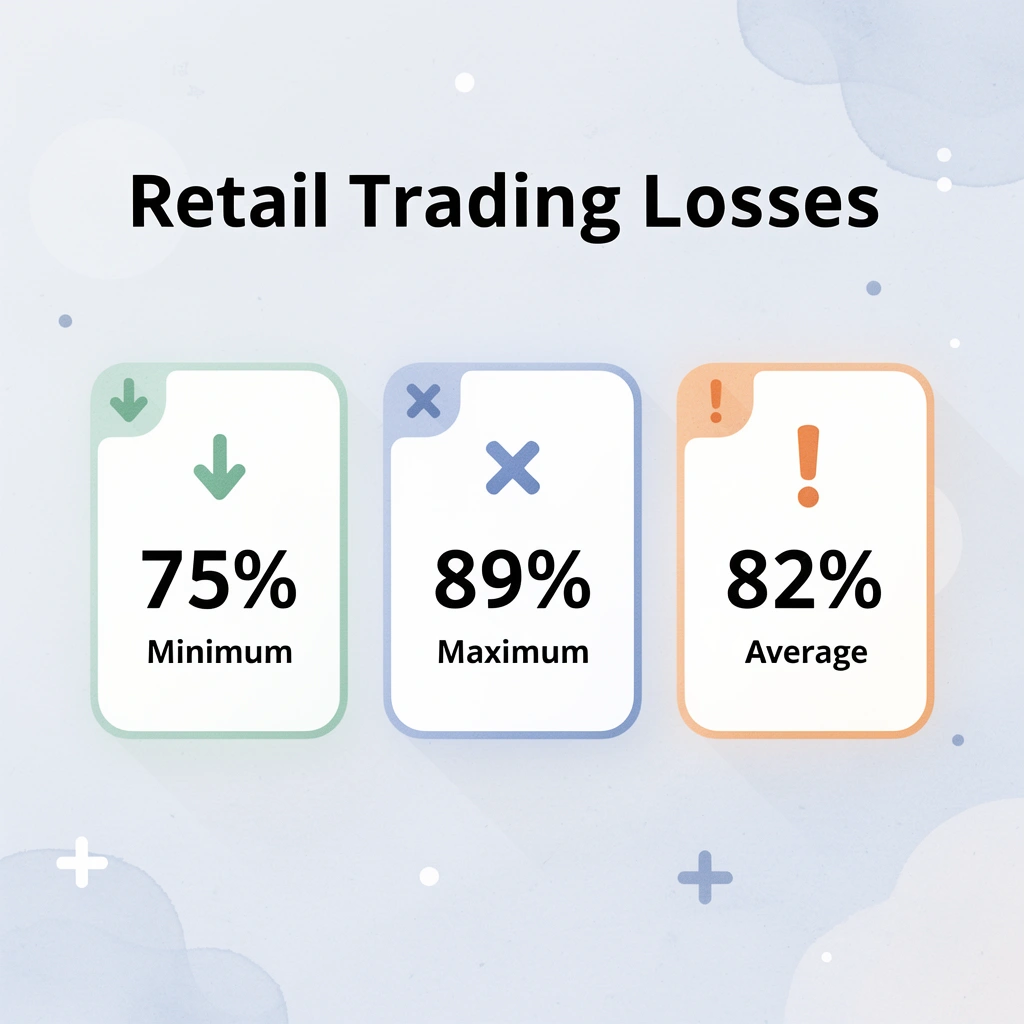
"75-89% of retail investor accounts lose money when trading CFDs and margin products." — European Securities and Markets Authority
⚠️ Warning: Robinhood's easy margin approval process can give beginners a false sense of readiness. The platform's streamlined interface may make margin trading seem simple, but the underlying risks remain just as dangerous for inexperienced traders.
The Beginner's Misunderstanding of Leverage
New traders often believe margin simply multiplies their buying power without changing the basic risk equation. Leverage doesn't just amplify gains—it restructures your entire account risk. According to Robinhood Support's Margin Overview, margin investing allows you to borrow up to 50% of the purchase price of marginable securities, meaning a 10% stock decline on a fully margined position erases 20% of your actual equity before interest charges accrue. Beginners rarely monitor positions with the intensity required to catch accelerating losses before maintenance calls trigger automatic liquidation.
Why Robinhood's Structure Amplifies Beginner Mistakes
The platform's design makes margin feel like a feature upgrade rather than a fundamental shift in risk exposure. You toggle it on with minimal friction, your buying power increases instantly, and the app's interface doesn't force you to confront daily interest calculations or real-time maintenance requirements. When prices move against you, the system calculates equity thresholds in real time across volatile holdings and liquidates positions without warning to protect the loan. Beginners enter this structure with overconfidence from the app's gamified experience but lack the discipline to exit positions early, monitor multiple tickers simultaneously, or maintain cash buffers for unexpected calls.
The Data on Beginner Margin Performance
Research consistently shows that inexperienced traders struggle with leveraged products. A 2018 SEC-linked survey revealed that only 15% of margin traders answered a basic question about how margin works correctly, compared to 31% of non-margin traders. In 2021, FINRA fined Robinhood a record $70 million and required restitution for providing misleading information about margin trading, leading to thousands of customers suffering losses due to unclear risk disclosures. The University of Florida found that less-experienced traders consistently lose money on high-leverage plays, with complex positions averaging 16.4% losses over three-day periods.
The Alternative Path for Serious Traders
Most traders assume margin is the only way to control larger positions without more cash. Prop firm structures offer an alternative: our funded trading accounts provide simulated capital from $20,000 to $2 million without borrowing against your money or paying daily interest. You trade with our capital rather than a loan secured by your portfolio, eliminating the risk of cascading liquidation as maintenance requirements increase. This structure gives you substantial buying power while protecting your personal finances from the debt exposure that destroys beginner margin accounts.
When Margin Might Fit Experienced Traders
Experienced investors with strong risk controls and diversified portfolios use margin to capitalize on short-term opportunities where expected returns exceed borrowing costs. They size positions based on maintenance requirements, monitor equity ratios throughout the day, and exit immediately when their thesis breaks down. Beginners skip this learning phase and face the full downside of leverage without the discipline required to manage it. Build your skills with cash accounts until you demonstrate consistent results and a deep understanding of risk, then consider whether borrowed capital aligns with your strategy.
Understanding what safe entry into leveraged trading looks like matters before attempting margin.
How to Get Started With Trading Margin Safely on Robinhood
Safe margin trading on Robinhood requires careful setup, hard limits on borrowing, and daily monitoring habits to prevent surprises. Skip these steps, and you're gambling with borrowed money rather than trading strategically.
🎯 Key Point: Margin trading amplifies both gains and losses - your $1,000 investment can control $2,000 worth of stock, but losses hit your actual cash balance twice as hard.

"78% of margin traders lose money in their first year because they skip risk management fundamentals." — Financial Industry Regulatory Authority, 2023
⚠️ Warning: Robinhood's instant deposits can create a false sense of available cash - always verify your actual settled funds before opening margin positions to avoid margin calls.

Setup Step: Enable Margin
- Action Required: Complete the application & wait for approval
- Time Needed: 1-3 business days
Setup Step: Set Position Limits
- Action Required: Cap borrowing at 25% of portfolio
- Time Needed: 5 minutes
Setup Step: Daily Monitoring
- Action Required: Check margin usage & maintenance requirements
- Time Needed: 2-3 minutes daily
Setup Step: Risk Controls
- Action Required: Set stop-losses on all margin positions
- Time Needed: 10 minutes per trade
Apply for Margin Investing Access
Open the Robinhood app, tap your account icon, select Investing, then Margin Investing. Answer the questions honestly about your trading experience and financial situation. Robinhood checks your application against its standards and approves qualifying accounts. Approval grants access to a tool that requires careful and responsible use.
Meet the Minimum Portfolio Requirement
You need at least $2,000 in portfolio value before Robinhood grants margin credit. This FINRA floor ensures you have real money at risk before borrowing. Deposit more than the minimum so market fluctuations don't push you below the threshold and trigger automatic restrictions. Pattern day traders face a higher $25,000 requirement to avoid trading limitations.
Understand Initial and Maintenance Requirements
Robinhood requires you to deposit at least 50% of any new purchase under Regulation T, while the platform lends the rest. Your equity must stay above the maintenance requirement, which starts at 25% but increases for volatile stocks or concentrated positions. Check your Buying Power and Margin Status daily in the app for exact numbers and your proximity to forced liquidation, as thresholds change with market conditions and position changes.
Set a Personal Borrowing Limit
Go into Margin Investing settings and cap the amount you borrow below what Robinhood offers. This self-imposed ceiling prevents you from using all available power on impulse trades and forces careful consideration before each position. Keep it conservative until you prove consistent profitability over multiple months. The platform will let you borrow up to your full limit, so you must have the discipline to stop yourself.
How should you monitor daily margin activity on Robinhood?
Check your margin used, interest accrued, and maintenance buffer every trading day before market open. Robinhood charges up to 12.5% annual interest compounded daily on borrowed balances, so holding leveraged positions for weeks erodes returns. Sell positions or deposit cash immediately when equity approaches the maintenance line.
What common mistakes do traders make with Robinhood margin?
Crypto holdings don't count toward margin calculations, so your Bitcoin balance won't protect you from a margin call on stock positions. Most traders who blow up on margin treat borrowed capital like their own money and ignore the daily interest clock.
Mastering safe margin habits on Robinhood opens a different path, removing personal debt risk while scaling buying power beyond what retail brokers typically offer.
Related Reading
- How To Borrow Against Stocks
- How Do You Profit From Day Trading Stocks
- How Do You Take Profit In Crypto Trading
- Position Sizing Day Trading
- How To Become A Trader From Home
- Is Issuing Common Stock A Financing Activity
- How To Day Trade Without 25k
- Best Prop Firm For Stocks
- Position Sizing In Trading
- Prop Trading Firms' Profit-Sharing Models
- Sbloc Vs Margin Loan
- Best Crypto Prop Firm
- Lowest Margin Rates Brokers
- Can I Borrow Against My Stocks
- How To Stay Consistent In Trading
How Goat Funded Trader Helps Traders Scale Without Heavy Margin Risk
Robinhood's margin model forces you to risk your own capital and pay daily interest on borrowed money. Prop firms like Goat Funded Trader flip that structure: we provide simulated capital to trade with zero personal debt exposure, so you keep up to 100% of profits. We absorb all downside risk while you execute your strategy with professional-level buying power.

"We provide traders with simulated capital and absorb all downside risk while they keep up to 100% of profits with zero personal debt exposure." — Goat Funded Trader Model
🔑 Key Takeaway: The fundamental difference between traditional margin trading and prop firm funding is who bears the risk. With Robinhood's margin, you're personally liable for losses plus daily interest charges. With Goat Funded Trader, you get institutional-level capital without the personal financial exposure.
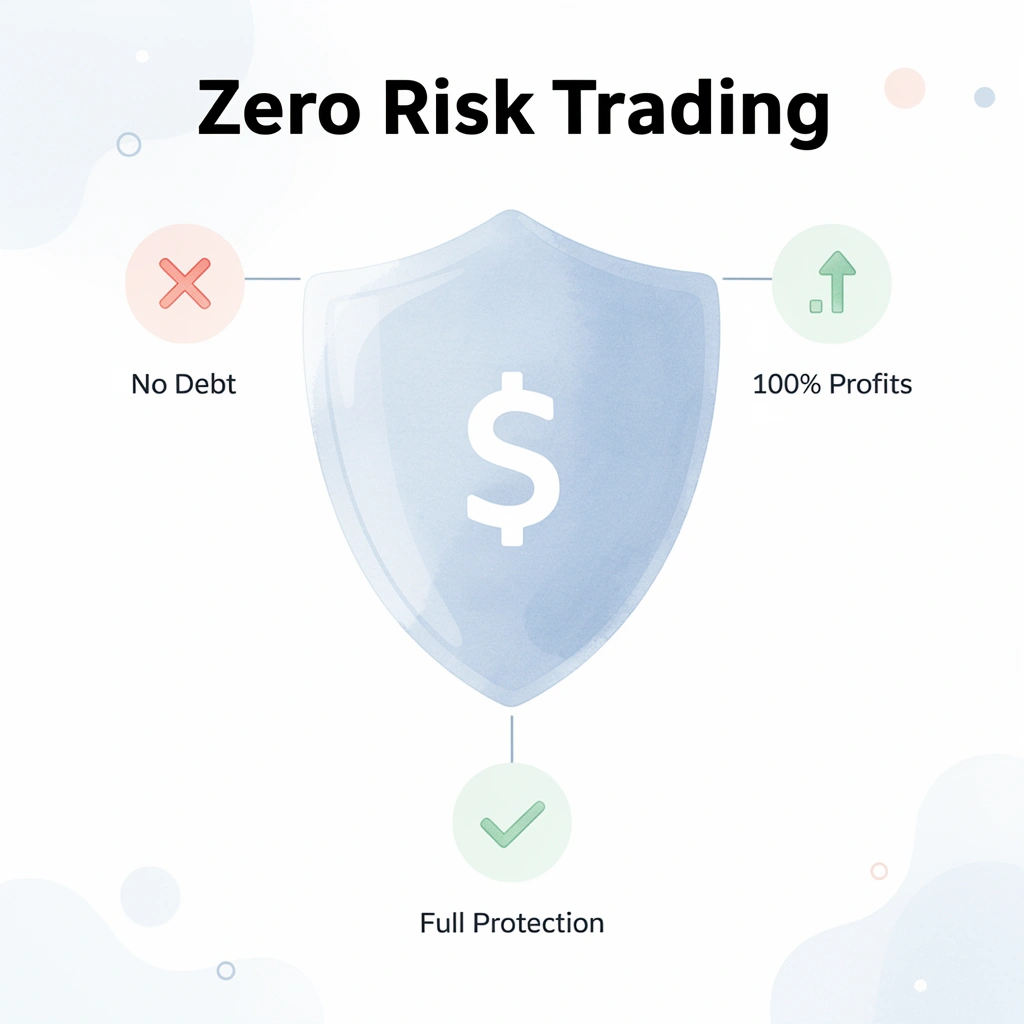
💡 Advantage: This model allows traders to scale their strategies with significant buying power while maintaining complete downside protection — something impossible with traditional margin accounts.
Trading Without Personal Debt or Interest Charges
Robinhood charges interest on borrowed funds that compounds daily, raising your break-even threshold before market movements are factored in. Goat Funded Trader eliminates this entirely: you trade the firm's simulated capital with no interest charges, no personal liability for losses, and keep full profits from larger positions without daily fees eroding your gains.
Avoiding Forced Liquidations Through Fixed Risk Limits
Robinhood issues margin calls when equity drops below maintenance requirements and automatically sells positions at the worst possible moment, often locking in losses during temporary volatility. Goat Funded Trader enforces clear, fixed drawdown limits: 4% maximum daily loss and 6% overall maximum loss. These thresholds give you breathing room to manage trades actively rather than watching the broker liquidate your account mid-session.
Scaling Capital Beyond Retail Broker Constraints
Robinhood limits you to your personal deposits plus 50% initial margin. Goat Funded Trader unlocks up to $2,000,000 in simulated capital with up to 1:100 leverage after passing straightforward challenges. This enables you to control larger positions using the same proven strategy, execute professional-level volume, while the firm assumes all downside risk, and you retain profits.
Building Long-Term Growth Through Performance-Based Scaling
Robinhood limits growth to whatever extra cash or margin you can personally add. Goat Funded Trader offers a performance-based scaling program that grows your funded account as you demonstrate consistent profitability, with account size increasing by 25% tied to your results. You start with manageable challenges and scale toward $2 million while the firm carries all capital risk, creating a clear path to professional trading income without additional personal investment.
But scaling capital only matters if you can access your profits when you earn them.
Related Reading
- How To Get Profit In Option Trading
- Margin Loan Vs Securities Based Lending
- Best Forex Prop Firm
- How To Trade Forex With A Prop Firm
- How To Become A Full Time Trader
- Recommended Prop Trading Firms With Growth Plans
- How Does A Margin Loan Work
- Options Trading Strategies For Consistent Income
- Best Trading Strategies For Consistent Profits
- Forex Trading Strategies For Consistent Profits
- Day Trading Strategies For Consistent Profits
- Best Margin Rates Brokers
- Trading Cash Flow
Get 25-30% off Today - Sign up to Get Access to Up to $800K Today
You now understand how margin works on Robinhood: the 50% initial requirement, daily interest charges, maintenance rules, and margin calls that liquidate positions at the worst moment. Small market moves threaten your entire account, interest eats into wins, and forced sales reset your progress while your capital stays capped.

🎯 Key Point: Traditional margin trading puts your personal money at risk with daily interest charges and forced liquidations.
Goat Funded Trader ends that cycle. Our simulated capital accounts go up to $2 million with up to 1:100 leverage, following fixed risk rules: 4% maximum daily loss and 6% maximum overall loss. No personal money at risk, no interest, no broker liquidations. Pass the challenges, get funded, and withdraw up to 100% of profits on demand—payouts processed within 24 hours or receive an extra $1,000 for the delay.
"250,000 traders have joined Goat Funded Trader to access up to $2 million in simulated capital without risking personal funds." — Goat Funded Trader, 2024
Ready to trade bigger without margin stress? Use code FIRSTGFT for 50% off your first account and start your challenge today with instant dashboard access and no credit card required. Join 250,000 traders on Goat Funded Trader.
🔑 Takeaway: Funded trading accounts eliminate the margin trap by providing substantial capital without personal risk or interest charges.

Be Great and get the App