


Trading Tips

6 Best Halal Prop Firms for Islamic Traders in 2026

Compare the 6 best Halal Prop Firms for Islamic traders in 2026. Fees, rules, payouts, and Sharia-compliant features explained.

For Muslim traders seeking to grow their skills without compromising their faith, understanding what a funded account is becomes the gateway to opportunity. A funded account allows you to trade with a proprietary trading firm's capital rather than your own money, but here's the challenge: most prop firms operate using interest-based structures that directly conflict with Islamic principles. This guide will show you how to select and join a top halal prop firm, securing Sharia-compliant funding to scale your Islamic trading career with zero riba risk in 2026.

Goat Funded Trader offers Muslim traders a solution built on Islamic finance principles that eliminates swap fees, interest charges, and other prohibited elements in the funding process. Their approach to proprietary trading respects your religious obligations while providing access to substantial trading capital, profit splits aligned with halal business partnerships, and evaluation programs free of gambling or speculative elements. When you're ready to advance your trading without crossing red lines, their platform connects your skill with capital in a way that honors both your ambition and your values.

Summary

  • Halal prop firms eliminate interest-based overnight fees that conventional firms charge automatically, but the implementation method matters as much as the elimination itself. Some firms extend grace periods of three to seven days before applying administrative charges, while others widen spreads by fractions of a pip to compensate for foregone swap revenue. According to AboutIslam's 2023 Shariah analysis, this structural change transforms trading from an interest-bearing activity into a fee-for-service model that aligns with Islamic commercial law. The shift affects strategy execution because swing traders can hold positions through consolidation phases without accumulating daily charges that erode profits.
  • Most prop firm evaluations are designed with pass rates below 10%, creating revenue models that depend more on repeated challenge fees than on funded trader success. When firms generate 80% of income from evaluation purchases rather than profit-sharing with successful traders, the incentive structure favors artificial difficulty over genuine skill assessment. This business model introduces elements of chance that resemble gambling more than professional evaluation, raising concerns about maysir compliance. Traders attempting multiple $300 challenges generate more revenue from failures than from potential long-term profitability as funded accounts.
  • Contract clarity in halal prop firms must eliminate the excessive uncertainty that Islamic law prohibits in commercial relationships. Mudarabah partnerships require precise documentation of profit splits, loss allocations, withdrawal procedures, and account-termination conditions before any trading occurs. Many firms include vague clauses about discretionary profit adjustments or data-use rights buried in lengthy terms of service, creating information asymmetry that favors the firm. 
  • Screening for halal equities extends beyond obvious sector exclusions to include an examination of corporate debt ratios and capital structure. Islamic finance scholars typically require that total debt remain below 33% of market capitalization and that interest-bearing assets remain below similar thresholds. Companies might operate in permissible sectors such as technology or healthcare, but finance operations through excessive leverage that creates prohibited interest exposure. Firms that provide pre-screened equity lists perform this analysis continuously, relieving traders who lack expertise in Islamic finance jurisprudence and ensuring compliance extends beyond surface-level filtering.
  • Data usage by prop firms creates legitimate anxiety for Muslim traders concerned about whether performance information indirectly supports prohibited financial instruments. When firms analyze thousands of trader strategies and execution patterns, that aggregated data becomes valuable for risk modeling and market behavior analysis. The concern intensifies when firms might sell insights to third parties, use data to trade instruments that traders wouldn't touch themselves, or feed information into systems supporting interest-based derivatives. Transparency about revenue sources beyond profit-sharing remains rare, forcing traders to trust claims they cannot independently verify about how their trading activity connects to the firm's broader business operations.
  • Goat Funded Trader addresses these structural concerns by building its business model around funded trader profitability rather than evaluation fee extraction, with instant payout systems processing withdrawals in documented 9-hour turnaround times and scaling programs that increase profit splits to 95% as traders demonstrate consistency.

What are Halal Prop Firms, and How Do They Work?

Crypto trading app on a smartphone - Halal Prop Firms

Halal prop firms provide access to trading capital without requiring traders to risk their own money, but they operate under strict Islamic finance principles that prohibit interest (riba), excessive uncertainty (gharar), and speculation that resembles gambling (maysir). These firms evaluate traders through skill-based challenges, then allocate real capital to successful candidates who trade permissible instruments, with profits shared according to clear, predetermined agreements. The structure mirrors a partnership in which the firm provides capital and the trader contributes expertise, with both parties understanding their obligations and potential outcomes from the outset.

The model solves a real problem for Muslim traders: how to scale trading performance without compromising religious principles. Traditional prop firms often charge swap fees for overnight positions, use interest-bearing leverage, or operate in ways that introduce forbidden elements into the trading relationship. A truly halal prop firm eliminates these issues by redesigning the funding structure to align with Islamic commercial law, ensuring that every transaction, fee, and profit-sharing arrangement complies with Shariah guidance.

The Assessment Process

Most halal prop firms begin with an evaluation phase where traders demonstrate their abilities using simulated accounts. You pay an upfront fee (typically $100-$500) to access a practice environment with defined profit targets, maximum drawdown limits, and minimum trading-day requirements. This isn't a gamble because the outcome depends entirely on your skill, not chance. The fee covers the technology, oversight, and administrative costs of conducting the evaluation, similar to the cost of a professional certification exam.

During this phase, you're trading in a simulated environment that doesn't interact with live markets. According to AboutIslam's 2023 Shariah analysis, this separation matters because it transforms the assessment fee from a speculative wager into a service payment. You're purchasing access to a testing platform, not betting on uncertain market outcomes. The firm evaluates whether your risk management, strategy execution, and emotional discipline meet its standards before entrusting you with actual capital.

Successful traders move from simulation to a funded account, where real money is used to trade live markets. This transition creates stress for many because the psychological weight changes, even though the trading rules remain identical. The firm now assumes the financial risk of your trades up to agreed loss limits, while you retain responsibility for executing your strategy within defined parameters. Position size limits, prohibited trading times, and daily loss caps protect both parties from catastrophic outcomes.

Profit Sharing and Payout Structures

The financial arrangement in halal prop trading resembles a mudarabah contract, an Islamic partnership where one party provides capital (the firm) and the other provides labor and expertise (you). Profit splits typically range from 70% to 95% in the trader's favor, with the firm taking the remainder as compensation for capital risk and operational support. These percentages are fixed before trading begins, eliminating the ambiguity that would constitute gharar.

Many traders have spent thousands of dollars on failed prop firm challenges, resulting in financial losses and the quiet shame of repeatedly missing targets. This reality underscores why the evaluation phase must be genuinely skill-based rather than designed to generate fees from prospective participants. A halal firm structures its assessments to identify capable traders, not to profit primarily from evaluation fees. The business model depends on successful traders generating consistent returns, not on a revolving door of failed attempts.

Payout frequency matters because delayed or complicated withdrawal processes can hide problematic practices. Transparent firms process payouts on regular schedules (weekly, biweekly, or monthly) with clear documentation of profit calculations, fees, and any adjustments. When you request a withdrawal, the timeline should be predictable and the process straightforward. Opacity in payouts often signals deeper compliance issues, whether related to Islamic principles or general business integrity.

Ensuring Islamic Compliance

For a prop firm to qualify as truly halal, it must meet several specific requirements beyond surface-level claims. Swap-free accounts are essential because standard overnight position fees represent interest on borrowed capital. Some firms eliminate swaps entirely during a grace period; others charge flat administrative fees unrelated to time or amount; and still others adjust spreads to compensate. The method matters less than the outcome: no interest-based charges at any point.

The firm's own capital must come from permissible sources. If the company finances its operations through interest-bearing loans or invests in prohibited industries, that contamination affects the entire relationship. Muslim traders seeking peace of mind about whether their trading activities align with Islamic ethical standards need transparency about the firm's balance sheet and funding sources. Few firms volunteer this information, raising legitimate concerns about hidden haram elements in their business models.

Trading restrictions must exclude prohibited instruments and sectors. Alcohol, gambling, pork products, conventional financial services involving interest, and weapons manufacturing all fall outside permissible boundaries. Some halal prop firms maintain approved lists of tradeable assets, while others rely on traders to avoid forbidden instruments. The former approach provides more certainty, especially for those newer to Islamic finance principles.

Contract clarity addresses gharar by ensuring both parties understand terms, obligations, loss limits, and profit distribution before any trading occurs. Ambiguity about who owns trading profits, how losses are allocated, or what happens if you violate rules creates the kind of uncertainty that Islamic law prohibits in commercial relationships. A proper contract specifies these details in writing, leaving no room for disputes or surprise conditions that emerge only after problems arise.

The Data Usage Question

A serious concern has emerged among Muslim traders about how prop firms use performance data from thousands of traders who attempt challenges and manage funded accounts. When prop firm executives publicly state that "it's all about the data" while support teams claim no data sharing occurs, the contradiction creates anxiety about whether firms might be using trader behavior to facilitate haram activities, such as CFD trading, margin-based instruments, or other prohibited financial products.

Most prop firms analyze aggregate trading data to improve their risk models and understand market exposure across their trader base. This practice isn't inherently problematic if the firm uses insights only to manage its own halal operations. The concern arises when firms might be selling data to third parties, using it to trade against their own traders, or feeding it into systems that support interest-based financial products. Transparency here is rare, which forces Muslim traders into an uncomfortable position of trusting claims they cannot verify.

Some traders experience cognitive dissonance trying to reconcile their desire to access prop firm capital with uncertainty about whether their participation indirectly supports haram activities. This tension is real and deserves honest examination rather than dismissal. If a firm's business model depends on revenue streams beyond trader success and profit sharing (such as selling performance data or providing liquidity to prohibited instruments), then participation becomes questionable regardless of whether your individual account avoids interest and prohibited assets.

The most reliable approach is to consult qualified Islamic scholars who understand both Shariah principles and modern financial technology. Generic fatwas about forex trading don't address the specific structure of prop firm relationships, data usage policies, and revenue models. You need guidance that examines the actual contracts, fee structures, and business practices of specific firms rather than broad categories.

Why Structure Matters More Than Marketing

Not every firm claiming to be halal actually meets Islamic finance standards. Hidden charges disguised as administrative fees, unclear rules about profit ownership, or evaluation processes designed more to generate fee revenue than identify skilled traders all introduce elements that compromise compliance. The gap between marketing claims and operational reality explains why thorough due diligence matters more than trust in branding.

Platforms like prop firm have built their models around transparency and trader success rather than maximizing revenue from evaluation fees. Their instant payout system (with documented 9-hour turnaround times) and scaling programs that reward consistency with profit splits up to 95% signal a business model aligned with trader success. When a firm's revenue depends on funded traders generating profits rather than on challenge fees from unsuccessful attempts, the incentive structure shifts toward genuine skill evaluation and long-term support.

High dropout rates in prop firm trading (often exceeding 90% of evaluation attempts) highlight that this path requires real expertise, not just enthusiasm. The difficulty isn't a flaw but a feature that separates skilled traders from those who need more development before managing significant capital. A halal firm should make this clear up front rather than marketing the opportunity as easy money, because misrepresenting the challenge level introduces a form of deception (gharar) into the initial agreement.

Limited options of truly certified halal prop firms make it difficult for Muslim traders to find compliant opportunities without extensive research. Some firms have obtained formal Shariah certification from recognized Islamic finance boards, which provides stronger assurance than self-declared compliance. Others operate according to Islamic principles but haven't pursued formal certification, requiring you to evaluate their practices directly or through consultation with scholars who can review their contracts and business model. But knowing the structure only raises a more practical question: which specific markets and instruments can you actually trade while staying within these boundaries?

What Instruments Can You  Trade with a Halal Prop Firm?

Stock market charts on digital devices - Halal Prop Firms

Halal prop firms grant access to currency pairs, equities from permissible sectors, physical commodities, and select indices composed entirely of compliant assets. The boundaries depend on whether instruments involve actual ownership transfers, avoid interest-based structures, and steer clear of prohibited industries. Your trading universe is narrower than that of conventional prop firms, but within those limits, you'll find sufficient diversity to build robust strategies across multiple asset classes and timeframes.

The restriction isn't arbitrary. Islamic finance demands that every transaction reflect real economic exchange rather than synthetic constructs designed purely for speculation. This principle filters out derivatives with ambiguous underlying assets, contracts that resemble gambling more than investment, and any instrument whose profit mechanism depends on interest accrual. What remains are markets where skill, analysis, and timing determine outcomes, not chance or forbidden financial engineering.

Currency Pairs Without Overnight Fees

Foreign exchange trading forms the foundation of most halal prop firm offerings because currencies represent genuine economic value and facilitate international commerce. Major pairs such as EUR/USD, GBP/USD, and USD/JPY reflect real supply and demand dynamics across economies, making them suitable for spot trading that settles immediately. The challenge lies in eliminating the swap fees charged by conventional brokers for positions held overnight.

Swap fees represent interest on borrowed capital, a clear violation of riba prohibitions. Halal prop firms address this by offering accounts in which overnight positions incur no time-based charges. Some extend a grace period of several days before applying administrative fees unrelated to position size or duration. Others adjust spreads slightly wider to compensate for the absence of swaps, maintaining their revenue model without introducing forbidden elements. The method matters less than the outcome: you can hold positions based on your analysis without accumulating interest charges that contaminate profits.

The psychological freedom this creates shouldn't be underestimated. When you're not watching the clock to avoid swap charges, your strategy can be driven by market conditions rather than arbitrary cutoff times. Swing trading and position trading become viable approaches instead of forcing everything into intraday timeframes. This alignment between religious compliance and strategic flexibility demonstrates that proper structure enhances, rather than restricts, trading effectiveness.

Screened Equity Positions

Stock trading through halal prop firms requires careful filtering because not all publicly traded companies operate within permissible boundaries. Technology firms developing software, healthcare companies producing treatments, and consumer goods manufacturers selling halal products generally qualify. Financial institutions that profit from interest-based lending, entertainment companies involved in gambling or alcohol, and defense contractors manufacturing weapons all fall outside acceptable limits.

The screening process examines both business activities and capital structure. A company might operate in a permissible sector but finance operations with excessive debt, creating interest exposure that compromises compliance. Islamic finance scholars typically set thresholds: total debt shouldn't exceed 33% of market capitalization, and interest-bearing assets should remain below similar limits. These ratios ensure that your investment primarily supports legitimate business operations rather than debt-based financial engineering.

Most halal prop firms provide pre-screened lists of approved equities, removing the burden of individual research for every potential trade. These lists are periodically reviewed as companies change their business models or capital structures. When you trade within these boundaries, you're participating in actual wealth creation through businesses that produce goods and services, not speculating on financial instruments divorced from real economic activity. The distinction matters both spiritually and practically, as companies with strong fundamentals and ethical operations often demonstrate more sustainable performance than those built on leverage and financial manipulation.

Physical Commodity Exposure

Raw materials like gold, silver, crude oil, and agricultural products qualify for halal trading when contracts represent actual physical goods rather than purely speculative instruments. Spot commodity trading, where you buy or sell at current market prices with immediate settlement, aligns with Islamic principles because it involves tangible assets with inherent utility. Futures contracts have become more complex, requiring careful examination of whether they serve genuine hedging needs or simply enable gambling-like speculation.

The critical factor is whether your position connects to real supply and demand in physical markets. Trading gold as a store of value or hedge against currency fluctuations reflects a legitimate economic purpose. Speculating on complex commodity derivatives with no intention of delivery or practical use crosses into prohibited territory. Halal prop firms structure their commodity offerings to emphasize spot markets and contracts with clear physical backing, avoiding synthetic products that multiply leverage through financial engineering.

Commodity markets provide diversification benefits because they often move independently of equity and currency trends. During periods of currency weakness, precious metals typically strengthen. When geopolitical tensions rise, energy prices respond to supply concerns. This natural hedge allows you to construct portfolios that balance risk across uncorrelated assets, a fundamental principle of sound trading, whether you're operating under Islamic guidelines or conventional frameworks.

Compliant Index Instruments

Certain index products become permissible when they track baskets composed entirely of screened equities or commodities. An index representing technology companies that meet debt and business activity requirements can provide broad sector exposure without requiring individual stock selection. The structure must avoid prohibited components and ensure that the index methodology doesn't introduce leverage or interest-based elements through its construction.

The transparency requirement here is higher than with individual assets because indices aggregate multiple underlying components. You need confidence that every constituent meets Shariah standards, not just the majority. Some halal prop firms offer access to purpose-built Islamic indices maintained by specialized providers who perform continuous screening. Others restrict index trading entirely to avoid the complexity of verifying compliance across dozens or hundreds of underlying assets.

When available, compliant indices offer strategic advantages for traders who want market exposure without the concentration risk of individual positions. You can express views on sector trends, regional economic performance, or broad market direction while maintaining diversification. The key is ensuring that the convenience of index trading doesn't come at the cost of hidden non-compliance buried in the basket composition.

Digital Asset Considerations

Cryptocurrency trading occupies contested territory in Islamic finance because scholars disagree about whether digital currencies function as legitimate money or speculative tokens. Some cryptocurrencies that facilitate actual transactions and serve as mediums of exchange may qualify as permissible, while others designed purely for speculation or linked to prohibited activities clearly don't. Halal prop firms that include crypto typically limit offerings to major coins with established utility and avoid highly volatile altcoins that resemble gambling more than investment.

The evaluation framework examines whether a digital asset has intrinsic value, serves a genuine economic purpose, and operates through transparent mechanisms. Bitcoin's role as a decentralized store of value and medium of exchange gives it stronger claims to permissibility than meme coins with no utility beyond speculation. Ethereum's function as a platform for smart contracts and decentralized applications provides economic justification, though concerns about its proof-of-stake mechanism and DeFi ecosystem complicate the analysis.

Most conservative Islamic scholars advise caution with cryptocurrencies until a clearer consensus emerges about their nature and compliance. If you choose to trade digital assets through a halal prop firm, expect stricter limits and a more conservative approved list than conventional offerings. The rapid evolution of blockchain technology and crypto markets means that today's permissible instruments might face new scrutiny as their use cases and underlying mechanisms change.

The Data Question Returns

Muslim traders seeking definitive answers about whether their trading data indirectly supports haram financial instruments face a frustrating reality: most prop firms won't provide detailed transparency about how they monetize performance information. The concern isn't theoretical. If a firm analyzes your successful strategies and uses those insights to improve their own trading in prohibited instruments like interest-based derivatives or margin products, your participation creates an uncomfortable connection to forbidden activities, even if your individual account remains compliant.

The familiar approach is to trust the prop firm's statements that the data remains internal and serves only risk management purposes. As your trading generates performance records across thousands of evaluation attempts and funded accounts, that information becomes valuable for understanding market behavior, trader psychology, and profitable patterns. The hidden cost emerges when firms might be selling aggregated insights to third parties, feeding data into systems that support conventional finance, or using your strategies to trade instruments you wouldn't touch yourself. 

Platforms like prop firms address this by building business models around trader success and transparent payout structures, rather than opaque data monetization, thereby narrowing the gap between what firms claim and what they actually do with your performance information.

The most reliable protection comes from choosing firms with clear revenue models based on funded trader profitability rather than evaluation fees or undisclosed data licensing. When a company's income depends on your long-term success and profit sharing, the incentive structure aligns with your interests. When revenue sources remain murky or depend heavily on challenge fees from unsuccessful attempts, skepticism about data usage becomes warranted.

Trading What Matters

The instruments available through halal prop firms provide sufficient variety to develop sophisticated strategies across multiple timeframes and market conditions. You're not limited to a single asset class or forced into approaches that don't match your analytical strengths. Currency pairs offer liquidity and tight spreads for active trading. Screened equities connect you to long-term business performance. Commodities provide diversification and inflation hedges. The boundaries exist to ensure your trading reflects genuine economic participation rather than gambling dressed up as investment.

The prohibition on prohibited instruments eliminates temptations that can destroy many traders, regardless of religious considerations. High-leverage derivatives, complex options strategies with asymmetric risk profiles, and speculative instruments divorced from underlying fundamentals all fall outside halal boundaries. These same instruments account for disproportionate losses among retail traders who mistake complexity for sophistication. Islamic finance principles, by eliminating these hazards, encourage strategies grounded in analysis, patience, and risk management rather than lottery-ticket speculation. But understanding what you can trade only scratches the surface of how halal prop firms actually operate compared to their conventional counterparts.

Related Reading

How Do Halal Prop Firms Differ from Regular Firms?

Person analyzing stock market laptop charts - Halal Prop Firms

Halal prop firms restructure every revenue mechanism, contract term, and operational practice to eliminate interest, excessive uncertainty, and gambling-like speculation, while conventional firms optimize for maximum leverage and profit extraction through whatever means generate returns. The difference isn't cosmetic. It reshapes how you're evaluated, what you pay, how long you can hold positions, and whether the firm's success depends on your trading profits or on your repeated challenges and failures. Every structural choice either aligns with or violates Islamic commercial law, creating fundamentally different experiences for traders navigating each system.

Swap-Free Architecture Beyond Marketing Claims

Regular prop firms charge overnight fees automatically because their liquidity providers and prime brokers build interest into position rollovers. The mechanism is simple: when you hold a leveraged forex position past 5 PM EST, you're technically borrowing one currency to buy another, and that loan carries interest based on the rate differential between the two. These swap charges accumulate daily, sometimes reaching several dollars per standard lot, creating a silent drain on positions held for days or weeks.

Halal firms eliminate this entirely by negotiating different arrangements with liquidity providers or absorbing the cost internally. Some extend grace periods of three to seven days before applying any administrative fee. Others widen spreads by a fraction of a pip to compensate for foregone swap revenue, distributing the cost across all trades rather than penalizing longer holding periods. The method varies, but the outcome remains consistent: you can maintain positions based on technical or fundamental analysis without having to watch the clock to avoid prohibited charges.

This shift affects strategy in ways most traders underestimate until they experience it. Swing trading becomes viable when you're not bleeding swap fees on every position held through the week. You can let winning trades run through consolidation phases rather than close them prematurely to avoid overnight costs. The psychological freedom to trade according to market structure rather than fee schedules creates alignment between sound analysis and execution, something regular firms inadvertently discourage through their interest-based fee models.

Administrative Fee Transparency

To replace swap income, halal prop firms often introduce flat monthly account fees or slightly wider spreads that apply uniformly across all position durations. A $10 monthly administrative charge covers technology, support, and operational costs without tying fees to time or leverage, eliminating the riba element that makes swaps problematic. This transparency matters because you know exactly what you're paying before opening any position, removing the ambiguity that constitutes gharar in Islamic commercial law.

Regular firms rarely disclose the full cost structure upfront. Swap rates fluctuate based on interbank rates, creating unpredictable expenses that vary from day to day. You might hold a position expecting modest overnight fees only to discover that central bank policy shifts or liquidity conditions tripled the cost. This uncertainty makes accurate profit projections impossible and introduces an element of chance into what should be skill-based trading.

The fixed-fee model in halal operations shifts focus from minimizing time exposure to maximizing strategic quality. You're not rushing trades to close before the daily cutoff. You're not avoiding otherwise sound setups because holding them overnight would erode profits through accumulated swaps. Predictable costs allow you to calculate risk-reward ratios accurately and execute strategies based on market conditions rather than fee avoidance.

Platform and Tool Restrictions for Compliance

Halal prop firms sometimes limit access to certain trading platforms or automated tools if those systems facilitate prohibited practices. Expert advisors that execute high-frequency scalping with leverage ratios resembling gambling might be restricted. Platforms that offer one-click access to CFDs, binary options, or other derivatives with excessive gharar could be excluded from the approved software lists. These boundaries protect against inadvertent violations that could compromise the entire trading relationship.

Regular firms provide unrestricted access to any platform or tool that generates trading volume, regardless of whether it encourages responsible risk management or reckless speculation. MetaTrader, cTrader, proprietary platforms with advanced order types, and algorithmic trading systems all remain available without ethical filters. This freedom appeals to experienced traders who want maximum flexibility, but it also enables practices that Islamic finance explicitly prohibits.

The controlled environment in halal operations creates guardrails that benefit traders beyond religious compliance. By restricting tools that facilitate over-leveraging or impulsive execution, these firms nudge you toward more deliberate, analysis-based trading. The limitation can feel constraining at first, especially if you're accustomed to one-click order entry and complex automated strategies. Over time, the discipline it enforces often improves outcomes by reducing the emotional trading that destroys accounts regardless of faith considerations.

Asset Universe Filtering

Halal prop firms maintain curated lists of permissible instruments, excluding equities from companies involved in alcohol production, gambling operations, conventional banking with interest-based lending, pork products, weapons manufacturing, and entertainment that violates Islamic principles. This screening extends beyond obvious categories to examine capital structures, ensuring that even companies in acceptable sectors don't finance operations through excessive debt that would create prohibited interest exposure.

The filtering process requires ongoing monitoring because companies change business models, acquire subsidiaries in forbidden sectors, or adjust their debt ratios in ways that affect compliance. A technology company that was permissible last quarter might become questionable after acquiring a fintech division focused on interest-based consumer lending. Halal firms either employ internal Shariah boards or partner with specialized screening services to maintain up-to-date lists of approved products, thereby relieving individual traders who lack expertise in Islamic finance jurisprudence.

Regular firms offer access to thousands of instruments without ethical filters, maximizing trading opportunities across all sectors and asset classes. You can trade casino operators, alcohol distributors, defense contractors, and banks simultaneously if your analysis suggests profit potential. This breadth creates diversification opportunities and allows you to capitalize on market movements regardless of the underlying business activities.

The narrower universe in halal operations requires you to develop deeper expertise in permissible sectors rather than spreading your attention across the entire tradeable universe. You become more knowledgeable about technology trends, healthcare innovations, and commodity supply dynamics because those markets receive your full focus. The specialization often produces better results than superficial analysis across hundreds of instruments you don't truly understand.

Leverage Caps and Risk Parameters

Halal prop firms typically offer lower maximum leverage ratios, often capping at 1:30 or 1:50, compared with the 1:100 or 1:500 available from regular firms. This moderation stems from concerns that excessive leverage transforms trading into gambling by amplifying outcomes beyond what skill and analysis can reasonably control. When a 0.5% price movement can double your account or trigger a margin call, the element of chance overwhelms the element of expertise, creating the maysir that Islamic law prohibits.

Lower leverage forces larger account sizes relative to position sizes, which naturally encourages better risk management. You can't risk 10% of your account on a single trade when leverage restrictions limit position sizes. The constraint pushes you toward the 1-2% risk-per-trade level advocated by professional traders, regardless of religious considerations. What begins as a compliance requirement becomes a performance advantage by protecting you from the overleveraging that destroys most retail accounts within months.

Regular firms market high leverage as a feature, emphasizing how you can control $100,000 in currency with just $1,000 in margin. The appeal is obvious: smaller capital requirements and amplified profit potential. The reality is brutal: according to research published by the European Securities and Markets Authority in 2019, between 74% and 89% of retail forex accounts lose money, with excessive leverage identified as a primary contributor. The very feature that attracts traders becomes the mechanism of their failure.

The moderated leverage in halal operations aligns religious compliance with statistical survival rates. By limiting how much you can lose on any single position, these firms extend your trading lifespan, giving you more opportunities to learn from mistakes without depleting your account. The restriction feels limiting when you're eager to maximize gains, but it serves as a circuit breaker against catastrophic losses that can end trading careers.

Evaluation Design Philosophy

Halal prop firms' structures make it difficult to identify genuinely skilled traders, rather than maximizing fee revenue from repeated attempts. Profit targets, drawdown limits, and minimum trading day requirements should reflect realistic market conditions and achievable performance standards. When evaluation parameters are set so aggressively that pass rates drop below 5%, the assessment begins to resemble a lottery, with occasional winners arising from statistical noise rather than consistent skill.

The familiar approach is to trust that any firm offering funded accounts wants successful traders. The hidden cost emerges when you examine business models built primarily on evaluation fees rather than profit sharing from funded accounts. If a firm generates 80% of revenue from challenge purchases and only 20% from funded trader profits, its incentive structure favors difficult evaluations that require multiple attempts. Your repeated $300 challenge fees become more valuable than your potential long-term success as a funded trader.

Platforms like prop firm address this by building revenue models around funded trader success, with instant payout systems and scaling programs that increase profit splits to 95% as you demonstrate consistency. When a firm's income depends on your continued profitability rather than on your repeated challenge failures, evaluation parameters shift toward realistic skill assessment rather than revenue extraction through artificial difficulty.

Regular firms face no ethical constraints on evaluation design beyond market competition. If aggressive parameters generate more challenge revenue than they lose in reputation damage, the business logic supports maintaining them. The lack of a religious framework means decisions are optimized solely for profit maximization, which may not align with a fair assessment of trader capability.

Contract Clarity and Profit Ownership

Halal prop firms must specify profit distribution, loss allocation, and account ownership terms with precision that eliminates ambiguity. A proper mudarabah contract states exactly what percentage of profits you receive, how losses affect future trading privileges, what happens to your share of profits if you violate rules, and whether the firm retains any claim on your trading strategies or performance data. This transparency addresses the gharar prohibition by ensuring both parties understand their obligations and rights before any trading occurs.

Many firms include vague clauses on profit adjustments, discretionary account termination, and data usage rights buried in lengthy terms of service. You might discover after a successful month that certain trades don't qualify for profit sharing due to undisclosed restrictions, or that withdrawing profits triggers review periods that delay access to your money. The opacity creates information asymmetry that favors the firm, which Islamic commercial law explicitly prohibits by emphasizing mutual understanding and consent.

The difference becomes stark when disputes arise. With clear contracts, disagreements are resolved through reference to specific written terms both parties acknowledged. In ambiguous agreements, firms exercise discretion that often disadvantages traders without leverage in negotiations. The Shariah requirement for contract clarity protects both parties by establishing objective standards that neither can manipulate after the fact.

Capital Source Verification

For a prop firm to qualify as truly halal, its operating funds must come from permissible sources. If the company finances its trading capital through interest-bearing loans or invests its reserves in conventional bonds that pay interest, that contamination affects every trader's relationship with the firm. You might avoid interest in your individual trades while unknowingly participating in a system built on riba at its foundation.

Most firms provide no transparency about their capital structure or funding sources. Regular prop firms see no reason to disclose whether they use bank loans, private equity with preferred-return structures, or other financing mechanisms that may involve interest. The information remains proprietary, leaving Muslim traders unable to verify compliance at the organizational level even if their individual accounts avoid obvious violations.

This gap creates legitimate anxiety for traders seeking complete assurance that their activities align with Islamic principles. Consulting scholars can review your contract and trading practices, but they can't audit the firm's balance sheet or examine its corporate financing arrangements. The uncertainty forces you to either accept surface-level compliance or avoid prop trading entirely, neither option being satisfactory for those who want both market access and religious integrity. But knowing these structural differences still leaves the practical question of which specific firms actually implement these principles correctly.

Related Reading

  • Pass Ftmo Challenge
  • Prop Firms That Use Mt5
  • Prop Trading Firms Singapore
  • Best Prop Firms For Forex
  • Best Prop Firms In Uae
  • Best Prop Firms In Uganda
  • Proprietary Trading Firms In India
  • Best Prop Firms For Futures Trading
  • Best Prop Firms For Options Trading
  • Best Prop Trading Firms Malaysia
  • Best Prop Firms In Nigeria
  • Halal Prop Firms
  • Best Prop Firms In South Africa

6 Best Halal Prop Firms for Islamic Traders in 2026

The landscape of Shariah-compliant proprietary trading has matured significantly, with several firms now offering genuine swap-free structures, transparent profit-sharing models, and access to screened instruments that align with Islamic finance principles. According to DailyForex's 2026 analysis, six firms have established themselves as reliable options for Muslim traders seeking funded accounts without compromising religious integrity. Each brings distinct strengths in capital allocation, evaluation flexibility, and compliance mechanisms that matter when you're committing months of effort to earn funding.

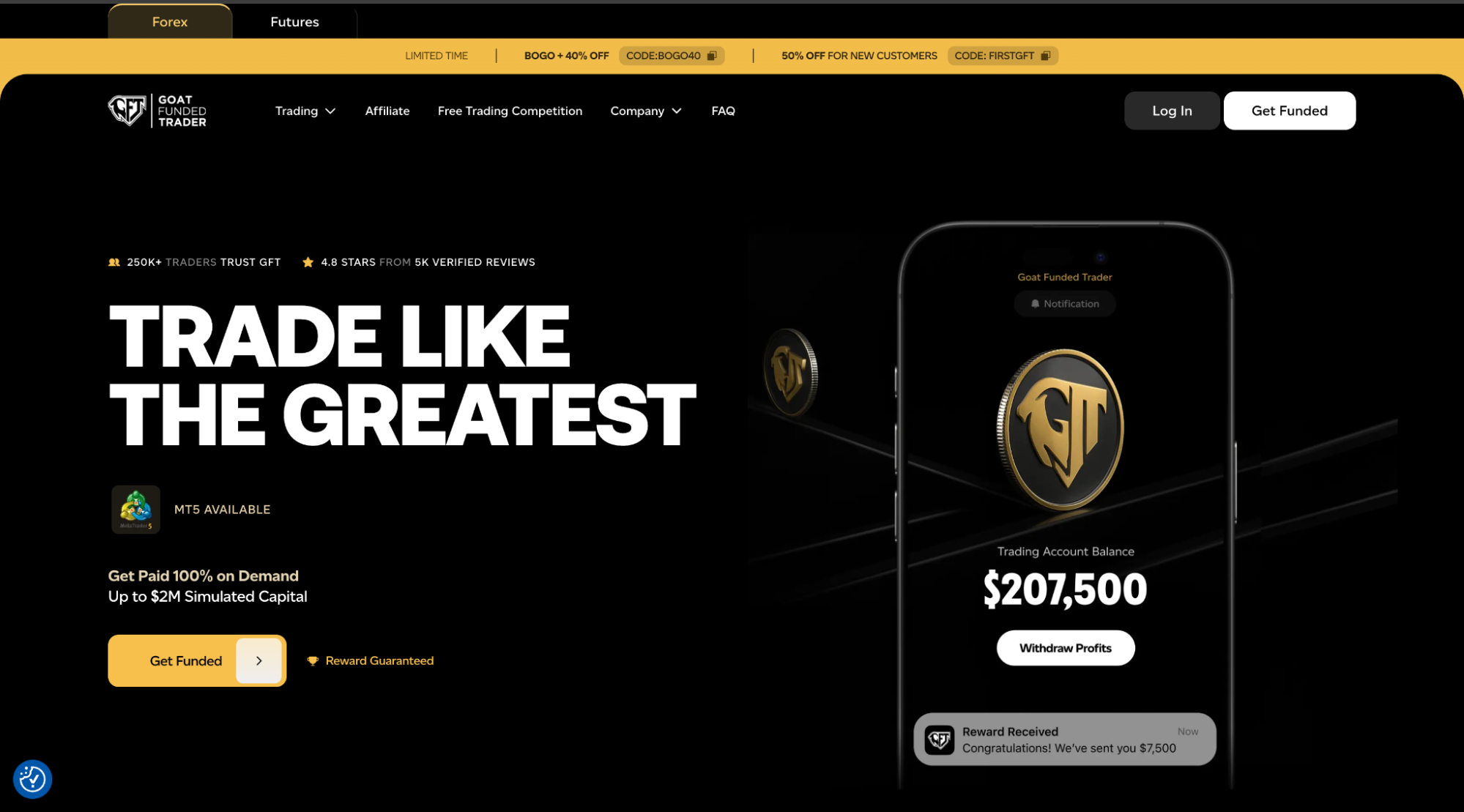
1. Goat Funded Trader

Goat Funded Trader

Goat Funded Trader stands out as a premier proprietary trading provider in 2026, offering swap-free options tailored to Islamic traders. By partnering with compliant brokers, the firm enables access to up to $800,000 in simulated funds without overnight interest charges, fostering risk-free strategy testing while honoring religious guidelines. This setup allows devout market participants to scale their skills ethically.

Key Features for Islamic Trading

  • Swap-Free Structure: Overnight positions incur no interest debits or credits, with fixed commissions substituting traditional swaps to maintain Sharia alignment.
  • Sharia-Compliant Broker Integration: Utilizes partners like zForex, which provide dedicated Islamic setups, ensuring all trades avoid riba across forex, stocks, and crypto instruments.
  • Flexible Challenge Pathways: Unlimited trading periods in evaluations, allowing gradual progression to funded status without time pressure that could conflict with ethical pacing.
  • High Leverage Options: Up to 1:100 on select assets, balanced with drawdown safeguards like 4-10% maximum limits to promote responsible, halal risk management.
  • Scalable Capital Access: Starts at $2,500 in challenges, expanding to $2 million in total allocation, all within a demo environment that mirrors live conditions, excluding prohibited fees.

Benefits for Devout Islamic Traders

Islamic traders gain peace of mind with Goat Funded Trader's elimination of swap costs, enabling extended position holds without violating tenets of their faith. This feature proves invaluable for long-term strategies, while the firm's 80-100% profit-sharing model delivers swift payouts, often bi-weekly, fueling financial growth aligned with Islamic values. Moreover, the absence of minimum profit hurdles in funded phases supports steady, non-speculative approaches, and the platform's mobile compatibility enhances accessibility for global users committed to ethical investing.

2. AquaFutures

AquaFutures

AquaFutures emerges as a compelling choice among halal proprietary trading firms for Islamic traders in 2026, offering instant access to funded futures accounts of up to $450,000. Headquartered in the United Arab Emirates, this platform enables users to trade foreign exchange, stock indices, precious metals, cryptocurrencies, and futures contracts using the firm's capital, with no personal liability for any losses incurred. Traders retain the full amount of their first $15,000 in earnings and 90% of subsequent profits, supported by user-friendly platforms like ProjectX and Volumetrica. By emphasizing transparent operations, avoiding interest charges, and focusing on skill-based profit sharing, AquaFutures supports Sharia-compliant practices, enabling Muslim investors to participate in financial markets ethically and efficiently.

Key Features

  • No personal liability for trading losses, reducing elements of excessive uncertainty (gharar), and aligning with risk-sharing principles in Islamic finance.
  • Support for a range of permissible assets, including metals and indices, avoiding prohibited sectors like those involving alcohol or gambling.
  • Unlimited trading periods in select accounts, allowing flexible strategies without time pressures that could encourage haram speculation.
  • Transparent fee structures with no hidden charges or activation costs, fostering trust and compliance with honesty in dealings.
  • 24/7 customer support and a community focus that encourages ethical growth and knowledge sharing among traders.

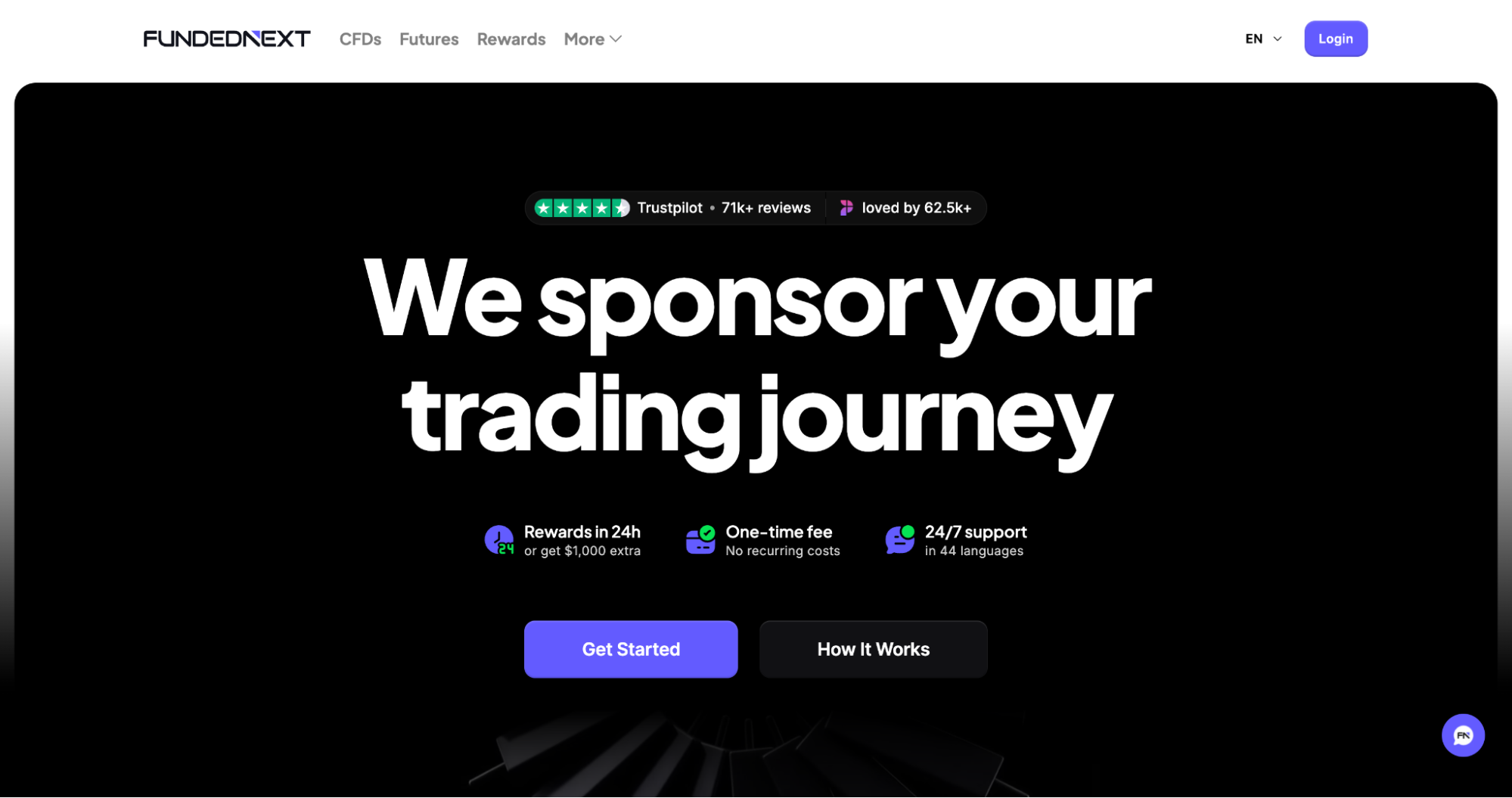
3. FundedNext

FundedNext

FundedNext stands out as a leading proprietary trading company that caters specifically to Muslim investors by providing Sharia-compliant options. Established with a focus on accessibility and ethical practices, this firm allows participants to access substantial capital through evaluation processes, supporting trades in currency pairs, stock indices, and raw materials. It emphasizes rapid disbursements, educational resources, and adaptable assessment formats, making it ideal for those adhering to Islamic financial guidelines while pursuing market opportunities.

Key Features

  • Swap-exempt profiles eliminate interest charges on positions held after trading hours, aligning with prohibitions on usury.
  • Transparent profit-sharing models ensure fair distribution without hidden fees or speculative elements that could violate ethical standards.
  • Access to diverse, permissible assets avoids involvement in prohibited sectors like alcohol or gambling-related instruments.
  • Flexible leverage options up to high ratios, but structured to promote responsible risk management in line with moderation principles.
  • Quick payout systems and supportive tools foster an environment of trust and equity for faith-based traders.

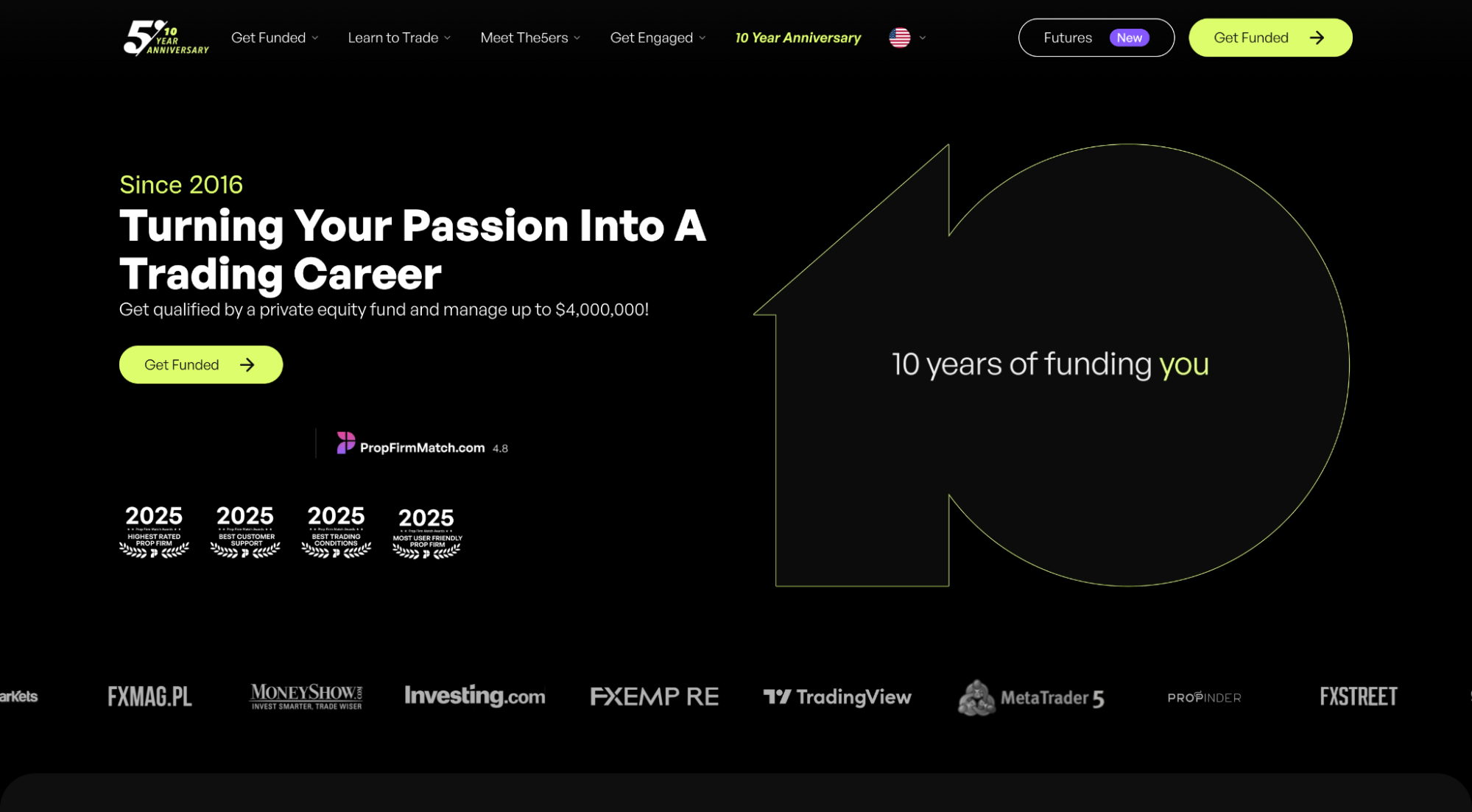
4. The5ers

The5ers

The5ers is a reputable prop trading entity known for its commitment to low-risk growth strategies and institutional-grade liquidity. Targeting conservative and extended-horizon investors, it offers funding up to millions through structured challenges, covering foreign exchange, benchmarks, and precious metals. With reliable distribution channels and expansion plans, it appeals to Islamic investors seeking stable, principled engagement in financial markets.

Key Features

  • Interest-free account setups remove overnight financing costs, ensuring compliance with anti-riba rules.
  • Emphasis on disciplined risk controls promotes sustainable practices without excessive uncertainty.
  • The selection of Sharia-compliant instruments excludes haram categories, maintaining investment purity.
  • Scaling mechanisms reward consistent performance, reflecting values of fairness and merit.
  • Educational support and community features encourage knowledge sharing within an ethical framework.

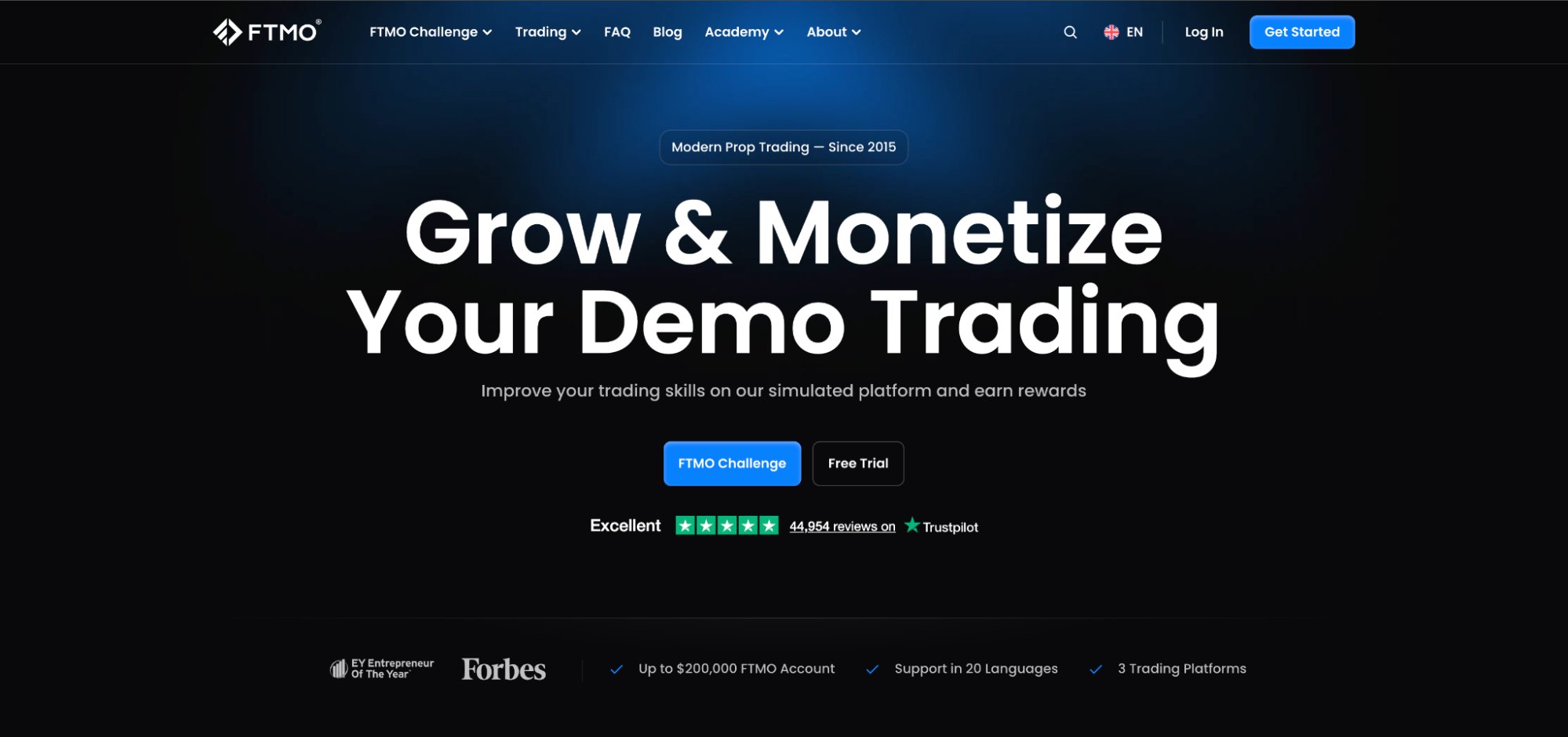
5. FTMO

FTMO

FTMO ranks among the most recognized prop trading operations globally, serving a diverse clientele with robust evaluation systems. It provides access to significant funded accounts for skilled individuals, supporting activities in equities, digital currencies, and futures. Renowned for its transparency and trader-centric policies, it accommodates Muslim users through customized arrangements that respect religious requirements.

Key Features

  • Provision for swap-free operations upon request, avoiding any form of interest accrual.
  • Profit division based on demonstrated ability, eliminating chance-based elements.
  • Inclusion of halal-compliant assets like stocks from ethical companies and non-interest derivatives.
  • Strict guidelines on permissible strategies help avoid speculative excesses.
  • Global accessibility with dedicated support for faith-specific account modifications.

6. Lux Trading Firm

Lux Trading Firm

Lux Trading Firm delivers premium proprietary trading services with an emphasis on discipline and quality. It enables access to large-scale accounts, suitable for swing and positional approaches in currencies, indices, and commodities. Promoting consistency and professional standards, it creates a welcoming environment for Muslim traders committed to Sharia principles.

Key Features

  • Premium swap-free environments eliminate charges for extended positions.
  • Realistic parameters that encourage ethical, long-term decision-making.
  • Focus on permissible financial tools and avoid prohibited industries.
  • Structured risk frameworks that embody prudence and balance.
  • Support for faith-aligned trading without compromising on performance.

But selecting from these options requires understanding which specific features actually matter for your trading style and compliance needs.

How to Choose the Best Halal Prop Firm For You

Person using laptop for financial trading - Halal Prop Firms

Your selection process should prioritize firms whose evaluation structures, fee models, and asset offerings match both your trading methodology and compliance requirements. A scalper trading indices needs different features than a swing trader focusing on forex pairs, and those distinctions matter more than generic reputation or marketing polish. Start by examining whether the firm's profit targets and drawdown limits align with your historical performance metrics, then verify that their swap-free implementation genuinely eliminates interest rather than disguising it through alternative charges.

Match Evaluation Parameters to Your Strategy

Traders pursuing intraday strategies benefit from firms that offer unlimited time to meet profit targets, reducing the pressure that leads to premature exits or oversized positions. If you typically hold trades for hours rather than days, aggressive daily profit requirements become less relevant than maximum drawdown protections that accommodate normal intraday volatility. Your edge might require 20 trades to materialize statistically, but evaluation structures that demand 8% returns within 10 trading days push you toward speculation that contradicts both your methodology and Islamic principles, creating excessive uncertainty.

The critical factor is whether assessment parameters reflect achievable skill demonstration or revenue extraction through artificial difficulty. When pass rates drop below 10%, you're likely facing evaluations designed to generate repeated challenge fees rather than identify capable traders. Examine whether profit targets scale proportionally with account size. A $100,000 account requiring $10,000 profit presents identical percentage challenges to a $10,000 account needing $1,000, but absolute dollar targets that don't scale reveal misaligned incentive structures.

Verify True Swap-Free Implementation

Some firms claiming Islamic compliance still charge "administrative fees" that correlate suspiciously with position duration and size, effectively reintroducing interest through semantic manipulation. Request specific documentation showing how overnight positions are handled. Genuine swap-free accounts either eliminate all time-based charges or apply fixed monthly fees unrelated to trading activity. Spread widening that replaces swap income should be transparent and consistent, not variable based on market conditions or position direction.

Test the structure during the evaluation phases by holding positions for multiple days and documenting any charges beyond the stated commissions. If unexplained fees appear on trades held for more than 24 hours, the swap-free claim warrants scrutiny. Contact support with specific questions about how they compensate for foregone rollover revenue. Vague responses or reluctance to provide detailed fee breakdowns may indicate compliance issues that could compromise the religious permissibility of your trading.

Assess Asset Diversity Within Halal Boundaries

Your strategy may depend on correlations between currency pairs and commodity movements, which may require simultaneous access to both markets. Firms that restrict you to forex alone limit diversification opportunities, reducing portfolio volatility while maintaining Shariah compliance. Verify that screened equity lists include sufficient diversity across sectors such as technology, healthcare, and consumer goods to build balanced positions rather than forcing concentration in narrow categories.

The depth of screening matters as much as breadth. Some firms provide basic exclusions of obvious haram sectors, but ignore debt ratio analysis that reveals interest exposure through corporate financing. Ask whether their equity screening follows established Islamic indices methodologies or relies on simplified filters that miss nuanced compliance issues. Access to 500 stocks means little if half contain hidden Shariah violations that surface only after detailed examination.

Examine Payout Speed and Transparency

Withdrawal timelines reveal whether firms view your profits as partnership distributions or liabilities to minimize. Platforms processing requests within 24-48 hours demonstrate operational confidence in their business model and respect for your capital access needs. Multi-week review periods or surprise verification requirements that emerge only after withdrawal requests suggest cash flow concerns or deliberate friction designed to retain trader funds longer than necessary.

The familiar approach is to trust that any regulated firm will eventually process payouts. The hidden cost emerges when you discover that "processing" means initiating review cycles that extend weeks beyond stated timelines, or when profit calculations suddenly exclude certain trades based on undisclosed criteria. Platforms like prop firms address this by documenting 9-hour turnaround times and biweekly payout cycles that treat profit distribution as routine rather than exceptional, thereby narrowing the gap between earning capital and accessing it for reinvestment or personal use.

Consider Scaling Opportunities

Your trading might generate consistent 3-5% monthly returns that seem modest on a $50,000 account but become substantial as capital scales into six figures. Firms offering progression paths that increase both allocation size and profit splits reward the consistency that characterizes professional trading rather than the volatility that defines speculation. Scaling programs with clear advancement criteria based on time and performance metrics create incentive alignment, where your growth directly benefits the firm through larger, more profitable trades rather than through repeated evaluation fees.

Contrast this with firms that offer no scaling or require you to purchase larger evaluations at full price after demonstrating profitability on smaller accounts. The structure signals that their revenue model depends on challenge sales rather than funded trader success, creating misalignment between your interests and theirs. Verify whether scaling maintains your existing profit split or reduces it as capital increases, as some firms decrease trader percentages precisely when absolute dollar profits become meaningful.

Evaluate Platform Reliability and Tool Access

Your strategy's execution quality depends on order fill speeds, slippage during volatile periods, and platform stability during high-impact news releases. Firms providing demo access to their trading infrastructure allow you to test execution quality before committing to evaluations. Pay attention to whether limit orders fill at requested prices or consistently slip by several pips, as this seemingly minor detail compounds across hundreds of trades into significant profit erosion.

Mobile platform capabilities matter if you monitor positions across time zones or prefer flexibility beyond desktop setups. Verify that mobile apps provide full functionality rather than limited monitoring, as partial implementations require you to use a computer for critical order modifications during market-moving events. Integration with risk management tools that calculate position sizes based on account balance and stop-loss distance prevents manual calculation errors that can result in oversized positions that exceed drawdown limits.

Investigate Support Quality for Compliance Questions

Muslim traders navigating Shariah compliance need responsive support that understands Islamic finance principles beyond surface-level awareness. Test this during initial inquiries by asking specific questions about how the firm handles profit distribution under mudarabah principles or whether their capital sources involve interest-bearing instruments. Vague responses or referrals to generic terms of service indicate insufficient expertise to address faith-specific concerns that matter for your trading's religious permissibility.

Multilingual support, including Arabic options, facilitates clearer communication on nuanced compliance topics, where translation ambiguity can lead to misunderstandings. Firms serving Muslim traders globally should recognize common Shariah questions and provide detailed answers without requiring repeated escalation to specialized teams. The quality of these interactions predicts how well the firm will handle future issues when you need clarity about whether specific trading scenarios maintain compliance or introduce forbidden elements. But understanding these selection criteria only prepares you for the decision, not the commitment that follows once you've identified the right firm.

Get 25-30% off Today - Sign up to Get Access to Up to $800K Today

Once you've identified a firm that aligns with your compliance needs and trading methodology, the commitment itself becomes straightforward. You're not gambling on whether the structure will work or hoping hidden fees won't surface later. You've done the verification work that separates genuine Shariah compliance from marketing claims, and now the decision reduces to execution rather than speculation. Goat Funded Trader removes the friction that typically delays this transition by offering simulated capital up to $800,000 with swap-free compatibility through partnered brokers, allowing you to pursue forex, indices, stocks, and commodities without interest-based overnight charges. The evaluation structure provides unlimited time on most challenges and no strict minimum profit targets on many paths, eliminating the artificial pressure that forces rushed decisions and undermines sound strategy and Islamic principles. 

Profit splits reach 100% with on-demand payouts, backed by a 2-business-day payment guarantee that adds $500 to your account for any delay beyond that window. Over 250,000 traders have already received more than $15 million in real payouts, with current discounts of 25-30% on challenge fees, making this the most accessible entry point to halal funding in 2026. You can choose customizable evaluation challenges for a structured start, or opt for instant funding to begin trading immediately, with scaling opportunities that increase both your allocation and profit share as you demonstrate consistency over time.

The path forward isn't complicated once you've eliminated firms whose structures introduce forbidden elements or whose business models depend on your repeated failures rather than your sustained success. Sign up today to access capital that respects both your trading expertise and your religious principles, without the compromises that have forced Muslim traders to choose between market access and ethical integrity for too long.

Related Reading

  • My Forex Funds Vs Ftmo
  • Prop Firms In Ghana
  • Balance-Based Drawdown Prop Firms
  • Topstep Vs Apex
  • Best Prop Trading Firms For Stocks
  • Bulenox Vs Apex
  • Prop Trading Firms Toronto
  • Ftmo Vs Topstep
  • Take Profit Trader Vs Topstep
  • Prop Firms That Allow Ea
  • Surgetrader Vs Ftmo

Join the

Greatest

Traders

Sign up now for exclusive giveaways, discounts & promotions.
Thank you! Your submission has been received!
Oops! Something went wrong while submitting the form.
Goat Traders Community
Join Discord