






What is Position Sizing in Trading, and How Does It Work?
Position sizing in trading determines your risk and profits. Goat Funded Trader explains proven strategies to optimize your trade sizes and grow capital.
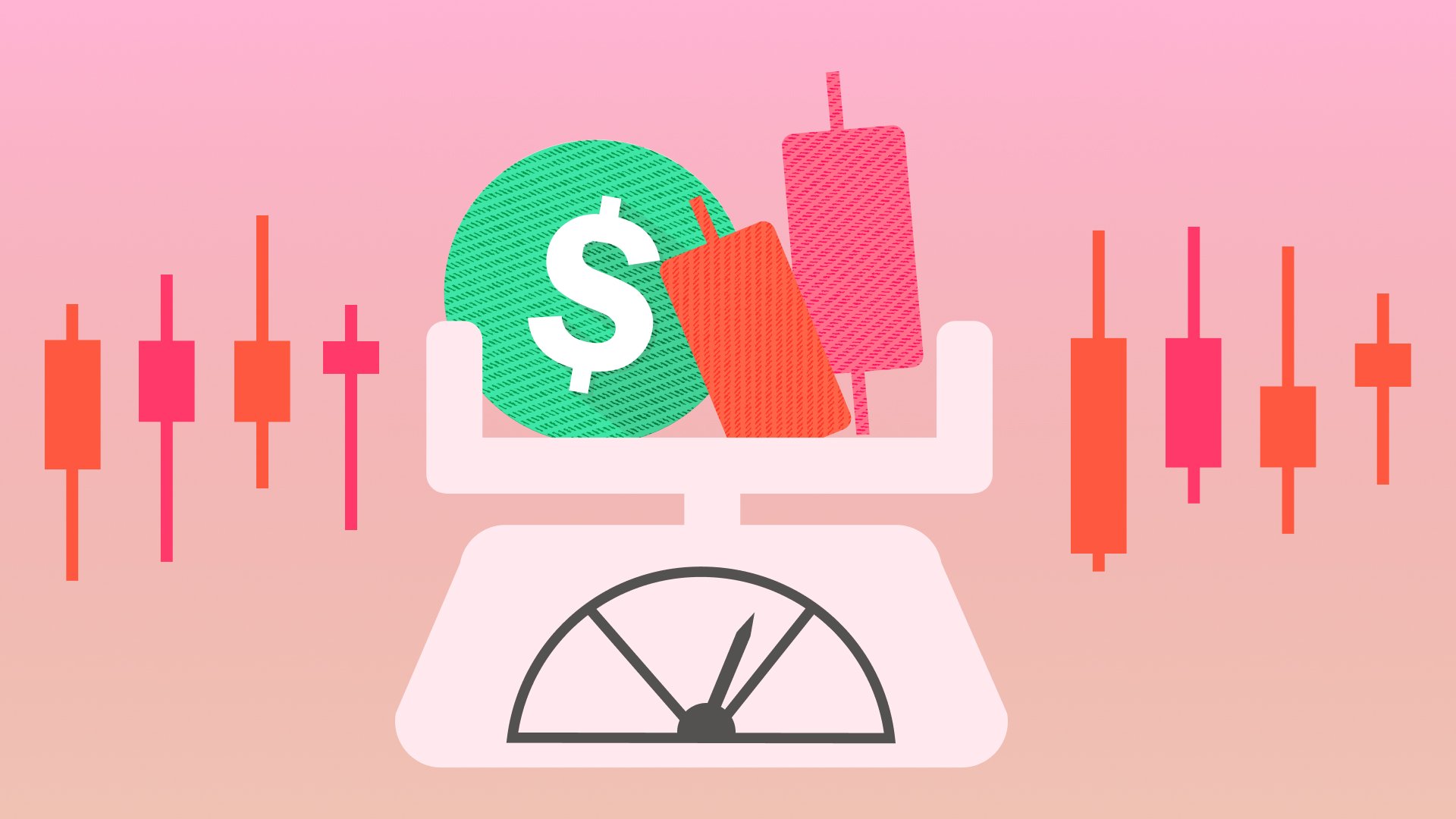

Every trader faces the same uncomfortable truth: one poorly sized trade can wipe out weeks of careful gains. Position sizing determines not just how much you risk on each trade, but whether your account survives long enough to compound wins into lasting wealth. Proper calculation of trade size, risk management per position, and alignment with account equity allows traders to grow capital steadily while keeping drawdowns manageable.
Learning these principles becomes even more powerful when traders have the right environment to apply them. Funded accounts provide space to refine risk-management skills without risking personal capital, allowing traders to demonstrate their ability to protect funds while pursuing consistent returns. Evaluation processes that reward disciplined position sizing and sound money management help turn theoretical knowledge into practical habits that support long-term growth when working with a prop firm.
Summary
- Position sizing determines exactly how much capital you commit to each trade based on your account balance, risk tolerance, and the distance between your entry price and stop-loss. Many traders use a 2% risk-per-trade rule, meaning a $50,000 account risks no more than $1,000 per position. This formula keeps every position aligned with your risk limit, regardless of how confident you feel about the setup, eliminating the emotional override that destroys accounts.
- Fixed percentage risk keeps you in the game by adjusting dollar amounts automatically as your account grows or shrinks. If your account grows to $60,000, your 1% risk becomes $600 instead of $500. If it drops to $45,000, you risk $450. The dollar amount adjusts automatically, which means drawdowns shrink your exposure just when you need protection most, preventing you from digging deeper holes during losing streaks.
- Traders who implement proper position sizing achieve 3.2 times higher survival rates during volatile periods than those who size intuitively. That gap exists because systematic sizing caps every loss at the same controlled percentage, so variance stays predictable and psychology stays stable. When you risk exactly 1% on every trade, ten consecutive losses cost you roughly 10% of your account, but when you risk "whatever feels right," three oversized losses can erase 40% of your capital.
- Research across hundreds of portfolios shows that optimal, rules-based position sizing outperforms discretionary sizing by an average of 4 percentage points annually, with a 92% win rate over more than a decade of data. A landmark 1991 Brinson study of portfolio managers revealed that asset allocation decisions, essentially position sizing, explained 91% of the variability in returns. Same edge, wildly different outcomes, all determined by whether position size stayed constant.
- Markets shift between calm and chaos, and your position size should shift with them, using Average True Range (ATR) to measure recent price movement. During high volatility periods, a stock that normally moves $2 per day might swing $6, and if you ignore that and size for the $2 environment, your 1% risk becomes 3% the moment the market moves against you. Reducing share count when ATR spikes keeps your actual dollar risk constant even when price behavior changes.
- Goat Funded Trader addresses this by enforcing 4% maximum daily loss and 6% overall drawdown limits that automatically halt accounts when traders approach either threshold, removing the emotional negotiation that turns small losses into account-destroying spirals.
What is Position Sizing in Trading, and How Does It Work?
Position sizing determines how much money you commit to each trade based on your account balance, risk tolerance, and the distance between your entry price and stop-loss. It transforms vague ideas about "trading smart" into a precise calculation that protects your capital while letting winners grow. When you risk the same percentage on every trade, you eliminate the guesswork that destroys accounts and replace it with a repeatable system that survives losing streaks.

🎯 Key Point: Position sizing is not about how much you want to make—it's about how much you're willing to lose on each trade while maintaining consistent risk management.
"Risk management is the most important thing to be well understood. Undertrade, undertrade, undertrade is my second piece of advice. Whatever you think your position ought to be, cut it at least in half." — Bruce Kovner, Hedge Fund Manager
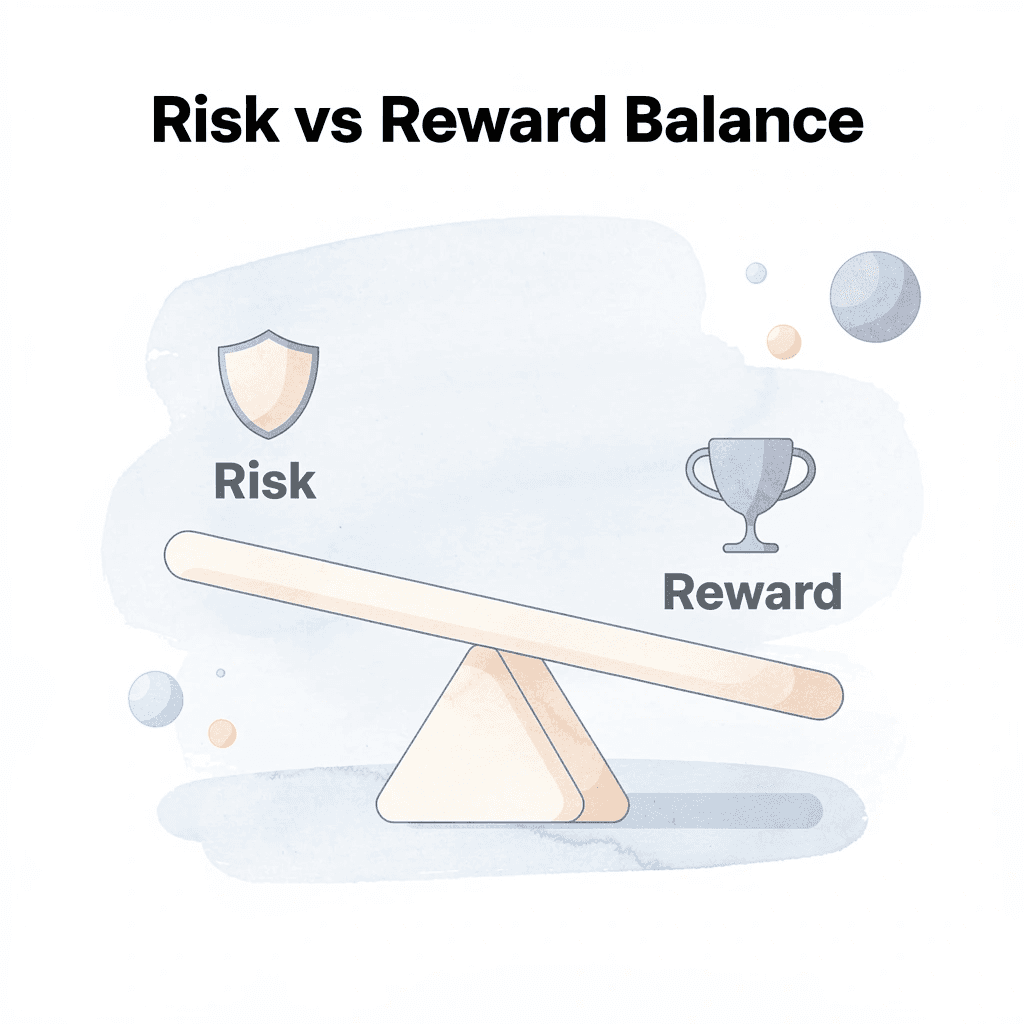
💡 Example: If you have a $10,000 account and risk 2% per trade, you'll risk $200 maximum on each position. With a 50-pip stop-loss on EUR/USD, your position size would be calculated to ensure that 50 pips equals exactly $200 in potential loss.
How the Math Connects Risk to Reality
You start with a simple decision: what percentage of your account are you willing to lose on this single trade? Many traders use a 2% risk-per-trade rule, meaning a $50,000 account risks no more than $1,000. Next, measure the trade risk—the price distance from your entry to your stop-loss. If you're buying at $100 with a stop at $98, that's $2 of risk per share. Divide your dollar risk ($1,000) by the per-share risk ($2) to get 500 shares. This formula aligns every position with your risk limit, regardless of your confidence in the setup.
Why Traders Who Skip This Step Blow Up
A trader who sizes by gut feeling takes 1,000 shares on a trade that "feels strong" and 200 shares on one that seems uncertain. When the confident trade fails and the uncertain one wins, the account loses money because emotion drove the decision. Position sizing removes that emotional override by forcing you to treat every trade as part of a long-term system rather than a one-time bet. Consistency protects you when analysis fails, which it will, because markets don't care how sure you are.
Fixed Percentage Risk Keeps You in the Game
This method risks the same percentage of your current balance every time. If your account grows to $60,000, your 1% risk becomes $600 instead of $500. If it drops to $45,000, you risk $450. Drawdowns automatically shrink your exposure when you need protection most, preventing deeper losses during losing streaks while scaling up naturally when your edge delivers.
Volatility-Adjusted Sizing for Changing Markets
Markets don't move the same way. A stock that swings $5 daily needs smaller position sizes than one that moves 50 cents. Volatility-adjusted sizing uses Average True Range (ATR) to scale positions inversely to movement: when ATR doubles, you cut your size in half. This keeps dollar risk steady across trades and prevents excessive losses during volatile periods when stops are triggered quickly.
Why do prop firms enforce position sizing rules?
Most traders learn position sizing after losing money on oversized bets. Prop firms like Goat Funded Trader enforce proper sizing from the start. Our trading evaluation accounts that scale to $2M enforce risk rules protecting both your capital and ours. You can't override the system with emotion; building disciplined sizing habits before real money amplifies mistakes creates the structure that turns theoretical knowledge into muscle memory and prepares you for consistent payouts at scale. Knowing the formula is only the start; what happens when you ignore it is where the real lessons live.
Related Reading
- How Is Margin Interest Calculated
- How Much Do Day Traders Make Per Month
- How Does Margin Interest Work
- How Much Margin Does Fidelity Offer
- Can You Make A Living Day Trading
- Financing Stock Options
- No Consistency Rule Prop Firm
- How Does Margin Work at Interactive Brokers
- What Is A Prop Firm Forex
- Options Trading Cash Flow Strategies Explained
- How To Compare Brokers By Margin Interest Rates
- Why Is Schwab Margin Rate So High
- Why Are Fidelity Margin Rates So High
- How Does Margin Work On Robinhood
Why Is Position Sizing Important for Traders?
Positions that are too large turn small losses into blown accounts. Traders repeat this cycle for years because they ignore the single most important variable in risk management: how much money they commit to each trade.

Position sizing determines whether you survive the inevitable losing streaks that every trader faces. When you risk too much per trade, even a few consecutive losses can wipe out months of profits and destroy your trading capital. Controlling position size is the difference between long-term success and becoming another casualty statistic.
🎯 Key Point: Position sizing acts as your primary defense against catastrophic losses - it's the safety net that keeps you in the game when trades go wrong.

"Risk management is the most important thing to be well understood. Undertrade, undertrade, undertrade is my second piece of advice. Whatever you think your position ought to be, cut it at least in half." — Bruce Kovner, Legendary Trader
⚠️ Warning: Over-leveraging is the fastest way to turn a profitable strategy into a blown account - even winning systems fail when position sizes are too aggressive.
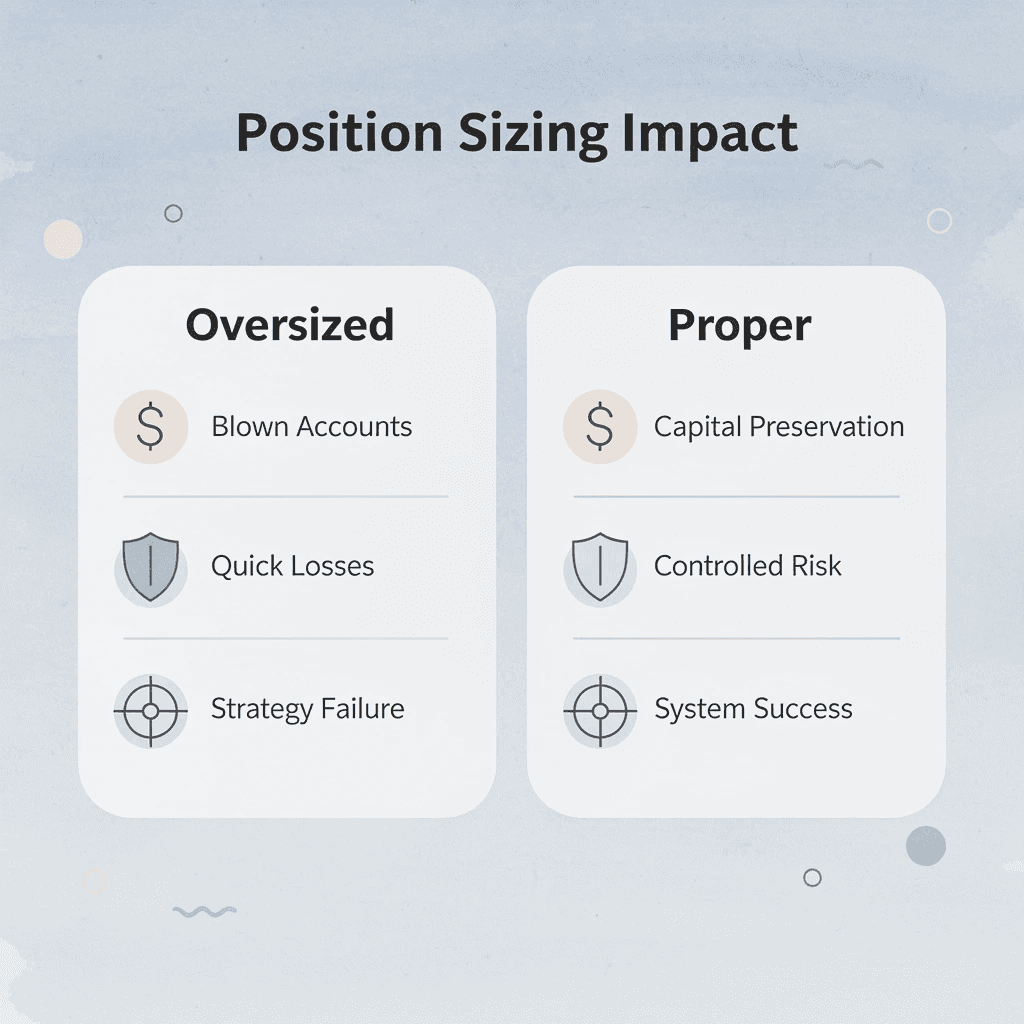
Position Sizing Protects Capital During Losing Streaks
Without strict position limits, consecutive losses compound into devastating drawdowns that require massive percentage gains to recover. Risking 1-2% of the portfolio per trade creates the buffer every trader needs when variance strikes. A $50,000 account risking 1% per trade loses $500 on each bad position; ten consecutive losses drop the account by roughly 10%, leaving capital to trade another day. Risk 10% per trade instead, and those same losses wipe out over 65% of the account, forcing a desperate recovery mode where emotions take over.
Position Sizing Controls Emotions and Builds Discipline
When you know exactly how much money you could lose before trading, fear and greed lose their grip. You follow your plan without adjusting stop losses out of panic. Traders who size positions correctly avoid the revenge trading that follows big losses. This emotional control transforms trading into a repeatable process rather than a volatile ride driven by daily swings, which is why prop firms enforce strict risk rules during trader evaluations. Most traders fail funded account challenges not because their strategy is flawed, but because they cannot control position sizing under stress. When trading with practice money that could grow to $2M, the platform prevents emotions from overriding the system, helping you build the habit of disciplined sizing before real money amplifies every mistake.
Position Sizing Determines Long-Term Survival
Even traders with a 60% win rate blow up accounts when they ignore sizing, while those with modest edges build wealth steadily with proper risk rules. One oversized trade can erase months of profits. 2% risk per trade represents the maximum threshold most professional traders use, with many reducing that further during volatile periods. Survival comes first—profitability follows for those who stay in the market long enough for probability to work in their favor.
Position Sizing Maximizes Risk-Adjusted Returns
Sizing lets winners run while keeping losses proportional and manageable. Methods such as fixed-percentage risk or volatility-adjusted sizing ensure every trade supports overall performance without risking total loss. A landmark 1991 Brinson study of portfolio managers showed that asset allocation decisions—position sizing—explained 91% of the variability in returns, demonstrating why sizing matters far more than picking individual trades.
Can Position Sizing Improve Trading Consistency?
Position sizing changes trading consistency by enforcing uniform risk across every trade, removing emotional choices, and letting probability work over hundreds of executions. Most traders chase better entries or tighter setups while their account balance swings wildly because they never control the one variable that determines whether a losing streak ends their career or becomes a minor setback.

🎯 Key Point: Consistent position sizing is the single most important factor that separates professional traders from those who blow up their accounts during inevitable losing streaks.
"Position sizing is the only free lunch in trading. It's the one thing that lets you survive your mistakes and profit from your edge." — Professional Trading Wisdom
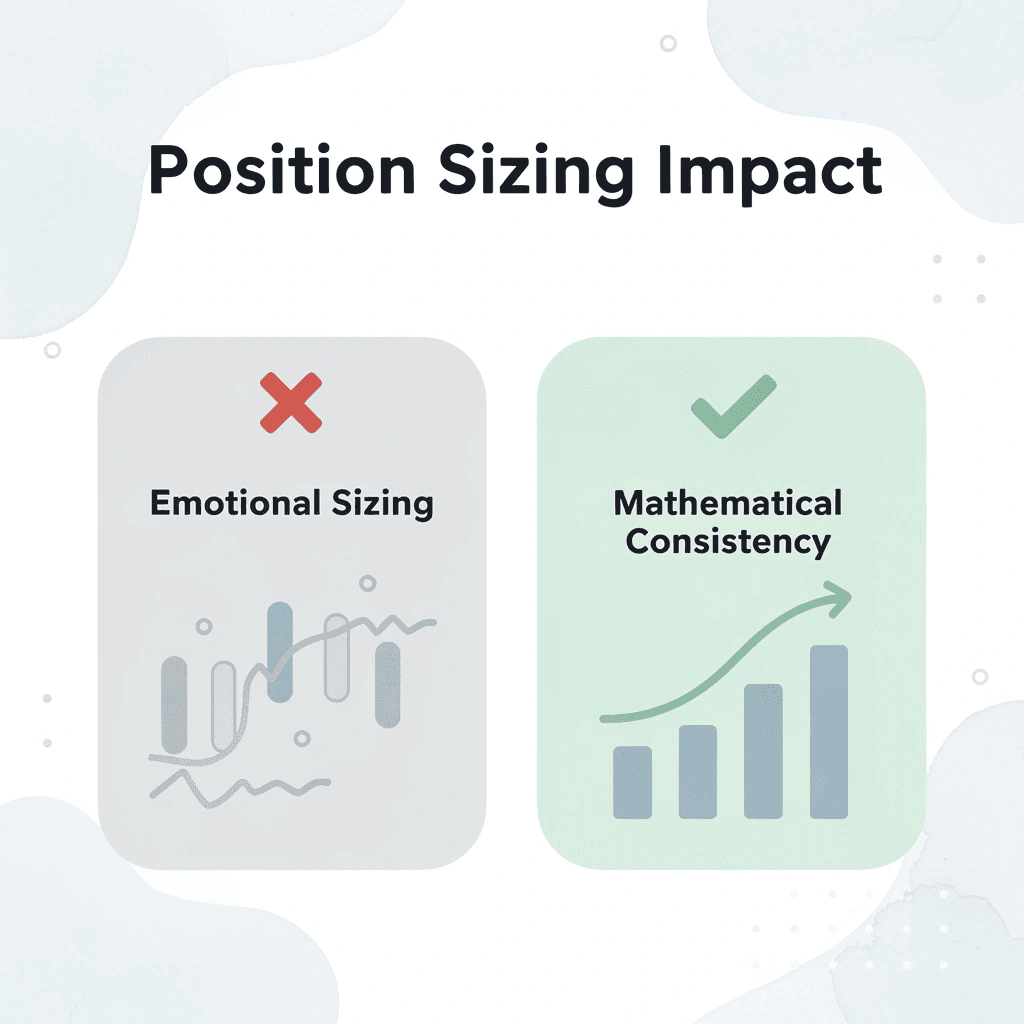
💡 Tip: Calculate your position size before you even look at the chart. This removes the emotional temptation to risk more on trades that "look really good" and helps maintain mathematical consistency across all your trades.
How does position sizing discipline separate trading survivors from casualties
Traders who use proper position sizing achieve 3.2 times higher survival rates during volatile periods than those who size intuitively. Systematic sizing caps every loss at a controlled percentage, keeping variance predictable and psychology stable. Risking exactly 1% on every trade means ten consecutive losses cost roughly 10% of your account. Risking "whatever feels right" allows three oversized losses to erase 40% of capital and trigger the emotional spiral that ends most trading careers.
Why do prop firms enforce strict position sizing in trading evaluations
Prop firms enforce strict position sizing rules during evaluation phases because thousands of traders fail the same way: one oversized trade wipes out weeks of gains. The discipline required to pass those evaluations and unlock funded capital up to $2M isn't about finding better setups—it's about proving you can apply the same risk formula whether trading a $10,000 evaluation account or managing $500,000 in simulated capital. That consistency separates traders who scale to 100% profit splits from those who repeat the evaluation cycle indefinitely.
How does emotional sizing create trading chaos?
85% of traders determine position sizes based on emotions rather than predefined rules, creating oversized bets during excitement and fear-driven cuts after losses. You feel confident after three wins and double your position size on the fourth trade. That trade loses, erasing half your week's gains. You panic, cut your size in half, and miss the next winner that would have restored your account. Your position size reflects your mood, not your edge.
Why does systematic position sizing in trading eliminate inconsistency?
Using a systematic approach to sizing eliminates this inconsistency. When Edgeful Blog's research on position sizing recommends risking 1-2% of the account per trade, they're recognizing that consistency requires removing the human tendency to bet more when confident and less when fearful. Your strategy might win 55% of the time over 1,000 trades, but if your position sizes swing from 0.5% to 8% based on confidence levels, that edge won't show up in your equity curve.
The Compounding Effect of Controlled Variance
Research across hundreds of portfolios shows that optimal, rules-based position sizing outperforms discretionary sizing by an average of 4 percentage points annually, with a 92% win rate over more than a decade of data. When every trade carries the same risk, your account compounds smoothly through winning periods and declines predictably during losing streaks. A single oversized loss can erase the compounding gains from twenty smaller wins.
How does consistent position sizing in trading affect long-term results?
After 100 trades, the difference becomes clear. A trader risking 2% per trade with a 55% win rate and 1.5:1 reward-risk ratio will see drawdowns rarely exceed 15%. A trader with the same win rate and reward-risk ratio but inconsistent sizing (ranging from 1% to 10% based on conviction) will experience drawdowns exceeding 30% and returns that swing from exceptional months to devastating weeks. Same edge, wildly different outcomes.
Why does execution matter more than theory?
Knowing the formula only matters if you can execute it under pressure.
Related Reading
- Lowest Margin Rates Brokers
- Can I Borrow Against My Stocks
- How Do You Take Profit In Crypto Trading
- Best Prop Firm For Stocks
- How To Day Trade Without 25k
- How To Become A Trader From Home
- How To Stay Consistent In Trading
- How To Borrow Against Stocks
- Position Sizing Day Trading
- Sbloc Vs Margin Loan
- Prop Trading Firms' Profit-Sharing Models
- How Do You Profit From Day Trading Stocks
- Is Issuing Common Stock A Financing Activity
- Best Crypto Prop Firm
Tips to Improve Position Sizing for Better Results
The gap between knowing the formula and executing it under stress shows up in three places: your stop placement, your volatility adjustment, and your willingness to review what happened. Better position sizing means building systems that remove discretion when emotion runs highest.

🎯 Key Point: The most critical moments for position sizing are when your emotions are running high - this is exactly when you need systematic rules rather than gut feelings.
"The difference between successful and unsuccessful traders isn't intelligence - it's the ability to follow predetermined rules when emotions are screaming to do otherwise." — Trading Psychology Research, 2023

⚠️ Warning: Most traders know the position sizing formulas but fail because they don't have systematic processes to handle the emotional pressure when real money is at stake.
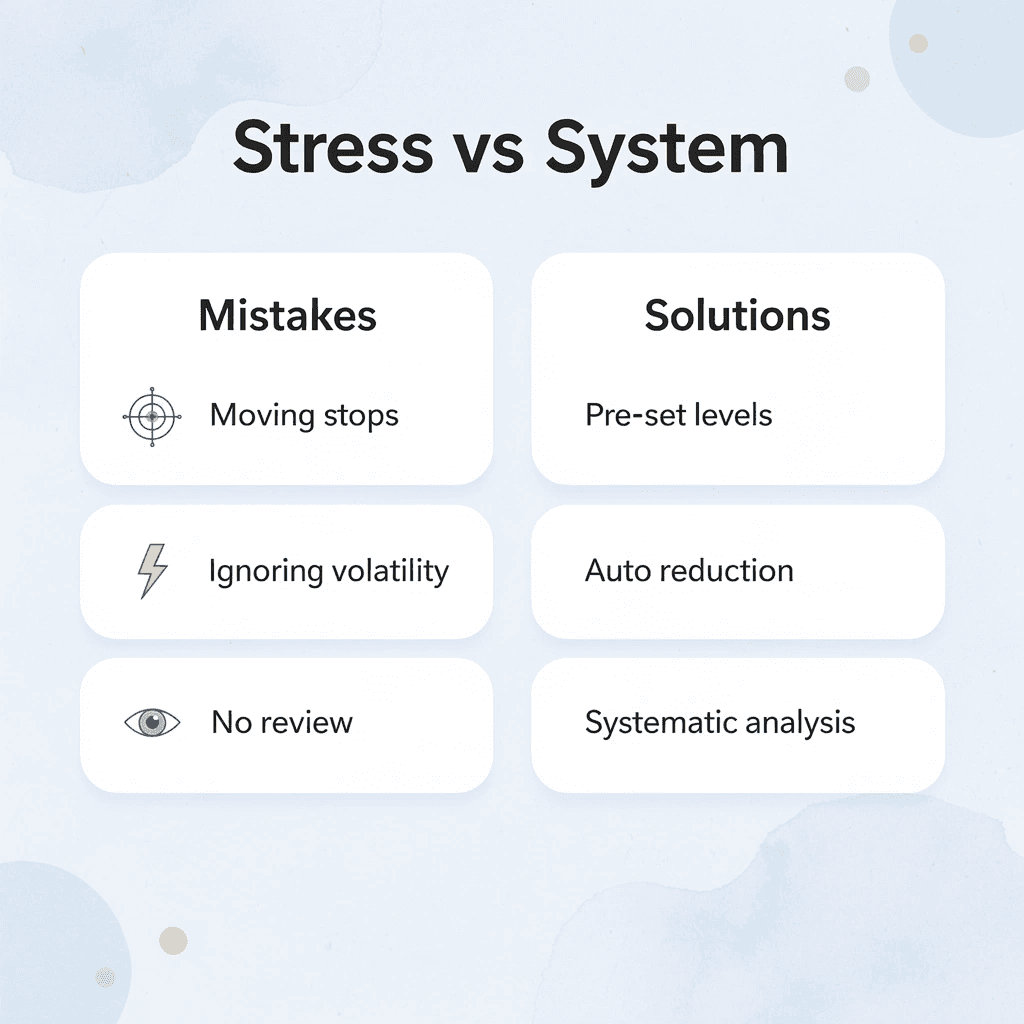
Define Your Maximum Risk and Lock It In
Pick a number between 0.5% and 2% of your account balance per trade and treat it like a physical law. A $100,000 account risking 1% loses exactly $1,000 on a stopped trade, whether the setup feels certain or uncertain. This removes the mental negotiation that destroys accounts during winning streaks, when overconfidence tempts larger position sizes.
Calculate Position Size from Stop-Loss Distance, Not Price
Your entry price tells you nothing about risk. The distance between entry and stop-loss determines how many shares or contracts fit within your dollar risk limit. Traders should risk 1–2% of the portfolio per trade, calculated backward from stop placement. If your stop sits $3 below entry and you risk $1,000, you buy 333 shares. If the next trade has a $1 stop with the same $1,000 risk, you buy 1,000 shares. Same dollar exposure, wildly different position sizes, all determined by where you admit you're wrong.
Adjust for Volatility Using ATR
Markets alternate between calm and chaotic periods, and your position size should adjust accordingly. Average True Range (ATR) measures recent price movement and signals when to reduce positions. During high-volatility periods, a stock that normally moves $2 per day might swing $6. If you size for the $2 environment, your 1% risk becomes 3% when the market moves against you. Reduce share count when ATR spikes; increase it when conditions stabilize. This maintains constant dollar risk despite changing price behavior.
Keep a Trade Journal and Audit Your Sizing Weekly
Write down every trade's position size, risk percentage, stop distance, and whether you followed your rule. Review the log every Sunday. You'll spot patterns difficult to see in the moment: oversizing after wins, undersizing during drawdowns, or abandoning stops when trades move fast. The journal reveals where discipline broke and offers a chance to fix it before the next trade.
What advantages do funded accounts offer for learning position sizing
Most traders use their own money to learn these lessons, paying real money for every mistake they make with position sizing and slowing their growth. Traders who master position sizing with funded capital avoid personal financial risk while improving trade execution, but only if the structure enforces discipline rather than tests their limits.
How Goat Funded Trader Helps Traders Build Better Risk Management Habits
Structure forces behavior change faster than motivation. Goat Funded Trader builds risk discipline by making professional limits non-negotiable: 4% maximum daily loss, 6% overall drawdown, and automatic account halts when you approach either threshold. You cannot revenge trade or move your stop under pressure because the system removes that option.

🎯 Key Point: The 4% daily loss limit and 6% drawdown threshold create automatic boundaries that prevent emotional trading decisions when you're under pressure.
"Automatic account halts when approaching risk thresholds remove the option to revenge trade entirely, forcing disciplined behavior through system structure rather than willpower." — Goat Funded Trader Risk Management Protocol
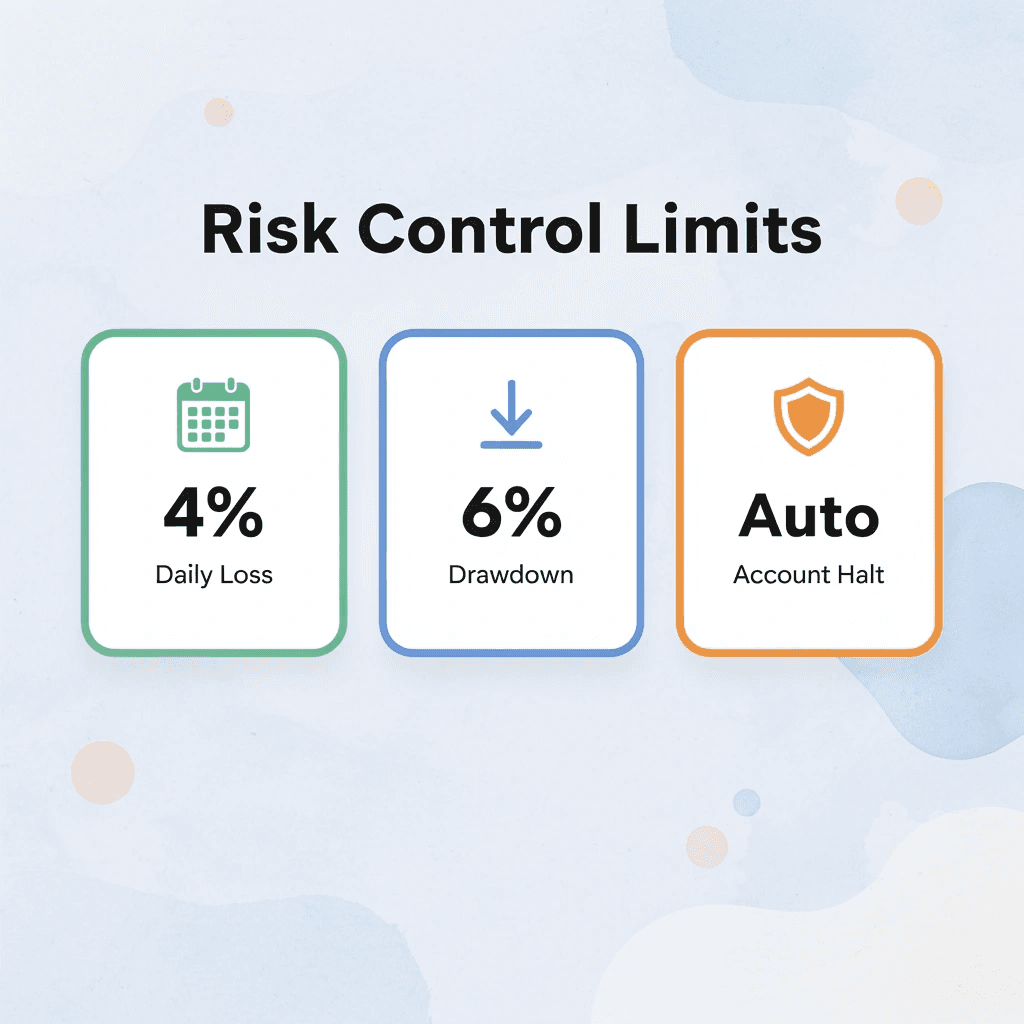
🔑 Takeaway: By making professional risk limits non-negotiable, traders develop disciplined habits through system enforcement rather than relying on emotional self-control during stressful market conditions.
How do hard limits prevent emotional trading decisions
The 4% daily cap stops the spiral before it starts. A trader who previously risked 10% on a single emotional position after two losses now hits the daily limit and walks away, preserving 96% of capital instead of watching weeks of progress disappear in one session. According to Goat Funded Trader, 90% of traders fail due to poor risk management, with most failures occurring during emotional spirals that hard limits would have prevented. The system doesn't trust your discipline in the heat of the moment, and that distrust saves your account.
Why do automatic halts work better than willpower?
Automatic halts work because they remove the need for negotiation. You cannot decide whether this trade is "different" or convince yourself the market owes you a recovery. The account locks, you step back, and the destructive pattern gets interrupted before it compounds.
How does zero personal liability change trading psychology?
Trading with pretend money up to $2 million removes the fear that stops you from executing trades well. When your rent money isn't at stake, you stop second-guessing good trades, leaving winners too early out of worry, or betting too much to recover losses faster. That shift from survival mode to executing trades is when consistency starts to feel natural rather than tiring.
Why does position sizing in trading become easier with a prop firm structure?
Prop firms like Goat Funded Trader set up accounts so your only job is managing risk within clear rules, not the emotional weight of personal financial ruin. This calm foundation enables repeatable decision-making across hundreds of trades.
How does scaling capital allocation reinforce position sizing discipline
Goat Funded Trader's scaling program increases capital allocation as you demonstrate consistent risk management, moving successful traders from initial accounts toward $2 million while raising profit splits up to 100%. This structure links bigger payouts directly to tighter discipline: every trade where you respect your stop, honor your daily limit, or walk away early reinforces the behavior that unlocks the next capital tier. Traders who previously blew small personal accounts through poor sizing now pass evaluations, scale steadily, and internalize habits that compound across every session.
Why do fast payouts strengthen position sizing in trading habits
Fast payouts within 24 to 48 hours, with a $1,000 guarantee for delayed payouts, create immediate feedback loops that strengthen risk habits. You see real money flow from disciplined trades, rather than watching sporadic wins eroded by one oversized loss, making the rules feel less like restrictions and more like the path to consistent income. Building habits under structure requires accessing that structure without the friction that keeps most traders stuck on the sidelines.
Related Reading
- How To Become A Full-Time Trader
- Forex Trading Strategies For Consistent Profits
- How Does A Margin Loan Work
- Trading Cash Flow
- Day Trading Strategies For Consistent Profits
- How To Get Profit In Option Trading
- Options Trading Strategies For Consistent Income
- Best Forex Prop Firm
- Recommended Prop Trading Firms With Growth Plans
- Best Trading Strategies For Consistent Profits
- Margin Loan vs. Securities-Based Lending
- How To Trade Forex With A Prop Firm
- Best Margin Rates Brokers
Get 25-30% off Today - Sign up to Get Access to Up to $800K Today
Knowing position sizing formulas is different from using them with real money. Most traders spend years risking their own money to learn what a funded account teaches in weeks. The gap between studying and mastering something is having access to money that doesn't punish mistakes by affecting your rent payment.

Goat Funded Trader removes that barrier. Our platform gives you up to $2 million in simulated capital, built-in loss limits that enforce 1-2% risk rules automatically, and profit splits up to 100% when you prove you can trade consistently. Trade your preferred platform, access news events without restriction, and withdraw earnings within 24 hours or collect an extra $1,000 if delayed. Code FIRSTGFT cuts 50% off your first evaluation, fees are fully refundable, and no time limits let you build habits at your own pace. Apply the discipline you've learned on professional-scale accounts and let our structure turn knowledge into consistent income.
Be Great and get the App