






How Does Margin Work on the Interactive Brokers Platform?
How Does Margin Work at Interactive Brokers? Goat Funded Trader explains leverage requirements, calculations of buying power, and risk management strategies.
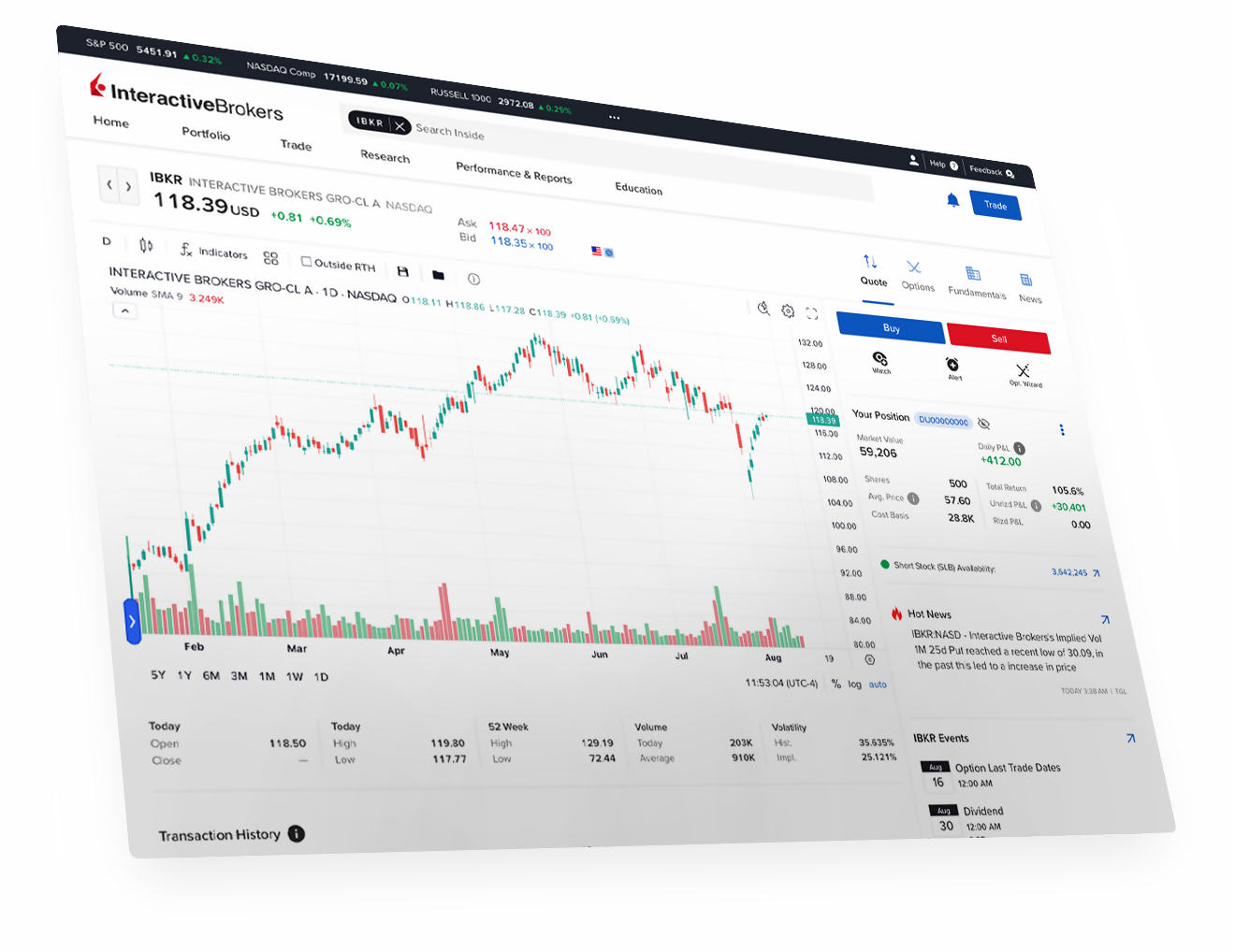

Understanding how to use margin effectively at Interactive Brokers can mean the difference between amplifying returns and facing unexpected margin calls that derail trading strategies. Many traders open IBKR accounts, attracted by competitive margin rates and flexible leverage options, yet they struggle with the platform's tiered margin requirements, portfolio margin calculations, and real-time risk-monitoring systems. Mastering these margin mechanics allows traders to confidently leverage capital without exposing themselves to unnecessary risk. Success requires understanding everything from initial margin requirements to maintenance levels across different securities.
Learning IBKR's margin system while risking personal capital can be costly for developing traders. Partnering with a prop firm provides access to funded accounts, allowing traders to apply margin strategies with reduced personal risk while focusing on sound position sizing habits without fear of depleting savings.
Summary
- Interactive Brokers enforces a 25% maintenance margin requirement on long stock positions held overnight, meaning your account equity must stay above one quarter of your total position value, or the platform liquidates automatically without warning. Traders consistently report positions closing within seconds of breaching this threshold, often locking in losses before they can deposit funds or adjust holdings. This real-time liquidation system protects the broker's capital but prevents you from riding out normal volatility.
- Position sizing at 20-30% of available buying power, rather than 80-90%, creates the cushion needed to survive overnight gaps and volatility spikes without triggering forced exits. Many traders discover that maximum buying power represents a danger zone rather than a target, especially when Interactive Brokers applies stress models that haircut collateral values beyond simple strike-times-100 calculations on options positions. Conservative leverage preserves the flexibility to add to winners and absorb temporary drawdowns.
- Daily compounding interest on margin loans erodes returns faster than most traders calculate upfront, particularly on positions held for weeks or months. Interactive Brokers charges rates starting around 5.13% annually for smaller balances, with interest accruing every single day you hold a leveraged position. This silent cost transforms winning trades into break-even outcomes when holding periods extend, making disciplined exit timing as important as entry selection.
- Portfolio Margin qualification requires $110,000 in net liquidation value and shifts calculations from fixed percentages to risk-based modeling across your entire portfolio. This system rewards diversified or hedged positions with higher effective leverage but punishes concentrated bets by imposing requirements that exceed standard Reg T levels. The stress scenarios run by the platform mean your available leverage depends on how positions interact, not just individual security volatility.
- Excess liquidity monitoring matters more than account balance tracking because it represents capital available outside earmarked funds and determines whether you can close positions without going negative. Traders who maintain 15-20% cash buffers above position collateral avoid the advisory warnings that appear when buying power consumption hits 90%, even when they technically have assignment coverage. The distinction between having cash to cover assignments and meeting excess-liquidity requirements for closing trades under stress becomes critical during fast-moving market conditions.
- Goat Funded Trader provides simulated capital accounts up to $2M, where traders follow clear risk rules (typically 4% daily and 6% total drawdown) while keeping up to 100% of verified profits, eliminating margin interest, liquidation pressure, and personal financial exposure that traditional margin trading requires.
What is Margin Trading, and How Does It Work?
Margin trading lets you borrow money from your broker to buy securities beyond your cash balance. You put up a percentage of the purchase price—usually 50%—while the broker lends the remainder, using your existing collateral. This leverage amplifies both potential gains and losses, magnifying market movements in your position.

💡 Example: If you have $5,000 in cash and want to buy $10,000 worth of stock, you can use margin trading to borrow the additional $5,000 from your broker. Your $5,000 serves as collateral, and you now control a $10,000 position with half the capital.
⚠️ Warning: While margin trading can amplify your profits, it equally amplifies your losses. A 10% drop in your investment becomes a 20% loss on your actual capital when using 2:1 leverage.

How does borrowed capital multiply your purchasing power?
With a margin account, you multiply your purchasing power. If you have $10,000 and want to buy stock at $100 per share, a cash account lets you control 100 shares. With margin, you put in $10,000 and borrow another $10,000, controlling 200 shares. If the stock rises to $110, your cash account gains $1,000 (10% return), while your margin position gains $2,000 on the same $10,000 of your own money (20% return before interest). A $10 drop wipes out 20% of your capital, not 10%.
How does margin work at Interactive Brokers? What are its interests and requirements?
Your broker charges daily interest on borrowed funds, with rates varying based on market conditions and account size. Unlike traditional loans, margin debt carries no repayment schedule; you settle when you sell or deposit additional funds. Interest compounds over time, reducing profits on leveraged positions held for weeks or months. According to Charles Schwab, the 50% initial margin requirement sets the standard for most equity purchases, though brokers can demand higher percentages for volatile or thinly traded securities.
How Collateral and Equity Work Together
Your securities act as collateral securing the loan, and your account equity—the market value of holdings minus the borrowed balance—determines your financial cushion. As stock prices fluctuate, this equity changes constantly. A rising market increases your equity; a falling market shrinks it. Brokers watch this ratio closely because their money is at risk. If your equity drops too low, the firm issues a margin call demanding immediate deposits to restore the required balance. Fail to meet it, and the broker automatically sells your positions to recover the loan, locking in your losses at the worst possible moment.
What makes margin trading so appealing to traders?
Traders use margin to amplify moderate beliefs into larger returns without having to deploy all their capital. Margin enables traders to capitalize on time-sensitive opportunities, diversify across more positions, and employ strategies like short selling that require borrowed shares. When the market moves favorably, leverage feels like a quick path to wealth. A trader watching a stock they believe will rise 20% next week faces temptation: why settle for a small position when borrowed money could triple the effect?
How does margin work at Interactive Brokers when markets turn volatile?
The trap springs when volatility spikes or positions move against you. tastytrade notes that marginable securities require 50% of the value as collateral, but that protection erodes quickly in a downturn. A 5% market dip becomes a 10% account loss; a 10% decline triggers forced sales, preventing recovery. Interest compounds silently, turning winning trades into break-even outcomes if held too long. The same leverage that amplifies gains accelerates ruin.
A Different Path to Capital Access
Traditional margin trading forces you to risk your own money to access broker capital, creating exposure where losses exceed your initial deposit and interest costs compound. Prop firms like Goat Funded Trader eliminate this personal financial risk by providing simulated capital accounts, where you trade with the firm's funds rather than borrowing against your savings. You pursue the same profit potential and position sizes without margin calls, compounding interest, or the threat of losing more than you started with. Understanding how margin requirements function at brokers like Interactive Brokers reveals why many traders encounter unanticipated limits.
What Are the Margin Trading Requirements on Interactive Brokers?
Interactive Brokers enforces a 25% margin requirement on long stock positions held overnight. Your account equity must remain at least 25% of the total market value of your holdings, or positions are automatically closed out. You deposit 50% upfront under Reg T rules when opening the position, but the 25% maintenance threshold determines whether the position survives volatility.

🎯 Key Point: The maintenance margin of 25% is different from the initial margin requirement of 50% - you need more capital upfront than you need to maintain the position.
"Interactive Brokers maintains a 25% margin requirement for overnight stock positions, with automatic liquidation when account equity falls below this threshold." — Interactive Brokers Margin Requirements, 2024

⚠️ Warning: If your account equity drops below the 25% threshold due to adverse price movements, Interactive Brokers will automatically close your positions without prior notice to bring your account back into compliance.
Account Minimums and Eligibility
You need a net liquidation value of $2,000 to unlock margin trading at IBKR. With less, you're limited to a cash account with no borrowing power. This minimum applies to individual and joint accounts and grants access to leverage on equities, options, and other margin-eligible products. Most experienced traders fund well above this baseline to avoid liquidation risk during normal market fluctuations.
Reg T Initial and Maintenance Levels
When you buy stock on margin, you deposit 50% of the purchase price. For a $20,000 position, you put up $10,000 and borrow the rest. Once the trade is active, the maintenance requirement drops to 25% of the current market value. If your equity falls below that threshold, IBKR's automated system liquidates positions within seconds, locking in losses before you can add funds or adjust holdings.
Portfolio Margin for Qualified Accounts
Accounts with a net liquidation value of $110,000 or more can apply for Portfolio Margin, which calculates risk across your entire portfolio rather than applying fixed percentages to each position. This risk-based model often allows higher leverage on diversified or hedged portfolios, but concentrated bets can trigger requirements above standard Reg T levels. The system runs stress scenarios to estimate potential losses, so your leverage depends on how your positions interact rather than on their individual volatility.
Interest Rates and Borrowing Costs
IBKR charges the lowest margin loan interest rates starting around 5.13% annually for smaller USD balances, with rates declining as your debit balance grows. Interest accrues daily and compounds until you close positions or add funds to reduce the loan. Daily compounding means holding leveraged positions for weeks or months erodes profits faster than most traders anticipate, particularly on smaller accounts where rate premium costs are highest.
What alternatives exist to traditional margin trading?
Prop firms like Goat Funded Trader provide simulated capital accounts where you can trade with up to $2M without risking your own money or facing margin calls. These accounts offer the same position sizes and profit potential, but the firm absorbs losses while you keep up to 100% of verified gains. No interest charges, no maintenance requirements, no automatic liquidations that lock in losses before you can react. Understanding which assets IBKR allows you to trade on margin determines your practical leverage.
Related Reading
- Capital Growth Trading
- How Does Margin Work On Robinhood
- Can You Make A Living Day Trading
- How Much Do Day Traders Make Per Month
- How Much Margin Does Fidelity Offer
- How To Compare Brokers By Margin Interest Rates
- How Is Margin Interest Calculated
- How Does Margin Interest Work
- No Consistency Rule Prop Firm
- Options Trading Cash Flow Strategies Explained
- Financing Stock Options
- Why Are Fidelity Margin Rates So High
- How Does Margin Work at Interactive Brokers
- Why Is Schwab Margin Rate So High
- What Is A Prop Firm Forex
What Assets Can You Trade on Margin With Interactive Brokers?
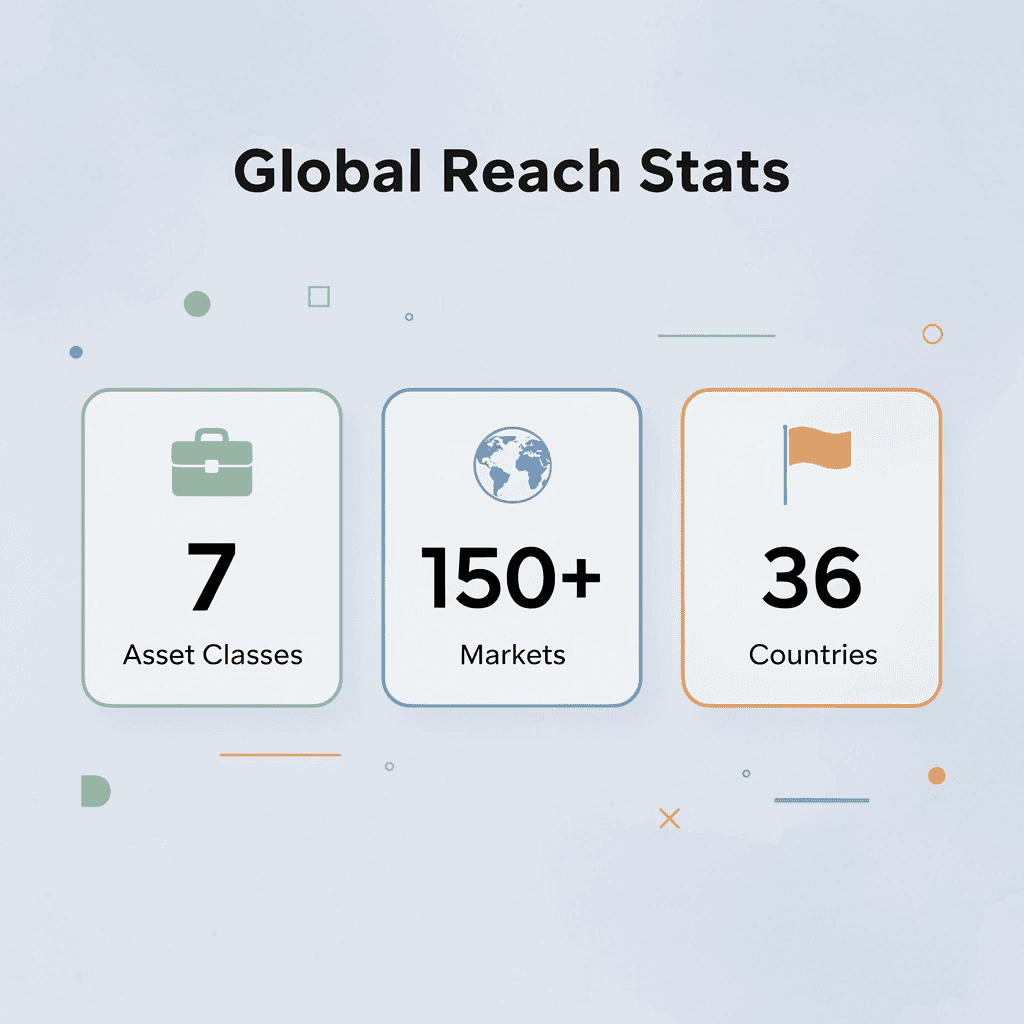
You can trade stocks, ETFs, options, futures, bonds, forex, and single stock futures on margin at Interactive Brokers across 150+ global markets in 36 countries. Each asset class follows different margin rules based on price volatility, liquidity, and regulatory requirements.

🎯 Key Point: Interactive Brokers offers one of the most comprehensive margin trading platforms globally, supporting 7 major asset classes across more markets than most competitors.
"Interactive Brokers provides access to 150+ global markets across 36 countries, making it one of the most internationally diverse margin trading platforms available." — Interactive Brokers, 2024
⚠️ Warning: Each asset class has significantly different margin requirements and risk profiles - what works for stock margin trading may not apply to forex or futures positions.
Stocks and ETFs Across Global Markets
U.S. stocks and ETFs follow Reg T's 50% initial margin requirement, meaning you put up half the purchase price upfront. International equities carry varying requirements depending on the exchange and liquidity: a German DAX stock might require 30% margin, while a thinly traded emerging-market share could demand 100% cash. IBKR applies real-time risk checks at order entry, so you see exact requirements before committing capital.
Options and Structured Strategies
Equity and index options qualify for margin in approved accounts, with requirements varying by strategy complexity. Long calls and puts require full payment because they lack collateral value. Short options and spreads use risk-based calculations that measure maximum loss potential rather than notional exposure. Portfolio margin accounts offer tighter requirements for hedged positions, allowing you to control larger notional values with less capital. Interactive Brokers LLC offers three margin types (Reg T, Portfolio, and Overnight) that adjust leverage based on account size and risk profile, benefiting traders running iron condors, butterflies, or delta-neutral strategies.
Futures and Commodities
Futures contracts use exchange-set, risk-based margin as performance bonds rather than borrowed funds. CME, Eurex, and global exchanges calculate requirements through SPAN methodology, which models potential loss across price scenarios. You post a fraction of the contract value to hold positions in equity indices, commodities, currencies, and interest rates. A single E-mini S&P 500 contract might require $12,000 margin to control $200,000+ notional exposure. This structure amplifies gains and losses faster than a stock margin because futures carry built-in leverage before any borrowing. Metals contracts follow similar rules for gold, silver, and copper.
Bonds and Fixed Income
Corporate bonds, Treasuries, municipals, and international debt securities can be traded on margin at IBKR. Requirements vary by credit rating, duration, and issuer type: investment-grade corporate bonds might require 15% margin, while high-yield debt demands 30% or more. This leverage lets you build larger income portfolios or make relative-value trades across different maturities and issuers, increasing both coupon income and price sensitivity to interest-rate changes.
Forex and Currency Pairs
You can trade spot forex with tiered leverage based on currency-pair volatility and total position size. Major pairs like EUR/USD might offer 50:1 leverage for smaller positions, dropping to 20:1 as exposure grows. Exotic pairs have tighter limits due to liquidity constraints. IBKR adjusts margin dynamically as your positions expand, preventing overleveraged accounts from accumulating dangerous exposure.
What are the alternatives to traditional margin trading?
Using leverage across margin-eligible assets means risking your own money with every trade, paying daily interest, and facing margin calls when positions move against you. Prop firm accounts with Goat Funded Trader change that structure by providing simulated capital up to $2M without personal financial risk. You pursue the same position sizes and profit potential across asset classes, but the firm absorbs losses while you keep up to 100% of verified gains. No interest charges, no maintenance requirements, and no automatic liquidations that lock in losses before you can react.
Related Reading
- Can I Borrow Against My Stocks
- Lowest Margin Rates Brokers
- Best Prop Firm For Stocks
- How To Borrow Against Stocks
- How To Day Trade Without 25k
- Best Crypto Prop Firm
- How Do You Take Profit In Crypto Trading
- How To Become A Trader From Home
- Is Issuing Common Stock A Financing Activity
- Position Sizing In Trading
- Prop Trading Firms' Profit-Sharing Models
- Sbloc Vs Margin Loan
- How Do You Profit From Day Trading Stocks
- Position Sizing Day Trading
- How To Stay Consistent In Trading
How to Trade Margin Responsibly on the Interactive Brokers Platform
Position sizing determines survival. You can master every margin calculation and monitor real-time equity levels, but still blow up your account if you treat maximum buying power as a target instead of a ceiling. Responsible margin trading means using a fraction of available leverage, maintaining excess liquidity that absorbs volatility without triggering liquidations, and treating interest costs as a real expense that demands selective trade entry.
🎯 Key Point: Maximum buying power is your ceiling, not your target. Professional traders typically use only 25-50% of their available margin capacity to maintain a safety buffer against market volatility.

⚠️ Warning: Overleveraging is the #1 cause of margin account failures. Even profitable strategies can lead to forced liquidations if you don't maintain adequate equity cushions for drawdown periods.
"Risk management is not about avoiding risk entirely, but about taking calculated risks with proper position sizing and adequate capital reserves." — Interactive Brokers Risk Management Guide, 2024

Size positions to survive volatility first, maximize returns second
Open your first margin trades using 20-30% of available buying power, not 80-90%. This approach gives you room to add to winning positions and handle overnight gaps without forced exits. Many traders report margin warnings on cash-secured puts despite having sufficient funds because Interactive Brokers uses stress models that account for worst-case scenarios, including gap risk, rather than relying on current position value alone. Your risk model should assume the platform will reduce collateral value and calculate requirements higher than strike times 100, especially on volatile underlyings.
Monitor excess liquidity, not just account balance
Check your extra cash multiple times daily through Trader Workstation—it shows available funds after setting aside money for positions and whether you can close positions without a shortfall. Interactive Brokers automatically sells positions when maintenance margin is breached, with no traditional phone calls in fast markets. Traders who maintain 15-20% cash buffers above position requirements avoid warning messages triggered at 90% buying power use. Cash to cover the assignment differs from the extra cash required to close trades during market stress.
Spread exposure across uncorrelated assets
If you concentrate your money in a few stocks or one industry, you risk having to sell everything quickly when prices drop, and correlations break down. Instead, spread your investments across stocks, futures, foreign currency, and options in different markets. This way, if one position hits your stop-loss level, it won't force you to liquidate your entire portfolio. Use options or futures to hedge against significant price moves when appropriate.
How does timing affect margin costs with Interactive Brokers?
Every day you hold a margin position, interest charges accumulate and reduce your net returns. Compare Interactive Brokers LLC's lowest margin loan interest rates against your expected profit before entering any leveraged trade, then exit immediately when the thesis changes or price action stalls. Treat interest as a fixed expense that demands disciplined trade selection, not a minor fee to ignore.
What alternatives exist to margin trading for capital growth
Most traders focus on maximizing leverage when they should minimize personal capital risk. Prop firms like Goat Funded Trader provide simulated accounts with up to $2M in capital after passing structured evaluations, letting you pursue the same position sizes and profit potential without margin interest, liquidation pressure, or personal financial exposure. You keep up to 100% of verified gains while the firm absorbs downside.
How Goat Funded Trader Helps Traders Use Margin More Effectively
Goat Funded Trader solves the core margin problem by providing simulated capital instead of requiring you to borrow against your own money. You trade with our buying power, follow clear risk rules (typically 4% daily and 6% total drawdown), and keep up to 100% of verified profits while we absorb all losses. No interest charges, no margin calls, and no personal liability if a trade goes wrong.

🎯 Key Point: With Goat Funded Trader, you get all the benefits of leveraged trading without the traditional risks of margin debt or personal financial exposure.
"100% of verified profits with zero personal liability — this eliminates the biggest barrier to effective margin trading for most retail traders." — Goat Funded Trader Risk Management Framework

🔑 Takeaway: This approach transforms margin trading from a high-risk personal financial decision into a structured opportunity where you can focus on trading performance rather than worrying about debt management or catastrophic losses.
Access Capital Without Personal Risk Exposure
Traditional margin accounts trap you in a cycle where your savings serve as collateral for every leveraged position. Goat Funded Trader breaks that pattern by offering up to $2,000,000 in capital through simulated accounts after passing a straightforward evaluation. A trader who started with a $10,000 personal margin account, constantly worried about overnight gaps triggering liquidation, now manages six-figure positions without personal funds at risk. The psychological shift is immediate: you stop trading scared and start executing your actual strategy.
Eliminate Interest Costs That Erode Returns
Every day you hold a leveraged position on margin, interest compounds against your equity. Goat Funded Trader charges zero interest because you're trading simulated capital, not borrowed money. On swing trades and multi-week positions, traditional margin interest can consume 15-20% of your gains before you close the trade. You keep the full profit from your edge instead of splitting it with the broker's lending desk.
Use Higher Leverage Within Protected Boundaries
Interactive Brokers enforces 25% maintenance margin, which reduces your available leverage when volatility increases. Our Goat Funded Trader accounts provide leverage ratios matched to your strategy (up to 1:100 on forex, appropriate levels on equities) with hard stop-loss rules that prevent major losses.
Scale Without Time Pressure or Capital Constraints
Personal margin accounts grow slowly due to deposit limits and personal risk tolerance. Our scaling program lets successful traders increase allocations to $2 million based on performance, with 100% refundable fees and no time restrictions. One trader moved from $50,000 to $400,000 in simulated capital over eight months, receiving consistent payouts, because we prioritize profitable execution over personal wealth. The fastest path to professional-scale trading doesn't require years of slow growth or dangerous personal leverage.
Get 25-30% off Today - Sign up to Get Access to Up to $800K Today
You understand margin mechanics: collateral haircuts, maintenance requirements, and daily interest charges. The question is whether to keep trading within those constraints or access a model designed for growth without personal downside.

Goat Funded Trader removes friction from margin trading. Trade simulated capital up to $2 million with leverage up to 1:100, no borrowing costs, and no risk to your savings. Pass a straightforward evaluation testing execution discipline, and the firm supplies buying power while you keep up to 100% of profits. Use code FIRSTGFT for 50% off your first account. No credit card required to explore the dashboard and rules.
If you're building long-term positions with dividend reinvestment, margin at a traditional broker makes sense. But if you're capturing momentum, trading volatility, or sizing for meaningful impact, daily interest and liquidation risk on your collateral slow you down.

Over 250,000 traders use Goat Funded Trader to access capital they couldn't deploy personally. They withdraw earnings on demand, scale through multiple accounts, and build track records without the emotional weight of personal loss. The firm absorbs drawdowns; you keep the upside.
Get funded today at Goat Funded Trader and start controlling six-figure positions immediately.

Related Reading
- How Does A Margin Loan Work
- Best Forex Prop Firm
- Options Trading Strategies For Consistent Income
- Trading Cash Flow
- How To Become A Full-Time Trader
- How To Trade Forex With A Prop Firm
- Forex Trading Strategies For Consistent Profits
- Day Trading Strategies For Consistent Profits
- How To Get Profit In Option Trading
- Recommended Prop Trading Firms With Growth Plans
- Best Trading Strategies For Consistent Profits
- Margin Loan vs. Securities-Based Lending
- Best Margin Rates Brokers
Be Great and get the App