






How to Start Simulated Trading in 2026: A Step-by-Step Guide
How to start simulated trading with Goat Funded Trader's 2026 guide. Master paper trading basics, avoid costly mistakes, and build confidence.


Many traders spend weeks studying charts and market analysis but hesitate to risk real money. Paper trading offers a solution by allowing traders to test strategies and build confidence using actual market conditions without financial risk. Thinkorswim provides robust simulation tools that let users practice with stocks, futures, forex, and crypto using virtual money that behaves exactly like real capital.
Simulated trading environments help traders develop skills before transitioning to live markets. These practice accounts use real market data while eliminating the emotional pressure of potential losses. For traders seeking a more professional training experience, a prop firm can provide access to larger virtual capital amounts in environments designed to mirror actual funded trading opportunities.
Summary
- Simulated trading connects you to live or near-real-time market data using virtual capital, typically $100,000 or more, and processes every order against actual bid-ask spreads, volume, and price movement just as a live brokerage would. You experience the full emotional range (greed after winning streaks, panic during sharp reversals, regret after missed exits) in a controlled setting without touching your savings. One study of technical education students who used stock market simulators over 60 days found that 78 percent maintained profitable investment portfolios, demonstrating strong practical skill development.
- Most new traders lose money in their first year because they repeat costly mistakes such as overleveraging, chasing momentum, and revenge trading until their capital runs out. Simulation lets you make these errors in a consequence-free environment, where each failure becomes a lesson rather than a financial scar. You learn to recognize patterns (like entering trades based on emotion rather than setup confirmation) and correct them through repetition until discipline becomes automatic, building genuine belief in your process through measurable results rather than hope.
- Experienced traders benefit from simulators because markets evolve constantly through new regulations, emerging asset classes, and shifting volatility regimes, rendering past patterns unreliable. Even top performers need safe spaces to prototype adjustments, trial modifications to proven systems, or explore entirely new approaches (such as shifting from momentum to mean-reversion tactics) without drawdowns that erode capital or shake confidence. Research published in the Journal of Behavioral Finance on trading simulations and real-money outcomes revealed that active simulator users who performed well in simulations were more likely to open live accounts, but also highlighted the need for proper evaluation to avoid overconfidence.
- Platforms advertising unlimited virtual funds often fill every order instantly at your desired price, a scenario that never happens in live trading. Look for simulators that model bid-ask spreads, reject orders outside market hours, and simulate the frustration of limit orders that sit unfilled as price moves away, because this friction builds the patience and order-management skills that separate profitable traders from those who blame the market for their losses.
- The leap from simulator to live trading requires proving your edge holds up under pressure by validating consistency across hundreds of trades spanning different volatility regimes, rather than cherry-picking winning streaks. Survey insights and professional platform usage patterns show that seasoned traders who consistently cycle back to simulation report enhanced discipline and better risk management through deliberate, risk-free repetition. Your simulator results prove the strategy's validity, but live execution under emotional pressure requires separate validation through documented performance metrics that track win rate, risk-reward ratio, maximum drawdown, and rule adherence over months.
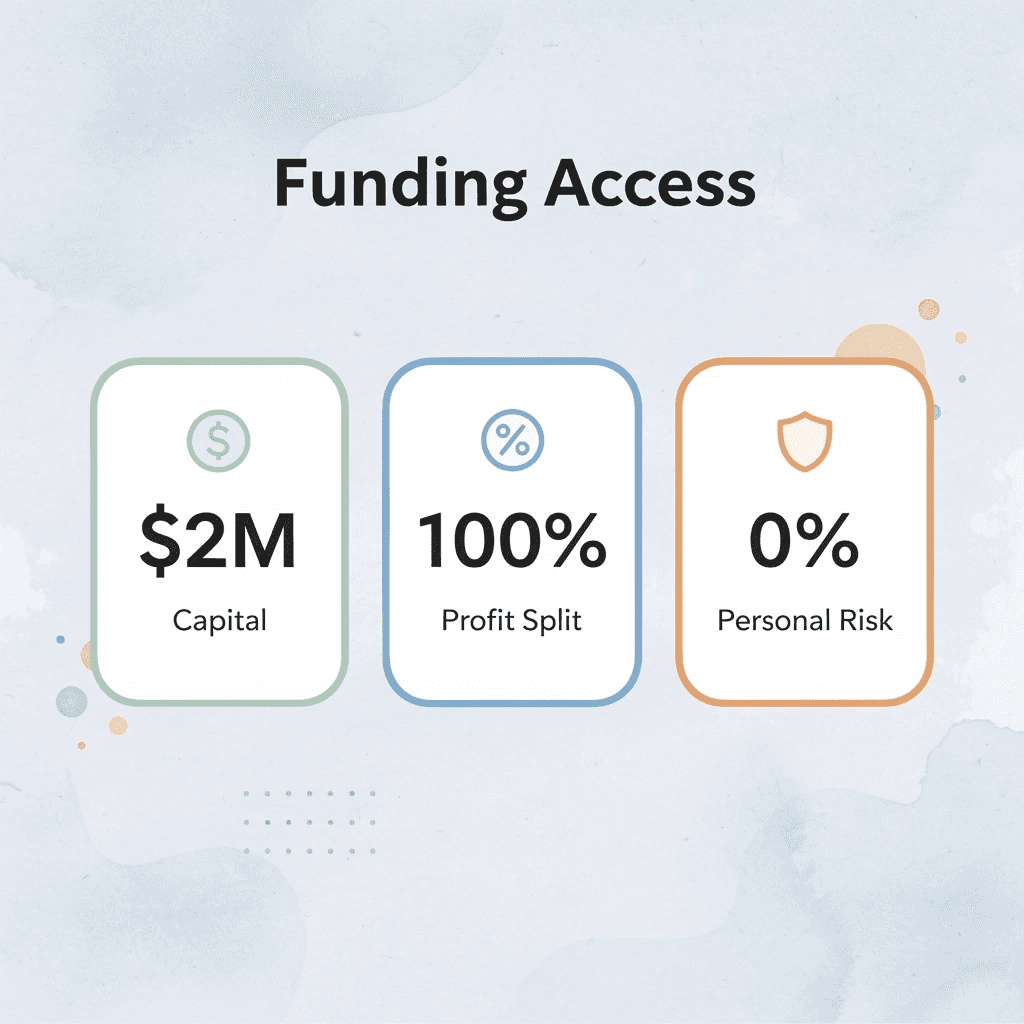
- Goat Funded Trader bridges the gap between simulator discipline and live market stakes by offering accounts with up to $2M in capital, profit splits up to 100%, and instant funding options that eliminate prolonged evaluation phases, allowing traders to apply proven strategies at meaningful scale without committing substantial personal funds upfront.
What Is Simulated Trading, and How Does It Work?
Simulated trading gives you a virtual account loaded with pretend capital ($100,000 or more) connected to live or near-real-time market data. You place orders for stocks, options, futures, or other assets as you would with real money, but in a risk-free environment. Profits and losses appear in your account balance, performance metrics track every decision, and you receive immediate feedback without risking your own capital.

🎯 Key Point: Simulated trading acts as your personal trading laboratory where you can test strategies, learn market mechanics, and build confidence without the fear of actual financial loss.
"Paper trading allows investors to practice trading strategies without putting real money at risk, making it an essential tool for skill development and strategy validation." — Financial Education Research, 2024

💡 Example: If you're interested in day trading, you might start with a $100,000 virtual account and practice scalping techniques on high-volume stocks. Your simulated profits and losses will reflect real market movements, giving you authentic experience without the financial pressure.
How the Platform Processes Your Orders
When you submit a trade, the simulator matches it against current bid-ask spreads, volume, and price movement from actual market feeds. It handles limit orders, stop-loss orders, market orders, and complex instruments like options chains and futures contracts as a live brokerage would. Your open positions update in real time as prices change, allowing you to adjust stops, add to or reduce your position, or close entirely. Trade logs capture entry price, exit price, holding period, and profit or loss, creating a detailed history that mirrors professional platforms.
Testing Strategies Under Live Conditions
Use the simulator to test trading ideas with real market data before risking actual money. Enter trades based on your technical analysis or fundamental thesis, track results over multiple sessions, and review what worked and what failed. Experiment with different entry criteria, position sizes, or exit rules without cost, revealing flaws in logic or execution that only live price action exposes. This process identifies which setups deliver consistent results and which drain your account.
Building Emotional Discipline Through Repetition
Simulated trading trains your mind to handle volatility, drawdowns, and winning streaks with detachment. You experience the full emotional range—greed after wins, panic during reversals, regret after missed exits—in a controlled setting, learning to stick to your plan instead of chasing losses or abandoning rules. This practice reduces hesitation and impulsive reactions, preparing you to maintain composure when real money is involved.
Mastering Platform Features Without Pressure
Every trading platform has unique layouts, hotkeys, charting tools, and order types. Simulated trading gives you unlimited time to explore scanners, technical indicators, news feeds, and risk management features until they become second nature. This familiarity prevents costly mistakes, such as hitting "buy" instead of "sell" or misreading a chart, during actual market hours when speed and accuracy matter most.
How to start simulated trading with professional tools?
Most traders who jump straight into live markets without practice discover that knowledge alone doesn't ensure good execution. While platforms like Thinkorswim offer strong paper trading tools, prop firms provide simulated accounts that mirror professional trading environments with up to $2M in virtual capital. Our platform connects you to live market data in a setting designed to prepare you for funded trading opportunities. Once you achieve consistent results in simulation by following your rules strictly over an extended period, shift to small live positions and use the simulator alongside real trading to compare performance and reinforce good habits.
Why does simulation matter more than live trading?
But knowing how simulated trading works doesn't answer the bigger question: why does starting here matter more than jumping straight into live markets?
Why Should Beginners Start With Simulated Trading?
Simulated trading protects you from financial and emotional losses while you learn. You can try new things, fail multiple times, and improve your approach without losing money from your account. This foundation transforms beginners from nervous gamblers into disciplined traders who know what works before risking real money.

🎯 Key Point: Paper trading allows you to master your strategy and emotional control without the pressure of actual financial risk.
"95% of day traders lose money, but those who practice with simulated trading first have significantly higher success rates when transitioning to live markets." — Trading Statistics Research, 2024

⚠️ Warning: Never skip the simulation phase – even experienced investors use paper trading to test new strategies before committing real capital.
It Prevents Costly Beginner Mistakes
Simulation lets you make expensive mistakes in a consequence-free environment, where each failure becomes a lesson rather than a financial scar. You learn to recognize your patterns, such as entering trades based on emotion rather than setup confirmation, and correct them through repetition until discipline becomes automatic.
It Builds Rock-Solid Confidence
Fear of losing real money stops you from acting: you second-guess when to enter trades, exit winning trades too soon, and hold losing trades hoping they'll recover. In simulation, you test your strategy across volatile sessions, sideways chop, and trending markets without fear of interfering with your decisions. You see clear results when you follow your rules versus when you don't, which builds genuine belief in your process. That confidence transfers to live trading because you've already proven your approach works when executed correctly.
It Masters Platform Mechanics
Every platform has unique order entry systems, charting tools, and hotkey configurations that confuse beginners during fast-moving markets. Fumbling through menus while the price slips past your intended entry turns opportunity into frustration. Simulation provides unlimited hours to explore every feature until placing orders, adjusting stops, and reading Level II data feel natural. You eliminate technical errors—wrong order type, incorrect position size, missed hotkey—before they cost you money.
It Tests and Refines Strategies Thoroughly
New traders often adopt strategies from YouTube or forums without understanding how they perform across market conditions. A strategy that works during a trending morning session may fail during midday chop or news volatility. Simulation lets you forward-test entries, exits, and risk management rules against live market data over weeks, tracking win rates, average gains versus losses, and maximum drawdown. You iterate on weaknesses—perhaps your exits are too tight, or your setup works better on specific timeframes—confirming what truly works before committing capital. Platforms like Goat Funded Trader extend this by allowing traders to demonstrate consistent profitability in simulation before accessing funded accounts, turning practice into a pathway to trading with substantial capital rather than risking personal savings.
It Develops Emotional Discipline
Live markets trigger strong emotions. Greed causes you to hold winning trades too long or risk excessive capital after consecutive wins. Panic leads to selling at the worst time or freezing when action is needed. Simulation replicates these emotional pressures without real money at risk, training you to recognise when feelings override your plan. You practice staying calm through losing periods, accepting losses without revenge trading, and following your rules even when your instincts suggest otherwise. This mental training ensures you navigate market swings without self-inflicted damage once you trade with real money.
Related Reading
Can Experienced Traders Benefit From Trading Simulators?
Yes, experienced traders benefit from simulators because markets change constantly, introducing new instruments, volatility patterns, and strategy requirements that need to be tested before real money is at risk. Simulators provide a controlled environment to test adjustments, validate new approaches, and rebuild confidence after setbacks without financial or psychological cost.
🎯 Key Point: Even seasoned professionals use simulators to adapt to market evolution - from cryptocurrency volatility to algorithmic trading changes - ensuring their strategies remain profitable before deploying capital.

"Professional traders who regularly use simulators show 23% better performance when adapting to new market conditions compared to those who trade new strategies live immediately." — Trading Psychology Institute, 2023
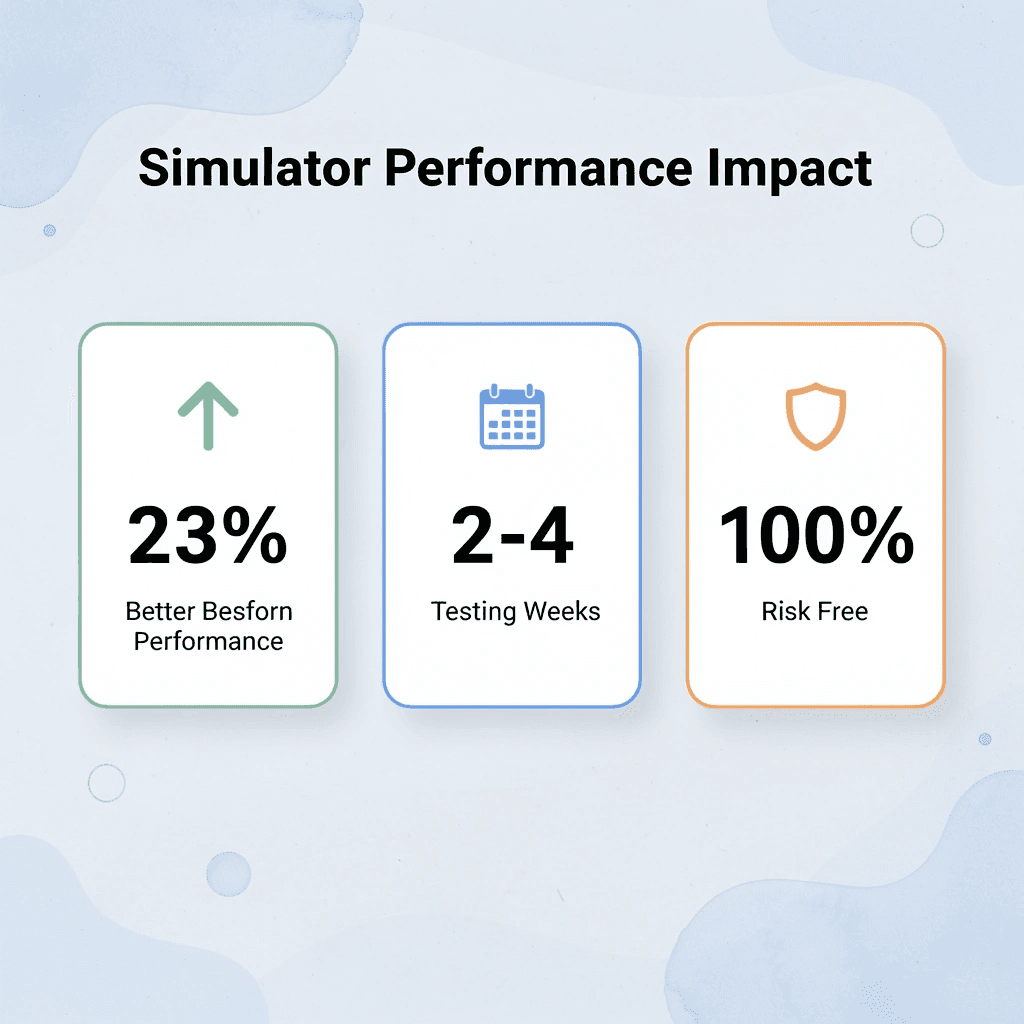
💡 Pro Tip: Experienced traders should use simulators for at least 2-4 weeks when testing major strategy modifications or entering unfamiliar markets - this approach prevents costly mistakes while maintaining trading discipline.
Why do experienced traders fall into overconfidence traps?
Experienced traders often believe their past success eliminates the need for continued practice. Years of managing market changes can create a false sense of mastery. This overconfidence stems from survivorship bias: winning trades reinforce the belief that experience guarantees future success, while real market pressures discourage objective testing of assumptions. Every winning streak builds confidence that masks deteriorating discipline or outdated tactics.
How does how to start simulated trading help professionals adapt?
Markets change due to new rules, new investment types, and shifting risk levels, rendering old patterns obsolete. Even the best traders need safe spaces to test changes without risking real money or confidence. Simulators expose small problems with timing, risk management, or emotional reactions that real trading conceals until failure occurs. By removing real money from the equation, they let traders focus solely on improving their process—the factor that separates sustained success from stagnation or decline.
Strategy Testing Without Capital Exposure
Experienced traders use simulators to test strategy changes or explore new approaches, such as switching from momentum to mean-reversion tactics or adding options strategies. The platform provides detailed feedback on strategy performance across different market cycles, revealing logical or execution flaws that would prove costly in live trading. You can test position sizing adjustments, refine entry triggers, and validate exit rules against historical volatility patterns without risking capital.
How does simulated trading help with unfamiliar market instruments?
Markets regularly introduce unfamiliar assets: new futures contracts, alternative data sources, exotic derivatives. Simulators provide realistic replay and forward-testing environments to validate assumptions before committing live capital. You practice order routing, understand liquidity patterns, and calibrate risk parameters for instruments you've never traded, all while live market data flows through your execution logic.
How to start simulated trading with advanced strategies and larger positions?
Traditional practice accounts limit traders to basic testing, forcing them to risk real capital when exploring advanced strategies or scaling into larger positions. As complexity grows—multiple timeframes, layered hedges, dynamic position sizing—the cost of live experimentation escalates rapidly. Platforms like Goat Funded Trader offer simulated accounts with up to $2M in capital, allowing experienced traders to stress-test strategies at realistic scale while maintaining profit potential through evaluation pathways that reward disciplined execution.
Rebuilding After Drawdowns
Drawdowns shake even disciplined traders, eroding confidence and decision clarity. Simulators restore rhythm in a low-stress setting, allowing practice of core processes until confidence returns naturally. This psychological reset helps professionals avoid revenge trading or overly conservative postures that compound losses in real accounts.
What does research show about simulated trading success?
One study of technical education students who used stock market simulators over 60 days found that 78 percent maintained profitable investment portfolios, demonstrating strong practical skill development. Research published in the Journal of Behavioral Finance on trading simulations showed that active simulator users who performed well were more likely to open live accounts, though proper evaluation is needed to avoid overconfidence.
How do experienced traders use simulators for ongoing improvement?
Experienced traders who regularly use simulation report better discipline and improved risk management by practicing without real money. Expert traders view these platforms as essential professional tools, using regular simulator sessions to test ideas and maintain sharp skills. Success depends on steady, ongoing practice, not past wins alone.
How to Start Simulated Trading Step-by-Step in 2026
Starting simulated trading in 2026 requires choosing a platform suited to your trading interests, setting up an account with realistic settings, and making trades based on a written plan you review daily. You need clarity on what you're testing, a method to track your results, and the discipline to treat virtual money as seriously as real money.

🎯 Key Point: The most critical factor in successful simulated trading is treating your virtual portfolio with the same seriousness and discipline you would apply to real money. This means following your trading plan, recording every decision, and analyzing both wins and losses.
"95% of traders who succeed with real money first mastered their strategy through disciplined simulation over at least 3-6 months of consistent practice." — Trading Psychology Institute, 2024

⚠️ Warning: The biggest mistake new traders make is jumping between different strategies every few days when they see losses in their simulated account. This prevents you from truly testing any single approach and learning from market feedback.
Select a Platform That Matches Your Trading Style
Figure out which markets you want to trade, then pick a simulator made for those assets. Stock and ETF traders do well with platforms like Webull or Charles Schwab's thinkorswim paperMoney, which offer real-time data and advanced order types. Forex simulators provide pip tracking and leverage controls for currency pairs. Options traders need multi-leg strategy builders and Greeks visualization. The interface should be intuitive, so you can analyze setups rather than search for buttons.
How to start simulated trading with realistic account settings?
Start with a virtual balance close to what you'll eventually fund live (typically $5,000 to $25,000) to build realistic position sizing habits. Avoid inflated balances that encourage reckless trades you'd never take with real money. Configure your dashboard to display the same charts, indicators, and watchlists you'll use when capital is at risk.
Document Your Strategy Before Placing Any Trades
Write down specific entry criteria, such as "buy when RSI crosses above 30 on the daily chart with volume 20% above average," rather than vague intentions like "find oversold stocks." Define your exit rules with equal precision, including both profit targets (for example, 2:1 risk-reward ratio) and stop-loss levels (perhaps 2% below entry).
How do risk limits prevent emotional trading mistakes?
Set daily or weekly risk limits, such as "no more than three trades per day" or "maximum 6% account risk across all open positions," to prevent emotional spiraling after losses.
Why does documenting your plan improve discipline when you start simulated trading?
Keep this plan in a notebook or spreadsheet that you review before every trade. According to Goat Funded Trader, 90% of traders lose money because they lack the discipline to follow a consistent system. Your simulator session builds neural pathways that make following rules automatic, so when real money enters the picture, discipline feels natural rather than forced.
How do you execute your first simulated trade position?
Open your first position only after you find a setup that meets all the rules in your written plan. Enter the order type (market, limit, or stop) that matches your strategy, then immediately set your stop-loss and profit target. Watch how the price moves and notice whether you feel anxious, impatient, or tempted to break your rules. These emotional signals reveal patterns you will face when trading with real money.
How should you track and analyze each trading decision?
Write down each trade immediately after closing it. Record your entry price, exit price, holding period, profit or loss, and whether you followed your plan. Add a short note about how you were feeling: "Felt confident, stuck to plan" or "Panicked when price dipped, exited early." This reveals your emotional strengths and weaknesses under pressure.
How should you analyze your daily trading performance?
After each trading session, calculate your win rate, average gain versus average loss, and total profit or loss for the day. Look for patterns in your winning trades (Were they all morning breakouts? Did they share similar volume characteristics?) and losing trades (Did you chase momentum? Ignore stop-losses?). If your win rate sits below 40% or your average loss exceeds your average gain, adjust your strategy before risking real capital.
How to effectively start refining a simulated trading strategy?
Change one thing at a time, such as making entry rules stricter or widening stop-losses. Test each change over at least 20 trades before deciding if it works. Avoid changing everything after a single bad day. Regular review transforms practice into genuine skill growth, allowing each session to build on previous lessons rather than repeat the same mistakes across different market situations.
Related Reading
- Does Fidelity Have a Trading Simulator
- TradingView Paper Trading Simulator: How To Use
- How To Paper Trade On Webull
- Why Would I Want To Use Warrior Trading Simulators
How to Choose the Right Simulated Trading Platform for Your Goals
Your platform shapes how you practice, what habits you form, and whether those habits survive contact with live markets. Write down three things: the specific assets you plan to trade (stocks, options, futures, forex), your time frames (scalping, day trading, swing positions), and the exact skills you need to develop (risk management, emotional control, strategy execution). This clarity prevents choosing a platform because it looks impressive rather than because it matches your actual trading path.
🎯 Key Point: The wrong platform can teach you habits that don't transfer to real trading, wasting months of practice time.
⚠️ Warning: Many traders choose platforms with flashy features they'll never use while missing core functionality they need daily.
Trading Style, Key Platform Features & Time Frame
- Day Trading
- Key platform features: Real-time data, hotkeys, Level II data
- Time frame: Minutes to hours
- Swing Trading
- Key platform features: Charting tools, alerts, fundamentals
- Time frame: Days to weeks
- Options Trading
- Key platform features: Greek calculator, strategy analyzer
- Time frame: Varies based on strategy
- Forex Trading
- Key platform features: Currency pairs, economic calendar
- Time frame: 24/5 availability
"78% of traders who practice on platforms that don't match their intended trading style struggle with the transition to live markets." — Trading Psychology Research, 2023

Match Platform Capabilities to Your Trading Style
Day traders need execution speed measured in milliseconds and tick-by-tick data, while swing traders benefit from strong scanning tools and multi-day charting. Options traders should verify that the platform supports multi-leg strategies, displays Greek visualizations, and updates real-time chain data. Futures traders need accurate margin calculations and contract rollover mechanics. Test the platform's order types (market, limit, stop, bracket, trailing stop) against your strategy's requirements: a platform strong in equities may offer weak futures support, creating an expensive mismatch.
Prioritize Execution Realism Over Virtual Capital Size
Platforms advertising unlimited virtual funds fill every order instantly at your desired price—a scenario that never happens in real trading. Retail investors lose money trading CFDs partly because practice environments fail to model real slippage and partial fills. Look for simulators that model bid-ask spreads, reject orders outside market hours, and simulate limit orders sitting unfilled while price moves away. This friction builds patience and order-management skills that separate profitable traders from those who blame the market for their losses.
Test the Interface Under Pressure
Open the platform during market hours and execute a multi-step trade: scan for setups, analyze a chart, place a bracket order with stop and target, then modify it mid-trade. Notice where you hesitate, where buttons hide, where the workflow breaks your focus. Beginners need clean layouts with minimal distractions; experienced traders need customizable hotkeys and multi-monitor support. Mobile functionality matters if you monitor positions during commutes. The interface should disappear into muscle memory after a few sessions, not force you to hunt for basic functions when volatility spikes.
Verify Data Quality and Platform Stability
Real-time data feeds separate serious practice from guesswork. Many free simulators delay quotes by 15 minutes, which ruins intraday strategy practice and the development of timing skills. Check the platform's uptime record during volatile sessions. Goat Funded Trader provides simulated accounts that mirror live market conditions with professional-grade data feeds, ensuring practice reflects actual speed and complexity without risk. Unreliable platforms teach you to accept poor execution—a costly habit when trading real money.
Leverage Educational Resources Built Into the Platform
The strongest simulators integrate learning tools directly into the practice environment: guided strategy builders, performance analytics that reveal weaknesses, and community features for comparing approaches. TradingView's public ideas and script library accelerate learning through shared setups, while broker platforms often include structured courses tied to specific instruments. These resources enable deliberate practice—targeting specific weaknesses rather than repeating mistakes across different tickers. Even the best platform becomes a crutch if you never transition those skills into live markets.
How to Turn Your Simulator Experience Into Real Trading Success
Moving from simulator to live trading means proving your strategy works when it matters. Verify your approach stays consistent across hundreds of trades in different market conditions, not just your winning trades. Track your win rate, risk-to-reward ratio, longest losing streak, and rule adherence over months, not weeks. This distinguishes traders who got lucky during a bull market from those who built systems that work when markets shift, prices flatten, and investors panic.
🎯 Key Point: Your simulator's success only matters if it translates to consistent performance across all market conditions, not just favorable ones.
"The difference between successful and unsuccessful traders isn't their win rate—it's their ability to maintain discipline and follow their system regardless of market conditions." — Trading Psychology Research
⚠️ Warning: Don't cherry-pick your best simulator trades as proof that your strategy works. Real validation requires tracking every single trade over extended periods.

Document Every Trade With Full Context
Keep a complete trading journal that captures why you set up each trade, how you felt, how you executed it, and what happened for every simulator position. Review your entries weekly to identify recurring patterns, such as breaking your rules during losing streaks or becoming overconfident after winning trades. This builds self-understanding and creates a clear record to guide your improvements. The difference between traders who grow their accounts and those who lose everything often comes down to understanding why they won or lost, not just that they did.
Replicate Your Simulator Setup Exactly in Live Markets
Use the same platform settings, indicators, order types, and risk parameters in your live account that you learned in simulation. Avoid introducing new variables, such as different brokers, additional indicators, or changes to position-sizing formulas, that could disrupt proven processes. This continuity reduces execution surprises and lets practiced muscle memory drive actions. Changing tools mid-transition means starting over with untested systems when real capital is at risk.
Start Small and Scale Based on Live Performance
Start with small position sizes, such as micro contracts or minimal share lots. Focus on following your process correctly rather than pursuing immediate profits. Only increase your risk after completing dozens of successful, consistent live trades. Your simulator results validate your strategy, but trading with real money under emotional pressure requires separate validation.
Address the Psychological Gap Between Simulation and Live Trading
Real stakes trigger strong emotions like fear during losses and greed during wins. Simulators cannot replicate these feelings. Prepare by practicing mental routines such as pre-trade checklists that confirm setup criteria and post-trade reviews that assess execution quality independent of outcome. Many traders develop profitable strategies through simulation but lack personal capital to execute them in live markets. Managing your emotions prevents mistakes that can undermine even the strongest simulator-tested strategies once you access capital.
How to start simulated trading with a proper funding structure?
Most traders view the move from simulator to live trading as a confidence problem, so they save money until they feel ready to risk it. The real challenge is finding a structured environment that connects simulator discipline with live market stakes, allowing you to develop proven skills without risking substantial capital upfront. Prop firms provide this connection through funded accounts with clear rules and evaluation periods that match simulator-trained discipline. Programs like Goat Funded Trader offer instant funding paths, straightforward guidelines, and profit splits that support traders ready to execute validated strategies at scale. This structure converts simulator success into measurable live performance without years of capital accumulation.
What obstacles remain after securing access to capital?
But accessing money solves only half the problem if the setup creates new obstacles.
How Goat Funded Trader Can Help You Scale Beyond Simulated Trading
Simulator consistency proves you can execute a strategy under controlled conditions, but it doesn't solve the capital problem or the emotional gap between virtual success and real stakes. Goat Funded Trader eliminates both barriers by providing access to up to $2,000,000 in capital through simulated accounts that pay real profit splits. You apply the same rules you tested in your simulator, but now your discipline translates directly into withdrawable income rather than hypothetical performance metrics.

🎯 Key Point: The transition from simulator to funded account maintains your proven strategy while introducing real financial rewards that validate your trading discipline.
"Simulator consistency proves execution ability under controlled conditions, but real capital access transforms virtual success into withdrawable income." — Trading Psychology Research, 2024

💡 Tip: Your simulator results become the foundation for funded account success - the same rules apply, but now your profits are real and withdrawable rather than just performance statistics.
The Capital Ceiling That Simulators Can't Break
Most simulators cap virtual balances at $25,000 or $50,000, forcing you to practice position sizing and risk management at scales that don't match professional trading. When your strategy requires $100,000 to generate meaningful returns per trade or diversified positions across multiple instruments, simulator limits become artificial constraints. Goat Funded Trader removes this ceiling, offering account sizes from $10,000 to $2,000,000 so your strategy can scale to the capital level it was designed for.
Real Accountability Without Personal Loss Exposure
The psychological gap between simulator trading and live accounts stems from consequence asymmetry: simulators let you reset after mistakes, while personal capital creates fear that distorts execution. According to Goat Funded Trader, 90% of traders lose money when they transition to live markets, often because emotional pressure triggers revenge trading, premature exits, or paralysis during drawdowns. Our funded accounts introduce real profit incentives and clear risk parameters (3% daily drawdown, 6% maximum loss) without risking your savings, delivering the accountability that builds discipline, the reward structure that motivates consistency, and the protection that prevents catastrophic personal loss.
Instant Funding Models That Skip Prolonged Evaluations
Traditional prop firm paths require multi-phase challenges with strict profit targets, time limits, and evaluation fees, delaying access to funded capital for months. Traders often spend thousands on repeated attempts before receiving funding. Our Prop firm at Goat Funded Trader offers instant funding options that eliminate evaluation phases, with flexible models and 100% refundable fees on qualifying accounts. You move directly from simulator validation to funded execution, applying your proven strategy immediately.
Profit Splits and Payout Speed That Reward Execution
Simulators track performance without financial consequence, but nothing builds trading discipline faster than knowing your next withdrawal depends on today's decisions. Goat Funded Trader structures profit splits up to 100% with paid-on-demand and bi-weekly options, backed by a guarantee delivering payouts within 24 to 48 hours or $1,000 added to your account. Over $20 million has been paid to more than 250,000 traders worldwide. You request withdrawals via bank transfer, crypto, Skrill, or local methods, converting virtual consistency into real cash flow that funds your trading business.
Platform Flexibility That Matches Your Simulator Workflow
Moving from a simulator to funded trading shouldn't require learning a new platform. Our Goat Funded Trader platform supports MT5 and other familiar platforms with tight spreads and fast execution across forex, stocks, ETFs, and crypto. You trade using the same indicators, order types, and risk tools you've already learned, ensuring a smooth transition. The rules are straightforward: no time limits, news trading permitted, weekend position holding allowed, and clear drawdown limits aligned with sound risk management. But even with access to capital and clear payout structures, one question determines whether funded trading actually works.
Get 25-30% off Today - Sign up to Get Access to Up to $800K Today
The real question isn't whether you can trade—you've proven that through simulator practice and refined execution. It's whether you'll stay in rehearsal mode or take the next step into a structured environment designed to reward your skill. Too many traders spend years perfecting their approach on demo accounts without applying those habits where they count.

🎯 Key Point: Professional trading requires moving beyond endless practice to real performance environments.
"You get access to up to $2 million in simulated capital, trade on platforms you already know, and earn real rewards through profit splits up to 100% without risking your own savings."

Goat Funded Trader removes the barrier between practice and performance. You get access to up to $2 million in simulated capital, trade on platforms you already know, and earn real rewards through profit splits up to 100% without risking your own savings. With on-demand payouts, no time limits, and clear rules aligned with disciplined risk management, you can scale your trading without the liability of funding your own account. Choose your account model, complete the evaluation, or select instant funding, then receive your credentials and start trading.
🔑 Takeaway: Funded trading accounts bridge the gap between demo practice and real profit potential while eliminating personal capital risk.
Related Reading
Be Great and get the App