






What Is a Trading Simulator? How It Works and Why It Matters
What Is a Trading Simulator? Goat Funded Trader explains how simulators work, their benefits, and why they're essential for risk-free practice.


Trading simulators provide a risk-free environment where beginners can practice buying and selling stocks, options, and futures using virtual money instead of real capital. These platforms function like flight simulators for traders, allowing mistakes to become valuable lessons rather than financial disasters. Mastering simulated trading helps nervous beginners develop into confident traders ready for real market conditions.
Building skills through paper trading represents just the first step toward trading success. Once traders develop profitable strategies and demonstrate consistent performance, they face the challenge of securing adequate capital to implement their methods effectively in live markets with a prop firm.
Summary
Key Takeaways
- Ninety percent of traders lose money in their first year, largely because they expose capital before developing the skills to protect it. A trading simulator removes financial pressure entirely, letting you execute full sequences with virtual capital while real market dynamics play out around you. You test position sizing, experiment with entry techniques, and refine exit strategies without permanent damage to your account or your mindset.
- Traders who use simulators experience a 90% improvement in confidence, largely because repetition wires professional behaviors before real stakes arrive. You learn to wait for high-probability setups, avoid revenge trades after losses, and close positions according to plan rather than emotion. The simulator instills the habits that prevent failures that amplify drawdowns in live trading.
- Research from the Brazilian Securities and Exchange Commission found that only 1.1% of day traders achieve consistent profitability, a statistic that includes experienced traders who stopped testing their methods against new conditions. The gap between occasional success and sustained profitability often comes down to deliberate practice, not just accumulated screen time. Simulators let professionals trial modifications to proven systems without drawdowns that compound psychological damage.
- High-frequency trading accounts for 50 to 70% of daily trading volume, forcing retail traders to constantly refine execution speed and precision. Simulators expose subtle timing flaws or slippage assumptions that live trading masks until losses accumulate. This feedback loop separates traders who plateau from those who continuously sharpen their edge.
- The psychological weight of real capital introduces emotions like fear and greed that simulators cannot fully replicate. Many traders validate their edge in simulation only to discover they lack the personal capital to execute it at meaningful scale, a frustration that surfaces when you've proven technical competence but can't deploy it.
- Goat Funded Trader addresses this constraint by providing access to substantial trading capital once traders demonstrate consistent performance in the simulator, allowing them to scale validated strategies without committing substantial personal funds or waiting years to save enough.
What Is a Trading Simulator, and How Does It Work?
A trading simulator is software that replicates live market conditions using virtual money instead of real money. You place trades, watch positions move with actual price data, and track profit and loss exactly as you would with a funded account. The difference: every dollar gained or lost exists only on screen, so you can practice executing strategies, managing risk, and navigating market volatility without financial consequences.

🎯 Key Point: Trading simulators provide identical market experiences without the financial risk, making them perfect for skill development and strategy testing.
"Paper trading allows traders to practice their strategies in a risk-free environment while experiencing real market conditions and price movements." — Financial Trading Education, 2024
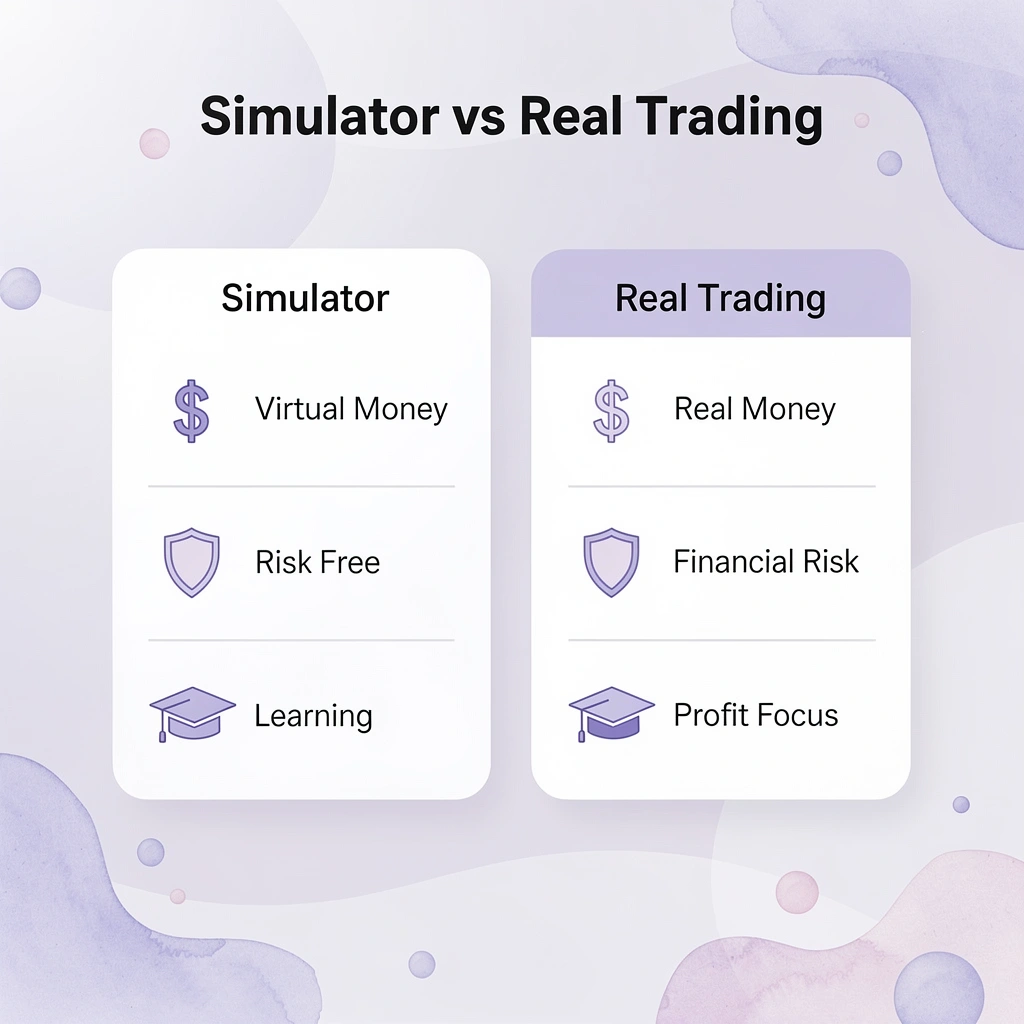
💡 Example: When you buy 100 shares of a stock at $50 in a simulator, you'll see the same price movements as real traders, but your $5,000 investment is purely virtual—perfect for learning without financial stress.
How do trading simulators replicate real market conditions?
Simulators use real or delayed market feeds and process orders through the same logic brokers use. When you buy 100 shares, the platform deducts the cost from your virtual balance, applies commission fees, and updates your portfolio immediately. Most platforms model slippage, order types like stop-loss and limit orders, and corporate actions such as dividends or stock splits, ensuring your practice environment mirrors the actual market.
What is a trading simulator's advantage with live data feeds?
The best simulators connect to live data streams, so you're reacting to the same price movements, volume spikes, and volatility that real traders face. Some offer replay modes that let you step through historical sessions tick by tick at up to 100x speed, compressing weeks of market activity into hours of practice. You can pause, rewind, and repeatedly test different decisions in the same setup until execution becomes automatic.
What advanced features does a trading simulator need?
Good simulators include advanced charting with dozens of technical indicators, Level 2 order book data, and time-and-sales tapes showing every transaction. They should allow you to customize workspaces, save layouts, and switch between asset classes: stocks, options, futures, and forex.
The interface must match your live broker's platform; muscle memory matters. Relearning navigation under pressure after months of practice wastes critical mental energy.
How does performance tracking separate serious simulators from basic ones?
Performance tracking separates serious simulators from basic versions. Detailed journals logging entry reasoning, exit rationale, and emotional state for every trade are essential. Metrics like win rate, average risk-reward ratio, maximum drawdown, and profit factor should update automatically, revealing whether your edge is real or luck-driven.
Trading Game, a stock simulator app, has attracted over 3 million students building foundational skills before risking real money.
Why Simulators Build Discipline Faster Than Theory Alone
Reading about position sizing or stop-loss placement teaches concepts. Practicing those rules under simulated market pressure builds habits. When a position moves against you and you must decide whether to cut the loss or hold, your brain processes that stress even without real money at stake. Repeating that decision hundreds of times trains your response until it becomes automatic.
How does a trading simulator prevent costly beginner mistakes?
Most traders who skip simulation and jump straight into live markets lose money not because their strategy is flawed, but because they panic during normal price changes or ignore their own rules when a trade feels different. The simulator removes financial pain from the learning curve, letting you fail cheaply and often.
Once you've proven consistent results over hundreds of trades using the same risk parameters you'll apply with real capital, you've earned the right to scale. Platforms like Goat Funded Trader recognize this progression by offering evaluation accounts, where traders demonstrate their skills in a simulated environment before accessing funded accounts with significant capital.
Instead of spending years saving money to trade meaningfully, you prove your process works and trade larger sizes while keeping a share of the profits.
What challenges remain when transitioning to real capital?
But showing skill in a simulator and maintaining that performance with real capital are two different challenges.
Related Reading
Why Is a Trading Simulator Important for Traders?
A trading simulator lets traders build skills, test ideas, and gain market experience without risking real money. Organized practice helps traders avoid expensive mistakes and develop crucial trading discipline before entering live markets.

🎯 Key Point: Trading simulators provide a risk-free environment where beginners can learn market mechanics and experienced traders can test new strategies without financial consequences.
"95% of day traders lose money, but those who practice with simulators first have significantly higher success rates when transitioning to live trading." — Financial Industry Research, 2023
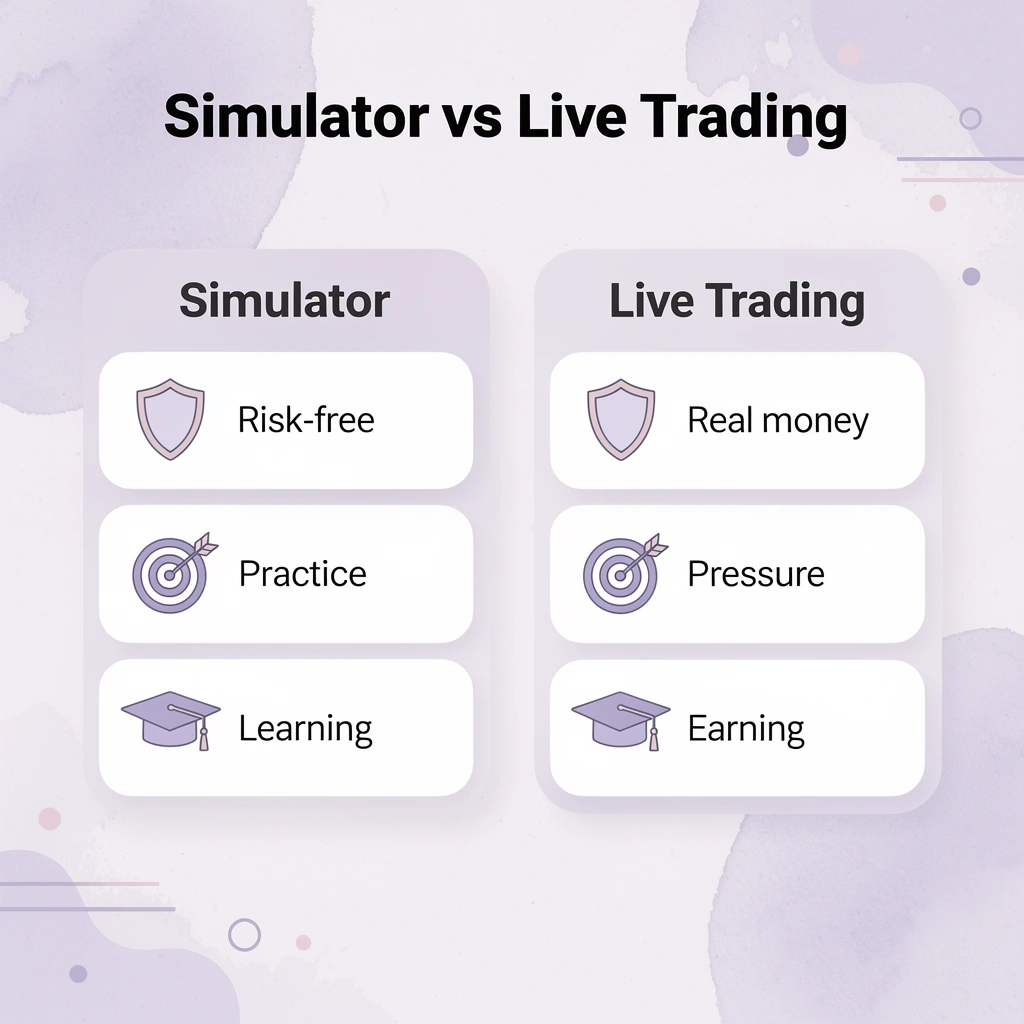
⚠️ Warning: While simulators are excellent for learning technical skills, they cannot replicate the emotional pressure and psychological stress of trading with real money.
How does a risk-free environment prevent costly mistakes
When you risk real money before your strategy proves itself, every mistake compounds: you lose money, your confidence erodes, and you make emotional decisions instead of logical ones. A trading simulator removes that financial pressure, letting you execute full sequences with virtual capital while real market dynamics play out.
You test position sizing, experiment with entry techniques, and refine exit strategies without permanent damage to your account or mindset.
What is a trading simulator's role in learning from failures
This protected environment lets you fail forward. You discover which setups suit your style, which risk parameters keep drawdowns manageable, and which emotional triggers sabotage your execution.
Without this space, those lessons result in permanent capital destruction rather than reversible feedback.
How does a trading simulator build discipline through repetition?
Practice the same rule set on every simulated trade until following it feels automatic. Stop-loss placement, position sizing, and daily loss limits become muscle memory through repetition.
Guardian Trading reports that 90% of traders who use simulators experience improved confidence, as repetition builds professional behaviors before real money is at risk. You learn to wait for high-probability setups, avoid revenge trades after losses, and close positions according to plan rather than emotion.
Traders who skip this step frequently chase losses, overtrade during winning streaks, and abandon their process when discipline matters most. The simulator builds the habits that prevent those failures.
How does a trading simulator accelerate strategy testing?
Simulators provide quick feedback on how specific approaches perform across different market conditions, volatility regimes, and time frames. You can run dozens of iterations rapidly, identify weaknesses in your logic, and refine your strategy before risking real money.
This fast cycle sharpens your edge much faster than trial-and-error with actual money, where each mistake costs you permanently. You discover whether your breakout strategy works better at market open or midday, whether your risk-reward ratio holds across trending and ranging markets, and whether your stop placement prevents small losses from becoming large ones.
What is a trading simulator's advantage for skill development?
Simulators speed up the path to expertise by enabling deliberate practice instead of chance. You control conditions, replay identical setups, and measure results with accuracy that real trading cannot provide.
Bridges the Gap to Funded Capital
Making money consistently in the simulator under realistic rules demonstrates readiness for real trading and opens a path to funded capital. Platforms like Goat Funded Trader let traders prove skill in a simulated environment, then provide access to funded accounts with significant capital.
Instead of spending years saving personal capital, you prove your process works and trade larger sizes while keeping a share of the profits.
How does a trading simulator remove capital barriers?
This progression removes the main barrier most skilled traders face: insufficient capital to execute their strategy at scale. Your simulator performance becomes your credential.
But proving skill in a controlled environment and maintaining that performance under psychological pressure are two different challenges.
Can Experienced Traders Benefit From Trading Simulators?
Yes. Experienced traders face changing markets, new tools, and shifting volatility patterns that demand adaptation. Simulators provide the only venue to test new strategies, rebuild your execution rhythm after losses, and refine your tactics without risking money or confidence.

🎯 Key Point: Even seasoned professionals need a risk-free environment to refine their approach when market conditions evolve or after experiencing significant drawdowns.
"Experienced traders who regularly use simulators to test new strategies show improved adaptability and faster recovery from losing streaks." — Trading Psychology Research, 2023

💡 Pro Tip: Use simulators to practice position sizing with unfamiliar instruments or test risk management rules before implementing them with real capital.
Simulator Benefits for Pros
Real-World Application
Strategy Testing
Validate new approaches before risking capital
Rhythm Recovery
Rebuild confidence after losing periods
Tool Mastery
Learn new platforms without execution errors
Market Adaptation
Adjust to changing volatility patterns

Why do experienced traders avoid what a trading simulator is
Experienced traders often think their past success means they don't need to practice. They've navigated major market swings, placed thousands of orders, and developed solid instincts. This confidence stems from survivorship bias: winning trades create the illusion of mastery, while the stress of real trading prevents them from questioning whether their approach actually works.
How does continuous practice impact trading profitability
Markets never stop changing, and neither should your preparation. According to research from the Brazilian Securities and Exchange Commission (CVM), only 1.1% of day traders are consistently profitable, a figure that includes experienced traders who stopped testing their methods against new conditions.
The gap between occasional success and sustained profitability comes down to deliberate practice, not accumulated screen time.
Why do professionals prototype strategy changes in simulation first?
You've refined a momentum strategy that worked for two years, but recent market chop has turned your edge into noise. Do you risk live capital testing adjustments to entry filters, or prototype changes in simulation first? Professionals choose the latter.
Simulators let you try modifications—shifting from breakout entries to pullback entries or layering in volatility filters—without drawdowns that compound psychological damage. Feedback is immediate: you see whether the adjustment improves win rate, reduces maximum adverse excursion, or introduces new problems.
How does a trading simulator separate plateauing traders from improving ones?
This separates traders who stop improving from those who keep sharpening their edge. When high-frequency trading accounts for 50 to 70% of daily trading volume, retail traders must continually improve execution speed and precision.
Simulators reveal small timing problems and slippage assumptions that real trading conceals until losses accumulate.
How do trading simulators help with unfamiliar instruments?
Markets introduce new futures contracts, options structures, and alternative data sources faster than most traders can keep up with. Simulators provide realistic environments to build skill with unfamiliar assets before committing real money.
You can replay historical sessions at faster speeds to test how a new instrument behaves during earnings volatility or economic releases, then test it against current conditions. This eliminates hesitation and execution errors that occur when adapting under pressure.
What is a trading simulator's role in professional development?
The best traders treat simulators as professional tools for staying ahead. Platforms like Goat Funded Trader take this further: simulator performance becomes the credential that unlocks access to significant capital, turning practice into a pathway to funding.
Your discipline in simulation directly translates to earning potential.
Restoring Rhythm After Drawdowns
Losing streaks shake even disciplined professionals. Confidence erodes, execution becomes hesitant, and the urge to overtrade or freeze up intensifies. Simulators help you regain rhythm in a low-stress environment where you can practice core processes until you feel clear about your decisions again. You're not risking extra money while rebuilding trust in your system.
But knowing simulators help and using them with the right structure are completely different challenges.
Related Reading
- Does Fidelity Have a Trading Simulator
- TradingView Paper Trading Simulator: How To Use
- How To Paper Trade On Webull
- Why Would I Want To Use Warrior Trading Simulators
How to Use a Trading Simulator Effectively Step by Step
Most traders open a simulator, place a few trades, and wonder why nothing improves. The difference between wasted screen time and genuine skill development lies in how you structure each session. Treat virtual capital with the same respect you'd give real money, follow a repeatable process that builds muscle memory, and review outcomes with brutal honesty.
🎯 Key Point: Your simulator sessions should mirror real trading conditions exactly - same timeframes, same position sizes relative to your account, and same emotional discipline.

"Traders who treat demo accounts like real money show 67% better performance when transitioning to live trading compared to those who trade carelessly in simulation." — Trading Psychology Institute, 2023
⚠️ Warning: The biggest mistake new traders make is using unrealistic position sizes in simulators, creating false confidence that crumbles when real money is at stake.
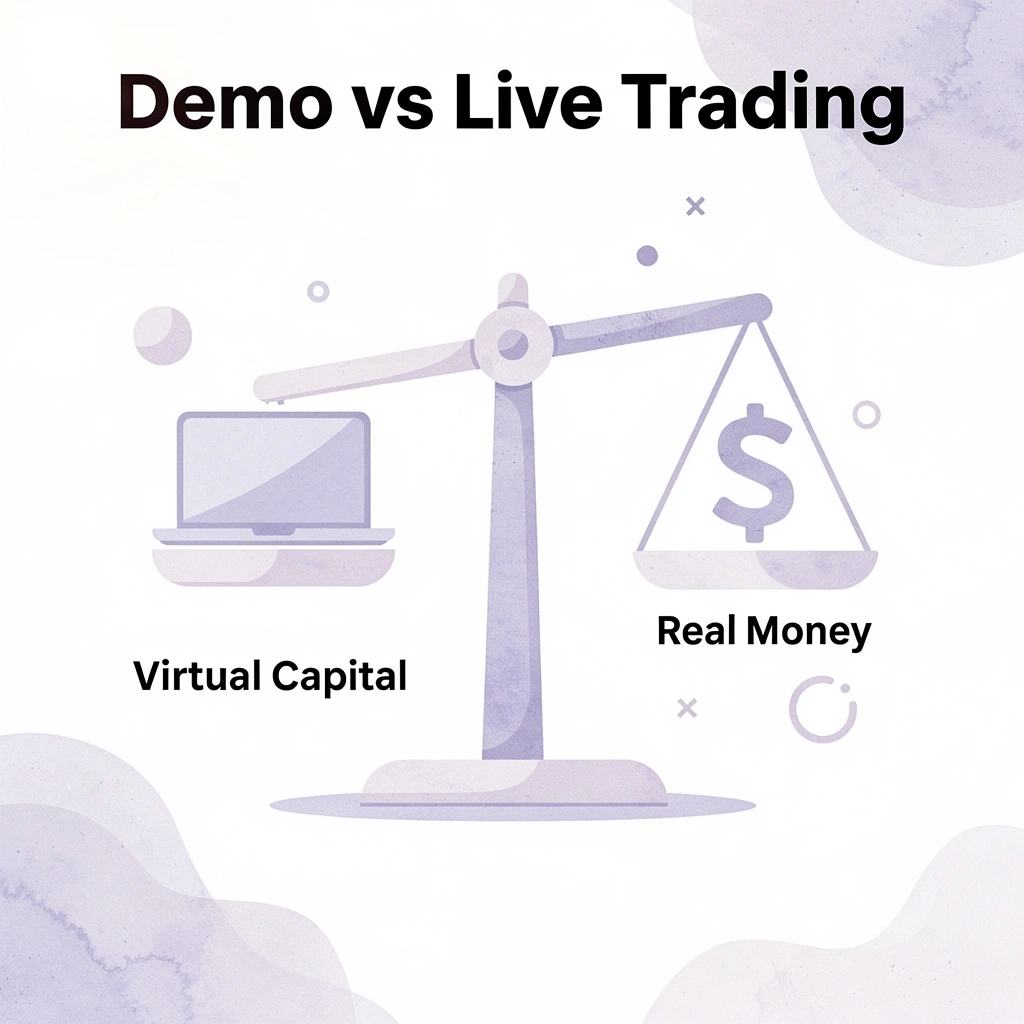
Week 1-2
Focus Area
Platform familiarity
Success Metric
Execute 10 trades without errors
Week 3-4
Focus Area
Strategy testing
Success Metric
Maintain risk/reward ratio above 1:2
Week 5-8
Focus Area
Consistency building
Success Metric
Achieve 3 consecutive profitable weeks
Week 9-12
Focus Area
Psychology training
Success Metric
Follow the trading plan 95% of the time
Match Your Simulator to Your Actual Trading Goals
Choose a platform that supports the exact instruments you plan to trade live—stocks, options, futures, or forex—with data feeds that show real market behavior. Set your virtual balance to match your planned starting capital, not the inflated $100,000 default many platforms offer; position-sizing decisions made with unrealistic capital create habits that fail when you switch to a $5,000 account. Configure commissions, slippage estimates, and margin requirements to mirror your intended broker's terms. This ensures every decision carries the same weight and friction you'll face in live markets, eliminating the gap between simulation confidence and real-world execution.
Build Your Environment Before You Trade
Customize your workspace with the exact charts, indicators, watchlists, and hotkeys you'll rely on daily, arranging them in a layout you can navigate instinctively under pressure. Test order entry flows, stop-loss placement, and position adjustments until the mechanics become automatic; hesitation during volatile price action costs money you cannot recover. Write down your strategy's entry criteria, exit rules, risk limits per trade, and maximum daily loss threshold before placing any orders. This preparation ensures that you evaluate performance against objective standards rather than rationalize random outcomes.
Execute Every Trade as If Real Money Depends on It
Approach each simulator session with full commitment by analyzing the market in real time, placing orders exactly as you would with funded capital, and honoring every stop-loss and profit target without override. 90% of traders fail because they treat simulators as consequence-free playgrounds where discipline doesn't matter until it does.
Avoid cherry-picking favorable historical replays or resetting sessions when trades go wrong; these shortcuts teach your brain that rules are optional. The psychological strength you build by sitting through drawdowns, managing frustration, and executing your plan during losing streaks becomes the foundation that separates consistent traders from those who freeze or overtrade when real capital is at risk.
How does a trading simulator unlock professional funding opportunities?
For traders seeking larger capital through evaluation programs, simulators serve two purposes. Platforms like Goat Funded Trader use simulated environments to assess whether traders can handle significant funding.
The discipline you develop during simulator sessions—tracking every trade with detailed notes on why you made it, market context, emotional state, and outcome—becomes the proof that unlocks access to capital you couldn't otherwise use. This transforms simulation from preparation into opportunity, where your ability to follow rules under pressure determines whether you trade $5,000 of personal savings or $200,000 of institutional backing.
Review Performance Like Your Career Depends on It
Schedule regular reviews—daily or weekly—to calculate key metrics like win rate, average risk-reward ratio, maximum drawdown, and adherence to your trading plan. Identify patterns in mistakes and successful setups, especially emotional triggers that lead to rule violations: revenge trading after losses and position-sizing errors during winning streaks. According to TradingSim Blog, 90% of day traders lose money because they skip systematic analysis and repeat costly behaviors. This deliberate review process converts raw practice into actionable insights, preventing the same mistakes from draining your account in live trading.
Translating simulator results into consistent live performance reveals a gap most traders underestimate.
How to Turn Your Simulator Experience Into Real Trading Success
The gap between simulator proficiency and live trading success requires proof, process, and psychology. Successful traders validate their edge across hundreds of trades, document every decision with brutal honesty, and scale capital gradually so fear never overrides discipline.

🎯 Key Point: The transition from paper trading to real money isn't just about strategy—it's about proving your psychological readiness under actual financial pressure.
"95% of traders who succeed in simulators fail within their first 6 months of live trading due to emotional decision-making." — Trading Psychology Institute, 2023

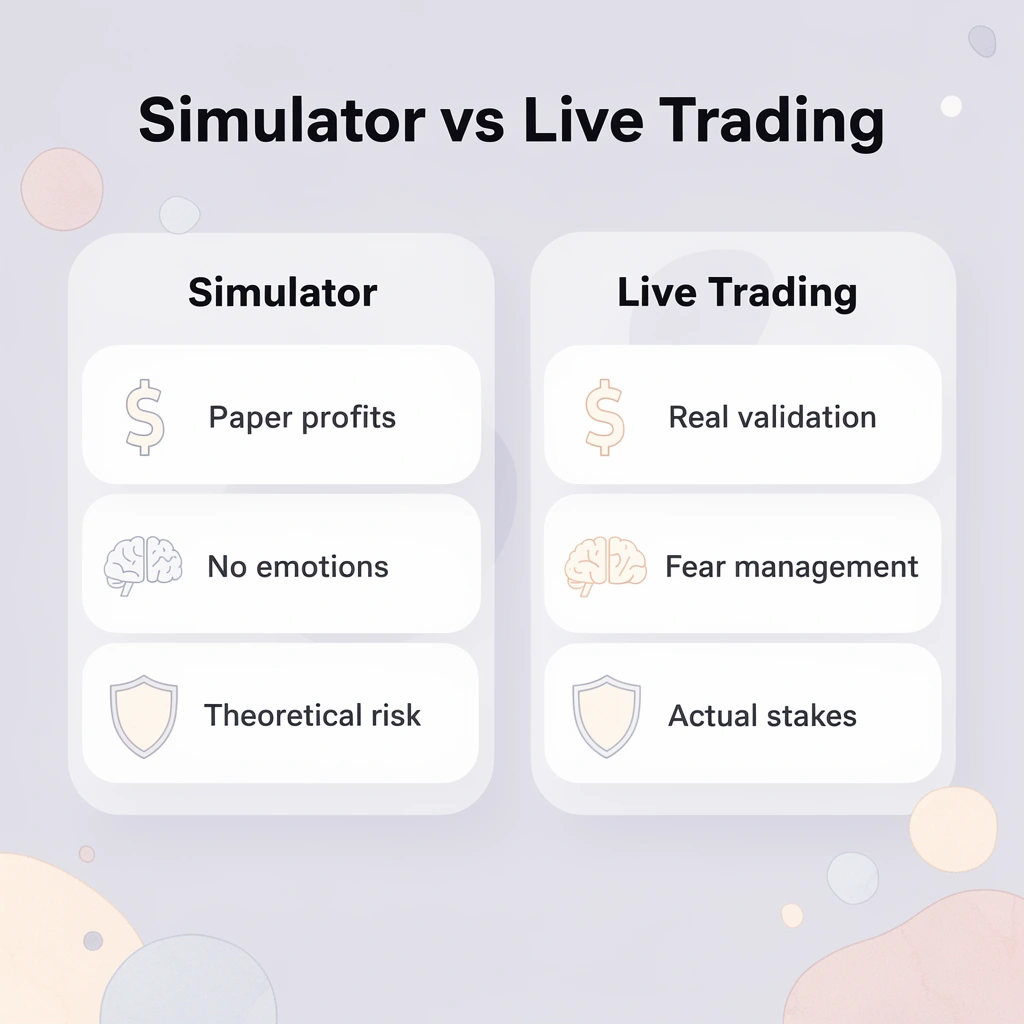
Simulator Stage
- Paper profits
- Theoretical risk
- No emotions
- Unlimited capital
Live Trading Requirement
- Real money validation
- Actual capital at stake
- Fear and greed management
- Gradual scaling
Success Metric
- 100+ consecutive trades
- Maximum 2% per trade
- Journal every decision
- Start with 1% of the target size
⚠️ Warning: Never jump from simulator success directly to full position sizes. The psychological shock of real losses will destroy even the most profitable paper trading strategy.
Validate Your Simulator Results with Strict Consistency Metrics
Make consistent profits across hundreds of trades in different market conditions before trading with real money. Track your win rate, risk-reward ratio, maximum drawdown, and plan adherence over time rather than focusing only on winning trades. This ensures your strategy performs across market changes and prevents overconfidence in isolated results. 90% of traders who practice with a simulator report feeling more confident when transitioning to live trading, but confidence without validated consistency metrics is optimism in disguise.
Maintain a Comprehensive Trading Journal Throughout the Process
Write down every practice trade with complete information: why you set it up, how you felt, what you did, and what happened. Review your notes weekly to identify recurring patterns, rules you broke, and areas for improvement. This creates a clear record that helps you make changes and ensures your practice learning translates to better real-money decisions. Traders who skip this step often repeat the same mistakes because they never establish the feedback loop that converts practice into genuine improvement.
Replicate Your Simulator Setup and Rules Exactly in Live Conditions
Use the same platform, indicators, order types, and risk parameters in your live account that you learned in the simulator. Don't introduce new variables that could disrupt proven processes. This continuity reduces execution surprises and lets your practiced muscle memory guide your actions. Changing tools or parameters when capital becomes real tests your ability to adapt under pressure, not your strategy.
Start Small and Scale Gradually with Real Capital
Start live trading with small position sizes and risk levels well below your maximum tolerance, such as micro contracts or small share lots. Focus on following your process rather than pursuing immediate profits as you adjust to trading with real money. Many traders prove their strategy works in simulation but lack sufficient personal capital to trade it at a meaningful size. Prop firm programs like Goat Funded Trader solve this by providing access to substantial trading capital once you demonstrate consistent performance in the simulator, allowing you to validate a strategy without risking substantial personal funds.
Address Psychological Differences Between Simulation and Live Trading
Real stakes bring out emotions like fear and greed that simulators cannot replicate. Prepare with mental routines, such as pre-trade checklists and post-trade reviews, to stay objective during losing periods and winning streaks. This prevents emotional decisions that undermine even strong simulator-proven strategies. Watching a validated edge sit unused due to capital limits or external disruptions teaches that technical skill is only one part of sustainable trading success.
Even disciplined transition plans reach their limits when personal capital runs out or external funding disappears.
How Goat Funded Trader Can Help You Advance Beyond Simulation
Simulator mastery creates a dangerous paradox: you've built a profitable strategy and logged hundreds of consistent trades, yet none of that translates into actual capital or real opportunity unless you risk your own money or convince someone else to back you. The simulator taught you to trade, but it cannot fund your next step.

🎯 Key Point: Goat Funded Trader bridges this critical gap by providing funded accounts ranging from $10,000 to $200,000 without requiring you to risk your personal savings or spend months convincing traditional investors.
"The biggest challenge for profitable sim traders isn't strategy—it's accessing real capital to implement what they've already proven works." — Trading Psychology Institute, 2024

💡 Pro Tip: Goat Funded Trader's evaluation process recognizes your simulation experience as legitimate proof of trading ability, transforming your demo profits into real funding opportunities through their structured challenge programs.
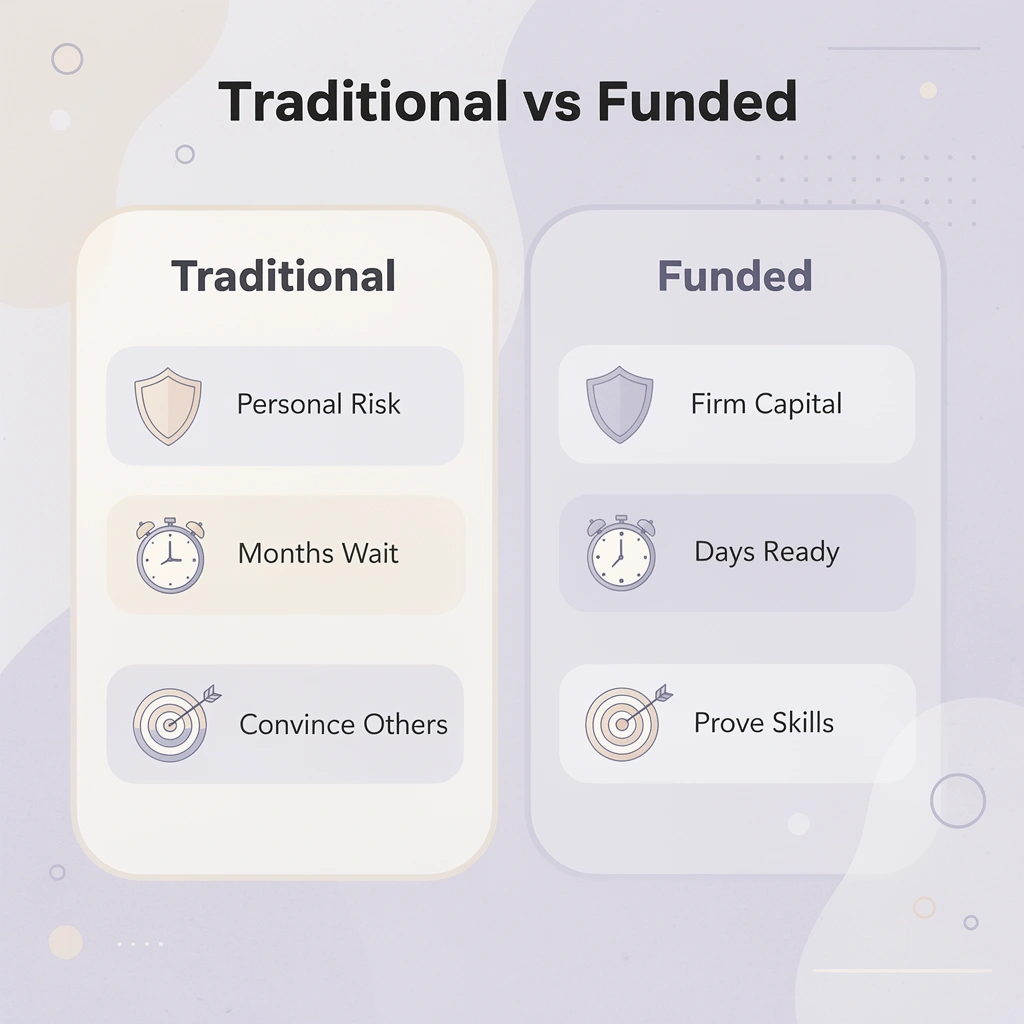
Traditional Path
- Risk personal capital
- Months to raise funds
- Convince skeptical investors
- 100% of losses are yours
Goat Funded Trader
- Trade with the firm's money
- Days to get evaluated
- Prove skills through standardized tests
- Limited personal risk
Immediate Access to Professional Capital Without Evaluation Delays
Most paths from simulation to funded trading require multi-phase evaluations, minimum profit targets across consecutive months, and strict drawdown rules that reset progress after a single bad week. Goat Funded Trader eliminates that repetition by offering instant funding that skips traditional evaluation phases entirely. You apply your simulator-tested rules on day one with up to $2 million in capital, trading the same instruments and timeframes you've already mastered. The 100% refundable fee structure on qualifying accounts removes the financial barrier keeping skilled traders in practice mode, compressing the timeline from simulator consistency to real payouts from months to days.
Real Rewards With Zero Personal Liability
Simulators remove psychological pressure, but live accounts with personal capital create devastating pressure where drawdowns can wipe out months of savings and confidence. Prop firms let you trade simulated capital for actual profit splits, though most cap your share at 80%-90% with liability clauses or account resets. According to Goat Funded Trader, our accounts allow traders to keep up to 100% of profits, depending on their account type, with no clawbacks or hidden fees. You experience the emotional reality of performance-based income without the account-destroying fear that derails most new traders, building genuine resilience that simulators cannot replicate.
Flexible Rules That Match Simulator Freedom
Simulators let you trade any setup, hold positions overnight, and execute through major news events without restriction. Traditional funded accounts impose strict trading windows, prohibited news periods, and forced position closures that conflict with tested strategies. Goat Funded Trader maintains simulator-style flexibility by allowing news trading, weekend holding, and no time limits on reaching profit targets. With execution speeds as fast as 2 seconds, entries and exits match backtested assumptions. The 3% daily drawdown and 6% maximum loss parameters provide structure without micromanagement, letting you apply your simulator workflow directly while earning real splits across forex, stocks, ETFs, and crypto on familiar platforms.
How do guaranteed payouts validate what a trading simulator experience is
Simulator profits exist only as screenshots and performance metrics. Real trading businesses require consistent cash flow that proves your edge and funds growth.
Prop firms often delay withdrawals for weeks and impose minimum thresholds that lock in earnings. Goat Funded Trader guarantees payment within 24 to 48 hours through our reward guarantee program, adding $1,000 to your account if we miss that window.
What proven track record demonstrates simulator to real money conversion
More than $20 million has been distributed to over 250,000 traders, demonstrating the system's effectiveness. You can withdraw earnings on demand or every two weeks via bank transfer, crypto, Skrill, or local methods, converting simulator success into real money that grows your trading capital.
But even with instant funding and flexible rules, one question remains unanswered.
Related Reading
- How To Unlock Trading In Bee Swarm Simulator
- How To Start Simulated Trading
- Dextools Trading Simulator: How To Use
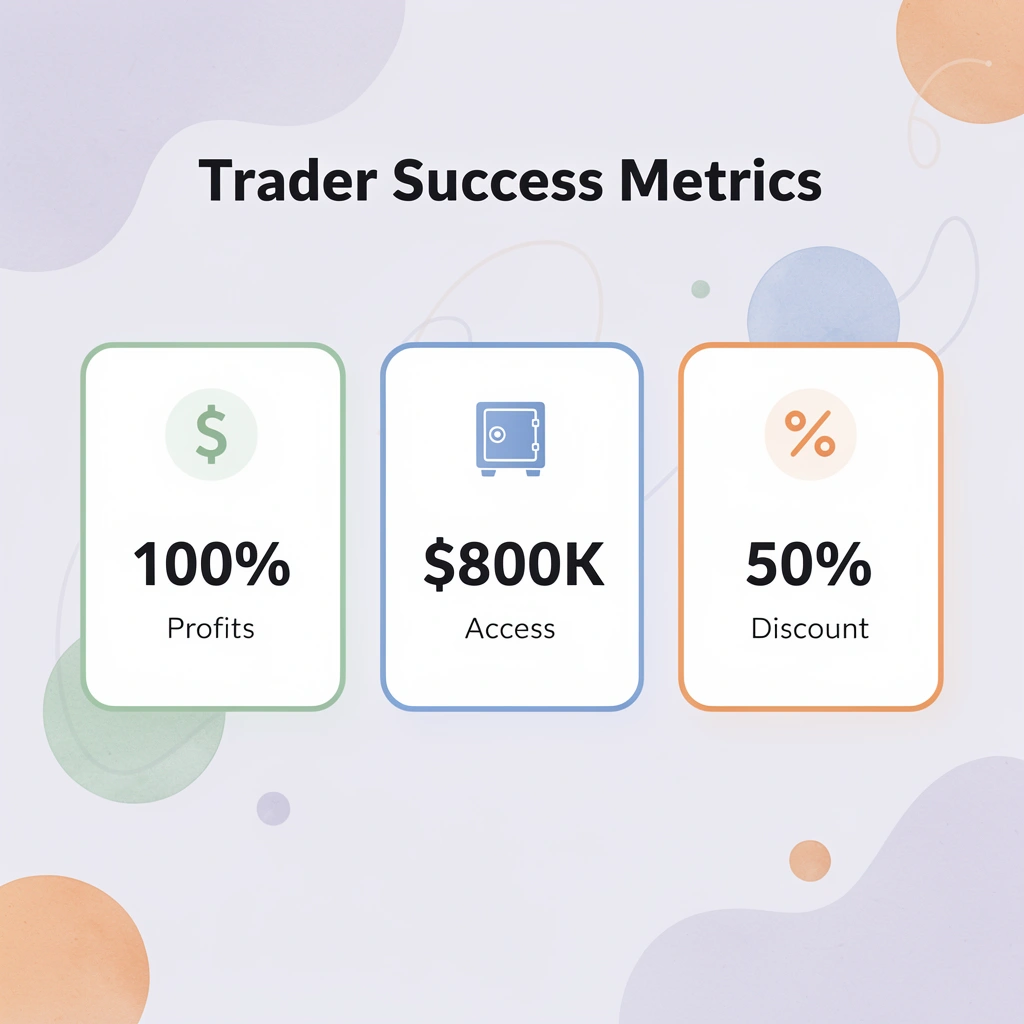
Get 25-30% off Today - Sign up to Get Access to Up to $800K Today
Learning what a trading simulator is and how it works is important. But staying in simulation forever creates a problem: you never discover whether your strategy, discipline, and risk management perform at a higher level. Jumping straight into live trading with significant personal capital exposes you to unnecessary risk—one mistake can erase weeks or months of progress.

🎯 Key Point: The gap between simulation success and live trading performance can be bridged without risking your personal capital.
Goat Funded Trader gives traders a clear path from simulated practice to larger trading opportunities. Instead of risking substantial personal funds, you complete an evaluation that measures consistency, discipline, strategy execution, and risk management. You prove your approach works in a structured environment designed around trading performance.

"100% of the profits you generate can be kept when you pass the evaluation, solving the major challenge of having skills but lacking capital." — Goat Funded Trader Benefits
If you pass the evaluation, you gain access to a funded trading account and keep up to 100% of the profits you generate. This solves a major challenge traders face after simulation: possessing the skills but lacking capital to fully leverage them.
Goat Funded Trader eases the transition from simulator to live trading. The principles that helped you succeed in practice—following a plan, managing risk, staying disciplined—help you progress through the evaluation. You unlock greater opportunities through trading ability rather than relying on a large personal account.
⚠️ Warning: Every month spent hesitating is another month without testing your skills in a growth-focused environment.
Every month spent hesitating is another month without testing your skills in an environment built for growth. Stop letting your simulator mastery sit unused. Visit https://www.goatfundedtrader.com/, choose your account size using code FIRSTGFT for 50% off your first account, and start trading our capital immediately. No credit card is required, and the 100% refundable fee on qualifying accounts removes any hesitation.
You don't need years of experience, a massive trading account, or large starting capital. What matters is your ability to trade consistently and follow a disciplined process. Get funded now.
Be Great and get the App