






How to Paper Trade on Webull: 7 Steps for Beginners
How to Paper Trade on Webull in 7 simple steps. Goat Funded Trader's complete beginner's guide to risk-free trading practice and skill building.
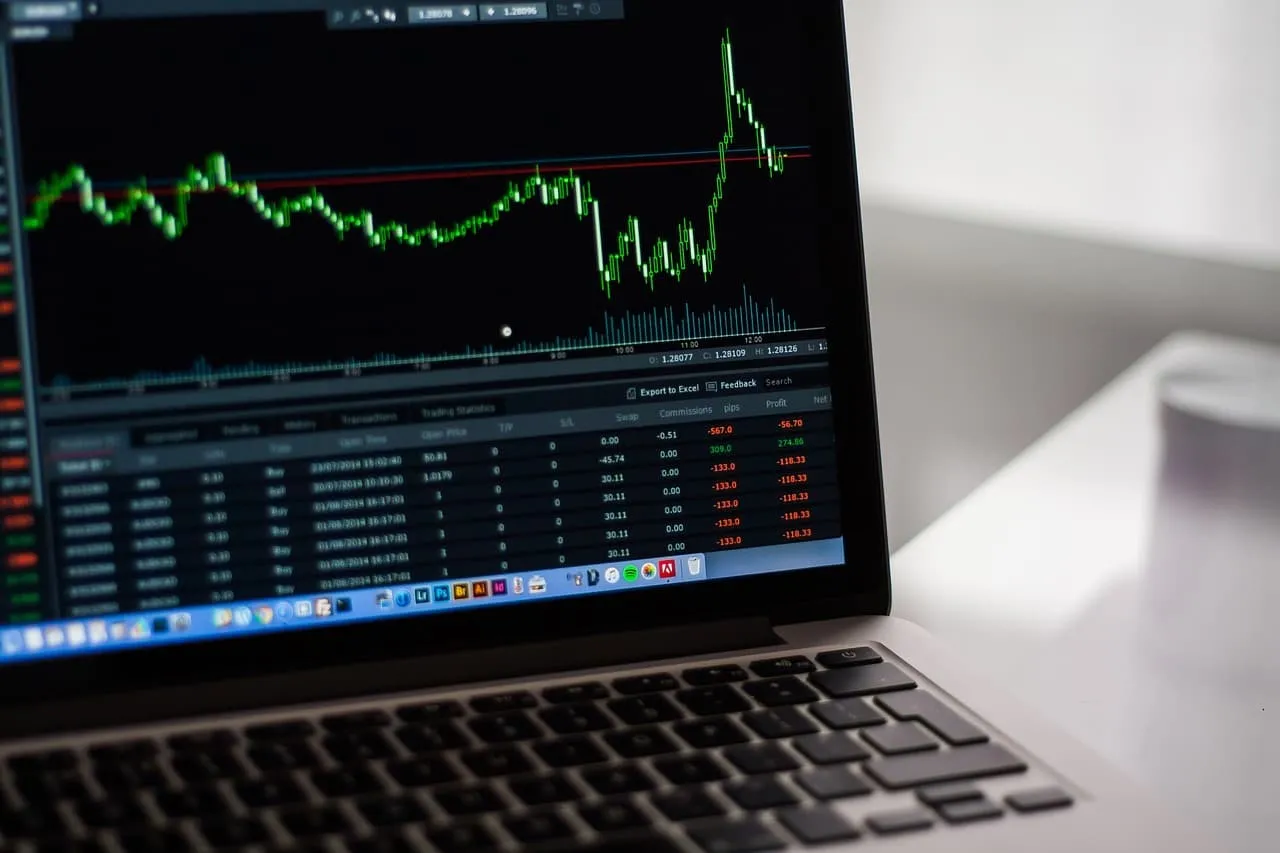

Webull's paper trading feature provides $100,000 in virtual cash for traders to practice buying and selling stocks and ETFs without financial risk. This simulation environment allows beginners and experienced traders alike to test strategies, learn platform mechanics, and build confidence before committing real capital. The platform replicates actual market conditions while eliminating the fear of losses that can cloud judgment during the learning process.
Paper trading serves as an essential stepping stone for traders who want to develop skills before accessing live markets. After mastering simulated trading, many traders seek opportunities to trade with institutional capital rather than their own funds. Successful paper traders can transition to evaluation-based programs offered by a prop firm, where they can potentially earn real profits while trading with provided capital.
Summary
- Paper trading provides simulated trading with real-time market data without risking actual capital, helping you build practical skills and confidence as you refine strategies free from monetary consequences. Modern platforms replicate full trading interfaces, including live charts, multiple order types, and position tracking, so your virtual portfolio reflects gains and losses exactly as they would in live conditions. This setup allows complete exploration of different approaches and platform mechanics before committing real money.
- Research published in the American Journal of Business Education found that 66 percent of participants achieved significant gains in investment knowledge after engaging with equity trading simulations. The deeper value lies in hands-on practice that builds muscle memory in order entry, risk calculations, and platform navigation, preventing costly mistakes when real money is on the line. Repeated exposure to emotional feedback loops reveals behavioral patterns before they cost anything, building instinctive responses that keep you disciplined when live positions swing against you.
- A study published in the Review of Finance by researchers at the University of Zurich and the University of Oxford found that participants who gained simulated experience made significantly better investment decisions than those who received information alone. Experience beats explanation because practice forces you to confront real decision points repeatedly until better choices become instinctive. The simulator captures execution flaws like entering trades too late, cutting winners too early, or ignoring stop-loss rules without financial consequences, giving you space to adjust before bad habits compound into significant losses.
- Consistency beats intensity in building trading skills, with daily one-hour practice sessions proving more effective than six-hour weekly marathons. Daily repetition builds muscle memory and pattern recognition faster than sporadic marathon sessions do, because it reinforces neural pathways through repeated exposure rather than overwhelming you with information. Reviewing key metrics such as win rate, average win-to-loss ratio, maximum drawdown, and adherence to your rules after each session or week reveals patterns in your execution and timing that guide strategic improvements.
- Webull provides virtual cash starting at $1,000,000 to execute trades in stocks, ETFs, options, and futures, with real-time quotes and identical order types available in live accounts. The simulator synchronizes seamlessly across desktop, web, and mobile applications, with no minimum deposit or funding requirement blocking entry, so you can start testing strategies the moment your account activates. This broad accessibility removes barriers that often delay practice and skill development, while unlimited virtual cash that resets or adjusts as needed supports extended testing sessions.
- Goat Funded Trader addresses the capital ceiling that limits paper trading success by providing simulated accounts of up to $2 million, with real profit splits once traders demonstrate consistent risk management, turning months of disciplined practice into actual bi-weekly withdrawals without personal financial risk.
What Is Paper Trading, and How Does It Work?
Paper trading is the practice of trading where you execute buy and sell orders using real-time market data without risking actual money. Modern platforms replicate full trading interfaces with live charts, multiple order types, and position tracking, so your virtual portfolio reflects gains and losses exactly as they would in real conditions. This builds practical skills and confidence while you refine your approach, free from money risk.

🎯 Key Point: Paper trading provides a risk-free environment to test trading strategies and learn market mechanics before committing real capital.
"Paper trading allows new traders to practice with real market conditions while eliminating the emotional pressure of financial loss." — Trading Education Research, 2024

💡 Example: A beginner trader uses paper trading to practice day trading strategies for 3 months, testing different entry and exit points on volatile stocks without losing actual money while building confidence and skill.
How Paper Trading Works
You open a paper trading account on a brokerage platform with a virtual starting balance. Charles Schwab provides $100,000 virtual cash in their simulators, though many platforms let you adjust this to match your planned real capital. You then analyze markets, select assets, choose order types such as market, limit, or stop-loss orders, and execute trades. The platform processes these orders against live or near-live prices, updates your positions, and calculates performance metrics in real time.
Setting Up Your First Paper Trading Account
Pick a trusted platform with strong simulation tools from established brokerages. Sign up or log in, enable paper trading mode with a simple toggle, and configure your fake balance and layout to match your real trading plan. Treat this setup as seriously as live trading: bad habits formed during practice will carry into real trading, where mistakes cost actual money.
Choosing Strategies to Test
Pick specific trading strategies that match your goals—day trading fast-moving stocks, swing trading based on chart patterns, or buying stocks for longer-term holds. Write down clear rules for when to buy, when to sell, position sizing, and risk management, such as risking no more than 1% of your virtual portfolio per trade. Apply these rules consistently across different market conditions to gather reliable data about what works best for your trading style. This discipline proves valuable in prop firm evaluation challenges, which reward traders who demonstrate strong risk management and adherence to rules before accessing real capital.
Executing Trades and Managing Positions
Enter trades based on your analysis, specifying quantity, order type, and protective stops. Monitor how slippage, spreads, and volatility affect results in real time. Manage open positions by adjusting stops, taking partial profits, or exiting according to your plan. Log every decision and its rationale to reveal patterns in your execution and timing.
Reviewing Performance and Analyzing Results
After each session or week, review key metrics: win rate, average win-to-loss ratio, maximum drawdown, and rule adherence. Identify what worked, where emotions or mistakes caused problems, and how market conditions affected results. Daily practice outperforms occasional long sessions because repeating trades builds muscle memory and helps you recognise patterns faster. Use this analysis to improve entry points, strengthen risk controls, and eliminate underperforming setups before trading with real money. Perfect paper trading results don't guarantee you'll have access to the capital you need to trade at a larger scale.
Does Webull Offer Paper Trading?
One bad decision with real money can wipe out weeks or months of savings. Jumping into live markets without practice turns every mistake into an expensive lesson. Webull offers paper trading, a simulated trading environment that mirrors live market conditions using virtual funds instead of real money.

🎯 Key Point: Paper trading allows you to test strategies and build confidence without risking your hard-earned capital.
"Paper trading is the foundation of successful trading education, allowing beginners to learn market dynamics without the emotional pressure of real financial loss." — Trading Education Research, 2024

💡 Tip: Use Webull's paper trading to practice different trading strategies and get comfortable with the platform's interface before committing real funds.
What Is Webull's Paper Trading Account?
Webull's paper trading account mirrors its real platform, with virtual cash starting at $1,000,000 to trade stocks, ETFs, options, and futures. It uses real-time quotes, the same order types, advanced charting tools, technical indicators, and position tracking under actual market conditions, letting you test strategies and learn the platform without risking your money.
Availability and Access to the Simulator
Anyone who signs up for Webull gets immediate access to the paper trading environment across desktop, web, and mobile applications with no minimum deposit or funding requirement. The simulator works smoothly across devices, allowing you to refine strategies on desktop during market hours and review performance on mobile afterward.
Core Features of the Paper Trading Environment
The simulator includes unlimited virtual cash, which resets during extended testing periods. Real-time data feeds, more than 60 technical indicators, and complete charting tools mirror the live platform. Order execution covers market, limit, stop, and conditional types, with accurate price action and slippage simulation, and supports complex strategies such as options spreads, futures contracts, and multi-leg positions.
Strategy Testing Capabilities
Traders use paper environments to test technical setups and refine parameters based on performance metrics. This focused practice identifies strengths and weaknesses before risking actual money. Mastering simulated environments in programs like prop firm with Goat Funded Trader demonstrates responsible capital management and positions you to access funded accounts without risking your own savings.
Platform Mastery and Tool Familiarization
The simulator gives you complete access to Webull's charting suite, watchlists, alerts, and analysis features without pressure or consequence. Repeated sessions help you build instinctive skill with navigation shortcuts, custom layouts, and indicators. This mastery eliminates costly errors caused by unfamiliarity with the platform during live trading, where hesitation or misclicks can have real financial consequences.
But knowing Webull offers paper trading doesn't tell you whether you need it.
Related Reading
Who Should Use the Webull Paper Trading Account?
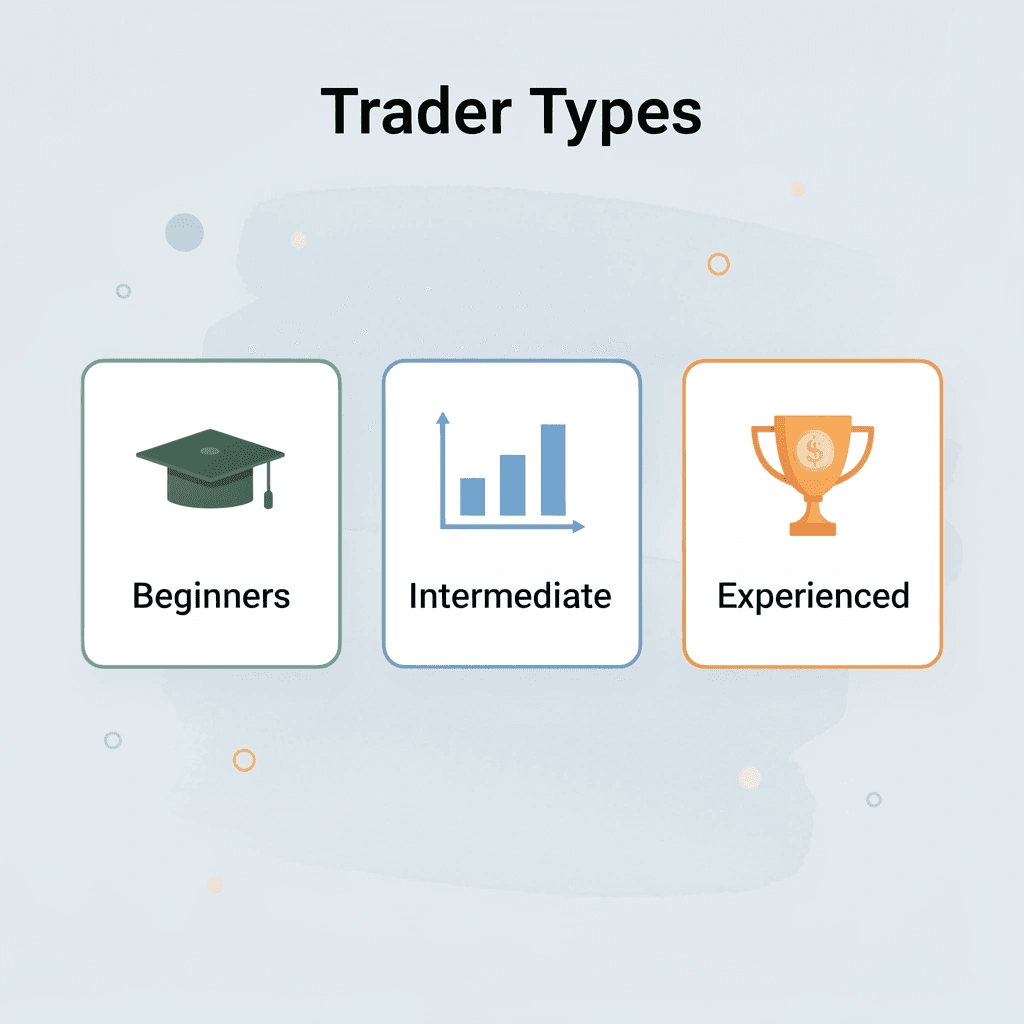
Webull's paper trading simulator helps traders of all skill levels. Whether you're placing your first practice order or managing complex options strategies, the platform provides a safe space to improve your trading skills, test new strategies, and build the discipline that separates successful traders from those who lose their accounts.

🎯 Key Point: Paper trading is essential for beginners who need to learn the basics without risking real money, but it's equally valuable for experienced traders testing new approaches.
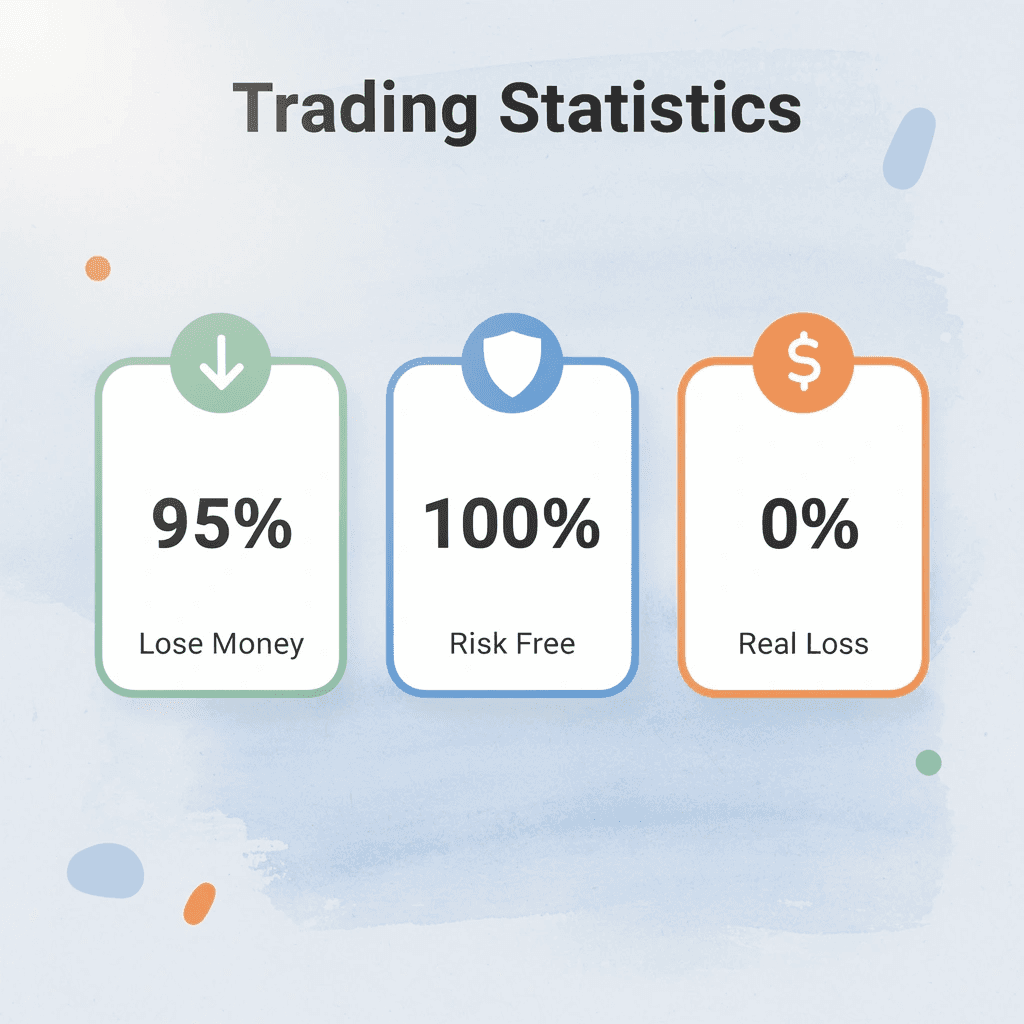
"95% of day traders lose money in the markets, making risk-free practice environments like paper trading simulators crucial for developing profitable strategies." — Financial Industry Research, 2023
⚠️ Warning: Even experienced traders should use paper trading when exploring unfamiliar markets or testing high-risk strategies – real money should never be the testing ground for unproven approaches.
Why do beginners need foundational mastery through paper trading?
New traders need hands-on practice beyond videos and articles. Webull's simulator provides $1,000,000 in virtual cash to test market orders versus limit orders, experiment with different stop-loss placements, and observe how position sizes affect gains or losses. According to research published in the American Journal of Business Education, 66 percent of participants gained significant investment knowledge after using equity trading simulations. You build muscle memory in order entry, risk calculations, and platform navigation, preventing costly mistakes when real money is at stake.
How does paper trading prepare you for psychological challenges?
The simulator shows beginners what it feels like to watch positions fluctuate. You'll feel the urge to close winning trades too early or hold losing ones too long, even with fake money. Repeated exposure to these moments builds instinctive responses that keep you disciplined when live positions swing against you and fear threatens your plan.
How do intermediate traders identify strategy weaknesses?
Intermediate traders often stall in their progress because strategies that worked under one market condition fail when volatility shifts or trends reverse. The simulator tests new setups, adjusts entry and exit rules, and tracks performance metrics—win rates, average gains, and maximum drawdowns—across different scenarios. You might run a momentum strategy during earnings season, then switch to mean reversion during low-volume periods, gathering data on what performs reliably versus what worked by luck. This iteration reveals which approaches hold up under varied conditions and which collapse when the market shifts.
How does paper trading on Webull help fix execution flaws?
The deeper value lies in finding execution flaws that drain profitability. You might discover you're entering trades too late, cutting winners too early, or ignoring stop-loss rules when positions move against you. The simulator captures these patterns without incurring financial consequences, allowing you to adjust before bad habits compound into significant losses.
A study published in the Review of Finance by researchers at the University of Zurich and the University of Oxford found that participants who gained simulated experience made significantly better investment decisions than those who received information alone. Practice forces you to face real decision points repeatedly until better choices become instinctive.
How do experienced traders test new strategies safely?
Experienced traders use the simulator to test advanced strategies or new investment types without affecting their real trading results. You might test complex options trades, futures contracts, or conditional orders that require exact timing and execution. The platform's real-time data and order routing replicate live conditions, helping you test new approaches under actual market pressure and providing the information needed to decide whether to deploy real capital.
How does paper trading help when switching trading styles?
The simulator supports traders moving between different styles: swing trading stocks, day trading options, or adding futures to a portfolio. Each change requires new risk parameters, different position sizing, and adjusted mental frameworks. Testing these changes with virtual capital improves your approach before using real money, shortens the learning curve, and prevents costly mistakes. Research on stock market simulations shows that repeated exposure strengthens learning outcomes beyond traditional instruction alone.
What opportunities exist after mastering paper trading?
Many traders who master Webull's simulator eventually seek environments that reward proven discipline with real capital. Platforms like prop firms, such as Goat Funded Trader, offer funded accounts of up to $2 million, enabling skilled traders to test strategies without risking their own savings. The risk management and execution habits refined through paper trading become the foundation for accessing institutional-level capital. Proving you can trade well in simulation, however, doesn't guarantee you're ready for the psychological shift that real money brings.
Related Reading
- Does Fidelity Have a Trading Simulator
- TradingView Paper Trading Simulator: How To Use
- How To Paper Trade On Webull
- Why Would I Want To Use Warrior Trading Simulators
How to Paper Trade on Webull in 7 Steps as a Beginner
Paper trading lets beginners experience financial markets without risking real money. Webull's paper trading feature simulates live market conditions using virtual funds, allowing you to learn how orders work, test strategies, and build confidence before trading with actual capital.

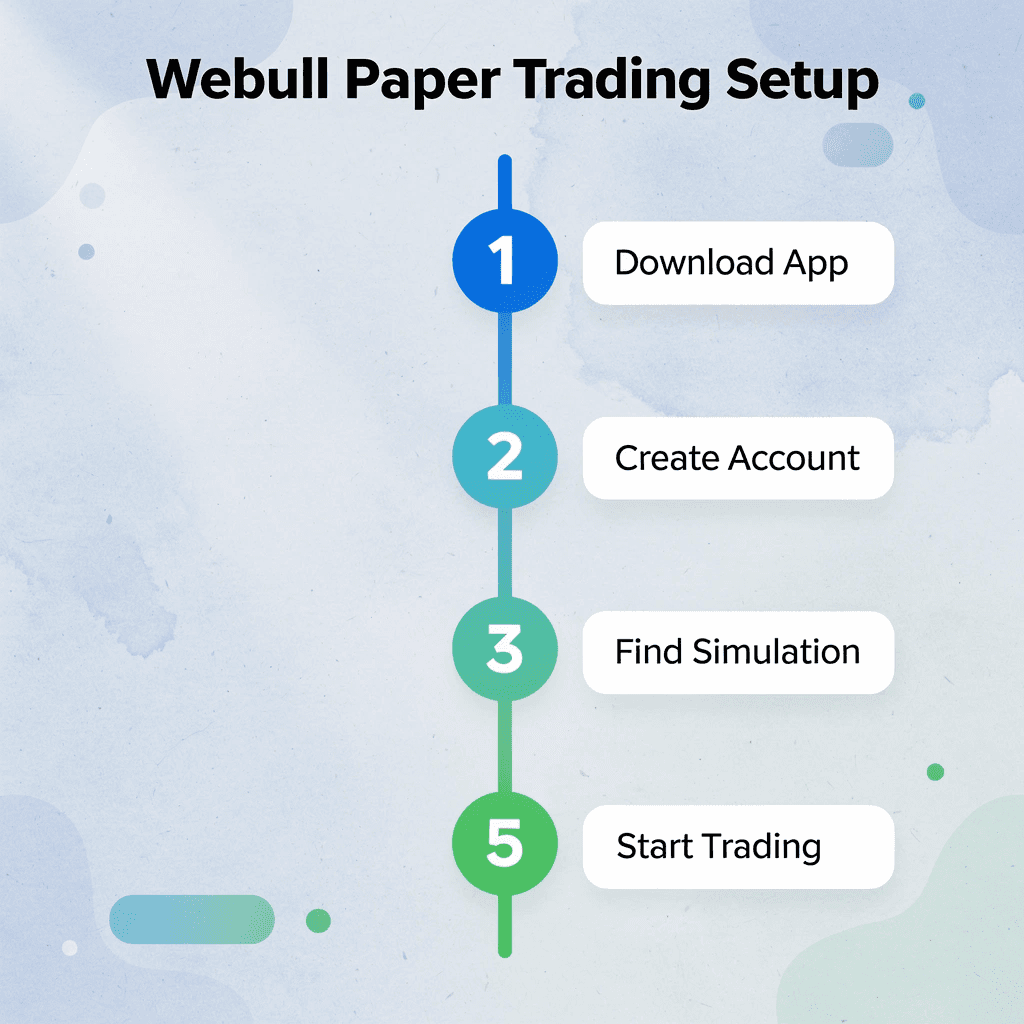
- Step 1: Download the Webull app
- Key focus: Account setup
- Step 2: Create a free account
- Key focus: Verification process
- Step 3: Navigate to paper trading
- Key focus: Find simulation mode
- Step 4: Set virtual portfolio
- Key focus: Choose a starting amount
- Step 5: Practice placing orders
- Key focus: Learn order types
- Step 6: Monitor positions
- Key focus: Track performance
- Step 7: Analyze results
- Key focus: Review and improve
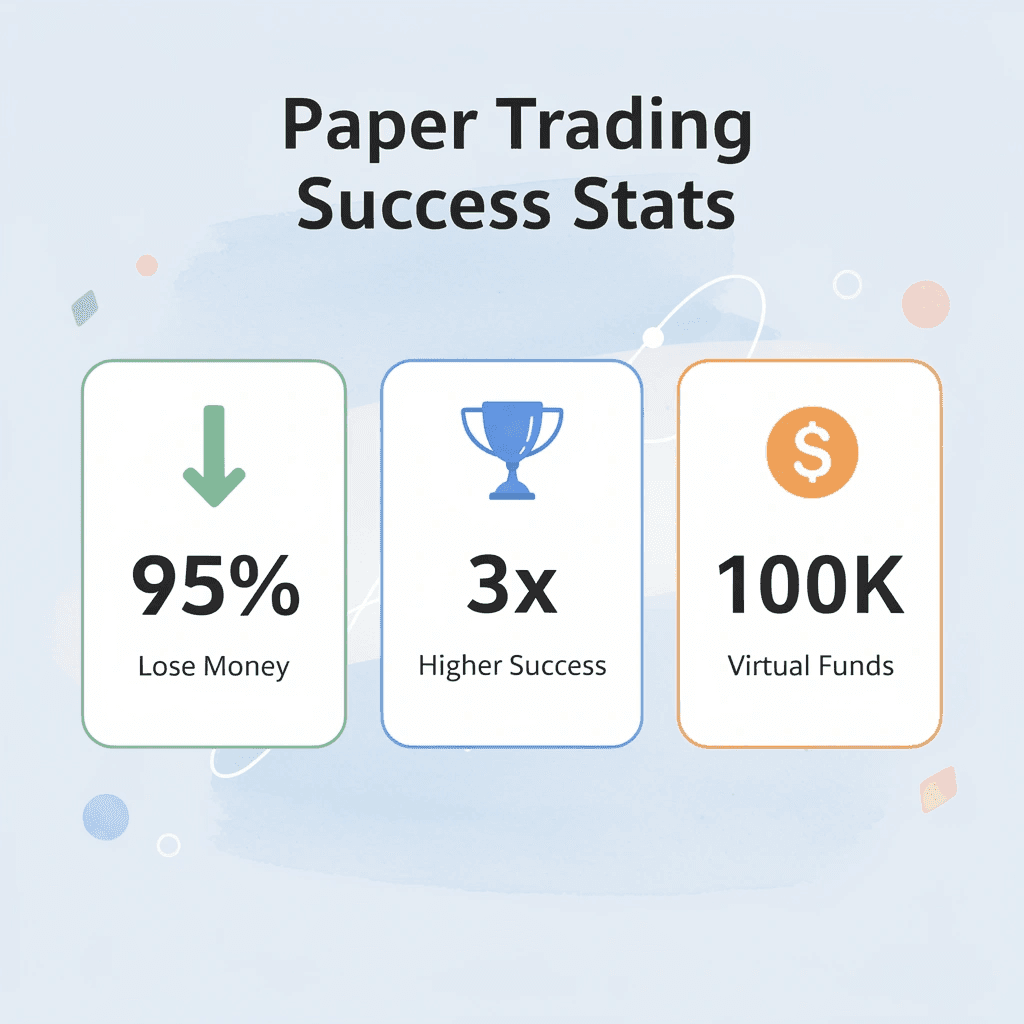
"95% of new traders lose money in their first year, but those who practice with paper trading first have 3x higher success rates when transitioning to real money." — Financial Trading Research Institute, 2023
🎯 Key Point: Paper trading is essential for beginners because it eliminates the emotional pressure of losing real money while you learn market mechanics and develop trading discipline.
💡 Tip: Start with $100,000 in virtual funds on Webull to simulate realistic position sizes and get comfortable with the platform's order execution and portfolio management tools before risking any real capital.
Step 1: Create Your Webull Account
Visit the Webull website or download the mobile app from the App Store or Google Play. Provide your email address or phone number, create a secure password, and complete identity verification (U.S. users must submit identification details). This unlocks all platform features, including paper trading, without requiring an initial deposit.
Step 2: Log In and Navigate to the Platform
Log into the Webull mobile app or desktop platform using your login credentials. Explore the main dashboard, which includes sections for markets, watchlists, and account settings. Familiarizing yourself with the interface now ensures you can easily switch between real and simulated trading modes later.
Step 3: Switch to Paper Trading Mode
In the app, go to Menu > More > Paper Trade. On desktop or web, look for the Paper Trading icon (usually a dollar sign). This activates your practice account with simulated funds (typically $1,000,000) that you can adjust. Confirm you are in paper trading before proceeding.
Step 4: Explore the Trading Interface and Tools
Look at key features such as live price quotes, advanced charts with 60+ technical indicators, watchlists, and order types (market and limit). Set up price alerts and practice charting to analyze opportunities. This hands-on practice builds foundational knowledge of Webull's tools and simulates realistic decision-making without pressure.
Step 5: Research and Select Your First Asset
Use Webull's search function to find stocks, ETFs, or other instruments by ticker symbol. Review available research resources, news feeds, and charts to evaluate your choice based on your beginner strategy, perhaps focusing on well-known companies for simplicity. Develop disciplined habits, such as understanding market trends and avoiding impulsive decisions, which are crucial for long-term success.
Step 6: Place Your First Simulated Trade
With your chosen asset selected in paper trading mode, tap the trade button to open the order ticket. Choose an order type: market order for immediate execution at the current price, or limit order to buy or sell only at your specified price. Input the number of shares or contracts, review the estimated cost against your virtual balance, and submit. This mirrors real trading, helping you understand execution mechanics, slippage in volatile conditions, and how order types affect outcomes without monetary risk.
Step 7: Monitor, Manage, and Analyze Your Trades
After submitting orders, go to the positions or open orders section in your paper trading account to track performance using Webull's advanced charts, news feeds, and performance metrics. Regularly review your virtual portfolio for gains or losses, close positions as needed, and use the platform's journaling or export features to document trades for later analysis. This builds important habits: discipline, emotional control, and strategy refinement, helping you identify what works, adjust approaches based on market behavior, and prepare for live trading.
How to Turn Your Webull Paper Trading Experience into Real Trading Success
Paper trading gives you a safe place to learn, but real success requires applying what you learned to actual markets. The challenge isn't making money in a demo account—it's avoiding the mistakes that occur when real money brings fear, greed, and pressure. Turning your Webull demo trading experience into real trading success requires structure, discipline, and a clear plan.
🎯 Key Point: The transition from paper to real trading is where 90% of traders fail—not because of strategy, but because of emotional management.
⚠️ Warning: Don't enter real trading without a risk management plan. Many traders who succeed in paper trading lose their first $1,000-$5,000 in real markets due to emotional decision-making.
"The difference between paper trading and real trading isn't technical—it's 100% psychological. Your strategy might be perfect, but your emotions will test every rule you've learned." — Trading Psychology Research, 2023

Treat Demo Sessions with Real-Money Discipline
Treat every practice trade exactly like you would with real money by using the same risk rules, position sizes, and daily limits. This habit prevents the common problem where practice wins feel easy, but real losses trigger emotion and rule-breaking. Sticking to your plan during practice strengthens your decision-making when you trade with real money.
Maintain a Detailed Trading Journal
Write down every virtual trade with reasons for entering and exiting, what the market was doing, how you felt, and what happened. Review your entries weekly to find patterns in what worked and what didn't. This reveals hidden problems in your execution or strategy that real trading amplifies. By doing this, you build a data-driven foundation for making changes before risking real money.
Validate Strategies Across Market Conditions
Test your approaches in the simulator across different volatility regimes, news events, and session types. Gather dozens of trades per setup to establish reliable metrics like win rate and risk-reward ratios. This validation ensures your methods hold up beyond favorable conditions.
Start Small When Funding Your Live Account
Start live trading with a small deposit and use position sizes one-quarter to one-third smaller than those in your demo account. This approach lets you experience real emotional dynamics without excessive risk. As your performance matches your simulated track record, gradually increase position sizes to build confidence.
Implement Ironclad Risk Management Rules
Set and enforce strict risk limits for each trade, daily loss caps, and overall drawdown thresholds from your first live session. These boundaries protect your account during the psychological adjustment period and prevent small errors from escalating into account-threatening losses.
Conduct Regular Performance Reviews
Compare your live results against demo benchmarks weekly or monthly, focusing on your plan rather than short-term profits. Analyze differences in trade execution, timing, or psychology, then return to the simulator to address specific weaknesses. This iterative process accelerates improvement.
Leverage Prop Firm Funding
Once you demonstrate consistent profitability with your own money on Webull, you can scale by accessing larger accounts from prop firms. These companies test your skills through practice challenges and provide real capital if you pass their assessments. This enables you to trade larger amounts while managing risk effectively. Goat Funded Trader is an excellent choice, offering clear rules and rapid funding options that reward traders who follow the plan.
How Goat Funded Trader Helps Traders Scale Beyond Paper Trading on Webull
You've mastered Webull's simulator with consistent gains and sharp execution. But demo profits don't translate to real wealth, and your personal account balance limits how far proven strategies can grow. This is where most traders get stuck, caught between simulation success and meaningful capital.
🎯 Key Point: The gap between paper trading success and real capital growth is where most traders plateau - but it doesn't have to be permanent.

Goat Funded Trader bridges this critical gap by providing funded accounts that let you trade with real capital while earning profit splits that reward performance. Instead of being limited by your personal savings, you can scale proven strategies with accounts ranging from $10,000 to $200,000 or more. This transforms your Webull simulation skills into actual income-generating trades.
"The difference between successful traders and everyone else isn't strategy - it's access to sufficient capital to make those strategies profitable." — Trading Psychology Institute, 2023

💡 Tip: Your Webull paper trading track record becomes your application strength when applying for funded accounts - document those consistent wins.
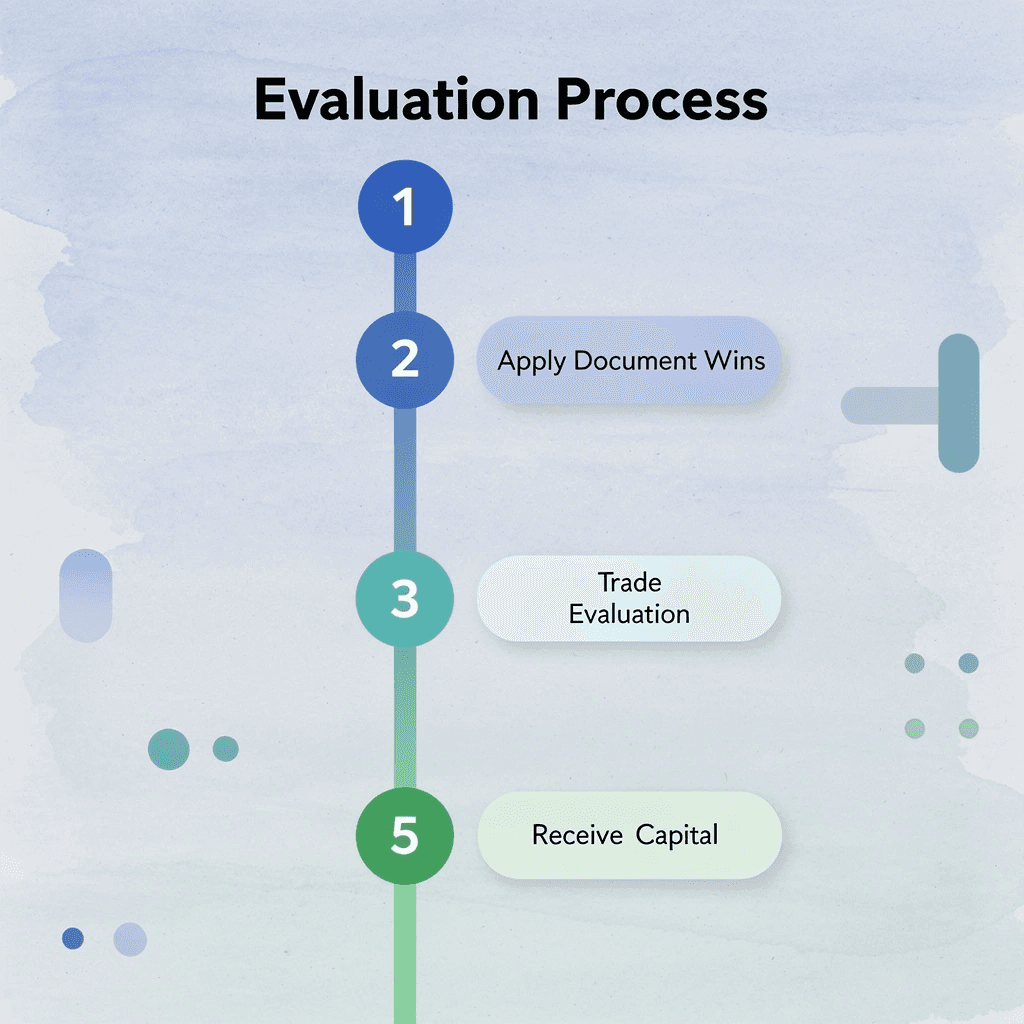
The evaluation process involves demonstrating consistent profitability and risk management over a 30-60 day period. Once you pass, you receive real capital to trade with, keeping 70-90% of profits while the firm provides account funding. Your $500 personal account limitations disappear, replaced by professional-level capital that matches your proven abilities.
- Webull Paper Trading
- Capital limits: Unlimited virtual funds (simulated money)
- Profit potential: $0 real profit
- Risk level: Zero financial risk
- Personal Trading Account
- Capital limits: Limited to your own savings
- Profit potential: Limited by available capital and performance
- Risk level: Full personal financial risk
- Funded Trading Account
- Capital limits: Typically $10,000–$200,000+ provided by a prop firm
- Profit potential: Usually 70–90% of generated profits
- Risk level: Primarily the firm's capital is at risk, subject to firm rules and loss limits
⚠️ Warning: Don't jump into funded trading without first proving consistent profitability in your paper trading environment - the evaluation process requires demonstrated skill, not just ambition.
Breaking Through the Capital Ceiling
Webull's paper account provides $1,000,000 in virtual funds that disappear when you close the app, and you cannot withdraw gains or exceed position sizes based on your actual savings. Goat Funded Trader offers simulated capital accounts up to $2 million after demonstrating steady risk management. Trade their capital using setups refined on Webull: an 8% monthly return converts to real profit, splitting to $16,000 instead of hypothetical gains.
Turning Simulated Discipline Into Real Payouts
Practice trading masks emotional control problems that real trading exposes. Goat Funded Trader addresses this with clear rules: 3% daily trailing drawdown and 6% maximum loss limits, plus Goat Guard protection preventing single mistakes from ending your opportunity. You build discipline through Webull practice while making real bi-weekly withdrawals, eliminating personal financial risk. According to Goat Funded Trader CEO, The Founder, traders can reach their first payout in as little as 15 days and one hour.
Validating Strategies With Accountability
Webull's simulator lets you test endlessly without consequences, but that freedom removes the accountability that separates profitable systems from lucky streaks. Goat Funded Trader maps your Webull-honed strategies onto our platform with real reward incentives, flexible rules allowing news trading and weekend holding, and no time pressure. You iterate at your own pace with profit splits climbing to 100% and on-demand payouts within 24 to 48 hours. Your proven approach either delivers consistent withdrawals or reveals weaknesses before you risk personal capital.
Building a Scalable Trading Career
Most traders hit a ceiling when personal funds run out, or emotional pressure from real losses disrupts their process. Goat Funded Trader eliminates both barriers with 100% refundable evaluation fees, reward guarantees that compensate you if payouts are delayed, and a scaling program that grows accounts from initial capital to $2 million as you hit consistency targets.
You apply the same technical analysis, position sizing, and order execution practiced on Webull, but within a structure that rewards discipline with increased capital allocation, higher profit shares, and leverage up to 1:100 on MT5's lightning-fast execution. This creates a clear progression from demo proficiency to sustainable income, where your edge compounds through larger positions rather than stalling at your savings limit. Most traders assume the hardest part is learning to trade profitably. What they discover later is that accessing the capital to make those skills matter requires entirely different proof.
Get 25-30% off Today - Sign up to Get Access to Up to $800K Today
You've practiced the discipline. You've learned to manage virtual positions, set stop losses, and stay calm when a trade moves against you. But paper trading doesn't pay rent. The gap between simulation and opportunity isn't about skill—it's about access to capital that rewards what you've built.

Goat Funded Trader gives you up to $2 million in simulated capital with real profit splits. Trade our money, follow clear rules like 3% daily and 6% maximum loss limits, and keep up to 100% of your earnings. No personal risk or savings account required. Use code FIRSTGFT for 50% off your first account, get funded instantly with no credit card required, and request your first withdrawal in 24 hours. If we're late, we add $1,000. Join 250,000+ traders turning practice into paychecks.
Related Reading
- How To Unlock Trading In Bee Swarm Simulator
- How To Start Simulated Trading
- Dextools Trading Simulator: How To Use
Be Great and get the App