






Simulated Forex Trading: A Complete Beginner's Guide
Simulated Forex Trading guide for beginners by Goat Funded Trader. Learn risk-free trading strategies and build confidence before real markets.


Aspiring currency traders need a way to master forex markets without risking their own capital. Learning how to paper trade on Thinkorswim provides access to a powerful platform for practicing strategies with virtual money and building the decision-making skills that separate profitable traders from those who burn through accounts. The platform allows traders to execute demo trades and develop discipline before transitioning to live markets.
While Thinkorswim offers solid paper trading functionality, structured evaluation programs provide an even better path forward for serious forex traders. These environments offer realistic trading conditions where traders can prove their skills and access funding once they demonstrate consistent profitability, making the transition from practice to professional trading through a prop firm.
Summary
- Simulated forex trading lets traders execute currency trades in live market environments using virtual capital, experiencing real price movements, spreads, and volatility without financial risk. Most platforms provide demo accounts with $50,000 to $100,000 in virtual funds linked to real price feeds, allowing users to test strategies across different market sessions and build pattern recognition through focused practice. Quality simulators stream the same data feeds brokers use for real accounts, ensuring traders face genuine execution delays and slippage rather than idealized conditions that don't exist in live markets.
- Industry data show that 90% of forex traders lose money, underscoring why dedicated simulation practice matters more than casual experimentation. Traders who approach demo accounts with the same risk management rules they'll use live, tracking every trade in a journal and measuring success by strategy adherence rather than individual wins, build the mental framework that separates sustainable performance from early burnout. Without this disciplined approach, simulation becomes entertainment rather than skill development.
- Experienced traders extract more value from simulators than beginners because they know exactly what to test. Veterans use these platforms to validate new strategies, refine execution under pressure, and rebuild discipline after drawdowns without risking capital. One trader might test a modified breakout filter across 200 replayed sessions in a weekend, gathering data that would take months to accumulate in real time, revealing hidden flaws in timing or position sizing before they surface as costly live losses.
- Effective simulation demands structure rather than aimless practice. Each session should target one specific skill, whether testing a breakout entry rule, mastering trailing stop adjustments, or executing three consecutive trades without revenge impulses. Traders who practice with inflated demo balances or reckless position sizes develop muscle memory for decisions they can't afford later, which explains why 90% of traders fail within their first year when they skip focused testing phases and deploy untested strategies with real capital.
- The transition from simulation to live trading requires absolute consistency in approach, applying the exact trading plan validated in demo accounts without modifications. Small personal accounts often force compromises that contradict simulator training, where traders practice proper position sizing on $100,000 demos, then squeeze those same strategies into $3,000 live accounts, where one standard lot represents unacceptable risk. This mismatch between practice conditions and live execution creates the psychological friction that derails otherwise capable traders.
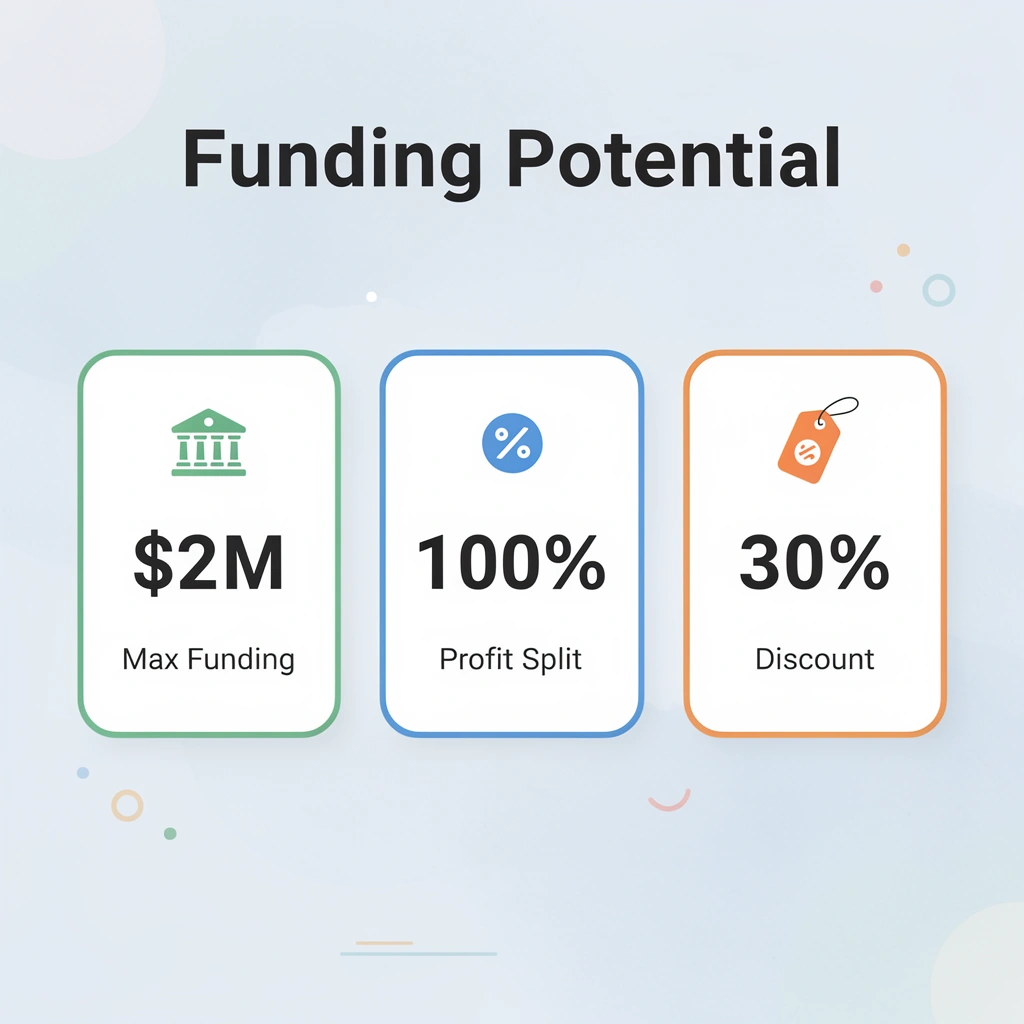
- Goat Funded Trader addresses this gap by evaluating traders through simulated challenges and providing funded accounts of up to $2 million, with profit splits up to 100%, enabling proven simulation performance to translate directly into professional trading income without requiring personal capital or account size compromises.
What Is Simulated Forex Trading, and How Does It Work?
Simulated forex trading lets you execute currency trades in a live market environment using virtual capital. You analyze charts, place orders, manage positions, and experience real price movements, spreads, and volatility without financial risk. Your decisions, timing, and emotional responses are tested as if real funds were at stake.

🎯 Key Point: Demo trading provides identical market conditions to live trading, including real-time pricing, execution delays, and market slippage – the only difference is using virtual money instead of actual capital.
"Practice trading allows new traders to develop skills and confidence before risking real money, with studies showing that consistent demo practice can improve trading performance by 25-40%." — Trading Education Research, 2023
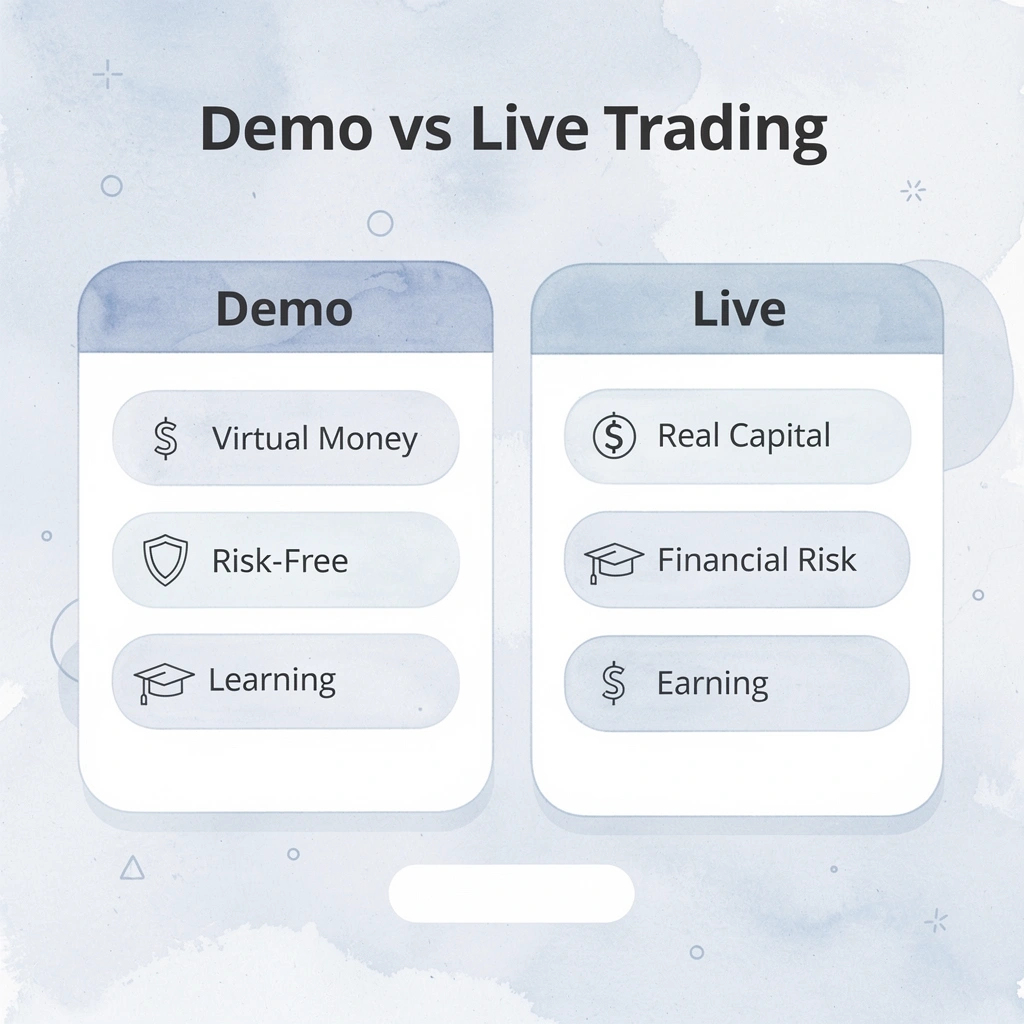
💡 Example: When you place a buy order for EUR/USD at 1.0850 in a demo account, you'll see the same bid-ask spread, experience identical market volatility, and face the same timing challenges as live traders – but your $10,000 virtual balance lets you learn without financial consequences.
How do you set up simulated forex trading accounts?
Most traders start by opening a demo account with a broker that provides virtual money, typically $50,000 to $100,000, connected to live or historical price data. You select currency pairs, set leverage, place market or limit orders, and watch positions update in real time based on actual spreads and order fills. Some platforms offer replay features that let you pause, rewind, or accelerate through sessions, compressing weeks of market data into hours of focused practice.
How does simulated forex trading replicate real market conditions?
When you place a simulated trade, the platform processes your order against current bid-ask spreads and liquidity conditions exactly as a live account would. Profits and losses adjust your virtual balance immediately, reflecting slippage during news events, rollover considerations, and execution delays during volatility spikes.
Quality simulators stream the same data feeds brokers use for real accounts, so you experience genuine market behavior rather than smoothed or idealized conditions. You test strategies across London, New York, and Asian sessions, adapting to liquidity shifts and understanding how different timeframes respond to economic releases.
Why do traders struggle with discipline in simulation?
Many traders fail to treat simulation seriously enough to develop real discipline. Reckless positions feel consequence-free, but that habit becomes dangerous in live trading. According to regulatory disclosures and broker data, approximately 72% to 85% of retail investor accounts lose money when trading CFDs, underscoring the importance of dedicated simulation practice.
Traders who apply the same risk management rules they'll use in live trading, track every trade in a journal, and measure success by adherence to strategy rather than individual wins build the mental framework that separates sustainable performance from early burnout.
How does simulated forex trading bridge the gap to professional capital?
Traditional simulation stops at skill development, leaving traders to fund their own accounts once they prove consistent profitability. This gap between demo success and live capital creates a barrier where trading ability matters less than personal wealth.
Goat Funded Trader removes that obstacle by turning simulated trading into a pathway for accessing real capital. Traders demonstrate their skills through structured evaluations using virtual funds, and once they meet performance criteria, they receive funded accounts up to $2 million with profit splits reaching 100%. Your ability to manage risk, execute a strategy, and stay disciplined under pressure becomes the currency that unlocks professional trading capital, not your bank account size.
What makes this model different from traditional practice?
This model transforms simulation from practice into proof of skill. You build a real track record that immediately grants you access to substantial capital. The habits you develop in simulation—sizing positions correctly, placing stop-losses, and controlling emotions—transfer directly to funded account performance, where your skills generate real money without risking your own savings. Position sizing learned in the simulator becomes the same skill that drives success with real money.
Related Reading
Why Do Traders Use Simulated Forex Trading?
Traders use simulated forex trading to build skills, test strategies, and develop psychological resilience without losing real money. Simulation provides hands-on experience with live market conditions, improves trade execution, and builds disciplined habits essential for funded trading with Goat Funded Trader.

🎯 Key Point: Simulated trading serves as the ultimate training ground where traders can practice extensively without the financial pressure that often leads to poor decision-making in live markets.
"Risk-free practice through simulation allows traders to develop the muscle memory and emotional control necessary for consistent profitability." — Trading Psychology Institute, 2024

Simulation Benefits
- Real Trading Impact
- Risk-free practice
- Confident execution
- Strategy testing
- Proven methodologies
- Emotional training
- Disciplined mindset
- Skill development
- Consistent profits
💡 Tip: The most successful traders typically spend 3-6 months in simulation before transitioning to funded accounts, ensuring they've developed both the technical skills and psychological resilience needed for long-term success.
Risk-Free Environment Builds Lasting Confidence
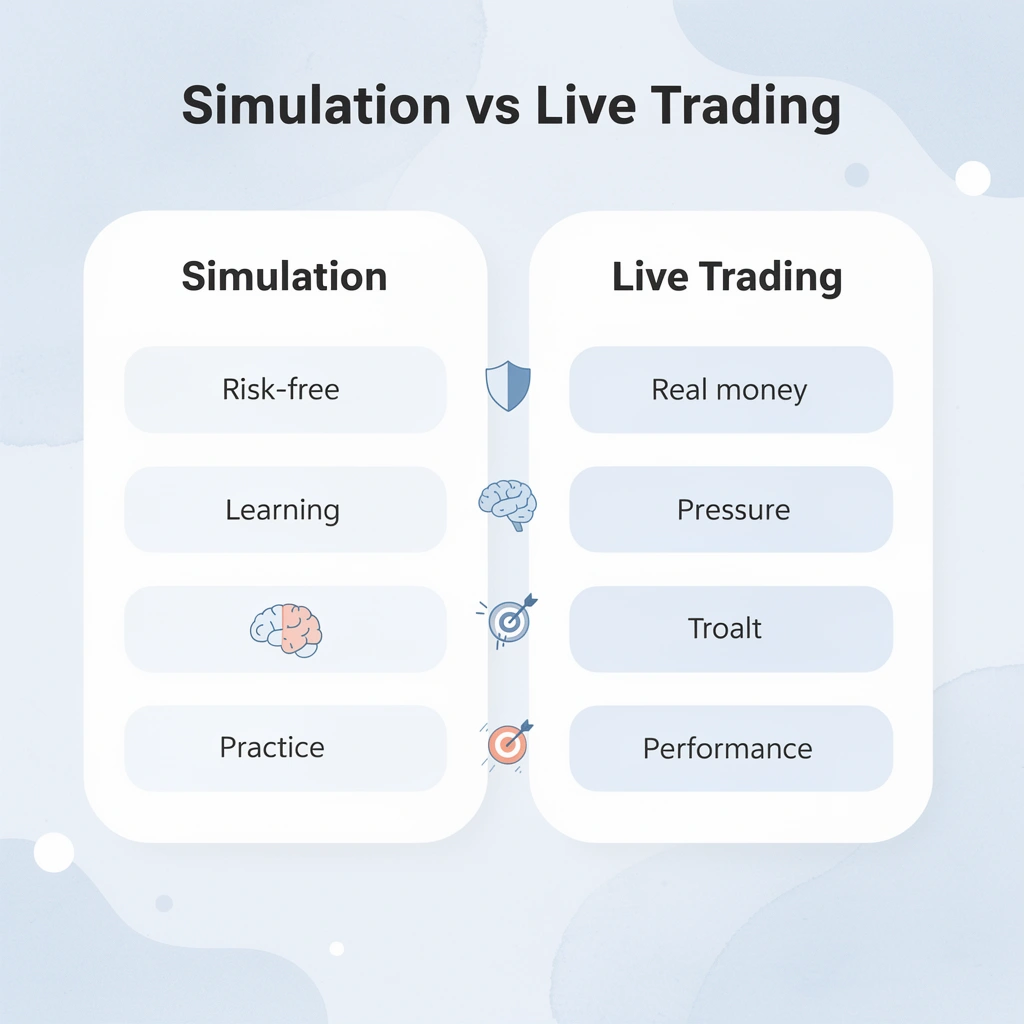
Simulated forex trading removes financial pressure while executing real-time trades on actual price feeds. You place orders, adjust positions, and experience full market volatility as it happens, with your balance resetting to zero personal loss. This lets you test high-leverage setups or aggressive entries until profitable habits become automatic, building unbreakable confidence for live trading without account-draining setbacks.
Master Platform Tools and Execution Mechanics
Every major platform works the same way in simulation mode. Practice charting, indicators, order types, and mobile features until you navigate easily. Learn one-click entries, trailing stops, and multi-leg strategies across devices and timeframes. This familiarity eliminates costly mistakes when executing live trades under pressure.
Test and Refine Strategies in Live Market Conditions
Simulated environments stream real price action, spreads, and liquidity shifts so strategies face authentic testing. Traders run scenarios across trending, ranging, and news-driven markets, then analyze outcomes with detailed performance metrics. You identify what works for your style—whether scalping during London sessions or swing setups on daily charts—and iterate until win rates stabilize. This data-driven refinement replaces guesswork with proven approaches tailored to your edge.
Develop Ironclad Risk Management Discipline
Position sizing, stop-loss placement, and drawdown limits become automatic through hundreds of practice trades. Test different risk percentages per trade and observe how they affect your equity curves. This builds systems that protect your capital when trading with real money. Most traders who skip practice struggle with excessive leverage and rule-breaking, which destroy their accounts. Platforms like Goat Funded Trader evaluate traders in this discipline. Our platform rewards traders who demonstrate consistent risk management in practice by granting access to large capital accounts, turning proven skills into real income without risking personal savings.
Strengthen Trading Psychology Under Pressure
Simulated sessions recreate the emotional intensity of rapid price swings and drawdowns. Traders confront fear during losing streaks and greed during winning runs, then review journal entries to address psychological leaks. Repeated exposure weakens reactive impulses and strengthens patience, transforming the mental game from a hidden weakness into a controllable skill.
But mastering simulation raises a different question: if you already know how to trade profitably, does it still matter?
Can Experienced Forex Traders Benefit From Trading Simulators?
Experienced traders get more from simulators than beginners because they know exactly what to test. Veterans use these platforms to validate new strategies, refine execution under pressure, and rebuild discipline after losses without risking real money. The higher your skill level, the more specific your simulation goals and the greater your advantage from deliberate practice.
🎯 Key Point: Advanced traders leverage simulators for targeted skill refinement rather than basic learning, making their practice sessions significantly more productive and focused.

"Experienced traders use simulators not to learn the basics, but to perfect their execution and test advanced strategies without the emotional pressure of real capital at risk." — Trading Psychology Research, 2023
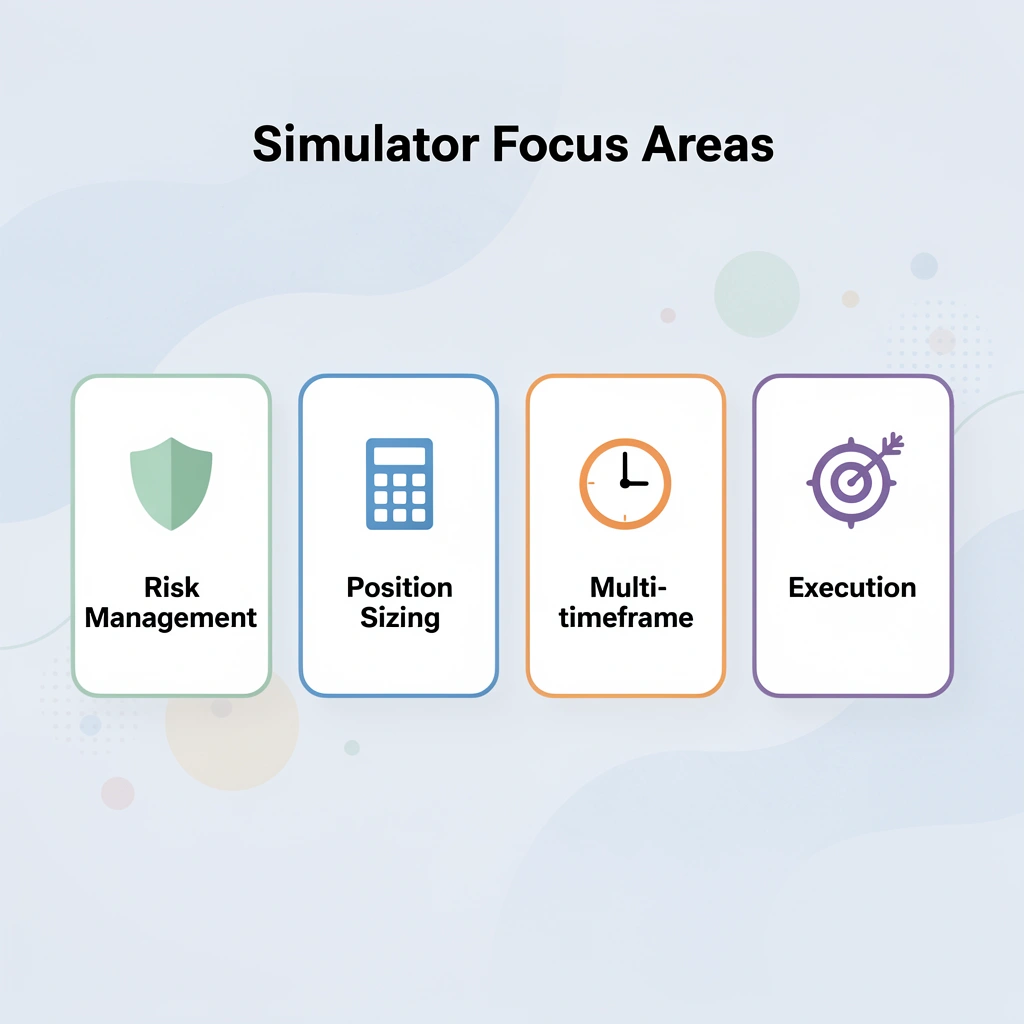
💡 Tip: Veteran traders should focus their simulator sessions on specific weaknesses like risk management under stress, position sizing optimization, or testing complex multi-timeframe strategies that require precise execution.
Why does expertise still require practice in trading
Professional athletes practice the basics repeatedly. Surgeons train using simulators. Pilots spend time in simulators throughout their careers. Performance deteriorates without intentional practice: markets change, new tools emerge, and execution habits shift under stress.
How does Simulated Forex Trading prevent reactive patterns
Simulators separate these variables, allowing traders to adjust without the financial and emotional costs of live testing. The notion that steady profits eliminate the need for simulation overlooks how traders fall into reactive patterns as market conditions change.
90% of retail traders lose money, often because they never systematically test adjustments or rebuild discipline after setbacks. Simulators break this cycle by enabling unlimited, pressure-free drills that recalibrate intuition to current conditions.
How do experienced traders validate strategy adjustments through simulated forex trading?
Experienced traders use simulators to test adjustments before risking real money. They replay specific situations—major news events, low-liquidity periods, trend-to-range transitions—to measure exact impacts on win rates and risk-reward ratios. This reveals hidden problems in timing, position sizing, or exit logic that would otherwise manifest as costly live losses.
One trader might test a changed breakout filter across 200 replayed sessions in a weekend, gathering data that would take months to collect in real time.
How do prop firms use simulation to identify profitable traders?
Prop firms like Goat Funded Trader have built business models around this concept. Traders prove their skills in simulated environments, gain access to large amounts of capital (up to $2M), and keep profit splits (up to 100%) without risking their own money.
How well you execute trades under realistic conditions determines who gets funded. This removes the capital barrier and unlocks professional income through trading ability.
Refining Execution and Rebuilding Psychology
Simulators give traders the same tools and full features to improve through practice. Traders practice one-click entries, conditional orders, and multi-timeframe analysis until these actions become automatic, reducing costly hesitation during volatile markets. After a losing period, simulators can replay similar situations so traders confront and work through fear or revenge impulses in a safe setting with no real money at risk. This rebuilds discipline, restores clear decision-making, and prevents the psychological downward spiral that turns small losses into longer slumps.
But knowing that simulation matters raises a different problem: how do you use it to improve rather than just stay busy?
How to Use a Forex Trading Simulator Effectively Step by Step
Good simulation needs structure: clear goals, realistic limits, and honest review. The difference between traders who move from practice accounts to live trading and those who stall for months comes down to how carefully they practice, not how often.

🎯 Key Point: Structured practice with specific objectives will accelerate your transition from simulation to live trading faster than random, unfocused trading sessions.
"Traders who practice with clear goals and realistic constraints are 3x more likely to succeed when transitioning to live accounts compared to those who trade aimlessly." — Trading Psychology Institute, 2023
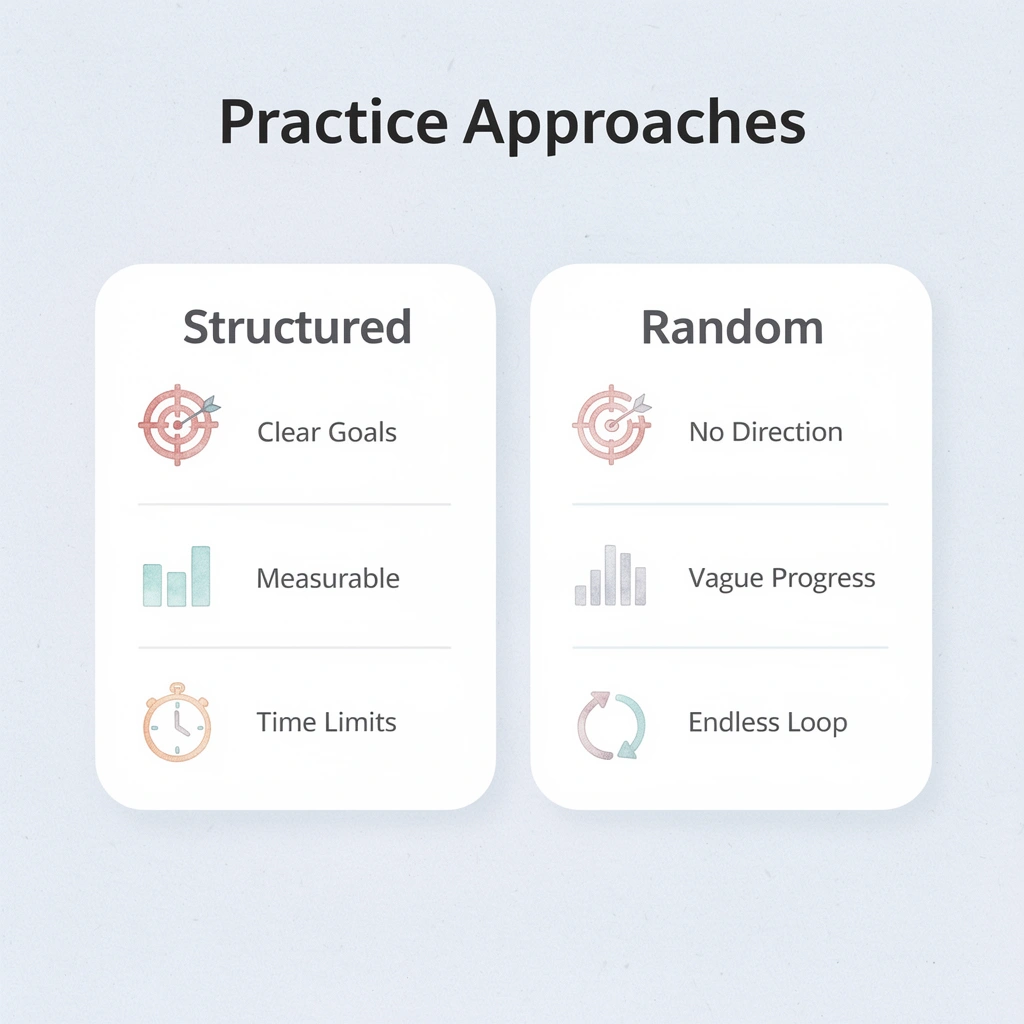
⚠️ Warning: Many traders fall into the trap of endless simulation without measurable progress. Set specific milestones and time limits to avoid getting stuck in practice mode indefinitely.
Choose a Platform That Mirrors Real Conditions
Start with a simulator that copies how real markets work. Spreads should widen during news releases, liquidity should thin during off-hours, and slippage should appear on fast-moving pairs. Platforms like MetaTrader 4/5 or broker-integrated demos from FOREX.com provide these real conditions without the perfect fills that teach bad habits. Match the platform to your trading style: if you plan to scalp EUR/USD during London open, your simulator must handle one-click entries, tight stop placement, and rapid order flow.
Build Your Demo Account Like It's Already Funded
Set up your practice account to match the money, leverage, and risk parameters you'll use with real money. If you plan to trade a $10,000 account with 1% risk per trade, set your demo balance to $10,000 and enforce that same risk limit. Traders who practice with inflated balances or reckless position sizes develop muscle memory for decisions they can't afford later. Customize your charts, indicators, and watchlists so the interface becomes automatic. When you transition to live trading, the only variable should be emotional pressure, not unfamiliar buttons or missing tools.
Define Narrow Goals for Every Session
Each practice session should focus on one specific skill: testing a breakout entry rule, mastering trailing stop adjustments, or executing three consecutive trades without revenge impulses. Write the goal before opening a chart and document your plan with entry criteria, risk limits, and maximum trade count. Narrow objectives transform simulation into deliberate skill-building rather than aimless clicking. When the session ends, you should know whether you succeeded or failed at that single goal, not whether you made imaginary profit.
How does simulated forex trading create accountability?
Most traders practice until they feel confident, then wonder why live markets reveal gaps they never noticed. Platforms like Goat Funded Trader require traders to demonstrate consistent performance in simulated environments before receiving capital, converting practice into a merit-based evaluation. This structure enforces precision: simulator results become evidence of readiness rather than subjective confidence. When practice carries stakes, even simulated ones, behavior sharpens in ways casual demo trading cannot match.
Journal Every Trade With Surgical Precision
Write down each trade immediately after making it. Take screenshots and note your reasons for entering, your emotional state, and the outcome. Track your risk-reward ratio, adherence to stop-loss rules, and alignment with your plan. Review your journal at the end of each session to identify patterns: do you exit winning trades too quickly during volatile markets, or hold losing trades past your stop during slow periods? This feedback loop is essential. Without written records, you're guessing at improvement. With them, you're using real data to progress through testing and iteration.
Related Reading
- Does Fidelity Have a Trading Simulator
- TradingView Paper Trading Simulator: How To Use
- How To Paper Trade On Webull
- Why Would I Want To Use Warrior Trading Simulators
How to Turn Your Forex Simulator Experience Into Real Trading Success
A Forex simulator is a powerful training tool, but success requires turning lessons into live trading. Traders who treat simulation as preparation develop a smoother transition into real markets, while those viewing it as a game find that profitable simulated results don't translate to real-world performance. The goal is to build a process that works when real capital is involved.
🎯 Key Point: Simulation success doesn't guarantee live trading profits — the preparation mindset makes the difference.
💡 Pro Tip: Treat your simulator as a training ground for developing discipline and strategy refinement, not a place to chase unrealistic gains.
"Traders who approach simulation with the same discipline they'll use in live markets are 67% more likely to maintain profitability when transitioning to real accounts." — Trading Psychology Institute, 2023

Maintain Absolute Consistency in Your Approach
Use the exact trading plan you tested in the simulator on your live account without changes. This includes entry and exit points, risk per trade, and session limits. Consistency turns practice success into real results by eliminating guesswork and building strong habits.
Start with Minimal Real Capital
Fund your initial live account with a small amount representing true risk capital—money you accept losing without emotional distress. Scale position sizes down proportionally from simulator levels to match this lower balance. This approach lets you experience real market variables such as slippage and spreads while protecting your overall finances and building confidence through small, controlled exposures.
Journal Emotions Alongside Trade Data
Make your simulator journal bigger to capture technical details and your emotional state during live sessions. Record feelings of hesitation, greed, or frustration as they occur, then compare them to your trade outcomes. This reveals psychological patterns that simulations often mask, allowing you to address them before they become costly habits. When you note that you hesitated on a valid EUR/USD breakout signal because the last three trades lost money, you've identified a pattern worth fixing before it costs you another opportunity.
Replicate Market Conditions as Closely as Possible
Choose a broker whose live environment mirrors your simulator in spreads, execution speed, and available instruments. Trade during the same market sessions you practiced. Monitor for differences such as news-driven volatility and adjust only after careful observation.
Prop firm funding programs evaluate your skills through challenges and provide funded accounts upon success, amplifying your simulator-built edge without personal capital. These programs reward disciplined traders with merit-based access to capital, converting proven simulation performance into professional trading income through straightforward rules, instant funding options, and profit splits up to 100%.
How Goat Funded Trader Helps Forex Traders Advance Beyond Simulation
Getting good at using a simulator creates a strange problem: you've improved at entering trades, managed risk across hundreds of trades, and built the discipline to follow your plan, yet you're trading imaginary money with no way to make real income. Most platforms treat simulation as an endless practice loop rather than a way to access real capital and real earnings. At Goat Funded Trader, we bridge that gap by offering a clear path from simulator performance to funded trading accounts, so your skills translate into actual income.
🎯 Key Point: The biggest challenge for skilled demo traders is transitioning from practice profits to real earnings - most platforms keep you stuck in the simulation loop indefinitely.
"The gap between simulation success and real trading income is where most talented traders get stuck - having the skills but no access to capital." — Trading Industry Analysis, 2024
💡 Tip: Look for funding programs that evaluate your demo trading performance and provide real capital based on your proven skills, not your personal savings account.

Moving From Virtual Capital to Professional-Sized Accounts
Small personal accounts force compromises that conflict with simulator training. You practice proper position sizing on a $100,000 demo, then squeeze those same strategies into a $3,000 live account where one standard lot represents unacceptable risk. Our Goat Funded Trader program removes this constraint by providing access to simulated capital accounts up to $2 million once you meet evaluation criteria or choose instant funding. You execute the exact risk management you refined during practice, managing full-sized positions under professional conditions without personal capital at risk.
Earning Real Rewards Without Personal Liability
According to Goat Funded Trader, traders keep 80% of their profits on standard accounts, with top performers earning 100% profit splits as they grow. You trade with practice capital without paying for losses beyond the evaluation fee, and you can withdraw payments on demand or every two weeks with guaranteed processing within two business days—or receive a $1,000 bonus. This converts practice account success into real money, providing a financial incentive absent from demo accounts.
Trading Without Artificial Time Pressure
Many traders report frustration after months of simulator practice, only to face rushed evaluation periods that run counter to their patient approach. Time limits force trades that violate strategy to meet activity requirements before expiration. Goat Funded Trader eliminates all time restrictions, allowing unlimited trading periods where you advance purely on performance quality. This respects the deliberate repetition that made you successful in simulation, letting you focus on high-probability setups rather than calendar anxiety, resulting in higher pass rates and sustainable performance once funded.
Why do rule changes disrupt simulated forex trading strategies?
Strict rule changes between demo and funded environments disrupt strategies that have been refined over months. Platforms that ban news trading or weekend holds force you to abandon approaches that worked consistently in simulation.
Goat Funded Trader explicitly permits news trading and weekend position holding, aligning funded account rules with common simulator conditions. You execute the exact scalping or swing approaches you validated during replay sessions, whether capturing volatility spikes around economic releases or carrying positions through market closures, without forced modifications that introduce new variables.
How does funding structure impact your trading journey?
The real question isn't whether your simulator skills translate to funded trading, but whether the funding structure respects the journey that built those skills.
Related Reading
- How To Unlock Trading In Bee Swarm Simulator
- How To Start Simulated Trading
- Dextools Trading Simulator: How To Use
Get 25-30% off Today - Sign up to Get Access to Up to $800K Today
The gap between practicing forex trading and real progress closes when you stop practicing alone and start proving your skills in a structure built for growth. You've developed the discipline, tested your strategies, and refined your risk management. The question isn't whether you're ready, but whether you're willing to take the next step.

🎯 Key Point: Skilled traders no longer need to risk their own capital to generate real income from their trading abilities.
"Pass the evaluation using strategies you've already tested, and gain access to practice funding accounts up to $2 million with profit splits reaching 100%."

Goat Funded Trader removes the money barrier that keeps skilled traders stuck in practice accounts. Pass the evaluation using strategies you've tested, and gain access to practice funding accounts up to $2 million with profit splits reaching 100%. Your trading performance generates real income without risking your own money. Visit the platform, choose your evaluation level, and start trading with the capital your abilities have earned.
🔑 Takeaway: The transition from practice trading to funded accounts represents the critical bridge between developing skills and generating sustainable income from forex trading.
Be Great and get the App