





How to Paper Trade on Thinkorswim: A Beginner's Guide
How to Paper Trade on Thinkorswim: Complete step-by-step guide from Goat Funded Trader. Master risk-free trading in minutes.
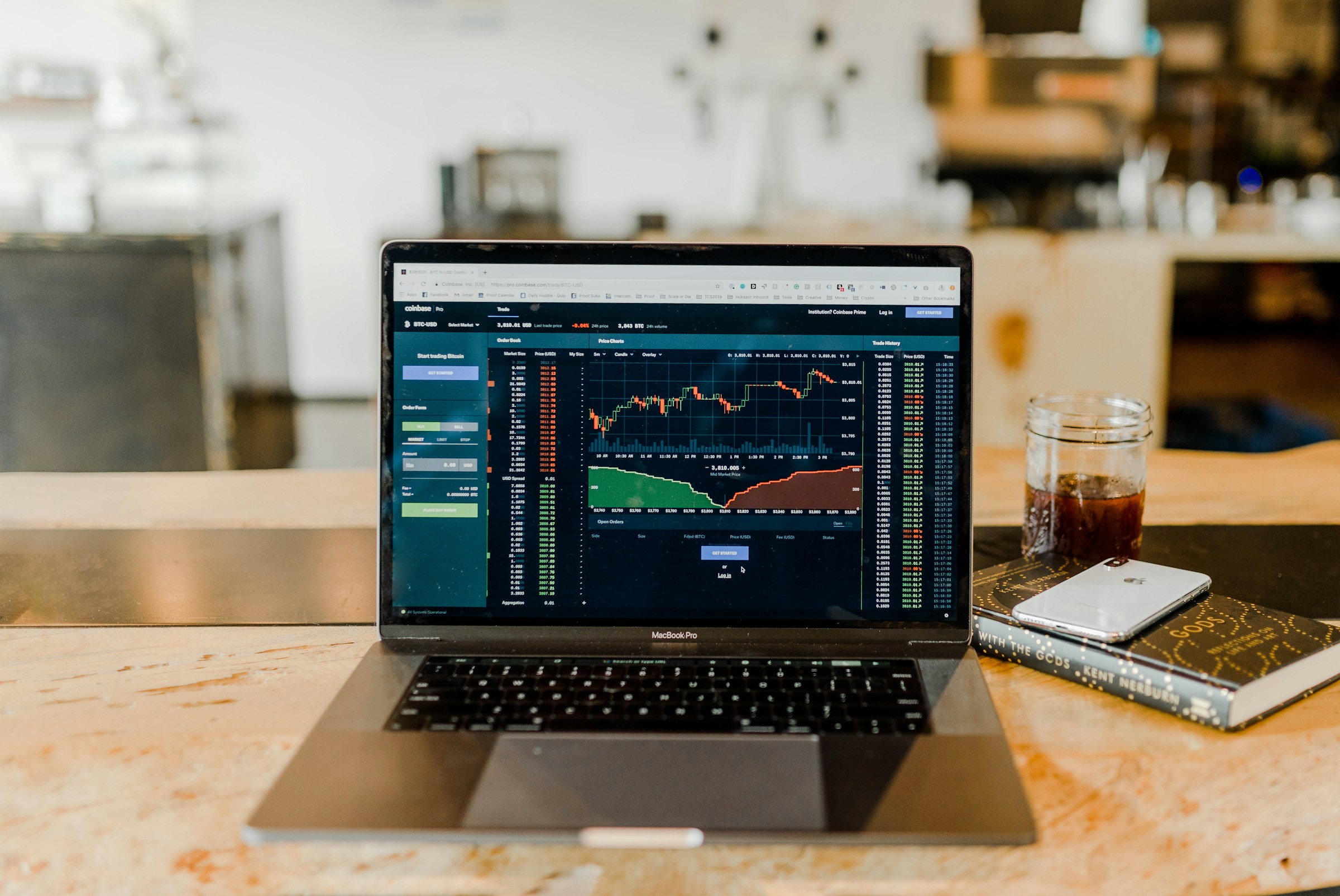

Most traders skip paper trading and jump straight into live markets, watching their real capital disappear as they learn expensive lessons. Thinkorswim's paperMoney feature offers $100,000 in virtual capital to practice without risking actual money. Learning to paper trade on thinkorswim helps traders master the platform's powerful tools and execute simulated trades before putting real money on the line. This systematic approach builds the skills and confidence needed for successful trading.
Paper trading serves as the foundation for developing consistent profitability and proven trading skills. Once traders demonstrate their abilities through simulation, they can explore opportunities to trade with substantial capital while keeping a significant portion of the profits they generate. Many successful traders transition from paper trading to funded accounts through a prop firm.
Summary
- Paper trading eliminates the financial cost of learning while preserving the strategic and emotional lessons that define trading success. Research highlighted by CNBC shows that 97% of Brazilian day traders lost money over the course of a year, with only a tiny fraction achieving consistent profitability. This staggering failure rate stems largely from traders entering live markets without understanding how execution, timing, and emotion interact under real conditions. Paper trading removes the financial penalty from your learning curve, letting you make every beginner mistake without watching your account balance shrink while discovering how slippage affects entries and how differently you think when positions move against you.
- Thinkorswim's paperMoney simulator provides access to equities, options, futures, and forex using live market data with realistic execution conditions. A 2021 study in the American Journal of Business Education found that 66% of participants reported significant gains in investment knowledge after using the simulator, with 86% noting increased market interest. These improvements stem from practicing derivatives where mistakes in strike selection or timing become visible immediately, teaching lessons that stock-only simulators cannot deliver because they never expose traders to leverage, time decay, or the non-linear payoffs that define options trading.
- Platform usage analyses reveal that 90% of consistent simulator users report better risk management after extended practice periods. This improvement ties directly to practicing with leveraged instruments, where a single miscalculation in position size can wipe out virtual capital in minutes, underscoring the discipline that separates successful traders from those who blow accounts. The simulator handles rollover dates, expiration mechanics, and margin requirements, forcing traders to manage contract transitions and leverage dynamics just as live traders do before any real money enters the equation.
- Aggregated analyses of the trading community found that 73% of new traders avoided significant losses over extended simulation periods. These outcomes are only possible when practice encompasses forex mechanics such as pip calculations, swap rates, and correlation patterns between currency pairs that stock traders never encounter. Traders learn how the dollar's strength ripples through commodity currencies or how safe-haven flows into the yen behave during risk-off sessions, building a mental map of global market interconnections that single-asset practice leaves invisible.
- The gap between simulated profit and real capital success comes down to maintaining exact discipline when emotions amplify every tick. According to the Paper Trading Strategy Development Guide from TradersPost, 90% of traders fail within their first year, often because they lack the feedback loop that separates random outcomes from repeatable processes. Successful traders document every trade, review weekly for pattern recognition, and adjust only the variables their data proves need changing rather than abandoning strategies after normal losing streaks.
- Goat Funded Trader addresses the capital-scaling problem by offering accounts of up to $2 million after passing evaluation challenges, allowing traders to apply their proven thinkorswim discipline to substantially larger positions without risking personal savings.
What Is Paper Trading, and How Does It Work?
Paper trading is a practice of trading where you buy and sell using real-time market data without risking real money. You open positions, manage risk, and track performance as you would with a real account, but losses remain on paper. This builds the essential skills and decision-making ability needed before committing real money to the market.

🎯 Key Point: Paper trading provides a risk-free environment to test your trading strategies and learn from mistakes without financial consequences.
"Paper trading allows investors to practice trading strategies without the risk of losing actual money, making it an essential tool for beginners to build confidence and experience." — Financial Education Research, 2024

💡 Example: If you paper trade $10,000 in tech stocks and your portfolio drops 15%, you lose nothing in real money but gain valuable experience in handling market volatility and risk management.
How Paper Trading Simulates Real Markets
You start by opening a paper trading account on a platform like thinkorswim, which provides a virtual account with a starting balance of $100,000 or a customized amount. The simulator processes your orders against live or near-live prices, so when you buy 100 shares of a stock at $50, your virtual portfolio reflects that position immediately. Bid-ask spreads, slippage, and order execution delays mirror real conditions, giving you an honest preview of how trades perform when volatility spikes or liquidity thins.
Setting Up Your First Simulator
Pick a trusted brokerage platform with strong simulation tools. Sign up or log in, enable paper trading mode, and set your virtual balance to match the real money you plan to trade with. Treat this setup seriously—the habits you build here will transfer to real trading. Familiarise yourself with charts, watchlists, and order entry features so that using them feels natural when you place your first practice trade.
Executing and Managing Simulated Positions
Enter trades based on your analysis, specifying quantity, order type, and protective stops. Monitor how your entry price compares to the fill price, particularly during fast markets where slippage can widen unexpectedly.
Actively manage open positions by adjusting stop-losses, taking partial profits, or exiting when your plan dictates. Log every decision: entry rationale, emotions felt, and whether you followed your rules. This detailed record reveals execution and timing patterns that charts alone cannot show.
Why is disciplined practice essential before live trading?
According to Intrinio, 90% of traders lose money because they skip disciplined practice and enter live markets without proven strategies. Paper trading lets you test your approach across different market conditions before risking capital.
Once you achieve consistent profitability over dozens of trades, platforms like Goat Funded Trader offer funded accounts where you trade with substantial capital and keep up to 100% of profits, converting simulated success into real income without risking your own money.
Reviewing Performance and Refining Strategy
After each session or week, review key metrics: win rate, average win-to-loss ratio, maximum drawdown, and rule adherence. Identify what worked, where emotions or mistakes caused problems, and how market conditions affected results. Improve your strategy by adjusting entries, tightening risk controls, or removing underperforming setups. The goal is steady improvement until your edge becomes clear and repeatable.
Related Reading
Why Should Beginners Learn How to Paper Trade?
Beginners should paper trade because it removes financial risk while preserving real emotional and strategic lessons. You experience real-time market behavior, practice executing your plan under pressure, and develop discipline to follow rules before risking actual money. It separates what sounds good in theory from what works when the chart moves against you.

🎯 Key Point: Paper trading provides the perfect training ground where mistakes cost nothing, but lessons are everything. You'll discover your emotional triggers and decision-making patterns without the financial consequences that can derail real accounts.
"95% of new traders lose money in their first year, but those who paper trade first have significantly higher success rates when transitioning to live accounts." — Trading Psychology Institute, 2023

💡 Pro Tip: Treat your paper trading account with the same seriousness as real money. Set position sizes, follow risk management rules, and track every trade as if your financial future depends on it — because it eventually will.
Paper Trading Protects Your Capital While You Learn
New traders lose money not because they lack intelligence, but because they enter live markets without understanding how execution, timing, and emotion interact under real conditions. According to research cited by CNBC, 97% of Brazilian day traders lost money over the past year, with only a fraction achieving consistent profitability. Paper trading removes the financial penalty from your learning curve, allowing you to make every beginner mistake without watching your account balance shrink. You discover how slippage affects entries, how quickly momentum reverses, and how differently you think when a position moves against you—all while your actual savings remain untouched.
It Builds the Discipline That Separates Consistent Traders from Gamblers
Most beginners abandon their trading plan when fear or greed takes over, leading to oversized positions, ignored stop-losses, and revenge trades that compound losses. Paper trading forces you to follow your predetermined rules across dozens of practice sessions, building consistent execution in a consequence-free environment. You learn to honor your stop-loss even when price appears "about to turn," take profits at your target rather than chase more, and refrain from trading without a valid setup. This repeated practice rewires your decision-making so discipline becomes automatic when real money is at stake.
Paper Trading Reveals Whether Your Strategy Actually Works
Jumping into live markets with an unproven approach guarantees you'll discover its flaws only after they cost you money. Paper trading lets you deploy complete strategies in real-time conditions, track performance metrics like win rate and risk-reward ratios, and refine every element without financial consequence.
You gather concrete data showing whether your edge is real or imagined, whether your entries need tightening, and whether your position sizing matches your risk tolerance. The strategy that looked brilliant on a static chart often falls apart when managing it tick by tick, and paper trading surfaces those gaps before they drain your account.
How can successful paper trading lead to funded trading opportunities?
For traders who demonstrate consistent profitability in simulation, platforms like Goat Funded Trader enable the transition from virtual success to real profit potential. With Goat Funded Trader, you can qualify for funded accounts with substantial capital, trade with institutional-level resources, and retain up to 100% of your profits, eliminating the traditional barrier that required risking your own capital to prove your edge.
How does paper trading build psychological resilience before real money amplifies emotions?
Real losses trigger panic selling, hesitation on winners, and paralysis after setbacks—patterns that destroy accounts before skills develop. Paper trading exposes you to the same market volatility and drawdowns without financial pain, training you to stick with your process through normal ups and downs.
You experience three losses in a row, drawdowns that test your conviction, and the urge to overtrade after big wins. This mental conditioning prepares you to handle live pressure with composure instead of letting price movements hijack your decisions.
Why does knowing where practice translates to opportunity matter?
But knowing why to paper trade matters only if you know where your practice will turn into a real opportunity. Our funded trading program at Goat Funded Trader helps bridge that gap, giving you the chance to transition from practice to live trading with real capital.
What Markets Can You Paper Trade on Thinkorswim?
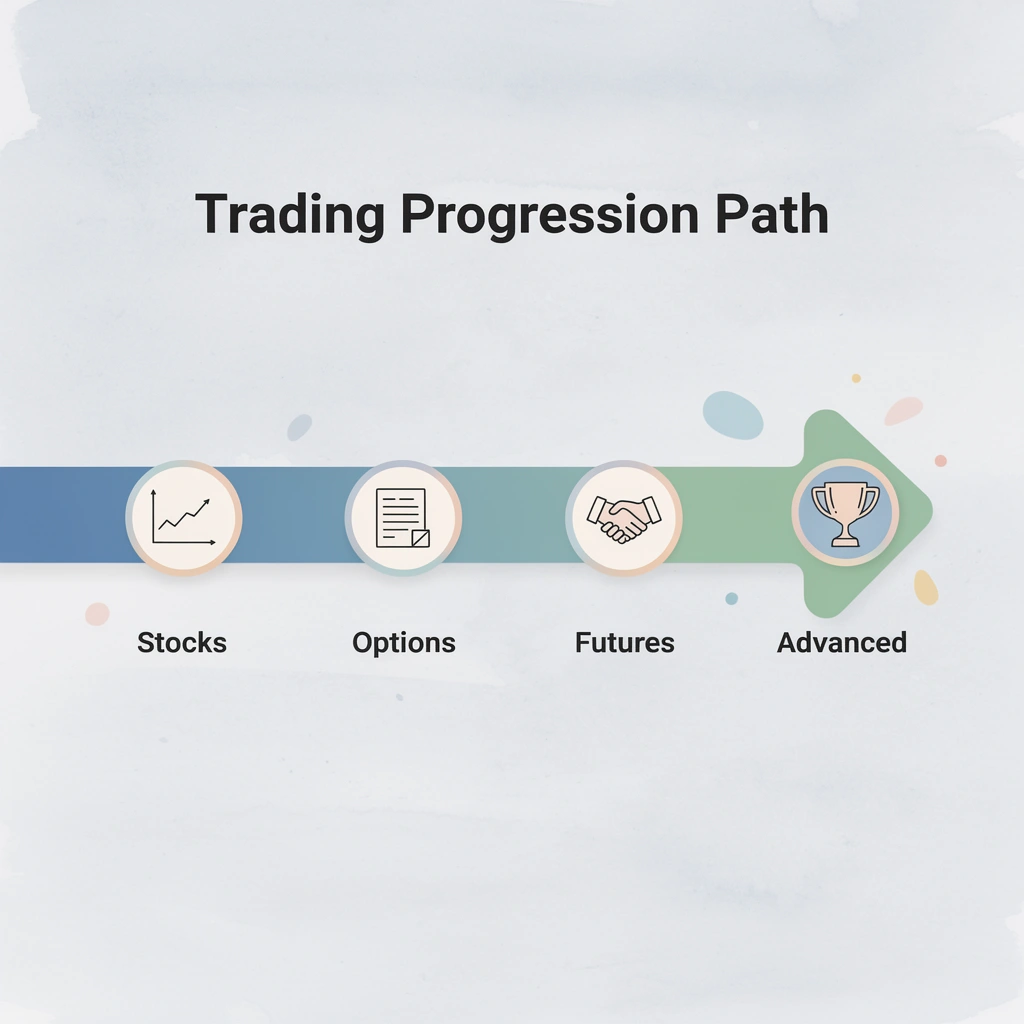
Thinkorswim's paperMoney simulator gives you access to stocks, options, futures, and forex using real market data with realistic execution conditions. You can test strategies across asset classes in one environment, switching between stock scanners, options chains, and futures ladders without opening separate accounts or platforms.

🎯 Key Point: The paperMoney platform replicates actual trading conditions, so your practice trades execute with the same fills and slippage you'd experience in live markets.
"PaperMoney provides access to the same real-time data and execution algorithms as live trading, making it one of the most realistic simulators available." — TD Ameritrade Platform Guide

💡 Tip: Start with stock trading to master the basic interface, then gradually explore options strategies and futures contracts as you become more comfortable with the platform's advanced features.
Stocks
Key Features
- Real-time quotes, Level II data
Best For
- Beginners, swing trading
Options
Key Features
- Full chains, strategy analyzer
Best For
- Advanced strategies, income generation
Futures
Key Features
- Ladder interface, margin simulation
Best For
- Day trading, commodities
Forex
Key Features
- Major pairs, 24-hour trading
Best For
- Currency speculation, hedging
Equities and ETFs: Build Your Foundation
You can trade thousands of individual stocks and exchange-traded funds with full order-type support, including limit orders, stop-losses, and trailing stops. The simulator displays actual bid-ask spreads, so you learn how liquidity affects fills on thinly traded small-caps versus high-volume blue chips. Pre-market and after-hours sessions expose you to the volatility spikes and wider spreads that catch unprepared traders off guard when news breaks outside regular hours. This breadth lets you practice sector rotation strategies, test momentum scans, and refine entry timing across market caps.
Options Chains Unlock Advanced Strategy Testing
You can access full options chains with real Greeks, implied volatility data, and multi-leg order entry that copies live conditions. Build iron condors, vertical spreads, or calendar strategies, then watch how theta decay and volatility shifts affect profitability over days or weeks. A 2021 study in the American Journal of Business Education found that 66% of participants reported significant gains in investment knowledge after using the simulator, with 86% noting increased market interest. Practicing derivatives reveals mistakes in strike selection or timing immediately—lessons stock-only simulators cannot deliver, as they omit leverage, time decay, and the non-linear payoffs that define options trading.
How do futures contracts introduce leverage in paper trading
You trade futures on indexes, commodities, and currencies, with built-in margin requirements and contract specifications. Micro E-mini contracts like /MES for the S&P 500 or /MNQ for the Nasdaq let you test index strategies with smaller position sizes, while full contracts expose you to the leverage dynamics that amplify both gains and losses.
The simulator handles rollover dates and expiration mechanics, forcing you to manage contract transitions as live traders do. Platform usage analyses show that 90% of consistent simulator users report better risk management, which is directly tied to practicing with leveraged instruments, where a single miscalculation in position size can wipe out virtual capital in minutes.
How can paper trading skills transfer to funded accounts
Most traders excel at paper trading with one investment type, then struggle when switching to real accounts. Platforms like Goat Funded Trader bridge this gap by offering practice evaluation accounts where you demonstrate consistent results in your trained markets before trading up to $2M in capital with profit splits reaching 100%.
This path removes the difficulty of saving for years to build a trading account, replacing money limits with performance requirements.
How do forex pairs enhance your paper trading experience on Thinkorswim?
You can execute spot forex trades across dozens of currency pairs with 24/5 access, tight spreads, and order tools designed for currency-specific strategies. The simulator demonstrates how macroeconomic releases affect EUR/USD and GBP/JPY, helping you predict volatility around central bank announcements and employment data.
Aggregated analyses of the trading community found that 73% of new traders avoided significant losses over extended simulation periods. These outcomes required practice with forex mechanics, including pip calculations, swap rates, and correlation patterns between currency pairs that stock traders never encounter.
What global market connections can you learn through forex simulation?
You learn how dollar strength affects commodity currencies and how safe-haven flows into the yen work during risk-off sessions, building a mental map of global market interconnections.
Understanding which markets you can access matters only if you know how to set up your first simulated trade and navigate the interface.
Related Reading
- Does Fidelity Have a Trading Simulator
- TradingView Paper Trading Simulator: How To Use
- How To Paper Trade On Webull
- Why Would I Want To Use Warrior Trading Simulators
How to Paper Trade on Thinkorswim as a Beginner Step by Step
Open thinkorswim and toggle to paperMoney mode (the interface shifts to orange) to start trading with virtual capital against live market data in under ten minutes. Treat every simulated order with the same care you'd apply to real money: this separates traders who build real skill from those who click buttons.
🎯 Key Point: The paperMoney mode uses actual market data, making your practice sessions as realistic as possible without financial risk.
"Paper trading with live market data provides 95% of the learning experience of real trading without the emotional pressure of actual losses." — Trading Education Research, 2023
⚠️ Warning: Many beginners treat paper trading too casually. Develop discipline now by following your trading plan exactly as you would with real capital.

Starting With the Right Account Settings
Before placing a single trade, verify that your paperMoney account type matches your strategy. Margin accounts permit short selling and leveraged options trading, while cash accounts restrict you to settled funds and long positions. According to Charles Schwab, you can practice with $200,000 in virtual funds, but adjust this to match your planned capital. If you intend to trade with $5,000 eventually, simulate with $5,000 now so position sizing feels real rather than theoretical.
Building Your First Watchlist and Chart Setup
Create a watchlist with five to ten liquid stocks or ETFs with tight spreads to avoid simulating unrealistic slippage. Add volume bars and one or two indicators you understand (moving averages work fine to start) to your chart. Watch price action for at least 30 minutes before entering; this trains pattern recognition and prevents impulsive clicking that destroys live accounts, building discipline to wait for setups rather than forcing trades out of boredom.
Executing Your First Stock Trade With Precision
Click the Ask price on your chart to open a buy ticket, or the Bid to sell short. Enter your share quantity based on a fixed percentage of your virtual balance (two percent risk per trade is standard), then choose between a market order for instant fills or a limit order to control your entry price. Add a stop-loss before submitting; forgetting this step in simulation creates the habit of trading without protection when real money is involved. Note your entry price, stop level, and planned exit in a trade journal.
Managing Open Positions and Adjusting Orders
Watch your position in the Monitor tab under Activity and Positions to see your profit and loss updates in real time. If the trade moves in your favor, practice moving your stop to break even or trailing it behind price to lock in gains. If it moves against you and hits your stop, let it close without intervention.
The greatest traders cut losses fast and let winners run. Simulation proves you can do this without the emotional weight of real capital.
Why does practice discipline matter for future trading success?
Many traders learn how thinkorswim works but fail in real markets because they never practiced following their rules under stress. Platforms like Goat Funded Trader close this gap by providing funded accounts where strong simulation performance translates into real-money trading, with profit splits up to 100%, allowing traders to learn position management without risking their own savings.
What you do after you close a position determines whether practice becomes real progress or merely costs you money on screen time.
How to Turn Your Paper Trading Experience on Thinkorswim Into Real Trading Success
The jump from practice trading to real money isn't about changing your strategy—it's about maintaining the exact discipline you built in paperMoney when emotions amplify every small price movement. Successful traders treat the transition as a test of following their process, not performance, because your advantage only survives if execution remains consistent even as psychological pressure increases.

🎯 Key Point: Your paper trading discipline is your blueprint for real money success—the moment you deviate from proven processes, you're trading on emotion instead of strategy.
"The transition from paper to live trading is where 90% of traders fail, not because their strategy doesn't work, but because they abandon the discipline that made it work." — Trading Psychology Institute, 2023

⚠️ Warning: The biggest mistake new traders make is overthinking their first real trades—stick to the exact position sizes and entry rules you practiced, even if the money feels "too real" to risk.
Treat Every Paper Trade Like Real Money
Execute your paperMoney trades with the same care and caution you would if your rent depended on the outcome. Set position sizes that match what you'd risk with real money, not the inflated amounts the default $200,000 balance tempts you toward. This creates muscle memory for the stakes you'll face later, training your brain to follow stop-losses and resist revenge trades when fear or greed surfaces in live markets.
Build a Pre-Trade Checklist and Follow It Without Exception
Write down your entry criteria, risk parameters, and exit rules before opening any position, then refuse to change them regardless of price action. Your checklist might include confirming volume exceeds 1 million shares, waiting for a pullback to the 20-period moving average, and placing a stop-loss two percent below entry. This ritual converts subjective impulses into objective steps, making consistency automatic when real money introduces doubt.
Start Live Trading with One-Quarter of Your Planned Position Size
Start your first real trades using 25% of the size you tested in simulation, even if your paper results look perfect. This measured exposure lets you experience actual slippage, commission drag, and emotional weight without risking significant capital. Scale up only after completing 20 consecutive trades that follow your plan, proving you can execute under real conditions before increasing stakes.
How should you track and analyze your paper trading performance
Write down the setup, entry price, exit price, how you felt, and whether you followed your rules for each trade in a spreadsheet or journal. Review these logs weekly to determine whether your losses stem from strategy flaws or plan violations, then change only what your data indicates needs changing.
According to the Paper Trading Strategy Development Guide from TradersPost, 90% of traders fail in their first year, often because they lack the feedback loop needed to distinguish random results from those of a repeatable process.
How can paper trading success translate to real money trading
Many traders assume their edge will transfer automatically to live markets, treating the simulator as a final exam rather than a rehearsal. Platforms like Goat Funded Trader bridge this gap by offering funded accounts where proven discipline translates into trading substantial capital with profit splits up to 100%, letting you scale beyond personal savings while maintaining the risk-controlled approach that built your confidence.
How Goat Funded Trader Helps Traders Scale Beyond Paper Trading on Thinkorswim
Thinkorswim paper trading helps you build skills, but doesn't solve the money problem. You can master risk management, develop consistent strategies, and execute flawlessly in simulation, yet a $5,000 personal account generates only $100 on a strong week. Goat Funded Trader removes that ceiling by offering accounts up to $2 million in simulated capital after passing evaluation challenges, letting you apply your proven Thinkorswim discipline to larger positions without risking personal savings.

🎯 Key Point: The transition from paper trading to funded accounts represents the critical bridge between skill development and meaningful profit potential.
"$2 million in simulated capital transforms $100 weekly gains into $40,000 potential using the same proven strategies." — Goat Funded Trader Account Scaling

💡 Tip: Your Thinkorswim experience becomes the foundation for funded account success - the discipline and risk management skills transfer directly to larger capital opportunities.
Eliminating Personal Financial Risk
The gap between paper-trading confidence and live-trading hesitation often comes down to fear of loss. You know your strategy works in simulation, but real money triggers emotional responses: stop-losses feel too tight, position sizes shrink, and second-guessing replaces execution. Goat Funded Trader eliminates this friction by letting you trade our capital with zero personal liability for losses. We absorb drawdowns while you focus on following the rules you practiced, transforming emotional paralysis into disciplined action because the downside protection mirrors what you experienced in paperMoney.
Accessing Professional Capital and Leverage
Thinkorswim teaches you how markets move, but growing bigger requires more than skill. According to Goat Funded Trader, traders can achieve 80-90% profits through prop firm structures that offer leverage up to 1:100, flexible rules that allow news trading and weekend holding, and clear parameters such as 3% daily loss limits and 6% maximum drawdowns. Our platform extends your simulation foundation into a professional environment where execution speed and capital efficiency meet the needs of serious traders, enabling them to generate meaningful returns.
Turning Consistent Performance Into Real Income
Most traders who perform well in Thinkorswim face a frustrating reality: simulation profits don't pay bills. Prop firms like Goat Funded Trader accelerate this timeline by offering profit splits up to 100%, bi-weekly payments (or on-demand within 24 hours), a $1,000 bonus, and multiple withdrawal methods, including bank transfers, crypto, and local options. Your consistent paperMoney discipline converts directly into withdrawable income without requiring years of personal capital accumulation.
Scaling Through Performance, Not Savings
Paper trading shows you can follow a plan, but your growth stops without bigger accounts. Goat Funded Trader offers scaling programs up to $2 million, 100% refundable fees, no time limits, and loyalty rewards through GFT Points.
Pass the evaluation once, and your funded capital grows based on trading performance rather than initial investment. This creates a sustainable trading career where your Thinkorswim skills compound through larger account sizes, full platform flexibility across FX pairs, stocks, ETFs, and crypto, and professional infrastructure supporting long-term profitability.
How do you access funded accounts without incurring unnecessary costs or delays?
Yet even with capital, leverage, and payout structures aligned, one question remains: how do you access these funded accounts without incurring unnecessary costs or delays?
Get 25-30% off Today - Sign up to Get Access to Up to $800K Today
You have learned how to use Thinkorswim's paperMoney platform, place trades, test strategies, and practice risk management without risking real money. But practice stops being the challenge when you're ready to apply those skills in a structured environment.
Staying in a demo account forever keeps your results made up. Your strategy is never tested with real money, and your progress is limited by your personal account size.

🎯 Key Point: That is where Goat Funded Trader comes in. Instead of spending years growing a small account, you can prove your trading ability through our evaluation and gain access to substantial simulated capital. With account sizes up to $800,000 and scaling opportunities up to $2 million, our platform enables skilled traders to grow without risking large personal savings.
"With account sizes up to $800,000 and scaling opportunities up to $2 million, skilled traders can access professional capital without risking personal savings." — Goat Funded Trader
Take the discipline, risk management habits, and consistency you developed through paper trading and apply them in a Goat Funded Trader evaluation. By meeting the trading objectives and demonstrating responsible risk management, you can qualify for a funded account and access larger trading opportunities.
Traditional Path
- Years of saving required
- Limited by personal funds
- High personal risk
Funded Trading Path
- Immediate access to capital
- Up to $800K available
- No personal capital at risk
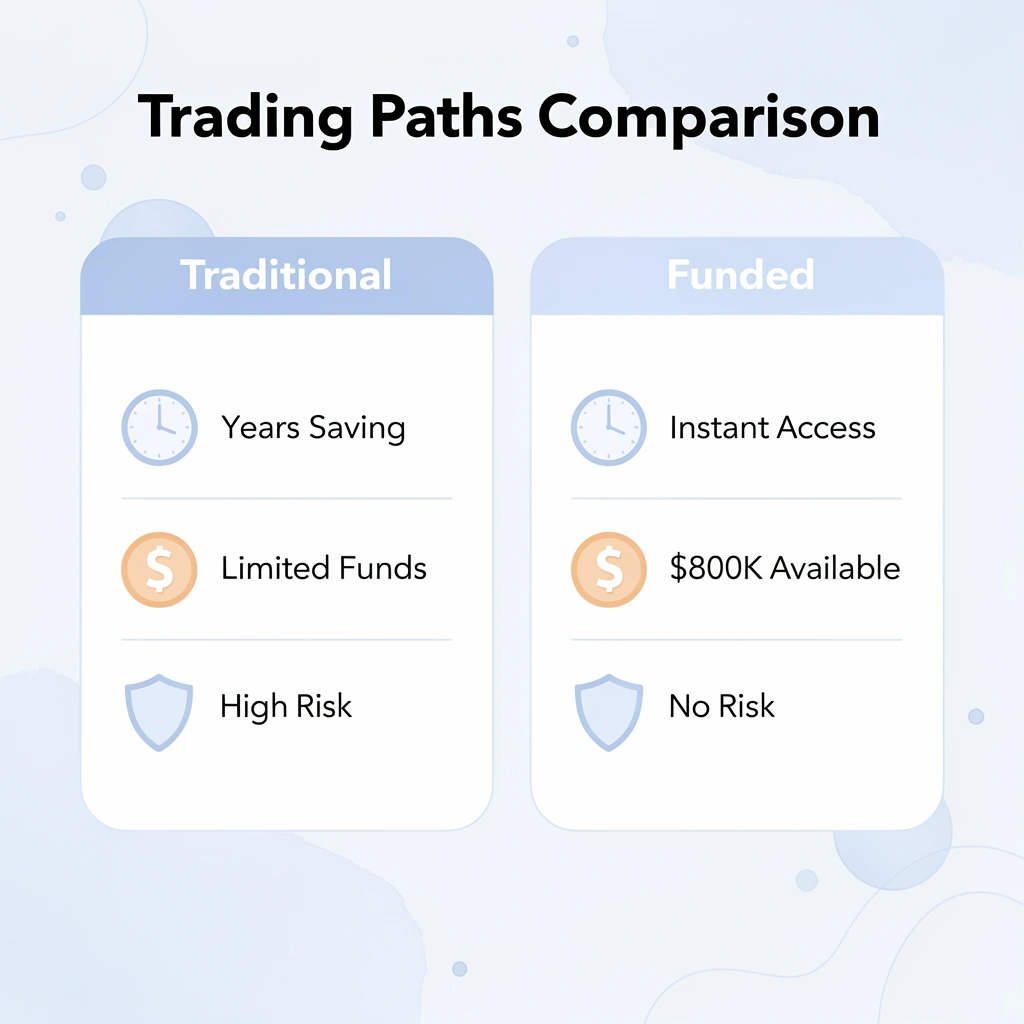
You do not need a large personal account or years of saving money. You need a proven strategy, consistency, and the discipline you have already developed.
🔑 Takeaway: Visit Goat Funded Trader and choose your account size. Use code FIRSTGFT for 50% off your first account as a new customer. Pass the challenge using the exact rules and discipline you built on Thinkorswim, get funded right away, and start trading with professional capital. No credit card is required, and there are no experience barriers beyond the skills you have already practiced.

Turn your Thinkorswim paper trading mastery into real payouts and scale to the profits you deserve.
Related Reading
Be Great and get the App