






10 Best CFD Trading Platforms
Compare 10 top platforms via real demo tests and precise risk controls. Get insights from Goat Funded Trader for smarter trades.


Navigating CFD trading platforms can be daunting with complex figures, margin calls, and detailed charting tools. For Leverage Trading for Beginners, mastering margin rules, order types, stop losses, and position sizing proves essential for avoiding steep losses and achieving steady gains. Focused guidance simplifies selecting reliable brokers, evaluating platform execution, and testing strategies through demo accounts. These fundamentals lay the groundwork for informed CFD trading across global markets.
A structured approach transforms risk management and trade execution into manageable steps. Clear rules and practical performance measures help traders build strategies that balance potential rewards with inherent risks. Understanding market dynamics empowers traders to overcome challenges and refine their methods. Goat Funded Trader’s prop firm offers a funded account program that streamlines access to capital and provides professional trading tools for enhanced execution.
Summary
- Market structure concentrates liquidity and tools at the most prominent venues, with the top 10 CFD platforms accounting for about 90% of market share, and over 70% of traders citing platform reliability as the most critical selection factor.
- Retail CFD outcomes are sobering, with studies reporting that roughly 75% to 80% of retail investor accounts lose money, highlighting that product risk and weak processes, not just platform choice, drive failures.
- Leverage changes every trade’s geometry. For example, major currency pairs offer up to 30:1 leverage, so small price moves can translate into large P&L swings and require volatility‑matched stops and reduced size.
- Structured practice beats random demo play. A standard recommendation is a proof period of about 90 calendar days or 100 to 200 live‑simulated trades, and at least 60 trading days of demo runs that replicate margin calls and financing.
- Conservative sizing matters: early traders typically risk 0.5 to 1.0 percent of equity per trade in practice, transitioning to 0.25 to 0.5 percent when moving live, and reducing size further if realized volatility exceeds plan by 20 percent.
- Execution and cost testing should be quantitative: run identical orders across at least two platforms for 30 to 60 days, include a focused 20‑trade sample around news, and stop to reassess if slippage plus financing eats more than 25 percent of gross edge.
- This is where Goat Funded Trader fits in, offering simulated funded‑account programs with up to $800,000 in virtual capital and centralized performance analytics so traders can validate processes under realistic margin, financing, and payout constraints.
10 Best CFD Trading Platforms
These ten brokers cover the practical considerations every trader has to make. They vary from simple, easy-to-use apps for beginners to professional platforms with fast execution and API access. Each platform has its own advantages and disadvantages in terms of features, pricing, and functionality. So, the right choice will depend on whether someone needs curated simplicity, ultra-low latency, or broad multi-asset access. You should also explore our prop firm for additional trading opportunities.
1. IG

IG stands out in the CFD industry for its reliability, broad market access, and user-friendly technology. Supported by strong global regulations, IG offers one of the industry’s most extensive product ranges. It features over 19,000 markets across forex, stocks, indices, commodities, and cryptocurrencies. The platform combines deep market access, tight spreads, and advanced analytics, attracting both new traders and professionals. Its mobile trading app, awarded “#1 Mobile App” in 2025, makes global CFD trading easy on the go.
Key Features
- Over 19,000 CFDs covering global markets.
- Integrated trading signals from PIA First, Autochartist, and TipRanks.
- Choice between IG’s proprietary platform, ProRealTime, or MetaTrader 4.
- Competitive spreads from 0.9 pips on EUR/USD.
- Access to advanced tools like guaranteed stop-loss orders and DMA accounts.
2. Saxo Bank
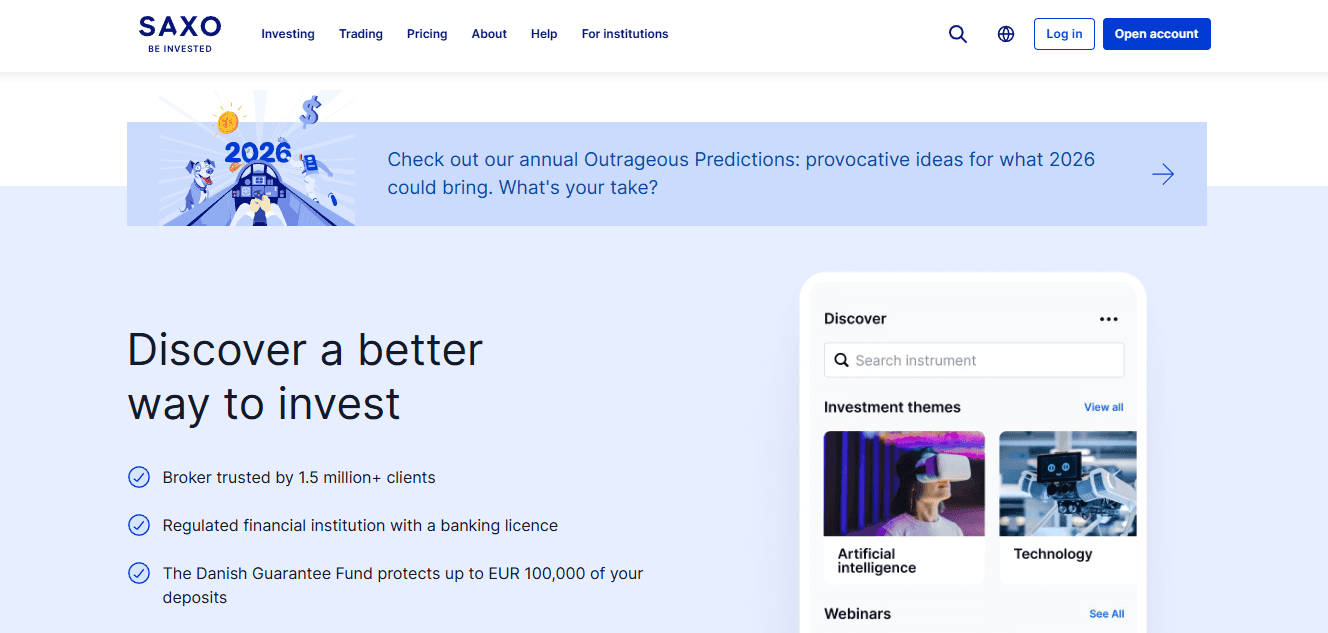
Saxo Bank provides one of the most advanced and broad CFD trading experiences available. It offers access to more than 70,000 financial instruments. The broker combines advanced trading platforms, excellent research, and strong execution quality. SaxoTraderGO is designed for active retail traders, while SaxoTraderPRO is meant for high-volume and institutional professionals. Saxo's integration of research, fractional CFD trading, and multi-asset access makes it perfect for serious traders who appreciate both depth and quality.
Key Features
- Access to 70,000+ CFDs and global markets.
- Professional platforms: SaxoTraderGO (web/mobile) and SaxoTraderPRO (desktop).
- Advanced research and real-time trading signals are built into the platform.
- Institutional-grade pricing with tiered account options (Classic, Platinum, VIP).
- Portfolio margin and fractional contract sizes for clever capital use.
3. Interactive Brokers (IBKR)

Interactive Brokers remains a top pick for professionals looking for precision, liquidity, and transparency. Even though it offers around 6,000 CFD instruments, fewer than IG or Saxo, IBKR provides superb execution quality for global equity and index CFDs. The Trader Workstation (TWS) platform offers excellent data visualization, automation, and international reach. IBKR’s pricing transparency, which reflects real market spreads, is terrific for advanced traders who care about low costs and tools that are as good as those used by institutions.
Key Features
- Global access to 6,000+ CFD instruments across equities and indices.
- Trader Workstation (TWS) for advanced analysis and automation.
- Low average EUR/USD spread of 0.59 pips.
- Volume-tiered pricing and a transparent cost structure.
- Access to forex, futures, ETFs, and options from a single account.
4. CMC Markets

CMC Markets combines advanced technology with great market insights. It is regulated in many top jurisdictions and offers over 12,000 CFDs across forex, stocks, indices, commodities, and treasuries. The special “Next Generation” platform provides super-fast execution, strong charting tools, and built-in sentiment analysis. CMC's ongoing focus on education and transparent pricing makes it a strong choice for traders who depend on data-driven decisions. If you're exploring your options, consider what a prop firm like Goat Funded Trader can offer.
Key Features
- Over 12,000 CFDs across asset classes.
- Award-winning “Next Generation” trading platform for desktop and mobile.
- In-depth market research and trading education from industry analysts.
- Tight spreads starting from 0.7 pips on major pairs.
- Customizable risk management options, including guaranteed stop-loss orders.
5. Plus500

Plus500 appeals to traders who want simplicity and speed without sacrificing regulation or reliability. The broker provides access to over 2,500 CFDs across forex, shares, indices, ETFs, commodities, and cryptocurrencies. Its own platform is well known for its clean layout and ease of use, making it especially appealing for beginners. Plus500 is one of the safest and simplest choices for CFD traders, thanks to transparent pricing, negative balance protection, and strict risk controls.
Key features
- Simple, intuitive trading platform for web and mobile.
- Over 2,500 CFDs across multiple markets.
- Built-in risk management tools, such as stop-loss and guaranteed stop.
- Real-time price alerts and sentiment indicators.
- Regulated across several jurisdictions, including the U.K., Australia, and Cyprus.
What features does eToro provide?
6. eToro

eToro is a popular CFD broker that's great for traders who value community insights and transparency. Trusted by millions worldwide, eToro combines traditional CFD trading with a modern social trading system. This lets users automatically copy the strategies of top investors. The platform has many features but remains easy to use, combining a simple layout with access to thousands of CFDs on stocks, indices, forex, commodities, and crypto assets.
Key Features
- Over 3,000 CFD instruments, including stocks, forex, and crypto.
- Unique CopyTrader™ technology for effective social trading.
- Simple web and mobile apps, ideal for beginner and intermediate traders.
- Real-time performance metrics for top traders.
- Zero-commission stock trading (CFD fees may apply).
7. Pepperstone

Pepperstone has built its reputation on super-fast execution, narrow spreads, and flexible trading. It supports advanced platforms like MetaTrader 4, MetaTrader 5, cTrader, and TradingView, making it one of the most adaptable CFD brokers worldwide. Transparent pricing and access to top-tier liquidity make it a favorite among professionals and scalpers who want to reduce costs. Furthermore, Pepperstone’s execution speed and tool variety make it very suitable for algorithmic trading and active day trading in 2025.
Key features
- Industry-leading low spreads, with EUR/USD starting from 0.0 pips on Razor accounts.
- Multiple trading platforms, including MT4, MT5, cTrader, and TradingView.
- Over 1,200 instruments, featuring forex, indices, shares, and commodities.
- Institutional liquidity with lightning-fast order execution.
- Advanced risk management tools and VPS hosting support.
8. XTB

XTB is becoming more popular because of its strong trading technology and customer education. Its unique platform, xStation 5, offers fast execution speeds and easy-to-use charts, enhanced by real-time sentiment data. Traders can work with CFDs on forex, indices, commodities, stocks, ETFs, and crypto. XTB is also known for its educational content, making it an excellent choice for new traders who want to understand CFD markets quickly.
Key Features
- Highly responsive xStation five platform with innovative trading tools.
- CFDs across six asset classes, including crypto and commodities.
- An extensive library of webinars, tutorials, and market analysis.
- Transparent pricing with spreads from 0.1 pips.
- Top-tier regulation across the EU and the U.K. for added security.
9. AvaTrade

AvaTrade appeals to traders who want a variety of platform choices. It combines the classic MetaTrader support with innovative options like AvaTradeGO, WebTrader, and AvaOptions. Its versatility covers CFDs in forex, indices, stocks, ETFs, and cryptocurrencies. AvaTrade’s balanced system supports both discretionary and automated traders. It also offers built-in educational resources and both fixed and floating spreads. It’s an excellent option for those looking for steady performance and multiple strategies all in one place.
Key Features
- Wide platform choice including MetaTrader 4, 5, AvaTradeGO, and AvaOptions.
- 1,000+ CFD instruments across markets.
- Features fixed or variable spreads for flexibility.
- Comprehensive educational materials integrated in-platform.
- Reliable regulation across six continents.
10. City Index

City Index is a well-known broker with a long history. It is recognized for its strong analytics, reliable execution, and broad market coverage. City Index, owned by the same parent company as FOREX.com, offers more than 13,500 CFD markets and features a specialized platform designed for efficiency and accuracy. With advanced charting, research tools, and top-quality execution, it is an excellent option for experienced CFD traders seeking stability and performance driven by analysis.
Key Features
- Access to 13,500+ CFD products, including global equities and indices.
- Proprietary advanced platform with performance tracking and analytics.
- Competitive spreads (EUR/USD, starting from 0.5 pips).
- Intelligent order management and custom chart features.
- Backed by GAIN Capital and regulated by the FCA.
How to pick the right platform for your stage?
When choosing a trading platform, focus on how it fits your needs rather than just its features. If your goal is to quickly test out demo ideas, choose a simple user interface with reliable order types and precise risk controls. On the other hand, if you want to scale automation or use composite strategies, pay attention to execution quality, API access, and available liquidity across different venues. These trade-offs can significantly determine whether you end up spending time dealing with problems with the broker or improving your edge and discipline. Additionally, finding the right prop firm can enhance your trading experience and provide valuable support.
What patterns do traders follow when transitioning?
A typical pattern seen with traders moving from practice to larger accounts becomes clear after working with funded-account candidates. Newer traders often face choice paralysis due to the wide variety of product options and tiered accounts. On the other hand, experienced traders are ready to pay the extra cost for better markets and execution. Many traders sign up with brokers that promote the largest selection of instruments, but this can fail when they need consistent fills and a reproducible process.
What costs arise from chasing breadth?
Chasing a wide range of options without a clear plan can be very expensive. As watchlists grow, it becomes harder to execute trades consistently, making it harder to understand how well the strategy is actually working. Additionally, the risk rules can be overlooked. This hidden cost manifests as slower learning and larger losses, especially as trade sizes increase.
How does the bridge to practice look?
The bridge to practice is structured effectively. Platforms like Goat Funded Trader offer a clear path forward by using simulated prop accounts and a well-defined scaling program. This method compresses the demo-to-funded timeline while keeping risk discipline. Once traders show consistency, they can receive on-demand payouts. For those looking for repeatable progress rather than jumping between platforms, this in-house setup, along with a quick payout cadence, dramatically speeds up the transition from practice to usable capital.
What risk realities must be accepted?
Risk is a reality you must accept. The market structure focuses activity on the major platforms—the Turbocharge Your Profits: Top 10 Killer CFD Trading Platforms for Retail Traders in 2025. The top 10 CFD platforms account for 90% of market share, indicating that liquidity, spreads, and tools are mainly found among the big names. Additionally, remember that Turbocharge Your Profits: Top 10 Killer CFD Trading Platforms for Retail Traders, which states that over 70% of retail investor accounts lose money when trading CFDs, is a solemn reminder that choosing a platform doesn't replace the need for careful risk management.
What are the practical steps for choosing?
Practical next steps for choosing include starting with a short checklist: platform stability, available order types that match your strategy, access to demo environments, API or automation options, and clear fee transparency. Open two demos and run the same trade plan on both for 30 days; this approach will quickly reveal where execution slippage and UX friction occur.
Why is iteration important when using a platform?
You might believe you're finished when you open an account, but the real challenge is whether the platform lets you make changes quickly while still following your rules as the stakes rise.
Why do trade mechanics matter?
Understanding trade mechanics is crucial because they affect trading success in ways many people miss. These mechanics include order execution, spread pricing, and margin requirements, all of which can significantly impact your profits.
What is CFD Trading?
CFD trading amplifies what traders already do well and punishes what they do poorly. The real skill is turning small, repeatable advantages into disciplined execution under pressure from leverage and costs. Mastery comes from managing position size, execution, and ongoing financing costs, rather than from trying to predict big market moves. Our prop firm helps traders access the capital they need to execute their strategies effectively.
How does leverage change the mechanics of every trade?
Leverage turns a normal position into a high-stakes decision. A small price move can cause a significant change in profit and loss. For major currency pairs, CFD trading lets you use leverage of up to 30:1, according to the Retail Technology Innovation Hub, which means the margin is small, and where you place your stop must match the real volatility of the instrument. The pattern is the same: when volatility increases, a trader must either reduce position size, widen stops accordingly, or accept a higher chance of being stopped out. Think of leverage as a tool that needs a solid set of rules, not just as extra money.
What hidden costs reduce what seems like a winning edge?
Spreads, commissions, slippage, and overnight financing can quietly take away your returns. Financing fees build up when you hold directional trades over several days, and slippage happens most often during news events or when the market has low liquidity. The quality of execution is just as important as the design of your strategy, because reliable fills and clear margin calls help traders accurately measure their edge. A trader who ignores roll costs and slippage will find their backtested win rate significantly reduced in real trading situations.
Why do so many retail accounts lose money?
This failure is a clear pattern: traders treat leverage as optional horsepower instead of the limit it really is. They then let their feelings and changing trade sizes break their own rules. This helps explain why over 80% of retail investor accounts lose money when trading CFDs, according to VT Markets. Such a serious outcome shows both product risk and poor processes. Also, many countries, including the US, limit or ban retail CFD trading. This creates different skill levels across areas, which increases survivorship bias and pushes for risky shortcuts.
To create strong guardrails that can handle real market conditions, it is essential to set complex, measurable rules. Set a fixed percent risk per trade, daily and weekly loss limits, volatility-adjusted position sizes, and required journaling with trade-level performance metrics. Run demo tests that imitate margin calls and funding costs for at least 60 trading days. Compare actual losses to backtest expectations. The main behavioral fix is clear and straightforward: reduce size when uncertainty goes up. This rule helps avoid larger losses than any adjustment to the trading strategy.
What should you track daily to know whether a system is still valid?
Monitor realized versus expected volatility, average slippage per trade, hit ratio by trade type, and the percentage of capital at risk if every open position moved one ATR against you. Think of this as a flight checklist: you would not take off without fuel and alternatives; do not trade size without checking these four numbers first. Trading under margin is like running a time trial with a narrow lane. One steering mistake can send you off course. The lane enables you to go fast, but only if you steer precisely. That neat explanation provides a base, but figuring out if CFDs are a sensible fit for a beginner is a more complicated question that goes beyond simple risk rules.
Related Reading
- Are Small Caps a Good Investment Now
- Can Forex Trading Make You Rich
- How Much Money Do You Need to Start Trading
- How to Start Trading With No Money
- Black Friday Prop Firm Deals
- How Long Does It Take To Become A Profitable Trader
- Which Trading Is Best For Beginners
- Trading Vs Investing
- How to Trade Forex With $100
- Best Market To Trade For Beginners
- Best Timeframe For Swing Trading
- How to Get Free Stocks
Is CFD Trading a Good Idea For Beginners?
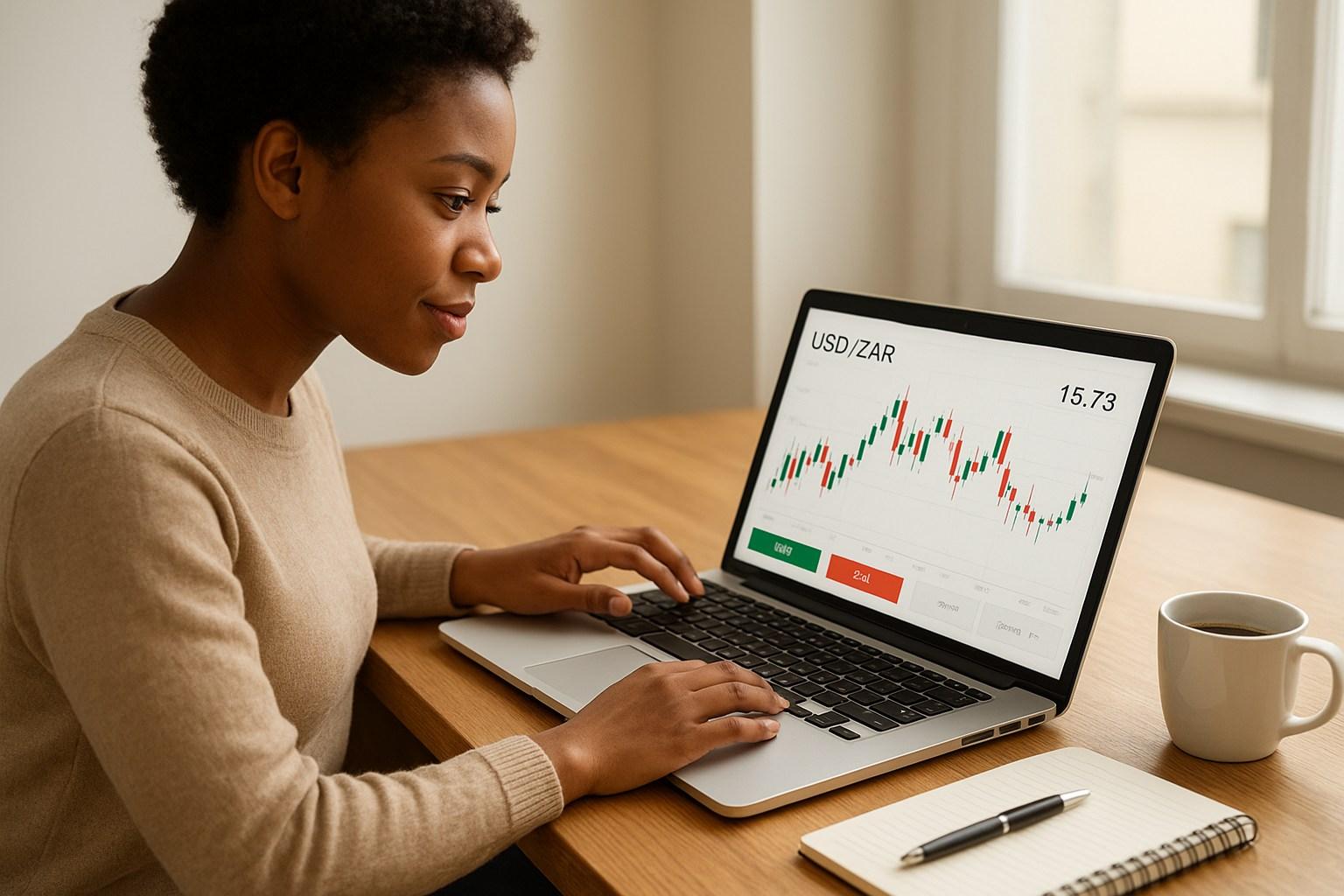
CFD trading is rarely a good choice for absolute beginners. The mix of margin, costs, and unusual execution can quickly punish mistakes. If someone wants to try CFDs, it should be seen as a careful learning process with strict risk rules, a clear demo proof period, and objective entry criteria before risking any real money.
To make sure practice helps with live trading, start with a plan that treats the demo like a laboratory, not a game. Set a fixed proof period, such as 90 calendar days or completing 100 to 200 live-simulated trades, whichever comes later. Write down every trade, including why you entered, stop logic, and actual fills.
Use volatility-adjusted sizing, set a single-trade risk cap (0.5 to 1.0 percent of equity is standard early on), and create firm daily and weekly loss limits. Each day, track four essential metrics at the same time: realized expectancy, average slippage, maximum drawdown, and the percentage of equity at risk if open positions lose one ATR. These metrics reveal more than just gut feelings about whether the trading process can handle normal market fluctuations.
What practical checks prove your demo edge is real?
To test your trading strategy, use the same trading plan in at least two different market conditions, such as a trending month and a mean-reverting month, and examine the results. Make sure to include live-simulated slippage and financing costs in the demo to avoid losing your advantage when fees are added. A helpful guideline to remember is: if your real-time slippage plus roll costs take up more than 25 percent of your overall edge on average, you need to change your approach before expanding.
Which rookie mistakes actually kill accounts fastest?
Several predictable mistakes can quickly lead to account losses. These include size creep, trading through scheduled news spikes, and justifying an increase in trade size after a winning trade. Psychologically, this creates a trap in which traders see leverage as extra capital rather than a critical limit. Think of leverage as a narrow bridge: it allows for faster crossings, but you need to reduce speed and stay centered to avoid falling off. Establish rules that require size reduction during periods of increased volatility or uncertainty, rather than increasing position sizes.
Why does jumping straight from demo to live stakes break down?
Most traders start with the familiar demo environment before they move on to small live stakes. However, this can often lead to problems. Many traders copy demo profit and loss (P&L) without really understanding margin behavior or funding costs. While this familiarity is understandable, it hides the real challenges that come when position sizes increase. Key issues include diluted edge, surprise margin events, and analytics gaps that only appear under real trading conditions. Platforms like Goat Funded Trader provide simulated prop accounts that clearly show margin, financing, and scaled virtual capital up to $2M. They also have centralized performance analytics and fast, on-demand payouts. This allows traders to shorten the learning curve and test their strategies under realistic pressure before risking their own money.
How should position size change when you move from demo to real funds?
Translate 'leverage' into 'position limits,' rather than seeing it as a way to trade more aggressively. Since Markets.com states that CFD trading allows leverage of up to 30:1 for major currency pairs, margin requirements can be low. Stops must reflect the instrument's actual volatility, not just what we hope for. Traders should start live with a size that creates an equity risk of 0.25 to 0.5 percent per trade at the full stop distance. Also, reduce the size on any day when realized volatility exceeds the planned amount by 20 percent.
When is CFD trading simply not a good idea for a beginner?
The answer to this question is based on results rather than personal views. The statistics are concerning: about 75% of retail investor accounts lose money when trading CFDs, according to Markets.com on October 1, 2023. This shows a big structural gap in how retail traders protect their money and follow processes. If a beginner cannot meet clear demo standards, stick to the right risk percentage, or accept regular small losses as part of learning, it is better to either step back or hold off on live trading. For those looking to improve their trading skills, consider what a good prop firm can offer in terms of support and education.
What daily habits separate the small group that survives?
Traders in the top tier always write down every detail of their trades and check how well they executed them every week. They also take breaks after losing several times in a row. It's crucial to automate checks; for example, they should automatically reduce trade sizes if slippage or ATR spikes occur. By focusing on making things repeatable rather than trying to be heroes, they set up routines that lead to repeatable micro-wins rather than pursuing big, infrequent payoffs.
What surprising set of external constraints should you consider?
The first choice to risk real money brings a surprising set of outside limits that many people overlook.
Are CFDs Legal in the U.S.?
Yes. U.S. retail traders cannot legally trade CFDs because regulators view them as off-exchange swaps. These require dealer registration and oversight, which domestic brokers do not provide. This legal position forces most American traders to seek exposure through cleared, regulated instruments rather than retail CFD products.
Why did regulators shut that door?
Regulators took action against CFDs after the financial crisis to prevent highly leveraged, opaque retail trading that can harm the system and consumers. The Dodd-Frank framework sees many CFD-like contracts as swaps. This classification leads to registration, reporting, and capital requirements under the Commodity Futures Trading Commission and the Securities and Exchange Commission. These requirements make it very difficult for mainstream brokers to offer retail CFDs to U.S. customers.
How clear is the status today?
For clarity, BNO News, 2025 — "CFDs are illegal for retail traders in the U.S.," states the prohibition clearly. The 2025 regulatory environment does not allow for a legal retail CFD market. Similarly, SabioTrade Blog, 2025 — "0% of CFDs are legal for retail traders in the U.S." — shows this lack, stating that retail traders cannot find legal CFD options that comply with U.S. law.
What happens when traders reach for offshore alternatives?
It is common to see U.S. accounts opened on foreign platforms that advertise CFD access, but these arrangements carry real costs. Banks and payment processors often block or reverse transfers flagged for regulatory risk. Customer protections are minimal, and resolving disputes can be slow or even impossible because the provider is outside the U.S. jurisdiction. This situation is like buying an expensive appliance without a warranty, invoice, or the ability to call a regulator if it fails; getting your money back looks very difficult in practice.
Most people deal with this by keeping a live offshore account, as it seems faster and cheaper at first. While this standard method is understandable, hidden costs appear as trade sizes increase: transfer friction, wider spreads, and no legal recourse when a platform freezes accounts or changes terms.
Platforms like Goat Funded Trader offer an alternative. They provide simulated funding programs and clear scaling methods, allowing traders to practice under realistic margin and funding constraints while remaining within compliant, auditable systems. This method keeps withdrawal options and dispute pathways open as things get more complicated.
How should you validate a trading venue if you are in the U.S.?
Before funding any trading venue, make sure to do three key checks: proof of regulatory registration or an apparent reason why the product is available to U.S. residents; clear margin and financing terms that you can use in your strategy; and a withdrawal test with a small amount of money. It's also essential to include an operational check by requesting real account statements and settlement confirmations, especially when considering options with a prop firm. Never think that reasonable pricing can replace the need for a confirmed legal status.
What benefits does Goat Funded Trader offer?
Goat Funded Trader gives you access to simulated accounts up to $800K with the best trader-friendly conditions in the industry. These include no minimum targets, no time limits, and triple paydays with up to 100% profit split. This way, you can test your skills under realistic conditions without the risks of retail CFDs. Join over 98,000 traders who have already earned more than $9.1 million in rewards. This is backed by a 2-day payment guarantee and a $500 penalty for delays.
You can sign up to get access to up to $800K today with 25-30% off as you choose your path. This prop firm path shortens the demo-to-funded timeline while keeping transparent rules and fast payouts.
What impact do your choices have on your trading experience?
This surface answer explains the rules. However, the practical choices made next will determine whether the learning curve speeds up or ends with a frozen account.
Related Reading
- How to Make Money in Forex Without Actually Trading
- How to Stop Overtrading
- How to Become a Successful Day Trader
- Swing Trading Strategy
- Most Profitable Trading Strategies
- How Much Can You Make Day Trading With 100k
- How to Start Day Trading With $500
- Risk Management for Traders
- How Much Money Do I Need to Start Day Trading
- Swing Trading vs Day Trading - Which Is More Profitable
- Best Indices to Trade
- Best Pairs to Trade in Forex
- Trading Risk Management Tools
How Do I Choose the Best CFD Platform?

Select a platform that shows its ability to execute and operate honestly under pressure, not just the one with the most impressive user interface. Do careful, repeatable tests to assess slippage, fills, uptime, and actual running costs. Pick the venue whose measurable performance matches your specific strategy and automation needs.
How should execution and fills be stress tested?
A common mistake is thinking a demo win means the broker is reliable, as this confuses paper fills with real execution. Instead, place the same orders at the exact times on at least two platforms for 30 to 60 calendar days. Keep track of fill rates, partial fills, median slippage, and the 95th percentile slippage for both entries and exits. Analyze the results like a post-race report: figure out what percentage of market orders were re-priced, how often limits were executed at worse prices, and how long acknowledgments took. If you trade during news releases or slow hours, include a focused sample of 20 trades around scheduled announcements to see the worst-case behavior.
What technical guarantees deserve scrutiny?
Uptime and determinism are more critical than feature lists when profit and loss depend on them. It is necessary to ask for published uptime SLAs, historical outage logs, and distributions of order acknowledgment times. Checking the server locations relative to where trading occurs is also vital. Look at whether the platform offers FIX or WebSocket APIs with documented rate limits. Also, ask for a sample trade audit trail that includes timestamped client orders, exchange acceptance, and fill details. For algorithmic traders, it is imperative to request tick-by-tick market data and a backtest engine that uses the exact matching and slippage model seen in live fills.
What’s the hidden cost of broker selection?
Most traders choose brokers based on price or features, but what’s the hidden cost? Many teams choose brokers by comparing spreads and features because it seems simple. This way might be fine for smaller trading amounts, but as someone grows in trading, issues like inconsistent fills, unreliable reporting, and slow withdrawals become problems. These issues build up into execution risks and wasted time. Platforms like Goat Funded Trader offer simulated prop accounts that accurately reflect margin and financing costs. They also provide centralized performance analytics for reviewing each trade and quick payout systems to maintain steady cash flow. This setup acts as a practical bridge from careful demo routines to larger, funded trading.
How do you validate trustworthiness beyond marketing claims?
If a platform will hold your capital or be important to your routine, it’s essential to check several key aspects. First, look at corporate filings, proof of segregated client accounts, and whether an independent auditor reviews custody arrangements. Then, conduct a withdrawal test using a small amount and carefully time the full settlement. Also, review complaint histories and regulator notices. Look for documented negative balance protection policies and withdrawal fee schedules. Verified payout proofs and timestamped client statements are much more convincing than polished testimonials.
Which features matter per strategy, and how do you score them?
If you scalp, focus on DMA, order book depth, and measurable median execution latency. For swing trading, focus on high-quality historical tick data and precise overnight financing calculations. If you create systems, emphasize reproducible backtests, API throughput, and deterministic fills. Build a simple decision matrix: write down five criteria, give them 1 to 5 weights based on how often you trade and your risk tolerance, then score each platform fairly. Lastly, do a 100-trade mini-experiment to check the top scorer before you invest more money.
What hidden costs should you model into the total cost of ownership?
Beyond spreads and commissions, it's essential to consider other costs, such as data fees, API or connection charges, VPS costs, currency conversion fees, and, during holidays, wider spreads. Change these factors into one measure, cost per round trip, and multiply this by the expected monthly trade count to see the real drag on your profit. Also, calculate the opportunity cost from slippage by calculating the average amount lost on fills and converting it to dollars per trade.
How can industry comparisons guide your choice?
Industry comparisons are plentiful, with over 60 CFD trading platforms tested on ForexBrokers.com in 2023. It's essential to have a straightforward method to separate noise from substance. Functionality may catch your eye, but reliability is what really affects decisions. According to the FXBO Blog, in 2025, over 70% of traders ranked platform reliability as the most critical factor when selecting a CFD trading platform; this information should help guide your decision-making process.
How can you test platforms before committing?
Picture it like choosing a race car: spec sheets show top speed, but you should select the vehicle that runs consistently, lap after lap, without unexpected failures. Once you have a short list, carry out the same trade plan across these platforms for 30 days. After that, let the data guide your decision.
What more can be learned about funding mechanics?
There’s more to discover about how early access offers and funding mechanics change your way of living capital.
Get 25-30% off Today - Sign up to Get Access to Up to $800K Today
Trading with leverage can quickly reveal small execution and process mistakes. Moving from practice trading to a CFD trading platform with real money, spreads, and order routing can feel like driving a finely-tuned car onto a busy highway. To test rules under realistic execution and financing conditions, consider platforms like Goat Funded Trader. They provide tech-backed simulated accounts and a clear scaling program to turn consistent performance into funded accounts. This system has transparent risk controls and allows for fast payouts. This way, traders can focus on improving their skills rather than dealing with operational issues.
Related Reading
- CFD Trading
- CFD How It Works
- CFD Broker
- CFD Meaning
- CFD Simulation
- CFD Analysis
- CFD Account
- CFD Modeling
- CFD Forex
- CFD Online
- CFD Trading App
- Regulated CFD Brokers
Be Great and get the App