






How to Trade Forex With $100
How to Trade Forex With $100 using intelligent risk control, simple setups, and broker tips that protect small accounts.


You have $100 and a head full of questions about leverage, lot size, and margin. For anyone learning Leverage Trading for Beginners, starting with a hundred dollars brings real constraints: spreads matter, position sizing decides if you survive, and trading psychology moves fast. Can you grow that money without getting wiped out? This guide provides clear, practical steps for risk management, micro lot sizing, demo practice, choosing a broker, and a simple trading plan, so you feel empowered and confident to start Forex trading with a small investment.
To help with that, Goat Funded Trader offers a prop firm program that lets you trade with larger capital under clear risk rules, so your $100 can be a start rather than the limit.
Summary
- Treat a $100 forex account as an evidence engine, not an income source, since a 1% return is just $1 and a 10% monthly return is $10. The priority is building a reproducible process rather than chasing cash.
- The forex market is deep, with daily volume north of $6 trillion, and micro-lots (1,000 units) let small accounts get real fills and test live execution without oversized nominal losses.
- Make demo practice realistic by forcing live-like constraints, for example, keep a daily trade log for 30 days and accumulate 50 to 100 documented trades while adding simulated slippage and identical spreads.
- Control leverage deliberately, because 1:100 leverage lets $100 control $10,000; cap effective leverage and size positions by a fixed-dollar risk or a 1% per-trade equivalent to prevent rapid drawdowns.
- Scale only after objective gates, such as a minimum trade count (for example, 50 trades), positive rolling expectancy, and passing a 60-day rule set, since traders who follow that discipline show steadier execution and fewer impulsive size increases.
- This is where Goat Funded Trader fits in; the prop firm addresses the scaling challenge by offering simulated funding tiers, consistent accounting, and on-demand payouts so traders can validate sizing and rules without risking their live capital.
What is Forex Trading?
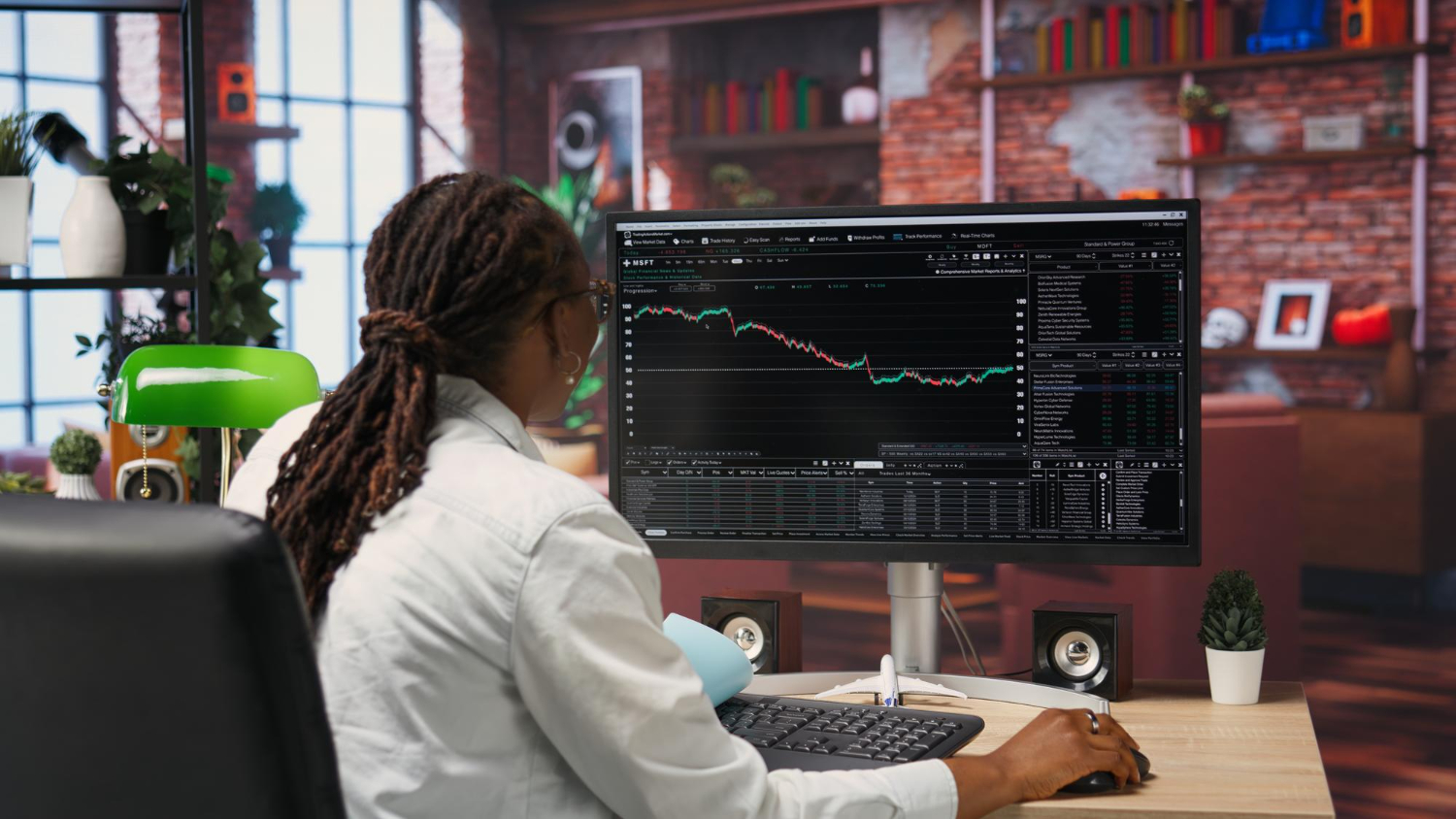
Forex trading is a global market for buying and selling currency pairs, where you use position size and leverage to turn small moves into tradable outcomes, and success comes down to disciplined risk rules and repeatable execution. With a structured practice plan, realistic simulation, and strict position sizing, you can build demonstrable performance without gambling on the first live account.
How Liquid And Available Is The Market?
Liquidity is not theoretical here; it is real and deep, which matters for execution and spreads. According to DailyForex (2020), the Forex market is the largest financial market in the world, with daily trading volume exceeding $6 trillion. Major pairs offer the tightest spreads and the cleanest fills. Because liquidity concentrates in a few major pairs, you can size micro trades and still get reliable fills, which is why learning micro lot math and pip value matters when you have limited capital.
When Can You Trade?
The market’s hours shape how you learn and schedule practice, since price moves don’t pause for convenience. DailyForex (2020), the Forex market operates 24 hours a day, five days a week, across major financial centers in different time zones, so you can test strategies across different sessions and volatility conditions without waiting a week. That availability is a double-edged sword: you can iterate quickly, but you also face nonstop information and the temptation to overtrade unless you set time- and session-based rules.
What Actually Moves Exchange Rates, And Why Does That Matter For A Small Account?
Interest rate expectations, economic releases, geopolitical shocks, and liquidity flows drive the big swings; order flow and market structure determine how that news translates into short-term moves. This pattern appears across demo and live trading: systems that ignore fundamentals and context collapse during surprise moves, and the hidden cost is an emotional whipsaw rather than just a P/L hit. Treat macro data as event risk, not prophecy, and build stop placement and trade sizing around predictable reaction ranges.
How Should You Practice So That Demo Results Count?
Practice with constraints that force live-like behavior: trade only major pairs, use micro lots, cap risk per trade to a fixed small percentage of equity, and add simulated slippage to your fills. The dominant failure mode I see is behavioral, not technical: traders skip methodical backtesting and journaling, then get swept up by short-term winners and overleverage. If you make backtesting and a daily trade log nonnegotiable for 30 days, you force reproducible behavior; that constraint reveals whether your edge is real or noise.
Most beginners follow the familiar path of demo accounts, expensive courses, and scattered practice. That works for learning basics, but the hidden cost is slow, noisy feedback: months of demo time with no clear path to scale, and habits that break when real slippage and emotional stakes arrive. Platforms like Goat Funded Trader provide a practical bridge, offering simulated funding tiers and large notional allocations so traders can validate scaling rules and consistency in a controlled environment, with rapid payout-on-demand and in-house stability to shorten the iteration cycle and preserve live capital while testing execution and discipline.
How Do You Make Demo Discipline Translate To Live Accounts?
Lower leverage, enforce exact stop placement, and trade with a checklist that includes spread, session, and news filters. Think of your demo as a flight simulator where you intentionally add turbulence, latency, and a modest execution penalty until your edge still works. That practice reduces the cognitive load that overwhelms many beginners, who are frustrated by platform choices and technical details; when you remove complexity through tight rules, learning speed increases and emotional control follows.
What feels simple on paper becomes a lot messier when real stakes appear, and that tension is precisely why the next question matters.
Can You Trade Forex With $100?

Yes, $100 can be a usable starting point, but the goal with that size is not to chase big single trades; it is to prove a repeatable process and scalable rules. You use a small account to demonstrate an edge, document consistency, and then convert that into higher simulated allocations and on‑demand payouts inside the funding ecosystem.
What Should You Prioritize In The First 30 Days?
Focus on process metrics that scale trade frequency, average risk per trade, win rate under your rules, and a clean trade log showing entry, stop, size, and rationale. Treat each trade as data, not drama. Over a 30 to 90 day window, you want a stable pattern of execution, same session filters, same exit discipline, so your performance reads as a repeatable method, not luck.
How Do You Use Leverage Without Turning $100 Into A Single Mistake?
Leverage multiplies buying power and exposure, so you must control it deliberately. According to telegramsignalcopier.com, 2023-10-01, "Leverage of 1:100 allows you to control $10,000 with $100." That math explains why brokers quote heady numbers. Still, it also explains why margin rules and stop placement matter, because the same lever that scales gains will scale rapid drawdowns. I recommend setting adequate leverage limits inside your plan, for example, never exposing more than a fixed fraction of nominal buying power across all open positions.
How Do You Size Trades To Prove An Edge?
Work a simple sizing ladder tied to volatility and account equity. Use fixed pip-based stops that respect average true range for the pair and step position size up only after objective performance thresholds are met, for instance, after a string of clean trades or a verified increase in expectancy. Think of the account like a ladder made of many small rungs; you climb one dependable rung at a time rather than attempting a single long jump.
What Role Do Micro Positions Play When Capital Is Tight?
Micro positions let you execute live with small nominal losses per stop, making them practical for building trade samples without catastrophic risk. The practical implication is captured plainly by telegramsignalcopier.com (2023-10-0), "With $100, you can trade micro-lots, which are 1,000 units of currency.", meaning you can experience real fills and trade management without inflating position size beyond what your psychology can sustain.
Most traders follow the familiar path of fragmentary demo runs and scattered rules that feel productive at first. That approach works because it is easy and requires no new systems, but the hidden cost is noisy signals and no clear path to scale, where good days masquerade as skill and slippage surprises you when you try to increase size. Platforms like Goat Funded Trader provide simulated funding tiers with large notional allocations and rapid payouts on demand, giving traders a bridge to validate scaling rules, preserve live capital, and compress the iteration cycle into measurable outcomes.
How Do You Translate Demo Consistency Into Credible Proof?
Create meta-rules that force realism, add execution friction to your demo fills, require identical spread/commission accounting, and insist on the same session and news filters you will use live. Pair that with a statistical checklist before you scale: minimum trade count, positive expectancy across subsamples, and a capped maximum drawdown relative to equity. That way, your demo performance becomes a replicable dossier rather than an anecdote.
How Do You Manage Psychology With A Slight And Volatile Equity Curve?
Accept that volatility will feel larger on a small base, and build buffers accordingly. Use daily stops that limit ruin risk, schedule deliberate non‑trading hours to avoid revenge trades, and enforce a rule that you will only increase size after documented changes in system expectancy. Emotionally, you are training a reaction, not trying to win a headline.
A short anecdote to make this concrete, I once helped a trader who treated a $100 account like lottery money, then switched to logging every micro position and treating each as a laboratory test; within two months, their decisions tightened, their sample size grew, and their "small" account produced evidence that justified simulated scaling.
That simple change in discipline is the lever that turns tiny capital into demonstrable performance, and it forces you to prove process before you pursue profit.
The next question exposes the real tension between demonstrable process and raw returns, and it is more revealing than you expect.
Related Reading
- Are Small Caps a Good Investment Now
- Can Forex Trading Make You Rich
- How Much Money Do You Need to Start Trading
- How to Start Trading With No Money
- Black Friday Prop Firm Deals
- How Long Does It Take To Become A Profitable Trader
- Which Trading Is Best For Beginners
- Trading Vs Investing
- How to Get Free Stocks
- Best Market To Trade For Beginners
- Best Timeframe For Swing Trading
How Much Can I Make With $100 in Forex?

You can make real, measurable progress with $100, but the dollar amounts are small, and your job is to turn those small wins into a reproducible signal you can scale. Treat the first months as evidence gathering, not income generation; your objective is consistent, risk-managed growth that a funding program will recognize and reward.
How Much Does A Single Percent Move Actually Pay?
According to Daily Price Action, "A 1% return on a $100 account is just $1.". That blunt math explains why absolute-dollar thinking matters when you start small. When your profits are measured in single dollars, every cost matters: spread, slippage, and a single losing streak can erase weeks of effort.
What does a realistic monthly win look like in cash terms?
Consider the scale Daily Price Action, "With a $100 account, a 10% monthly return would be $10." This helps frame expectations. That level of return, sustained, is what separates hobby trading from a reproducible performance record you can present to a funder or use to justify simulated scaling.
How Do You Make Small Cash Returns Persuasive?
You make them persuasive by turning trades into data. Track rolling performance metrics, such as average R per trade, maximum drawdown in dollars, and a minimum trade sample before you escalate size. Proven positive expectancy across multiple market conditions, document 50 or more objective trade decisions, and keep risk per trade fixed in absolute dollars so your growth curve reads as process, not luck.
What Breaks When Traders Try To Scale Too Fast?
Most traders respond to a rare win by amplifying size emotionally, then hit an outsized drawdown and lose their edge. This failure mode is predictable variance scales with position size, and psychology collapses before your rules do. Fight that by defining absolute-dollar loss limits per day and per week, and by refusing to increase size until your documented edge holds across a prebuilt subsample of trades.
Why Test Performance Inside A Simulated Funding Path?
Most traders run demos as isolated experiments because they feel safe and familiar. That works early, but it hides real costs: you lose the discipline of handling payout and scaling rules, and you extend the iteration cycle while burning emotional capital. Platforms like prop firms provide tiered simulated allocations, rapid on-demand payouts, and consistent accounting, so traders can validate scaling rules faster and keep live capital protected while they prove the process.
How Should You Use Small Profits Actually To Scale?
Treat each dollar earned as curriculum credit. Convert monthly cash gains into milestones: a documented streak of X profitable months, a capped drawdown metric, and a minimum trade count. Use those milestones to unlock larger simulated notional and then enforce stricter risk controls as you step up. Think of it like building scaffolding: you raise the scaffold only after the lower level has been inspected.
A short analogy that helps me explain this growing a trading account from $100 is like building a lean engine. You refine tolerances, test at low RPM, and only then increase power—rushing that process ruins parts, not just results.
Goat Funded Trader gives you access to simulated accounts up to $800K with the most trader-friendly conditions in the industry, no minimum targets, no time limits, and triple paydays with up to 100% profit split; join over 98,000 traders who've already collected more than $9.1 million in rewards, backed by a 2-day payment guarantee with $500 penalty for delays. Sign up to Get Access to up to $800 today, and 25-30% off, and see how a structured prop firm pathway shortens the time from small gains to scalable funding.
That steady, process-first approach sounds final, until you see the single tactical lever that changes everything.
How to Trade Forex With $100

You can turn $100 into a credible, fundable performance by treating it as an evidence engine rather than a cash target. Design a strict, measurable plan that forces live-like constraints, collects trade statistics, and only increases size when objective gates are met. Start with a broker selection that fits your capital and then lock in rules that make every trade repeatable and auditable.
Choose the Right Broker
Selecting the right broker is critical when trading with a small account. Look for brokers that accept low minimum deposits (ideally $100 or less), offer micro or nano lot trading to allow smaller position sizes, and have low spreads and fees to preserve your capital. Brokers like OANDA, Exness, XM, and Forex.com are good examples that accommodate smaller accounts.
Understand Leverage and Its Risks
Leverage lets you control a larger trading position with less capital. For example, 1:30 leverage on $100 means you can control $3,000 in the market. However, leverage amplifies both profits and losses, so use it cautiously. A prudent approach is to risk only 1–2% of your account per trade to protect your capital from significant loss.
Set Realistic Expectations
With just $100, avoid chasing quick riches. Your goal should be steady learning and consistent small gains. View this capital as a starting point, a foundation to grow your skills and account over time rather than expecting significant returns immediately.
Practice Risk Management
Protecting your capital through strict risk management is vital. Limit each trade risk to 1–2% of your account balance ($1–2). Use stop-loss orders to cap potential losses and focus on trading major currency pairs like EUR/USD, GBP/USD, and USD/JPY, which tend to have tighter spreads and more liquidity.
Develop a Simple Trading Strategy
Keep your trading strategy straightforward and beginner-friendly. Start by practicing on a demo account to understand the market dynamics without risking real money. Simple techniques like trend following, breakout trading, or price action based on support and resistance levels are effective starting points.
Calculate Lot Size Properly
Calculating your position size correctly helps manage risk. For example, risking $1 per trade with a stop loss of 10 pips means trading 0.1 micro lots (1,000 units), where each pip is worth about $0.10. Adjust your lot size according to your stop-loss distance and risk level to avoid overexposure.
Keep a Trading Journal
Maintain a detailed journal logging every trade’s entry and exit points, stop loss, take profit levels, and the rationale behind each trade. Regularly reviewing your journal helps improve your discipline, correct mistakes, and refine your strategy.
Avoid Common Pitfalls
Be vigilant against common errors that can destroy a small account. Avoid overtrading or increasing trade sizes impulsively to recover losses. Stay emotionally detached from trades and avoid acting on rumors. Stick strictly to your risk management plan to sustain your trading journey.
How Do You Build An Evidence Plan That Actually Scales?
Break your first 90 days into three measurable phases, including discovery, validation, and gating. In discovery (first 10–20 trades), you test entries and stop placement against real fills. In validation (following 30–50 trades), you run the same rules across different sessions and volatility bands, logging R per trade and slippage.
In the gating phase, you apply three pass/fail checks, for example, minimum trade count, positive expectancy across subsamples, and a capped maximum drawdown in absolute dollars, before you increase allowed notional. Treat each phase like a lab protocol: fewer variables, consistent measurement, clear pass criteria.
What Concrete Sizing Rules Keep You Alive While Proving An Edge?
Size positions by fixed dollar risk tied to volatility, not by temptation. Calculate the stop distance using a short Average True Range (ATR) window, convert it to a pip value, then set the lot size so your absolute loss equals the fixed risk line on your plan. Use a step-up ladder only to increase size after a gate is passed, for instance, after 50 documented trades with a steady R multiple and no rule breaches across two market regimes. This makes your growth traceable, and it prevents emotional bursts from masquerading as skill.
Why Force Demo Realism, And How Do You Do It?
When you force demo accounts to reflect real costs and execution, your behavioral reflexes adapt properly. Add a fixed execution penalty to your simulated fills, require identical spreads and commissions as the live broker you’ll use, and enforce session and news filters that mirror your live routine. This constraint converts demos from fantasy scores into actionable evidence that a funding path will accept.
Most traders follow a familiar path: they use loose demo rules because it feels easy and harmless. That works early, but when volatility spikes or costs change, that loose approach fragments into missed stops, hidden slippage, and emotional overleverage that destroys credibility. Solutions like Goat Funded Trader provide a structured, simulated funding ladder with stable accounting and on‑demand payouts, letting traders compress the iteration cycle while testing identical rules under consistent simulated capital allocations.
How Do You Control Leverage And Exposure Without Killing Optionality?
Don’t treat nominal buying power as permission to max out positions. Cap total open exposure as a fraction of your effective notional, enforce a hard per-day dollar loss limit, and require that new positions be opened only after prior trades close or meet a predefined risk threshold. Think of it like tuning a small engine at idle before you add throttle, calibrating each setting so the machine behaves predictably when you step on the gas.
What Metrics Will Convince A Reviewer You’re Ready To Scale?
Put the numbers front and center: rolling expectancy, median R per trade, average slippage in dollars, trade count by session, and absolute maximum drawdown in dollars. Build a compact dossier that shows a stable edge across subsamples and months, not a string of lucky winners. When those metrics meet your gates, you have both a repeatable method and the evidence reviewers need.
When we enforced a 60-day rule set for new traders, the pattern was unmistakable: those who treated each trade as a data point, limited per-trade dollar loss, and waited for gate confirmation developed steadier execution and fewer impulsive size increases. This behavioral change, measured across trade counts and drawdown, is the real currency you convert into simulated allocations.
Use practical defaults that match real-world constraints, for example choose brokers that accept [LiteFinance, 2023-10-01, "Minimum deposit of $100, and set your risk baseline to a disciplined rule such as LiteFinance (2023-10-01), "Risk management with 1% per trade", then express that percentage as a fixed-dollar limit in your plan so it is enforceable and auditable.
That small‑account discipline gets you a record that funding programs can evaluate, instead of a highlight reel that falls apart under scrutiny. That simple change in framing is powerful, but the next problem is quieter and more complicated to fix than you think.
Related Reading
- How to Make Money in Forex Without Actually Trading
- How to Stop Overtrading
- How to Become a Successful Day Trader
- Swing Trading Strategy
- Most Profitable Trading Strategies
- How Much Can You Make Day Trading With 100k
- How to Start Day Trading With $500
- Risk Management for Traders
- How Much Money Do I Need to Start Day Trading
- Swing Trading vs Day Trading - Which Is More Profitable
- Best Indices to Trade
- Best Pairs to Trade in Forex
- Trading Risk Management Tools
Limitations of Trading Forex With $100 and How to Overcome Them

You will hit three practical ceilings with a $100 forex account, such as tiny absolute profits, fragile buffers that punish one mistake, and limited diversification. Overcome them by treating the account as a measurement device, protecting every dollar from fees and slippage, and creating a clear, auditable path to scale your small wins into verifiable performance.
How Do You Stop Spreads And Swaps From Eating Your Edge?
Be ruthless about execution cost. Choose a broker and trading times that minimize spreads and avoid holding positions through rollovers when possible, because a couple of pips here and a swap there can turn a winning day into a breakeven when your profit goal is measured in single dollars. Use limit orders to capture midspread fills, check typical spread tables for your pair at the session you trade, and tally commissions and swaps in your trade log so your expectancy reflects net, not gross, returns.
What Order Types And Habits Protect A Tiny Account?
Use limit and conditional orders, not market orders, as a default, so you control entry price and reduce slippage. Practice one-click execution for exits, and create OCO rules to remove emotion at the moment price tests a key level. Time-in-force matters: avoid market orders during overlapping news windows, and prefer shorter, well-defined trade horizons where you can actually manage position sizing and stops without leaking margin.
How Do You Make A $100 Account Produce Fundable Evidence Rather Than Noise?
Treat each trade like lab data. Log entry, exit, pip slippage, commission, ATR-based stop distance, and the exact reason you entered. Convert those fields into simple performance metrics, such as cost‑adjusted expectancy and average R after costs. When you record 50 to 100 trades under identical rules, you stop arguing about whether a result was luck and instead show reproducible behavior that reviewers can understand.
How Can You Diversify Without Spreading Yourself Thin?
You cannot hold many simultaneous positions, but you can diversify over time and correlation. Stagger trades across sessions so wins are not clustered, and pick two or three low‑correlation major pairs rather than a dozen noisy crosses. Use tiny hedge tickets to neutralize event risk when necessary, but only when the hedge itself follows the same documented sizing rules that you journal every time.
Most traders use spreadsheets and scattered demo runs because it feels low-friction and familiar, and that approach works early on. As volumes grow, those ad hoc systems fragment into inconsistent rules and slow scaling decisions that hurt credibility and waste time. Solutions like Goat Funded Trader provide structured simulated funding tiers with stable accounting and rapid payout-on-demand, giving traders a single place to prove process under consistent conditions while preserving live capital and compressing the feedback loop.
What Metrics Actually Convince A Funding Reviewer?
Move beyond percent returns and show cost‑aware metrics: median trade duration, cost‑adjusted expectancy per trade, average slippage in dollars, maximum consecutive dollar drawdown, and a consistency score across session types. Present these as a compact CSV with annotated trades so your reviewer sees both the raw fills and the rule set you followed, not an abstract equity curve.
How Should You Compound Small Wins Without Blowing The Account?
Lock a profit reserve. Every time you net positive for the week, transfer a fixed fraction into a reserve you do not risk for at least 30 days. Increase size only after your gating rules pass, for example, after 50 documented trades with stable cost‑adjusted expectancy and no rule violations. Think of compounding as disciplined reinforcement, not emotional escalation.
Where Does Leverage Fit Into This Plan?
Leverage can let you test position-sizing concepts at lower capital, but you must control it deliberately, because it speeds both gains and ruin. Brokers sometimes advertise options like LiteFinance (2023-10-01), "Leverage of up to 1:500", which shows how much nominal buying power you could use. Still, the practical move is to cap effective leverage inside your rules so margin calls never flip your experiment into a catastrophe.
Which Entry-Level Accounts Should You Pick To Keep The Experiment Honest?
Pick brokers whose onboarding matches your plan, and confirm they accept LiteFinance (2023-10-01), "Minimum deposit of $100", so you are not chasing exotic account types. Match spreads, execution policy, and swap treatment between demo and live accounts and embed those costs into every trade you log; otherwise, your results will fail at the first scale gate.
Turning $100 into a credible funding dossier is like tuning a precision watch; you tighten tolerances, test at low power, and only then add torque. That next twist explains why the pathway to larger simulated allocation is easier than it looks, and why a straightforward change in your plan can speed that process dramatically.
Related Reading
- CFD Trading
- CFD How It Works
- CFD Broker
- CFD Meaning
- CFD Simulation
- CFD Analysis
- CFD Trading Platform
- CFD Account
- CFD Modeling
- CFD Forex
- CFD Online
- CFD Trading App
- Regulated CFD Brokers
Get 25-30% off Today - Sign up to Get Access to up to $800 today

Consider Goat Funded Trader if you want to turn a disciplined $100 practice into a fundable, scalable pathway, because it puts your rules and trade log at the center, with structured simulated funding tiers, instant funding options, and precise payout mechanics that judge performance on consistency, not luck. I know many traders are rightly skeptical of simulated accounts, fearing manipulated fills and confusing drawdown rules. That concern is genuine, which is why platforms like Goat Funded Trader emphasize transparent rules, consistent accounting, and fast payouts so you can prove repeatable results without risking live capital.
Be Great and get the App