






6 Best Demo Trading Apps and Platforms to Try in 2026
Looking for the best demo trading app? Review 6 platforms for risk-free practice, charting, and paper trading before going live.


Every aspiring trader faces the same challenge: how do you learn to trade without losing real money in the process? The best paper trading app offers a solution by providing a risk-free environment where you can practice strategies, test different markets, and make mistakes that cost nothing but experience. This article will guide you through the top demo trading platforms available in 2026, helping you master essential trading skills without financial risk and build the confidence needed to transition into profitable live trading.
Since consistent practice on a quality trading simulator is just the starting point, you'll also want to explore opportunities that bridge the gap between paper trading and real market success. That's where Goat Funded Trader comes in, offering traders who've honed their skills on demo accounts the chance to trade with firm capital instead of their own money, letting you apply what you've learned while the prop firm assumes the financial risk and shares profits with you when you succeed.
Summary
- Demo trading apps replicate live market conditions using virtual capital, letting you practice strategies without financial risk. These platforms provide the same charts, order types, and execution tools available on funded accounts, pulling real-time price data so simulated trades reflect current market conditions.
- Most traders overestimate their readiness for live markets because emotional detachment during simulation allows riskier experimentation without consequence. A 2023 study by Intrinio found that traders who practice on demo platforms often struggle when real capital enters the picture, not because their strategy failed, but because their risk-management discipline was never tested under genuine stress.
- Demo accounts fill orders instantly at displayed prices, but live trading introduces slippage, partial fills when liquidity thins, and trading costs that compound over time. 90% of traders fail in their first year, often because demo success created false confidence rather than genuine readiness.
- Effective demo practice requires treating virtual capital exactly as you would real money, enforcing the same risk limits, position sizes, and trade frequency you plan to use when funded. 3 to 6 months of consistent profitable simulator trading provides the foundation needed before risking real capital.
Goat Funded Trader addresses the transition gap by providing access to simulated accounts funded by the firm, allowing traders to apply skills learned on demo platforms with substantially larger position sizes without risking personal capital.
What is a Demo Trading App, and How Does it Work?

A demo trading app is a risk-free simulator that mirrors live market conditions using virtual capital instead of real money. You place trades, watch prices move in real time, and track profit and loss exactly as you would with a funded account, except the consequences remain hypothetical.
These platforms serve one essential purpose:
- Building the muscle memory
- Decision-making discipline is required before capital enters the equation
Simulating Real-Market Mechanics in Risk-Free Environments
The mechanics are straightforward.
- You sign up with a broker
- Receive virtual funds (typically $10,000 to $100,000)
- Gain immediate access to;
- The same charts
- Order types
- Execution tools available on live accounts
The app pulls real-time or near-real-time price data from exchanges, so when you buy a stock or currency pair, the simulated fill reflects current market conditions.
Your portfolio updates instantly, showing unrealized gains, losses, and margin usage just like actual trading would. The difference is that no money changes hands, no broker fees apply, and emotional stakes remain artificially low.
How Demo Apps Replicate Live Trading Pressure
The best simulators don't just display price movements. They reproduce bid-ask spreads, order execution delays, and even slippage during volatile sessions. When you place a market order during a news event, the app may fill your position slightly away from the displayed price, mimicking what happens when liquidity thins in real markets.
This level of fidelity matters because it exposes traders to the friction and unpredictability that spreadsheets and manual paper trading cannot capture. You learn how stop losses trigger, how leverage amplifies both gains and losses, and how quickly a winning position can reverse.
Navigating the Psychological Gap in Simulated Environments
However, simulation has limits. The app cannot replicate the psychological weight of watching real capital evaporate or the adrenaline spike when a trade moves sharply in your favor. Traders who practice on demo platforms often overestimate their readiness for live markets because the emotional detachment allows for riskier experimentation without consequence.
You might hold a losing position longer than you should, or size trades more aggressively than discipline permits, simply because the downside feels abstract. That gap between simulated confidence and real-market psychology is where most traders stumble.
Why Demo Apps Alone Don't Guarantee Funded Account Success
Practicing on a demo app builds familiarity with platform mechanics and basic strategy execution, but it doesn't teach you how to manage capital under real pressure.
The transition from virtual funds to live trading introduces constraints that simulation rarely addresses:
- Position sizing relative to account equity
- Drawdown limits
- The emotional cost of consecutive losses
Teams often report that traders who perform well on demo accounts struggle immediately when real money enters the picture, not because their strategy failed, but because their risk management discipline was never tested under genuine stress.
Bridging Technical Practice and Professional Accountability
That's where programs like a prop firm become critical. Instead of jumping from demo trading directly into risking your own capital, funded trading programs provide a structured bridge: you trade with firm capital, follow defined risk parameters, and prove consistency before scaling position sizes.
The psychological shift is significant because losses affect your standing with the firm, not your personal savings, creating accountability without catastrophic financial exposure. It's the closest approximation to professional trading conditions without requiring you to fund a large account yourself.
But before you can access funded capital, you need to know which demo features actually prepare you for that environment and which ones create false confidence.
Related Reading
- Best Paper Trading App
- What Is Paper Trading
- Simulated Stock Trading
- Practice Crypto Trading With Fake Money
- Simulated Futures Trading
- Does Robinhood Have Paper Trading
- Where To Practice Day Trading
- Futures Paper Trading
- Simulated Day Trading
What are the Core Features Of A Demo Trading App?

The core features of a demo trading app must mirror the mechanics of live trading while removing the risk of financial loss.
- You need real-time market data
- Full order execution capabilities
- Professional-grade charting tools
- Comprehensive risk management controls
Without these elements, you're practicing on a system that won't prepare you for the friction, speed, and psychological pressure of actual market conditions.
Virtual Capital That Feels Real
Most platforms allocate between $10,000 and $100,000 in simulated funds, letting you experiment with position sizing and portfolio allocation at a scale that mirrors professional trading. The psychological benefit isn't just consequence-free learning.
It's the ability to test how your strategy holds up when you're managing five or six positions simultaneously, each requiring different stop-loss levels and exit plans. You discover whether your risk tolerance matches your strategy before real capital enters the equation.
Bridging the Gap Between Simulation and Live Discipline
Beginners prioritize simplicity and safety when starting out, but they quickly realize that demo trading without realistic constraints creates habits that don't transfer. You might hold losing positions longer than you should, or size trades aggressively because the downside feels abstract. The gap between simulated confidence and live-market discipline is where most traders stumble.
Live Data Feeds and Execution Speed
Demo apps pull:
- Real-time price quotes
- Spreads
- Volatility directly from,
- Actual markets across stocks
- Forex
- Commodities
- Cryptocurrencies
This connection to the current market feeds builds intuition for how external events influence asset values. You learn to react swiftly to news or shifts, sharpening timing and awareness without financial downside. But the critical detail is execution speed.
Internalizing Execution Fidelity and Market Friction
The best simulators reproduce bid-ask spreads, order delays, and slippage during volatile sessions. When you place a market order during a news event, the app may fill your position slightly away from the displayed price, mimicking what happens when liquidity thins in real markets.
That level of fidelity matters because it exposes you to the friction and unpredictability that spreadsheets and manual paper trading cannot capture. You learn how stop losses trigger, how leverage amplifies both gains and losses, and how quickly a winning position can reverse. 90% of traders lose money, often because they underestimate how execution mechanics and emotional pressure interact under real conditions.
Risk Management Tools and Performance Tracking
- Integrated stop-loss controls
- Position-sizing limits
- Risk-reward calculators mirror protections in live accounts
- Highlight potential drawdowns before they happen
Practicing with these mechanisms instills the habit of protecting capital and maintaining emotional balance. The difference between a trader who survives and one who blows up often comes down to whether they enforce rules consistently, not whether their strategy is brilliant.
Quantifying Performance via Data-Driven Feedback Loops
Apps log every transaction with detailed reports on profit and loss, win rates, and strategy effectiveness over time. This analytical depth turns practice into measurable progress, revealing patterns in behavior or market response. You can review trade journals, equity curves, and metrics to evaluate what works and what needs adjustment. That feedback loop is what separates deliberate practice from aimless repetition.
Programs like prop firms extend this concept by requiring traders to demonstrate consistent profitability and disciplined risk management before accessing the firm's capital. Instead of jumping from demo trading directly into risking your own money, you trade with defined parameters and prove your strategy works under structured accountability. The psychological shift is significant because losses affect your standing with the firm, not your personal savings, creating real consequences without catastrophic financial exposure.
How is a Demo Trading Account Different From a Live Trading Account?

Many traders assume demo trading is basically the same as the real thing, just without the money worries, so they expect a smooth switch to a live account. But the reality hits hard: what feels like perfect practice on a screen often leaves you unprepared for the pressure, costs, and surprises of actual trading.
This common belief can lead to false confidence and unnecessary losses when real dollars are involved, as studies consistently show that up to 95% of day traders lose money overall, with overconfidence from demo trading frequently identified as a contributing factor.
Accelerating Live Market Readiness via Strategic Simulation
The encouraging news is that spotting these differences early turns demo trading into a smart starting tool instead of a misleading one. You build real skills faster, adjust your approach wisely, and step into live trading with genuine excitement and a higher chance of success, because you now know exactly what to expect and how to handle it.
In fact, platform data indicates that over half of traders who start with paper transition to live accounts within 30 days, allowing them to calibrate expectations and improve outcomes.
Execution Quality Shifts When Real Capital Enters the Picture
Demo platforms typically fill orders at the exact price you see, assuming unlimited liquidity and zero delays. You click buy, the position appears instantly, and your entry matches your expectation. This clean simulation helps you focus on strategy mechanics without worrying about market microstructure or order flow dynamics.
Confronting Execution Friction and Liquidity Realities
Live accounts expose you to the reality of order execution. Your market order during a news release may fill several ticks away from the displayed price because liquidity evaporates in that split second. Stop losses trigger at worse-than-planned levels when volatility spikes. Limit orders sit unfilled while the market trades through your price, leaving you watching from the sidelines.
Traders often describe this as the moment when spreads suddenly widen, and everything that ran perfectly on demo breaks down. The gap feels larger than it should because demo environments rarely accurately simulate these execution frictions.
Trading Costs Accumulate in Ways That Demo Accounts Hide
Most demo platforms either skip commissions and spreads entirely or apply them inconsistently, making your virtual profit and loss look cleaner than reality permits. You might show a 3% gain on paper, but after subtracting broker fees, exchange charges, and slippage, that same strategy nets 1.2% in a live account. Over dozens of trades, these costs compound into the difference between profitability and slow capital erosion.
Successful traders learn to manually subtract estimated fees during demo sessions, building realistic expectations before real money enters the equation. If your edge depends on capturing small price movements, even a few cents of slippage per share can turn a winning system into a break-even grind. The discipline required to account for these costs before going live separates traders who survive from those who burn through capital, only to wonder why their demo results didn't translate.
Emotional Responses Reshape Decision-Making Under Pressure
Demo trading lets you experiment without fear because losses carry no financial consequence. You stay calm, follow your plan, and exit positions based on logic rather than panic. This detachment makes it easy to hold through drawdowns or cut winners early without feeling the sting of regret.
Live trading triggers fear, greed, and hope in ways simulation cannot replicate.
- You exit profitable trades too soon because watching real gains evaporate feels unbearable.
- You hold losing positions longer than planned, hoping the market reverses, because accepting the loss means admitting failure.
Teams who transition from demo to live accounts often report that the strategy didn't fail, the emotional discipline did. The calm, detached mindset that worked perfectly on paper collapses when actual money moves against you.
Cultivating Psychological Resilience via Structured Accountability
Programs like prop firm address this gap by creating accountability without catastrophic personal risk. You trade firm capital under defined drawdown limits and profit targets, so losses affect your standing rather than your savings. The emotional stakes feel real because the consequences are real, but the financial exposure remains contained. This middle ground between demo and self-funded trading builds the psychological resilience needed for long-term consistency.
Related Reading
- Day Trading Paper Trading
- Crypto Paper Trading
- Paper Trading For Beginners
- TradingView Paper Trading Demo Account How To Use
- How To Practice Paper Trading
- How To Do Paper Trading
- Best Demo Trading Platform
6 Best Demo Trading Apps and Platforms to Try in 2026
Demo trading apps, also known as paper trading platforms, let you practice buying and selling stocks, options, ETFs, futures, and more using virtual money in real market conditions. These tools are perfect for beginners building confidence and experienced traders testing strategies without risking actual capital.
In 2026, the top platforms stand out for realistic simulations, advanced tools, and seamless transitions to live accounts. Whether you want mobile-first simplicity or professional-grade analysis, these six options deliver high-fidelity practice environments that mirror real trading.
1. Webull
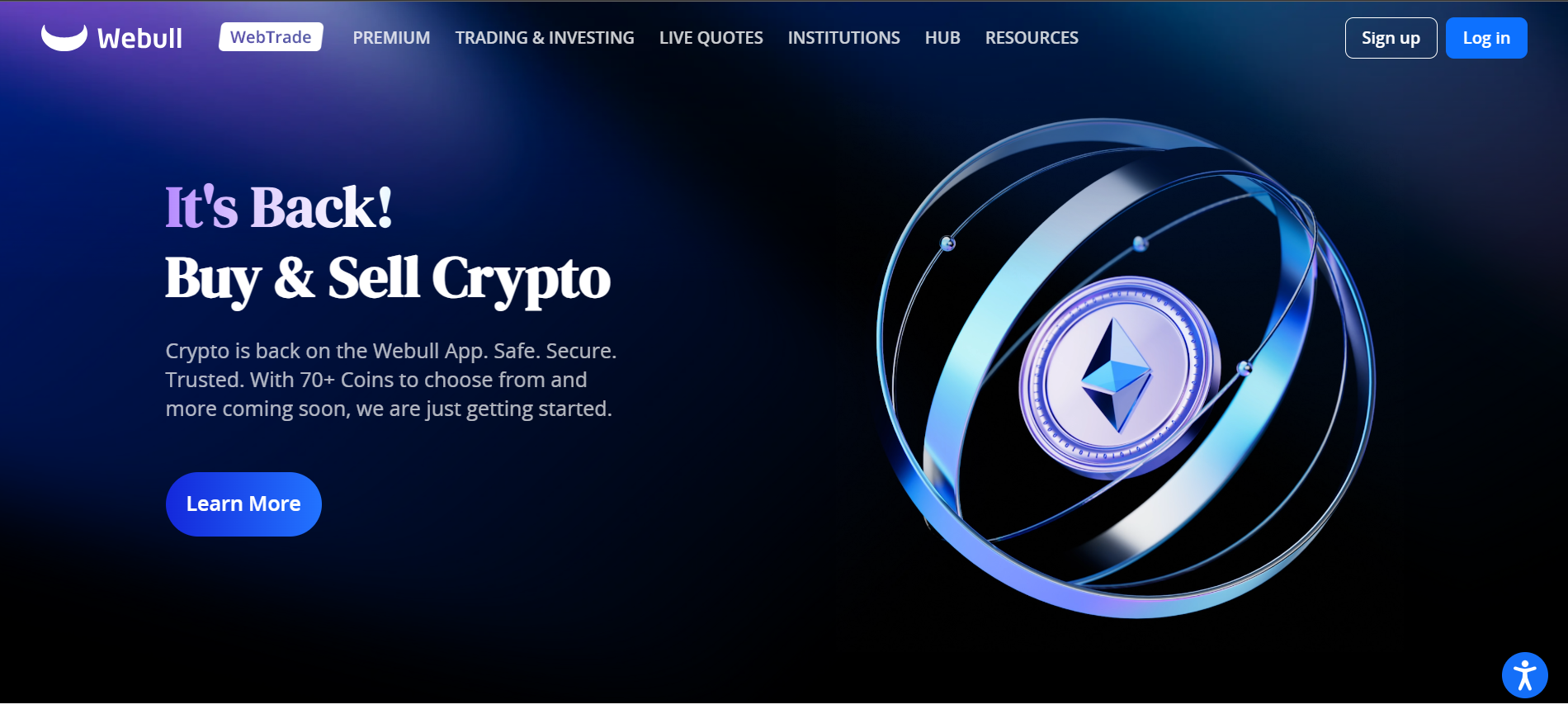
Webull leads the pack in 2026 as the premier demo trading platform because its simulation feels almost identical to live trading. Users get a virtual account loaded with play money to experiment with stocks, ETFs, and options using the same professional tools available on real accounts. The setup eliminates any learning curve when moving from practice to live markets, thanks to its intuitive desktop widgets and full-featured mobile app.
Key Features
- High-fidelity virtual account that replicates live execution for stocks, ETFs, and options.
- Turbo Trader tool for fast order placement and advanced order types.
- Over 55 technical indicators plus Replay Mode for visual backtesting of historical price action.
- AI-powered news summaries and market pulse widgets to explain price movements.
- Customizable widget-based desktop interface with heatmaps and economic calendars.
- Comprehensive Morning Brief dashboard covering futures, earnings, dividends, and analyst updates.
- Seamless sync between a powerful mobile app and a desktop for on-the-go practice.
Pros
- Completely free with no minimum deposit required for the demo.
- Extremely realistic fills and tools that prepare you directly for live trading.
- Modern AI features add a contemporary edge to strategy development.
- Excellent for technical analysis practice without any cost.
Cons
- Simulation can occasionally feel overly optimistic on fast-moving trades compared to live conditions.
- Focusing on technical tools may overwhelm absolute beginners who prefer simpler interfaces.
- Limited community or social features compared to some rivals.
Accessibility
- Available on web, desktop app, and full-featured mobile app (iOS and Android).
- No account funding is needed to start paper trading immediately.
- Open to U.S. users with quick sign-up via app or website.
2. Charles Schwab

Charles Schwab secures a strong position through its thinkorswim platform and the PaperMoney feature, which provides a virtual environment with $100,000 in simulated funds. This setup lets traders master advanced order types and multi-leg options strategies in a professional-grade interface that matches live trading exactly.
Key Features
- PaperMoney virtual account with full thinkorswim capabilities for stocks, options, and futures.
- Hundreds of customizable technical indicators and precise trend-drawing tools.
- Integrated backtesting engine to evaluate strategy performance on historical data.
- The Chart Describer tool explains technical events in real time.
- Direct integration of FRED economic data into charts for fundamental analysis.
- Highly customizable widget dashboards with live news streams and heat maps.
- Fully featured mobile app that supports complex options chains and watchlist syncing.
Pros
- Industry-leading tools for serious strategy development and options trading.
- Realistic simulation with professional data feeds.
- Built-in tutorials and “Swim Lessons” to ease the learning curve.
- Strong research integration, including earnings analysis and volatility tools.
Cons
- Steeper learning curve than simpler mobile-first apps.
- Desktop-focused power can feel overwhelming for casual users.
- Some advanced features require time to master fully.
Accessibility
- Accessible via thinkorswim desktop, web, and mobile apps.
- No minimum deposit for PaperMoney simulation.
- Available to all Schwab account holders or new users with easy activation.
3. Interactive Brokers
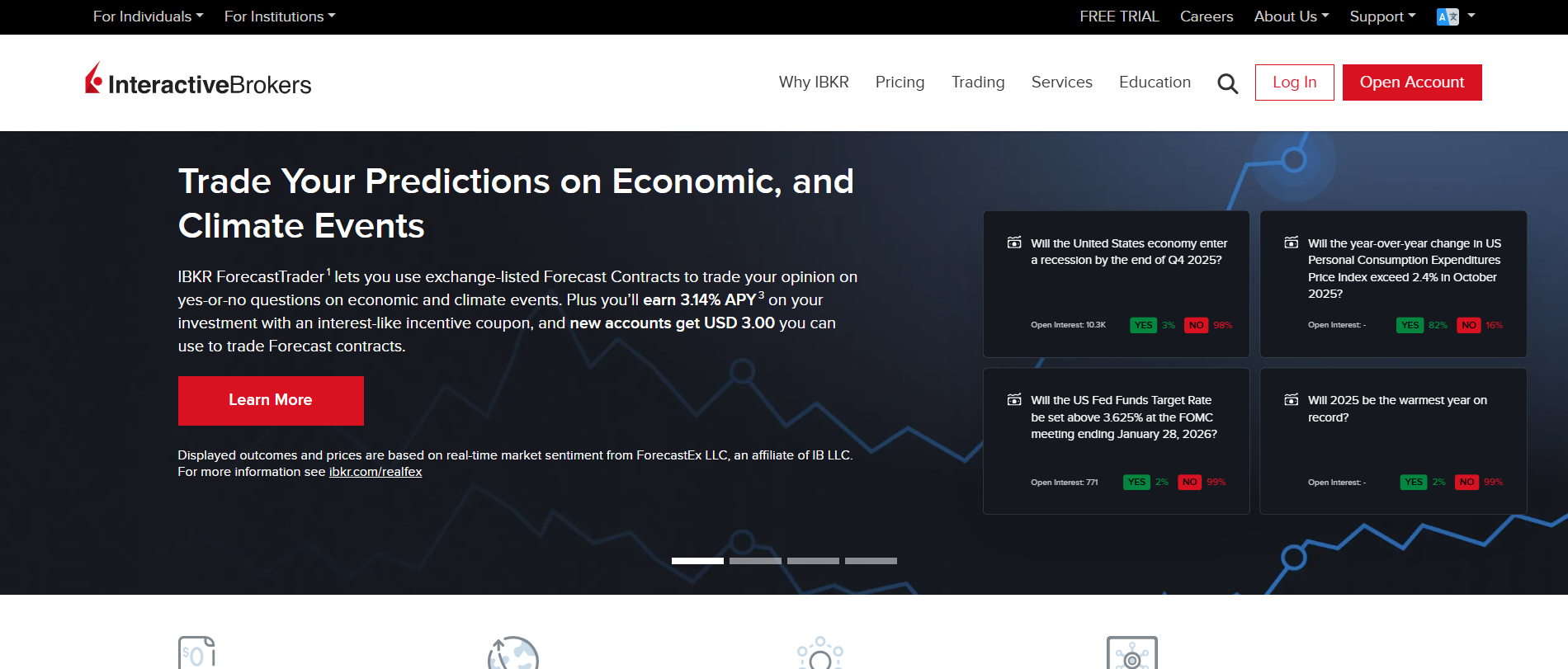
Interactive Brokers stands out for its Trader Workstation (TWS) Paper Trading account, which offers the broadest global market simulation available to retail traders. Users practice across stocks, options, futures, cryptocurrencies, and bonds in over 150 markets using the exact same institutional-grade technology as live accounts.
Key Features
- Paper trading account pre-loaded with $1 million in virtual buying power.
- Comprehensive crypto simulation including spot Bitcoin, Ethereum, futures, and ETPs.
- Risk Navigator tool for portfolio “what-if” scenarios and volatility monitoring.
- ORATS backtester with 180 million historical data points for options strategies.
- 18 chart types, including Renko, Kagi, and Point & Figure with extensive indicators.
- Adaptive Algos and advanced order types for precise execution practice.
- Daily Lineup AI summaries, economic calendar, and global market insights.
Pros
- Unmatched asset range and global market access in simulation.
- Professional tools that scale perfectly from demo to live institutional trading.
- Excellent for diversified portfolios including crypto exposure.
- Highly precise data and customization options.
Cons
- Significant learning curve due to the advanced professional interface.
- Best suited for experienced traders rather than complete novices.
- Interface can feel dense compared to streamlined mobile apps.
Accessibility
- Available through TWS desktop, web, and mobile platforms.
- Free paper account setup with no real deposit required.
- Open to U.S. and international users via quick Client Portal activation.
4. E*TRADE

ETRADE shines with its Power ETRADE platform in full-paper-trading mode, providing a modern widget-based interface that mirrors live trading. It creates an ideal low-risk space for new traders to build skills, especially in options.
Key Features
- Full-featured Power E*TRADE paper trading environment with virtual funds.
- 19 chart styles and an extensive library of technical indicators.
- The Earnings Move tool visualizes implied moves and historical volatility.
- TradeLab risk-analysis widget for calculating max profit and loss probabilities.
- Easy customization of moving averages and volatility bands.
- Integrated strategy evaluation before executing virtual trades.
- Streamlined mobile access that supports options chains directly.
Pros
- Beginner-friendly modern interface with powerful options tools.
- Strong focus on risk analysis and earnings insights.
- Smooth transition from paper to real accounts.
- Excellent visualization tools for learning price action.
Cons
- Drawing tools have a slight learning curve for new users.
- Fewer global assets than some competitors.
- Options-specific strengths may limit appeal for pure stock traders.
Accessibility
- Available on Power E*TRADE desktop, web, and mobile apps.
- Instant paper trading activation with no deposit needed.
- Straightforward setup for U.S. users.
5. TradeStation

TradeStation caters to serious traders with its high-performance simulated trading mode on the Titan X platform. It offers a clean, modern interface for testing equities, futures, and complex options using Launch Pad templates that jump-start specialized layouts.
Key Features
- Fully functional trading simulator with unlimited virtual currency.
- Real-time strategy testing for stocks, options, and futures.
- Intuitive forward-testing environment with easy balance resets.
- Launch Pad templates for quick access to customized trading layouts.
- Advanced backtesting and automation tools in simulation.
- Seamless switch between paper and live modes within the same platform.
- Support for complex options and futures strategy development.
Pros
- Powerful environment for testing automated and algorithmic strategies.
- Clean modern interface with professional-grade tools.
- Unlimited virtual funds allow extensive experimentation.
- Excellent for futures and options automation practice.
Cons
- Geared toward more experienced traders rather than total beginners.
- The simulator may require familiarity with platform navigation.
- Fewer social or community elements than some alternatives.
Accessibility
- Available via Titan X desktop, web trading, and mobile apps.
- No minimum deposit for the simulated trading mode.
- Quick activation through TradeStation account settings.
6. eToro
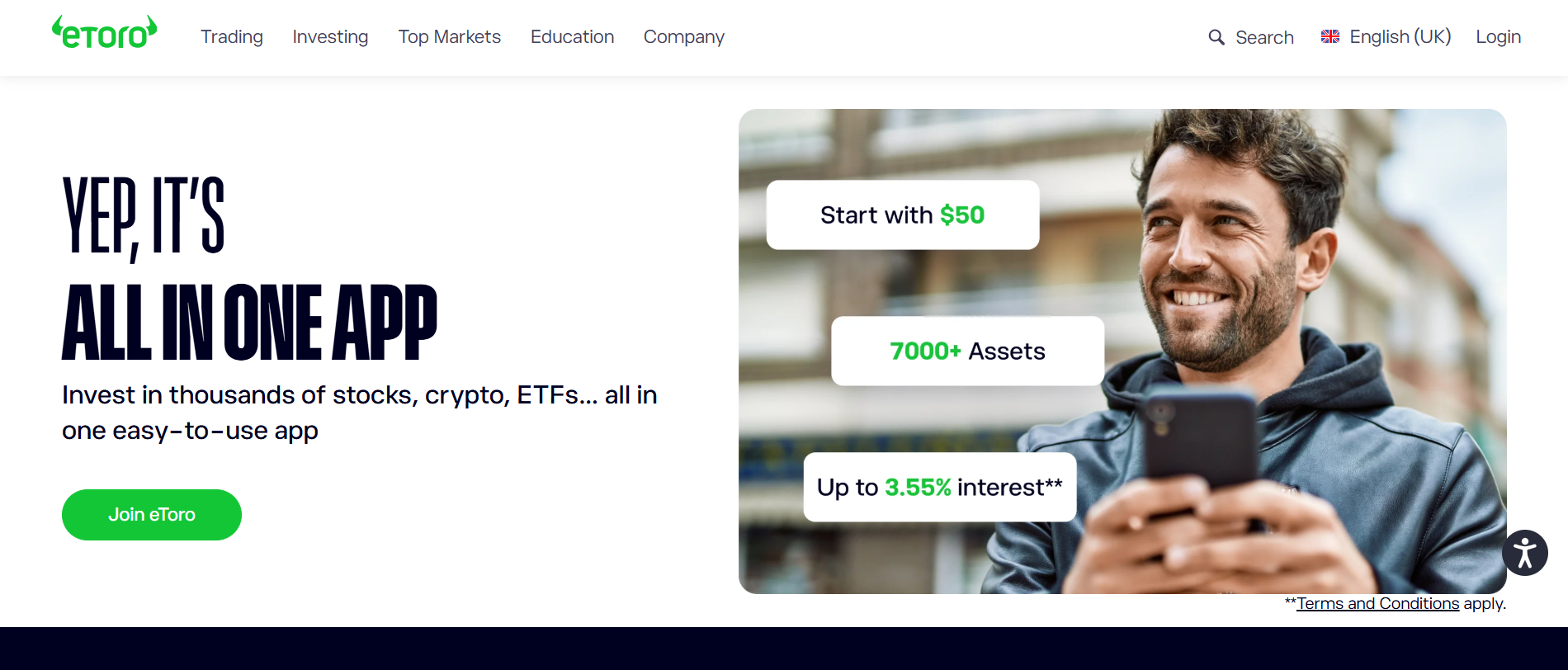
eToro rounds out the top demo trading platforms in 2026 with its user-friendly virtual portfolio that emphasizes social investing and copy trading. The demo account comes preloaded with $100,000 in virtual funds, allowing beginners and intermediate traders to explore stocks, cryptocurrencies, ETFs, and other assets in a realistic environment that closely mirrors the live platform.
Key Features
- Virtual portfolio with $100,000 in play money that replicates the full live trading experience.
- CopyTrader tool to practice automatically mirroring strategies of top-performing investors.
- Social feed and community engagement for discussing trades and market insights.
- Wide asset selection including stocks, crypto, commodities, and Smart Portfolios.
- Intuitive mobile-first interface with easy navigation for beginners.
- Real-time market data and charts that sync seamlessly between demo and live modes.
- Unlimited practice time with the ability to switch instantly between virtual and real accounts.
Pros
- Excellent for learning through social features and copying experienced traders.
- Beginner-friendly design with minimal learning curve.
- Broad crypto and international asset exposure in simulation.
- Demo never expires, encouraging long-term skill building.
Cons
- Less emphasis on advanced technical charting compared to professional platforms.
- Social/copy features may encourage following others rather than developing independent strategies.
- Minimum real deposit of $50–$200 (varies by region) once transitioning to live trading.
Accessibility
- Primarily accessible via the eToro mobile app (iOS and Android) and web platform.
- Instant demo signup with email, Google, or Facebook, no real deposit required.
- Available to users in many countries, including the U.S., for supported assets.
Detailed Comparison Table of the 6 Best Demo Trading Apps and Platforms in 2026
This comparison highlights how each platform excels in different areas while all provide risk-free environments with real-time market data. Choose based on your goals, whether mastering technical analysis, testing automation, exploring crypto, or learning through community.
Webull
- Platform Webull
- Best For Realistic everyday practice
- Virtual Funds Unlimited
- Key Strengths Replay Mode, AI news, Turbo Trader
- Asset Focus Stocks, ETFs, Options
- Learning Curve Low-Medium
- Mobile Experience Excellent, full-featured
- Minimum Real Deposit $0
Charles Schwab (thinkorswim)
- Platform Charles Schwab (thinkorswim)
- Best For Complex layouts & options
- Virtual Funds $100,000
- Key Strengths Advanced charting, backtesting, FRED data
- Asset Focus Stocks, Options, Futures
- Learning Curve Medium-High
- Mobile Experience Strong, customizable
- Minimum Real Deposit $0
Interactive Brokers
- Platform Interactive Brokers
- Best For Global & crypto simulation
- Virtual Funds $1,000,000
- Key Strengths Risk Navigator, ORATS backtester
- Asset Focus Stocks, Options, Crypto, Futures, Global Markets
- Learning Curve High
- Mobile Experience Good
- Minimum Real Deposit $0
ETRADE (Power ETRADE)
- Platform ETRADE (Power ETRADE)
- Best For New options traders
- Virtual Funds Up to $100,000 + margin
- Key Strengths Earnings Move tool, TradeLab risk analysis
- Asset Focus Stocks, ETFs, Options
- Learning Curve Medium
- Mobile Experience Very good
- Minimum Real Deposit $0
TradeStation
- Platform TradeStation
- Best For Automated strategy testing
- Virtual Funds Unlimited
- Key Strengths Titan X layouts, forward-testing
- Asset Focus Stocks, Options, Futures
- Learning Curve Medium-High
- Mobile Experience Solid
- Minimum Real Deposit $0
eToro
- Platform eToro
- Best For Social & copy trading
- Virtual Funds $100,000
- Key Strengths CopyTrader, community feed
- Asset Focus Stocks, Crypto, ETFs
- Learning Curve Low
- Mobile Experience Outstanding, mobile-first
- Minimum Real Deposit $50+ (varies)
How We Chose the Best Demo Trading Apps and Platforms

Selecting the top demo trading apps for 2026 required evaluating how closely each platform replicates the conditions traders face when real capital is at stake. We tested execution quality during volatile sessions, measured tool depth against professional requirements, and verified that practice environments exposed users to the friction that determines survival in funded accounts.
The platforms that made this list passed a simple test: they prepare you for accountability, not just familiarity with buttons and charts.
Evaluation Methodology and Selection Criteria
Selecting the top demo trading apps and platforms for 2026 required a thorough, hands-on evaluation process focused on delivering realistic practice environments that truly prepare traders for live markets. We examined dozens of options available to retail investors, prioritizing those that combine high-fidelity simulations with practical tools, broad accessibility, and specialized strengths.
Our goal was to highlight platforms that minimize the gap between virtual practice and real-world trading while catering to beginners, options enthusiasts, crypto explorers, and automated strategy testers alike. By testing each platform directly and cross-referencing official capabilities with user outcomes, we narrowed the field to these six standout choices that excel across key performance areas.
Rigorous Evaluation of Simulation Realism
We began by measuring how closely each demo environment replicated actual live trading conditions, including order execution, price fills, and the accuracy of market data. Platforms that offered only basic virtual accounts fell short; we favored those using the same backend technology and real-time feeds as their live systems to ensure practice translated directly into real capital deployment. This criterion highlighted Webull and Charles Schwab’s thinkorswim PaperMoney as leaders because their simulations deliver professional-grade fidelity without artificial simplifications.
In practice, we executed identical test trades across volatile sessions and compared outcomes against live market behavior. Interactive Brokers’ Trader Workstation paper account and TradeStation’s Titan X simulator stood out for matching institutional-level precision, including awareness of slippage and handling of multi-leg options. This realism filter eliminated platforms with gamified or delayed experiences, confirming that the selected six provide trustworthy training grounds where virtual results closely mirror what traders encounter once they go live.
In-Depth Assessment of Trading Tools and Analytics
Next, we scored the depth and usability of analytical features available exclusively in demo mode, such as charting indicators, backtesting engines, and risk analysis widgets. We required full access to professional tools, like advanced order types, Replay Mode, and economic data overlays, without restrictions that watered down the practice. Charles Schwab’s thinkorswim and Interactive Brokers excelled here with hundreds of customizable indicators and integrated backtesters that let users refine strategies using historical data spanning millions of data points.
ETRADE’s Power ETRADE and TradeStation further impressed during our testing by offering specialized widgets for earnings moves and automated strategy forward-testing. We verified these tools through extended sessions to confirm they supported data-driven decision-making rather than basic charting. This evaluation ensured that the chosen platforms equip users with everything they need to develop sophisticated approaches before risking real money.
Comprehensive Review of Asset Coverage and Specialization
We analyzed the range of tradable assets supported in each demo account, emphasizing platforms that allowed practice across stocks, ETFs, options, futures, cryptocurrencies, and global markets. Breadth mattered, but so did depth in niche areas, crypto simulation for portfolio diversification, or community-driven copy trading. Interactive Brokers earned high marks for its unmatched global reach and crypto spot/futures capabilities in paper mode, while eToro’s virtual portfolio shone for social and copy features across diverse asset classes.
Webull and E*TRADE rounded out the selection by delivering focused excellence in everyday equities/options practice without unnecessary complexity. Our process involved cataloging every asset class and testing execution in each category, ensuring the final six covered the full spectrum of trader interests while maintaining seamless demo-to-live transitions.
Focus on User Accessibility and Low Barriers to Entry
Accessibility formed a core pillar of our selection, as the best demo platforms should welcome users instantly with zero financial commitment and straightforward onboarding. We prioritized accounts that require no minimum deposit and offer immediate virtual funding, while evaluating signup speed and interface intuitiveness for both novices and veterans. All six finalists, starting with Webull and extending through eToro, allow paper trading right after quick registration, removing common hurdles like funding requirements.
We tested mobile and desktop activation flows personally to confirm that beginners could start practicing within minutes. Platforms like TradeStation and Charles Schwab balanced this ease with powerful customization options, proving that accessibility does not mean sacrificing depth. This step guaranteed our recommendations to serve traders at every experience level without gatekeeping.
Examination of Mobile Experience and Community Support
Finally, we assessed cross-device performance and supplementary learning resources, including mobile apps, research integrations, and community elements. Modern traders expect full-featured mobile demos that sync seamlessly with desktop, plus tools like AI summaries or social feeds for ongoing education. Webull and eToro led in mobile-first design with rich community engagement, while Charles Schwab and Interactive Brokers provided robust research dashboards and expert insights directly in the simulator.
Our hands-on trials included trading from phones during market hours to verify watchlist syncing and options chain usability. This criterion confirmed that the selected platforms deliver complete, convenient experiences that extend beyond the screen, fostering continuous skill growth through integrated education and peer interaction.
How to Use a Demo Trading App Effectively for Practice

Effective demo practice starts by treating virtual capital exactly as you would real money, enforcing the same risk limits, position sizes, and trade frequency you plan to use when funded.
This means setting hard rules before each session:
- Maximum trades per day
- Percentage risk per position
- Predefined stop-loss levels that mirror what your actual account could withstand
Without this discipline, demo trading becomes a video game where consequences feel abstract, and habits form that won't survive the psychological pressure of live markets.
Enforce Strict Position Sizing From Day One
Most traders blow through demo accounts by sizing positions three or four times larger than they could afford with real capital, simply because losses feel hypothetical. That practice creates muscle memory for reckless behavior. If your eventually funded account will hold $25,000, limit each demo position to the same dollar amount and percentage risk you would use live, typically 1 to 2 percent of total equity per trade. This constraint forces you to think through opportunity cost and portfolio allocation rather than chasing every setup that appears.
Platforms like Webull and Interactive Brokers let you customize account sizes within the simulator, so adjust your virtual balance to match the capital you'll actually trade. When your demo shows $100,000 but you plan to start with $10,000 live, the psychological gap between practice and reality becomes a trap. Matching the numbers eliminates that disconnect and builds realistic expectations around drawdowns and recovery time.
Track Every Trade With Detailed Reasoning and Outcomes
Open a spreadsheet or journal and log entry price, exit price, position size, the setup that triggered the trade, and how you felt during execution. This record reveals patterns you won't notice by simply watching profit and loss numbers move. You might discover that your best trades happen during the first hour after market open, or that holding positions overnight consistently erodes gains because your strategy depends on intraday momentum.
3 to 6 months of consistent profitable simulator trading provides the foundation needed before risking real capital. That timeline assumes you're logging performance data and adjusting based on what the numbers show, not just accumulating screen time. Without documentation, six months of practice becomes six months of repeating the same mistakes with slightly different stocks.
Test Your Strategy Across Multiple Market Conditions
Run your approach during:
- Trending sessions
- Choppy sideways action
- High-volatility news events
- Low-volume holiday periods
A strategy that works perfectly during strong uptrends often collapses when momentum stalls or reverses, and you won't discover that weakness until you deliberately practice in unfavorable conditions. Use replay features on platforms like Charles Schwab's thinkorswim to simulate past market environments and see how your rules would have performed during corrections or sector rotations.
Asset Diversification and Risk Correlation
Rotate between different asset classes if your plan involves diversification. Practice managing three stock positions, two options spreads, and a futures contract simultaneously to understand how correlation risk and margin requirements interact. This breadth prevents over-specialization on one instrument or market phase that won't last.
Set Performance Benchmarks Before Transitioning to Funded Accounts
Define clear metrics that signal readiness:
- A win rate above a specific threshold
- A maximum drawdown within acceptable limits
- Consistent profitability over at least 60 trading days
These benchmarks should reflect real trading conditions, not cherry-picked winning streaks. If your demo shows 15 profitable days followed by three catastrophic losses that wipe out gains, you haven't yet proven consistency.
Performance Accountability and Capital Access
Programs like prop firms formalize this transition by requiring traders to demonstrate disciplined performance under structured evaluation phases before accessing firm capital. Instead of guessing when you're ready, you follow defined profit targets and drawdown limits that mirror professional risk management standards.
This accountability bridge between demo and self-funded trading builds the psychological resilience needed when real consequences appear, because losses affect your standing with the firm rather than your personal savings.
But even perfect demo execution only prepares you for the mechanics of trading, and the real question becomes how to access the capital that turns preparation into opportunity.
Related Reading
- Best Free Paper Trading Platform
- How To Practice Trading Stocks
- Best Paper Trading Simulator
- How To Use Webull Paper Trading
- Best Futures Paper Trading Platform
- Best Simulated Trading Platform
- Best Trading Platform For Beginners
- Best Day Trading Simulator
Get 25-30% off Today - Sign up to Get Access to up to $800K Today
You've practiced with virtual money, built strategies, and proven you can trade profitably in a risk-free environment. The frustration arises when you realize that jumping directly from demo accounts into live trading with your own limited capital creates a gap most traders can't cross successfully. Small personal accounts restrict position sizing, fear of losing your savings distorts decision-making, and broker restrictions make scaling nearly impossible even when your strategy works.
Prop firm solves this exact transition problem by giving you access to simulated trading accounts funded by the firm, allowing you to apply everything you learned on demo platforms with substantially larger position sizes without risking personal capital. You trade with accounts up to $800K under the same disciplined risk rules you already practiced, proving consistency before scaling further. The psychological shift matters because losses affect your standing with the firm rather than your savings, creating real accountability without catastrophic financial exposure.
Funding Flexibility and Profit Distribution
You choose your path through customizable challenges that match your trading style, or explore instant funding options to start trading firm capital quickly.
Once funded:
- You keep up to 100% of profits with available add-ons
- Receive bi-weekly or on-demand payouts
- Benefit from a 2-day payment guarantee backed by a $500 penalty for delays,
- No minimum targets exist in some models
- No time limits pressure your decisions
- Triple paydays reward consistency rather than forcing aggressive risk-taking
Over 98,000 traders have already collected more than $9.1 million in rewards by bridging the gap between demo practice and funded trading. Sign up today to access up to $800K and enjoy 25-30% off your challenge fee, turning the skills you built on the best demo platforms in 2026 into real payouts with trader-friendly rules that reward the discipline you've already developed.
Be Great and get the App