






How To Practice Paper Trading and Get the Most Out Of It
How to practice paper trading and get more from it. Learn to test setups, review results, and build trading discipline.

Every trader dreams of finding winning strategies, but the fear of losing hard-earned money keeps most people stuck on the sidelines. Paper trading offers a risk-free environment where you can test your ideas, refine your approach, and build genuine confidence before putting actual capital on the line. This guide will walk you through practical steps to master simulated trading, helping you identify strategies that actually work and prepare for the transition to real market conditions with a track record you can trust.
Finding the best paper trading app makes all the difference in how quickly you develop your skills and spot opportunities that translate to real profits. Goat Funded Trader provides traders with a simulated environment that mirrors live market conditions, giving you the tools to practice different strategies, learn from mistakes without financial consequences, and prove your abilities before trading with real funds.
Summary
- Paper trading removes financial consequences, which sounds ideal until you realize that the same safety net creates blind spots that surface only when real money amplifies fear, greed, and hesitation. Research tracking thousands of day traders found that fewer than 1 percent maintained consistent profitability after costs in live markets, largely because emotional and execution gaps appear only when actual stakes are on the line.
- Most simulators deliver instant fills at quoted prices, ignoring the slippage, partial fills, and order delays that eat into real profits. Paper traders typically see returns 15 to 20 percent higher than their live trading performance, a gap largely driven by the absence of transaction costs and execution delays in simulations.
- The calendar matters far less than consistency when deciding when to transition from paper to live trading. Instead of counting months, measure whether your strategy delivers repeatable results across at least 100 trades spanning different market conditions, including trending versus range-bound price action, high versus low volatility, and bullish versus bearish sentiment.
- Success after success in a risk-free environment breeds unrealistic expectations that lead to aggressive position sizing or ignored risk rules the moment real money appears. Ninjatrader notes that 90% of traders lose money, a statistic that reflects how easily good intentions collapse under pressure when emotional discipline hasn't been tested.
- Your journal should track not just win rates and profit totals, but the quality of your execution, including whether you followed stop-loss rules without exception, sized positions according to your risk plan, and exited based on predefined criteria rather than hope and fear.
Goat Funded Trader addresses this transition by offering evaluation accounts that require you to hit specific profit targets and drawdown limits before accessing up to $2M in funded capital, ensuring your practice mirrors real risk management and proves consistency under structured pressure before capital appears.
What is Paper Trading, and How Exactly Does it Work?
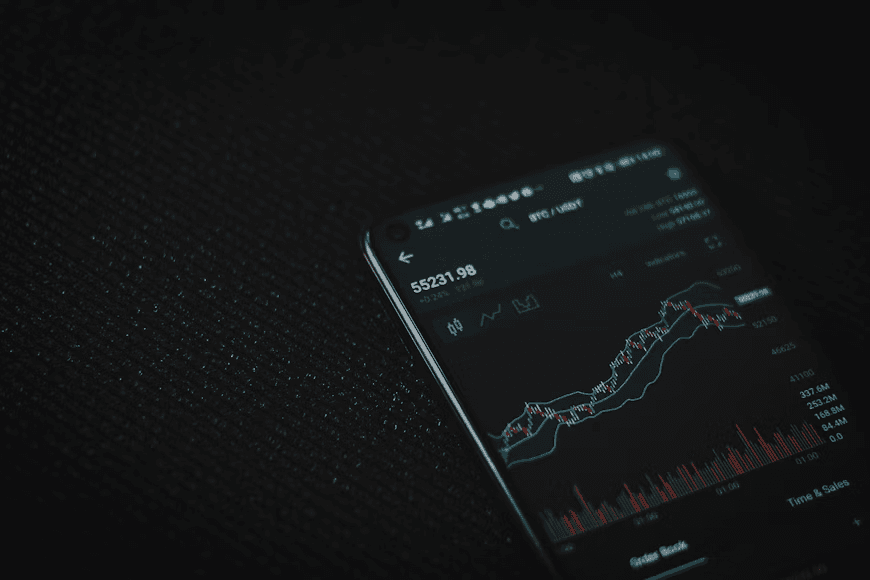
Paper trading lets you execute buy and sell orders using virtual money in a simulated environment that mirrors real market conditions. You open positions, track performance, and close trades exactly as you would with actual capital, except no real funds ever change hands. The process builds muscle memory for order placement, chart analysis, and portfolio management without the financial consequences that accompany live trading.
Setting Up Your Simulation Environment
Most brokers and charting platforms offer simulation modes that activate with a single click after you create an account. The system assigns a starting virtual balance, typically between $50,000 and $200,000, though some tools let you customize that amount or reset it whenever needed. Real-time or slightly delayed market data feeds into your interface, displaying the same bid-ask spreads, volume indicators, and price movements active traders see.
You select securities from equities, exchange-traded funds, options, or futures depending on platform capabilities, then place orders using market, limit, stop-loss, or trailing-stop instructions. The simulator instantly records each transaction, updates your portfolio value, and calculates unrealized gains or losses as prices shift throughout the session.
Tracking Performance and Refining Strategies
Once positions are open, you monitor them through the same dashboard layouts and charting tools found in live accounts. Profit and loss metrics update continuously, showing how each trade performs relative to your entry price and overall account balance. Many platforms generate performance reports that break down win rates, average holding periods, maximum drawdown, and risk-reward ratios across all executed trades.
This statistical feedback reveals patterns in your decision-making, such as exiting winners too early, holding losers too long, or sizing positions inconsistently. Traders often journal their reasoning for each entry and exit, creating a documented history that highlights which strategies work under specific market conditions and which need adjustment before real capital enters the picture.
Why Traders Start Here
The complete absence of financial risk frees you to experiment with position sizing, test technical indicators you've never used, and explore asset classes outside your comfort zone. 90% of traders lose money, a statistic that underscores how unforgiving live markets can be when you lack preparation.
Paper trading gives you the repetition needed to recognize setup patterns, manage emotions during volatility spikes, and develop the discipline to follow a plan when prices move against you. It also exposes gaps in your understanding, whether that's misinterpreting order types, underestimating slippage during fast markets, or failing to account for overnight gaps that can blow past your stop-loss levels.
Utilizing Simulations as a Strategic Rehearsal Space
Many experienced traders return to simulation after losing streaks or when testing new platform features, treating it as a low-stakes rehearsal space rather than a one-time beginner exercise. You can practice across different market sessions, simulate high-volatility periods, and explore correlations between assets without the pressure of protecting real capital.
This repetition builds confidence rooted in documented results rather than gut feelings, creating a foundation you can reference when emotions run high in live accounts.
But knowing how to execute trades in a simulator only gets you halfway. The real test begins when you compare that frictionless practice environment to the psychological and executional challenges awaiting you in live markets.
Related Reading
- Best Paper Trading App
- What Is Paper Trading
- Simulated Stock Trading
- Practice Crypto Trading With Fake Money
- Simulated Futures Trading
- Does Robinhood Have Paper Trading
- Where To Practice Day Trading
- Futures Paper Trading
- Simulated Day Trading
What is the Difference Between Paper Trading and Live Trading?

The shift from paper to live trading feels less like an upgrade and more like entering a different game entirely.
Paper trading gives you:
- A clean simulation where orders execute instantly at expected prices
- Costs stay invisible
- Emotions remain muted because nothing real is at stake
Live trading introduces friction at every level:
- Your orders face slippage and partial fills
- Fees chip away at profits with each transaction
- The psychological weight of risking actual capital changes how you think, feel, and act in the moment
Financial Risk: Zero Stakes Versus Real Skin in the Game
Paper trading lets you experiment with strategies using fake money, so every loss or big swing stays completely risk-free. This setup encourages trying new ideas, testing different position sizes, and learning from mistakes without any actual hit to your wallet, which makes it ideal for beginners building basic knowledge.
In contrast, a live account means your own hard-earned cash is on the line with every trade. Even small errors can lead to real losses, forcing you to focus on smart risk management, such as limiting each trade to one or two percent of your total capital. That genuine financial exposure builds the discipline needed for long-term survival in the markets.
Emotional Pressure: Calm Practice Versus High-Stakes Feelings
With paper trading, there is no real money at risk, so emotions like fear of losing or greed for bigger wins rarely kick in. You stay cool and logical, sticking to your plan easily and avoiding impulsive moves driven by stress. Live trading, however, triggers strong emotions because actual profits and losses affect your finances and confidence.
Fear might make you exit winners too soon, while hope can keep you in losing trades longer than planned. 90% of traders who paper trade for at least three months before going live show better risk management, suggesting that extended simulation practice helps you recognize emotional patterns before real money amplifies them. Mastering these feelings through small live positions after paper practice is what separates consistent traders from the rest.
Order Execution Realism: Ideal Fills Versus Real-World Delays
Paper trading usually gives you instant fills at the exact price you expect, assuming plenty of liquidity and no delays. This clean simulation helps you focus purely on strategy without worrying about how fast the market moves or whether your order actually gets filled.
Live accounts deal with real market conditions, including slippage (where the executed price differs from what you saw), partial fills, and waiting in line behind other orders. These frictions can turn a winning strategy on paper into a break-even or losing one in reality, so experienced traders often add extra buffers in their plans to account for them.
Costs and Fees: Ignored in Simulations Versus Real Deductions
Most paper trading platforms skip or greatly simplify commissions, spreads, and other trading fees, letting your virtual results look cleaner and more profitable than they would in real life. In a live account, every trade comes with real costs, such as broker commissions and slippage, which eat into profits over time.
Paper traders typically see returns 15 to 20 percent higher than their live trading performance, a gap largely driven by the absence of transaction costs and execution delays in simulations. Successful traders learn to factor these in during paper sessions by manually subtracting estimated fees, ensuring their live results more closely match what they practiced.
Scaling Skills via High-Capital Funding Programs
Platforms like Goat Funded Trader bridge this gap by offering simulated accounts that mirror live conditions while removing personal financial risk. Traders prove their skills in a realistic environment, then access up to $2M in funded capital with profit splits reaching 100 percent, turning paper practice into a pathway for earning real income without risking their own savings.
The transition feels less like a shock and more like an exciting next step when you understand these differences early. But even with that knowledge, paper trading carries its own set of limitations that can quietly undermine your progress if you're not paying attention.
Are There Any Challenges That Come With Paper Trading?
Paper trading removes financial consequences, which sounds perfect until you realize that the same safety net creates blind spots. You practice entries, exits, and position sizing without the emotional friction that defines live trading. The strategies that work flawlessly in simulation often crumble when real money amplifies fear, greed, and hesitation.
Research tracking thousands of day traders found that fewer than 1 percent maintained consistent profitability after costs in live markets, largely because emotional and execution gaps surface only when actual stakes are on the line.
The Absence of Genuine Emotional Stakes
Simulators let you hold losing positions without the stomach-churning anxiety that comes when your savings decline. You exit winners calmly, stick to stop-losses perfectly, and size positions according to plan because the outcome feels academic. That false calm evaporates the moment real capital enters the picture.
Traders who journal their feelings during paper sessions, noting when they hesitated or second-guessed entries, build awareness of emotional patterns before those patterns cost money. The gap between knowing what to do and executing under pressure separates paper profits from live results.
Differences in Trade Execution Realism
Most simulators deliver instant fills at quoted prices, ignoring the slippage, partial fills, and order delays that eat into real profits. A strategy showing 15 percent returns on paper might break even once you account for wider spreads during volatile periods or the seconds it takes for your broker to execute a market order.
Platforms like Goat Funded Trader address this by offering evaluation accounts that mirror live conditions, including realistic execution and costs, while still removing personal financial risk. Traders prove their skills in an environment that reflects actual market friction, then access funded capital with profit splits reaching 100 percent, turning validated strategies into real income without the shock of transitioning from perfect fills to messy reality.
The Pitfall of Overconfidence
Success after success in a risk-free environment breeds unrealistic expectations. You start to believe that every setup will work, every dip is buyable, and losses are temporary blips rather than warnings. That overconfidence leads to aggressive position sizing or ignores risk rules the moment real money appears.
One trader described it perfectly: strong paper results followed by immediate live struggles, not because the strategy failed, but because emotions hijacked execution. Treating paper trading as a temporary rehearsal space rather than a final exam keeps expectations grounded. Gradually adding small real positions alongside paper practice exposes you to emotional friction in controlled doses, building resilience without the sting of big surprises.
Challenges in Capturing Broader Market Influences
Paper setups often focus on isolated charts, overlooking how index correlation, sector rotation, or sudden news events ripple through everything simultaneously. A stock might look perfect on its own chart, but if the broader market tanks, your position follows regardless of individual fundamentals. Simulators rarely capture algorithmic interference targeting common stop levels or how volatility spikes affect execution quality across all assets.
Reviewing paper results against major index performance and tracking how your trades behave during high-volatility periods builds a fuller picture. That broader awareness sharpens your edge and sparks fresh excitement for applying what you've learned when real conditions test your preparation.
But knowing these limitations only helps if you act on them, and the next question everyone asks is how long you should actually stay in simulation before risking real capital.
How Long Should I Paper Trade Before Moving To Live Trading?

Many new traders hear the same advice everywhere: paper trade for three to six months, then flip the switch to real money. It sounds safe and structured, yet it often leaves people feeling stuck or rushing ahead without true readiness. This rigid timeline overlooks how each trader learns differently and how markets shift constantly.
The better path lies in measuring real skill through consistent results rather than counting weeks on a calendar. When you focus on proven performance under changing conditions, the move to live trading feels exciting and natural rather than scary. Data from trading platforms shows that many who start with paper accounts transition effectively within one to two months once they hit solid milestones, proving that quality preparation beats a fixed schedule every time.
Why Calendar Deadlines Create False Readiness
Setting a fixed three-month deadline sounds disciplined until you realize it ignores whether you actually learned anything during that stretch. A trader who executes five setups per week in choppy, low-volume summer markets won't see the same range of conditions as someone practicing through earnings season or a Federal Reserve announcement cycle. Time alone doesn't build skill. Repetition under varied pressure does.
Platforms like Goat Funded Trader solve this by offering evaluation accounts that require you to hit specific profit targets and drawdown limits before accessing funded capital, ensuring you prove consistency rather than just logging hours. Traders who pass those evaluations earn profit splits up to 100 percent, turning validated preparation into real income without the shock of switching from arbitrary timelines to live stakes.
Track Performance Across Changing Conditions
Your journal should show steady profits through at least two distinct market phases, whether that's trending versus range-bound price action, high versus low volatility, or bullish versus bearish sentiment. If your edge only works when momentum carries everything higher, live trading will expose that gap the moment conditions reverse.
Many traders report feeling ready after a string of winning weeks, only to discover their strategy crumbles during the first pullback because they never tested it when fear dominated the tape. Document not just wins and losses, but the market context surrounding each trade. That pattern recognition separates luck from skill.
Match Practice Duration to Your Trading Style
Day traders who execute dozens of setups weekly generate enough data in two months to reveal whether their edge holds. Swing traders holding positions for days or weeks need longer timelines because fewer trades mean smaller sample sizes and less exposure to overnight gaps, earnings surprises, or sudden sector rotations.
Position traders working monthly charts might spend six months in simulation just to capture a handful of complete cycles. Adjust your practice window to fit the rhythm of your chosen approach, not some generic advice that ignores how different timeframes behave.
Recognize the Emotional Gaps Simulation Can't Fill
90% of traders lose money in their first year, a statistic that highlights how emotional discipline separates paper success from live survival. You can follow every rule perfectly in simulation, yet freeze or overtrade the instant real money appears because fear and greed don't activate until stakes feel genuine.
Start your live transition with the smallest position size your broker allows, treating those first trades as continued education rather than profit opportunities. That gradual exposure builds emotional muscle memory; simulation skips compresses the learning curve without the sting of large losses.
Clear Milestones Signal True Readiness
Your performance metrics should show a positive expectancy over 100-plus trades, a maximum drawdown you can stomach emotionally, and strict adherence to position-sizing rules even when tempted to chase a hot setup. If you can review your journal and honestly say you never bent your plan out of boredom or revenge, you've built the discipline live markets demand.
At that point, the switch feels less like a leap and more like a natural step forward, because you've already proven the system works when conditions test your patience.
But knowing you're ready is only half the equation. The real question is what you actually do during those practice sessions to make them count.
Related Reading
- Day Trading Paper Trading
- Crypto Paper Trading
- Paper Trading For Beginners
- TradingView Paper Trading Demo Account How To Use
- How To Do Paper Trading
- Best Demo Trading App
- Best Demo Trading Platform
How to Practice Paper Trading

Effective practice demands more than opening a simulator and clicking buttons. You need deliberate structure:
- A written plan that defines your entry criteria
- Exit rules
- Position sizing
- Risk limits before you place a single trade
Without that framework, you're just gambling with fake money, building habits that will betray you the moment real capital appears. The goal isn't to rack up wins in a frictionless environment. It's to expose your decision-making patterns, reveal where discipline breaks down, and prove your strategy holds up across conditions that test patience and conviction.
Start With a Realistic Virtual Balance
Set your starting capital to match what you'll actually trade live, whether that's $5,000 or $50,000. Many beginners inflate their paper balance to $500,000, then size positions aggressively because the numbers feel abstract. That disconnect teaches terrible habits. If you plan to risk one percent per trade in a live account, practice that exact percentage now.
Platforms like Goat Funded Trader solve this by offering evaluation accounts that require you to meet specific profit targets and drawdown limits before accessing up to $2M in funded capital, ensuring your practice mirrors real risk management from day one. Traders who pass those evaluations earn profit splits of up to 100 percent, turning validated preparation into actual income without the shock of transitioning from inflated paper balances to modest live stakes.
Execute Trades With Full Commitment
Place every order as if your savings depend on it. That means writing down your thesis before entering, setting stop-losses immediately, and resisting the urge to widen them when the price moves against you. 90% of traders lose money, a statistic that reflects how easily good intentions collapse under pressure.
Simulation can't replicate the gut-punch of watching real money evaporate, but treating each trade seriously builds the procedural discipline that carries over. Use the full range of order types (market, limit, stop, trailing) to understand how they behave during volatile periods, and track how slippage or delayed fills would affect your results if execution weren't instant.
Journal Every Decision and Outcome
- Record your rationale
- Entry and exit prices
- Position size
- Market context
- Emotional state for each trade
Include screenshots of charts showing your setup and note whether you followed your plan or deviated from it.
This documentation reveals patterns you can't see in the moment:
- Exiting winners too early during strong trends
- Holding losers too long
- Hoping for reversals
- Sizing up impulsively after a string of wins
Refining Strategy via Objective Data Review
Many traders discover they bend rules out of boredom when markets chop sideways, a behavior that costs real money later. Review your journal weekly to calculate win rates, average risk-reward ratios, and maximum drawdown, then adjust your strategy based on what the data actually shows rather than what you hope it proves.
Test Across Different Market Conditions
Your edge needs to survive trending days, choppy ranges, high volatility, and low volume. If your strategy only works when momentum carries everything higher, the first pullback will expose that gap. Practice during earnings season when gaps and whipsaws dominate, then compare those results to quieter periods when price action grinds slowly.
Track how your trades perform relative to major index movements, noting whether you're capturing real alpha or just riding beta. This broader awareness sharpens your ability to recognize when conditions favor your approach and when stepping aside preserves capital better than forcing setups.
Gradually Increase Complexity
Start with a single setup on one asset until you can execute it consistently, then layer in additional strategies or securities. Trying to master ten different patterns across five asset classes simultaneously guarantees confusion and scattered results. Once your journal shows profitability over 50 to 100 trades on a core setup, expand deliberately.
Add a second instrument or timeframe, document how that changes your workflow, and measure whether performance holds. This progression builds competence methodically rather than overwhelming you with variables you can't control or analyze effectively.
Related Reading
- Best Free Paper Trading Platform
- How To Practice Trading Stocks
- Best Paper Trading Simulator
- How To Use Webull Paper Trading
- Best Futures Paper Trading Platform
- Best Simulated Trading Platform
- Best Trading Platform For Beginners
- Best Day Trading Simulator
How to Get The Most Out Of Paper Trading?

Measuring what matters separates productive practice from wasted screen time. Your journal should track not just win rates and profit totals, but the quality of your execution:
- Did you follow your stop-loss rules without exception?
- Did you size positions according to your risk plan, or did you inflate them after three consecutive winners?
- Did you exit based on your predefined criteria, or did hope and fear override your system?
These behavioral metrics reveal whether you're building the discipline to live up to the markets' demands or simply accumulating trades that look good on paper but teach nothing transferable.
Treat Every Trade as a Live Commitment
Execute each order with the same care you would if your mortgage payment depended on the outcome. That means documenting your thesis before entry, placing protective stops immediately, and refusing to adjust them wider when the price moves against you. Write down why you're entering this specific trade at this specific moment, what chart pattern or signal triggered your decision, and where you'll admit you were wrong.
This pre-trade ritual forces clarity and exposes fuzzy thinking before it becomes a habit. Reviewing these notes later shows whether your edge actually exists or whether you're rationalizing random outcomes into a narrative of skill.
Simulate Real-World Friction and Costs
Most paper platforms deliver instant fills at quoted prices, ignoring the slippage, partial executions, and order delays that erode live profits. Manually subtract estimated commissions and realistic slippage from each trade's result to see whether your strategy survives real-world friction.
If your edge depends on capturing every tick of a two-point move, it will evaporate the moment execution lag costs you half a point on entry and another quarter-point on exit. A gap largely driven by underestimating how transaction costs and execution quality compound across hundreds of trades. Building those assumptions into your practice now prevents the shock of watching paper profits vanish in live conditions.
Measure Consistency Across Market Phases
Your strategy needs to survive more than just trending days when momentum carries everything higher. Test it during choppy ranges when price whipsaws without direction, high-volatility periods when gaps and sudden reversals dominate, and low-volume sessions when liquidity dries up and spreads widen.
Track how your trades perform relative to major index movements to determine whether you're capturing real alpha or just riding beta. If your edge only works when the market cooperates, the first pullback will expose that dependency. Document which conditions favor your approach and which signal it's better to step aside, preserving capital instead of forcing setups that don't fit the environment.
Expand Complexity Only After Proving Core Competence
Master one setup on a single instrument before layering in additional strategies or asset classes. Trying to juggle 10 different patterns across 5 markets simultaneously guarantees scattered focus and unclear feedback on what actually works.
Once your journal shows consistent profitability over 50 to 100 trades with a core approach, deliberately add a second instrument or timeframe. Measure whether performance holds or deteriorates, and document how the added complexity changes your workflow and decision speed. This methodical progression builds competence without overwhelming you with variables you can't isolate or control.
Bridging Simulation and Capital via Structured Evaluation
Many traders who demonstrate consistency in simulation environments, like Goat Funded Trader, discover they can access up to $2M in funded capital without risking personal savings. The platform's evaluation phases require hitting specific profit targets while respecting strict drawdown limits, ensuring your practice translates to real-world discipline before capital appears.
Traders who pass earn profit splits of up to 100 percent, turning validated preparation into actual income while maintaining the same risk-management habits they built during simulation. This progression from paper to funded accounts removes the emotional shock of transitioning from fake money to personal stakes, since the evaluation process already tested your ability to perform under structured pressure.
Get 25-30% off Today - Sign up to Get Access to up to $800K Today

You've built the foundation through paper trading, tracked your metrics, and proven your strategy holds across different market conditions. The question now isn't whether you're ready, but whether you'll keep practicing with play money or step into a structure that rewards performance without risking your savings.
Goat Funded Trader bridges that gap by offering simulated accounts up to $800K with no minimum targets, no time limits, and profit splits reaching 100 percent. You trade the same way you practiced, except now consistency earns real payouts instead of just confidence.
Incentivizing Performance Through Guaranteed Payout Structures
Over 98,000 traders have already collected more than $9.1 million in rewards, backed by a 2-day payment guarantee with a $500 penalty for late payments. You can start with instant funding or choose a customizable challenge that matches your style, turning your paper trading preparation into an actual opportunity.
Ready to put everything you learned into action? Sign up to get access to up to $800K today, and get 25 to 30 percent off.
Be Great and get the App