






How to Use Webull Paper Trading Effectively in 7 Steps
How to use Webull paper trading in 7 simple steps. Learn setup, place practice trades, track results, and test ideas before going live.

Imagine losing thousands of dollars while learning to trade stocks, or worse, never starting because the risk feels too heavy. For aspiring traders searching for the best paper trading app, Webull offers a powerful simulator that lets you practice with virtual money before risking real capital. This guide walks you through mastering Webull paper trading in 7 simple steps, showing you how to backtest your strategies without financial risk and build the confidence needed to transition into live markets.
Once you've honed your skills through paper trading and proven that your strategy works, the next logical step is to trade with real capital. Goat Funded Trader, a prop firm that provides traders with funded accounts, bridges this gap by evaluating your proven abilities and giving you access to substantial trading capital without putting your own money at risk.
Table of Contents
- What is Webull Paper Trading, and How Does It Work?
- Does Webull Paper Trading Use Real Market Data?
- Can I Access Webull Paper Trading on the Desktop Platform, the Mobile App, or Both?
- How to Use Webull Paper Trading Effectively in 7 Steps
- How to Transition From Webull Paper Trading to Real Trading
- Get 25-30% off Today - Sign up to Get Access to Up to $800K Today
Summary
- Paper trading eliminates the financial risk that stops most aspiring traders from ever starting, but it introduces a different problem. The simulator fills orders instantly at your intended price without bid-ask spreads or liquidity constraints, creating execution conditions that don't exist in live markets.
- Starting with position sizes that feel almost too small helps protect against the psychological shock that can surface when your own money moves. Traders who practiced with 100-share entries in simulation should begin live trading with 25 shares, keeping dollar amounts small while their nervous systems acclimate to real consequences.
- Most traders who fail during the transition skip defining non-negotiable risk limits before funding their accounts. Setting maximum loss per trade at one to two percent of total capital and enforcing it without exception creates boundaries that simulation never required.
- Webull's paper trading platform provides $1,000,000 in virtual capital and pulls live market data from over 100 exchanges, giving traders access to real-time quotes, price movements, and volatility across stocks, ETFs, options, and futures. The system syncs across desktop, mobile, and web platforms in real time, letting you test strategies wherever you happen to be when an idea strikes rather than limiting practice to calm, predictable windows when you're sitting at your desk.
- Scaling position sizes before proving consistency across multiple market conditions amplifies risk faster than psychological capacity can adapt. Traders should achieve profitability across at least three consecutive months in live trading, covering different volatility regimes and market directions, before increasing position sizes by more than 25% increments.
Goat Funded Trader addresses the capital constraint that limits skilled traders by evaluating performance through simulated accounts before providing access to up to $800,000 in funding, letting you apply the same risk management habits developed through paper trading to account sizes where consistent execution generates meaningful income.
What is Webull Paper Trading, and How Does It Work?

Webull's paper trading environment lets you simulate real market activity without risking a single dollar. You receive virtual capital to trade stocks, ETFs, options, and futures using the same interface, charts, and order types you'd encounter in a live account. Users start with $1,000,000 in virtual money, providing substantial buying power to test strategies across different market conditions and asset classes. The system mirrors actual trading mechanics by executing orders based on real-time last prices pulled from live market feeds. When you place a market order or limit order in the simulator, it fills according to current price action, not hypothetical scenarios. Your virtual buying power adjusts dynamically as you open positions, take losses, or capture gains, creating an authentic experience that helps you understand how capital allocation works before you transition to real money.
Building Confidence Through Risk-Free Repetition
Traders often struggle to determine which indicators and timeframes work best for their style without burning through capital on expensive lessons. Paper trading solves this by letting you cycle through different approaches until patterns emerge. You can test moving average crossovers for one week, pivot points for the next, and volume-based setups after that, all while tracking performance metrics that reveal which methods align with your decision-making rhythm.
The platform provides detailed profit and loss reports that break down changes in your account value, individual stock performance, and overall portfolio metrics. You see exactly how each trade contributed to your results, making it easier to identify what's working and what's draining your virtual balance. This feedback loop accelerates learning because you're not guessing about effectiveness; you're reviewing concrete data that shows whether your strategy holds up across multiple trades.
The Gap Between Simulation and Live Markets
When you return to paper trading after consistent losses, you create space to diagnose what's breaking down in your execution. The simulator lets you replay scenarios, adjust your approach, and validate whether the issue stems from poor strategy selection or psychological roadblocks that emerge when real money enters the equation. Many traders discover their methods work fine in theory, but fall apart under the pressure of watching actual capital fluctuate.
Keep in mind that Webull's paper trading simplifies certain realities. Orders fill instantly at the last traded price rather than navigating bid-ask spreads, and you won't experience the liquidity constraints or slippage that can appear during volatile market periods. The platform reminds users that past simulation results don't guarantee future real-world outcomes, because live trading introduces friction points the simulator can't fully replicate.
Validating Strategic Discipline via Professional Evaluation
Mastering a demo environment proves you can execute a strategy under controlled conditions. Platforms like Goat Funded Trader extend this concept by evaluating traders through simulated accounts before providing access to substantial capital, recognizing that consistent performance in a risk-controlled setting demonstrates the discipline required to manage larger positions without the emotional interference that destroys most trading careers. But there's a question most traders overlook until they're deep into their practice: if the data feeding your simulation isn't genuine, how much does your preparation actually matter?
Related Reading
- Best Paper Trading App
- What Is Paper Trading
- Simulated Stock Trading
- Practice Crypto Trading With Fake Money
- Simulated Futures Trading
- Does Robinhood Have Paper Trading
- Where To Practice Day Trading
- Futures Paper Trading
- Simulated Day Trading
Does Webull Paper Trading Use Real Market Data?

Webull paper trading pulls live market data from actual exchanges, not delayed or fabricated feeds. Your simulated orders interact with the same real-time quotes, price movements, and volatility that funded accounts see. The platform aggregates information from 100+ exchanges, giving you access to genuine market conditions across stocks, ETFs, options, and futures without risking capital.
How the Data Feed Works
The simulator displays streaming quotes that update instantly as prices shift throughout the trading day. When you open a chart or place an order, the system references current bid, ask, and last prices pulled from live market activity. This setup mirrors what you'd encounter in a funded account, letting you react to news events, earnings releases, and intraday momentum shifts exactly as they unfold. Price alerts are triggered by real movements, and technical indicators are calculated from authentic price action rather than hypothetical scenarios.
Where Execution Differs From Live Trading
Many traders find that paper-trading execution feels smoother than in live markets because the simulator fills orders at the last-traded price without accounting for bid-ask spreads or liquidity constraints. During volatile periods, a real market order might slip several cents as it chases rapidly moving prices, while the simulator completes the trade instantly at your intended level. Regulatory fees, exchange charges, and the emotional weight of watching actual capital fluctuate don't appear in paper mode, creating a gap between simulated results and funded outcomes.
Why Authentic Data Matters for Strategy Development
Testing strategies with real-time information reveals whether your approach holds up under genuine market conditions rather than idealized scenarios. You see how your entry and exit rules perform when volatility spikes, how your stop losses behave during rapid price swings, and whether your profit targets align with actual price movement patterns. This feedback accelerates learning because you're not adapting to stale data that misrepresents current market dynamics. Platforms like Goat Funded Trader recognize this principle by evaluating traders using simulated accounts under real market conditions, demonstrating that consistent performance in a risk-controlled environment translates into the discipline needed to manage substantial capital.
The Confidence Gap Between Paper and Live
The emotional pressure of risking real money introduces friction that no data feed can replicate. You might execute flawlessly in paper mode, then freeze or overtrade when your own capital enters the equation. The simulator shows you whether your strategy works in theory, but it can't predict how you'll respond when a position moves against you by hundreds of dollars in seconds. That psychological shift separates traders who transition successfully from those who struggle despite strong paper results.
Can I Access Webull Paper Trading on the Desktop Platform, the Mobile App, or Both?

Traders today switch between screens constantly, yet many platforms still treat practice accounts as if they belong to a single device. Webull solves this with full, real-time paper trading available everywhere you trade (desktop, mobile app, and web), letting you test strategies without missing a beat. User reviews across app stores echo this convenience, with the mobile app alone drawing over 200,000 ratings that frequently highlight seamless practice features.
Desktop Platform Access
The desktop environment gives you screen space to layer multiple charts, watchlists, and order panels simultaneously while running simulated trades. You can customize layouts with technical indicators, split screens between different timeframes, and execute complex multi-leg options strategies without cramping your workflow into a small display. Resetting your virtual balance or exporting trade logs takes seconds through the settings menu, creating a focused workspace for deep practice sessions where you're testing intricate setups that require visual clarity and precision.
Mobile App Access
The mobile app compresses that same functionality into a pocket-sized interface optimized for quick decisions on the move. Tap into paper trading from the menu, place simulated orders during your commute, and adjust stop losses while waiting in line at the coffee shop. The touch-based navigation feels intuitive for rapid entries and exits, though analyzing detailed chart patterns or managing multi-position portfolios becomes harder on a smaller screen. Most traders use mobile to monitor open positions and seize sudden opportunities, then shift to a desktop when they need to study performance metrics or refine their strategy based on what the market reveals.
Why Cross-Platform Access Changes Practice Habits
Testing a strategy only when you're sitting at your desk limits the number of market conditions you encounter. Volatility spikes during lunch hours, news breaks while you're away from your computer, and momentum shifts happen when you're stuck in traffic. Cross-platform access means you can react to these moments in paper mode, building muscle memory for the chaos that defines live trading rather than practicing only during calm, predictable windows. The more scenarios you navigate in simulation, the fewer surprises will derail you when real capital enters the equation.
Demonstrating Consistency Across Varied Market Conditions
Traders who master demo environments across different contexts prepare themselves for the discipline required to manage larger positions without freezing under pressure. Goat Funded Trader evaluates candidates through simulated accounts that mirror this principle, proving that consistent performance in risk-controlled settings translates to the focus needed when trading substantial capital. The platform recognizes that demonstrating skill across varied conditions matters more than perfect execution during a single ideal session, because funded trading rarely waits for your most convenient moment. But having access everywhere only helps if you're using the simulator in ways that actually prepare you for funded outcomes, not just racking up virtual wins that evaporate the moment psychology enters the picture.
Related Reading
- Day Trading Paper Trading
- Crypto Paper Trading
- Paper Trading For Beginners
- TradingView Paper Trading Demo Account How To Use
- How To Practice Paper Trading
- How To Do Paper Trading
- Best Demo Trading App
How to Use Webull Paper Trading Effectively in 7 Steps

Creating your Webull account takes minutes and requires only basic information:
- An email address
- A secure password
- Identity-verification steps to unlock the full platform
No deposit obligation exists because paper trading runs entirely on simulated funds. Once logged in, you gain immediate access to real-time market data, advanced charting tools, and the complete trading ecosystem that mirrors live account functionality across every device.
1. Setting Up Your Account and Accessing Paper Mode
After completing registration, navigate to the paper trading section through the menu tab on mobile or the left sidebar on desktop. The interface displays your virtual portfolio instantly, showing account value, open positions, and watchlists in the same layout you'd encounter with funded capital. Users receive $1 million in virtual cash to start, providing substantial buying power to test strategies across different market conditions without the anxiety of watching real money fluctuate.
Desktop users benefit from multi-widget customization that allows side-by-side views of charts, order books, and account details. Mobile traders get streamlined access optimized for quick decisions during commutes or lunch breaks. Both environments sync in real time, meaning positions opened on your laptop appear instantly on your phone when you switch devices mid-session.
2. Customizing Your Virtual Balance for Realistic Practice
The platform lets you adjust your starting capital to match your actual trading goals. Locate the net account value display, tap the edit icon, and input any desired balance. This customization ensures that your practice scenarios reflect realistic constraints rather than inflated buying power, which distorts position-sizing decisions.
Testing with $5,000 simulated capital teaches different lessons than practicing with $500,000. Smaller balances force you to manage risk tightly, calculate position sizes carefully, and experience how quickly losses can deplete limited capital. Larger balances let you explore scaling strategies and multi-position management without artificial constraints. Changes take effect immediately, and the system tracks performance based on your chosen amount without affecting your actual financial situation.
3. Placing Your First Simulated Trades
Search for any stock, ETF, option, or futures contract using the search bar or your custom watchlist. Open the asset's detail page, select the paper trade option, choose buy or sell, set your order type (market or limit), specify quantity and price, then submit. The system executes based on real-time last prices, filling orders when conditions match current market activity.
Market orders complete instantly at the current price, while limit orders wait until your specified price level appears in the live feed. This workflow mirrors funded trading exactly, building muscle memory for order flow and confirmations. The repetition matters because hesitation costs money in live markets. Practice until placing trades feels automatic rather than stressful.
4. Monitoring Positions and Tracking Performance
Return to the main paper trading screen after submitting orders to view open positions, pending orders, and real-time profit-and-loss updates. The platform calculates your account value continuously as prices move, showing exactly how each trade contributes to your overall results. Use the built-in charting tools with over 60 technical indicators to analyze price action, identify entry and exit points, and set price alerts that notify you when specific levels are triggered.
Performance reports break down account P&L, individual stock results, dividends received, and time-period summaries. This detailed tracking reveals whether your strategy holds up across multiple trades or collapses under specific market conditions. Traders returning to paper mode after consistent losses often discover their methods work fine during calm periods but break down when volatility spikes or momentum shifts suddenly.
5. Testing Different Strategies Without Capital Risk
The simulator creates space to experiment with approaches you'd never risk real money testing. Try moving average crossovers one week, volume breakouts the next, and options spreads after that. Track which methods align with your decision-making rhythm and which ones generate signals you can't execute confidently. Small simulated positions keep losses tiny while you work through strategy variations, letting you fail cheaply rather than expensively.
Many traders use paper trading to drill basics like reading candlestick patterns, experimenting with indicator combinations, and developing exit strategies that protect gains without cutting winners too early. The key is to treat each practice session like a real trading day, rather than clicking randomly through positions because the money isn't real. Discipline in simulation translates to discipline under pressure.
6. Identifying Execution Gaps That Appear in Live Trading
Paper trading shows whether your strategy works in theory, but it can't replicate the emotional friction that surfaces when your own capital enters the equation. Orders fill instantly at your intended price in the simulator, while live markets introduce bid-ask spreads, slippage during volatile periods, and liquidity constraints that delay execution. You might execute flawlessly in paper mode, then freeze or overtrade when positions move against you by hundreds of dollars in seconds.
Leveraging Evaluation Models to Overcome Capital Constraints
Platforms like Goat Funded Trader recognize this gap by evaluating traders through simulated accounts that mirror real market conditions, proving consistent performance in risk-controlled environments before providing access to substantial capital. The evaluation model acknowledges that mastering a demo environment demonstrates the discipline required to manage larger positions without the psychological interference that destroys most trading careers. Skilled traders shouldn't be limited by their own capital constraints when they can prove their abilities through structured practice.
7. Resetting Your Account to Start Fresh
Tap the reset option in the upper-right corner on mobile, or use the reset button in the account details widget on desktop, to clear all data and start over. Confirm the action to restore your balance to the initial setting and erase all positions, open orders, order history, and P&L records instantly. This feature supports repeated practice cycles, letting you recover from simulated losses or test completely different approaches without carrying forward baggage from previous sessions.
Utilizing Strategic Resets to Maintain Analytical Clarity
Resetting makes sense when you've identified a fundamental flaw in your strategy and want clean data to evaluate a new approach. It also helps when you've accumulated too many positions to track effectively or when your virtual account value has drifted far from realistic levels. The ability to wipe the slate clean removes the temptation to revenge trade or force positions just to recover paper losses that don't actually matter. But proving you can execute a strategy under controlled conditions only gets you halfway to funded outcomes if you can't manage the transition when real money amplifies every decision.
How to Transition From Webull Paper Trading to Real Trading
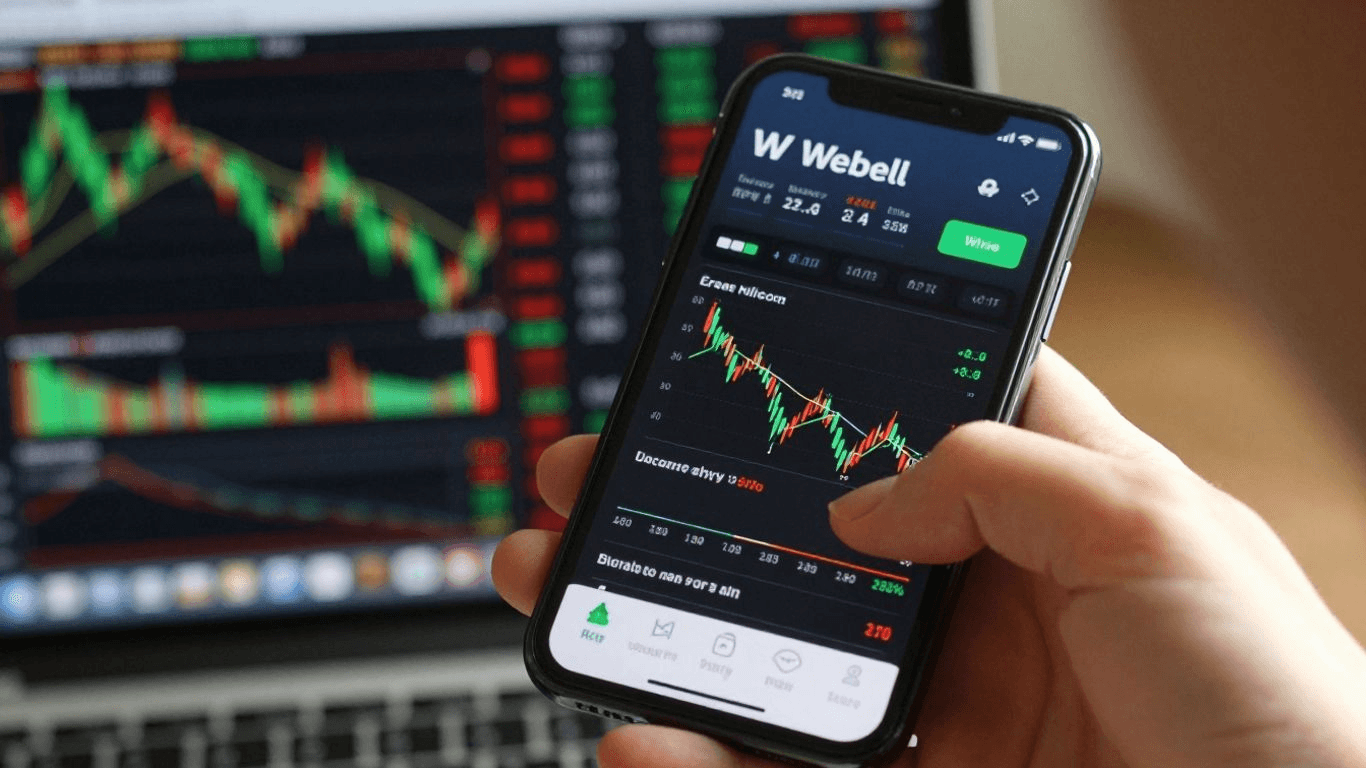
The shift from simulated capital to live trading isn't a technical upgrade. It's a psychological leap that exposes every gap in your discipline, every unexamined impulse, and every assumption you made when losses didn't sting. Your strategy may work perfectly on paper, but the moment your own money moves, hesitation creeps in, exits get delayed, and rules you followed religiously in simulation suddenly feel negotiable. The transition succeeds when you prepare for this emotional friction before it derails your first funded week.
Start With Position Sizes That Feel Almost Too Small
Your first live trades should use one-quarter to one-third of the share count you tested successfully in paper mode. This conservative sizing keeps financial impact minimal while you acclimate to the weight of real consequences. If you practiced with 100-share entries, start with 25 shares live. The dollar amounts feel trivial, but the psychological adjustment matters more than the profit potential at this stage. You're training your nervous system to execute under pressure, not chasing returns.
Documenting Emotional Triggers in Live Trading Transitions
Traders often report that even small live positions trigger emotions absent from simulation. A $50 unrealized loss on 25 shares can feel heavier than a $5,000 paper loss because one represents actual capital while the other resets with a button click. Log these emotional responses immediately after each trade, noting when fear altered your exit or greed extended your hold beyond plan parameters. This written record reveals patterns that destroy consistency before they compound into serious damage.
Define Non-Negotiable Risk Limits Before Funding Your Account
Set your maximum loss per trade at one to two percent of total capital and enforce it without exception. If you fund $5,000, no single position should risk more than $50 to $100, regardless of conviction level. Calculate this amount before entering any trade, place your stop loss immediately, and treat that level as immovable. The simulator lets you recover from oversized bets through resets. Live markets don't offer second chances when you violate position sizing discipline.
Most traders who fail during the transition skip this step, assuming that their paper-trading success proves they can manage risk intuitively. When you compare live execution against your simulation journal, slippage and emotional hesitation often double the intended risk without conscious awareness. Webull's price alerts and conditional orders help enforce these boundaries, but only if you configure them before volatility spikes and adrenaline overrides judgment.
Track Every Live Trade Against Your Paper Performance Baseline
Schedule weekly reviews to compare your live results with the metrics you established during simulation.
- Calculate win rate
- Average gain per winner
- Average loss per loser
- Maximum drawdown for both environments
Discrepancies reveal where real-world execution diverges from theory. You might discover your live win rate drops ten percent because fear causes premature exits on winning trades, or your average loss increases because hope delays stop execution when positions move against you.
Diagnosing Strategic Durability and Scaling via Professional Funding
This comparison isn't about self-criticism. It's diagnostic work that identifies which elements of your strategy survive contact with real capital and which ones collapse under emotional pressure. After three months of consistent live data, patterns emerge that show whether you need tighter entry rules, wider stops to account for normal price fluctuation, or simply more practice managing the discomfort of watching actual money move. Skilled traders who master this transition often seek ways to apply their proven edge to larger capital without committing additional personal funds. Goat Funded Trader extends the paper trading principle by evaluating traders through simulated accounts before providing access to substantial capital, up to two million dollars.
Standardizing Performance Metrics for Professional Capital Allocation
Candidates complete structured challenges featuring:
- A 10% profit target
- A 3% daily loss limit
- A 6% overall drawdown cap
Upon passing, they receive funded MT5 accounts to trade forex, stocks, ETFs, and crypto with an eighty to one hundred percent profit split on all returns, paid on demand via multiple methods. The model recognizes that demonstrating consistent performance in risk-controlled environments proves the discipline required to manage positions that would otherwise remain inaccessible due to capital constraints.
Scale Only After Proving Consistency Over Multiple Market Conditions
Resist increasing position sizes until you've achieved profitability across at least three consecutive months in live trading, covering different volatility regimes and market directions. One profitable month might result from luck or favorable conditions that won't repeat. Three months of positive returns across varied scenarios suggest your strategy adapts to changing environments rather than exploiting a temporary edge that has already disappeared. When you do scale, increase by twenty-five percent increments rather than doubling overnight. Move from 25 shares to 30, then 40, then 50 over subsequent months as results remain stable. Gradual progression protects against the common mistake of expanding risk faster than your psychological capacity can handle. Each size increase introduces new emotional friction that requires time to adjust before the next step.
Related Reading
- Best Free Paper Trading Platform
- How To Practice Trading Stocks
- Best Paper Trading Simulator
- Best Futures Paper Trading Platform
- Best Simulated Trading Platform
- Best Trading Platform For Beginners
- Best Day Trading Simulator
Get 25-30% off Today - Sign up to Get Access to Up to $800K Today
- You've built the discipline.
- You've tested strategies until they work consistently.
- You've proven you can execute under simulated conditions without letting emotions override your rules.
The problem is your personal account can't turn that skill into meaningful income, and saving enough capital to trade at scale takes years that most traders don't have. Goat Funded Trader removes that bottleneck by providing access to simulated capital up to $800,000, letting you apply the same habits you developed through Webull paper trading to account sizes where your edge actually generates rewards worth the effort.
Funding Evaluation and Reward Structures
The setup mirrors what you already practiced. Choose a customizable challenge or instant funding option with no minimum trading days, no strict time limits, and flexible loss parameters that respect how real traders operate. Pass the evaluation, receive your funded MT5 account, and start trading stocks, ETFs, forex, and more with the same risk management rules you refined in simulation. You keep up to 100% of profits with on-demand withdrawals, backed by a 2-day payment guarantee, including a $500 penalty for delays. Over 98,000 traders have collected more than $9.1 million in rewards using this model, proving that consistent performance in risk-controlled environments translates directly to funded outcomes when capital constraints disappear.
Be Great and get the App