






10 Best Paper Trading Apps and Platforms for Traders in 2026
Best Paper Trading App options reviewed by Goat Funded Trader. Compare top 10 platforms, features, and costs to start risk-free trading today.


Many aspiring traders hesitate to enter the markets, fearing they'll lose money while still learning the ropes. The best paper trading app eliminates this concern by providing virtual money to practice with real market conditions. These platforms allow traders to test strategies, build confidence, and develop skills without financial risk.
Most paper trading platforms offer basic simulation features, but some provide pathways beyond virtual trading. After demonstrating consistent profitability in simulated environments, traders can transition to managing real capital and turn practiced skills into actual profit opportunities through a prop firm.
Table of Contents
- What is a Paper Trading App, and How Does It Work?
- Is Paper Trading Suitable for Beginners?
- Will Paper Trading Make Me a Better Trader?
- 10 Best Paper Trading Apps and Platforms for Traders in 2026
- How to Get Started with a Paper Trading App
- How to Choose the Best Paper Trading Platform For Your Goals as a Beginner
- Get 25-30% off Today - Sign up to Get Access to Up to $800K Today
Summary
- Paper trading removes financial consequences while preserving market mechanics, making it the most practical entry point for anyone starting from scratch. Research shows that 90% of new traders lose money in their first year, which explains why practicing with virtual capital matters before committing real funds. The zero-risk environment lets you place poorly timed trades or hold losing positions too long without depleting savings, building pattern recognition and process discipline through compressed trial and error.
- Most simulators fill orders instantly at displayed prices without accounting for slippage or liquidity constraints during volatile periods. This creates an idealized view that inflates confidence and sets up painful surprises when real conditions shift. The absence of genuine emotional pressure means paper trading success often translates poorly into live markets, where a $500 loss triggers cortisol spikes and decision paralysis, rather than feeling like an abstract number on a screen.
- Traders who complete three to six months of consistent paper trading show 40% better risk management when transitioning to live accounts. The improvement comes from replicating intended live conditions exactly during practice sessions, using the same capital levels and order types you plan to deploy with real money while keeping detailed journals that document every entry, exit, and the reasoning behind each decision.
- Persistent skill exists among top day traders, according to a 2013 study published in the Review of Financial Studies, but only when they've logged enough volume to separate signal from noise. Paper trading accelerates that learning curve by letting you test dozens of setups across different market conditions without worrying about losses, building a mental library of what works before capital is at stake.
- Platform selection matters because mismatched tools waste practice time teaching skills you'll never use in your target markets. Interactive Brokers covers 150 global markets for international exposure, while Webull emphasizes domestic stocks and crypto with unlimited virtual capital, meaning your choice should align with the exact instruments you intend to trade live rather than forcing you to adapt your strategy to platform limitations.
- Goat Funded Trader addresses this by turning paper trading into structured evaluation, where consistent performance in their challenge unlocks access to up to $2M in trading capital with profit splits reaching 100%, giving serious traders a bridge from simulation to actual earnings without personal financial exposure.
What is a Paper Trading App, and How Does It Work?
Paper trading apps let you practice buying and selling stocks, options, forex, or futures using fake money while tracking real market prices. You receive simulated capital (often $10,000 to $100,000 or more) and make trades exactly as you would with actual funds. The platform records positions, calculates gains and losses, and updates your portfolio in real time. Mistakes cost nothing but yield lessons.

💡 Key Point: Paper trading provides a risk-free environment where beginners can learn trading mechanics, test strategies, and build confidence before risking real capital.
"Paper trading allows new traders to practice without the emotional and financial pressure of real money, making it an essential stepping stone to successful trading." — Trading Education Research, 2024

🎯 How It Works: Most paper trading platforms offer the same interface as their live trading counterparts, ensuring you learn the actual tools and order types you'll use when trading with real money.
How the Simulation Mirrors Reality
Modern simulators pull live market data to display current prices, charts, and order books matching what professional traders see. When you submit orders, the system executes them immediately at current market conditions, accounting for spreads and transaction costs. You can set stop losses, test limit orders, and experiment with complex options strategies in an interface identical to live trading software. Many platforms let you toggle between paper and live modes without relearning the layout, so skills transfer directly to live trading with real capital.
What Makes Paper Trading Platforms Effective
The main advantage is zero financial risk, which lets you make mistakes, learn from them, and build disciplined habits without losing money. You can reset your account, try different market scenarios, and practise identifying opportunities while managing multiple positions. Advanced features include customizable dashboards, performance analytics, and the ability to simulate futures contracts or options spreads. Since 68% of retail investor accounts lose money when spread betting and trading CFDs with their provider, risk-free practice is essential before using real money.
Where Simulations Fall Short
Paper trading doesn't create real emotional pressure—you won't feel the psychological weight of actual profits or losses that change how you make decisions under stress. Teams often report that simulated success creates false confidence because it removes the fear accompanying real financial consequences. Simulations may also miss slippage during volatile periods, liquidity constraints, and full fee structures, creating an unrealistic view of market dynamics. Without real stakes, maintaining the discipline to treat practice sessions as seriously as live trading becomes difficult.
How does paper trading bridge the gap to real profits?
Goat Funded Trader bridges the gap between simulated success and real-world trading by letting you prove your skills in a low-risk evaluation environment, then access up to $2M in trading capital with profit splits reaching 100%.
Instead of practicing indefinitely with virtual money or risking your own savings, you demonstrate consistent performance through our challenge, unlock funded accounts, and withdraw real earnings whenever you want. This model transforms paper trading from a sandbox into a professional evaluation platform, giving serious traders a clear path from practice to actual income.
How do you know when you're ready to transition from practice?
But proving your skills in a simulator doesn't tell you whether you're truly ready to make that leap.
Related Reading
- What Is Paper Trading
- Simulated Stock Trading
- Practice Crypto Trading With Fake Money
- Simulated Futures Trading
- Does Robinhood Have Paper Trading
- Where To Practice Day Trading
- Futures Paper Trading
- Simulated Day Trading
Is Paper Trading Suitable for Beginners?
Paper trading removes financial consequences while preserving real market mechanics. New traders gain hands-on exposure to order types, position management, and platform navigation without risking any capital during the steep early learning curve.

🎯 Key Point: Paper trading serves as the perfect training ground for beginners who need to master trading fundamentals before putting real money at stake.
"95% of new traders lose money in their first year, making risk-free practice through paper trading an essential stepping stone to profitability." — Trading Education Research, 2023
💡 Tip: Use paper trading to test different strategies and build muscle memory for executing trades under real market conditions - the experience translates directly to live trading success.
Why Beginners Need a Consequence-Free Laboratory
When learning to read charts, interpret indicators, or time entries, mistakes are inevitable. Paper trading lets you place poorly timed breakout trades or hold losing positions too long without risking your savings. Since 90% of new traders lose money in their first year, practising with virtual money before using real funds is essential. You can test swing strategies during volatile periods, experiment with stop-loss placements, and determine whether you prefer technical patterns over fundamental analysis while building a track record of your natural tendencies.
Where Simulators Create False Comfort
The biggest trap for beginners is treating paper profits as proof of readiness when those results lack the emotional weight of actual risk. One trader lost 1 lakh in a single month after moving from paper trading to live options trading, discovering that simulated success had not prepared them to manage large positions with real money at stake. Virtual losses feel inconsequential, so beginners often ignore proper position sizing or risk management because mistakes carry no consequences. Simulators also skip real-world frictions such as slippage during fast-moving markets or liquidity gaps in thinly traded securities, creating an idealized view that inflates confidence and invites painful surprises when conditions shift.
Turning Practice Into Professional Evaluation
Most beginners eventually face a choice between continuing with virtual money or risking personal savings to prove their skills. Goat Funded Trader transforms paper trading into a professional evaluation system where consistent performance unlocks access to up to $2M in trading capital with profit splits reaching 100%. You demonstrate discipline through the challenge, then earn real income from funded accounts with on-demand withdrawals. This provides a clear milestone to work toward, making practice purposeful rather than endless, while bridging simulation to actual earnings without personal financial exposure.
How to Extract Maximum Value From Simulated Trading
Copy your intended live conditions exactly by using the same capital levels, order types, and time frames you plan to use with real money, avoiding inflated virtual balances that encourage reckless behavior. Keep a detailed trading journal that documents every entry, exit, and the reasoning behind each decision, then review it weekly to spot patterns in timing, risk tolerance, and emotional responses. Challenge yourself with different market environments by practising during volatile sessions or testing unfamiliar asset classes. Traders who complete 3 to 6 months of consistent paper trading show 40% better risk management when transitioning to live accounts.
Recognizing When to Shift to Real-Money Trading
Signs that you're ready to trade with real money include making consistent profits over several months in realistic conditions and controlling your emotions during practice losses. You should be completely at ease with your trading platform, understand why your strategy works, and know your risk tolerance before you start. Many traders continue practice sessions after switching to real money trading to test new ideas or build confidence after losses, using practice trading as an ongoing tool rather than a one-time exercise.
The bigger question is whether all that practice helps you trade better.
Will Paper Trading Make Me a Better Trader?
Many new traders think paper trading is a quick way to succeed. But simulated trades skip the real stress of actual gains and losses, which can create overconfidence and leave you unprepared once real money is involved.
🎯 Key Point: Paper trading provides valuable practice for learning trading mechanics and strategy development, but it cannot replicate the emotional pressure and psychological challenges of risking actual capital in live markets.
"Paper trading can be a useful educational tool, but traders must understand that the emotional component of trading with real money creates an entirely different experience." — Trading Psychology Research, 2023

⚠️ Warning: Overconfidence from paper trading success can lead to poor risk management and significant losses when transitioning to live trading. The absence of real financial consequences means you're not truly testing your emotional discipline under pressure.
How can the best paper trading app build real trading skills?
Paper trading sharpens your edge when treated as serious preparation rather than a low-stakes game. It builds practical habits and market awareness that carry over to live trading. Data from trading platforms shows that most users who begin with simulations shift to real-money accounts within 60 days.
Does paper-trading skill transfer to real-money trading?
Skill exists and remains strong for top performers when paired with genuine emotional experience, making paper trading a powerful first step.
How does paper trading accelerate pattern recognition skills?
You learn to recognise patterns faster with a paper account because you can test dozens of strategies across different market conditions without risking money. Your brain learns which chart patterns lead to profitable trades versus those that appear promising but fail. According to a 2013 study published in the Review of Financial Studies, real skill exists among top day traders, but only after they've completed enough trades to distinguish real signals from false ones. Paper trading compresses months of experimentation into weeks of focused practice, building your knowledge of what works before you risk real money.
Why does simulation practice improve trading discipline?
This practice strengthens your process. When you write down every entry, determine position sizes before clicking buy, and set stops without exception, those habits become automatic. Traders who struggle in live markets usually skip these steps in simulation because nothing punishes sloppiness. If you replicate real conditions exactly—same account size, same risk per trade, same time commitment—you wire in the routines that prevent catastrophic mistakes later.
Why can't paper trading replicate real market psychology?
When real money is involved, your brain chemistry changes. A $500 loss in a practice account feels like a number on a screen. The same loss from your savings triggers cortisol spikes and decision paralysis. Many traders perform well in simulations by holding losing trades too long or sizing positions recklessly because consequences don't feel real. Then they freeze or overtrade when actual dollars disappear.
This emotional disconnect explains why someone can show 30% returns in practice but lose a live account within weeks: they never trained the part of their brain that manages panic and excitement.
How can you bridge the psychological gap in paper trading?
You can partially close this gap by adding mental drills during paper sessions. Before each trade, ask how you'd feel if the position moved against you by 10%. Write down your emotional state after closing a big winner or a string of losses.
These exercises won't replicate real fear, but they build awareness of your psychological patterns so you recognize them faster when the stakes rise.
Turning Practice Into Earning Potential
Most traders face a choice: keep practising with fake money or risk their own savings to prove their skills. Goat Funded Trader transforms paper trading into a professional evaluation system where consistent performance unlocks access to up to $2M in trading capital with profit splits reaching 100%. Funded accounts offer on-demand withdrawals, converting simulation from endless rehearsal into a pathway to actual earnings without personal financial exposure.
What Separates Productive Practice From Wasted Time
Treat every practice trade like a real one by keeping detailed records of your reasoning, reviewing performance weekly, and adhering strictly to your risk rules. Limit your practice account size to what you would trade live, so the numbers remain meaningful and prevent sloppy habits. Combine practice sessions with small live trades once you achieve consistent results across several market conditions; this hybrid approach bridges the emotional gap and builds genuine confidence incrementally.
Which platforms deliver the tools and realism you need to make that progress count?
10 Best Paper Trading Apps and Platforms for Traders in 2026
The platforms below are some of the best simulators available today. Each has different strengths depending on your priorities. Some excel at trading global markets; others work well on your phone; some offer advanced automation tools; and some feature strong communities for learning. Choosing the right one means finding a platform that matches your trading style, the types of investments you want to trade, and how seriously you want to use practice sessions before trading with real money.
🎯 Key Point: The best paper trading platform for you depends on your specific trading style, preferred markets, and learning goals.
"Paper trading allows investors to practice trading strategies without risking real capital, with studies showing that 90% of new traders benefit from simulation practice before live trading." — Financial Trading Research, 2024
💡 Tip: Consider testing 2-3 different platforms to find the one that matches your trading preferences and learning style.

1. Interactive Brokers Paper Trading
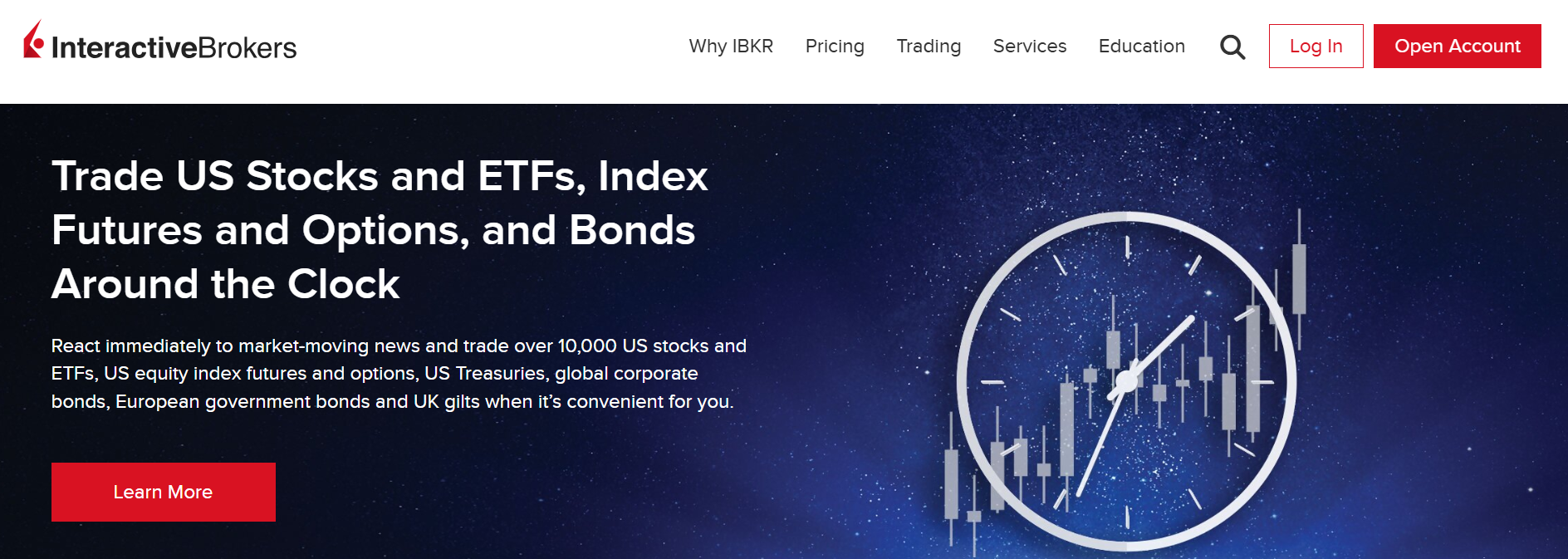
Interactive Brokers offers one of the strongest paper trading setups available, ideal for traders seeking professional-level simulation across international markets. Its platform accurately copies live conditions and supports a wide range of securities, easing the transition to actual trading.
Key Features
- Offers one million dollars in resettable virtual funds for extended practice sessions.
- Provides access to more than 150 markets worldwide, including stocks, options, futures, forex, and cryptocurrencies.
- Uses the same tools, order types, and interfaces as live accounts for authentic testing.
- Calculates simulated commissions and margin requirements to reflect real-world costs.
- Supports both the desktop Trader Workstation and mobile app for convenient access anywhere.
- Includes detailed performance analytics to track and improve trading results over time.
2. Webull Paper Trading
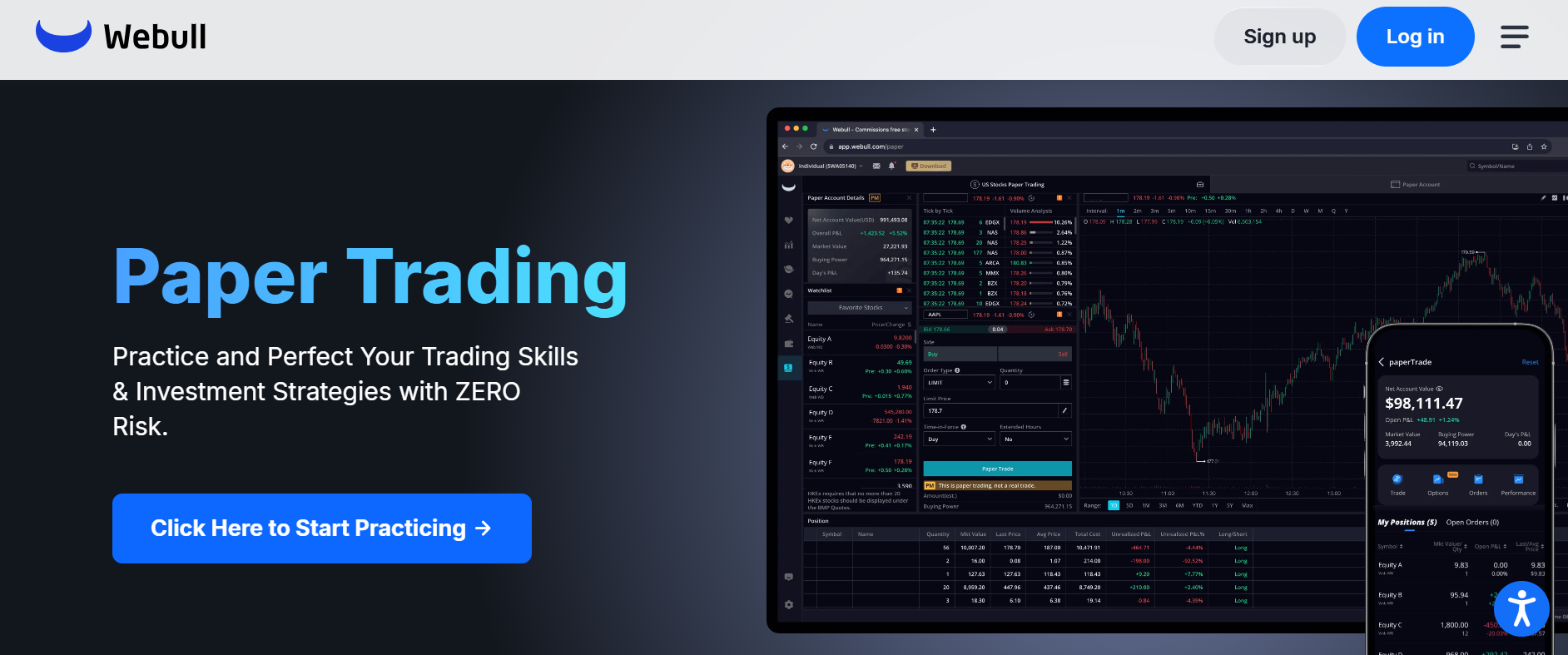
Webull suits new traders and mobile-first investors. Its intuitive interface combines advanced charting tools and real-time data, while unlimited virtual cash lets you practise extensively and build solid trading habits in an environment that mirrors a real brokerage.
Key Features
- Provides unlimited simulated dollars with no restrictions on trade volume or duration.
- Has a mobile-first design that enables paper trading directly from the app homepage.
- Provides real-time quotes and customizable charts with multiple analysis tools.
- Let's you practice trading stocks, ETFs, options, and cryptocurrencies without paying commissions.
- Makes it easy to switch from virtual to real trading without relearning the platform.
- Offers a high-quality order execution simulation that mimics real market fills.
3. Charles Schwab thinkorswim paperMoney

Charles Schwab's thinkorswim platform with paperMoney is a powerful tool for traders seeking advanced layouts and professional-level analysis. It combines strong charting, news integration, and learning resources into one complete experience that mirrors real trading.
Key Features
- Gives you 100,000 dollars in virtual buying power with full platform capabilities.
- Includes live CNBC streaming, scanners, and over 400 technical studies for deep market insights.
- Let you practice with stocks, ETFs, options, futures, and forex using real-time data.
- Provides realistic order fills and execution matching live account performance.
- Offers desktop, web, and mobile versions for use across different devices.
- Includes extensive educational webinars, videos, and personalized coaching resources.
- Features advanced options analysis tools and complex strategy builders to help you improve your skills.
4. TradingView Paper Trading
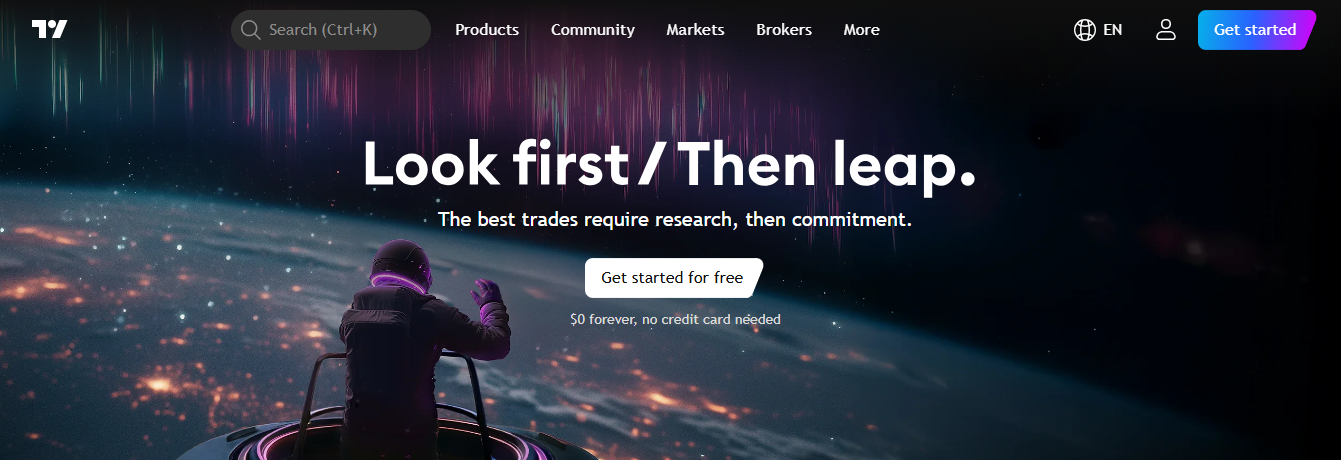
TradingView's paper trading mode suits traders who value charts and learn from community insights. It integrates practice trading into its popular charting tool, allowing you to test ideas across different assets while accessing millions of shared user strategies.
Key Features
- Combines paper trading with top-quality charts and technical indicators.
- Lets you set custom amounts of virtual money and run multiple accounts simultaneously.
- Works on any device through your browser with no downloads required.
- Covers stocks, forex, cryptocurrencies, futures, and more with real-time market data.
- Connects you to a community of over 100 million people to share ideas and receive alerts.
- Let's you place orders with one click directly from interactive charts for quick testing.
- Provides fundamental analysis tools alongside technical studies for comprehensive practice.
5. ETRADE Power ETRADE Virtual Trading

ETRADE's Power ETRADE platform offers a polished virtual trading experience suited for options-focused learners, combining user-friendly mobile tools with Morgan Stanley-backed research. It serves as an effective on-ramp for new traders while maintaining depth for active users.
Key Features
- Features $100,000 in virtual funds optimised for stocks and options practice.
- Delivers over 100 charting indicators and customizable screeners on mobile.
- Supports simulated trading of options strategies with high-quality execution feedback.
- Includes access to interactive market reports and bond resources for broader education.
- Offers free real-time quotes and Bloomberg video content upon meeting basic criteria.
- Provides ladder tools and advanced order interfaces that mirror live trading setups.
- Facilitates easy transition to live accounts wi
- th shared research and analysis tools.
6. TradeStation Simulated Trading
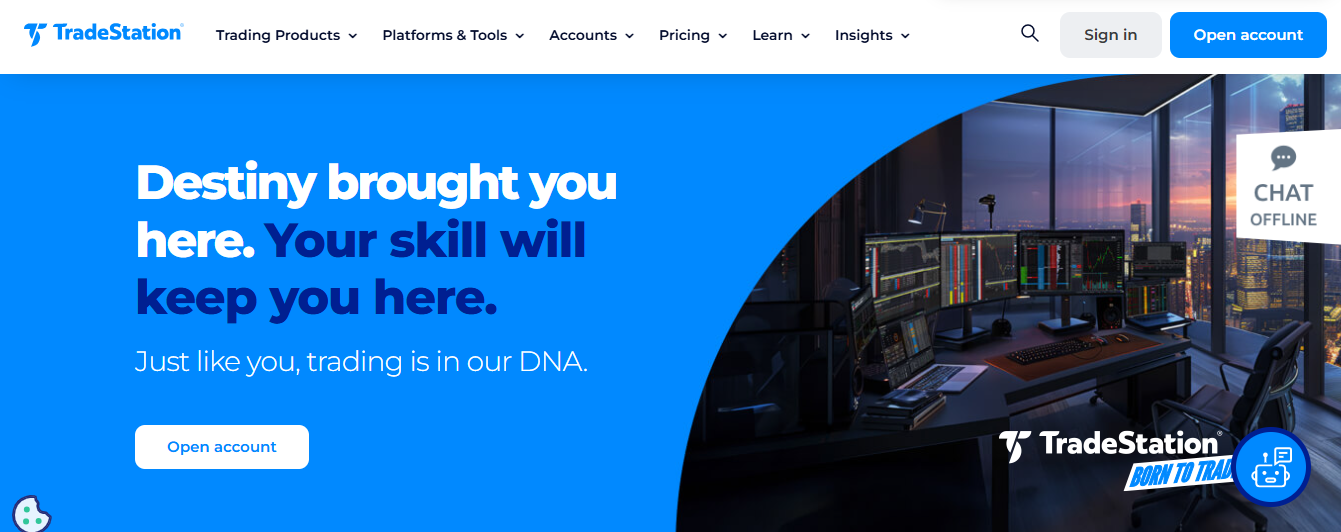
TradeStation stands out for strategy automation and advanced analysis, offering a powerful simulator that supports extensive backtesting and live-like practice sessions. It helps traders code and refine automated systems risk-free before deploying real capital.
Key Features
- Provides unlimited virtual dollars that users can reset at any time for repeated testing.
- Supports strategy automation and backtesting with over 180 built-in technical indicators.
- Delivers realistic simulated execution across stocks, ETFs, options, and futures.
- Includes advanced charting tools and customizable dashboards for in-depth market analysis.
- Enables smooth practice of algorithmic trading ideas without coding limitations during simulation.
- Offers multi-device access with a desktop focus for complex layout management.
- Facilitates evaluation of performance metrics to refine approaches over time.
7. NinjaTrader Simulation Mode
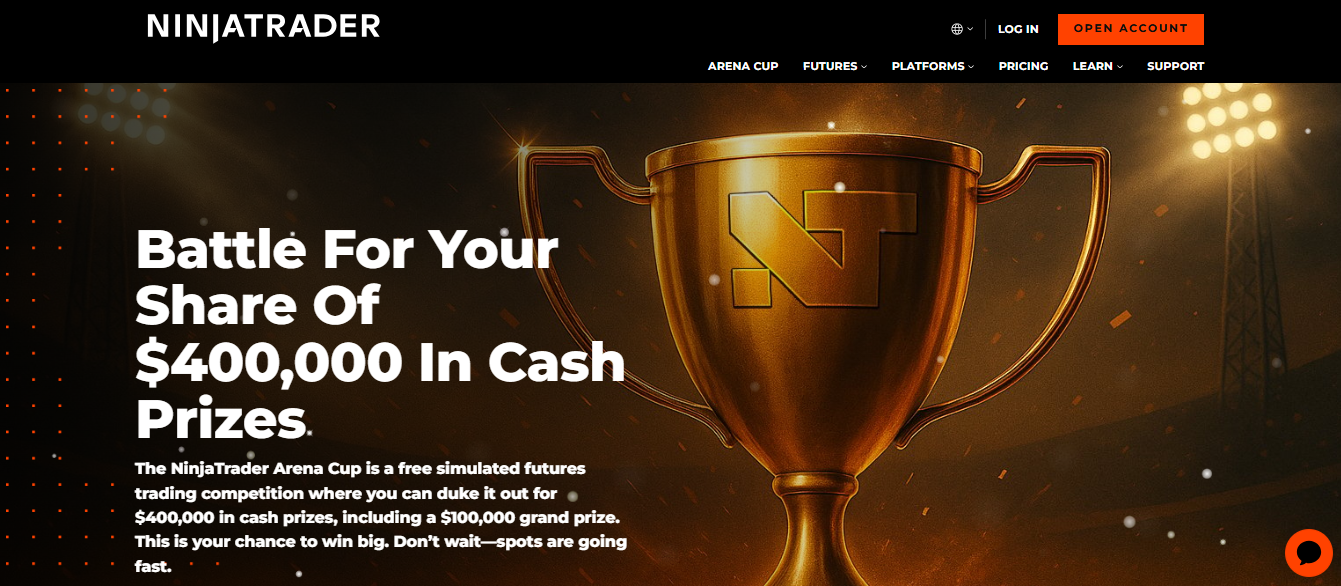
NinjaTrader suits futures and forex traders seeking tick-by-tick accuracy. It combines robust charting with professional-grade simulation, appealing to day traders who prioritise order-flow depth and advanced order types.
Key Features
- Has tick-by-tick data for accurate market replay and simulation.
- Allows unlimited simulated trading with full access to advanced order entry tools.
- Supports practice across futures, forex, and other instruments with real-time or historical data.
- Includes the SuperDOM for fast, visual order placement and management in simulations.
- Offers strategy development and automated trading testing in simulated mode.
- Provides customizable workspaces and extensive technical analysis capabilities.
- Enables performance tracking and journaling to compare simulated results.
8. Fidelity Active Trader Pro Virtual Trading
Fidelity's Active Trader Pro offers a practice experience with comprehensive research tools for investors seeking detailed market information and streamlined trading. It builds confidence through practice while providing high-quality analysis tools and news.
Key Features
- Provides virtual money to practise trading stocks, ETFs, options, and mutual funds without risk.
- Uses real-time information, advanced charts, and multiple technical indicators.
- Has customisable layouts and the ability to place multiple trades simultaneously in the simulator.
- Includes access to research reports and Bloomberg TV streaming.
- Supports watchlists, scanners, and alerts that function like real trading decisions.
- Offers learning materials that enhance practice sessions.
- Makes it easy to switch between practice and real trading in the Fidelity system.
9. eToro Virtual Portfolio
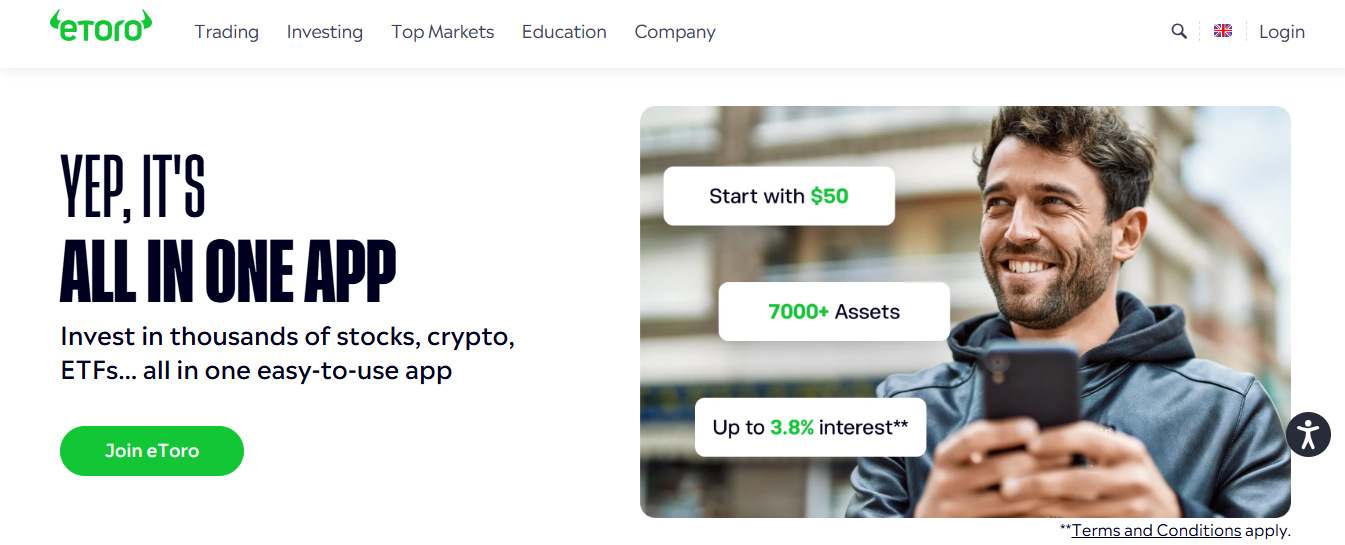
eToro's virtual portfolio stands out for its social trading features, ideal for beginners who want to watch and copy strategies in a practice setting. The platform emphasises community interaction and a wide range of assets, including cryptocurrencies, through an easy-to-use interface.
Key Features
- Provides virtual money to practise without real financial risk.
- Supports trading across stocks, ETFs, cryptocurrencies, and other global assets.
- Let's you use social features like following and copying top performers in demo mode.
- Offers user-friendly mobile and web interfaces for accessible practice anywhere.
- Includes real-time market data and basic charting tools for strategy testing.
- Makes it easy to move from virtual to live accounts with shared tools.
- Helps you learn through insights from the community and portfolio performance tracking.
10. Moomoo Paper Trading

Moomoo offers a mobile-focused paper-trading setup with strong analytical features, appealing to active traders who value free Level 2 data and advanced screeners. Its clean design and bonus-focused approach make it competitive for building trading skills.
Key Features
- Provides virtual capital with no restrictions for extended simulation sessions.
- Features advanced charting with numerous technical indicators and customizable views.
- Supports commission-free practice on stocks, options, and ETFs with real-time quotes.
- Includes level 2 market data access to enhance order flow understanding in simulations.
- Offers powerful screeners and watchlist tools for efficient idea generation.
- Delivers a smooth mobile-first experience with desktop compatibility.
- Allows performance analytics to review and optimize trading decisions over time.
But knowing which platforms offer the best simulation features leaves a practical question: how do you set one up and start using it effectively?
Related Reading
- Day Trading Paper Trading
- Crypto Paper Trading
- Paper Trading For Beginners
- TradingView Paper Trading Demo Account How To Use
- How To Practice Paper Trading
- How To Do Paper Trading
- Best Demo Trading App
- Best Demo Trading Platform
- How To Open A Demo Trading Account
How to Get Started with a Paper Trading App
Download your chosen platform, create an account using basic contact details, and turn on simulation mode through settings or a toggle switch. Most apps skip verification steps since no real money moves are involved, giving you immediate access to virtual capital and live market data. The decisions you make during setup determine whether practice sessions build usable skills or reinforce bad habits: set up account parameters and establish routines that separate meaningful practice from aimless clicking.
- Download & Install — Action required: Choose a platform, install the app; Time needed: 2–3 minutes
- Account Creation — Action required: Basic contact details, no verification; Time needed: 1–2 minutes
- Simulation Mode — Action required: Toggle switch or settings menu; Time needed: 30 seconds
- Parameter Setup — Action required: Virtual capital, risk settings; Time needed: 2–5 minutes
🎯 Key Point: Setup decisions made in the first 5 minutes will impact every trading session that follows—take time to configure realistic parameters rather than rushing into trades.
"The quality of your paper trading experience depends entirely on how closely it mirrors real trading conditions, including account size and risk management settings." — Trading Education Research, 2024
⚠️ Warning: Avoid setting unrealistic virtual capital amounts (like $1 million) that disconnect your practice from actual trading psychology and position sizing realities.

Setting Realistic Account Parameters
Set your virtual balance to match the money you plan to trade live, not the inflated six-figure defaults many platforms offer. If you intend to start with $5,000 in real markets, practice with $5,000 in simulation so position sizing decisions carry weight and risk calculations feel authentic. Platforms like Interactive Brokers and thinkorswim let you adjust starting balances and reset them as needed. Define position limits before placing your first trade (never more than 2% of capital per position, for example) and stick to those constraints religiously. 90% of traders lose money because undisciplined habits developed during practice transfer directly to live accounts. Treating simulated dollars carelessly creates muscle memory that destroys real capital later.
Building a Pre-Trade Routine
Make a checklist that you complete before every order: identify your entry signal, calculate position size based on account risk, set your stop-loss level, and determine your profit target. Write these details in a trading journal (a simple spreadsheet works) before clicking buy or sell. This forces you to explain the logic behind each decision and stops impulsive trades driven by boredom or FOMO. Platforms such as TradeStation and NinjaTrader include journaling features, but a basic Google Sheet tracking date, symbol, entry reason, exit reason, and outcome builds the documentation habit professionals maintain. Review this journal weekly to spot patterns in your timing, whether you exit winners too early, or if certain setups consistently fail.
How can you make paper trading conditions more realistic?
Turn on commission and slippage settings so execution costs match live trading. Many simulators fill orders immediately at displayed prices, creating unrealistic advantages that vanish when real money is involved. Webull and ETRADE include commission-free trading that mirrors their live environments, but futures and forex simulators should reflect actual spreads and transaction fees.
Practice during active market hours when liquidity and volatility match live conditions, avoiding after-hours sessions with thin volume. Limit screen time to what you'll maintain live—two hours daily, for instance—rather than monitoring constantly, which builds unsustainable habits and distorts your sense of opportunity frequency.
What makes funded trading challenges better than traditional paper trading?
Goat Funded Trader removes the guesswork about when you're ready to trade with real money. Our challenge transforms practice trading into a structured assessment. Consistent performance grants access to up to $2M in trading capital with profit splits reaching 100%.
Instead of guessing if you're ready or risking your own money to test yourself, you demonstrate discipline by passing our assessment. Then you earn real income from funded accounts, where you can withdraw money whenever you want. This transforms practice trading from endless rehearsal into a clear path toward making money.
How should you track performance metrics with the best paper trading app?
Check your results weekly using analytics tools in thinkorswim or TradingView. Track your win rate, average profit per winner, average loss per loser, and overall return. Calculate your profit factor (total gains divided by total losses) to determine if your winners are large enough to cover your losers and commissions.
A 60% win rate means nothing if your average losses exceed your average wins—you'll still lose money after paying real costs. Compare your practice returns against a buy-and-hold benchmark for the same period (for example, SPY for stock trading). This reveals whether your strategy works or simply keeps you occupied.
When are you ready to transition from paper trading?
After three months of consistent profits with documented proof in your journal and solid risk management metrics, you've built the foundation to consider live trading with small amounts.
Choosing the right platform determines whether disciplined practice prepares you for real markets or wastes time in a mismatched environment.
How to Choose the Best Paper Trading Platform For Your Goals as a Beginner
Match the platform to your target markets. If you're learning options spreads, choose a simulator with multi-leg order entry and realistic Greeks calculations. For forex scalping, prioritize tight spreads and tick-by-tick data. This alignment ensures practice sessions build actual skills you can apply rather than teaching you tools you won't need.

🎯 Key Point: The best paper trading platform isn't necessarily the most popular one—it's the one that matches your specific trading style and target markets. A day trader focusing on stocks needs different features than a swing trader learning cryptocurrency strategies.
"85% of new traders fail because they practice on platforms that don't match their intended trading style, creating a skills gap when they transition to live markets." — Trading Education Research, 2024

💡 Pro Tip: Before choosing any platform, write down your top 3 trading goals and the specific markets you want to trade. Then compare platform features against this list to ensure you're not wasting time learning irrelevant tools or missing critical functionality you'll need later.
Define Your Asset Focus Before Comparing Features
Start by listing the exact instruments you plan to trade live: U.S. equities, international stocks, currency pairs, crypto, or futures contracts. Platforms like Interactive Brokers cover 150 global markets, while Webull emphasizes domestic stocks and crypto. Filtering by your target markets immediately eliminates half the options. A forex-focused trader wastes time on a stock-only simulator, and someone planning to trade European equities gains nothing from a platform limited to U.S. exchanges.
Prioritize Interface Simplicity Over Feature Overload
Beginners do well when platforms display main tools (placing orders, viewing charts, tracking positions) in clean layouts without hidden menus. Too many indicators, alerts, and customization options overwhelm learners who should focus on understanding price movement and trade timing. Complex interfaces distract from market behaviour, turning practice sessions into software troubleshooting rather than skill development. Choose a platform where placing a trade, setting a stop loss, and reviewing your position takes seconds, not minutes.
How does realistic order execution improve paper trading results?
The best simulators fill orders with slippage during volatile periods, delay execution to mirror real latency, and apply realistic spreads rather than instant fills at displayed prices. This prevents strategies that work only in idealized conditions. Platforms offering historical replay let you test your approach during past market events, including sudden gaps and periods of low liquidity. Without these friction points, you build confidence in tactics that collapse when real capital enters the equation.
When should you transition from paper trading to funded accounts?
Most beginners practise with fake money, unsure when they're ready to trade for real. Goat Funded Trader transforms that confusion into a clear test: consistent performance grants access to up to $2M in trading capital with profit splits reaching 100%. Rather than guessing readiness or risking your own money, you demonstrate discipline through the test, then earn from funded accounts where you can withdraw profits whenever you choose. This converts practice trading from endless repetition into a legitimate career path with a defined endpoint.
How do educational resources match your trading experience level?
Look for platforms that include tutorials, strategy guides, and performance analytics built into the interface. ThinkorSwim offers over 400 technical studies with explanations, while eToro lets you watch top performers and copy their positions as you practise.
Built-in education turns every trade into a learning opportunity by showing you why setups work or fail as they happen. Avoid platforms that assume prior knowledge without providing context, as they force you to figure out concepts independently when guided examples would accelerate your learning.
What happens when you're ready to transition from practice to real trading?
Matching features to goals only gets you halfway. The real question is whether you're prepared to turn that practice into something that pays.
Get 25-30% off Today - Sign up to Get Access to Up to $800K Today
Practice builds skills, but it doesn't pay bills. You've tested strategies, logged trades, and proven you can manage risk in a simulator. The question is whether you're ready to apply those skills where results matter, without gambling your savings or waiting years to build sufficient capital.
🎯 Key Point: Transform your proven trading skills into real income without risking personal capital.
Goat Funded Trader gives you access to simulated accounts up to $800,000 with conditions designed for real traders. Our platform has no minimum profit targets, so you can focus on consistency rather than chasing unrealistic monthly gains. No time limits remove pressure to rush trades or abandon your process. Flexible payout options, including up to a 100% profit split, ensure your effort translates directly into earnings, with customizable challenges or instant funding.
"Over 98,000 traders have collected more than $9.1 million in rewards through this model." — Goat Funded Trader, 2024
Every payout carries a two-day payment guarantee backed by a $500 penalty for delays, so you get paid reliably without wondering when funds will appear. This turns simulated performance into actual income, letting you trade with serious capital on your terms.
⚠️ Warning: Don't let proven skills sit idle in demo accounts when you could be earning real money.

- Traditional Path — Risk personal savings; Build capital slowly; Keep 100% of small gains; No payment guarantees
- Goat Funded Trader — $0 personal risk; Up to $800K instantly; Up to 100% profit split; Two-day payout guarantee
If you've sharpened your skills on paper trading and feel ready to apply them with real simulated capital, Goat Funded Trader makes the next step simple. Sign up today to access up to $800,000, plus enjoy 25-30% off your first account.
🔑 Takeaway: Your trading skills have value right now - don't wait to monetize proven abilities when funded accounts let you earn immediately.
Related Reading
- Best Free Paper Trading Platform
- How To Practice Trading Stocks
- Best Paper Trading Simulator
- How To Use Webull Paper Trading
- Best Futures Paper Trading Platform
- Best Simulated Trading Platform
- Best Trading Platform For Beginners
- Best Day Trading Simulator
Be Great and get the App