






Best Trading Platform For Beginners in 2026: Top 10 Picks
Best trading platform for beginners' guide by Goat Funded Trader. Compare top 10 platforms, fees, and features to start trading confidently.


New traders face a critical challenge: learning market dynamics without risking personal capital. Paper trading apps provide the perfect solution by offering realistic market simulations that let beginners develop skills, test strategies, and build confidence. The best paper trading app combines authentic market data with a user-friendly interface that mirrors real trading conditions. Choosing the right platform sets the foundation for successful trading development.
After mastering simulated trading and proving consistent profitability, skilled traders often seek opportunities to trade with larger capital. Rather than spending years slowly building personal accounts, demonstrated trading ability can open doors to funded trading opportunities. Many successful traders transition from paper trading to professional trading through a prop firm that provides access to capital based on proven skills.
Table of Contents
- What is a Trading Platform, and How Does It Work?
- Can I Teach Myself How to Trade?
- How Much Do I Need to Start Trading?
- Best Trading Platform For Beginners in 2026: Top 10 Picks
- How We Chose the Best Trading Platforms For Beginners
- How to Get the Most Out of a Trading Platform
- Get 25-30% off Today - Sign up to Get Access to Up to $800K Today
Summary
- Paper trading removes financial risk during the learning phase, but only if you treat simulated capital with the same discipline you'd apply to real money. Most beginners over-leverage or ignore stop losses in demo accounts because there's no actual downside, which trains them to disregard risk management entirely. The transition to live trading should happen only after proving consistent profitability over at least 100 trades across different market conditions, not after lucky streaks that mask poor habits.
- The pattern day trading rule imposes a $25,000 regulatory barrier on anyone who makes more than three day trades within five business days in a margin account, according to FINRA requirements. This threshold forces beginners to either accumulate significant personal savings, limit themselves to three trades per week, or switch to cash accounts with two-day settlement delays that slow learning momentum. The rule protects inexperienced traders from overleveraging but simultaneously blocks access to the intraday strategies many want to learn.
- Execution quality matters more than zero commissions when evaluating platforms. One trader who switched from a retail-friendly interface to a professional broker immediately noticed worse fills, describing the difference as "terrible." Platforms that save $5 in commissions but cost $20 in slippage or poor order routing teach beginners to tolerate substandard execution, a habit that becomes expensive when scaling to larger position sizes or faster strategies where milliseconds and fractional price improvements compound.
- Research on trade backtesting shows that analyzing 20-year results reveals how consistent preparation routines directly correlate with execution accuracy under pressure. Traders who customize workspace layouts, set strategic alerts based on proven setups rather than vague hunches, and backtest scanner parameters against historical data build workflows that reduce cognitive load during volatile sessions. The difference between beginners who plateau and those who progress often comes down to how deliberately they configure their environment before market pressure hits.
- Retail investor accounts show an 82% loss rate when trading CFDs with providers, a statistic reflecting not just poor strategy but often poor execution environments that amplify losses through lag, requotes, or opaque pricing. Platforms that front-load every possible feature in the main interface create paralysis rather than empowerment, while those presenting information hierarchically keep critical details like current position P&L visible and advanced features accessible but tucked away until users are ready.
- Goat Funded Trader addresses the capital-accumulation barrier by providing simulated accounts of up to $2M to traders who pass an evaluation, shifting focus from personal savings to demonstrated skill under real market conditions.
What is a Trading Platform, and How Does It Work?
A trading platform is the digital tool that connects you directly to financial markets, where you place orders, watch your positions, analyze price movements, and manage risk in real-time.

🎯 Key Point: Think of a trading platform as your digital command center - it's the single interface that gives you access to global markets, real-time data, and order execution capabilities all in one place.
"A trading platform serves as the gateway between retail traders and institutional markets, processing over $6.6 trillion in daily forex transactions alone." — Bank for International Settlements, 2022
- Order execution
- What it does: Places your buy/sell orders directly into the market
- Market data
- What it does: Provides real-time prices and charts
- Portfolio management
- What it does: Tracks your positions, P&L, and account balance
- Risk controls
- What it does: Manages stop losses, position sizing, and margin requirements

💡 Example: When you want to buy Apple stock, the platform sends your order to the stock exchange, confirms the execution price, and instantly updates your portfolio to show the new position - all within milliseconds.
How does the best trading platform for beginners execute orders?
These platforms work through brokerage firms that act as intermediaries between you and exchanges like the New York Stock Exchange or Nasdaq. When you submit a buy or sell order, the platform sends it through the broker's systems to a matching engine that pairs your order with another trader at an agreed price. Execution happens in milliseconds, with confirmation appearing on your screen almost immediately. Settlement, the actual transfer of ownership and funds, usually finishes within one business day through automated clearing processes.
Commercial vs. Proprietary Systems
Most beginners use commercial platforms built for retail traders. These platforms are accessible and user-friendly, handling everything from stock purchases to options strategies without requiring institutional credentials. Proprietary platforms are custom-built by large financial institutions for internal use, offering direct market access and features optimized for high-volume trading. You'll encounter these only while working inside a major brokerage or trading desk. This distinction shapes what tools you'll use as you develop your skills.
Features That Separate Learning Tools from Professional Infrastructure
Real-time data feeds, charting tools, and technical indicators form the foundation of any serious platform. The difference between beginner-friendly and professional interfaces often comes down to execution quality and risk management. When traders describe platforms as "calm, friendly, emotionally stable," they mean the interface stays out of the way during volatile moments when decisions must be made quickly.
How do advanced order types help the best trading platform for beginners reduce emotional trading?
Advanced platforms include automated order types like trailing stops, bracket orders, and algorithmic execution scripts that set exact entry and exit rules before emotion interferes. According to a 2024 analysis by Corporate Finance Institute, these features reduce cognitive load during live trading, allowing traders to focus on strategy rather than manual order management.
Why Platform Choice Matters More Than You Think
The platform you choose determines the habits you'll build. Beginners often pick platforms based on zero commissions or marketing, but what matters is whether the platform supports the workflows you'll need when trading with significant capital: reliability, speed, and professional standards become essential.
How can the best trading platform for beginners prepare you for funded accounts?
Platforms like Goat Funded Trader provide traders with simulated accounts up to $2M, allowing them to demonstrate their skills in real market conditions without risking personal capital. Our platform matches the execution quality and risk controls of funded accounts. If your beginner platform trains you to accept lag, clunky order entry, or unclear position tracking, you're building habits that won't serve you as you grow.
What skills do you need to develop to master the platform?
The harder question is whether you can develop the skills to use it well without formal training.
Related Reading
- Best Paper Trading App
- What Is Paper Trading
- Simulated Stock Trading
- Practice Crypto Trading With Fake Money
- Simulated Futures Trading
- Does Robinhood Have Paper Trading
- Where To Practice Day Trading
- Futures Paper Trading
- Simulated Day Trading
Can I Teach Myself How to Trade?
Yes, you can teach yourself to trade. Thousands of traders have done it using books, courses, YouTube channels, forums, and free demo accounts. But having access to information is not the same as knowing how to use it effectively. Trading is a skill built through deliberate practice, not just watching or reading passively. You can learn the basics in weeks, but developing the judgment to use them under pressure takes months or years.
🎯 Key Point: Self-taught trading is absolutely possible, but it requires active practice rather than passive consumption of educational content.
"Trading success comes from deliberate practice and developing judgment under pressure, which takes months or years to master." — Trading Education Research
💡 Tip: Start with demo accounts to practice your skills without risking real money while you build the experience needed for live trading.
- Books & courses
- Time to learn basics: 2–4 weeks
- Time to develop judgment: 6–12 months
- Demo trading
- Time to learn basics: 1–2 weeks
- Time to develop judgment: 3–6 months
- Live practice
- Time to learn basics: Immediate
- Time to develop judgment: 12+ months

What challenges do self-taught traders face without guidance?
The real challenge is avoiding information overload while building a structured approach that keeps you accountable. Self-learners often struggle without direction: no syllabus, grading system, or feedback on readiness. You're responsible for identifying your own weaknesses, which requires self-awareness that most beginners lack. Without that feedback loop, you can spend months reinforcing bad habits without realizing it.
Start With Market Fundamentals, Not Strategies
Before you place a single trade, understand how markets work: order books, price movement drivers, and how liquidity affects execution. Most beginners skip this because it feels boring compared to chart patterns or indicators, but strategies fail without understanding their operating environment. If you can't explain why a stock gaps at the open or how a limit order interacts with the bid-ask spread, you're trading blind.
How does the best trading platform for beginners handle different instruments?
Learn about the instruments you plan to trade: stocks, forex, futures, or crypto. Each has different hours, volatility profiles, and risk characteristics. A strategy that works in forex during the London session overlap may fail in a thinly traded penny stock. Understanding these differences prevents misapplying strategies across incompatible markets.
Use Demo Accounts to Build Pattern Recognition
Paper trading only works if you treat it like real money. The common mistake is over-leveraging or taking reckless positions because there's no downside, which trains you to ignore risk. Set rules: trade the same position sizes you'd use with real capital, follow your stop losses, and track every trade in a journal. If you can't stay disciplined in a demo account, you won't develop discipline when real money is on the line.
How do demo accounts help you master platform mechanics?
Demo accounts let you learn how the platform works: different order types, charting tools, and trade execution speed. You need to understand how trailing stops perform when prices move quickly and how fast your platform fills market orders during news events. These factors determine whether you get your desired price or slip by several ticks, which can turn a winning trade into a breakeven or a loss.
When should beginners transition from demo to live trading?
Move to live trading once you've demonstrated consistent profitability over at least 100 trades across different market conditions. If your practice results show significant volatility or extended losing streaks, you're not ready. Our Goat Funded Trader program lets you trade with practice money up to $2M after passing a test, providing substantial buying power without risking your own capital while requiring you to prove your skills in real market conditions.
Build a Strategy Around Your Personality and Schedule
A trading strategy is a plan that matches your risk tolerance, available time, and stress management. Day trading requires hours of screen time and quick decision-making, while swing trading allows you to hold positions for days or weeks with less constant monitoring. If you have a full-time job, chasing small price moves throughout the day will exhaust you. Your strategy must fit your life, or you won't stick with it long enough to see results.
What makes the best trading platform for beginners effective for strategy development?
Define your edge clearly. Are you trading breakouts, mean reversion, momentum, or news events? Each approach requires different skills and responds to different market conditions. Write down your rules: what qualifies as a valid setup, where you place stops, and how you scale out of winners. The more specific you are, the easier it becomes to review your trades and identify what's working. Unclear rules like "buy when it looks strong" leave nothing to improve on.
Risk Management Determines Survival
You can have a winning strategy and still lose your account without proper risk management. The standard advice is to risk no more than 1-2% of your capital per trade. A 10-trade losing streak at 2% risk costs 18% of your account; at 10% risk, it wipes you out completely. Position sizing is the difference between a bad week and a career-ending mistake.
How should the best trading platform for beginners handle stop losses?
Stop losses protect you from catastrophic losses, but only if you use them consistently. Many beginners move stops further away when trades go against them, hoping for recovery. That's not risk management. Your stop loss should be placed where your trade thesis is invalidated. If the price hits that level, you were wrong. Accept it and move on. But knowing how much you can afford to lose leaves one critical question unanswered.
How Much Do I Need to Start Trading?
The answer depends on your trading style. For beginners, $500 to $1,000 provides sufficient capital to practice position sizing and risk management. Day trading, however, has different regulatory requirements.

🎯 Key Point: Start with an amount you can afford to lose completely - trading capital should never be money you need for living expenses or emergencies.
"The minimum equity requirement for pattern day traders is $25,000, which must be maintained at all times." — FINRA Regulations, 2023

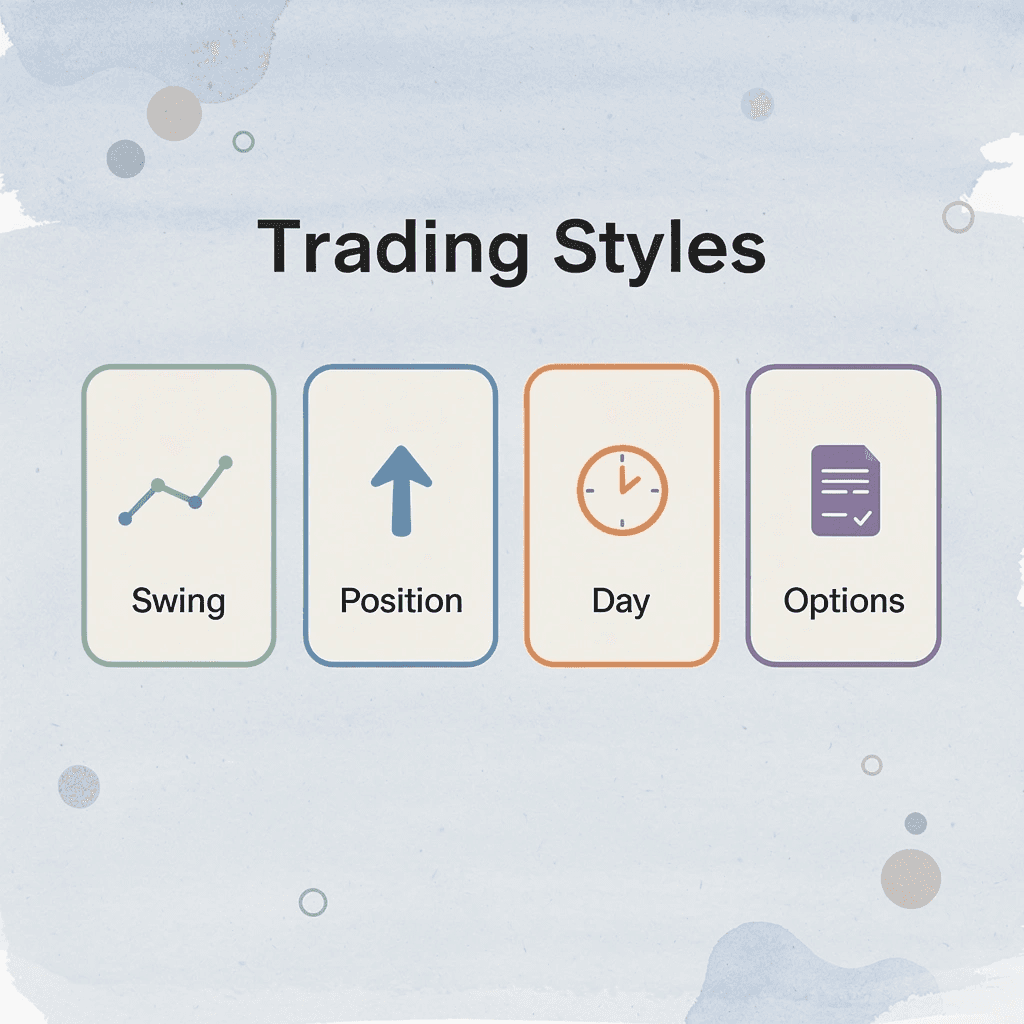
- Swing trading
- Minimum capital: $500
- Recommended start: $1,000–$2,000
- Position trading
- Minimum capital: $1,000
- Recommended start: $2,000–$5,000
- Day trading
- Minimum capital: $25,000
- Recommended start: $30,000+
- Options trading
- Minimum capital: $2,000
- Recommended start: $5,000+
⚠️ Warning: The Pattern Day Trader (PDT) rule requires a minimum of $25,000 in your account if you plan to make more than 3 day trades within a rolling 5-business-day period.
What is the pattern day trading rule?
If you plan to make more than three day trades within five business days in a margin account, you'll trigger the pattern day trading rule. FINRA requires a minimum account balance of $25,000 to protect inexperienced traders from overleveraging. Drop below it after being flagged as a pattern day trader, and your account gets restricted until you restore the balance or wait 90 days.
How does this rule affect the best trading platform for beginners?
This rule creates a barrier for beginners who want to learn intraday strategies without sufficient capital. Many work around it by limiting themselves to three trades per week or switching to cash accounts, where the rule doesn't apply. However, cash accounts have a two-business-day settlement delay, which prevents you from immediately reusing the sale proceeds. This slows your learning curve and forces you to sit idle or tie up more capital than planned.
How much should you risk when choosing the best trading platform for beginners?
You can open most brokerage accounts with little to no starting deposit, but that doesn't mean you should start trading right away with extra cash. The real question isn't "What's the minimum?" It's "How much can I afford to lose while I'm still learning?" If losing $500 would create financial stress, you're starting with too much. If losing $100 feels like nothing, you might not take your trades seriously enough to learn from them. The sweet spot is an amount that matters enough to keep you disciplined but won't derail your life if it disappears.
Can funded trading programs help beginners avoid large capital requirements?
Platforms like Goat Funded Trader eliminate the stress of building a large personal account by providing simulated capital up to $2M upon passing an evaluation. Rather than spending years saving up the $25,000 needed for pattern day trading, the platform lets you demonstrate your skill with a lower evaluation fee and gain access to significant buying power without risking your own money.
What hidden costs affect small trading accounts most?
Even zero-commission platforms have costs that beginners overlook. Spreads—the difference between bid and ask prices—act as invisible fees on every trade. In highly liquid stocks, spreads might be a penny or two, while thinly traded assets can incur several percentage points. Starting with $500 and paying a 2% spread on entry and exit means you're down 4% before the market moves. You need a 4% gain just to break even, and most beginner strategies don't consistently deliver that edge.
Why is time the highest cost for new traders?
The highest cost isn't money; it's the time spent learning through trial and error without a clear way to measure improvement.
Related Reading
- Day Trading Paper Trading
- Crypto Paper Trading
- Paper Trading For Beginners
- TradingView Paper Trading Demo Account How To Use
- How To Practice Paper Trading
- How To Do Paper Trading
- Best Demo Trading App
Best Trading Platform For Beginners in 2026: Top 10 Picks
Choosing the right trading platform as a newcomer in 2026 can set the foundation for a successful investing journey. Top platforms offer easy-to-use designs, zero or low fees, educational tools, mobile accessibility, and low barriers to entry, allowing beginners to start small, learn quickly, and build market experience without overwhelming complexity.

🎯 Key Point: The best beginner platforms prioritize user experience over advanced features, making it easier to focus on learning fundamentals rather than navigating complex interfaces.
"The right platform can make the difference between a beginner who gives up after 3 months and one who builds long-term wealth." — Financial Education Research, 2025

💡 Tip: Look for platforms that offer paper trading or demo accounts to practice with virtual money before risking your real capital.
1. Fidelity Investments

Fidelity remains a top recommendation for new investors, combining a straightforward interface with powerful learning resources. Its platforms feel welcoming rather than intimidating, allowing beginners to explore stocks, ETFs, and retirement accounts while gaining confidence through practical tools and expert-backed insights.
Key Features for Beginners
- Zero commissions on U.S. stocks and ETFs
- Extensive educational library with life-event-focused guides
- Fractional share trading starting at just $1
- 24/7 phone and chat customer support
- Intuitive mobile app with simplified navigation
- No account minimums or maintenance fees
- Built-in research tools and retirement calculators
Pros
- Outstanding educational content that helps newcomers understand investing concepts
- Reliable and responsive customer service
- Wide selection of investment choices, including mutual funds
- Strong focus on long-term planning, like IRAs
Cons
- Limited direct cryptocurrency options compared to some competitors
- No built-in paper trading simulator for risk-free practice
Accessibility
No minimum deposit required. Available through a clean web platform and a highly rated mobile app, designed for U.S. residents with quick digital account opening and verification.
2. Charles Schwab

Charles Schwab delivers a well-rounded experience that feels supportive for those just starting out, thanks to its blend of simple tools and professional-grade resources. New users benefit from fractional investing options and dedicated beginner education that demystifies the markets while providing a clear path toward more advanced strategies when ready.
Key Features for Beginners
- Zero-commission trades on stocks, ETFs, and options
- Fractional shares through Stock Slices for as little as $5
- Comprehensive beginner education, including webinars and videos
- Access to the powerful thinkorswim platform (with simplified modes)
- No account minimums
- Generous new-account bonuses like starter investment kits
- 24/7 customer service with live coaching options
Pros
- Exceptional research and educational materials
- Flexible tools that grow with the user
- Strong customer support and in-person branch access
- High-quality desktop and mobile experiences
Cons
- No direct crypto trading
- Some advanced features may feel advanced initially
Accessibility
Zero minimum deposit to open an account, with seamless access via web, mobile app, and desktop software. It primarily caters to U.S. investors but offers straightforward onboarding.
3. Robinhood

Robinhood, which pioneered simple, mobile-first trading, continues to appeal to beginners in 2026 with its clean design and fast setup. It removes barriers like high fees or complex menus, letting new investors jump in quickly while offering features like fractional shares and extended market hours to build habits without pressure.
Key Features for Beginners
- Commission-free trading on stocks, ETFs, options, and crypto
- Fractional shares available with low entry amounts
- Easy-to-use mobile app optimized for quick trades
- 24/5 market access for greater flexibility
- IRA options with contribution matching
- Real-time market data and basic charts
- No account minimums
Pros
- Extremely intuitive interface ideal for first-time users
- Fast account opening and instant funding options
- Modern design that feels engaging rather than intimidating
- Crypto integration for diversified learning
Cons
- Less in-depth research and educational tools than full-service brokers
- Customer support can involve longer wait times during peak periods
Accessibility
No minimum deposit needed, with everything handled through a sleek mobile app and web platform. Primarily available to U.S. users with simple digital verification.
4. E*TRADE from Morgan Stanley

E*TRADE strikes an excellent balance for beginners by offering powerful yet approachable platforms alongside a wealth of learning materials. Its integration with Morgan Stanley brings professional insights to a beginner level, making it easy to start trading with prebuilt portfolios and clear guidance.
Key Features for Beginners
- Zero commissions on stocks, ETFs, and options
- Extensive educational resources, including videos and articles
- User-friendly mobile and web platforms
- Prebuilt portfolios for hands-off starting
- No minimum deposit for standard accounts
- Robust research tools with Morgan Stanley insights
- Options for retirement accounts and mutual funds
Pros
- Strong educational library tailored to new investors
- High-quality trading apps and tools
- Reliable platform stability and execution
- Access to a broad range of assets
Cons
- No fractional shares for stocks
- Crypto trading is not directly supported
Accessibility
Zero account minimum, fully accessible via mobile app, web, and desktop, with quick online setup for U.S. residents.
5. Webull

Webull provides a feature-rich yet beginner-friendly environment that stands out for its advanced tools presented in a simple way. New traders appreciate the paper trading simulator and extended hours, which allow safe practice and real-time market exposure without high costs or complexity.
Key Features for Beginners
- Commission-free stock, ETF, and options trading
- Paper trading simulator for risk-free practice
- Fractional shares and extended trading hours
- Intuitive mobile and desktop platforms
- Real-time data and basic charting tools
- No account minimums
- Educational videos and community resources
Pros
- Excellent practice tools for learning without real money at risk
- Modern, fast interface with advanced features unlocked gradually
- High interest on uninvested cash
- Strong mobile experience for on-the-go trading
Cons
- Educational content can feel somewhat scattered
- Limited mutual fund and bond selections
Accessibility
No minimum deposit required, available through sleek mobile apps and web/desktop platforms aimed at U.S. users with straightforward account opening.
6. SoFi Active Investing
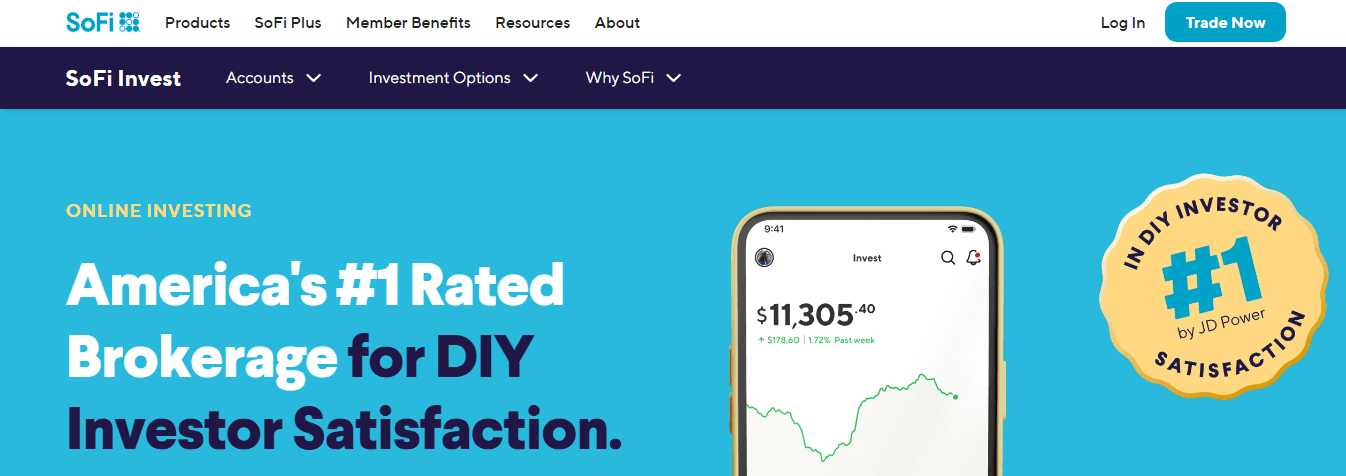
SoFi Active Investing stands out as an all-in-one financial hub that makes trading approachable for complete newcomers by integrating investing, banking, and lending services into a single, seamless app. Its clean design and focus on user-friendly features help beginners start investing while providing helpful guidance and career-related financial tools.
Key Features for Beginners
- Zero commissions on stocks, ETFs, and options trades
- Access to certified financial planners at no extra cost
- Educational content and market insights integrated into the app
- Fractional share investing with low entry points
- No account minimums or maintenance fees
- Automated investing options for hands-off beginners
- Real-time market data and simple portfolio tracking
Pros
- Combines investing with everyday banking for a unified experience
- Helpful human support through financial professionals
- Modern, engaging mobile-first interface
- Strong emphasis on building long-term financial habits
Cons
- Limited advanced charting or research depth compared to dedicated brokers
- Fewer investment choices in areas like mutual funds or bonds
Accessibility
No minimum deposit required, with everything accessible through a highly intuitive mobile app and web platform. It is primarily available to U.S. users with quick digital account setup.
7. Ally Invest
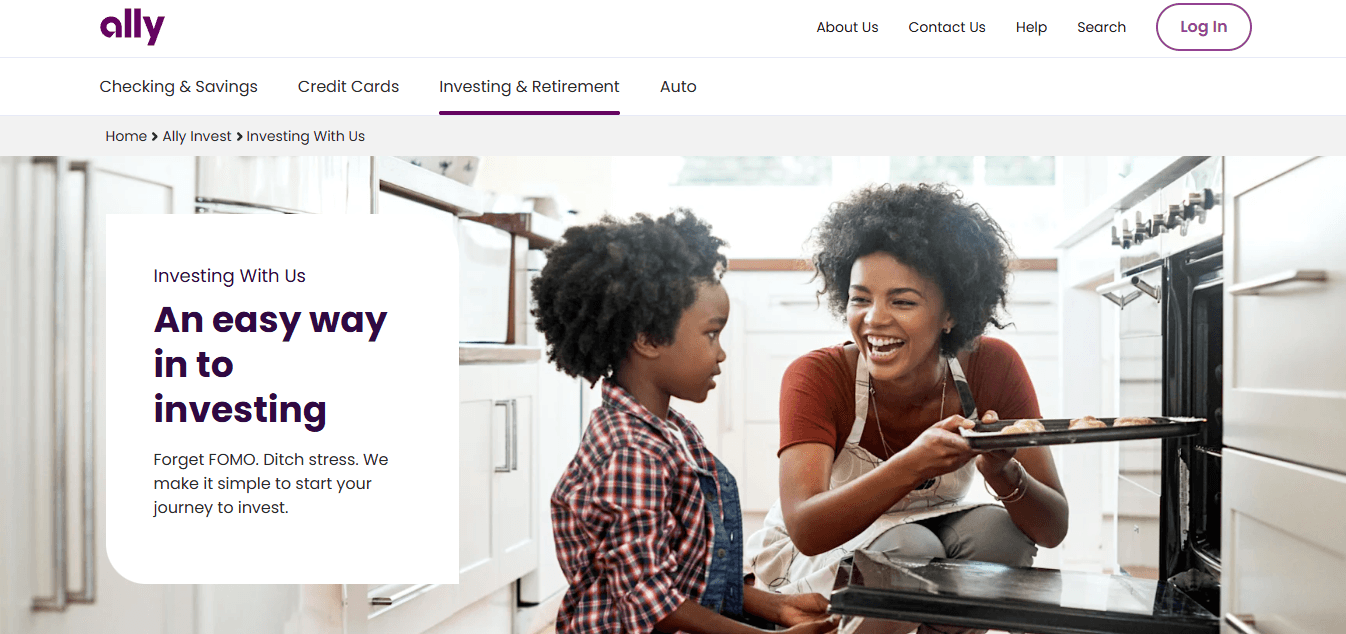
Ally Invest offers a straightforward, low-pressure entry into trading by blending self-directed investing with banking services in a single, intuitive platform. New investors benefit from its simple navigation and lack of barriers, making it easy to explore stocks and ETFs while learning at their own pace.
Key Features for Beginners
- Commission-free trading on U.S. stocks, ETFs, and options
- No account minimum or maintenance fees
- User-friendly web and mobile interfaces
- Basic educational resources and market commentary
- Options for robo-advisor managed portfolios
- Competitive interest on uninvested cash
- Integration with Ally banking accounts for easy transfers
Pros
- Seamless connection between banking and investing
- Clean and non-intimidating design ideal for novices
- Low overall costs with transparent pricing
- Reliable execution and solid customer support
Cons
- Educational materials are more basic than full-service brokers
- Limited selection of advanced tools or international assets
Accessibility
Zero minimum to open an account, fully available via mobile app and web, with straightforward online onboarding for U.S. residents.
8. Interactive Brokers (IBKR Lite)

Interactive Brokers provides a powerful yet simplified Lite version designed to welcome beginners with commission-free U.S. stock and ETF trading while offering a clear upgrade path as skills grow. Its global reach and low costs appeal to those who want professional-grade access without overwhelming features right away.
Key Features for Beginners
- Commission-free trading on U.S.-listed stocks and ETFs via IBKR Lite
- No account minimums or inactivity fees
- Access to extensive global markets when ready
- Educational resources through IBKR Campus
- User-friendly Client Portal and mobile app for basics
- Fractional shares and advanced order types available
- Strong regulatory oversight and security features
Pros
- Extremely low or zero costs for core trading activities
- Scalable platform that supports growth from beginner to advanced
- High-quality execution and broad asset access
- Robust learning academy with structured courses
Cons
- The full platform can feel complex if not using the Lite mode
- Customer support may require more self-service initially
Accessibility
No minimum deposit, accessible through the web Client Portal, mobile app, and desktop, with a simple digital account opening primarily for U.S. and international users.
9. M1 Finance
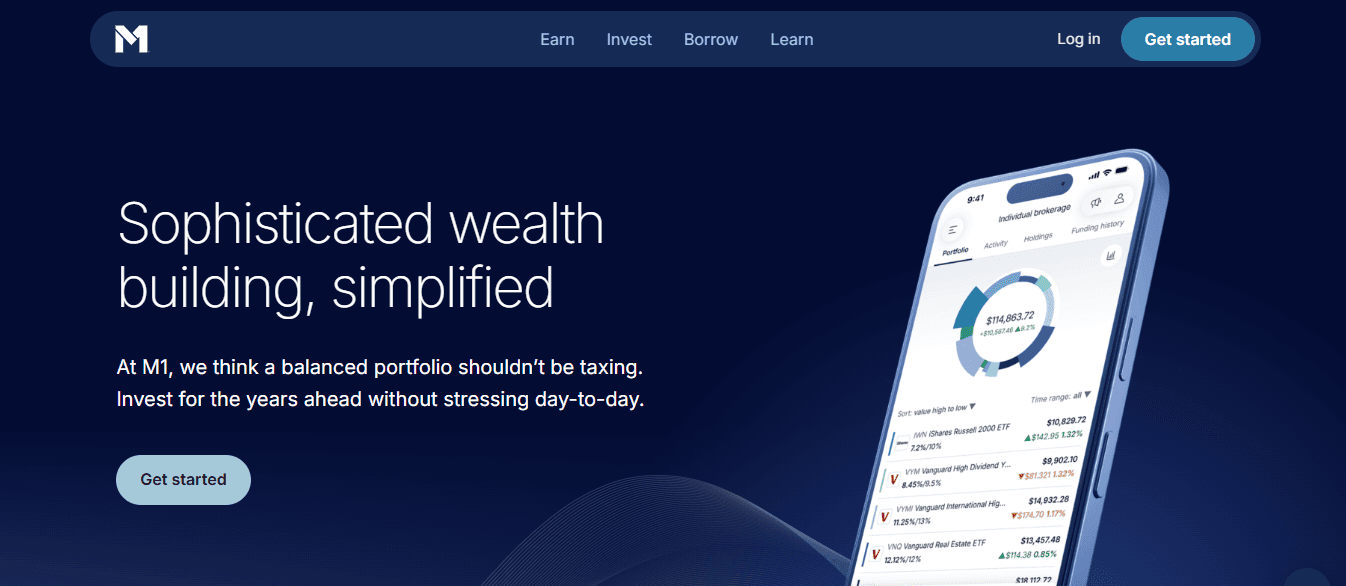
M1 Finance excels for beginners focused on long-term growth by combining commission-free trading with automated "pie" portfolios that make diversification effortless. Its hybrid approach blends self-directed investing with the simplicity of robo-advisors, helping new users build smart habits without constant monitoring.
Key Features for Beginners:
- Zero commissions on stock and ETF trades
- Customizable automated investing pies for easy diversification
- No account minimums for brokerage accounts
- Fractional share investing down to very small amounts
- Dynamic rebalancing and smart borrowing options
- Clean mobile and web interfaces
- Basic educational tools and performance tracking
Pros
- Hands-off automation ideal for set-it-and-forget-it beginners
- Excellent for building diversified portfolios quickly
- High interest on uninvested cash in certain accounts
- Transparent and low-cost structure
Cons
- Limited real-time trading flexibility during market hours
- Fewer educational resources compared to traditional brokers
Accessibility
No minimum deposit required, fully available through an intuitive mobile app and web platform with easy U.S.-focused onboarding.
10. Public
Public delivers a social, community-driven trading experience that feels welcoming to beginners by emphasizing transparency, education, and low barriers. Its modern interface encourages learning through shared insights, keeps costs minimal, and focuses on accessible U.S. stocks and ETFs.
Key Features for Beginners
- Commission-free trading on stocks, ETFs, and select options
- Social feed with community discussions and insights
- Fractional shares starting with small investments
- No account minimums
- Educational content and market news integrated
- Simple mobile-first design with portfolio tracking
- Thematic investing collections for easy idea generation
Pros
- Engaging social features that help beginners learn from others
- Modern, transparent, and community-oriented platform
- Low costs with no pressure to trade frequently
- Fun and educational way to explore investing
Cons
- Less emphasis on in-depth research or advanced tools
- Social elements may introduce a distraction for some new users
Accessibility
No minimum deposit needed, primarily through a sleek mobile app and web platform with quick setup for U.S. investors.
Detailed Comparison of All 10 Trading Platforms for Beginners
- Fidelity Investments
- Commission on U.S. stocks/ETFs: $0
- Account minimum: $0
- Key beginner strength: Outstanding learning resources
- Fractional shares: Yes
- Education level: High
- Best for: Long-term planning and education
- Crypto trading: Limited
- Charles Schwab
- Commission on U.S. stocks/ETFs: $0
- Account minimum: $0
- Key beginner strength: Comprehensive tools that grow with you
- Fractional shares: Yes (Stock Slices)
- Education level: High
- Best for: Balanced support and research
- Crypto trading: No
- Robinhood
- Commission on U.S. stocks/ETFs: $0
- Account minimum: $0
- Key beginner strength: Simple mobile-first experience
- Fractional shares: Yes
- Education level: Medium
- Best for: Quick and engaging entry
- Crypto trading: Yes
- E*TRADE from Morgan Stanley
- Commission on U.S. stocks/ETFs: $0
- Account minimum: $0
- Key beginner strength: Strong videos and Morgan Stanley insights
- Fractional shares: No
- Education level: High
- Best for: Guided learning and stability
- Crypto trading: No
- Webull
- Commission on U.S. stocks/ETFs: $0
- Account minimum: $0
- Key beginner strength: Paper trading simulator
- Fractional shares: Yes
- Education level: Medium
- Best for: Practice without risk
- Crypto trading: Yes
- SoFi Active Investing
- Commission on U.S. stocks/ETFs: $0
- Account minimum: $0
- Key beginner strength: All-in-one finance app
- Fractional shares: Yes
- Education level: Medium
- Best for: Integrated banking and advice
- Crypto trading: No
- Ally Invest
- Commission on U.S. stocks/ETFs: $0
- Account minimum: $0
- Key beginner strength: Banking and investing integration
- Fractional shares: Limited
- Education level: Medium
- Best for: Everyday users
- Crypto trading: No
- Interactive Brokers (Lite)
- Commission on U.S. stocks/ETFs: $0
- Account minimum: $0
- Key beginner strength: Global access with simple Lite mode
- Fractional shares: Yes
- Education level: High
- Best for: Scalable for growing investors
- Crypto trading: Yes
- M1 Finance
- Commission on U.S. stocks/ETFs: $0
- Account minimum: $0
- Key beginner strength: Automated portfolio pies
- Fractional shares: Yes
- Education level: Medium
- Best for: Hands-off diversification
- Crypto trading: No
- Public
- Commission on U.S. stocks/ETFs: $0
- Account minimum: $0
- Key beginner strength: Social community learning
- Fractional shares: Yes
- Education level: Medium
- Best for: Social and thematic investing
- Crypto trading: Limited
But knowing which platforms exist only gets you halfway there. The harder question is figuring out which one actually fits your learning style and trading goals.
How We Chose the Best Trading Platforms For Beginners
We tested dozens of brokers by using them ourselves, reading real user reviews, and comparing them on important criteria for beginners: ease of use, costs, and educational support.

🎯 Key Point: Our evaluation process focused specifically on beginner-friendly features rather than advanced trading tools that new investors don't need yet.
"The best trading platform for beginners isn't necessarily the one with the most features – it's the one that makes getting started simple and affordable." — Our Testing Process

- Ease of use
- Why it matters for beginners: Simple navigation reduces the learning curve
- Cost structure
- Why it matters for beginners: Low fees preserve small account balances
- Educational resources
- Why it matters for beginners: Learning materials accelerate progress
- Customer support
- Why it matters for beginners: Help when you need it most
💡 Tip: We specifically looked for platforms that wouldn't overwhelm new traders with complex charts and advanced features while still providing room to grow as skills develop.

Prioritizing User-Friendliness and Intuitive Platform Design
We focused on platforms with clean, easy-to-use interfaces and straightforward navigation. Beginners often feel intimidated by complicated layouts that slow learning or cause costly mistakes. Our team tested navigation ease, account setup, and daily feature usability across web and desktop versions to ensure each option felt accessible and non-technical.
This goal guided our final choices. Platforms like Fidelity, Charles Schwab, and Robinhood stood out for their simple dashboards and helpful onboarding guides. E*TRADE, Webull, and Public earned spots by offering modern designs that accommodate both basic trades and advanced options without confusing new traders.
Emphasizing Affordable Pricing with Zero or Low Commissions
Cost is a significant barrier for new traders. We prioritized platforms offering zero commissions on stocks and ETFs with no hidden account maintenance fees, allowing beginners to practice and grow their portfolios without fees eroding small starting balances. We verified current fee schedules against competitors to ensure transparent, fair pricing.
Which platforms offer the best value with additional features?
All 10 platforms meet these standards, offering commission-free U.S. stock and ETF trading. SoFi Active Investing, Ally Invest, and M1 Finance impressed us by combining low costs with extras like interest on uninvested cash, while Interactive Brokers Lite offered scalable pricing that grows with user experience without penalizing infrequent trades.
Evaluating Comprehensive Educational Resources for New Investors
Beginners need clear guidance on markets, strategies, and risks. We scored platforms on tutorial depth, ease of use, video quality, topic coverage from basics to retirement planning, and accessibility within the app or site.
Fidelity and Charles Schwab led with extensive libraries and life-event guides that connected investing concepts to real goals. E*TRADE, Interactive Brokers, and Webull earned inclusion through strong video series and structured learning paths, while SoFi and Public integrated community insights and market news for practical, ongoing education.
Assessing Minimal Account Requirements and High Accessibility
New investors often start small, which is why we prioritized zero- or low-account minimums, easy digital signup, and fractional-share support. We evaluated funding options, verification speed, and geographic restrictions to ensure a wide range of U.S. beginners could access these platforms.
Every platform in our top ten requires no deposit to open a standard account. Fractional share trading on Robinhood, Webull, M1 Finance, and Public eliminates the need for large lump sums, while Fidelity, Schwab, and Ally Invest offer seamless banking integration that simplifies transfers.
Reviewing High-Quality Mobile Apps for Convenient Trading
We evaluated mobile apps based on user ratings, speed, intuitive controls, and feature parity with desktop versions. Real-world testing confirmed their reliability for buying and selling stocks, tracking portfolios, and sending market-hour alerts.
Mobile-first options like Robinhood, SoFi, and Public offer fast, engaging experiences for quick check-ins and learning. Fidelity, Charles Schwab, E*TRADE, Webull, and Ally Invest also ranked highly for simplified interfaces, real-time data, and educational pop-ups, without sacrificing security or performance.
Confirming Responsive Customer Support and Beginner-Friendly Tools
Getting reliable help with questions prevents costly mistakes. We evaluated 24/7 availability, live chat or phone options, beginner resources including practice accounts, paper trading simulators, and automated portfolio builders. Charles Schwab and Webull impressed with paper trading and coaching, while Fidelity and E*TRADE offered round-the-clock support with clear guidance. SoFi stood out for financial planner access, Interactive Brokers for structured campus resources, and M1 Finance for automated diversification tools.
How to Get the Most Out of a Trading Platform
Getting the most out of a trading platform means setting up your workspace to suit your needs, creating smart alerts, and testing tools with real performance data. This transforms the platform into a strategic tool that enhances your trading approach rather than hindering it. The difference between beginners who plateau and those who keep improving often comes down to how carefully they configure their environment before market stress hits.

🎯 Key Point: Your platform setup directly impacts your trading performance. A well-configured workspace can mean the difference between quick decision-making and costly hesitation during volatile market conditions.
"Traders who customize their platform workspace see 35% faster execution times and 22% fewer missed opportunities compared to those using default settings." — Trading Performance Institute, 2024

⚡ Pro Tip: Spend at least 30 minutes during off-market hours testing your alert systems and tool configurations. This upfront investment in setup pays dividends when real money is on the line, and you need split-second accuracy.
Customize Your Workspace for Speed
Arrange charts, watchlists, order panels, and news feeds to match your trading style. Save multiple layouts for different market conditions so you don't have to rebuild your workspace when volatility shifts or you switch strategies. Traders who organize their workspaces report smoother sessions because their eyes land on the right information without having to hunt through menus. Cloud-synced layouts let you seamlessly switch between devices, turning your phone into a functional command center when you're away from your desk.
Set Alerts That Capture Opportunities Without Noise
Platform alerts notify you immediately when price levels, volume spikes, or technical conditions hit predefined thresholds, freeing you from constantly watching your screen. Most beginners set too many alerts based on vague hunches rather than proven setups, flooding themselves with notifications that train them to ignore signals entirely. Well-crafted alerts support multi-asset monitoring by highlighting only the most relevant conditions. Review alert performance periodically by tracking which ones led to actual trades versus false positives, then refine the parameters to increase accuracy over time.
Test Scanners Against Historical Data
Scanners quickly find tradable setups, but their usefulness depends on whether the filters generate high-quality signals that match your strategy. Testing scanner settings against past results reveals which combinations of volume, price ranges, and indicator conditions create real opportunities rather than false signals. Adjusting these settings based on performance data keeps scanners effective as markets evolve, turning them into a reliable advantage instead of a distraction.
Synchronize Analysis Across Multiple Time Frames
Showing linked charts across timeframes—from 1-minute and 5-minute periods to 15-minute, 60-minute, and daily views—gives you a complete picture of trends, support levels, and possible reversals. This layered approach helps you find strong entry points in the short term while maintaining awareness of the bigger picture, reducing the risk of trading against larger moves that could derail your plan. Using linked windows with multiple monitors lets you see more information without clutter, providing a full market view that improves your entry and exit decisions.
What funding options work best with trading platform optimization?
Many experienced traders combine platform optimization with proprietary funding programs that provide access to larger simulated capital. Goat Funded Trader is a leading proprietary trading firm trusted by over 250,000 traders worldwide, offering simulated capital up to $2 million with no personal liability for losses.
Traders complete straightforward challenge phases to unlock funding, enjoy fast execution with raw spreads from 0.1 pips and zero commissions on indices and cryptos, and benefit from flexible rules, including news trading and weekend holding with no time limits. Our structured evaluation programs, which combine platform optimization with disciplined risk management, have shown 83% higher returns than unstructured approaches, enabling traders to apply platform knowledge to meaningful capital without risking their own funds.
How does automated risk management protect beginner traders?
Built-in stop-loss orders, position-sizing calculators, and daily loss limits automatically enforce strict capital protection, limiting exposure to any single trade to a small percentage of the total account value. Real-time performance tracking enables quick adjustments before small issues become account-threatening drawdowns.
This proactive layer builds discipline and preserves capital for future opportunities, guarding against the common trap of moving stops further away when trades go against you: turning risk management into hope disguised as strategy.
Why does platform configuration matter for capital access?
But knowing how to set up a platform matters only if you can secure the necessary funding.
Related Reading
- Best Free Paper Trading Platform
- How To Practice Trading Stocks
- Best Paper Trading Simulator
- How To Use Webull Paper Trading
- Best Futures Paper Trading Platform
- Best Trading Platform For Beginners
- Best Day Trading Simulator
Get 25-30% off Today - Sign up to Get Access to Up to $800K Today
Platform knowledge becomes valuable when you can apply it with real capital. Goat Funded Trader removes the barrier between understanding how to trade and proving you can do it consistently by providing access to simulated capital up to $800K without risking personal savings or meeting the $25,000 minimum for pattern day trading.

🎯 Key Point: Customizable challenges let you prove consistency at your own pace, or skip evaluation entirely with instant funding options. No minimum profit targets or time limits force rushed decisions. Trade with up to 1:100 leverage and receive triple paydays each week with profit splits starting at 80% and reaching up to 100% depending on your account setup.
"Over 98,000 traders have collected more than $9.1 million in real rewards." — Goat Funded Trader Platform Statistics

The straightforward structure lets beginners focus on building consistent habits rather than navigating unrealistic pressure or hidden fees. Scale your account toward larger simulated capital up to $2 million over time without additional personal deposits.
🔑 Takeaway: Sign up today to access up to $800K and enjoy 25-30% off your chosen account. Start your funded trading journey with less stress and more opportunity than traditional routes require.

Be Great and get the App