






10 Common Mistakes in Stock Trading and How to Avoid Them
Learn the 10 common mistakes in stock trading that cost traders money. Goat Funded Trader reveals proven strategies to avoid these costly errors.


Every trader has watched their portfolio bleed red because of a decision they knew was wrong the moment they clicked "buy." Whether tracking traditional equities or exploring how to use AI for crypto trading, the mistakes remain surprisingly similar: jumping in without research, abandoning trading plans when emotions run high, or holding onto losing positions far too long. These common trading errors drain accounts and undermine even the most promising strategies. Building a disciplined approach that protects capital while positioning for consistent growth requires understanding these pitfalls and implementing practical solutions.
Understanding these mistakes is one thing, but having the right environment to practice better habits makes all the difference. Traders need structure and accountability to develop smarter strategies without risking personal savings. Access to capital, clear risk management guidelines, and proper feedback loops help identify patterns of overtrading, poor position sizing, and emotional decision-making before they become expensive lessons. This combination of resources and oversight is exactly what traders find when working with a prop firm.
Summary
- Research from the TradeZella Team indicates that 70 to 90 percent of retail traders lose money, and emotional decision-making sits at the core of most failures. Fear and greed hijack logic the moment capital sits exposed, transforming disciplined plans into reactive chaos. Traders exit winning positions early when panic whispers about reversals, or double down on losing trades, hoping to "get it back now." When short-term feelings override probability and risk rules, you're no longer trading your edge.
- According to a 2023 study by the Financial Industry Regulatory Authority (FINRA), 78% of day traders using personal capital lose money in their first year, not because they lack skill, but because emotional attachment to their own funds overrides disciplined execution. When your mortgage payment is on the line, you can't trade like a professional. The most expensive mistake isn't picking the wrong stock; it's trading with capital you can't afford to lose, which forces you to abandon sound risk management the moment fear or greed takes over.
- A 2019 study published in the Review of Finance that tracked Brazilian equity futures traders found that 97% of individuals who stayed active for more than 300 days lost money overall, and only 1.1% earned more than the minimum wage despite extended time to learn. Mistakes don't teach themselves away through simple repetition. Each ignored stop-loss and oversized position reshapes your risk profile and quietly erodes the statistical edge you're trying to build before it can work.
- Research from MIT Sloan on retail options trading revealed that traders lose 5% to 9% of their investment on average due to overpaying for volatility, mistiming entries, and reacting slowly to price changes. In high-volatility environments, losses climb to 10-14%. These aren't beginner mistakes; they persist across experience levels because traders fail to correct the core behaviors causing them, and overconfidence replaces caution as position sizes grow.
- Undercapitalized accounts turn smart traders into desperate ones because honoring a 1% stop-loss becomes psychologically impossible when that amount represents rent or groceries. You hold losing positions too long, hoping for reversals, because cutting the loss means real consequences outside the market. That fear doesn't just hurt one trade; it systematically destroys your ability to execute any strategy that requires accepting small, controlled losses as part of the process.
- Goat Funded Trader's prop firm addresses this by providing simulated trading accounts with up to $2M in capital, removing the emotional pressure that causes most discipline breakdowns while enforcing risk limits and consistency requirements that prevent traders from bypassing their own rules when emotions spike.
What are Trading Mistakes, and How Do They Affect Trading Decisions?
Trading mistakes aren't missed entries or early exits. They're patterns of behavior that override your strategy under pressure. Fear, greed, impatience, and overconfidence distort judgment, turning disciplined plans into reactive chaos that compounds losses and erodes confidence.

🎯 Key Point: Trading mistakes are behavioral patterns, not isolated incidents. They represent a breakdown in your decision-making process under market pressure.
"Fear, greed, impatience, and overconfidence distort judgment, turning disciplined plans into reactive chaos that makes losses worse and weakens confidence."

⚠️ Warning: The most dangerous trading mistakes are the ones that become habitual responses to market stress, creating a cycle where emotional reactions replace strategic thinking.
Emotional Reactions Replace Strategic Thinking
Fear and greed take over your thinking the moment your money is at risk. You might panic and sell winning trades too early, watching profits disappear, or a losing trade might drive you to "get your money back right now," prompting you to take bigger positions without a solid plan. Research from the TradeZella Team shows that 70 to 90 percent of regular traders lose money, with emotional decision-making being the main reason for most failures. When short-term feelings outweigh probability and risk rules, you're betting on hope instead of trading with a real advantage.
Overtrading Destroys Capital Through Accumulated Friction
Sitting still feels unproductive when markets move, so you jump into trades that aren't worth the risk just to stay active. Each extra trade increases exposure, adds commissions, and dulls your ability to recognize real opportunities. Overtrading trains you to chase every move, abandoning your edge in pursuit of the illusion of progress. Accounts drain not from one catastrophic loss but from dozens of small, unnecessary trades that never had favorable risk-reward ratios.
How does revenge trading amplify common mistakes in stock trading
After a losing trade, frustration makes you want to win the money back immediately. You enter the next position larger and faster, skipping your criteria because "winning it back" feels urgent. This impulse bypasses analysis entirely, turning one manageable loss into compounding mistakes that erode confidence and drain capital.
Many traders using their own capital feel this pressure acutely because every dollar lost feels personal, making revenge trading nearly impossible to resist without external structure.
What structural solutions prevent emotional trading decisions
Goat Funded Trader provides simulated trading accounts with up to $2M in capital, letting you practice disciplined execution without risking your own money. The platform offers clear risk management guidelines, profit splits of up to 100%, and a structure for identifying patterns such as overtrading or revenge trading before they become costly habits.
When your personal savings aren't on the line, you can focus on skill development and strategic consistency rather than emotional survival.
Lack of Planning Leaves Every Decision to Impulse
You enter positions based on gut feel or breaking news without set rules for entry, exit, or risk. Every price movement forces a reactive choice because you lack a framework guiding execution. This randomness makes it impossible to evaluate what works or build repeatable skills. Without a plan, you're reacting to noise and hoping momentum carries you through.
Related Reading
- How to Use AI for Crypto Trading
- What Are Crypto Trading Signals
- How Long Does It Take To Learn Forex Trading
- What Is Spot Trading in Crypto
- Is Paper Trading Real Money
- Emotional Trading Mistakes
- Crypto Trading Mistakes
- Forward Testing Trading
- Paper Trading vs Live Trading
- Risk Reward Ratio Trading
What Is the Most Expensive Mistake New Stock Traders Make?
The most expensive mistake isn't picking the wrong stock—it's trading with money you can't afford to lose. Most new traders start with their own money, so every loss stings more sharply. When a bad trade wipes out 20% of a $5,000 account, you've lost $1,000, face emotional damage, and lack enough capital to execute your next good idea. This forces you to abandon sound risk management when fear or greed takes over.
⚠️ Warning: Trading with money you need for bills, rent, or emergencies creates emotional pressure that leads to poor decision-making and abandoning your trading plan.
💡 Key Point: The emotional impact of losing your own money is 10x worse than losing practice capital, leading to revenge trading and bigger losses.

Why do common mistakes in stock trading become catastrophic with personal capital?
Accounts without sufficient capital can turn smart traders into desperate ones. You know the right move is to cut a losing position at 1% of your account, but when that 1% represents rent or grocery money, the stop-loss feels impossible to honor. So you hold, hoping the stock recovers, and a small mistake becomes catastrophic.
According to a 2023 study by the Financial Industry Regulatory Authority (FINRA), 78% of day traders using personal capital lose money in their first year. Emotional attachment to their own funds overrides disciplined execution. When your mortgage payment is on the line, you cannot trade like a professional.
Oversized Positions Destroy Accounts Faster Than Bad Picks
You enter a trade that feels like a sure thing, so you put 15% of your capital into it instead of the 2% your plan specifies. The stock drops 10% in a day, and suddenly you're down 1.5% on your entire account from one trade. One bad call shouldn't impair your ability to trade next week, but oversized bets do. You broke your own rules because confidence felt like certainty, and now you're rebuilding trust in your judgment while your account balance shrinks.
Adding to Losers Compounds the Damage
A position moves against you, and instead of cutting it at your predetermined stop, you buy more shares to lower your average entry price. The stock keeps falling, and what started as a 2% risk becomes 8% because you kept averaging down without confirming the trend had reversed. Your capital is now locked in a losing trade, preventing it from being deployed into better setups. Platforms like Goat Funded Trader solve this by giving traders access to larger simulated accounts, removing the emotional pressure to "make back" personal losses. When the capital isn't yours, cutting a loser at your stop-loss becomes a strategic decision rather than a painful financial blow.
Chasing Momentum Without a Plan Guarantees Repeated Failures
Everyone's talking about a stock up 30% in three days, so you jump in near the peak without analysis or an exit strategy. The momentum fades within hours, and you're holding a position down 12% because exiting feels like admitting you were wrong. This pattern repeats because the emotional cost of missing a winner feels worse than the financial cost of holding a loser. Every stuck position represents capital that could be working in a better trade, and the opportunity cost grows faster than most new traders realize.
Risk Management Isn't Optional When Real Money Is at Stake
Trading without strict position sizing, predefined stop-losses, and a 1–2% risk cap per trade will end your ability to stay in the game long enough to develop real skill. Lock in your risk parameters before entering any trade, review every outcome to identify where discipline broke down, and protect your account first. Profits compound over time, but only if you have capital left to trade with.
Protecting your account today does not guarantee profitability a year from now.
Do Trading Mistakes Impact Long-Term Profitability?
Trading mistakes compound. Each time you ignore a stop-loss, use a position that is too large, or make a revenge trade, it changes your risk profile and undermines how you make decisions. This erodes the statistical edge you're building. Making money over the long term depends less on avoiding losing trades and more on eliminating the behaviors that damage your system.

"Each trading mistake fundamentally changes your risk profile and systematically erodes the statistical edge you're building over time." — Trading Psychology Research, 2024
🔑 Key Takeaway: Consistent profitability isn't about perfect trades—it's about eliminating recurring mistakes that compound over time and destroy your systematic edge.
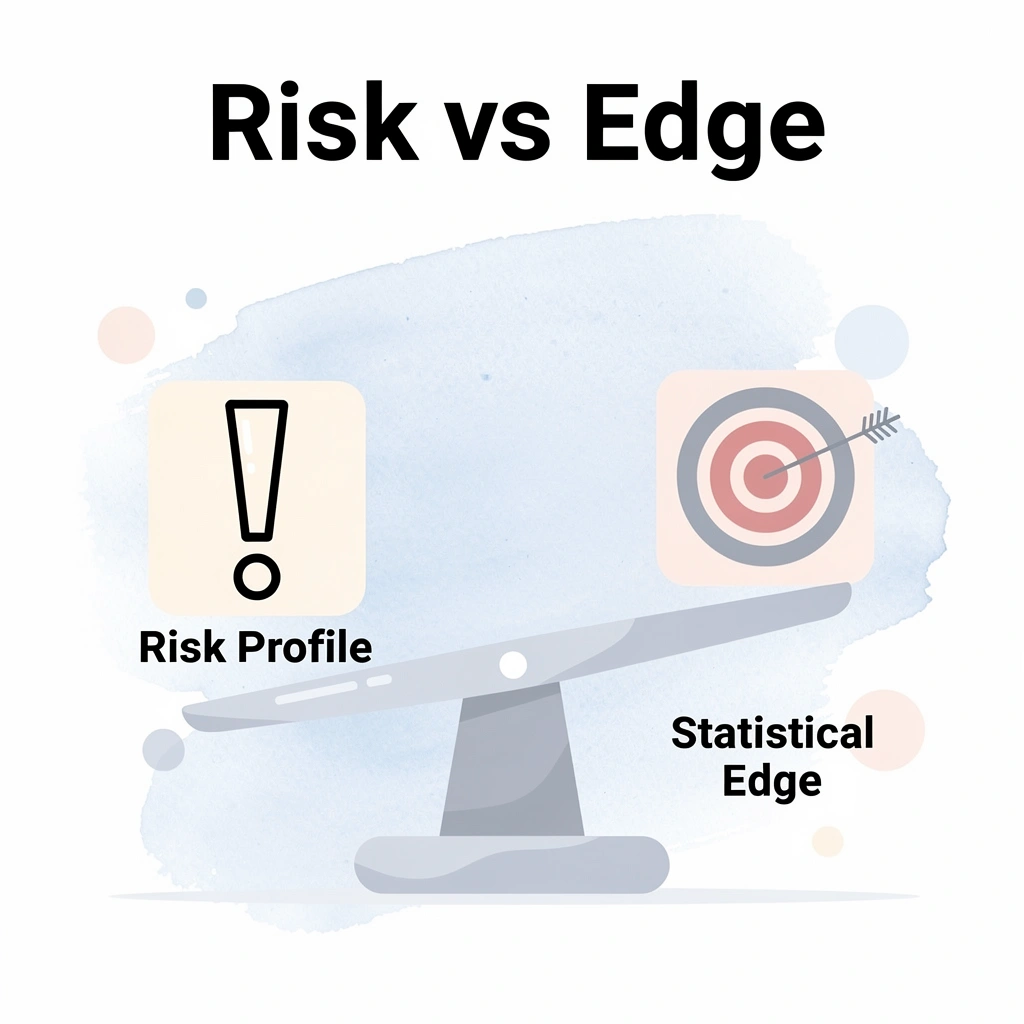
⚠️ Warning: Revenge trading and ignoring stop-losses create a dangerous cycle where each mistake makes the next mistake more likely to occur.
The Belief That Time Fixes Everything
Traders often believe that repetition alone will fix bad habits. They view their mistakes as the price of improvement, but this mindset allows them to repeat the same errors while their capital erodes. The harder truth is that mistakes don't disappear through continued trading. You must actively work to correct them rather than simply accumulate more market experience.
Why Mistakes Compound Instead of Cancel Out
A single huge loss changes how your trading system works. According to a 2019 study in the Review of Finance that tracked Brazilian equity futures traders, 97% of people who traded for more than 300 days lost money overall, and only 1.1% earned more than minimum wage.
How do common mistakes in stock trading prevent sustainable profits?
It's not about bad luck: making the same mistakes with position sizing and risk management prevents any advantage from growing. Each mistake puts you in recovery mode, where you chase gains to break even instead of executing high-probability trades.
Why does breaking risk rules shift your entire trading approach?
Traders who break their 2% risk rule on a single trade need a 25% gain just to recover a 20% loss. This mathematical reality shifts focus from disciplined execution to desperate recovery.
Over months, this cycle controls decision-making. Your system no longer performs as backtested because emotional decisions override strategy whenever drawdowns trigger fear or impatience.
Why do undercapitalized accounts lead to common mistakes in stock trading
Many mistakes stem from trading with underfunded accounts, where every loss feels catastrophic. When your rent money is at stake, honoring stop-losses becomes psychologically impossible. You hold losing positions too long, hoping for a reversal, because cutting the loss means real consequences outside the market.
This fear systematically destroys your ability to execute any strategy that requires you to accept small, controlled losses as part of the process.
How do prop firms help traders avoid emotional discipline breakdowns
Prop firms like Goat Funded Trader solve this problem by separating personal financial stress from trading decisions. Our platform gives traders access to accounts with up to $2M in practice money, removing the emotional pressure that can lead to rule violations.
When the money isn't yours to lose personally, you can follow your rules, close losing trades at the right time, and give your trading strategy enough chances to prove itself.
What the Data Shows About Experience and Performance
Research from MIT Sloan on retail options trading showed that traders lose 5% to 9% of their investment on average because they overpay for volatility, time entries poorly, and react slowly to price changes. During periods of market instability, losses reach 10-14%. A 2016 study in the Journal of Financial Markets found that more experienced retail FX traders perform worse over time, as overconfidence replaces caution and traders repeat mistakes on larger positions.
How do common mistakes in stock trading amplify over time?
Mistakes compound when left unfixed. Move forward by following strict rules, documenting every trade to identify where you lost discipline, and carefully controlling how much money you risk on each trade to protect your capital before pursuing larger gains.
But even if you have perfect discipline today, it won't help if your trading setup keeps pushing you toward the same problems.
Related Reading
- Crypto Trading For Beginners
- Fear Of Missing Out And Trading
- Discipline In Trading
- Common Forex Trading Mistakes Beginners
- Trading Risk Management 1% Rule Explained
- Risk Management Day Trading
- Crypto Trading Risk Management
- ICT Trading Strategy For Beginners Step By Step
- Trading Risk Management Strategies
- Algorithmic Trading Risk Management
10 Common Mistakes in Stock Trading and Their Warning Signs
Every trader knows the feeling: a promising setup turns into another loss that could have been avoided. A surprising number of losses stem from repeated behaviors rather than market unpredictability. The good news is that these mistakes leave clues before they become expensive. Learning to recognize the warning signs lets you correct course before they damage your performance.

🎯 Key Point: Most trading losses stem from behavioral patterns rather than market conditions - making them entirely preventable with the right awareness and discipline.
"85% of trading failures can be traced back to emotional decision-making and lack of systematic approach rather than market analysis errors." — Trading Psychology Institute, 2023

⚠️ Warning: The most dangerous mistakes are often the ones that feel right in the moment - like doubling down on a losing position or abandoning your strategy during a winning streak.
1. Trading Without a Written Plan
You open positions based on gut feelings, news headlines, or quick chart glances instead of following set rules for entries, exits, and risk. This creates inconsistent decisions that shift with market mood. Warning signs include scattered trade records lacking clear rationale and frequent second-guessing during open positions.
2. Letting Emotions Drive Decisions
Fear makes winners leave too early, while greed keeps losers in the game too long. Winning trades can excite you into making quick follow-up trades without thinking. Watch for warning signs like a racing heart before entering a trade, obsessive account checking, or abandoning your plan in response to recent wins or losses.
3. Overtrading
You chase every small price movement and fill your account with positions because sitting idle feels unproductive. This floods your account with commissions and spreads while diluting focus. Warning signs include high daily trade counts, shrinking average win size, and mental fatigue that causes you to miss obvious setups.
4. Skipping Stop-Loss Orders
You enter trades convinced they will work and avoid placing protective stops, hoping the market will turn your way. Small losses grow into account-threatening ones when positions are held well past your original thesis, and you rationalize "it will come back" instead of cutting at predetermined levels.
5. Poor Position Sizing
You risk large sums of money on a single idea because the setup looks especially strong. One bad trade wipes out days or weeks of progress. Warning signs include your heart pounding when the trade moves against you and worrying about margin requirements or forced liquidations.
6. Revenge Trading After Losses
A losing trade triggers frustration, driving you into the next position with a larger size and looser rules to recover money immediately. This turns one manageable setback into a rapid series of bigger losses as logic gives way to anger-fuelled impulses. Warning signs include jumping back within minutes of a loss, increasing position sizes beyond your normal limits, and ignoring your trading plan after red days.
7. Falling Into FOMO on Hot Moves
You see a stock rising rapidly on social media or in the news and buy near the top without analysis. This locks in entries at inflated prices that then drop quickly, resulting in real losses. Warning signs include trading during market hours while scrolling feeds, entering after sharp price jumps, and justifying poor setups because others are profiting from them.
8. Overconfidence Following Winning Streaks
A series of profitable trades can make you think your process is perfect, leading you to skip important research, make larger trades, or trade stocks you don't know well. Markets will correct this false belief with painful reversals that erase your gains and more. Warning signs include loosening your stop-loss rules, trading larger amounts after wins, and ignoring market conditions or your predefined criteria.
9. Trading Without a Detailed Journal
You execute trades but never record the setup, reasoning, emotions, or outcome in a structured way. This prevents you from spotting repeating patterns in your behavior and refining your edge over time. Warning signs include vague recollections of past trades, an inability to explain why positions worked or failed, and repeated errors without improvement.
10. Ignoring Proper Risk-Reward Ratios
You enter trades where possible losses are much bigger than possible gains because the setup "feels right," or you move stops further away as price goes against you. This changes your overall statistics so that even a winning percentage cannot produce net profits. Warning signs include frequent small wins wiped out by occasional large losses, hesitation to exit at planned targets, and constant adjustment of risk parameters mid-trade.
How to Avoid the Common Mistakes in Stock Trading
Successful traders aren't those who predict the future perfectly: they're those who build systems that stop small errors from becoming expensive habits. Avoiding common stock trading mistakes requires disciplined preparation, execution, and review. Consistent profitability depends less on secret strategies and more on behaviors that protect capital and strengthen judgment.

🎯 Key Point: The difference between profitable and losing traders isn't market prediction ability—it's the discipline to follow proven risk management systems that prevent costly emotional decisions.
"95% of day traders lose money over time, with the primary cause being emotional decision-making rather than lack of market knowledge." — Securities and Exchange Commission Study, 2019

⚠️ Warning: Even experienced traders fall victim to these mistakes when they abandon their systematic approach during periods of high market volatility or after a series of winning trades that create overconfidence.
Create a Written Trading Plan Before Entering the Market
A trading plan removes guesswork from decision-making by defining entry criteria, profit targets, stop-loss levels, acceptable risk, and setup conditions before placing any trade. A written plan provides structure during volatile markets and prevents emotional reactions from overriding logic. When every decision follows predetermined rules, consistency replaces impulse.
Limit the Amount You Risk on Each Trade
Protecting your money should be your first priority. Decide on a fixed percentage of your account that you are willing to risk on a single trade and apply it consistently to every trade. This prevents one mistake from causing serious financial damage and allows you to weather normal losing periods without jeopardizing your long-term goals.
Use Stop-Loss Orders Consistently
Stop-loss orders prevent emotional decisions by setting your exit point before you start trading. Accepting a small planned loss protects your capital and builds confidence. Traders who treat stop-losses as mandatory rules reduce catastrophic losses that damage long-term performance.
Keep Emotions Out of the Trading Process
Fear, greed, excitement, and frustration cloud your judgment. Emotional trading typically follows winning or losing streaks, as traders react to feelings rather than following their plans. Build routines like checklists, breaks after tough sessions, and objective trade reviews to create distance between emotion and execution. Discipline works best when decisions stem from preparation rather than mood.
Conduct Independent Research Before Every Trade
Social media hype and market rumors create pressure to act quickly. Successful traders resist this by verifying information independently through financial statements, earnings reports, technical patterns, economic developments, and relevant news. This evidence-based approach builds confidence in each trade.
Maintain a Trading Journal
A trading journal turns mistakes into learning opportunities. Record your thinking, feelings, results, and lessons from each trade. Reviewing these notes reveals recurring patterns—such as revenge trading after losses, impatience, poor timing, or inconsistent risk management—that you can address.
Accept Losses as Part of Trading
No strategy produces winning trades every time. Traders who view losses as personal failures tend to avoid exits, widen their stop-losses, and attempt recovery through hasty, unthinking decisions. Accepting losses as normal business costs removes emotional burden and preserves objectivity for disciplined execution.
Avoid Revenge Trading
After a loss, the urge to recover your money quickly becomes intense. Revenge trading replaces patience with urgency and pushes traders to take unplanned risks. Taking a break after emotionally difficult trades allows you to think clearly and prevents frustration from affecting your next decisions.
Focus on Process Instead of Short-Term Results
A well-executed trade that loses money is still successful because it followed the established rules. Conversely, a profitable trade executed carelessly can create bad habits. Measuring success by adherence to your process helps you stay consistent and reduces the emotional volatility that stems from individual results.
Continue Learning and Adapting
Financial markets change constantly. Traders who stop learning fall behind. Expand your knowledge through books, educational resources, market reviews, and performance analysis to sharpen your decision-making and strengthen your ability to adapt. Growth comes from identifying weaknesses, refining strategies, and committing to continuous improvement.
Avoiding common mistakes in stock trading means recognizing vulnerabilities before they become habits, protecting your capital through disciplined actions, and building a repeatable process that supports long-term success. Small improvements repeated consistently create sustainable profitability.
How Goat Funded Trader Helps Build Discipline Against Mistakes in Stock Trading
Every trader knows how frustrating it is to look back at a mistake that could have been avoided and think, "I knew better." You ignored your plan, chased a setup because you were afraid of missing out, or increased your risk after losing several trades in a row. Knowing what to do isn't enough to stop mistakes—you need structure. Goat Funded Trader creates an environment where discipline is built into the trading journey itself.
🎯 Key Point: The gap between knowing what to do and doing it is where most traders fail—Goat Funded Trader bridges this gap through structured accountability.
"Just knowing what to do isn't enough to stop mistakes—you need structure that enforces discipline at every step of your trading journey." — Trading Psychology Research
⚠️ Warning: Emotional trading decisions like FOMO and revenge trading are the #1 cause of account blowouts, but they can be prevented with the right framework.

Structure Forces Better Habits Than Motivation Ever Could
Discipline isn't something you create when you need it—it's built through repetition within a system that won't let you cheat. Goat Funded Trader creates that system by embedding risk limits, consistency requirements, and clear standards directly into the trading process. Traders can't skip the rules when emotions spike. The framework holds them accountable whether they feel confident or rattled, transforming discipline from something you want to do into something you must do.
Risk Limits That Protect You From Yourself
Bad risk control destroys more accounts than bad strategy ever will. Goat Funded Trader enforces maximum daily and total loss limits throughout the evaluation and funded stages. Every trade must fit within these boundaries: traders can't double down after losses or risk half their account on a single setup. The structure teaches capital preservation as the foundation, helping traders calculate position sizes that keep them in the game even when wrong.
Minimum Trading Days Eliminate the Lottery Ticket Mindset
Impulsive traders make quick decisions on risky setups, overtrade during slow markets, and chase losses. Goat Funded Trader requires traders to complete a minimum number of valid trading days before advancing or withdrawing profits, shifting focus from single winning sessions to consistency across multiple market conditions. According to Goat Funded Trader, 90% of traders fail due to a lack of discipline, not a lack of knowledge. The minimum day requirement enforces patience.
Consistency Rules Replace the Home Run Fantasy
Many traders believe success comes from one huge winning day that erases all past mistakes. Goat Funded Trader's consistency requirements stop this dangerous thinking by rewarding steady performance over dramatic bets that risk accounts unnecessarily. This teaches the most important lesson in trading: professional results come from repeatable processes, not occasional heroics.
Objective Standards Create Real Accountability
Trading a personal account means answering only to yourself, making it easy to justify bad habits. Goat Funded Trader introduces objective standards that every participant must adhere to. Violating rules affects progression and eligibility, creating immediate consequences for undisciplined behavior. Excuses lose power when the framework measures performance without emotion or bias. Traders discover that external accountability transforms how they approach every decision, turning discipline into identity rather than effort.
Related Reading
- How To Read Crypto Charts For Day Trading
- Best Trading Apps For Beginners
- How To Make Money Trading Crypto
- How To Learn Crypto Trading
- Best Day Trading App For Beginners
- How Do You Manage Risk In Futures Trading
- Best Crypto Trading App
- Best Stock Trading App For Beginners
- Risk Management In Stock Trading
- Best Demo Trading Account
Get 25-30% off Today - Sign up to Get Access to Up to $800K Today
Commitment separates traders who understand discipline from those who practice it. You can read every trading psychology book and strategy guide, but without a structure that demands proof, you'll repeat the same mistakes. Goat Funded Trader offers that structure with 25 to 30% off evaluation accounts, giving you access to up to $800,000 in simulated capital. Your decisions get measured, your habits get tested, and your progress becomes visible.

"The difference isn't talent or market knowledge—it's whether you trade inside a framework that enforces profitable behaviors."
🎯 Key Point: Goat Funded Trader's evaluation process transforms theoretical trading knowledge into measurable performance under real market conditions.

You know what happens when nothing changes: the same position sizing errors, emotional exits, and frustration watching other traders succeed. The difference isn't talent or market knowledge—it's whether you trade inside a framework that enforces profitable behaviors. Visit Goat Funded Trader, choose your evaluation, and start proving you can follow a process. The discount won't last, but the habits you build will.
🔑 Takeaway: This 25-30% discount represents more than savings—it's your opportunity to access up to $800K in trading capital while building the disciplined habits that separate successful traders from those who struggle.
Be Great and get the App