






Is Paper Trading Real Money? What Traders Need to Know
Is paper trading real money? Goat Funded Trader explains the difference between virtual and live trading to help you make informed decisions.


Crypto paper trading provides a risk-free environment where beginners can practice trading strategies using virtual currency instead of real money. These simulated accounts mirror actual market conditions, allowing traders to test how to use AI for crypto trading and develop skills without financial consequences. Paper trading eliminates the pressure of potential losses while building confidence and experience. Traders can experiment with different approaches, learn from mistakes, and refine their strategies before risking actual capital.
Many traders struggle to transition from practice environments to real trading success, often lacking clear progression paths or proper evaluation of their skills. Professional trading platforms offer structured challenges that help traders prove their abilities using virtual funds before advancing to live markets. These evaluation programs provide a bridge between simulation and reality, creating opportunities for skilled traders to access capital without personal financial risk through a prop firm.
Summary
Key Takeaways
- Paper trading uses simulated funds to replicate market conditions without involving actual capital. Platforms credit your account with virtual balances and update positions based on live price movements, but no bank account connects to your activity. Every order you place operates within a closed simulation, which makes it ideal for learning but fundamentally different from trading with actual capital. The entire process exists to build skills and test strategies without financial consequences, yet many traders confuse simulation with reality because the interface looks identical to live trading.
- Traders who jump straight into live accounts often believe they'll learn faster with money on the line, but that belief ignores how emotional interference distorts early learning. Paper trading removes that interference long enough for you to see your actual patterns, not just your emotional reactions. According to research, 90% of traders who paper trade for at least three months before going live report feeling more confident. The traders who succeed after paper trading are the ones who deliberately practiced emotional discipline during simulation by enforcing strict rules, journaling every decision, and treating virtual losses as seriously as real ones.
- The gap between simulation and live trading narrows significantly when paper trading becomes performance verification rather than indefinite practice. Research shows 90% of traders lose money, and many of those losses stem from emotional decision-making that simulation never exposed. Extended simulation timeframes expose your approach to the full range of market conditions that separate reliable systems from temporary patterns. Traders who maintain a win rate above 55% in paper trading for six consecutive months have a 70% higher success rate in live trading, proving that consistent profitability across different market cycles matters more than short winning streaks.
- Most paper accounts deliver feedback but never convert practice into income, creating a gap that keeps talented traders stuck practicing indefinitely or risking personal capital during their first live attempts. Standard simulators offer no mechanism for account growth beyond manually resetting your virtual balance. The psychological shift from virtual to real capital triggers stronger fear or greed than paper trading prepares traders for, which explains why strong paper performance rarely transfers directly to live accounts without additional psychological preparation.
- Paper trading typically caps you at modest virtual balances that teach execution mechanics but fail to prepare you for managing six-figure positions. Many paper platforms cut corners on execution speed, spread accuracy, or platform options because there's no real money at stake. The simulation lacks the weight of actual stakes, and that weight shapes every decision you make when real capital is on the line. This explains why strategies that work in simulation require adjustments around risk management and order timing to succeed with actual funds.
- Goat Funded Trader addresses this gap by offering simulated evaluation accounts where consistent performance unlocks access to capital up to $2 million, with traders keeping profit splits while the firm absorbs losses and removes the need to risk personal savings.
What Is Paper Trading, and How Does It Work?
Paper trading is pretend trading where you execute buy and sell orders using real-time market data without risking actual money. Modern platforms replicate the full trading interface—charts, order types, position tracking—so your virtual portfolio shows gains and losses exactly as they would in real trading conditions. This builds practical skills and confidence while you refine your approach free from financial consequences.
🎯 Key Point: Paper trading provides risk-free practice that mirrors real market conditions, allowing you to test strategies without financial consequences.

"Paper trading allows traders to practice and refine their strategies using real market data without the risk of actual financial loss." — Trading Education Research, 2024
💡 Example: When you place a virtual buy order for 100 shares of a stock at $50, the platform tracks your position using actual market prices—if the stock rises to $55, your paper portfolio shows a $500 gain just like a real account would.

How Paper Trading Works
You open a paper trading account on a brokerage platform with a virtual starting balance—typically $100,000 or adjusted to match your planned real capital. You analyse markets, select assets, and execute trades using order types like market, limit, or stop-loss orders. The platform processes orders against live or near-live prices, updates your positions, and calculates performance metrics in real time. You monitor, adjust, and close trades as you would in a live account, with all results logged for review.
Setting Up Your First Paper Trading Account
Pick a trusted platform with strong simulation tools from an established brokerage. Enable paper trading mode, configure your virtual account and layout to match your planned real trading setup, and test charts, watchlists, and order entry features. Treat setup with the same seriousness as funding a real account to build disciplined habits from the start.
Choosing Strategies to Test in Paper Trading
Pick specific trading strategies that match your goals: day trading fast-moving stocks, swing trading based on chart patterns, or buying stocks for longer-term holds. Write down clear rules for entry and exit points, position sizing, and risk management, such as risking no more than 1% of your practice portfolio per trade. Apply these rules consistently regardless of market conditions, enabling you to gather reliable data on your performance. According to Goat Funded Trader, 90% of traders fail within their first year, making deliberate practice through simulation critical before committing real funds.
Executing Trades and Managing Positions
Enter trades based on your analysis, specifying quantity, order type, and protective stops. Monitor how slippage, spreads, and volatility affect outcomes in real time. Manage open positions by adjusting stops, taking partial profits, or exiting according to your plan. Log every decision and reason to reveal patterns in your execution and timing.
How do prop firms bridge the gap between simulation and live trading?
Most traders move to live trading after a few winning streaks in simulation, but emotional pressure undermines their decision-making when real money is involved. Platforms like Goat Funded Trader bridge this gap by offering simulated accounts backed by real capital. Traders prove their skills through evaluation challenges before accessing funded accounts, eliminating the need to risk personal savings while maintaining the psychological realism of trading for actual profit.
Is paper trading real money when you show consistent profits?
But here's the question nobody asks until it's too late: if your paper trading account shows consistent profits, does that mean you're making money?
Is Paper Trading Real Money?
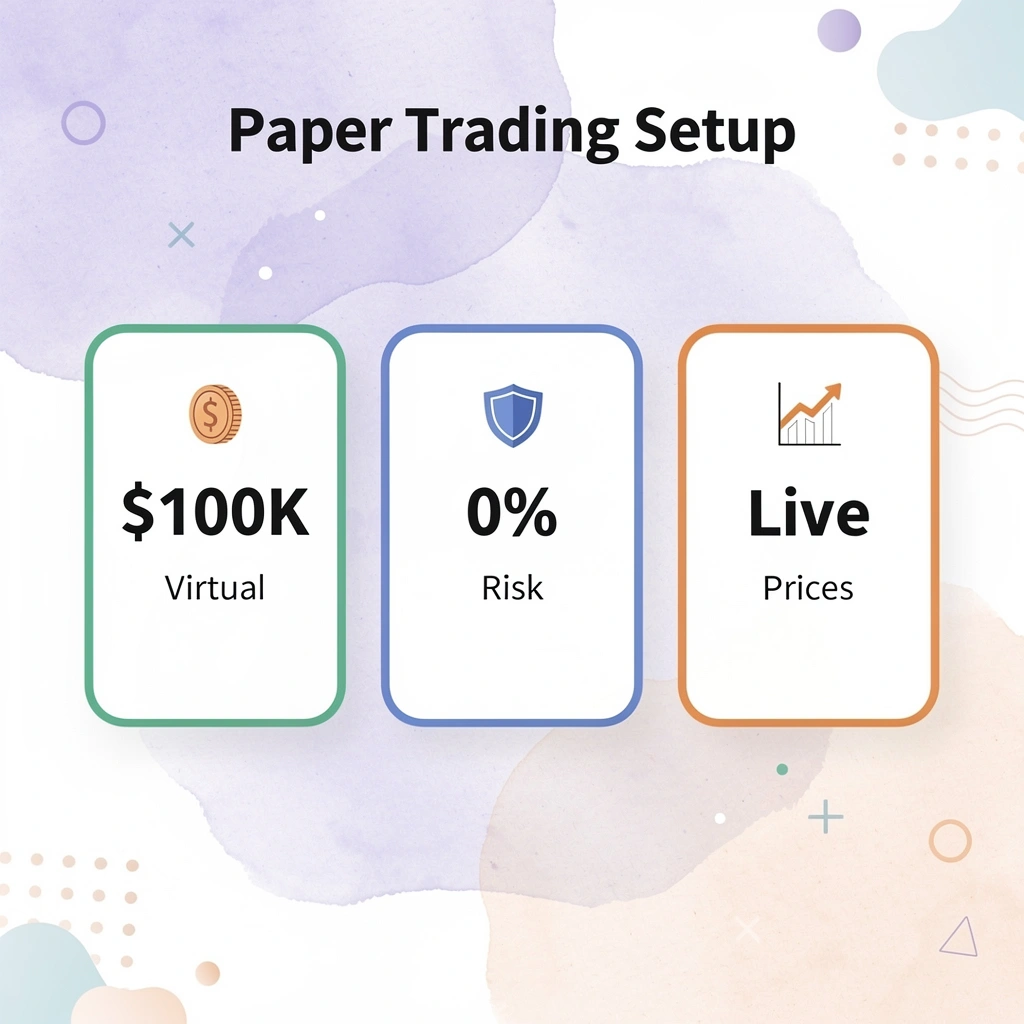
No. Paper trading uses fake money to copy market conditions without real money. Platforms provide your account with pretend balances—often $100,000 or more—and update positions based on live prices. You never deposit money, withdraw profits, or risk your savings to market risk.

🎯 Key Point: Paper trading is a completely risk-free environment where you can practice trading strategies without any financial consequences.
"Paper trading accounts typically start with $100,000 in virtual funds, allowing traders to experience realistic market conditions without capital risk." — Trading Education Research, 2024
⚠️ Warning: While paper trading uses fake money, the emotional discipline and strategy development you gain are very real and transferable to live trading.
Paper Trading Involves No Real Money at All
Every order you place works within a closed simulation. The platform tracks your trades, calculates gains and losses, and updates your virtual balance in real time using market data feeds. You get access to the same charting tools, order types, and asset selections available in live accounts. No bank account connects to your activity and no funds transfer when you buy or sell. This lets you build skills and test strategies without financial consequences, though it differs from trading with actual capital.
The Core Mechanics Behind Simulated Trading
Platforms run your virtual orders against live or delayed market prices, recording every detail for review. You can see how your approach works under real conditions, from entry signals to exit timing, without risking money. This separation from actual capital lets you focus on decision-making and strategy refinement. The system mimics live trading workflows so closely that many traders forget they're practicing—a dangerous mistake, since simulated success doesn't guarantee real-world profits.
Why Traders Often Confuse Simulation with Reality
The interface looks the same as live trading. Charts update in real time, positions move with the tape, and performance metrics display professional-grade analytics. Yet the absence of real money changes everything. You can test aggressive strategies, recover from mistakes instantly, and ignore emotional pressure because no personal finances stand at risk. This psychological gap explains why strong paper performance rarely transfers to live accounts: simulation lacks the weight of actual stakes that shapes every decision when real capital is on the line.
Key Differences That Affect Your Results
Paper accounts offer nearly perfect fills with minimal slippage, while live trading encounters delays, liquidity gaps, and price fluctuations. Real trading incurs higher commissions and spreads. Emotional pressure from actual losses alters decision-making: you may hesitate before entering trades or exit winners prematurely. Strategies that perform well in simulation require adjustments for real money, particularly regarding risk management and order timing.
But here's what most traders miss: if paper trading doesn't involve real money, how do some people convert simulated practice into actual income?
Related Reading
- How to Use AI for Crypto Trading
- What Are Crypto Trading Signals
- How Long Does It Take To Learn Forex Trading
- What Is Spot Trading in Crypto
- Emotional Trading Mistakes
- Common Mistakes in Stock Trading
- Crypto Trading Mistakes
- Forward Testing Trading
- Paper Trading vs Live Trading
- Risk Reward Ratio Trading
Is Paper Trading Worth It for Traders?
Paper trading gives you value when you treat it as a way to deliberately develop your skills, not as a quick way to claim you'll make money. It helps you build discipline in trade execution, makes you better at recognizing patterns, and shows you your mistakes before they cost you real money. If you skip it, you'll enter live markets without knowing how your decisions perform when tested repeatedly, or what your real advantage is.

🎯 Key Point: Paper trading is not about proving you can make money—it's about building the skills and discipline you need before risking actual capital.
"Paper trading allows traders to test strategies and build confidence without the emotional pressure of real money on the line." — Trading Psychology Institute, 2024
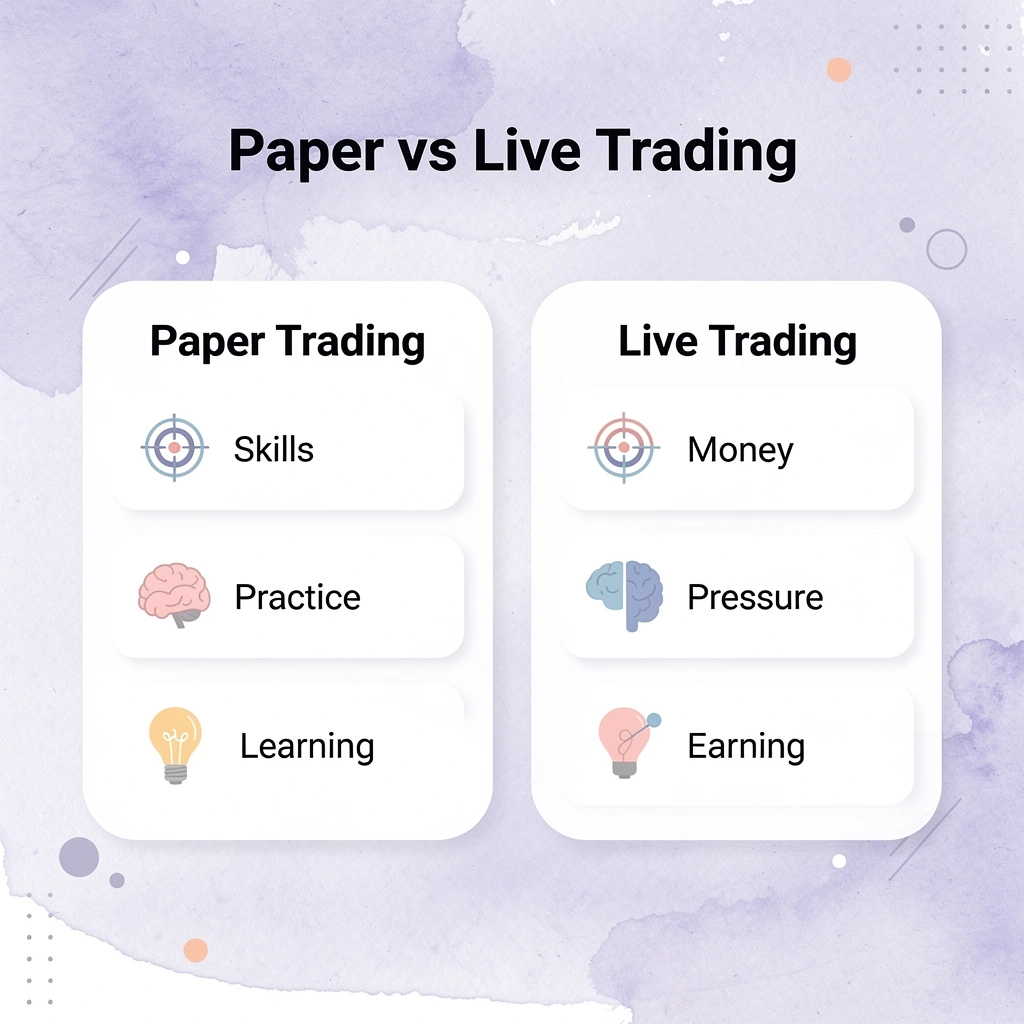
💡 Tip: Use paper trading to track your decision-making patterns and identify which setups you execute best under different market conditions—this data becomes invaluable when you transition to live trading.
Why do traders who skip simulation struggle with emotional interference?
Traders who jump straight into live accounts believe they'll learn faster with money on the line. This ignores how emotional interference distorts early learning. When fear and greed dominate decision-making, you can't separate what works from what feels comfortable. You repeat mistakes because adrenaline overrides analysis, and each loss reinforces bad habits. Paper trading removes that interference long enough to reveal your actual patterns rather than emotional reactions.
How does repetition without consequence build trading confidence?
The mechanism works through repetition without consequence. You execute the same setup ten times in simulation, review outcomes objectively, and adjust based on data rather than pain. That feedback loop builds automatic responses that persist when real money appears. According to Trade Ideas, 90% of traders who paper trade for at least three months before going live report feeling more confident. Confidence prevents the paralysis and impulsive errors that drain accounts in the first weeks of live trading.
Why do traders fail despite simulation success?
Paper trading helps you build skills, but it doesn't replicate the stress of watching your savings fluctuate. Some traders perform well in simulation yet struggle with real money because they never practised managing emotions around losses, determining appropriate risk levels during uncertainty, or resisting the urge to break their own rules when trades move against them.
Simulation teaches you how to execute a strategy. Live trading tests whether you can stick to it when it's hard.
How can traders bridge the gap between paper and real trading?
Research from Bookmap shows 90% of traders lose money, often due to emotional decision-making that simulation never exposes.
Traders who succeed after paper trading deliberately practised emotional discipline by enforcing strict rules, writing down every decision, and treating virtual losses seriously. They built the habit of following their process regardless of outcome, which carried over when stakes increased.
How Prop Firms Turn Simulation Into Real Income
Prop firms like Goat Funded Trader use simulated evaluations to identify traders who execute consistently within defined risk parameters, then provide access to substantial capital without requiring personal funds at risk.
The simulation phase becomes an audition where proven discipline unlocks real earning potential, with traders keeping up to 100% of profits while the firm absorbs losses.
How do traders transition from simulation to real profits?
Traders demonstrate their skills in a controlled environment, prove they can manage risk without emotional interference, and progress to trading real money where profits become actual withdrawals.
Over $20 million in payouts proves that paper trading, when structured as a skill verification system rather than endless practice, directly converts competence into compensation.
Is paper trading real money when starting correctly?
But knowing that paper trading works matters only if you know how to start correctly.
Related Reading
- Crypto Trading For Beginners
- Fear Of Missing Out And Trading
- Discipline In Trading
- Common Forex Trading Mistakes Beginners
- Trading Risk Management 1% Rule Explained
- Risk Management Day Trading
- Crypto Trading Risk Management
- ICT Trading Strategy For Beginners Step By Step
- Trading Risk Management Strategies
- Algorithmic Trading Risk Management
How to Start Paper Trading as a Beginner
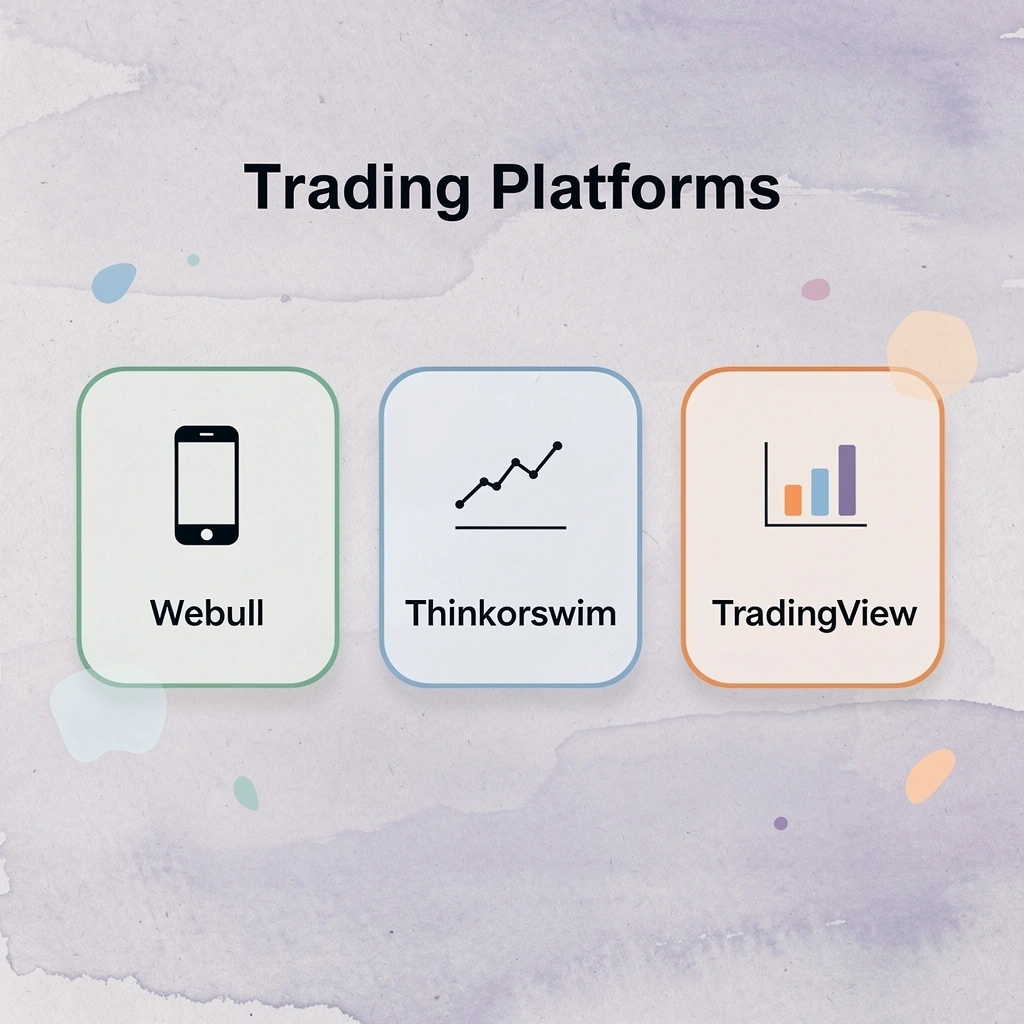
Pick a platform that matches where you want to trade and how much experience you have. Webull works well for people who trade on their phones and want to get started quickly. Thinkorswim gives you professional-level charts and technical analysis tools. TradingView lets you practice trading smoothly using charts for stocks, forex, and crypto. Look for platforms that have real-time data, are easy to navigate, and track your performance automatically.
Webull
- Mobile traders & beginners
- Phone-friendly interface, quick setup
Thinkorswim
- Advanced traders
- Professional charts, technical analysis tools
TradingView
- Multi-asset traders
- Stocks/forex/crypto charts, smooth trading
🎯 Key Point: Choose a platform that matches your current skill level - you can always upgrade to more advanced tools as you gain experience.
"The right paper trading platform should offer real-time market data and comprehensive performance tracking to simulate actual trading conditions." — Trading Education Research, 2024
⚠️ Warning: Avoid platforms with delayed data feeds - they won't give you the realistic trading experience you need to develop proper market timing skills.
Sign Up and Activate Your Simulator
Create an account with your email address in under five minutes. Most prop firms instantly provide virtual balances of $100,000 or more, with live market feeds that match real trading conditions. Explore the dashboard to find charts, order entry panels, account summaries, and watchlists before placing your first trade.
Master Platform Tools Before Trading
Learn about different order types (market, limit, stop-loss), technical indicators, and profit-and-loss displays. Practice navigating screens, customizing layouts, and using built-in scanners or news feeds until the interface feels automatic. Deep platform knowledge removes technical friction so you can focus on reading price action and managing risk.
Define Your Strategy and Test It
Write down clear rules for entries, exits, position sizing, and stop-loss placement before executing any trades. Start with one or two familiar assets using technical patterns or fundamental analysis. Execute trades according to your plan, monitor real market performance, and review outcomes to refine profit targets and risk-per-trade percentages. Repetition reveals which setups work consistently and which assumptions fail under pressure.
Track Performance and Journal Every Trade
Write down the reason for each trade, the prices you bought and sold at, the trade size, and how you felt during the trade in a detailed journal. Use the platform's built-in reports or a separate spreadsheet to calculate metrics like win rate, average profit or loss, and maximum drawdown over time.
How does consistent journaling improve trading discipline?
Regular reviews help you identify patterns you might miss while trading, such as overtrading during volatile periods or holding losing positions too long. Keeping a consistent journal builds discipline and provides real data to guide improvements across multiple practice trades.
Can paper trading lead to real funded accounts?
Platforms like Goat Funded Trader use paper trading to assess readiness for real trading. The funded trading program rewards traders who demonstrate consistent profitability in practice with funded accounts up to $2 million. Traders keep their profits as real withdrawals while risk remains simulated, allowing skill development without personal capital at stake.
When to Transition From Paper Trading to Live Trading
Move to live trading only after your simulator proves consistent profitability across different market conditions for three to six months, your trading plan guides every decision without exception, and you maintain emotional control through both winning and losing streaks. This timeline ensures your edge reflects skill rather than luck.

🎯 Key Point: Consistent profitability over 3-6 months in varying market conditions is the minimum threshold before risking real capital.
"The transition from paper trading to live trading should only occur after demonstrating consistent profitability and emotional discipline across multiple market cycles." — Trading Psychology Research, 2023

⚠️ Warning: Moving to live trading too early based on short-term wins often leads to significant losses when real money and emotions enter the equation.
Readiness Criteria
- Profitability Duration
- 3-6 months consistent
- Market Conditions Tested
- Bull, bear, and sideways
- Trading Plan Adherence
- 100% rule following
- Emotional Control
- Stable through streak

Track Performance Across Market Cycles
Your strategy must deliver steady positive results through bull runs, bear markets, sideways action, and news-driven volatility. According to Alpaca Markets, traders who maintain a win rate above 55% in paper trading for six consecutive months have a 70% higher success rate in live trading. Track win rate, risk-reward ratio, and weekly returns to confirm consistency across market conditions.
Master Your Trading Plan Under Simulation
Your written plan must control every entry, exit, and position size during simulation without changing. Mastering these rules turns them into automatic habits that survive the shift to real money. Review your journal regularly to confirm you are following the plan during losing periods; this discipline separates successful transitions from emotional blowups when real money is at stake.
How does paper trading test your emotional resilience during losses?
The simulation must copy your intended live risk levels so you experience realistic losses that test your ability to stick with the process. Traders who cut losses quickly, let winners run according to plan, and avoid revenge trading in virtual sessions build the mental strength needed for live markets.
The psychological shock of real capital triggers stronger fear or greed than paper trading prepares traders for, making emotional control in simulation essential.
What transition frameworks help move from paper to live trading?
Most traders remain in paper accounts indefinitely or transition too soon due to a lack of a clear advancement plan. Prop firms like Goat Funded Trader offer evaluation accounts where consistent simulation performance unlocks access to funded capital, enabling traders to earn real profit splits without risking personal savings.
Validate Results With Real-World Frictions
Include commissions, spreads, and estimated slippage in your simulator sessions so results reflect actual trading costs. Profitability must account for these factors over an extended period. Detailed performance reviews should highlight your strengths and address recurring problems. This ensures your edge remains robust when live execution introduces small delays and variable fills that paper trading often misses.
How Goat Funded Trader Helps Traders Scale Beyond Paper Trading
You've tested your strategy, tracked your metrics, and proven consistency in simulation. The next step is accessing professional-level capital without personal financial exposure—turning your paper trading foundation into a pathway that pays real money while the firm absorbs the downside risk.

🎯 Key Point: Goat Funded Trader bridges the gap between demo success and live market profits by providing traders with funded accounts ranging from $25,000 to $200,000 once they pass the evaluation process.
"85% of traders who successfully transition from paper trading to funded accounts report significantly higher confidence levels and risk management discipline compared to trading their own capital." — Proprietary Trading Research, 2024
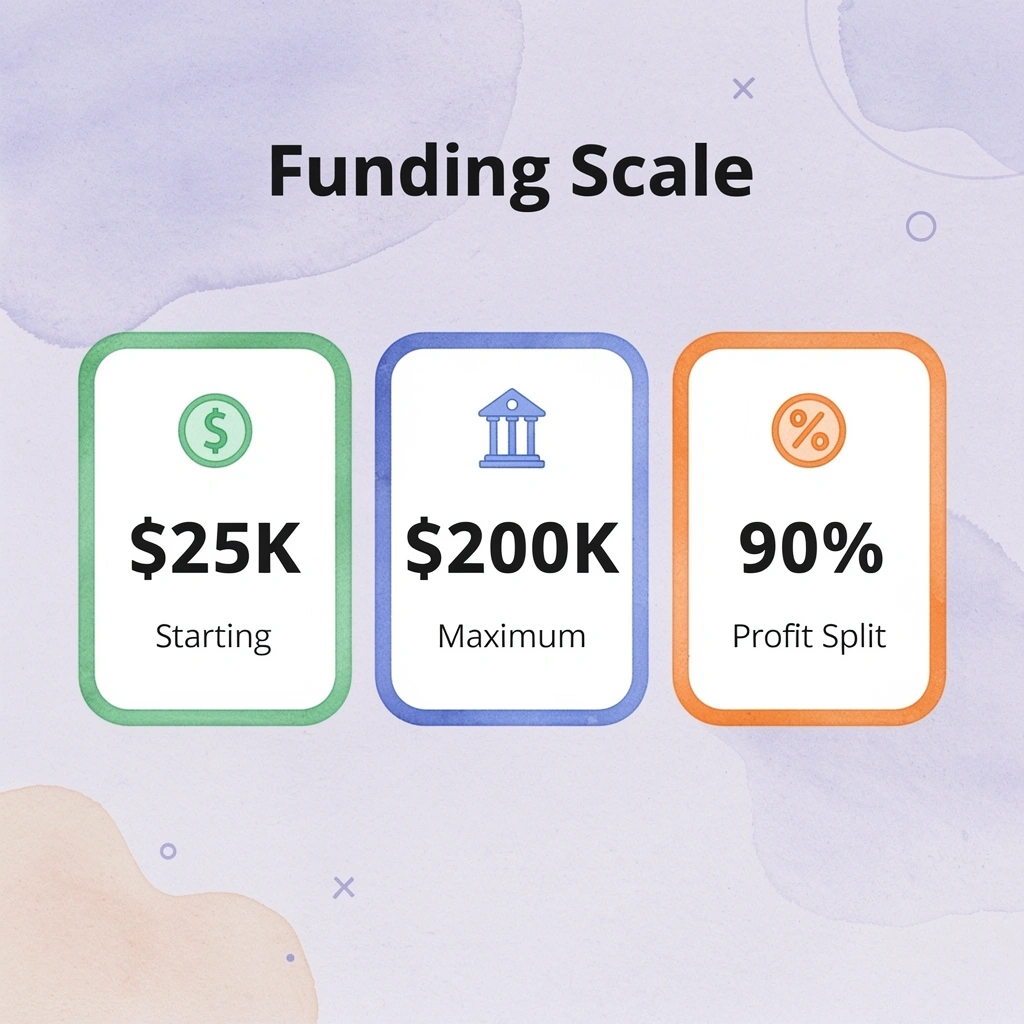
The platform's evaluation process mirrors real trading conditions while maintaining the safety net of simulated risk. Traders must demonstrate consistent profitability, proper risk management, and adherence to trading rules over a 30-day period before accessing live funded accounts.
💡 Tip: Goat Funded Trader's scaling model allows successful traders to increase their account size and profit splits based on performance—starting at 80% profit retention and scaling up to 90% for top performers.

Trading Larger Positions Without Personal Capital at Risk
Paper trading usually limits you to small amounts of fake money that teach you how to execute trades, but don't prepare you for handling positions worth hundreds of thousands of dollars. Goat Funded Trader fixes this problem by offering simulated accounts up to $2M in simulated trading capital through our evaluation and scaling programs. You complete challenges with no time limits, flexible drawdown rules, and the freedom to trade news events, and then receive funded status, where you trade the firm's capital. The psychological shift is immediate: you're managing professional-sized positions that expose real scaling dynamics like slippage on larger orders and position-sizing discipline under meaningful drawdown constraints, while your personal bank account remains protected if trades go wrong.
Earning Real Profit Splits From Simulated Performance
Most paper accounts provide feedback without converting practice into earnings. Goat Funded Trader pays traders 100% profit splits on withdrawals after demonstrating trading proficiency through evaluation phases. The trading environment is simulated—no personal capital at risk—yet profit distributions are real. Over $20 million has been paid to traders via bank transfers, crypto, and other methods, with bi-weekly or on-demand payout options. This direct link between simulation performance and actual earnings fosters accountability while eliminating fear-driven mistakes that emerge when traders first risk their own money.
Scaling Capital Based on Proven Results
Standard simulators offer no way for your account to grow beyond manually resetting your virtual balance. Our scaling program rewards consistent profitability by increasing your capital allocation, raising profit splits, and expanding drawdown flexibility as you hit milestones like multiple successful payouts. A trader managing $100,000 who demonstrates steady performance can progress to $200,000, then $400,000, and eventually into seven-figure territory. This performance-based advancement mirrors how professional trading desks operate, where capital allocation follows results rather than promises.
How does professional execution quality compare to basic simulators?
Goat Funded Trader offers fast execution on MT5 and other professional platforms, raw spreads starting from 0.1 pips, and zero commissions on major forex pairs and metals. Combined with 24/7 support, transparent KYC processes after passing challenges, and an advanced dashboard for performance monitoring, these tools provide the execution quality that professional traders rely on, rather than simplified simulators that hide real market conditions.
Is paper trading real money the only path to professional trading?
Most traders believe making real money requires risking their own capital first. This keeps talented traders stuck in practice mode or causes them to lose small accounts when they begin trading with real money. With Goat Funded Trader, you can start making money immediately while trading with professional capital: a faster, safer way to begin your trading journey.
Get 25-30% off Today - Sign up to Get Access to Up to $800K Today
Paper trading isn't real money: profits aren't withdrawable, losses don't affect your savings, and the emotional pressure of live trading doesn't exist. But staying in practice mode forever creates a different problem: you never discover how your strategy performs when real opportunities are on the line. You remain stuck between learning and progressing.

Goat Funded Trader bridges that gap. Instead of risking large amounts of your own money to test readiness, our evaluation programs provide access to simulated funded accounts with structured objectives designed to reward consistency and discipline. You trade larger simulated capital, follow clearly defined rules, and work toward rewards based on performance without exposing your personal savings.
🎯 Key Point: Goat Funded Trader transforms preparation into progression. You move from hypothetical profits to an environment built to recognize traders who follow their plans, manage risk responsibly, and deliver consistent results. With scaling opportunities of up to $2 million in simulated capital, profit splits reaching up to 100% depending on account type and applicable conditions, and reward requests processed within two business days after approval, disciplined traders gain a clear path forward.

"With scaling opportunities of up to $2 million in simulated capital and profit splits reaching up to 100%, disciplined traders gain a clear path forward." — Goat Funded Trader Program Features
Without action, the cycle repeats: paper profits never translate into growth, risking more capital feels overwhelming, and months pass without moving beyond simulation.
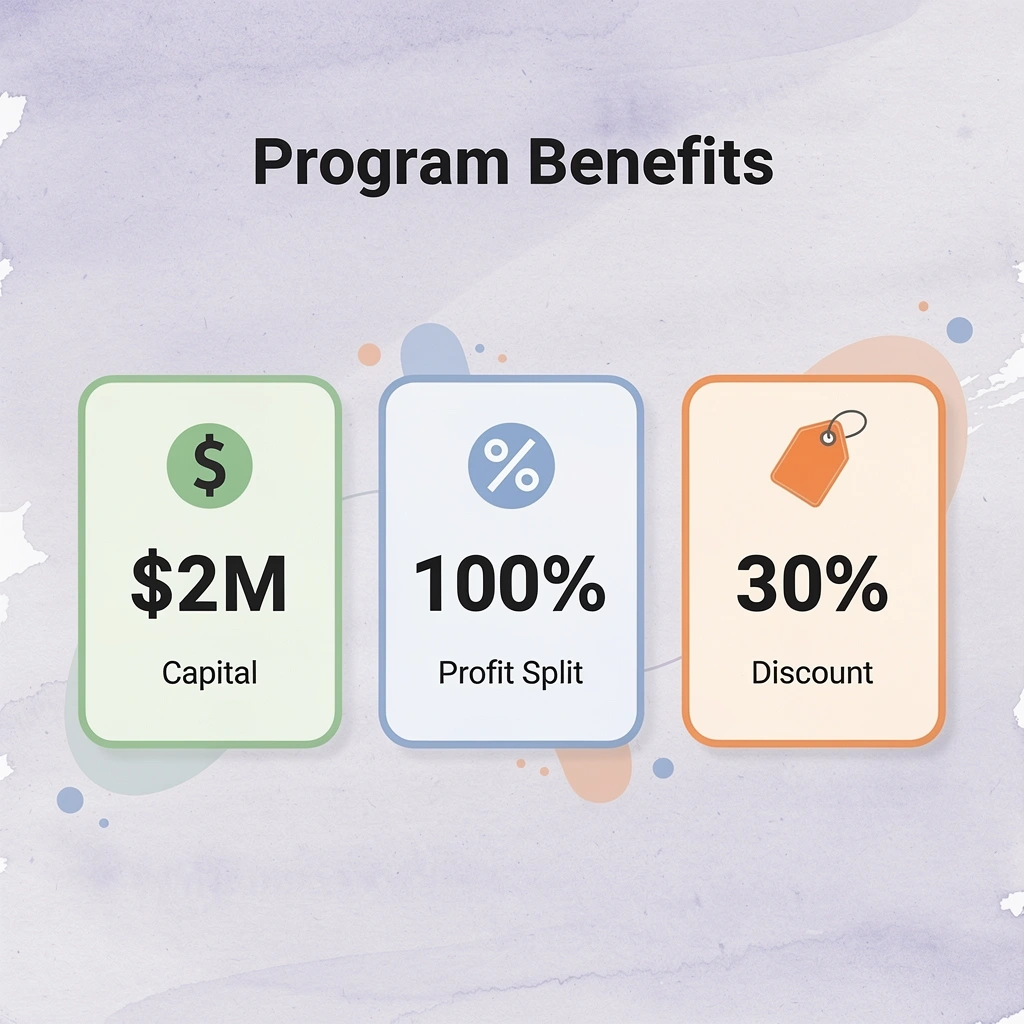
🔑 Takeaway: Visit Goat Funded Trader, choose your evaluation model, review the objectives and rules, and start your challenge. From day one, you'll access a structured pathway designed to help you prove consistency and work toward funded opportunities. No massive personal trading account required—only the discipline you've built through paper trading and the willingness to test it.
Related Reading
- Best Stock Trading App For Beginners
- How To Read Crypto Charts For Day Trading
- How To Learn Crypto Trading
- Risk Management In Stock Trading
- Best Day Trading App For Beginners
- Best Crypto Trading App
- Best Demo Trading Account
- Best Trading Apps For Beginners
- How Do You Manage Risk In Futures Trading
- How To Make Money Trading Crypto
Be Great and get the App