






9 Risk Management Strategies for Day Trading Success
Risk management day trading strategies that protect your capital. Goat Funded Trader reveals 9 proven tactics to limit losses and trade smarter.
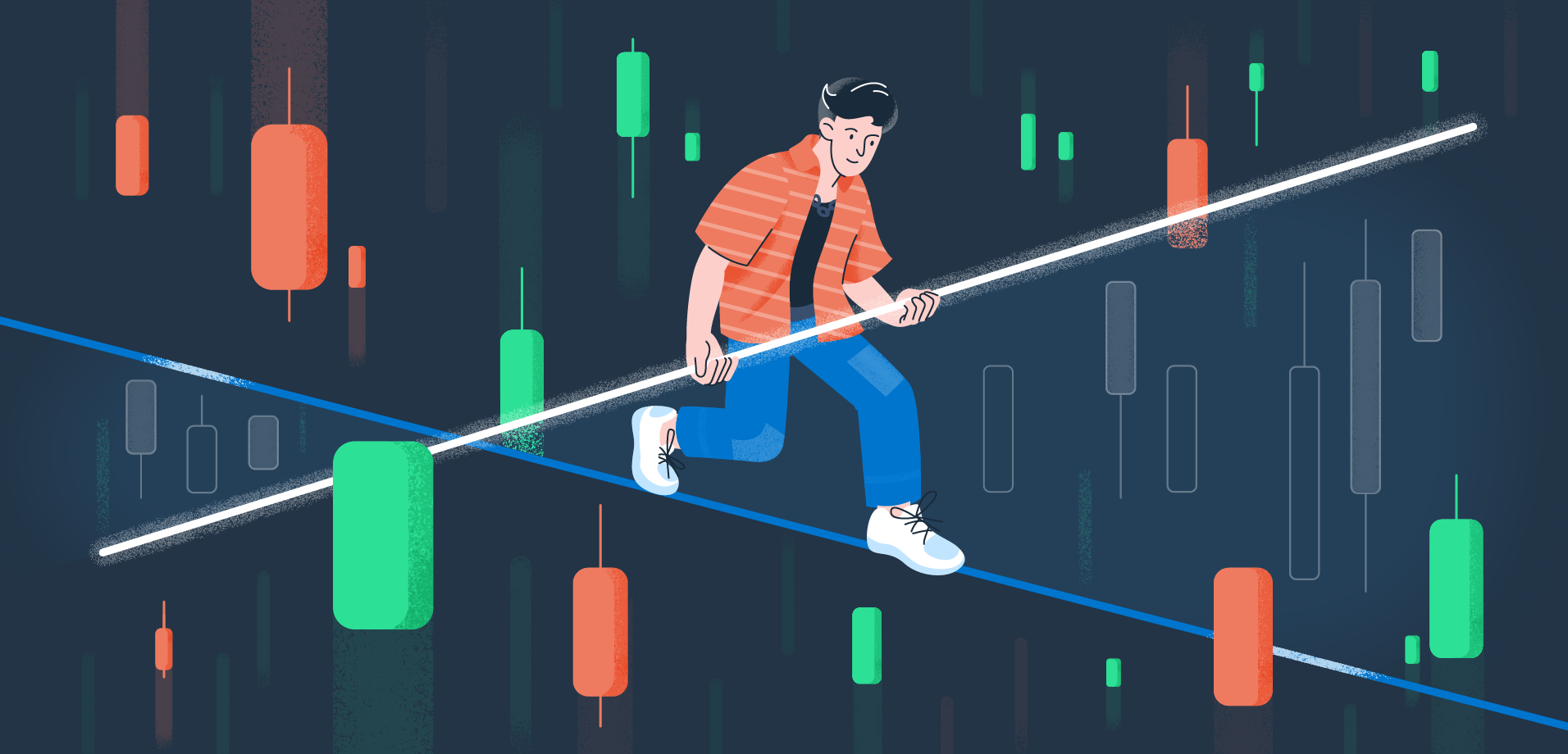

Blowing an account often comes down to a single moment: one ignored stop loss, one emotional decision, one trade sized too large. Whether a trader is just starting out or already exploring how to use AI for crypto trading to refine their edge, the skill that separates consistent performers from struggling ones is not finding the perfect entry. It is managing risk with discipline and precision. These nine proven risk management strategies cover everything from position sizing to drawdown control, giving traders the tools to protect capital and stay in the game long-term.
Having the right strategies matters, but so does the environment in which they are applied. Trading with real capital under structured rules accelerates skill development in ways that demo accounts simply cannot replicate. Traders looking to put these techniques into practice without risking personal savings can do so through a prop firm like Goat Funded Trader, which provides funded accounts designed for serious traders ready to perform in live market conditions.
Table of Contents
- What Is Risk Management in Day Trading and Why Does It Matter?
- How Much Should You Risk on a Single Day Trade?
- Can Professional Traders Risk More Than 1% Per Trade?
- 9 Risk Management Strategies for Day Trading Success
- Common Risk Management Mistakes Day Traders Make, and How to Overcome Them
- How Goat Funded Trader Helps Risk-Conscious Day Traders Scale Faster
- Get 25-30% off Today - Sign up to Get Access to Up to $800K Today
Summary
- Limiting risk to 1% or less of account balance per trade is one of the most consistently supported principles in professional trading. Traders who apply this rule survive losing streaks that eliminate those who size positions based on conviction rather than calculation. The math is straightforward: on a $50,000 account, a $500 maximum loss per trade, defined by entry-to-stop distance, removes guesswork and emotional negotiation from every position.
- Daily loss caps work alongside per-trade limits to prevent a rough session from compounding into a serious setback. Setting a hard stop at 3% to 4% of account equity for any single day creates a structural barrier against emotional overtrading. This pairing matters because approximately 70% to 80% of day traders lose money, and the separation between that group and traders who survive long-term is rarely about strategy quality.
- Professional traders operate at or below 2% risk per trade, not because they lack conviction, but because they understand how variance plays out across a sequence of trades. Many apply fractional versions of the Kelly Criterion, sizing at half or quarter Kelly to account for slippage, spread, and execution gaps that erode theoretical edge. A 30% drawdown requires a 43% gain just to return to breakeven, which is the mathematical reality that keeps experienced traders conservative.
- Position sizing should adjust with market conditions rather than stay fixed across all environments. Cutting risk to 0.5% during choppy or low-conviction periods is not a sign of hesitation. It reflects an accurate assessment of setup quality. Traders who size the same in noisy conditions as they do in high-clarity setups take equal risk for unequal probability, which quietly erodes their edge over time.
- The psychological environment matters as much as the technical framework. When personal savings are directly at risk, even traders with sound systems start making fear-based decisions: cutting winners early, skipping setups near the daily loss limit, or overriding stops. That anxiety compounds over time and corrupts an otherwise disciplined process. Removing personal financial liability from individual trade outcomes changes how consistently a trader can execute their own rules.
- Capital access creates a practical ceiling for traders whose discipline is already in place. Applying 1% risk per trade to a small personal account produces modest returns regardless of execution quality. The same habits applied to a larger, more fully funded account scaled proportionally, without requiring any change in approach. Goat Funded Trader addresses this gap by providing simulated funded accounts up to $2 million, with evaluation criteria built around the exact risk parameters, 3% daily loss, and 6% overall cap, that disciplined traders are already operating within.
What Is Risk Management in Day Trading and Why Does It Matter?
Risk management is the framework that determines whether your trading career lasts a week or a decade. It is the operating system running underneath every trade you place, determining how much damage any single loss can do to your account and your ability to keep trading.
"Risk management is the operating system running underneath every trade — it determines how much damage any single loss can do to your account and your ability to keep trading."
🎯 Key Point: Risk management isn't just one tool in your arsenal — it is the entire foundation your trading strategy is built on. Without it, even a winning strategy can destroy your account.
⚠️ Warning: Most traders focus obsessively on entry signals and profit targets while ignoring risk management — this is the #1 reason trading careers end prematurely.
- Single losses are capped and controlled → One bad trade can wipe your account
- Long-term trading career is sustainable → Career can end in days or weeks
- Losses are expected and planned for → Losses trigger panic and poor decisions
- Account growth compounds over time → Emotional trading leads to drawdown spirals

Why does risk management in day trading separate survivors from those who quit?
Most traders who blow accounts had a working edge. What they lacked was a system that kept any single trade from becoming catastrophic. A landmark FINRA study found that 72% of day traders experienced financial losses in a single year, demonstrating how poor risk practices lead to failure while disciplined approaches separate survivors from those who quit.
Why one trade can end everything
The math on unchecked risk is harsh and quick. A position sized too aggressively does not lose money—it compresses your future. On a 4x margin, a stock dropping 20% wipes out half your account on one trade. A single session erases months of disciplined work, and it happens to traders who believed the setup was too strong to fail.
Why does exposure matter more than the setup?
Traders often describe watching gains disappear in seconds because the position was too large to survive a normal reversal. The setup was not the problem—the exposure was. Your analysis determines direction, but your risk management determines survival.
How does risk management day trading close the gap between knowing and doing?
Most traders know risk management rules in their heads, then ignore them when a trade looks promising. That gap between knowing and doing is where accounts get lost. Treating risk as a fixed business cost—something unchangeable that comes with every trade regardless of confidence—removes emotional second-guessing. Traders who work through a prop firm like Goat Funded Trader often find this discipline builds naturally because the evaluation structure rewards steady risk control, not just winning trades.
Risk management as a competitive edge
The traders who last are not the ones with the best entries. They are the ones who lose the least when they are wrong. Controlling your maximum drawdown, maintaining a risk-reward ratio that favors you mathematically, and setting daily loss limits that stop emotional trading before it compounds are not defensive habits: they determine whether your edge gets enough time to prove itself. How much capital should be at risk on any given trade is a question with a more precise answer than most traders expect.
How Much Should You Risk on a Single Day Trade?
Risk exactly 1% of your total account balance on any single-day trade. This critical limit keeps losing streaks survivable and winning streaks growing meaningfully, without either outcome controlling your next decision.
"Risk exactly 1% of your total account balance on any single day trade — keeping losing streaks survivable and winning streaks compounding without emotion taking over."
🎯 Key Point: The 1% rule is not arbitrary — it means you can absorb 10, 20, even 50 consecutive losses and still have capital left to trade another day.
⚠️ Warning: Risking more than 1–2% per trade is one of the most common mistakes new day traders make — a short losing streak can wipe out your account before you ever find your edge.
- 1% risk per trade
- ~69 losing trades to wipe 50% of account
- 2% risk per trade
- ~35 losing trades to wipe 50% of account
- 5% risk per trade
- ~14 losing trades to wipe 50% of account
- 10% risk per trade
- ~7 losing trades to wipe 50% of account
🔑 Takeaway: Keeping your per-trade risk at 1% is the single most effective structural decision you can make to ensure long-term survivability — because staying in the game is what gives your edge time to work.
Why the 1% rule holds up under pressure
On a $50,000 account, the 1% rule means your maximum loss per trade is $500. Divide that $500 by the distance between entry and stop to determine your exact share count—a 50-cent stop on a $20 stock gives you 200 shares. A number derived from a rule you set before the market opened, not a guess. A comprehensive study of day traders in the Taiwan market revealed that less than 1% consistently earn positive abnormal returns net of fees, with poor risk practices cited as a primary reason most fail to survive.
Why should risk management in day trading adapt to changing market conditions?
The failure point is usually rigidity. Traders who apply 1% risk uniformly treat a quiet Tuesday the same as a volatile earnings week, and that mismatch costs them. During choppy, low-conviction periods, cutting risk to 0.5% per trade acknowledges lower setup quality and adjusts exposure accordingly. When price action is erratic or a major economic release approaches, tightening position size preserves capital for cleaner setups.
What is the hidden cost of keeping position size fixed?
Most traders keep position size the same because consistency feels like discipline. The hidden cost is taking the same risk in low-probability environments as in high-probability ones. Traders who size down in noise and size appropriately in clarity protect their edge long enough to see it pay off. Our prop firm structures its evaluation criteria around this adaptive discipline, rewarding controlled risk-taking across varying conditions rather than luck in favorable stretches.
Daily loss limits close the loop
Per-trade risk limits solve half the problem. Setting a daily loss cap at 3% to 4% of your account creates a hard stop that prevents a rough morning from threatening your account. Once you hit that ceiling, you stop trading. This boundary removes the temptation to chase because the rule was written before emotion entered the picture.
How does risk management day trading math work in your favor?
The structure of 1% per trade, paired with a 3%-4% daily cap, aligns directly with reward targeting. When paired with setups offering at least a 2:1 reward ratio, you need to win roughly four out of ten trades to grow your account. The separation between traders who lose money and those who survive long-term is rarely about picking better stocks—it's about surviving long enough through structured risk limits for a sound strategy to prove itself across a meaningful sample of trades.
Does the 1% rule apply equally to every trader?
Whether the 1% rule applies equally to every type of trader, regardless of account size, experience, or strategy, is more complicated than most expect.
Related Reading
- How to Use AI for Crypto Trading
- What Are Crypto Trading Signals
- How Long Does It Take To Learn Forex Trading
- What Is Spot Trading in Crypto
- Is Paper Trading Real Money
- Emotional Trading Mistakes
- Common Mistakes in Stock Trading
- Crypto Trading Mistakes
- Forward Testing Trading
- Paper Trading Vs Live Trading
- Risk Reward Ratio Trading
Can Professional Traders Risk More Than 1% Per Trade?
Professional traders almost universally stick to 1% or less per trade because they understand what variance does to a portfolio over time. The traders who survive decades in this business never give a single trade the power to define their month.
"Professional traders almost universally stick to 1% or less per trade — because they understand what variance does to a portfolio over time." — Core Risk Management Principle
🎯 Key Point: The 1% rule isn't a limitation — it's the exact reason professional traders stay in the game long enough to compound serious wealth.
⚠️ Warning: Traders who risk more than 1% per trade are not being bold — they're giving a single bad trade the power to destroy weeks of gains.
- Professional / Institutional Traders
- Risk per trade: ≤1%
- Long-term survival rate: High
- Aggressive Retail Traders
- Risk per trade: 2–5%
- Long-term survival rate: Moderate
- Undisciplined Traders
- Risk per trade: 10%+
- Long-term survival rate: Very Low
🔑 Takeaway: Decades of survival in trading come down to one non-negotiable habit — never letting a single trade define your month.

What the data actually shows about professional risk limits
Professional traders use fractional Kelly strategies, typically half- or quarter-Kelly, risking 1–2% or less per trade. Full Kelly recommends larger position sizes, but experienced traders reduce it to a fraction to account for calculation errors, slippage, and drawdown tolerance. The 2% limit represents the maximum risk under optimal conditions with a proven edge and controlled volatility. Most traders risk considerably less.
Why does risk management in day trading break down during losing streaks?
The failure point is typically a sequence of three or four consecutive average losses. When risk per trade climbs above 1-2%, these sequences become account-threatening events rather than manageable drawdowns. A 30% drawdown requires a 43% gain to return to breakeven. Professionals avoid these numbers because they have witnessed the consequences.
How does precise position sizing separate amateur from professional risk management day trading?
Most traders use a fixed percentage rule, which works for small accounts but breaks down as capital grows. Position sizing must account for correlation among open trades, sector concentration, and intraday volatility, not just a flat percentage of your account. Traders who master this qualify for larger capital through platforms like Goat Funded Trader, where risk discipline requirements determine access to up to $2 million in simulated capital and 100% profit splits.
Why fractional sizing separates professionals from the rest
The Kelly Criterion shows how professionals approach position sizing. Kelly suggests optimal bet size based on your edge and win rate. Professionals use half- or quarter-Kelly, reducing real-world risk to 1–2% per trade or less. Full Kelly assumes you know your edge perfectly, which no trader does. Markets have slippage, spread costs, and execution gaps that erode theoretical edges. Fractional Kelly accounts for that uncertainty while maintaining mathematical discipline.
What does risk management day trading data reveal about long-term survival?
Research on day traders shows that only 13% keep making consistent profits over six months, with 1% achieving long-term success over five years. These successful traders operate with conservative risk parameters around 1%—higher per-trade exposure correlates directly with failure rates. Traders who ignore that ceiling often chase recovery from losses, the emotional state that collapses risk management. Professionals treat stop-loss distance and position size as pre-trade calculations, not post-entry adjustments. This discipline, applied across hundreds of trades, separates funded traders from those starting over. Mastering risk limits translates into real access to capital and scalable income.
Related Reading
- Crypto Trading For Beginners
- Fear Of Missing Out And Trading
- Discipline In Trading
- Common Forex Trading Mistakes Beginners
- Trading Risk Management 1% Rule Explained
- Risk Management Day Trading
- Crypto Trading Risk Management
- ICT Trading Strategy For Beginners Step By Step
- Trading Risk Management Strategies
- Algorithmic Trading Risk Management
9 Risk Management Strategies for Day Trading Success
You follow your trading plan, find a strong setup, and enter with confidence. Minutes later, the price moves sharply against you. Instead of taking a small loss, you hold and hope. The loss grows, and one trade damages your account far more than it should. This cycle repeats daily for countless traders.
"The most dangerous moment in trading is not the losing trade: it's the losing trade you refuse to close." — Risk Management Principle
⚠️ Warning: Holding and hoping are two of the most common and costly mistakes in day trading. Every second you delay cutting a loss, you risk turning a manageable setback into an account-destroying event.
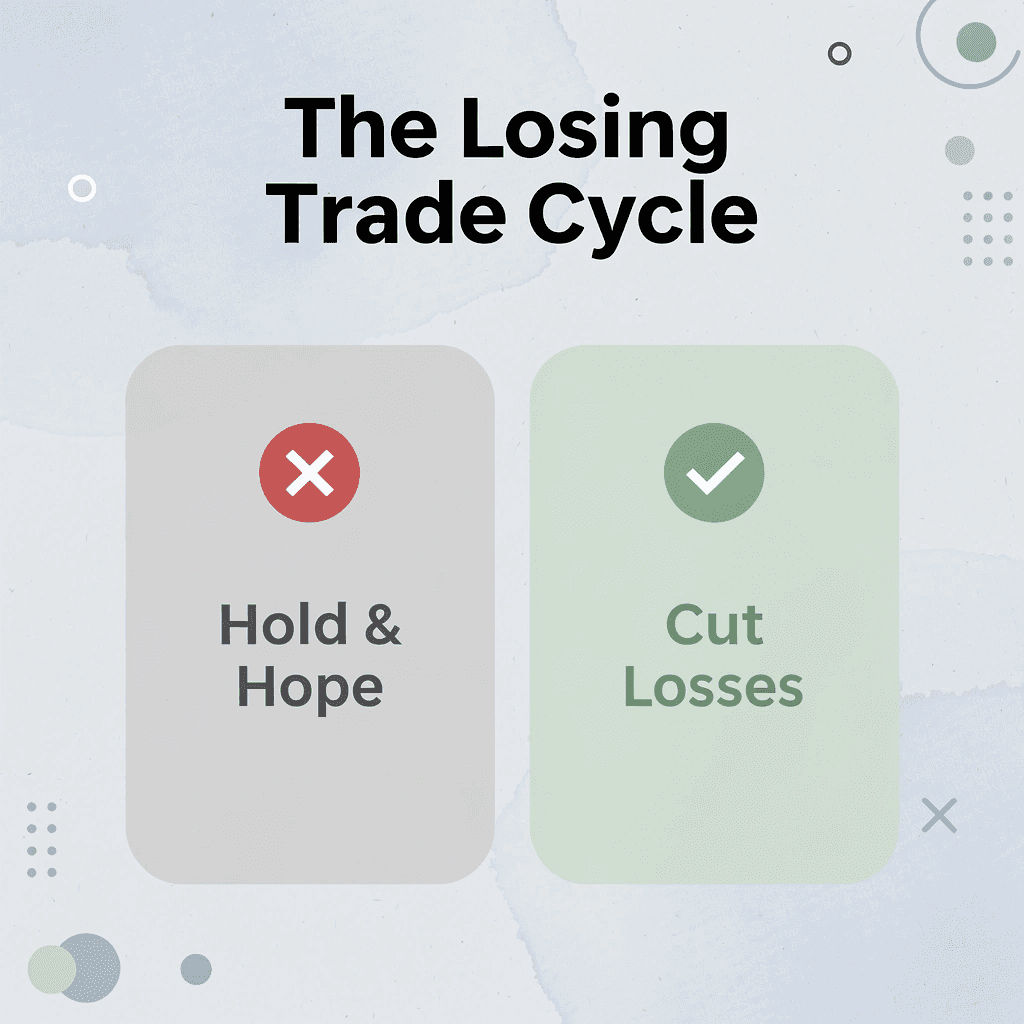
The difference between traders who last and those who quit rarely comes down to strategy alone — it comes down to risk management. A profitable trading system means little if poor risk control wipes out gains during a losing streak. The most successful day traders protect capital first and generate profits second. The following strategies help create that foundation.
💡 Tip: Before entering any trade, define your maximum acceptable loss. If you can't identify your exit point before you enter, you're not ready to place the trade.
🔑 Takeaway: Risk management is not a secondary concern — it is the core discipline that separates traders who build lasting accounts from those who blow up and quit.
1. Adopt Strict Position Sizing on Every Trade
Position sizing means deciding how many shares or contracts to buy based on your account balance and stop-loss placement. Limit your risk per trade to a small percentage of your total capital to prevent large positions from dominating your results and to preserve account strength through losing trades.
2. Deploy Stop-Loss Orders Without Exception
Stop-loss orders automatically exit your position at a set price level to limit losses. Place these based on technical support, volatility, or chart structure at entry. This removes emotional decision-making during fast moves and ensures you survive to trade another setup instead of hoping for reversals that rarely materialize.
3. Maintain Favorable Risk-Reward Ratios
Decide on a target profit level at least two or three times the amount you risk on each trade. This setup allows winning trades to offset losses over time, even when you're not always right.
4. Enforce Daily and Weekly Loss Limits
Set a maximum loss amount for each trading session and week, then stop trading once you reach that limit. Base these amounts on a percentage of your account to create firm boundaries against emotional escalation and destructive tilt sessions.
5. Plan Every Trade in Advance
Write down your complete trade plan: when you'll enter, where you'll set your stop-loss, what your target price is, and why you're making this trade. This removes in-the-moment guesswork, ensures your actions match your tested criteria, and builds the discipline that reduces costly mistakes.
6. Diversify Across Multiple Strategies and Instruments
Spread your activity across different trading approaches and market sectors rather than focusing on a single pattern or asset. This distribution reduces the impact of any underperforming setup on your overall results.
7. Control Emotions and Avoid Revenge Trading
Make rules that require you to take breaks after losing several times in a row or when you hit your daily limits. Step away from the screen to clear your head instead of making larger bets to recover losses quickly. This discipline prevents emotional decisions and protects your account, leading to better opportunities.
8. Maintain a Detailed Trading Journal
Write down every trade with the reasons you entered and exited, your risk limits, the outcome, and what you learned immediately after closing it. Review your entries weekly to identify patterns in your trading and refine your rules. Keeping a journal converts experience into actionable improvements and reinforces your risk discipline.
9. Adapt Risk Parameters to Current Market Conditions
Reduce position sizes during periods of high volatility and adjust stop-loss levels based on current price action, volume, and news. Each morning, assess broader market conditions to align your risk with market dynamics. This flexibility protects capital during difficult periods and maximizes gains during favorable ones.
Common Risk Management Mistakes Day Traders Make, and How to Overcome Them
You start the day with a clear trading plan. A few hours later, one big loss wipes out multiple winning trades. Frustration triggers the urge to recover quickly, leading to another trade that deepens the damage. This pattern is a primary reason day traders struggle to achieve consistent results.
"Most trading failures stem from poor risk management: not bad market conditions or bad luck, but preventable behavioral mistakes made in the heat of the moment."
⚠️ Warning: The cycle of loss → frustration → revenge trading is one of the most destructive patterns in day trading. Recognizing it early is the first step to breaking it.

Most trading failures stem from poor risk management, not bad market analysis. Even strong strategies fail when traders ignore position sizing, abandon stop losses, or let emotions control decisions. Understanding common risk management mistakes and how to fix them helps traders protect capital and improve long-term performance.
💡 Tip: Treat risk management as a non-negotiable system — not an afterthought. Traders who protect capital first give their strategies the best chance to perform over the long term.
🎯 Key Point: A winning strategy paired with poor risk management will always underperform a modest strategy backed by disciplined risk controls.
Ignoring or Moving Stop-Loss Orders
Traders often skip stop-losses or widen them during adverse price moves, hoping for a bounce. This converts small losses into account-wiping ones. Set firm stops based on technical levels when entering a trade and treat them as inviolable rules that protect your capital.
Risking Too Much Capital on a Single Trade
Many people enter trades by risking more than 1-2% of their account, chasing bigger rewards without calculating proper position size. A series of oversized bets quickly depletes capital, even with a winning rate. Fix this by strictly limiting risk to 1% per trade through precise position sizing, which provides the cushion to handle normal volatility and build gains steadily.
Revenge Trading After Losses
When you lose money on a trade, it's easy to get frustrated and make bigger trades or jump into new ones too quickly to recover. This usually worsens losses. To prevent this, set a daily loss limit before trading. When you hit that limit, stop trading for the day. Take a break, review your trading journal, and return only with a clear plan.
Averaging Down on Losing Positions
Adding to a losing trade to improve the average entry price increases your exposure when the market continues to move against you. This ignores your original plan and turns small mistakes into major losses. Accept the initial stop and move to the next setup instead; save your resources rather than fighting the market.
Overleveraging Without Proper Controls
Using excessive borrowed money amplifies both profits and losses, often triggering margin calls during normal market movements. Borrowed money reduces your margin for error. Use less leverage and focus on trades with a high probability of success. Prop firm funding provides structured access to capital without risking your own funds: platforms evaluate your risk discipline first and then grant you funded accounts with built-in loss protections. Our Goat Funded Trader platform stands out with straightforward rules, fast payouts, and sustainable trading practices that reinforce proper risk habits from day one.
How Goat Funded Trader Helps Risk-Conscious Day Traders Scale Faster
Discipline earns you the right to grow bigger. That's the main idea behind funded trading — and most traders working with small personal accounts miss this completely.
💡 Tip: If you're trading with limited personal capital, a funded trading program like Goat Funded Trader can be the fastest path to scaling your positions — without risking your own savings.
"Discipline is not a limitation — it's the leverage that unlocks bigger capital, higher payouts, and long-term trading growth." — Goat Funded Trader
🔑 Takeaway: Risk-conscious traders who demonstrate consistent discipline are exactly the kind of traders that funded programs are designed to reward — turning small, controlled accounts into real scaling opportunities.
- Capital at Risk
- Personal account: Your own money
- Funded account: Firm’s capital
- Scaling Potential
- Personal account: Limited by savings
- Funded account: Significantly higher
- Risk Management Rules
- Personal account: Self-imposed discipline
- Funded account: Structured & enforced
- Growth Speed
- Personal account: Slow
- Funded account: Accelerated

Why does risk management in day trading determine who actually reaches payout?
Risk management skill without sufficient capital is like having a precise measuring instrument but nothing worth measuring. Traders who limit losses to 0.5% to 0.75% per trade, take 30 to 60 days to pass evaluations safely, and read every rule before placing a single order consistently reach payout. According to the Goat Funded Trader Blog, up to 90% of day traders lose money. The separating factor is rarely strategy; it's the inability to maintain risk discipline under pressure when real capital feels threatened.
What changes when personal liability disappears?
The failure point for most disciplined traders is psychological, not technical. When personal savings are on the line, even a trader with a sound system makes fear-based decisions: tightening stops before they trigger, skipping setups that feel too close to the daily loss limit, or cutting winners short to lock in gains. Our prop firm model built on simulated capital removes that pressure. Breaches reset the evaluation, not the trader's bank account, so the psychological environment aligns with the rational framework the trader already knows how to operate within.
How does removing financial fear support consistent risk management in day trading?
When the fear of losing personal money no longer drives decisions, traders execute their setups with the consistency reflected in their performance records. The boring, repeatable systems that top-funded traders rely on—patient intraday entries, defined exit rules, no emotional overrides—become far easier to sustain when the downside is a reset rather than a depleted savings account.
How does scale change the math on discipline?
Using a 1% risk per trade on a $5,000 account generates small-dollar returns regardless of execution quality. The same discipline applied to a larger account produces proportionally bigger results without changing your habits. According to Goat Funded Trader, funded traders can earn up to 90% of the profit split, demonstrating the value of consistent, rule-following performance. The evaluation framework—3% maximum daily loss and 6% overall loss cap—doesn't constrain disciplined traders; it validates their approach, since these limits align with what careful traders already use.
What does risk management day trading reveal about a capital access problem?
Skilled traders often feel quiet resignation when results don't match effort, doing everything right while growth crawls. That frustration points to a capital access problem, not a skill problem. If your discipline is already there, what's the one thing standing between you and the returns it deserves?
Get 25-30% off Today - Sign up to Get Access to Up to $800K Today
Your discipline—stop-losses, position sizing, daily loss limits—is exactly what prop firms look for when giving out money to trade with. Our Goat Funded Trader accounts give you practice accounts with up to $2 million, enforce a 3% daily loss limit and 6% overall maximum, and pay out up to 100% profit splits every two weeks or whenever you want, with rewards delivered in 24 to 48 hours or compensation provided.
"Goat Funded Trader accounts offer up to $2 million in practice capital, 100% profit splits, and payouts delivered in as little as 24 to 48 hours." — Goat Funded Trader
🎯 Key Point: Your existing trading discipline—the habits most traders overlook—is the #1 factor prop firms use to decide who gets funded.
- Max Account Size
- Details: Up to $2,000,000
- Daily Loss Limit
- Details: 3%
- Overall Max Drawdown
- Details: 6%
- Profit Split
- Details: Up to 100%
- Payout Speed
- Details: 24–48 hours

Use code FIRSTGFT for 50% off your first challenge. No personal money at risk, no credit card required, and instant dashboard access after you sign up. Over 250,000 traders already earn money through the platform.
💡 Tip: Use code FIRSTGFT before your first challenge to cut entry costs in half and maximize savings.
🔑 Takeaway: With 250,000+ traders on the platform, zero financial risk to join, and up to $800K in accessible funding, now is the ideal time to start your funded trading journey.
Related Reading
- Best Trading Apps For Beginners
- Best Crypto Trading App
- How To Learn Crypto Trading
- Risk Management In Stock Trading
- How To Make Money Trading Crypto
- How To Read Crypto Charts For Day Trading
- Best Demo Trading Account
- Best Stock Trading App For Beginners
- Best Day Trading App For Beginners
- How Do You Manage Risk In Futures Trading
Be Great and get the App