






Risk Reward Ratio in Trading: What It Is and Why It Matters
Master risk reward ratio trading with Goat Funded Trader. Learn how to size positions and protect capital before every trade.

Every trader faces that uncomfortable moment: a position moves against them, and the realization hits that there was never a real plan. Understanding the risk-reward ratio is what separates traders who survive that moment from those who repeat it. Knowing how much you stand to lose relative to how much you stand to gain is not optional math. It is the foundation of every consistent trading decision.
Learning how to use AI for crypto trading has made many traders sharper at spotting opportunities, but no tool replaces a solid grasp of the numbers behind each trade. Calculating and applying the risk-reward ratio gives trades a clear purpose and removes emotion from the equation. Traders who want to put these principles to work with real capital and proper structure can do so through a prop firm.
Summary
- A trader's win rate is far less important than most assume. Reviews of swing and day trading systems across thousands of trades reveal that setups target average realized ratios near 1:2.5, with win rates of 35-45% and positive returns after costs.
- Long-term backtests on major indices and forex pairs demonstrate that portfolios maintaining an average 1:2 risk-reward deliver steady compounding with moderate drawdowns, even during sideways markets. Higher fixed ratios underperform because they miss frequent smaller moves that compound reliably.
- Most trading failures trace back to execution, not analysis. Traders often calculate a ratio correctly during planning, then abandon their take-profit level early out of fear or widen their stop-loss mid-trade to avoid being closed out. Both behaviors quietly collapse the ratio's protective logic, and neither shows up in backtests because they happen in live conditions under emotional pressure.
- The right risk-reward ratio is not universal. It depends on trading style, timeframe, and asset volatility. A scalper working short timeframes may sustain profitability with a 1:1.5 ratio across high trade frequency, while a swing trader targeting multi-day moves has room to pursue 1:3 without sacrificing execution quality. Forcing a fixed ratio onto every setup, regardless of context, produces wider stops and moved targets, meaning the ratio exists on paper but never in the journal.
- Tracking ratio outcomes across at least 100 trades reveals what instinct hides. Many traders know their win rate but have no clear picture of their average winner versus their average loser over time. Without that data, a cold streak is indistinguishable from a broken strategy. Measuring actual R-multiples across every trade converts gut feeling into evidence and enables meaningful refinement of stop-loss and take-profit placement based on real market behavior rather than assumptions.
- Goat Funded Trader addresses the gap between knowing risk management principles and applying them consistently by providing hard daily loss limits, no time pressure during evaluations, and a capital-scaling structure that ties disciplined execution directly to larger-funded accounts and profit splits.
What Is Risk Reward Ratio Trading and How Is It Calculated?
Risk-reward ratio trading measures capital at risk against possible gains before placing orders. It changes trading from instinct-driven guessing into a repeatable, structured process where every position earns its place through math.
"Risk reward ratio trading transforms reactive decision-making into a structured, math-driven process — ensuring every trade justifies its place in your portfolio before a single order is placed."
💡 How It's Calculated: Divide your potential loss (distance from entry to stop-loss) by your potential gain (distance from entry to target). A ratio of 1:2 means you risk $1 to make $2 — a foundational benchmark for disciplined traders.
1:1
- Risk: $1
- Potential Reward: $1
- Viability: ⚠️ Marginal
1:2
- Risk: $1
- Potential Reward: $2
- Viability: ✅ Standard
1:3
- Risk: $1
- Potential Reward: $3
- Viability: 🎯 Strong
1:5+
- Risk: $1
- Potential Reward: $5+
- Viability: 🔑 Exceptional
⚠️ Warning: A high win rate means nothing without a favorable risk-reward ratio. Traders who ignore this metric often find themselves profitable on paper but losing money overall due to outsized losses on bad trades.
🎯 Key Point: The risk-reward ratio is not just a number — it's the mathematical foundation that separates disciplined trading from emotional guesswork.

How the calculation actually works
The calculation uses three price levels: entry, stop-loss, and take-profit target. Subtract your stop-loss from your entry to find risk; subtract your entry from your take-profit to find reward. Divide the reward by the risk for your ratio. A trader entering a long position at $100 with a stop-loss at $95 and a target at $115 risks $5 to pursue $15, producing a 1:3 ratio. According to OANDA's analysis of risk/reward ratios in FX trading, a 1:3 risk/reward ratio requires only a 25% win rate to break even.
Why does Risk Reward Ratio Trading matter more than win rate?
Most traders fixate on win rate as the sole measure of success. A trader winning 60% of trades with a 1:0.5 ratio loses money, while a trader winning 30% with a 1:3 ratio builds steady equity. Risk-reward ratio fundamentally shapes how we evaluate performance.
Where most traders get this wrong
The failure point is usually execution, not understanding. Traders calculate the ratio correctly during analysis, then abandon their take-profit level the moment a trade moves in their favor, banking a smaller gain from fear. Or they widen their stop-loss mid-trade, inflating risk without adjusting reward. Both behaviors destroy the ratio's protective logic. The structure only works when you commit to both exits before the trade begins, treating them as fixed rules rather than flexible suggestions.
Why does account size pressure affect Risk Reward Ratio Trading decisions?
Most traders managing limited personal capital face a compounding problem: when account size limits position sizing, even a well-structured 1:3 ratio produces modest absolute returns, creating pressure to overtrade or stretch targets. With Goat Funded Trader, our prop firm solution helps you avoid this constraint by providing access to simulated funded accounts with up to $2M in capital, so the same disciplined ratio applied to a larger position size yields higher returns without requiring personal financial exposure.
What minimum ratio do professional traders treat as non-negotiable?
OANDA notes that many professional traders use a minimum risk/reward ratio of 1:2 to ensure long-term profitability. They treat it as an inviolable rule when entering trades. This standard exists because it creates sufficient difference between wins and losses that even an imperfect strategy remains solvent across hundreds of trades. Setting your floor at 1:2 and rejecting anything below it is professional discipline expressed as a rule.
Why Is the Risk-Reward Ratio Important in Trading?
The risk-reward ratio in trading matters because it determines whether your strategy lasts long enough to prove itself. A thousand disciplined trades built on the same framework determine profitability — not a single well-structured trade.
"A thousand disciplined trades built on the same framework determine profitability — not a single well-structured trade."
🎯 Key Point: The risk-reward ratio isn't just a number — it's the foundation that determines whether your trading strategy survives long enough to become consistently profitable.
⚠️ Warning: Relying on one great trade to validate your strategy is a critical mistake. Long-term profitability is built through repetition, discipline, and a proven framework — not luck.
Strategy Longevity
- Without Risk Reward Ratio: Unpredictable, short-lived
- With Risk Reward Ratio: Structured, sustainable
Profitability
- Without Risk Reward Ratio: Dependent on single trades
- With Risk Reward Ratio: Built over 1,000+ trades
Decision Making
- Without Risk Reward Ratio: Emotional, reactive
- With Risk Reward Ratio: Disciplined, framework-driven
Risk Control
- Without Risk Reward Ratio: Inconsistent
- With Risk Reward Ratio: Defined and repeatable

Why does your win rate matter less than your ratio?
Your win rate matters little if your risk-reward ratio is broken. According to IG International's risk management research, traders using a 1:2 risk-reward ratio need to be right only 34% of the time to break even. You don't need to predict markets brilliantly; you need to be disciplined about sizing your outcomes correctly every time you enter a position.
How does Risk Reward Ratio Trading change what losing feels like?
That discipline changes what losing feels like. When your stop-loss is half the size of your take-profit target, a losing trade costs you a defined, pre-approved amount. Traders who skip this structure let losses run because they cannot accept being wrong, and that decision, repeated across dozens of trades, turns a struggling account into an empty one.
Why does Risk Reward Ratio Trading separate funded traders from the rest?
Most traders fail not from lack of market knowledge, but from inconsistent position sizing and exit planning. A common pattern: entering setups where potential gain barely exceeds potential loss, then watching accounts trend sideways despite decent win rates. The asymmetry breaks before the trade opens. At Goat Funded Trader, we evaluate traders partly on this discipline because managing simulated capital of up to $2M, with 100% profit splits available, makes the reward side of the ratio meaningful. Sloppy ratios on large capital don't just hurt your account; they eliminate the payout entirely.
How does a strong ratio anchor your trading psychology?
A strong ratio anchors your psychology. When three losses can be recovered by two clean wins, you stop chasing and revenge trading. Traders who internalize this shift from reactive decision-making to systematic execution produce consistency across different market conditions.
Tracking the ratio reveals what instinct hides
The failure point is usually not the strategy itself but the absence of measurement. Many traders know their win rate but lack clear data on average winner versus average loser across hundreds of trades. Without that data, you cannot distinguish whether a cold streak reflects a broken strategy or normal variance.
Tracking your risk-reward outcomes across every trade converts gut feeling into evidence and lets you refine take-profit and stop-loss placement based on actual market behavior rather than assumptions.
What ratio should you target in Risk Reward Ratio Trading?
The harder question—one that determines whether your strategy compounds or stalls—is what specific ratio you should target.
Related Reading
- How to Use AI for Crypto Trading
- What Are Crypto Trading Signals
- How Long Does It Take To Learn Forex Trading
- What Is Spot Trading in Crypto
- Is Paper Trading Real Money
- Emotional Trading Mistakes
- Common Mistakes in Stock Trading
- Crypto Trading Mistakes
- Forward Testing Trading
- Paper Trading Vs Live Trading
What Is a Good Risk-Reward Ratio for Traders?
For most active traders, the sweet spot is between 1:2 and 1:3. This range shows where mathematical expectancy and realistic execution meet—where your winners can be bigger than your losers without needing price to travel impossible distances or your win rate to go against probability.
"The 1:2 to 1:3 risk-reward range is where mathematical expectancy and realistic execution meet—giving traders an edge without demanding an unrealistic win rate."
💡 Example: If you risk $100 on a trade, a 1:2 ratio means your target profit is $200—so even if you only win half your trades, you still come out ahead.
⚠️ Warning: Chasing ratios beyond 1:3 may look attractive on paper, but often force price targets into unrealistic territory, dramatically lowering the probability of your trade hitting its mark.
Risk:Reward Ratio: 1:1
- What It Means: Break-even at 50% win rate
- Trader Suitability: Rarely recommended
Risk:Reward Ratio: 1:2
- What It Means: Profit at 34% win rate
- Trader Suitability: ✅ Solid starting point
Risk:Reward Ratio: 1:3
- What It Means: Profit at 25% win rate
- Trader Suitability: ✅ Sweet spot for most
Risk:Reward Ratio: 1:5+
- What It Means: Very high reward, low probability
- Trader Suitability: ⚠️ Advanced only
🎯 Key Point: The 1:2 to 1:3 range is the gold standard for active traders because it balances mathematical expectancy with execution realism—you don't need an exceptional win rate to remain consistently profitable.

Why does risk-reward ratio trading favor the 12 to 13 range?
Traders chasing 1:5 ratios are optimistic, not disciplined. Markets do not trend forever; prices reverse, consolidate, and shake out positions long before distant targets are reached. A 1:2 ratio requires only about 34% wins to break even, while 1:3 drops to 25%. Trader journals and platform data confirm this range delivers profits for strategies with 40% win rates. Execution friction, slippage, and emotional exits consume the difference between what the chart shows and what your account receives.
Why does your trading style change the target?
The right ratio is not universal; it is personal and contextual. A scalper on a five-minute chart needs frequency to generate returns, so a 1:1.5 ratio with high trade volume can outperform a forced 1:3 that rarely triggers cleanly. A swing trader with a multi-day setup and clearly defined resistance has room to stretch toward 1:3 without sacrificing execution quality. The key variable is alignment between your timeframe, your strategy's natural profit distance, and asset volatility. When those three elements match your ratio target, the math works. When they do not, even a theoretically sound ratio produces losing results.
How does Risk Reward Ratio Trading separate compounders from wheel-spinners?
Many traders use a fixed ratio for every trade, forcing trades to fit a number rather than letting the chart reveal the real opportunity. This creates wider stops, moved targets, and a ratio that looks good when planning but never materializes in the journal. Traders who keep accounts with Goat Funded Trader do the opposite: they let market structure set the stop and target first, then check whether the result meets their minimum threshold. If it does not, they skip the trade. That filter, applied consistently, separates traders who grow their accounts from those who stagnate.
What the math demands from you
Most professional traders use a minimum 1:2 risk/reward ratio. At that ratio, you need to win roughly one in three trades to stay profitable, creating meaningful room for losing streaks. Positive expectancy doesn't require a high win rate—only that your winners, on average, are worth more than your losers.
What does Risk Reward Ratio Trading look like across real trade data?
A trader running 1:2 with a 40% win rate builds an edge. Reviews of swing and day trading systems across thousands of trades show setups targeting 1:2 to 1:3 achieve realized ratios near 1:2.5 with win rates of 35–45%, generating positive returns after costs. Strategies forcing 1:4+ see win rates drop below 25%, often resulting in net losses. Track your trades by R-multiple across at least 100 setups; the gap between planned and actual ratios reveals your real edge.
Knowing the right ratio is only half the equation; the environment in which you apply it determines the outcome.
Related Reading
- Crypto Trading For Beginners
- Fear Of Missing Out And Trading
- Discipline In Trading
- Common Forex Trading Mistakes Beginners
- Trading Risk Management 1% Rule Explained
- Risk Management Day Trading
- Crypto Trading Risk Management
- ICT Trading Strategy For Beginners Step By Step
- Trading Risk Management Strategies
- Algorithmic Trading Risk Management
How to Improve Your Risk Reward Ratio Over Time as a Trader
Improving your risk-reward ratio means making better decisions before, during, and after every trade. Small changes in how you pick trades, execute them, and stay disciplined add up over time. The best traders focus less on trying to win big and more on creating a repeatable process that protects them from big losses while taking advantage of realistic opportunities.
"The goal of a successful trader is not to make the most money on every trade — it's to build a repeatable process that consistently delivers a favorable risk reward ratio over time." — Trading Psychology Principles
💡 Tip: Track your risk-reward ratio on every single trade — even the winners. Over time, your trade log becomes your most powerful tool for identifying where your process breaks down.
⚠️ Warning: A common mistake traders make is focusing obsessively on win rate while ignoring the risk-reward ratio. You can be right less than half the time and still be consistently profitable — if your winners are significantly larger than your losers.
- Improvement Area: Trade Selection
- What to Focus On: Only enter high-probability setups
- Impact on Risk Reward: Raises potential reward relative to risk
- What to Focus On: Tighten entries near key levels
- Impact on Risk Reward: Reduces risk without shrinking reward
- What to Focus On: Use logical, not emotional, stops
- Impact on Risk Reward: Prevents premature exits and oversized losses
- What to Focus On: Let winners run to defined targets
- Impact on Risk Reward: Maximizes reward on winning trades
- What to Focus On: Analyze every trade outcome
- Impact on Risk Reward: Identifies patterns to refine your process
🎯 Key Point: Discipline and process are the real drivers of a strong risk-reward ratio — not luck, not market conditions, and not chasing big wins.
🔑 Takeaway: The traders who consistently improve their risk-reward ratio over time are the ones who commit to small, compounding improvements in their decision-making — before, during, and after every trade they take.

Master Precise Entry Timing to Expand Reward Potential
Wait for the price to reach the best zones instead of entering early. Entries near strong support or resistance levels reduce your stop-loss distance while giving you more room to reach profit targets. This naturally widens your risk-to-reward ratio without requiring unrealistic price moves. Sticking to this approach consistently builds your skill to spot high-quality moments where market structure supports larger possible payoffs relative to your risk.
Place Stop-Losses at Logical Technical Levels
Place your stops just beyond clear invalidation points, such as recent swing lows for longs or highs for shorts, rather than arbitrary percentages. This minimizes risk distance while preserving trade integrity. As you gain experience analyzing price action, your stops become tighter and more accurate, directly boosting your risk-reward ratio by shrinking exposure on each setup.
Set Take-Profit Targets Based on Measured Moves and Confluence
Find profit targets using projected extensions from chart patterns, Fibonacci levels, or earlier swing sizes rather than fixed multiples. When multiple factors align—such as resistance matching a round number or a moving average—you can have greater confidence in farther targets.
Maintain a Detailed Trading Journal for Pattern Recognition
Write down every trade with why you entered it, exactly how much you could lose and gain, what happened, and what you learned. Reviewing your trades regularly reveals patterns in what doesn't work: entries with poor risk-reward ratios or targets you miss under certain conditions. This process lets you refine your rules incrementally and improve average results.
Backtest and Forward-Test Adjustments to Validate Improvements
Apply refined rules to historical data to measure how changes affect average ratios and expectancy, then test them in real time on a demo account. This validates which tweaks genuinely enhance performance before risking live capital.
Scale Position Size Conservatively as Ratios Improve
As your average realized ratio improves, reduce the percentage of capital you risk per trade while maintaining the same dollar exposure-to-reward ratio. This builds gains safely because higher ratios provide a larger buffer, allowing account growth without a proportional increase in drawdown risk.
Review and Adapt to Changing Market Conditions
Markets move between trending and ranging phases. Check recent performance regularly to adjust your targets and stops. In strong trends, increase your rewards; in choppy conditions, tighten them for faster results. This adjustment keeps your ratios working as volatility changes.
Track your average risk-reward ratio every month. Improvements compound, yielding bigger winners, smaller controlled losses, and consistency. Apply one improvement to your next setup today.
Tools and Resources for Improving Your Risk Reward Ratio as a Trader
The right tools help you identify quality setups, calculate risk accurately, track performance, and maintain discipline under pressure. Traders who rely solely on instinct leave too much room for error, while those using proper resources create systems that support better decisions and consistent execution.
"Traders who build systems around proper tools and resources consistently outperform those who rely on instinct alone — because discipline, not luck, drives long-term profitability." — Trading Psychology Research
Tool Category: Setup Identification Tools
- Primary Benefit: Spot high-quality trade entries
- Impact on Risk Reward: Improves entry precision
Tool Category: Risk Calculators
- Primary Benefit: Calculate position size accurately
- Impact on Risk Reward: Eliminates costly guesswork
Tool Category: Performance Trackers
- Primary Benefit: Monitor wins, losses, and ratios
- Impact on Risk Reward: Reveals hidden patterns
Tool Category: Discipline Systems
- Primary Benefit: Enforce rules under pressure
- Impact on Risk Reward: Prevents emotional decisions
💡 Tip: Even the most experienced traders use structured tools to remove emotion from the equation — because consistent execution is built on systems, not feelings.
⚠️ Warning: Relying on instinct alone is one of the most common mistakes traders make. Without proper resources, even skilled traders leave significant performance gains on the table.

Trading Platforms with Built-In Risk-Reward Features
Modern platforms like TradingView, MetaTrader, and Thinkorswim display risk-reward ratios visually as you draw stop-loss and take-profit lines on the chart. These features let you adjust levels in real time and see the ratio update instantly. Regular use sharpens your ability to identify setups where the reward justifies the risk, while platform alerts keep you disciplined by notifying you when price approaches key levels.
Dedicated Risk-Reward Calculators
You can find standalone calculators online or as mobile apps that let you enter the entry price, stop-loss, and take-profit to output the exact ratio, the dollar amounts at stake, and the required breakeven win rate. Tools like those on TradeZella or free web-based versions provide quick pre-trade validation and position sizing recommendations. They eliminate emotional bias by grounding every decision in clear numbers before you commit capital.
Trading Journals for Performance Tracking
Complete journals like Tradervue or Edgewonk record your planned versus executed trades across dozens or hundreds of setups. This historical data reveals which market conditions yield the best ratios, enabling you to replicate winning behaviors and convert one-time improvements into consistent gains in your overall risk-reward profile.
Backtesting Software and Simulators
Programs like Forex Tester or built-in backtesting modules in TradingView let you test strategy rules with historical data to measure how different risk-reward targets perform across market cycles. You simulate hundreds of trades quickly, refine stop and target placements, and confirm positive expectancy before going live, preventing costly live experimentation.
Spreadsheets and Custom Templates
Simple Excel or Google Sheets templates with formulas for risk-reward, position sizing, and expectancy calculations let you customize everything. Build dashboards that track metrics over time and incorporate your unique rules. These tools work with journal data, enabling deep analysis that identifies ways to reduce risk or increase realistic rewards.
Prop Firm Funding
Prop firm funding programs provide structured capital and built-in risk limits that enforce proper ratios. They include performance dashboards focused on risk management, offering real-money practice with accountability that accelerates improvement in your personal ratios.
Goat Funded Trader combines quick funding with straightforward rules focused on disciplined risk-reward application. Our platform's tools and community support help traders maintain favorable ratios while scaling capital without the pressure of personal drawdowns.
How Goat Funded Trader Helps Traders Develop Better Risk Management Habits
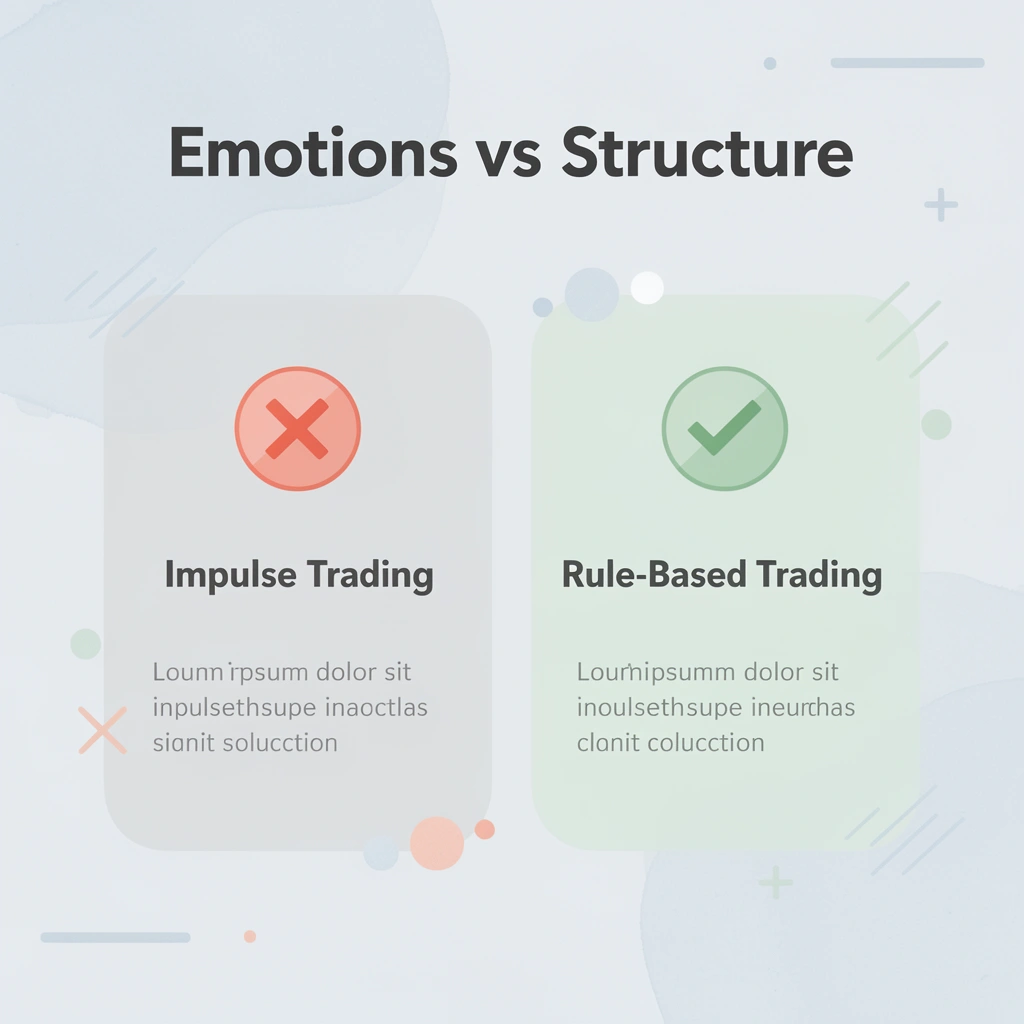
You can read every book on position sizing and still lose all your money when emotions take over. What actually changes trading habits is structure — rules that remove the choice to act on impulse when it costs the most.
"Structure is the difference between a trader who survives and one who doesn't — because rules remove the emotional choice at the worst possible moment."
🎯 Key Point: Reading about risk management is not the same as practicing it. Real discipline comes from having an enforced structure that makes impulsive decisions harder to execute.
💡 Tip: Look for trading programs that build rule-based frameworks directly into their structure — so accountability is built in, not left to willpower alone.
Approach: Reading about risk management
- Outcome: Theoretical knowledge, no behavioral change
Approach: Emotion-driven trading
- Outcome: Impulsive decisions, capital loss
Approach: Structure-based rules
- Outcome: Consistent habits, protected capital
How hard limits replace willpower
Most traders rely on self-discipline to manage risk, telling themselves they will stop at a certain loss level, then moving that line when the moment arrives. Goat Funded Trader replaces that negotiation with fixed boundaries: a 3% maximum daily loss and a 6% overall account drawdown limit. When you hit the daily threshold, activity stops. There is no override, no "just one more trade." That hard stop turns an intention into a reflex, and reflexes keep accounts alive across hundreds of trades. Most funded account challenges require traders to stay within a 5 to 10% maximum drawdown limit, so the habits you build inside those constraints are exactly the habits professional capital allocation demands.
What happens when deadlines disappear
The failure point is usually urgency. Traders who feel pressure to hit a profit target by Friday take setups they would otherwise skip, widen stops to avoid being closed out, and ignore their own rules because the clock feels louder than the plan. Our Goat Funded Trader challenges remove time limits entirely on both challenges and funded accounts, which changes the psychological equation. You stop optimizing for speed and start optimizing for quality. That shift filters out a significant portion of the impulsive, low-probability trades that quietly drain accounts over time.
Goat Funded Trader's blog reports that 80% of traders fail prop firm challenges due to poor risk management, not a lack of technical skill. Our Goat Funded Trader program removes artificial deadlines, giving traders the resource that builds discipline: sufficient time to practice the right behavior repeatedly until it becomes habitual.
When discipline pays, literally
Habit formation accelerates when behavior connects directly to reward. Our scaling program ties consistent risk management to concrete outcomes: access to progressively larger capital, up to $2M, and profit splits reaching 100%. Every rule-compliant week becomes a measurable step toward a bigger account and larger payout. Traders who maintain a minimum 1:2 risk-to-reward ratio have a significantly higher probability of passing funded account challenges, meaning daily discipline translates directly into unlocking more capital and keeping more of what you make.
How does Risk Reward Ratio Trading change your decision-making under pressure?
Trading without your own money at risk removes the fear that changes how you make decisions. When the money you might lose is your own savings, every stop-loss feels personal, and every drawdown feels like failure. That emotional weight causes traders to freeze on valid setups or to overtrade in an effort to recover losses faster. Trading with simulated capital inside a structured framework lets you focus entirely on executing the process correctly, the only thing that produces consistent results.
What makes consistent Risk Reward Ratio Trading worth more than the mechanics alone?
You can learn the basics of risk management in an afternoon. The hard part is maintaining discipline when things are tough, during losing streaks, and without taking shortcuts. This discipline separates traders who improve from those who repeat the same mistakes. Once you understand how much this discipline is worth in real money, the conversation changes.
Get 25-30% off Today - Sign up to Get Access to Up to $800K Today
Discipline without a testing ground stays theoretical. Goat Funded Trader provides the environment where risk management principles become measurable habits. With simulated capital scaling up to $800K, risk-reward ratios translate directly into profit splits and on-demand payouts.
"With simulated capital scaling up to $800K, risk reward ratios translate directly into profit splits and on-demand payouts." — Goat Funded Trader
🔑 Takeaway: The difference between knowing risk management and proving it is a live trading environment. $800K in simulated capital gives you that stage.
💡 Tip: Treat every simulated trade as if real capital is on the line, because your profit split depends on it.

🚨 Limited-Time Offer: Goat Funded Trader is offering 25–30% off today. Choose the evaluation that fits your experience level and let your execution speak for itself.
Discount
- 25–30% off
Max Simulated Capital
- Up to $800K
Payout Style
- On-Demand Payouts
✅ Best Practice: Don't wait — limited-time discounts of 25–30% on funded trader evaluations are rare, and your path to $800K in simulated capital starts with a single sign-up.
Related Reading
- How To Make Money Trading Crypto
- How To Learn Crypto Trading
- Best Day Trading App For Beginners
- How Do You Manage Risk In Futures Trading
- Best Trading Apps For Beginners
- Best Demo Trading Account
- Best Crypto Trading App
- How To Read Crypto Charts For Day Trading
- Best Stock Trading App For Beginners
- Risk Management In Stock Trading
Be Great and get the App