






20 Best Options Trading Simulators to Practice Risk Free in 2026
Discover the 20 best options trading simulator platforms to sharpen your skills and test strategies—completely risk-free in 2026.

You want to test options strategies without risking real money, but the market punishes mistakes, and learning on live accounts costs cash and confidence. The Best Trading Simulator for options pairs, paper trading, realistic market data, options chains, and backtesting so you can run spreads, straddles, and iron condors on a simulated trading platform. This guide walks you through platforms, demo accounts, mock trading, and strategy testing features to help you practice strategies risk-free, build confidence, and prepare to trade profitably in real markets. Ready to find a simulator that fits your level and goals?
Goat Funded Trader’s prop firm bridges practice and funded trading by offering staged evaluations, mock trading with performance tracking, and a clear path to trade with real capital once you prove your plan and consistency.
Summary
- Options simulators are mainstream, with over 50% of new traders using them in 2023, and they compress the learning cycle by allowing traders to practice entries and multi-leg orders without risking real capital.
- Simulated practice can materially preserve capital, with options simulators cited as reducing the risk of losing real money by about 70%, but that benefit depends on enforcing live‑grade risk limits during drills.
- Structured simulation delivers measurable skill gains, with a study showing simulated trading can improve trading skills by roughly 50% within six months when practice is disciplined and measured.
- Early attrition is steep: over 70% of new traders lose money in their first year, and only about 10% are consistently profitable, which highlights that rehearsal must focus on repeatable processes, not lucky streaks.
- Belief in rehearsal is widespread, with 85% of traders reporting that simulators improve skills, yet the article shows that without accountability mechanisms like staged capital or rule gating, that confidence rarely translates into live performance.
- Treat simulator verification like an experiment: run identical multi-leg orders across two or three simulators and a 30-day fill test, tracking fill rate, average slippage, and partial fills so you can detect idealized execution before you scale.
- This is where Goat Funded Trader's prop firm fits in; it addresses the rehearsal-to-live transition by offering staged evaluations, mock trading with performance tracking, and a clear path to trade with real capital once traders prove consistency.
What is an Options Trading Simulator, and How Does It Work?

Options trading simulators let you execute option strategies in a live‑like environment using virtual cash, real or near‑real market data, and the same order types you would use in a brokerage. They model price moves, volatility changes, and time decay so you can test entries, adjustments, and exits without risking real capital.
How does the simulator mirror real markets?
Simulators provide an options chain, implied volatility readings, and calculated Greeks so you can choose strikes and expiries and see theoretical P&L evolve in real time. Most give you a starting balance and margin rules, let you place market and limit orders, and show fills and position reports in a trading blotter that looks and feels like a live terminal. According to Bankrate, "Over 50% of new traders use simulators to practice options trading" (2023), many beginners begin exactly this way because it compresses the learning cycle without the cost of real mistakes.
What breaks the illusion of realism?
This setup works well for mechanics, but it breaks when psychology and market microstructure enter the frame. Order fills in a simulator are often idealized, so slippage and liquidity shocks that crush real trades don’t always appear. After working with traders through simulated funding programs for more than a year, the pattern became clear: people who treated simulations like a game kept making the same timing and sizing mistakes when they moved live, while those who enforced live-grade risk limits learned faster and transferred skills more reliably. It’s exhausting to watch, because the technical practice is useful, but the emotional practice is what most skip.
How much risk do simulators actually remove?
Simulators substantially reduce the risk of blowing real accounts when used correctly, which is why Bankrate's "Options trading simulators can help reduce the risk of losing real money by 70%" (2023) is such an important headline. That number measures the potential for capital preservation when traders iterate and learn without financial pressure, but it does not eliminate the need to practice discipline, execution, and edge validation under constraints that mimic live trading.
What do traders do now, and what hidden cost does that create?
Most traders learn on small, funded accounts or through ad hoc trial-and-error because that approach is familiar and cheap. That works until volatility spikes or position sizes scale, at which point an inconsistent execution model and unclear scaling rules produce avoidable losses and stalled growth. Platforms like Goat Funded Trader offer a different bridge, giving traders scalable demo capital up to $2M, transparent scaling rules, and fast, performance‑based payouts, which let traders iterate on the same rule set they will use when managing real capital while preserving speed and consistency at scale.
How should you use a simulator to get realistic practice?
If you want to transfer, mirror your live plan: use the same position sizing, fee assumptions, and acceptance criteria you intend to follow with real capital. Force in stress tests, such as holding through after‑hours moves or simulating partial fills, and mandate a trade journal that records the decision, the rule followed, and the emotional state. Treat the tool like a rigid rehearsal, not a sandbox. Think of it like practicing with your full racing kit instead of just kicking tires on a quiet road; the closer the rehearsal is to race conditions, the fewer surprises you will face. That methodology helps, but the next part reveals the one overlooked reason practice often fails to translate to consistent live profits.
Why Use an Options Trading Simulator?

A simulator is worth using because it lets you convert ideas into repeatable procedures, and it gives you a measurable way to prove those procedures before real capital is on the line. Done right, simulation accelerates skill development and reduces the chance that early mistakes become career setbacks.
How should you measure meaningful progress, not just P&L?
Start with process metrics, not ego metrics. Track a weekly decision adherence rate, trade expectancy per rule, and rolling max drawdown over fixed-size samples, then score each trading day against those targets. This turns vague confidence into objective evidence you can optimize. Pattern-based experience shows that traders who replace "did I make money today" with "did I follow my rules for 30 trades" make far cleaner adjustments and spot weak edges faster.
What practice routines force real learning?
Use short, intense drills that isolate a single skill: gamma management under rising implied volatility, adjusting legs when skew shifts, or executing entries within specific spread widths. Treat practice like musicians rehearsing a passage until tempo and intonation are automatic, then add complexity. Alternate blind drills, where you react to live quotes with fixed rules, and reflective drills, where you reverse-engineer a losing trade in five minutes and document the exact misstep and the corrective rule.
How does simulation actually raise your odds of survival?
The math matters: the risk is not theoretical; it is real and front-loaded, as shown in the data from Options Trading Insights: "Over 70% of new traders lose money in their first year." That reality makes deliberate rehearsal nonnegotiable. At the same time, controlled practice works, as indicated by the Trading Simulation Study, "Simulated trading can improve trading skills by 50% within six months." Use those odds as motivation, not comfort: structure your simulator time so the improvement is measurable and repeatable.
Why most paper practice fails to transfer, and how to fix it
The familiar approach is to treat simulated accounts like casual practice because there is no real downside, which breeds sloppy habits. As scale, volatility, and time pressure increase, the hidden cost appears: inconsistent sizing, rule creep, and surprise emotional breakdowns. Platforms that enforce rules, track adherence, and let you practice with progressively larger demo capital close that gap by making execution discipline the objective rather than hypothetical profit.
What accountability methods recreate emotional pressure without risking capital?
If you want emotional transfer, add consequences and rewards outside the simulator. Try public accountability sessions, graded performance reviews, or tying simulated payouts to real, time‑locked rewards. Another effective mechanic is a "consistency bonus," where you only unlock incremental demo capital after meeting adherence and drawdown rules for a fixed period. These methods create pressure that trains steadiness, not just technical skill.
After coaching traders through staged programs for several months, the pattern became clear: the frustration traders experience when moving live comes from inconsistent rehearsal, not a lack of skill. When traders practice with quantified rules, graded drills, and external accountability, they stop mistaking lucky runs for proven edges, and they build a transferable routine rather than a fragile tactic. That feeling of readiness, though, rarely lines up neatly with the moment you should actually trade real money.
Related Reading
- Best Trading Simulator
- Is Swing Trading Profitable
- Is Copy Trading Profitable
- Is Crypto Trading Profitable
- Is Options Trading Profitable
- Is Day Trading Profitable
- Are Crypto Trading Bots Profitable
- What Is Backtesting in Trading
- Where Can I Practice Day Trading
- Where Can I Practice Forex Trading Risk-Free?
- How Much Money Do You Need To Start Trading Stocks
- What Is Leverage In Trading
- Is Algorithmic Trading Profitable
- How Much Money Do You Need To Start Trading Options
- What Is The Most Profitable Trading Strateg
- What Is Leverage In Crypto Trading
- How Much Money Do You Need To Start Trading Futures
When Should I Stop Using the Simulator and Start Trading Live?

You should stop treating the simulator as the final destination and move to live trading when you can reproduce your trade process under measurable constraints, accept a small, predefined real‑money loss as the cost of learning, and have objective signals that your edge survives execution and variance testing. Make that transition by running tightly controlled live experiments that isolate execution, liquidity, and psychological responses, not by waiting for perfection.
How do you prove your edge survives real execution?
Run three short, focused experiments rather than one long, vague trial. First, a fill-and-slippage test: place the same orders you used in simulation at a tiny size with your intended broker for 50 fills, record the average slippage, and confirm that transaction costs keep your expectancy positive. Second, cross‑regime sampling: validate the setup across at least two distinct market environments within 60 trading days so you avoid a single‑regime artifact. Third, a durability test using bootstrapped trade samples, checking that your positive expectancy does not collapse when returns are randomly resampled, which exposes fragile, curve‑fitted edges.
What live tests separate execution problems from emotional failures?
Treat execution and emotion as separate engineering problems. To test execution, use limit orders and incremental fills to map how quote depth and spread widen at scale, then compare those live fills to your simulated fills. To test psychology, force a stress block: trade one small live position each morning for 10 consecutive sessions with fixed size and no discretionary changes, then log your urge to deviate and your physiological reactions. If you break rules under that low financial pain, you will likely break them under larger stakes.
Most traders delay moving live because the familiar path feels safer, but that safety has a cost: the longer you stall, the later you learn about real fills, slippage, and muscle‑memory under loss pressure. Platforms like Goat Funded Trader recognize that friction exists and offer a bridge, giving traders scaled demo capital up to $2M and a rules‑based scaling pathway that mirrors live constraints. Solutions like this let traders iterate quickly while still enforcing limits, which keeps learning velocity high without exposing large personal capital. Traders find that operating under those exact constraints shortens the gap between rehearsal and real performance, and that consistency, not perfection, is what scales.
When should you accept the first real losses and treat them as data?
Use a precommitted loss budget that you can psychologically tolerate, for example, a fixed percentage of your transition bankroll or a capped dollar amount for the first 30 live trades. If you break your plan after a loss, pause and run a 24-hour review before trading again. In practice, that routine forces accountability: you either treat the loss as informative, adjust a rule, and continue, or you admit the process is incomplete and return to focused simulation work with a specific remediation plan.
How fast should you scale after successful micro‑live tests?
Scale by rules, not feelings. Convert wins into capacity increases only after meeting objective gates: maintain trade adherence above your threshold for a fixed run length, keep the rolling drawdown below your ceiling, and confirm that slippage stays within the modeled bounds. A conservative ladder looks like 1x for 30 live trades, 2x for the next 60, then reassess before every further step. That ladder treats size as a system parameter you tune rather than a reward for short streaks.
What mental rehearsals reduce panic in the first few months?
Create three rituals: a pre‑trade checklist that you read aloud; a post‑trade five-minute review that logs the rule you followed or violated; and a forced cooling rule after any streak of two rule breaks or a single drawdown beyond your live stop. These rituals convert raw emotion into reproducible signals. Think of it like a pilot’s checklist and debrief after each short flight, small steps that keep you honest when the noise level rises. Remember the risk profile you face; it is harsh: 80% of traders fail within the first year of trading live. That 2023 community discussion shows how quickly early attrition happens when execution and psychology are untested. Long‑term persistence is rarer still, as indicated by the fact that only 10% of traders are consistently profitable. That 2023 estimate underscores how much of this work is about systems and repeatability, not rare, lucky runs.
If you want a sharp litmus test, run a “live split” for 90 days where you trade the same rules in simulation and at a tiny live size, then compare three metrics: rule adherence, realized expectancy after costs, and physiological reaction to loss events. This three‑way comparison isolates what still needs work and makes the decision to scale binary instead of emotional. The analogy is simple and useful: you do not solo a plane because you can taxi perfectly on a simulator, you solo because you can handle an engine cough at altitude and still follow the checklist. That solution works—until you hit the single obstacle nobody talks about, the one emotional reflex that survives every rehearsal.
Related Reading
- What Is Leverage In Futures Trading
- How To Learn Stock Trading For Beginners
- What Is Leverage In Forex Trading
- How Does After-Hours Trading Work
- How Does Pre-Market Trading Work
- Does Robinhood Allow Day Trading
- Best Practices for Backtesting Trading Strategies
- Backtesting Day Trading Strategies
- How to Set Stop Loss and Take Profit in Trading
- Stop Loss Day Trading
- What Is Take Profit in Trading
- Take Profit vs Stop Loss
- What Is Stop Loss in Trading
- Backtesting Trading Strategies
- Free Backtesting Trading Strategies
- Options Trading For Beginners
- Apps to Practice Day Trading
- How to Practice Day Trading Without Money
20 Best Options Trading Simulators to Practice Risk-Free
These twenty simulators cover the full range of practice needs in 2026, from high‑fidelity execution testing to mobile-first convenience and options‑specific automation, so pick one that forces the exact constraints you will face when you scale. Choose by matching the simulator’s execution fidelity, data access, and governance rules to your trading objectives, then layer exercises that test the weaknesses unique to that platform.
1. thinkorswim by Charles Schwab

thinkorswim's paperMoney simulator delivers a comprehensive, professional-level setup that closely mirrors live trading. It supplies real-time data feeds, sophisticated charting capabilities, and support for a wide array of options approaches, enabling users to experiment freely with everything from straightforward positions to elaborate multi-leg setups. This tool excels for individuals seeking an in-depth, brokerage-integrated experience for safely developing and validating ideas.
Why Choose It
thinkorswim stands apart due to its advanced charting features and analytical tools, which enable a precise examination of market dynamics and options behavior under real-world conditions. The paperMoney mode replicates live executions and pricing, making it perfect for practicing complex maneuvers without real capital at stake. Traders refining elaborate strategies particularly benefit, as the platform's depth supports thorough testing and adjustment, bridging the gap between theory and application in a no-risk setting.
2. E*TRADE Paper Trading

E*TRADE's simulator offers a well-rounded mix of accessibility and functionality, featuring an intuitive layout that suits newcomers while providing sufficient sophistication for seasoned participants. It enables smooth practice of options trades in a secure space, with smooth transitions to actual accounts when ready. This option appeals to those valuing ease alongside robust support for varied trading styles.
Why Choose It
Its straightforward navigation lowers the entry barrier for beginners exploring option fundamentals, while still effectively accommodating multi-leg combinations. Integration with the main platform ensures familiarity carries over to live environments, reducing adaptation time later. The setup promotes confident progression from basic learning to advanced testing, all under realistic market simulations that mirror live order handling.
3. Interactive Brokers (IBKR) Paper Trading

Interactive Brokers' paper trading closely duplicates actual market executions, including real-time fills for spreads, limits, and other order varieties. It grants broad access to international markets, suiting those interested in global options opportunities. This simulator is favored for its precision in replicating trading realities and the depth of its tools.
Why Choose It
By mirroring live conditions with high fidelity, it delivers authentic insights into order timing, slippage, and execution nuances that are critical to options success. Global reach extends the practice beyond domestic listings, making it ideal for exploring diversified strategies. It supports rigorous testing of timing and execution tactics, helping users optimize approaches in a faithful, risk-free replica of the market.
4. Webull Paper Trading

Webull provides a mobile-optimized simulator that's fluid across devices, offering complimentary options practice without requiring account funding. It includes clear visuals, performance metrics, and alert customization for monitoring positions closely. This makes it a top pick for traders prioritizing convenience and on-the-go access.
Why Choose It
Full mobile compatibility ensures smooth practice anywhere, avoiding the awkwardness that can occur with desktop-focused tools on phones. No funding prerequisite removes barriers, allowing unlimited experimentation with real-time data and analytics. Its emphasis on readable charts and insights helps track volatility and outcomes, supporting consistent improvement in options handling.
5. TradeStation Simulated Trading

TradeStation's simulator caters to analytical traders with real-time quotes, robust backtesting, and detailed options-pricing modeling. It enables validation of ideas against historical patterns and signals. This platform shines for data-oriented individuals focused on strategy refinement.
Why Choose It
Its powerful backtesting lets users assess how approaches would perform historically, building evidence-based confidence before live deployment. Professional analytics and modeling tools provide a granular understanding of pricing factors unique to options. For those driven by data, it facilitates thorough validation and iteration, turning theoretical concepts into tested, reliable methods in a secure environment.
6. tastytrade Paper Trading

tastytrade (formerly tastyworks) focuses on options-focused trading, allowing users to explore a variety of strategies in an interactive environment without financial exposure. The platform promotes active experimentation with risk management and market scenarios to deepen understanding of how positions behave. It suits those eager to engage deeply with options mechanics through guided, hands-on practice.
Why Choose It
Designed specifically around options, tastytrade fosters an engaging environment where traders can actively test approaches, tweak positions, and observe real-time impacts from volatility or events. This interactive style helps build intuition beyond passive observation, encouraging adjustments to risk levels and strategy variations safely. For dedicated options enthusiasts, it stands out by prioritizing education through experimentation, making it easier to grasp nuanced outcomes and refine tactics before committing actual funds.
7. OptionsXpress Virtual Trading

OptionsXpress delivers a straightforward virtual trading experience ideal for grasping core options concepts. It simplifies the interface to emphasize essentials like contract mechanics, order placement, and strategy outcomes, stripping away excess features that might confuse newcomers. This makes it a practical entry point for building foundational knowledge in a low-pressure setting.
Why Choose It
The clean, uncomplicated design reduces distractions, letting beginners concentrate on learning how options function and how trades unfold across different market conditions. It supports basic to intermediate practice without overwhelming complexity. Keeping things manageable, it helps new traders gain comfort with placing and managing positions risk-free, paving the way for smoother transitions to more advanced platforms later.
8. Power E*TRADE

Power E*TRADE's paper trading goes beyond basic execution by incorporating sophisticated analytics for volatility assessment, probability evaluations, and strategy optimization. It features clear visualizations of potential risk-reward profiles to aid informed planning. This appeals to traders who prioritize data-informed choices and detailed pre-trade analysis.
Why Choose It
Advanced probability and volatility-tracking tools provide deeper insights into trade potential, while visual risk-reward breakdowns clarify potential scenarios upfront. These elements support thoughtful decision-making in simulated conditions. For analytical traders, the platform excels at turning complex data into actionable understanding, helping refine approaches and build discipline in a no-risk framework that mirrors live platform capabilities.
9. NinjaTrader Simulation Mode
NinjaTrader offers robust simulation, especially strong in technical analysis, with capabilities for scenario testing and historical backtesting of options-related ideas. It provides extensive charting and indicator support for spotting patterns and validating signals. This fits traders who favor a methodical, indicator-heavy style in their practice.
Why Choose It
Powerful charting, combined with backtesting, allows users to evaluate how strategies might have performed historically, enabling evidence-based refinements. The analytical depth supports detailed trend analysis and the use of custom indicators. Data-focused traders benefit from its emphasis on precision and historical validation, enabling thorough strategy development and confidence-building in a simulated space before real-market application.
10. Tradier Paper Trading

Tradier emphasizes adaptability in its simulator, allowing users to customize their practice to match personal preferences and integrate external analysis tools. It supports flexible testing of options setups without rigid constraints. This flexibility makes it attractive for traders seeking a personalized, tool-agnostic experience.
Why Choose It
High customizability allows tailoring the environment to individual workflows, while compatibility with third-party tools expands analytical options beyond built-in features. This setup suits diverse trading styles. For those who value control and integration, it delivers a versatile risk-free arena to experiment broadly, adapt quickly, and incorporate preferred resources for more effective strategy honing.
11. Firstrade Paper Trading

Firstrade provides a simple, accessible simulator with real-time quotes to help users become familiar with options mechanics and pricing dynamics. It keeps the experience straightforward, focusing on core trade execution and basic strategy testing without overwhelming extras. This makes it especially practical for those starting out who want a no-frills way to place and monitor simulated trades.
Why Choose It
The beginner-oriented layout minimizes confusion, allowing new traders to focus on essentials such as understanding contract behavior and market responses. Real-time feeds deliver a lifelike feel for how prices shift, supporting gradual comfort-building. It serves as an effective bridge to live trading by emphasizing simplicity and realism, helping users build solid foundational habits in a protected environment before advancing to more advanced tools.
12. StockTrak

StockTrak delivers a structured simulation environment used widely in educational and institutional settings, featuring real-time conditions for practicing options and spreads. It supports diverse assets and detailed performance tracking to facilitate guided learning. This platform excels for users seeking a disciplined, classroom-style approach to mastering options.
Why Choose It
Its adoption by universities and finance programs ensures a reliable, professional-grade experience with realistic pricing and support for multi-leg strategies. The structured format, including analytics and transaction reviews, promotes thoughtful strategy development and error analysis. For those who prefer organized practice over free-form experimentation, it offers a solid framework for testing ideas, tracking progress, and gaining insights in conditions that closely mimic actual markets.
13. MarketWatch Virtual Stock Exchange

MarketWatch's browser-based simulator lets you practice without installation, with stocks and options in a free, user-friendly format. It allows quick setup of virtual portfolios and exploration of basic to intermediate strategies. This web-centric tool suits casual or entry-level traders looking for convenience and simplicity.
Why Choose It
No software downloads mean instant availability from any device, lowering barriers for quick sessions or on-the-go learning. The clean design supports straightforward trade testing and portfolio management under simulated real-time conditions. It provides an approachable entry for beginners to experiment with options basics, fostering familiarity without setup hassles or costs, ideal for initial strategy trials.
14. Option Alpha Paper Trading
Option Alpha specializes in options with built-in automation, backtesting, and AI-assisted tools for strategy refinement. Its simulator uses live data to test automated and manual approaches in a dedicated options environment. This appeals to traders interested in systematic, data-backed methods and in exploring automation.
Why Choose It
The focus on options-specific features like probability analysis, strategy scanning, and bot testing enables efficient idea validation and optimization. Paper trading with real-time conditions helps simulate automated executions safely. For those pursuing algorithmic or high-probability setups, it delivers powerful insights and refinement capabilities, turning practice into a more strategic, evidence-driven process.
15. ThinkTrader Demo Account

ThinkTrader's demo provides real-time data alongside extensive charting and technical tools, supporting analytical practice across options and other instruments. It emphasizes indicator-based analysis and trend evaluation in a simulated setting. This suits traders who rely heavily on technical setups during their risk-free rehearsals.
Why Choose It
Access to live feeds and advanced indicators allows a precise study of patterns, support/resistance, and momentum in options contexts. The analytical toolkit supports in-depth scenario testing and refinement. Technically inclined users benefit from its depth in charting and signals, enabling methodical strategy development and confidence-building through data-rich, no-risk simulations.
16. Warrior Trading Paper Trading Simulator
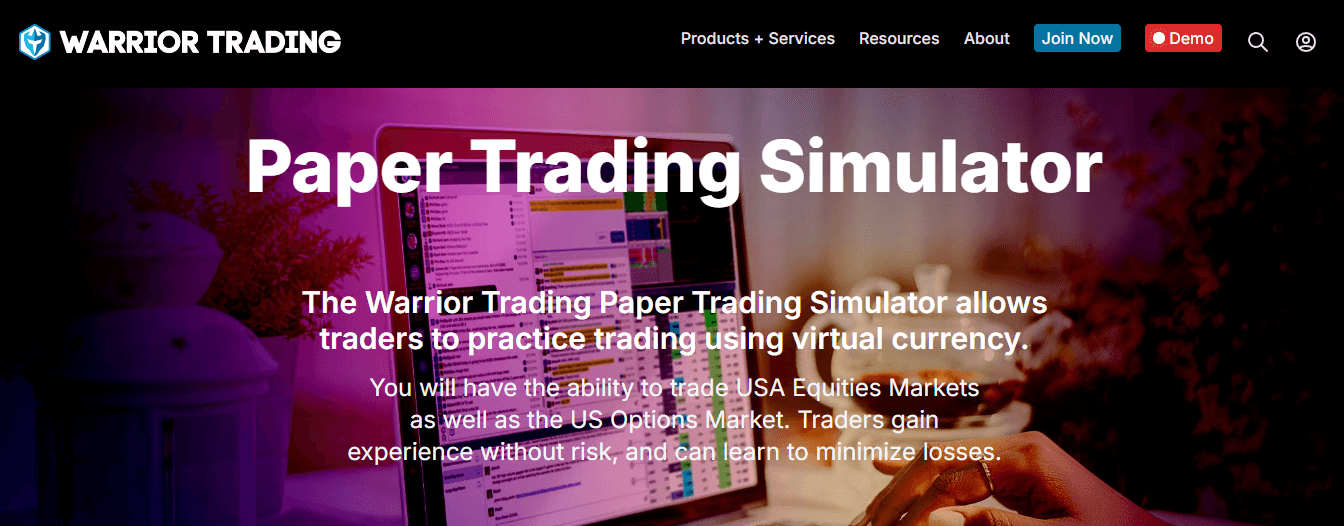
Warrior Trading combines a dedicated paper-trading simulator with comprehensive educational resources, enabling users to practice options trades in real-time market conditions while following structured courses and receiving live mentorship. The tool supports equities and options, helping traders apply learned concepts immediately in a simulated environment. It stands out for those seeking guided development rather than unstructured experimentation.
Why Choose It
Integrated with Warrior Trading's extensive training materials, including courses, live sessions, and community support, the simulator lets users test strategies under realistic conditions while reinforcing lessons on risk management and execution. This educational synergy accelerates skill-building and helps avoid common pitfalls through applied practice. For learners who thrive on structured guidance, it provides a smooth transition from theory to simulated execution, building discipline and confidence before live trading.
17. OptionsPlay Paper Trading

OptionsPlay differentiates itself by generating strategy suggestions tailored to current market conditions, alongside visual tools for comparing trades and simulating outcomes. Users can explore recommended options approaches with clear risk-reward visuals in a no-risk setting. This guided, insight-driven simulator is excellent for those refining decision-making skills.
Why Choose It
Its proactive strategy recommendations and side-by-side visual comparisons simplify evaluating potential trades, making it easier to understand probabilities, breakeven points, and scenarios without guesswork. The platform's focus on informed choices helps develop better judgment. Traders benefit from this supportive structure during practice, as it encourages thoughtful selection and adjustment of positions, fostering smarter habits in a secure, visual-heavy environment that enhances overall strategy comprehension.
18. Fidelity’s Active Trader Pro®
Fidelity’s Active Trader Pro supports options practice through advanced tools for analysis and visualization, leveraging both live and historical data to test strategies. While direct paper trading isn't built in for options, users can simulate via watchlists, scenario analysis, and performance tracking in a professional-grade interface. It balances real-time exploration with retrospective review for comprehensive preparation.
Why Choose It
Access to live feeds alongside historical backtesting allows thorough examination of how options perform across various conditions, supporting refined entries, exits, and adjustments. Analytical features like volatility tracking and probability tools add depth to simulations. For data-oriented traders, this setup excels at evidence-based refinement, enabling practice that mirrors live decision-making while incorporating past market lessons to strengthen future approaches in a robust, no-risk framework.
19. TradeSmart University Simulated Trading

TradeSmart University pairs its simulator with step-by-step educational courses on stocks and options, allowing users to apply concepts in real-time practice. The platform emphasizes disciplined, rule-based trading through guided modules and immediate feedback in a simulated space. This educational-simulator combo suits those preferring a progressive, lesson-driven path.
Why Choose It
Blending structured coursework with hands-on simulation enables the direct application of taught strategies, risk controls, and setups under market-like conditions. This integrated approach minimizes trial-and-error while building foundational to intermediate proficiency. For traders favoring guided progression, it supports steady confidence growth, helping transition smoothly to live markets through repeated, informed practice tied to clear instructional content.
20. Paper Trading on Robinhood (via Third-Party Simulators)
Robinhood lacks native paper trading for options, but various third-party tools replicate its clean, mobile-first interface for simulated practice. These alternatives let users mimic Robinhood-style executions and order flows in a familiar layout while testing options strategies risk-free. This is particularly useful for those committed to Robinhood's ecosystem who want preliminary rehearsal.
Why Choose It
Simulating Robinhood's straightforward design reduces the learning curve when moving to live trades, allowing focus on options mechanics, position management, and platform navigation without surprises. It bridges practice directly to intended live use. Traders planning a Robinhood deployment gain comfort with order types and interface quirks in a safe environment, ensuring smoother execution and better adaptation once real capital is involved.
A quick analogy to keep this practical: consider a simulator, your flight simulator. You do not judge it by how pretty the cockpit looks; you judge it by whether an engine failure in the sim produces the same checklist reaction you would use in a real aircraft. If not, you are rehearsing the wrong thing. That seems decisive, but the next section will reveal the single checklist you should run on every simulator before trusting it with your growth.
What to Look for in an Options Trading Simulator
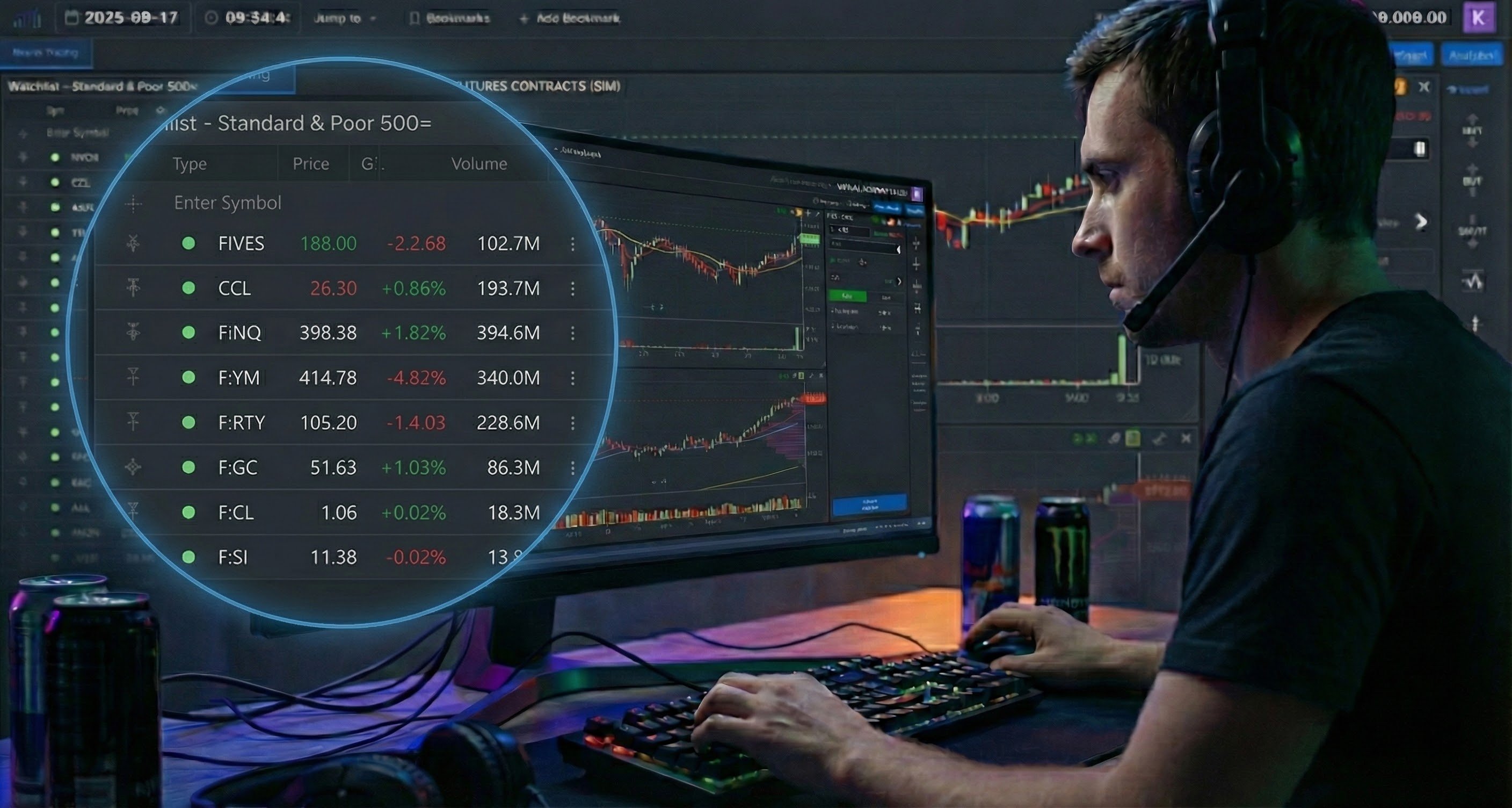
Selecting the right options trading simulator is essential for building skills safely in a realistic environment. Not every platform delivers the same level of authenticity, depth, or support, so focus on features that closely replicate live trading while providing learning opportunities. Prioritize tools that help you understand pricing dynamics, execute strategies effectively, and track progress without financial pressure.
User-Friendly Interface
A clear, intuitive layout forms the foundation of an effective simulator, especially for newcomers navigating complex option mechanics. The best platforms feature straightforward dashboards, simple order entry, and logical menus that let you focus on learning rather than wrestling with the software. This reduces frustration and accelerates mastery—platforms like Webull and E*TRADE excel here with clean designs that make placing trades, viewing positions, and analyzing results feel natural. In contrast, overly complicated setups can discourage practice and hinder progress toward confident, efficient decision-making in real markets.
Real-Time Market Data
Accurate, live pricing feeds are non-negotiable since option values shift rapidly with underlying movements, volatility, and time decay. Simulators with delayed or static data fail to capture genuine market behavior, leading to misleading strategy outcomes. Look for platforms that deliver current quotes, bid-ask spreads, and Level II depth where available—thinkorswim by Charles Schwab and Interactive Brokers stand out for closely mirroring live conditions. This authenticity helps you grasp how external factors influence premiums and executions, preparing you better for actual trading scenarios.
Variety of Options and Strategies
A strong simulator supports more than basic single-leg trades; it should enable testing of spreads, straddles, iron condors, and other multi-leg combinations to explore diverse approaches. Limited options restrict growth for those aiming to advance beyond fundamentals. Interactive Brokers and TradeStation shine by offering robust tools for complex setups under realistic conditions. This breadth allows thorough experimentation, helping you discover which strategies align with your risk profile and market outlook while understanding their mechanics deeply.
Comprehensive Educational Resources
Built-in learning materials—tutorials, strategy guides, webinars, or performance reviews—transform a simulator from a mere practice tool into a powerful educational asset. Beginners especially benefit from explanations tied directly to the platform's interface. Warrior Trading integrates strong mentorship and courses, while E*TRADE and Webull provide accessible videos and explainers. These resources clarify concepts like Greeks, volatility impact, and position management, turning simulated trades into meaningful lessons that build lasting knowledge.
Customizable Trading Settings
Flexibility in adjusting the virtual portfolio size, order types, risk parameters, and display preferences enables the simulator to adapt to individual needs and styles. Rigid setups limit relevance for varied trading approaches. TradeStation supports custom scripting and automation for advanced testing, and many others allow tweaks to match personal workflows. This personalization enhances realism and effectiveness, enabling targeted practice that reflects your intended live trading environment.
Beyond these core simulator features, consider prop firm funding as a complementary step for serious options traders. Firms like Goat Funded Trader offer evaluation challenges where skilled performers access funded accounts to trade with the firm's capital, sharing profits while limiting personal risk. This bridges simulated practice to real-money trading with professional backing, ideal after mastering a simulator.
Ready to boost your options skills and pursue funded opportunities? Join Goat Funded and choose your path to funding through customizable challenges or start trading immediately with our instant funding options. Sign up to Get Access to up to $800K Today, and 25-30% off.
Related Reading
- Best Automated Trading Platform
- Best Paper Trading Platform
- Best Stock Trading Simulator
- Best Copy Trading Platform
- Best App For Day Trading
- Best Day Trading Platform For Beginners
- Best Software for Backtesting Trading Strategies
- Best Chart Trading Platform
- Best App for Backtesting Trading Strategies
- Best Stock Trading Platform For Beginners
- How To Practice Day Trading
- Best Automated Trading Platform
- Best Trading Simulator Free
- Best Forex Trading Platform
- Best Crypto Trading Simulator
- Best Futures Trading Platform
- Best Trading Simulator App
- Best Options Trading Platform
- Best Futures Trading Simulator
Get 25-30% off Today - Sign up to Get Access to Up to $800K Today
We use the best options trading simulators to sharpen our process, but that comfort can leave our edge untested when funding decisions arrive. Platforms like Goat Funded Trader offer a practical bridge with simulated accounts up to $800K, trader-friendly rules that remove minimum profit targets and time pressure, triple paydays with up to a 100% profit split, and fast payout mechanics that let you keep focusing on consistency rather than red tape. If you want to move from rehearsal to a real path toward funding, consider a flexible evaluation or instant funding to start trading under the constraints that matter.
Be Great and get the App