






What Is Leverage In Crypto Trading? A Beginner's Guide
This article explains what leverage in crypto trading means, how margin and maintenance requirements work, and how to use risk management.

You know the moment: you open the Best Trading Simulator, see a 10x option, and wonder if that size will push your gains or wipe your account. Leverage can turn small moves into big profits, but without clear rules on margin, position sizing, stop loss, and liquidation, you can face sudden margin calls. This article explains what leverage in crypto trading means, how margin and maintenance requirements work, and how to use risk management, futures, and perpetual positions, and proper collateral to confidently use leverage in crypto trading to amplify profits while managing risks like a pro.
To help you practice these skills without risking capital, Goat Funded Trader’s prop firm offers structured funding and realistic rules that let you trade with professional size while sharpening risk control and execution.
Summary
- Leverage directly scales exposure and margin sensitivity, for example, allocating $2,000 at 4x creates an $8,000 notional position (0.2 BTC at $40,000), showing how a chosen ratio converts small capital into large market risk.
- Extreme multipliers make tiny moves catastrophic, as platforms can offer up to 100x leverage, and using 50x leverage can mean a 2 percent price change will liquidate a position.
- Recurring drains like funding, borrow fees, and slippage quietly erode runway, which is why one practical rule in the article recommends cutting nominal leverage if expected funding and fees over the next 48 hours exceed 0.5 percent of margin.
- Execution quality becomes the dominant constraint as notional grows, a pattern observed across a 250,000+ community and in three-week coaching cycles where traders who improved order tactics preserved gains while others saw profits leak away.
- Risk controls must be numeric and procedural, for example, sizing risk per trade to R equal to 2 to 5 percent of account equity, computing price-to-liquidation, and factoring funding and fees over a 24 to 72 hour horizon before execution.
- Make sizing dynamic and stress-tested, using volatility bands such as a 14-period ATR, running three types of tests (historical replays, Monte Carlo, and forward shadow trading), and simulating a 3 percent adverse move across correlated holdings to catch cascade risks.
- This is where Goat Funded Trader's prop firm fits in, it addresses this by providing realistic funded accounts and funding schedules so traders can rehearse leverage, execution, and risk procedures at scale without risking personal capital.
What Is Leverage In Crypto Trading, and How Do Leverage Ratios Work?

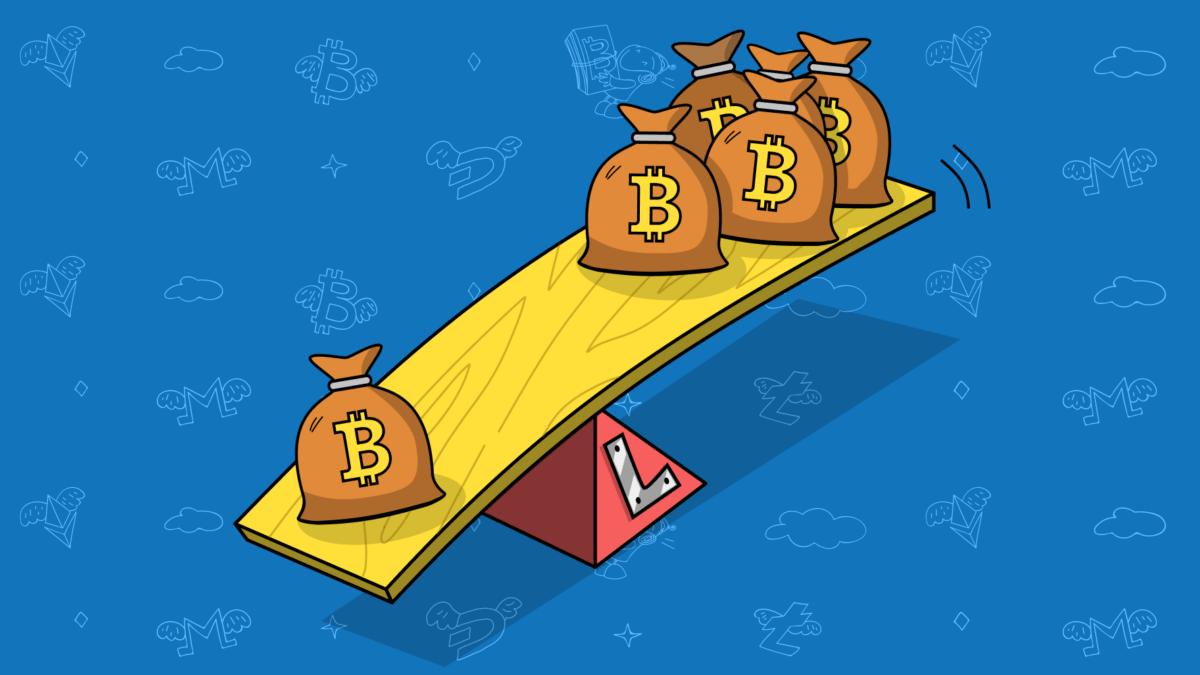
Leverage multiplies the position you control relative to the capital you put up, and the ratio you pick directly sets how quickly gains or losses eat into your equity and trigger liquidations. In practice, choosing a ratio is a deliberate risk-allocation decision, not a shortcut to outsized returns.
How does the ratio change how quickly a trade goes wrong?
Higher leverage reduces the price move required to wipe out your margin, so your margin cushion tightens as the ratio rises. That cushion is the practical fulcrum: with low ratios, you can survive big, noisy swings; with high ratios, you survive only tiny blips. Exchanges enforce this through initial and maintenance margin levels and automatic liquidations when equity falls below the maintenance threshold, which is why some traders feel a sudden, crushing inevitability when a fast move hits their position.
What costs quietly erode leveraged returns?
Beyond the directional PnL, funding, borrowing fees, and slippage are steady drains. Short-term funding can nudge a trade into the red even when price action is flat; slippage amplifies losses during forced liquidations because market fills occur at worse prices. That hidden leak is what turns an otherwise promising strategy into repeated account resets if you ignore execution quality and fee structure.
Why do rules matter more than hunches with leverage?
After coaching traders in a 250,000+ community across multiple scaling cycles, the pattern became clear: traders who treated leverage as a rule-driven parameter, not a gamble, progressed steadily; those who chased bigger multipliers incurred quick wipeouts and emotional whiplash. It’s exhausting when a single margin call removes weeks of disciplined work, and that fatigue drives poor decisions that compound the problem.
What tradeoffs should drive the ratio you pick?
If your goal is consistency, prioritize margin, runway, and position sizing over headline returns. Lower ratios buy breathing room and let you apply systematic exits, while higher ratios demand surgical stop placement and near-perfect timing. Use an isolated margin when you want damage control per trade, and a cross margin when you accept portfolio-level collateral sharing and its domino risk. Treat leverage as a lever you can tighten or loosen as market volatility and liquidity change.
Most traders accept the familiar approach of increasing leverage to scale returns because it seems efficient, but the hidden cost is faster, less forgiving failure modes that compound over time. Solutions like simulated funded accounts provide the bridge many traders need by allowing them to apply rules at scale, test payout cadence, and practice risk mechanics with meaningful capital and fast, on-demand payouts, without exposing real capital to liquidation cascades.
How do exchanges express leverage limits in practice?
Exchanges cap multipliers differently by product and token, and those caps shape how aggressively you can be responsible. As noted by Binance Academy, "Leverage ratios can go as high as 100x. Platforms sometimes permit extreme leverage, which can make small price moves catastrophic for undercapitalized accounts. Likewise, Binance Academy states, "Using 10x leverage means you can trade with 10 times the amount of your initial investment." That phrasing highlights how leverage directly scales your exposure relative to your deposit and why sizing matters more than bravado.
A simple analogy that sticks
Think of leverage like driving a high-performance car on a narrow mountain road. Speed accelerates progress and amplifies risk. The vehicle does not change; your margin for error does. Good drivers adjust speed based on visibility, grip, and traffic, and disciplined traders adjust leverage based on volatility, liquidity, and their stop discipline. That unresolved tension between using leverage to grow fast and preserving the ability to trade another day is where most traders stall. That trade-off looks solved on paper, until the next section forces you to face the exact math behind your exposure.
How to Calculate Your Leverage Exposure in Crypto Trading

Calculating leverage exposure starts with a clear inventory: convert your intended margin into the trade notional, then translate that notional into contract size and the price movement that would wipe your equity. Do this with the exchange’s maintenance margin and fee rules in hand, so your theoretical exposure matches what the platform will enforce in practice.
How do I turn margin into contract size and notional?
- Step 1: Convert currencies so everything lines up, usually into the quote currency.
- Step 2: Compute position notional, position_notional = margin_allocated × chosen_leverage.
- Step 3: get contract size, position_size = position_notional / entry_price for linear contracts.
Example: allocate $2,000 and choose 4x, position_notional = $8,000; with BTC at $40,000, position_size = 0.2 BTC. From that, you can calculate dollar PnL per percent move: PnL_per_pct = position_notional × 0.01. That tells you exactly how a given percent swing hits your equity.
How do I estimate the liquidation price accurately?
Find the exchange’s maintenance margin requirement, expressed either as a percent of notional or a fixed amount, then solve for the price that reduces your equity to that maintenance threshold. A clean algebraic form for a long position is:
price_liq = entry_price × (1 - (margin_allocated - maintenance_margin_amount) / position_notional).
Plug in the exact maintenance_margin_amount the exchange publishes rather than guessing a percent, because slight differences change the liquidation price materially. Work the math both ways: compute the percent move to liquidation, then convert that back to an absolute price to visualize the risk.
What about funding, fees, and slippage? How do they change exposure?
Treat fees and expected funding as a slowly leaking component of your margin. Effective_margin = margin_allocated - expected_fees - expected_funding; then recompute leverage as effective_leverage = position_notional / effective_margin. That adjustment tightens your runway and widens the percent move to liquidation. Also model worst-case slippage into the liquidation scenario, because forced fills happen at worse prices, and that extra gap is what actually kills accounts in fast moves.
Why do margin mode and contract type matter for the math?
Isolated versus cross margin changes what part of your account absorbs loss, and inverse versus linear contracts change units and PnL algebra. For an isolated margin, you solve liquidation with only that trade’s margin; for a cross margin, you must account for portfolio equity and other open positions. For inverse contracts, convert contract quantity to quote-currency terms before using the formulas above so your notional math stays consistent.
When traders stumble on tests or live exams, what pattern shows up?
When coaching exam takers and young traders, a clear pattern appears: ambiguous wording on leverage rules causes them to miss simple levers like adding margin to lower effective leverage, which leads to frantic, risky edits mid-trade. That confusion is exhausting, and it costs time and composure more than it costs money at first. The practical fix is a short pre-trade checklist: confirm maintenance margin, compute price-to-liquidation, factor in funding/fees for the next 24 to 72 hours, and verify the exchange’s contract type. Most traders set leverage on the exchange and treat the platform display as gospel, which works on a small scale. The hidden cost is that this approach hides execution friction and realistic funding cycles as you scale, causing strategies that looked robust in theory to fail under repeated, charged-up conditions.
Platforms like Goat Funded Trader provide significant simulated capital, realistic funding schedules, fast payout-on-demand, and in-house tech for repeated, rule-based practice so traders can test leverage choices without risking real capital. At the same time, they build the operational habits that prevent avoidable liquidations.
A simple, practical rule to size a position by risk
Decide the percentage of your account you will lose if your stop hits, call it R (commonly 2 to 5 percent), compute the dollar risk = account_balance × R, then set position_notional so that (price_move_to_stop × position_notional) ≈ dollar_risk, solving for position_notional = dollar_risk / price_move_to_stop. That gives you position_notional first, then margin_required = position_notional / chosen_leverage. This keeps risk per trade explicit, and ties leverage to stop placement rather than slider bravado.
Keep two platform realities in mind as you run the numbers. Up to 100x leverage is available on some crypto trading platforms. Arincen (2022) notes that availability means traders must assume exchanges allow them to take enormous, outsized exposure. And using 50x leverage, a 2% price change can liquidate your position. Arincen (2022) shows why tiny moves matter when leverage is extreme, which makes careful liquidation math nonoptional.
Quick checklist before you hit execute
- Convert all amounts to the same quote currency.
- Compute position_notional and position_size from your chosen leverage and entry.
- Pull the exchange’s maintenance margin amount and funding schedule.
- Solve for the liquidation price and the percent move to liquidation.
- Adjust for expected fees and worst-case slippage, then confirm the trade still fits your dollar-risk limit.
That simple pre-trade math keeps you trading another day, but the next question is more unsettling.
The frustrating part? This isn't even the most complex piece to figure out.
Related Reading
- Best Trading Simulator
- Is Swing Trading Profitable
- Is Copy Trading Profitable
- Is Crypto Trading Profitable
- Is Options Trading Profitable
- Is Day Trading Profitable
- Are Crypto Trading Bots Profitable
- What Is Backtesting in Trading
- Where Can I Practice Day Trading
- Where Can I Practice Forex Trading Risk-Free?
- How Much Money Do You Need To Start Trading Stocks
- What Is Leverage In Trading
- Is Algorithmic Trading Profitable
- How Much Money Do You Need To Start Trading Options
- What Is The Most Profitable Trading Strateg
- How Much Money Do You Need To Start Trading Futures
Benefits and Limitations of Using Leverage in Crypto Trading

Leverage can help you scale a working edge faster by increasing the notional per trade, but it also converts small operational mistakes and emotional slips into fast, painful losses. Use it as a tactical amplifier for proven rules, not to test unproven ideas.
How can we leverage to speed up real-world testing and growth?
When you need to validate execution, slippage, and funding behavior at real size, small demo bets do not cut it. Leverage gives you that notional density without tying up all your cash, and platforms that simulate larger capital let you rehearse the same trade mechanics you will face live. That matters because IG AU, "Leverage allows traders to open positions worth up to 20 times their initial investment.", which is why practicing with realistic position sizes changes how you design stops, choose order types, and size runs in a scaling program.
Why does execution and infrastructure become the fundamental constraint?
This is a pattern I see repeatedly: once the notional grows, execution quality becomes the dominant driver of whether a strategy survives. Poor fills, brittle order slicing, and shallow book liquidity cause slippage that erodes expected edge. When we rebuilt execution rules for traders over a three-week coaching cycle, the ones who adjusted order tactics and monitored liquidity windows preserved gains; the rest watched profits leak away because their infrastructure did not scale with exposure.
What does leverage do to your psychology and decision-making?
Increasing leverage narrows your margin for error and raises the emotional stakes on each tick, which changes behavior. After watching traders progress through scaling steps inside a 250,000+ community, a clear pattern emerged: heightened stress prompts micromanagement, earlier stop hunting, and revenge trades, all of which compound losses faster than the math alone would suggest. That human cost is discrete and predictable, and it demands process fixes before you upsize exposure.
Where do the hidden, recurring costs hide?
Funding, borrowing fees, and execution friction are steady drains that can turn a winning edge into a losing one over time, especially when positions are held across funding windows. Keep in mind IG AU, "Using leverage can magnify both gains and losses by 10 times.", which is why these recurring costs matter even when price action looks favorable, and why tax and regulatory filing complexity should be part of your plan as you scale.
Most traders ratchet leverage up because it looks like the fastest route to bigger returns. The hidden cost is that operational complexity, funding mechanics, and execution demands do not scale linearly; they multiply. Solutions like simulated funded programs provide a middle path, letting traders practice higher notional exposure with significant demo capital, realistic funding behavior, and fast payout-on-demand so the operational habits get built before real capital is at risk.
A practical way to think about the tradeoff
If your edge is purely alpha, increasing leverage can compress the time to meaningful account growth. If your edge depends on precise execution, low fees, or long funding horizons, leverage amplifies those weak points. Treat leverage as a lever you tune only after confirming execution pathways, funding profiles, and emotional responses at each scale step. That looks decisive now, but the most costly mistakes are the ones you make by habit rather than by ignorance. That solution works, until you hit the one invisible failure that turns disciplined rules into catastrophe.
Related Reading
- What Is Leverage In Futures Trading
- How To Learn Stock Trading For Beginners
- What Is Leverage In Forex Trading
- How Does After-Hours Trading Work
- How Does Pre-Market Trading Work
- Does Robinhood Allow Day Trading
- Best Practices for Backtesting Trading Strategies
- Backtesting Day Trading Strategies
- How to Set Stop Loss and Take Profit in Trading
- Stop Loss Day Trading
- What Is Take Profit in Trading
- Take Profit vs Stop Loss
- What Is Stop Loss in Trading
- Backtesting Trading Strategies
- Free Backtesting Trading Strategies
- Options Trading For Beginners
- Apps to Practice Day Trading
- How to Practice Day Trading Without Money
How to Manage Risk in Leveraged Crypto Trading
You manage risk in leveraged crypto by building layers that work together: automated guardrails, volatility‑sensitive sizing, hedges for tail events, and routine stress tests that prove those rules at scale. Treat each tool as a gate in a chain; the chain only holds when every gate is tested under pressure.
How should leverage move when volatility spikes?
Make leverage dynamic, not fixed. Use an ATR or realized‑volatility band to scale your multiplier down as volatility rises, and cap maximum leverage inside those bands so a sudden vol jump cannot instantly wipe you out. Remember, according to Changelly Blog, "Leverage trading can amplify losses by up to 100 times." That amplification is real, and your sizing rule must reflect it. Practically, that means coding automatic leverage reductions or hard blocks on the platform when volatility exceeds a predefined threshold.
When is hedging the more brilliant move than cutting risk?
For tail risk or event exposure, a tactical hedge often beats jamming a stop and hoping for the best. Buy protective calls or puts, or construct short futures positions sized to cover worst-case gaps, and treat those hedges like paid insurance with clear entry, exit, and cost limits. Use cost-benefit rules, for example, only hedge when the expected loss without a hedge exceeds the hedge premium by a defined multiple, so you avoid over-insuring and killing your edge.
What operational tools stop fast, preventable losses?
Automate your enforcement. Use OCO and post-only orders to control fills; predefine margin top-up ladders so margin add actions occur only on measured rules; and implement circuit breakers that close or reduce positions after X percent intra-session loss. Log every automated action and feed it back into your trade journal so you can tune thresholds with evidence rather than emotion.
Most traders treat testing as a checkbox. What really scales testing?
This is where the familiar approach breaks down. Many traders rehearse on small notional sizes and then scale up, only to find that execution, funding, and slippage behave differently. Solutions like Goat Funded Trader let traders practice with realistic capital levels, using in-house tech that mirrors funding schedules and offers fast, on-demand payouts, so rules are validated under the same constraints they will face live. The familiar route of small-sim, then leap, works early, but platforms such as these let traders compress learning cycles while still enforcing drawdown discipline.
How do you turn stress testing into a practical routine?
Run three kinds of tests on every new rule set: historical replays that include flash crashes, stochastic Monte Carlo scenarios that stretch correlations and funding, and forward shadow trading across several funding windows to capture recurring cost drains. Treat worst-case slippage as a variable, not a constant, and bake it into liquidation simulations so your stop spacing and hedge sizes survive real fills.
How do you prevent the human mistakes that cause liquidations?
This pattern shows up repeatedly: when stress rises, traders tighten stops, increase leverage, and chase losses. To break that loop, implement a pre-commitment protocol: a hard daily loss limit that triggers a cooling-off period, a mandatory review after any forced liquidation, and a scale-up rule that allows higher leverage only after N consecutive, rule-compliant weeks. Think of these controls as friction you add deliberately; they protect cognitive bandwidth the same way a seatbelt protects focus. That solution feels decisive, but what happens next will force a practical choice.
How to Trade Crypto With Leverage

You trade crypto with leverage by matching the multiplier to an execution plan, funding horizon, and a strict risk budget, not by chasing headline returns. The practical moves are simple: size positions to the stop you can live with, choose order types that protect fills, and rehearse those trades under realistic funding and liquidity conditions until the mechanics, not luck, drive outcomes.
How should I time leverage around funding windows and news?
Funded margin drains predictably over funding intervals, so treat funding windows like traffic lights for position size. Reduce effective leverage before principal funding payments, significant scheduled announcements, or known liquidity windows. A short, repeatable rule I use is this: if the expected funding and fees over the next 48 hours exceed 0.5 percent of margin, cut nominal leverage by half for that trade, then re-evaluate after the event. That keeps your margin runway steady and prevents small funding drains from turning into catastrophic liquidations.
Which order tactics keep execution risk low?
Use post-only limit slices for size in shallow books, add time-weighted slices near known liquidity windows, and always test market-taking at the scale you intend to trade. When scaling a position, simulate fills first with a shadow order run to measure slippage, then adjust stop spacing to account for that slippage. Treat a worst-case slippage assumption as part of your stop placement, not as an afterthought, so a forced fill does not become the thing that ends a streak of disciplined gains.
What do we do when platforms restrict access or leverage?
Platform constraints are a real operational variable. If an exchange caps leverage, move to a different contract type or a compliant venue with comparable liquidity, and only after you have validated funding schedules and KYC timelines. That matters because regulatory or access friction can force sudden position reductions that look like market losses but are really execution failures, and those events disproportionately punish traders using higher multipliers.
Most traders set the leverage slider by feel, and that familiar approach scales poorly as notional grows. The hidden cost is operational: higher notional uncovers slippage, funding decay, and margin top-up timing that were invisible at small sizes. Platforms like Goat Funded Trader address this gap by letting traders rehearse full-scale trades with significant simulated capital, realistic funding behavior, and fast payout-on-demand, so the trade mechanics get proven before real capital is at risk; many traders in the 250,000+ community reported faster, rule-compliant scaling after practicing at realistic sizes.
How should leverage change when volatility suddenly expands?
Make leverage dynamic, tied to a volatility band and a simple trailing rule. For example, scale your multiplier down when realized volatility spikes above a 14-period ATR threshold, and add a hard cap so leverage cannot exceed your volatility-adjusted maximum. That prevents an impulsive squeeze from converting a routine stop into forced liquidation. Think of it like tightening your grip when the road gets icy, not slamming the brakes after you have already slid.
What role do hedges and temporary insurance play?
Hedges are tactical, not permanent. Use options or short futures as short-duration insurance only when the hedge cost is lower than the expected cost of a gap to your liquidation level. Price the hedge into your expected returns before entering a leveraged trade; if the hedge premium consumes the edge, either reduce leverage or skip the trade. This keeps hedging from becoming a hidden tax that slowly erodes your edge. A concrete failure mode I repeatedly monitor is laddered margin calls caused by staggered positions across correlated contracts. The fix is procedural and simple: align expiries, consolidate margin where possible, and run a pre-trade cross-check that simulates a 3 percent adverse move across correlated holdings. If the simulation shows cascading liquidations, reduce leverage or stagger exits with protective hedges.
A final, practical checklist before you upsize leverage
- Simulate fills at the intended notional, including worst-case slippage.
- Compute funding and fee drain over your planned holding period, then reduce leverage if the drain tightens the margin below your stop tolerance.
- Verify custody and KYC timelines so withdrawals and top-ups will actually execute when needed.
- Require N rule-compliant trading days before moving to the next scaling step. These steps make use of a controlled amplifier, not a random multiplier.
A helpful image to hold: increasing leverage without testing execution is like turning up a high-powered speaker before checking the wiring; you do more damage faster when a fault appears. That simple fix helps, but it is not the end of the story.
Get 25-30% off Today - Sign up to Get Access to Up to $800 Today.
If you want to leverage crypto like a pro, consider Goat Funded Trader. We let you rehearse position sizing, margin runway, and liquidation scenarios at real notional with simulated accounts up to $800K, no time limits, and the choice of customizable challenges or instant funding, plus on-demand payouts backed by a two-day payment guarantee. Practice funding-aware entries and execution under real slippage and funding fees, keep more of your upside with up to 100 percent profit split, and use a 25 to 30% sign-up discount to accelerate measured scaling.
Related Reading
- Best Automated Trading Platform
- Best Paper Trading Platform
- Best Stock Trading Simulator
- Best Copy Trading Platform
- Best App For Day Trading
- Best Day Trading Platform For Beginners
- Best Software for Backtesting Trading Strategies
- Best Chart Trading Platform
- Best App for Backtesting Trading Strategies
- Best Stock Trading Platform For Beginners
- How To Practice Day Trading
- Best Automated Trading Platform
- Best Trading Simulator Free
- Best Forex Trading Platform
- Best Crypto Trading Simulator
- Best Futures Trading Platform
- Best Trading Simulator App
- Best Options Trading Simulator
- Best Options Trading Platform
- Best Futures Trading Simulator
Be Great and get the App