






6 Best Paper Trading Platforms For Beginners
Best Paper Trading Platform for beginners: Compare 6 simulators with real market data and risk controls. Get insights from Goat Funded Trader.

Realistic trading simulation allows users to test new strategies without risking real money. Selecting the Best Trading Simulator is crucial since virtual platforms differ in execution accuracy, charting tools, market replay, backtesting, portfolio tracking, and risk controls. Evaluating these features helps traders build confidence by mimicking live market conditions while gaining valuable insights.
A robust simulated account supports testing, strategy refinement, and effective trade journal maintenance. Such practice is essential for transitioning to live markets with a well-honed approach. Goat Funded Trader’s prop firm provides a practical solution by combining realistic simulations with clear evaluation criteria to support confident progression into funded trading.
Summary
- Paper trading is the standard first step for skill development, with over 80% of traders using simulated accounts to test strategies before risking real money.
- Focused practice is common: traders typically spend about 100 hours paper trading, and 60% use demos for at least three months, indicating that time-based incubation is a useful readiness heuristic.
- Short, targeted fidelity checks work: a 20-trade scripted test often reveals mismatched fills within five to ten trades, quickly exposing execution and latency gaps.
- Confidence rises quickly but can be deceptive: 90% of users report increased confidence after paper trading, yet that confidence can outpace readiness if commissions, slippage, and behavioral controls are not modeled.
- Small demo balances mask scaling problems. While 75% of beginners prefer paper platforms before investing, capped virtual capital prevents testing of fill degradation and payout logistics that matter at scale.
- Measure transfer with concrete thresholds: aim for 50 to 150 executed setups, and require an executed-to-planned ratio above 70 percent for 30 trades before introducing live capital.
- This is where Goat Funded Trader's prop firm fits in: it addresses the fidelity and scaling gap by offering multi-million-dollar simulated capital, clear evaluation rules, and payout mechanics, enabling traders to validate execution, scaling, and payout workflows at realistic sizes.
What is a Paper Trading Platform, and How Does It Work?

Paper trading platforms simulate real market conditions using virtual money, allowing you to practice execution, risk controls, and strategy refinement without risking capital. They recreate order flow, price feeds, and position accounting so you learn how orders behave and how your system responds before you scale into live trading. If you’re looking to transition into real trading, partnering with a reliable prop firm can provide the support you need.
How do these platforms actually reproduce market behavior?
The same mechanics appear across the better simulators: a virtual balance, various order types (market, limit, stop), time-and-sales or tick data, and position accounting that mirrors real broker statements. Good platforms pull live or near-live quotes, model bid-ask spreads, and allow you to test partial fills and slippage. This ensures your trading outcomes reflect real performance rather than fantasy gains. Moreover, ensure your trading outcomes reflect real performance, and that testing engines and replay modes enable you to stress-test strategies across decades of data, while performance reports provide metrics for your activity that you can iterate on.
Why do traders rely on paper trading at all?
Adoption is widespread: over 80% of traders use paper trading to test strategies before risking real money. This shows that practicing with simulations is the normal first step to developing skills. For most beginners, the goal is simple: learn the platform, understand order types, and create a repeatable process without the fear of losing real money. In contrast, experienced traders have a different goal. They look for validation and iteration, trying out small changes in sizing, timing, or execution tactics before using real money.
What features separate realistic simulators from toys?
If a platform provides delayed quotes and ignores transaction costs, it creates optimism rather than discipline. Important features to look for include: true tick or streaming data, realistic fee and slippage modeling, flexible order types, position-level risk controls, exportable trade logs, and detailed PnL attribution. Simulators that support large demo capital enable testing of scaling rules and edge cases that smaller accounts cannot demonstrate. Also, those that produce automated performance analytics encourage users to focus on measuring consistency instead of chasing flashy wins.
How do simulated accounts affect trading performance?
Most teams handle demo accounts with small balances because they are familiar and easy to set up. However, this approach hides a cost. As traders try to grow, simulated accounts that limit size create blind spots in execution, risk management, and cash flow. Platforms like Goat Funded Trader provide access to multi‑million simulated capital. They offer a clear scaling program and payout‑on‑demand mechanics so traders can check not only whether a strategy wins but also whether it scales and pays out reliably as it grows, without risking their own money.
Where do paper trading results break down when you go live?
The failure point usually arises from a psychological mismatch and a lack of market frictions. In real life, traders often act differently when real money is involved. Simulated winners can become live losers because fear and greed influence their decisions. Additionally, many simulators omit real commissions, taxes, and liquidity limits. This difference underscores why discipline matters more than just putting in hours; simulation should be treated as a controlled experiment with clear hypotheses, not just a video game.
How long should you paper-trade before moving to live trading?
Traders usually spend 100 hours on paper trading before they start live trading, according to Blueberry Markets. This shows that focused practice often occurs before they use real money, but this number is a guideline, not a set rule for readiness. What really counts is consistent, repeatable performance when facing modeled challenges. This includes having a clear advantage based on a meaningful sample, following risk rules, and showing emotional control when dealing with simulated losses that go against you. After organizing practice into short, timed sessions with required journaling and simulated fees over eight weeks, it became clear that traders who aligned simulated penalties with expected live costs adjusted more easily to real accounts.
What mistakes should you avoid while paper trading?
Treating simulations like arcade games is the fastest way to develop brittle habits. Common mistakes include ignoring transaction costs, failing to document trade rationale, changing rules during a session without noting the reason, and assuming a strategy that worked with perfect fills will perform well in low-liquidity conditions. Replace wishful thinking with realistic constraints: size positions as if real money were on the line, account for slippage in your results, and ensure you have a series of consistent, documented wins before moving on. Additionally, consider how our prop firm aligns with your trading strategies for better outcomes.
Does this method actually serve beginners?
That approach sets the stage for the next question about whether this method actually helps beginners. The answer is more complicated than one might think.
Related Reading
- Best Trading Simulator
- Is Swing Trading Profitable
- Is Copy Trading Profitable
- Is Crypto Trading Profitable
- Is Options Trading Profitable
- Is Day Trading Profitable
- Are Crypto Trading Bots Profitable
- What Is Backtesting in Trading
- Where Can I Practice Day Trading
- Where Can I Practice Forex Trading Risk-Free?
- How Much Money Do You Need To Start Trading Stocks
- What Is Leverage In Trading
- Is Algorithmic Trading Profitable
- How Much Money Do You Need To Start Trading Options
- What Is The Most Profitable Trading Strateg
- What Is Leverage In Crypto Trading
- How Much Money Do You Need To Start Trading Futures
Is Paper Trading Good for Beginners?

Yes. Paper trading is the practice of investing with virtual money. This lets people try buying and selling assets without spending real money. For those new to the markets, this method helps them learn about things like price changes and how orders work. It uses real or past data to create realistic situations, helping newcomers understand concepts before they start using real money.
If you want to take your trading to the next level, our prop firm offers an excellent opportunity to trade with real funds and gain hands-on experience. Many experts consider it a helpful starting point, but it has some drawbacks. Beginners often struggle to learn, with statistics showing high failure rates among novices due to limited experience. Although this method can reduce some risks, it's important to fully understand how it works to use it effectively.
What are the core advantages of paper trading?
One primary benefit is the absence of financial risk, which allows learners to make mistakes and recover without lasting consequences. Newcomers can explore various asset classes, from equities to derivatives, and test how different scenarios perform. This hands-on involvement builds foundational knowledge, like interpreting charts or placing trades, which might otherwise lead to costly mistakes in live settings. Furthermore, it accelerates skill development by providing immediate feedback on decisions. Users can review outcomes, change their approaches, and try again quickly. Over time, this repetition helps foster better decision-making habits, like setting stop-loss levels or diversifying holdings. This prepares individuals for a more confident shift to actual investing.
How does paper trading build confidence?
Simulated environments help build self-confidence by allowing repeated practice in a low-pressure space. Beginners often experience doubts and hesitation, but seeing strong results from virtual trades can strengthen their confidence in their skills. This mental boost is important because it encourages them to continue learning complex subjects such as technical analysis and market timing.
However, the confidence that people gain must be balanced with a sense of reality. While it reduces the fear of losing, it also teaches them to stay strong through simulated setbacks. Users learn to view failures clearly, spotting patterns in their choices that can be improved. This ultimately helps them develop a stronger mindset when facing real market ups and downs.
What strategies can be tested in paper trading?
Trying out different strategies is a major advantage. It allows beginners to test strategies such as day trading or long-term holding without adverse effects. They can see how these strategies work in different situations, like when the market is going up (bull) or down (bear), and gather information on their success rates and possible profits. This hands-on approach helps improve their strategies using real evidence rather than just ideas.
In detail, this process involves tracking key metrics over extended periods to identify patterns. For instance, a beginner might notice that a momentum-based plan performs well in rising markets but struggles when the market is stable. These insights can accelerate the learning process, providing users with personalized strategies before they invest their own money.
Why is familiarity with platform mechanics important?
Knowing how to use trading software is also helpful, as these platforms often have complex features that take time to learn. By using simulations, beginners can explore interfaces, set up dashboards, and use tools such as scanners and alerts without risking real money. This skill makes it easier to switch to real accounts later on.
Going deeper, it helps to explore advanced features, such as testing historical data or adding indicators. Beginners get hands-on practice with different order types, from market to limit orders, reducing the risk of technical errors in real trades. This comfort with the technology is important for maintaining focus on strategies rather than struggling with the controls.
How does paper trading help with emotional management?
While it doesn't fully capture real emotions, paper trading helps with basic emotional control by simulating the pressure of decision-making. Beginners can practice staying calm during virtual losses or resisting quick, impulsive actions, which helps them build discipline. It also makes personal biases clear, like overtrading or holding losers for too long, all in a safe setting. On a deeper level, paper trading helps people understand their psychological mistakes. Users may notice they feel greed during winning streaks or worry during losses, even if those feelings aren't as strong. This awareness encourages them to create rules-based systems, which help form habits that reduce emotional disruptions when real money is at stake.
What limitations should be recognized in paper trading?
Even though there are benefits, it doesn't fully capture the intensity of trading with real money. Without real losses or gains, users may become careless and ignore risk rules. This attitude doesn't work well in real situations where the stakes can cause strong feelings like worry or joy. This disconnect can lead beginners to become overly confident from their practice successes, not realizing that trading also involves the human side. Real trading involves physical responses, such as a faster heartbeat during market ups and downs, which practice can't replicate. Because of this, transitioning to real trading can be shocking and lead to poor results, even after extensive practice.
What real-world costs and factors are often overlooked?
Simulations often omit real expenses, such as transaction fees or price changes when executing trades. Beginners might think they get perfect fills, but real markets have delays or worse prices, especially with hard-to-sell assets. This mistake can make a strategy seem more effective than it really is. Looking more closely, other factors such as market connections or algorithmic effects are often overlooked. For example, a trade might work well on its own but fail when larger market movements are considered. Without these factors, users might not understand why results occur, which can lead to strategies that perform poorly in real-world situations.
How can poor habits develop through paper trading?
Without real consequences, some people fall into careless habits, such as making random trades or following trends, believing they can easily start over. This can create bad practices that are tough to change later. Beginners must take it seriously to avoid this trap. Research shows that motivation can vary; using virtual money doesn't require strict adherence to plans. There are stories of traders doing well in practice but failing in real trades, which highlights this problem. To fix this, it’s important to treat simulations like the real thing by keeping a journal or following rules to build good habits.
When should the transition to real trading occur?
Paper trading is a temporary tool best used until basic skills are learned. Beginners should monitor their progress, such as making steady virtual profits over months, before moving to small real trades. This slow change helps bridge the emotional gap. Deeper advice includes starting with a small amount of real money to feel genuine emotions while keeping risks low. Pair this with learning, like taking courses or finding mentors, to tackle any weaknesses. Regularly reviewing both simulated and real results helps ensure steady improvement, making this method a strong foundation rather than a crutch.
Can you Paper Trade for Free?

Yes, you can paper trade for free in most cases. Paper trading, also known as simulated or virtual trading, allows traders to practice buying and selling assets using virtual money in real market conditions. This way, there is no financial risk involved. Many leading U.S. brokers offer this feature at no extra cost. You typically need to open a standard brokerage account, but no initial deposit is required to access the simulator. Major platforms do not charge monthly fees or require a minimum balance for basic accounts, so the practice mode remains essentially free.
Popular options include Charles Schwab's thinkorswim paperMoney, which provides real-time data and a virtual balance, typically starting at $100,000. This feature is built into the platform for all clients. Webull offers a dedicated paper-trading simulator with unlimited virtual cash, real-time quotes, and no funding required. Interactive Brokers, TradeStation, E*TRADE, and others also offer free simulated environments that often include asset classes such as stocks, options, futures, and more.
Some standalone tools also exist, such as TradingView's paper trading mode and Investopedia's stock market simulator. These require only a free sign-up and no brokerage connection, making them easy to use without any account funding. In short, paper trading is widely available at no direct cost. Brokers offer it as a value-add to attract and teach users.
What potential minor costs should you consider?
While the core simulator is free, additional costs may apply depending on the platform. For example, some brokers might charge for premium real-time data feeds or advanced Level 2 quotes, but delayed market data, usually 15-20 minutes behind, is great for learning and testing strategies in paper mode. No trusted U.S. broker asks for payment just to use paper trading. It's important to review the specific broker's terms, as features may vary.
How to get started with free paper trading?
Opening access is easy
- Select a broker or platform that supports simulation (e.g., Webull, Schwab/thinkorswim, or Interactive Brokers).
- Set up a standard account online: provide basic information, such as your name and ID, for verification.
- Enable paper trading or demo mode (it's often automatic or can be toggled).
- Begin practicing with virtual money in real market conditions.
What practical checks should you run before trusting a free paper account?
Ask clear, checkable questions and test them fast. Check the data delay in milliseconds, ask for API or export access, and conduct a scripted 20-trade session. Make sure to apply modeled commissions and track PnL attribution while also seeing how long the simulated records last. Also, confirm whether you can create an auditable trade log. Finally, conduct a blind replay in which you record your decisions before seeing the results. During our four-week trainee trial, those who did not pass these checks showed significant gaps in their execution assumptions after only ten sessions. The frustrating part is that choosing the right platform quietly affects whether practice can lead to a paid career, yet most people overlook this important distinction.
6 Best Paper Trading Platforms For Beginners
Each of the six platforms fills a different beginner need: clarity and speed, options education, global exposure, options-to-intermediate bridging, strategy automation, and community learning. It's important to choose the option that best fits the skill you want to learn first, and then build from there. This section explains what to test on each platform, the realistic limits you can expect, and the kinds of mistakes that can quietly hinder your progress as you move from practice to a funded path.
1. Webull

Webull is a great choice for beginners because it offers a simple, attractive platform that works on mobile, desktop, and browsers. New users appreciate the clear design, which helps them focus on market trends and basic choices rather than navigating complex layouts. The paper trading mode is easy to activate via a dedicated button, allowing you to practice with stocks, ETFs, options, and more.
Key features
- Commission-free trades on stocks, ETFs, and options
- Easy access to paper trading through mobile shortcuts
- Multiple customizable charts and tabbed workspaces
- Free delayed market data, with real-time data available for a small fee
- User-friendly mobile and desktop apps
- Support for fractional shares in simulations
- Clean layout that is easy for new traders to learn
2. Charles Schwab

Charles Schwab offers a strong simulated trading experience with its thinkorswim platform. It has a paperMoney mode that mimics real market conditions for stocks, options, futures, and more. This feature is great for beginners who want to use advanced tools without encountering excessive complexity right away. It also includes streaming news, such as CNBC, and extensive learning materials, including webinars, coaching, and strategy guides. The platform's depth allows new traders to slowly manage complex setups while practicing safely.
Key Features
- Powerful thinkorswim desktop and mobile apps with paperMoney simulation.
- Access to real-time streaming video and proprietary market insights
- Extensive educational resources, including live sessions and personalized support
- Advanced charting with customizable layouts and numerous indicators.
- Support for multi-leg options strategies in virtual mode
- Smooth integration of research tools and news feeds
- No minimum deposit required for paper trading access
3. Interactive Brokers

Interactive Brokers provides extensive global market access, making it a strong choice for beginners looking to diversify beyond domestic stocks. Its paper-trading features allow users to practice without risking real money. The IBKR Mobile app is a simpler option for new users than the advanced Trader Workstation. It allows newcomers to simulate trades across many different assets and international exchanges. This setup helps users familiarize themselves with various opportunities while testing their strategies in realistic scenarios.
Key Features
- Access to over 150 markets in more than 30 countries for broad simulation
- Paper trading is available on the user-friendly IBKR Mobile app
- Support for stocks, options, futures, forex, and other global instruments
- Real-time market data in virtual mode for accurate practice
- Fractional shares trading in simulations for smaller position testing
- Advanced charting and tools that scale from basic to complex
- No minimum deposit needed to start paper trading
4. E*TRADE

The ETRADE Power ETRADE platform is a strong simulator for beginners looking to learn about options. It provides easy-to-use tools that guide users through different strategies without overwhelming them. The virtual trading environment closely mirrors real-world trading, with real-time data available at no cost if you maintain a small balance. It also includes Bloomberg video integration. This feature allows new users to try out calls, puts, spreads, and more. Its well-designed layout is ideal for those moving from simple stock trading to more complex derivatives, while remaining easy to use on mobile.
Key features
- Dedicated Power E*TRADE app for mobile paper trading
- Over 100 technical indicators on advanced charting
- Customizable options, screeners, and strategy builders
- Free real-time quotes with a qualifying balance
- Bloomberg video streams are included at no extra cost
- Support for multi-leg options and complex order types in simulation
- A user-friendly interface that bridges the needs of beginners and intermediates.
5. TradeStation

TradeStation excels at giving a realistic practice space for people exploring automated trading. It has robust backtesting using extensive historical data and allows users to run strategies in real-time virtual environments. Beginners find the mobile app easier to use, while the desktop version offers more tools for testing complex strategies without spending money. This makes TradeStation well-suited for newcomers who want to test rule-based systems before investing any money.
Key features
- Unlimited virtual funds for extensive strategy testing
- Real-time market data in simulation mode
- Access to one of the largest historical databases for backtesting
- Proprietary EasyLanguage for creating automated strategies
- Support for stocks, options, and futures in paper mode
- Mobile app with a beginner-friendly interface
- smooth transition from virtual to live trading
6. eToro
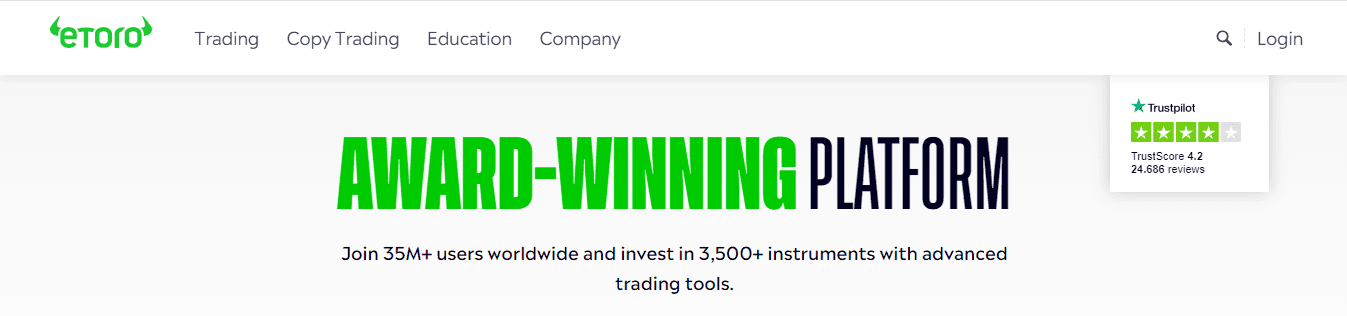
eToro brings a unique social aspect to paper trading. It combines a simple simulator with a community feed where users share ideas, strategies, and market commentary in real-time. Beginners appreciate the interactive feel, which is similar to social media. They can watch what others are doing virtually, discuss different methods, and find inspiration without financial risk. The platform makes stock and ETF simulations easy while encouraging learning through peer interaction.
Key Features
- Real-time virtual trading with a large social feed for ideas
- Paper trading is available on both desktop and mobile apps
- Commission-free simulated trades on stocks and ETFs
- Community posts and discussions from global users
- Copy trading observation allows users to view others' virtual portfolios
- User-friendly interface with low complexity for newcomers
- Minimum virtual funds provided for extensive practice
What are common pitfalls in paper trading?
A common failure mode is confusing repeatable micro-actions with overall readiness. To counter this, create two simple experiments for each platform: one that stresses process, which requires sticking to the same checklist for 30 consecutive trades, and another that stresses scale by increasing amounts until execution behavior changes. If either experiment shows that rules are being ignored or trades change noticeably, treat it as a signal to adapt, not to push harder. Choosing a platform is a lot like picking tools in a workshop. Start with a wrench that works for most bolts, then add torque wrenches and precision tools as projects require greater power and accuracy. The order of acquiring tools is important: learn to execute cleanly first, then move on to complexity, and finally to scale.
This choice seems easy at first, but when trying to turn practice into a funded career, the real challenges arise in timing, routing, and payouts. You will need tools specifically designed for these challenges, not just simple add-ons. That look of a finish line is really the start of the harder work.
Related Reading
- What Is Leverage In Futures Trading
- How To Learn Stock Trading For Beginners
- What Is Leverage In Forex Trading
- How Does After-Hours Trading Work
- How Does Pre-Market Trading Work
- Does Robinhood Allow Day Trading
- Best Practices for Backtesting Trading Strategies
- Backtesting Day Trading Strategies
- How to Set Stop Loss and Take Profit in Trading
- Stop Loss Day Trading
- What Is Take Profit in Trading
- What Is Stop Loss in Trading
- Backtesting Trading Strategies
- Free Backtesting Trading Strategies
- Options Trading For Beginners
- Take Profit vs Stop Loss
- Apps to Practice Day Trading
- How to Practice Day Trading Without Money
How to Choose the Best Paper Trading Platform For Your Goals as a Beginner

Choose the simulator that can teach you exactly what you want to do, quickly and clearly. Run short tests to verify data accuracy, functionality, and scalability with your process. If those tests pass, the platform deserves your time and commitment.
Identify Your Trading Objectives
When you start trading, it's important to know what you want to achieve, such as testing stock picks, trying options strategies, or entering the forex market. Beginners often skip this step, but clarifying goals helps narrow down platforms that fit specific asset types and trading styles. For example, if you're interested in global stocks or cryptocurrencies, look for simulators that cover a wide range of markets and accurately reflect real-world conditions.
Once your goals are clear, assess how well a platform aligns with them by reviewing the supported instruments and features. A good match means you will practice important skills—like analyzing futures or ETFs—without wasting time on tools that don't matter. This focused method accelerates learning and prepares you for live trading, helping you develop habits aligned with your long-term plans.
Prioritize User-Friendly Interfaces
For newcomers, a cluttered or confusing layout can turn learning into frustration. So, choose platforms with clean designs and easy navigation. Many top simulators focus on simple controls that help you concentrate on market decisions instead of figuring out buttons. This simplicity is important for building basic skills without unnecessary obstacles. Dig deeper by testing demo versions to see if the interface feels natural on both desktop and mobile. Platforms with drag-and-drop features or customizable dashboards let you add complexity slowly as you gain experience. Ultimately, an easy-to-use setup increases retention and encourages regular practice, making your trading start smoother and more enjoyable.
Ensure Access to Real-Time Data.
Accurate market information is crucial for realistic practice; choose platforms that offer live or near-live quotes to simulate real-time trading. Beginners benefit significantly from this, as it helps them learn to make quick decisions under pressure, rather than relying on delayed data that can alter results. Look for options that provide streaming charts and news feeds to improve the experience. In addition to basic access, assess how the data integrates with tools such as indicators and alerts. High-quality feeds help you understand volatility and trends, preparing you for real trades. Choosing a simulator with robust data ensures your strategies perform well in live settings, reducing surprises when you move from practice.
Seek Out Comprehensive Educational Tools
Learning resources can really help or hurt a beginner's progress. Focus on platforms that offer built-in tutorials, webinars, and guides for newcomers. These materials cover topics such as chart analysis and risk management, helping you apply what you learn in simulations. Without them, you might find it hard to understand the results. Check how these tools work with the trading interface, like interactive lessons or strategy builders. Good educational support helps you grasp concepts better and builds confidence, turning paper trading into a solid learning experience. Investing in knowledge pays off by equipping you with the skills to make smart, independent trading decisions.
Look for Customization Capabilities.
Personalizing your setup lets you adjust the experience to your needs. Choose platforms that offer flexible charts, watchlists, and layouts. For beginners, this flexibility means starting simple and building complexity over time, such as adding advanced indicators as skills improve. It helps avoid feeling overwhelmed while supporting your growth. Look for options that allow multi-chart views or custom alerts that fit your style, whether you are day trading or long-term investing. Good customization increases your involvement and makes your practice more realistic. By adapting the platform to your needs, you create an environment that reflects your evolving goals and improves your overall effectiveness.
Check for Mobile App Support
Trading on the go is important in today's fast-paced world. Ensure the platform has a reliable mobile version for seamless practice on the go. Beginners prefer apps that offer full functionality, such as placing trades or viewing portfolios, without missing any desktop features. This ease of access encourages regular use and fits busy schedules. Review app ratings and features, such as touch-friendly charts or push notifications, to ensure they're user-friendly. Good mobile support lets you monitor the markets in real time and act quickly, just like in live trading. Choosing a simulator with strong app integration ensures consistent learning across devices.
Evaluate Customer Service and Community.
Having reliable help and insights from peers can accelerate your growth, so choose platforms with responsive support teams and active user forums. Beginners often need quick answers to technical questions or strategy problems, so options like chat, email, or phone are really valuable. Communities provide shared experiences that help you understand better. Monitor activity on forums and social channels where users discuss trades and share tips. Good support builds trust and resolves issues quickly, while communities offer different viewpoints. Together, they create a supportive environment that improves learning and prepares you for the teamwork required in real trading.
Consider Any Associated Costs.
Most simulators are free, but be careful of hidden fees, such as data subscriptions or premium add-ons, that could increase your costs. Beginners should look for free options that offer ample virtual funds to practice without financial stress. Ensure there are no minimum deposits or ongoing charges so you can focus on improving your skills. To compare value, check whether any extras, such as advanced tools, are worth the cost. Free access to the main features helps ensure everyone has a fair chance to learn. By choosing affordable platforms, you can make the most of your resources for education and avoid unnecessary obstacles in your trading journey.
Verify Platform Security and Reliability
Safe and stable operations protect your practice data and ensure uninterrupted sessions. Choose established providers with strong encryption and good uptime records. Beginners depend on consistent performance to build routines, and any glitches can disrupt their momentum. Look for platforms backed by reputable brokers for extra reassurance. Check reviews for any downtime issues or security breaches, and confirm that they follow industry standards. Reliable systems build trust and allow for focused practice. Prioritizing security helps protect your progress and reflects the protections needed in live accounts.
Leverage Prop Firm Funding.
Once you've improved your skills through paper trading, think about proprietary firms that give money to skilled traders. These firms help you reach real markets without risking your own money. They usually have evaluation phases, similar to simulations, where you show that you can be consistent to gain access to funded accounts. This step enables beginners to apply their learned strategies with firm support, turning practice into potential earnings.
A good option in this area is Goat Funded Trader, which offers challenges with simulated capital of up to $800,000 and flexible rules, such as no time limits or allowances for news trading. Their process also includes profit targets and drawdown limits, resulting in 80% profit splits (upgradable to 100%). This setup makes it a natural step for those ready to grow. To boost your journey from beginner simulation to funded success, sign up with Goat Funded Trader today and turn your paper trading skills into real-world chances with refundable challenges and fast payouts.
How can prop firm funding benefit beginners?
Prop firm funding offers many benefits for beginners looking to start trading. It allows traders to get started without needing much of their own capital. This helps them focus on improving their skills and strategies rather than worrying about money issues. Additionally, many prop firms offer educational resources and mentorship that help beginners learn important information and gain insights into the trading world. This support can be very helpful in accelerating their learning and improving their chances of success in trading.
Related Reading
- Best Automated Trading Platform
- Best Stock Trading Simulator
- Best Copy Trading Platform
- Best App For Day Trading
- Best Day Trading Platform For Beginners
- Best Software for Backtesting Trading Strategies
- Best Chart Trading Platform
- Best App for Backtesting Trading Strategies
- Best Stock Trading Platform For Beginners
- How To Practice Day Trading
- Best Automated Trading Platform
- Best Trading Simulator Free
- Best Forex Trading Platform
- Best Crypto Trading Simulator
- Best Futures Trading Platform
- Best Trading Simulator App
- Best Options Trading Simulator
- Best Options Trading Platform
- Best Futures Trading Simulator
Get 25-30% off Today - Sign up to Get Access to Up to $800K Today
The goal of your paper trading is to demonstrate that you can transition to paid trading, not just to make you feel comfortable. It's important to treat practice as a staged rehearsal that can accommodate larger sizes and real withdrawals. Platforms like Goat Funded Trader offer trading simulator accounts up to $800K, flexible challenge or instant-funding options, and a payout-focused approach. This setup lets you confirm your scaling skills while taking advantage of 25-30% off today.
Be Great and get the App