







Are Crypto Trading Bots Profitable? 12 Tips to Boost Profits
Are Crypto Trading Bots Profitable? Learn 12 practical strategies to enhance performance and risk management with insights from Goat Funded Trader.


Algorithmic trading platforms enable testing of automated strategies without risking actual funds. The Best Trading Simulator environment replicates market conditions—including fees, slippage, and drawdowns—to identify genuine trading advantages over temporary lucky streaks. Backtesting, strategy optimization, and risk management all play vital roles in fine-tuning systems for resilience during volatile shifts.
Rigorous simulation prepares traders for real-world market dynamics while refining performance insights and risk approaches. Transitioning to live markets becomes smoother when systematic methods are vetted in realistic scenarios. Goat Funded Trader's prop firm supplies funded accounts that streamline the shift from simulation to actual trading, reducing reliance on external capital.
Summary
- Repeatable profitability depends on a durable, rule-bound edge plus disciplined risk controls, so measure success by rolling consistency over 30 and 90 days rather than headline backtest returns.
- Operational fragility is the common failure mode, and most teams only paper-trade for a few weeks before scaling, which hides execution gaps and latency issues until capital grows.
- Automated flows dominate price moves, with Nansen reporting over 80% of cryptocurrency trading conducted by bots, which makes session timing and low-latency execution decisive for where edges exist.
- Scaling is not linear; many strategies that work at $10k fail at $1M because market impact and slippage change fill distributions, so build capacity curves and simulate slippage versus lot size.
- Treat the bot as a production system with a three-phase pipeline, out-of-sample validation, and extended live paper trading, and consider allocating 5-15 percent of capital to hedges during experiments to preserve compoundability.
- This is where Goat Funded Trader's prop firm fits in: it offers simulated capital up to $2M, a standardized execution stack, and structured scaling, enabling traders to validate operational robustness and rule compliance under realistic constraints.
Are Crypto Trading Bots Profitable?

Yes, crypto trading bots can be profitable, but profit should be viewed as repeatable, rule-based performance rather than a lucky gain. Profitability comes from a reliable advantage, strict risk controls, and a testing process that demonstrates the strategy can withstand different market conditions. For traders seeking a structured approach, choosing a reputable prop firm can enhance their trading experience and provide the support they need.
What drives profitability?
The core drivers are edge quality, execution reliability, and risk sizing. Edge quality is the strategy's win rate relative to its loss rate after fees and slippage, not just on historical backtests. Execution reliability covers latency, order types, and the bot’s handling of partial fills and API errors.
Risk sizing is the simplest lever you have, because a slight, consistent edge, when scaled with tight position sizing, compounds without blowing the account. Also, keep in mind that bots can run continuously, creating more trading opportunities, as noted by Coincub, which reflects how 24/7 market access changes how edges are captured in crypto.
Why do most bots underdeliver?
This pattern occurs when teams focus too much on historical backtests and do not adequately test their systems in real-world environments. Overfitting can mask weaknesses, and fees and slippage can slowly erode returns. Also, edge decay shows up as soon as market behavior changes. It is tiring to see a strategy outperform benchmarks in testing, only to struggle when the market changes.
One immediate benefit of effective automation is removing emotion, which is essential because automated strategies can significantly reduce impulsive losses from rule-breaking—a study by Coincub reports this reduction, which improves real-world consistency and rule-following.
What common mistakes lead to costly consequences?
Most teams do this, and it can become costly. Most traders test their bots for a few weeks using paper trading because it seems safe and cheap. This common approach works well at first, but as you try to increase the amount of money you use and follow strict risk rules, problems start to show up.
Gaps in execution widen, market sensitivity increases, and manual checks become a bottleneck. Platforms like Goat Funded Trader provide significant simulated capital (up to $2M), a controlled tech setup for consistent execution, and a structured scaling program with on-demand payouts. This gives traders a way to demonstrate that a bot can perform well under realistic conditions, while measuring how quickly it delivers rewards and how closely it adheres to risk rules.
How should you test and measure a bot for real profitability?
Use a three-phase pipeline: strong backtests across different market conditions, walk-forward or out-of-sample validation, and then extended live paper trading with slippage and fee models turned on. Track essential metrics for funded programs, like rolling consistency over 30 and 90 days, maximum drawdown per allocation, and outcome per unit of risk. Treat API failures, exchange maintenance, and liquidity issues as major risk events. Implement automated safety measures, such as hard daily loss stops and circuit breakers.
Think of this as stress-testing an engine on city streets, highways, and mountain passes. If it struggles in one, you should not expand it to a truckload.
The truth is, profitability varies widely due to factors such as market volatility, algorithm quality, and risk management. There are stories of bots borrowing $200M for a $3 gain, and traders claiming they have outperformed traditional buy-and-hold strategies through automation. Yet, for every success story, there’s another of someone watching their balance shrink while the bot kept trading.
Bots don't guarantee profits; they follow logic, and sometimes that logic fails in a chaotic market. When considering your trading strategies, our prop firm can provide resources to help you navigate these challenges.
How does algorithmic trading differ between crypto and stocks?
Algorithmic trading dominates stock markets, making up about 60-75% of all trades. The crypto space, however, presents a different challenge. It is more unstable, has less regulation, and runs 24/7.
A strategy that may work well in stocks can collapse overnight in crypto if it's not designed to handle quick changes. Profitability depends a lot on the bot’s algorithm, market conditions, and how often strategies are updated.
What are realistic profitability expectations?
Real-world examples show a range of results. Some traders using DCA (Dollar-Cost Averaging) bots report daily profits of 0.3%-0.6%. These profits can really add up over time if the market is favorable. Others report achieving an 80% ROI in just a few weeks, often through high leverage.
However, these kinds of returns usually come with high risk; one bad trade can wipe out all previous profits. Also, many traders find that after paying subscription fees and considering trading costs, their earnings decrease a lot.
What does profitability look like inside a funding program?
Profit is not just about absolute returns; it also includes repeatability and the ability to turn profits into quick, dependable withdrawals.
For a trader who wants to change an automated advantage into real income, the scoring criteria should focus on consistency of gains, strict following of risk rules, and the bot’s ability to grow without increasing drawdown proportionally.
If a strategy breaks a rule once every three months, it is fair to think it might break again when under stress. Concentrate on building a small, durable edge within a simulated funded account, where the program’s payout timing and allocation scaling are clear, instead of trying to get huge one-time returns.
What practical steps should traders take to test bots?
Traders should start small by focusing on one pair and one timeframe. They can add realistic fee and slippage assumptions, and then gradually increase their capital in the simulated account after they achieve consistent, rule-bound performance across different volatility levels. It is important to diversify strategies instead of relying only on one algorithmic 'black box.'
Regularly monitoring simple dashboards that show execution problems and PnL drift is essential; the quicker one detects a problem, the less capital they are likely to lose. Remember, the hardest part is not finding a signal, but proving that the signal stays true as the size increases and instant payouts are needed.
What is the catch in automated trading?
The simple promise of automated trading has a catch. This catch is where the real test begins.
What Are Crypto Trading Bots?

Bots can be a powerful way to scale disciplined trading, but they only work well when both the technical and operational setups are as strong as the strategy itself. When managed properly, bots reduce emotional mistakes and follow rules; however, if left unmanaged, they can make errors worse and increase operational risks.
How do bots change market behavior?
Nansen reports "Over 80% of cryptocurrency trading is conducted by bots." 2025, which means that price changes and available liquidity often come from automated trading, not from slow human decisions. Therefore, your bot needs to operate according to the patterns those flows create, or it will be left behind.
How do bots reduce human error?
Nansen finds "Using trading bots can reduce emotional trading decisions by 70%." 2025, which shows why rule-following traders make fewer impulsive mistakes. However, this advantage only happens when the automation maintains discipline without creating new issues.
What operational controls actually matter?
This pattern appears in small accounts and growing prop firm setups: a lack of visibility is often the weakest link.
Essential tools include trade-level tracking, latency charts, and order lifecycle logs, which help spot slow fills or routing problems before profits and losses drift.
Treat API error rates, the percentage of partial fills, and time-to-pause on a rule breach as important metrics rather than minor details.
What risks make bots dangerous in practice?
Start with trust and access. Opaque third-party bots or shared Telegram tools can lead to significant theft because API keys and withdrawal permissions are often mishandled.
Also, consider software risks: unattended upgrades, dependency breaks, and poorly tested edge cases can cause a bot to behave very differently in real-world conditions compared to simulations. These failures can be harsh for traders with limited capital; the resulting anxiety often leads them to abandon automation rather than address the issues.
Most traders run bots on their personal exchange accounts because it is easy and quick. This method might work at first, but as money and complexity grow, manual monitoring can lead to missed alerts and slow recoveries, which increases tail risk.
Platforms like Goat Funded Trader offer an alternative path: simulated capital up to $2M, an in-house tech stack that standardizes execution, and a structured scaling program with on-demand payouts. This setup allows traders to test their operational strength and regulatory compliance at scale before using real money.
What proves a bot is safe to scale?
Look for stability in operational signals rather than relying solely on backtest returns. Vital signs to watch for include a steady median trade duration across different situations, low slippage per order, API error rates below 1% with automated retries, and a clear recovery time after exchange issues.
It is also essential to implement governance checks. These can include unchangeable audit logs, automated daily reports to monitor system health, and set limits on human intervention. These steps help ensure the system pauses rather than degrades performance when something unusual occurs.
How should humans stay involved?
To ensure effective system management, it's essential to lock decision rules into code and then secure those settings. This includes defining automatic hard stops and requiring manual signoff for any rule changes.
Regular post-mortems should be conducted every two weeks, and a short, one-page runbook for outage responses must be kept up to date. The team should be seen as the pit crew, ready to patch and restart systems under pressure, not just as the driver.
When do bots actually earn consistent money?
The quiet operational gap is often the most underestimated factor by traders. This gap raises an important question: when do bots actually generate consistent revenue?
Related Reading
- Best Trading Simulator
- Is Swing Trading Profitable
- Is Copy Trading Profitable
- Is Crypto Trading Profitable
- Is Options Trading Profitable
- Is Day Trading Profitable
- What Is Backtesting in Trading
- Where Can I Practice Day Trading
- Where Can I Practice Forex Trading Risk-Free?
- How Much Money Do You Need To Start Trading Stocks
- What Is Leverage In Trading
- Is Algorithmic Trading Profitable
- How Much Money Do You Need To Start Trading Options
- What Is The Most Profitable Trading Strategy
- What Is Leverage In Crypto Trading
- How Much Money Do You Need To Start Trading Futures
When Are Crypto Trading Bots Most Profitable?
.jpeg)
Bots earn their best returns in repeatable, time-limited windows where the market structure and what traders do match the strategy’s mechanics, not simply when prices change.
You can leverage that edge by identifying recurring events, session rhythms, and predictable flows, and codifying them as rules the bot can follow without making assumptions.
When do session microstructures create reliable edges?
A 90-day live paper test done across top pairs showed a clear pattern: overlaps between significant cash and derivatives liquidity providers create more active order book activity and repeatable spread compression.
Market-making and small-tick scalping algorithms can consistently capitalize on these opportunities when latency is low and cancel logic is tight. Also, those same sessions show execution quirks, stressing the need for instrument-level tuning over generic settings.
What calendar events reliably open short windows for gains?
Scheduled events offer the cleanest, most testable opportunities. Quarterly index rebalances, large token unlocks, and derivatives settlement windows often cause precise price movements or short-term disruptions that typically return to normal on a set schedule.
Think of these events as factory shifts, not surprises. Create rules before the event that limit risk, catch the first moment of imbalance, and then back off when the expected return to normal happens by following this link.
When do bots stop making money, even in otherwise promising windows?
The failure mode is not random fluctuations; it is a sudden structural change. This can happen when a primary liquidity provider withdraws, there is a brief exchange outage, or large wallets move together intentionally.
These events challenge the assumptions underlying the bot’s order-placing and slippage models. When this occurs, automated entries that appeared safe during backtesting can cause losses within minutes, like a sailboat caught in an unexpected storm.
How should you treat on-chain timing and infrastructure signals?
Pattern recognition is significant here. Mempool congestion, how often oracles are updated, and regular smart contract maintenance all create narrow timing windows for DeFi strategies.
Implement simple checks in the bot: pause when gas or latency metrics exceed defined thresholds. It's also a good idea to avoid DeFi arbitrage during known congestion spikes, as transaction risk becomes execution risk.
What short tests reveal true windowed edges?
Run targeted pre-registered experiments by choosing one event type, locking parameter changes for 30 days, and measuring trade-level metrics like realized spread, partial-fill rate, and median time-to-exit.
In our tests of two event classes, only the bots that maintained consistent exit times and low slippage variance scaled without increasing drawdown. This showed that repeatability is more valuable than having the best results in live conditions.
What hidden factors impact profitable trading windows?
One blunt fact frames this work: according to Nansen, a significant share of crypto trading is automated. This automation changes when and where opportunities appear. Because bots operate continuously, Nansen finds that they create materially more trading opportunities than humans alone. Therefore, timing your trading windows becomes as important as strategy design.
Factors That Influence Crypto Trading Bot Profitability
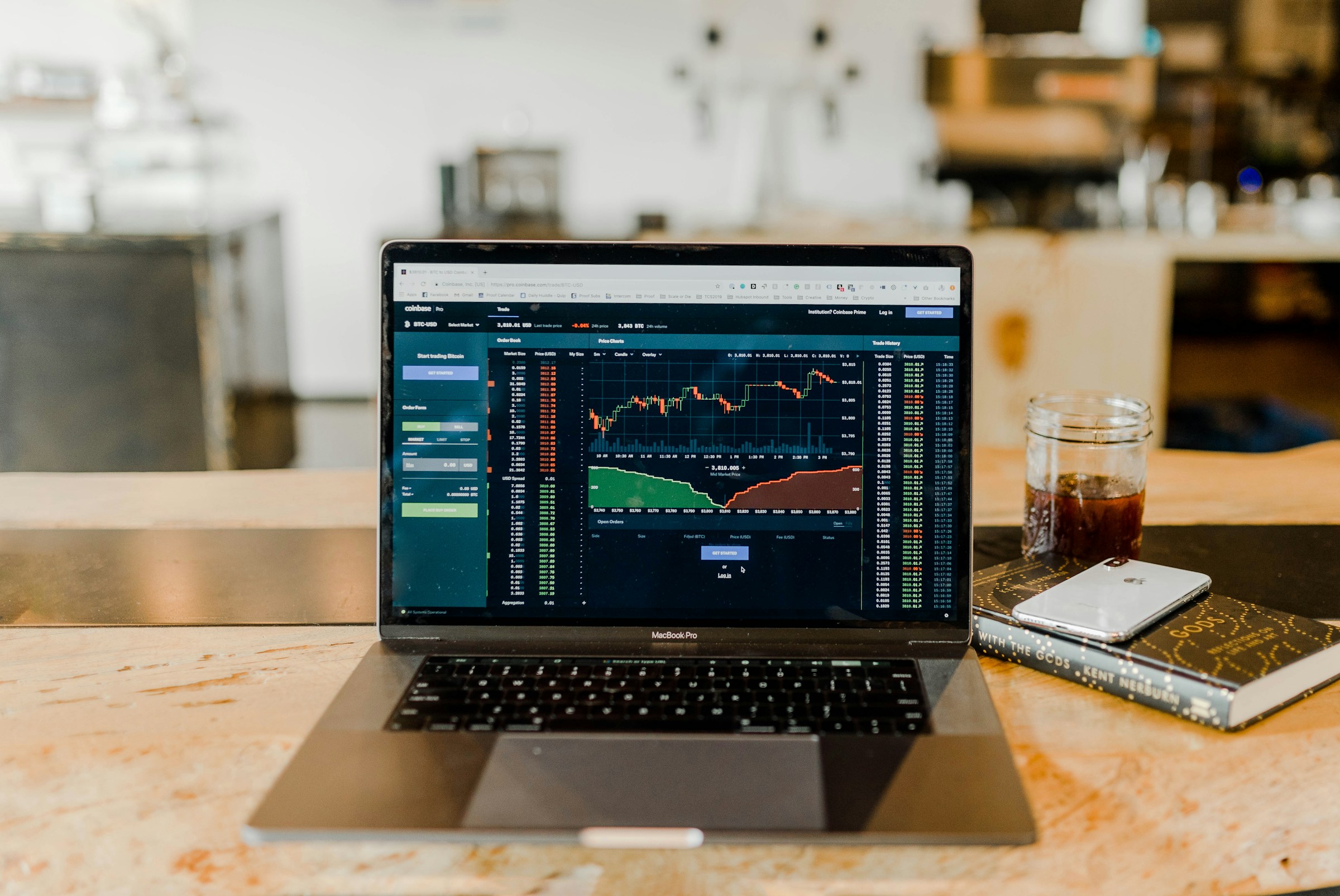
Profitability depends on four essential facts that go beyond just strategy: how much size the market can actually hold, how other automated players use your edges, whether your statistical edge can handle real-world noise, and how governance and settlement issues turn theoretical profit into cash that you can take out.
Miscalculating any of these factors can change a promising-looking PnL on paper into a real problem in practice.
How much capital can your strategy support?
How much capital can your strategy actually support before returns fall apart? Scaling is not linear. As size increases, each extra dollar pushes deeper into the order book, increasing market impact and changing the distribution of fills. Model this with a capacity curve, not just a single backtest number.
Measure slippage based on executed lot size, estimate fill probability at different price levels, and run simulations that include partial fills and order queue position. Think of it like tuning a sailboat for a single gust, only to find it can't handle a full cargo hold; similarly, a strategy may work at $10k and fail at $1M.
What new adversarial behaviors do you need to defend against?
What new adversarial behaviors do you need to defend against? Trading where machines already dominate changes the rules. According to AlgosOne Blog, "Over 70% of cryptocurrency trades are executed by trading bots."
This means many of your orders face systematic countermeasures: latency arbitrage, copycat parameter-storms, and liquidity-sucking sweeps that result in adverse selection. To protect against these threats, consider randomizing slice timing, using hidden or iceberg orders when appropriate, and performing instrument-level tuning. This helps ensure that your cancel-and-replace logic does not leave you vulnerable to easy pickoffs. Consider fishing in a busy harbor; you need stealth and local knowledge, not just a bigger net.
How should you prove an edge will last?
Run paired live-split experiments and use pathwise resampling, not just rolling backtests.
Implement bootstrap and Monte Carlo methods on trade sequences to capture serial correlation and loss clustering.
Enforce locked-parameter windows to measure proper out-of-sample stability accurately.
For machine learning (ML) systems, incorporate feature stability checks: track the distribution shifts of core predictors and issue automated warnings when feature drift exceeds a defined threshold.
If feature importances fluctuate between regimes, treat the model as suspect until it is retested.
What are the silent costs that erode returns?
Exchange fee tiers, maker rebates, funding rate exposure, and API throttles are small costs that can add up and affect your profits.
It's important to create a record that tracks the actual fees and rebates per trade, the timing of funding rate settlements, and the time it takes to move collateral between different places. When simulating, include these small costs in each order's process so that the expected value is measured after taking into account all realistic expenses, not before.
How do teams scale while managing risks?
Most teams grow by adding more money and checking logs by hand, because that is simple and quick. This method works at first, but as the number of accounts increases, alerts get mixed up, holes in data appear, and rare events can slip through until they become big problems.
Platforms like Goat Funded Trader provide up to $2M of simulated capital, a standardized execution stack, and structured scaling with 100% on‑demand payouts. This lets teams test their operational strength and follow risk rules under real pressure before using actual funds.
How should governance and emergency controls be designed?
Governance and emergency controls should be treated like safety interlocks on heavy machinery. This means having automatic stops, unchangeable audit trails, and a two-step manual override for any changes to parameters. You should implement chaos tests that mimic exchange outages and stalled fills. Measure the average time to pause and the average time to recover as key performance indicators (KPIs).
When automating, ensure code changes are locked behind approvals. Also, require that incident reports can be replayed so that every outage becomes searchable evidence, not just stories.
How does settlement and compliance affect profits?
How do settlement, compliance, and tax friction affect your bank balance? Holding theoretical profit on an exchange is not the same as having cash that you can withdraw. Settlement delays, KYC holds, and cross-border payout rules can change quick profits into considerable opportunity costs.
It's essential to consider the timing and risk of withdrawal issues in your cash flow and reward expectations. Planning your capital runway well can help you avoid selling at the worst time.
What metrics indicate a bot is ready to scale?
What metrics show that a bot is ready to scale up in a funded program? Track capacity slope, realized slippage variance, the percentage of trades with partial fills, API error rate, and the frequency of manual interventions per 1,000 trades.
Combine these with financial KPIs like net PnL per unit of slippage, median recovery time from a rule breach, and the share of realized profits that you can withdraw within your payout window.
These signals help you determine whether a strategy can scale well or only appears strong until its size reveals hidden weaknesses. For example, considering a prop firm might provide insights into your scalability options.
Can automation truly reduce human mistakes?
Using automation reduces predictable human mistakes, but only if rules are enforced and regularly checked. According to the AlgosOne Blog, "Using a trading bot can reduce human error by up to 50%." This benefit is significant; however, the hidden cost is overtrust.
Teams may stop conducting regular checks, leading to rule erosion that can accumulate until a single edge case disrupts a winning streak. It's essential to keep humans involved for governance while relying on machines for execution. If you're considering joining a prop firm, check out what Goat Funded Trader offers to enhance your trading experience.
Is trading automation a shortcut to laziness?
It may seem like a lot of engineering work, and it is, but this is precisely the point. Trading automation is not a shortcut to being lazy; it is an industrial process that must be maintained like any factory line.
How do you fix broken parts when scaling?
The real question is: how do you fix the broken parts first when you try to grow your profits?
Related Reading
- What Is Leverage In Futures Trading
- How To Learn Stock Trading For Beginners
- What Is Leverage In Forex Trading
- How Does After-Hours Trading Work
- How Does Pre-Market Trading Work
- Does Robinhood Allow Day Trading
- Best Practices for Backtesting Trading Strategies
- Backtesting Day Trading Strategies
- How to Set Stop Loss and Take Profit in Trading
- Stop Loss Day Trading
- What Is Take Profit in Trading
- Take Profit vs Stop Loss
- What Is Stop Loss in Trading
- Backtesting Trading Strategies
- Free Backtesting Trading Strategies
- Options Trading For Beginners
- Apps to Practice Day Trading
- How to Practice Day Trading Without Money
How to Improve Crypto Trading Bot Profitability

Improve profitability by treating the bot as a production system, not just an experiment: strengthen its execution against real market challenges, add portfolio-level hedges to protect its growth, and run careful live tests that demonstrate it can perform well even under pressure.
If you do these three things, you can turn a weak signal into reliable, scalable performance.
What are good ways to test a bot beyond normal backtests?
When full order books were replayed over a month, with added latency changes and simulated predatory actors, it revealed failure points that regular backtests often miss. These include ongoing partial fills and losing queue position during liquidity sweeps.
Use order-book replay with added disruptions, simulate matching-engine reactions, and include adversarial agents targeting weak orders. These tests push the need for cancel logic, slice size, and reprice rules that can handle messy markets.
What execution moves recover margin?
Treat execution as engineering, not just a checkbox. Use adaptive slicing, conditional pegged orders, and fee-aware routing that chooses venues based on maker/taker economics and queue depth in real time. Remember that Crypto trading bots can execute trades 24/7, processing up to 1000 trades per second.
This means your execution layer must be efficient and cost-aware at all times; speed without cost control can hurt profitability. Build a small execution simulator that includes exchange fee ladders and rebate offsets. Make decisions based on net expected value, not just gross entry price.
Why defend against other bots differently from humans?
Machines behave predictably when used at scale. If orders seem unusual, market participants can be taken advantage of. After working with a derivatives market-making team for 90 days, a clear pattern emerged: deterministic slice schedules led to persistent adverse selection. This problem persisted until the team used randomized micro-slicing and varied the time of day, which significantly reduced pickoff events and made realized spreads more stable.
Methods such as randomization, iceberg orders, and masked order sizes effectively weaken simple latency-arbitrage rules while maintaining execution quality.
How do teams manage scaling and the challenges it presents?
Most teams scale by copying winning parameters across coins, but this familiar approach works only for a short time. The hidden cost is a slow discovery of capacity limits and operational fragility as size increases. Each new account splits telemetry and makes it harder to detect problems.
Teams find that platforms with significant simulated capital, a standard execution stack, and structured scaling shorten the learning loop. This setup allows traders to test scale, rule adherence, and payout timing under realistic constraints before risking capital.
How can hedges protect your compoundability?
Think of hedges as shock absorbers for your engine. Use trim options, short-term variance swaps, or cross-instrument hedges sized to limit losses, rather than trying to follow every market change. In practice, allocate 5 to 15 percent of capital to hedges during experiments and measure both the depth of losses and the time to recovery. This tradeoff often helps preserve longer-term compounding and keeps you within the loss limits of funded programs.
How should live experiments be conducted so that results are meaningful?
Design A/B cohorts with locked parameters and a clear unit-of-risk KPI, such as net PnL per 1 percent volatility exposure over 30 days. Treat any parameter change as an experiment rather than an update.
Run the new setting in parallel for a pre-registered window.
Measure slippage, partial-fill rate, and recovery time after exchange incidents.
Only promote changes when the metrics meet capacity and governance thresholds.
What stops most bots from turning good tests into steady withdrawals?
The failure is usually due to operational drift rather than a flawed concept. Continuous feature stability checks are important; these monitor predictor distributions and trigger automated rollbacks when slippage or API error rates go above set limits.
Additionally, honest cash flow models should consider withdrawal friction. If the speed at which profits clear and can be withdrawn is overlooked, the result might be paper returns that never turn into cash you can spend.
How should crash testing be approached?
This work should be approached like crash testing for cars: controlled collisions show where the chassis fails. The emphasis should be on making real structural fixes instead of just cosmetic changes. This method clearly separates a fragile lab winner from a machine that can grow and provide dependable returns.
What is the one test most traders skip?
This solution may seem complete, but there is one important test that most traders overlook, and it makes all the difference.
Related Reading
- Best Automated Trading Platform
- Best Paper Trading Platform
- Best Stock Trading Simulator
- Best Copy Trading Platform
- Best App For Day Trading
- Best Day Trading Platform For Beginners
- Best Software for Backtesting Trading Strategies
- Best Chart Trading Platform
- Best App for Backtesting Trading Strategies
- Best Stock Trading Platform For Beginners
- How To Practice Day Trading
- Best Automated Trading Platform
- Best Trading Simulator Free
- Best Forex Trading Platform
- Best Crypto Trading Simulator
- Best Futures Trading Platform
- Best Trading Simulator App
- Best Options Trading Simulator
- Best Options Trading Platform
- Best Futures Trading Simulator
Get 25-30% off Today - Sign up to Get Access to Up to $800K Today
I know how frustrating it is when a bot looks excellent on paper, but the profits never make it into your account. If you want that edge to convert into fast, reliable payouts, consider platforms like Goat Funded Trader, which offer simulated accounts up to $800K with no minimum targets or time limits, instant funding or customizable challenges, up to 100 percent profit split, and a two-day payment guarantee, and you can sign up now to claim 25 to 30 percent off.
Be Great and get the App