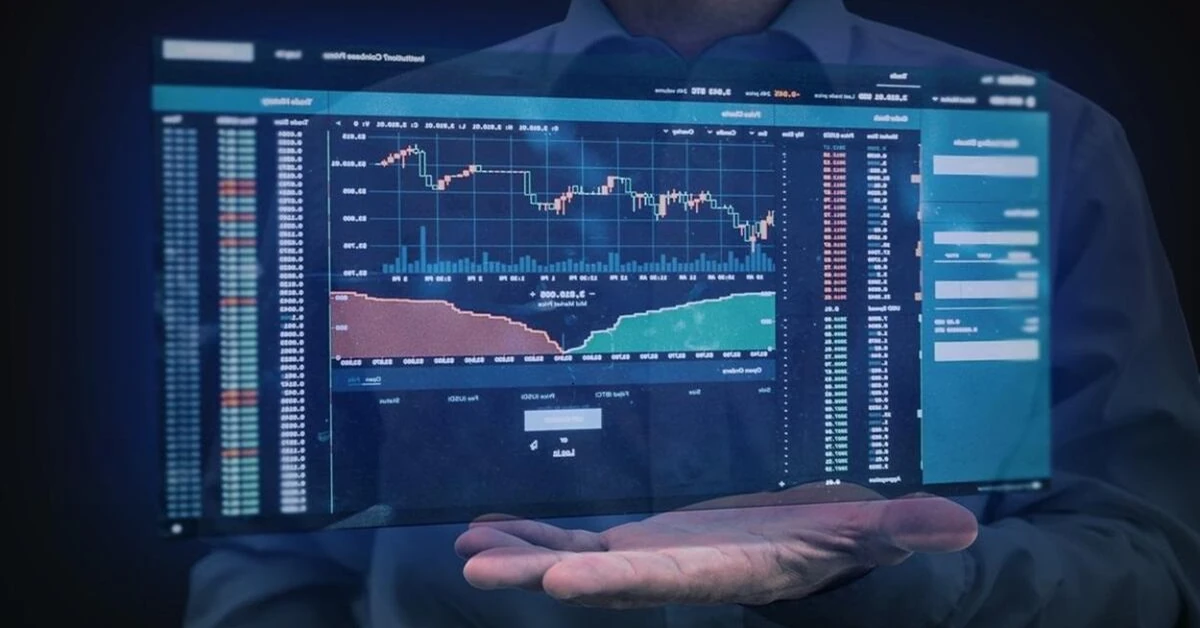



Consider spending months developing strategies in a Best Trading Simulator and paper-trading your trading bot, only to hit roadblocks when you go live. The right automated trading platform integrates your algorithmic trading strategy, backtesting engine, order execution, and risk management into a single system, ensuring your algorithms trade reliably. This guide shows how to select and deploy a top platform that handles backtesting, broker integration, API access, signal management, and portfolio monitoring, so you can run strategies on autopilot without trial and error. Ready to stop guessing and start trading with confidence?
To help you do that, Goat Funded Trader's prop firm supplies funded accounts, clear evaluation paths, and practical support so you can test, deploy, and scale automated strategies with real capital and less personal risk.
Summary
- Over 70% of US trading volume is generated by automated trading systems, so backtests that ignore other bots and microstructure will produce misleading slippage and fill estimates.
- High-throughput execution is a requirement, not a luxury, with platforms capable of processing thousands of trades per second, and intraday strategies often requiring median round-trip latency in the low milliseconds to preserve edge.
- Not every market behaves the same; for example, over 70% of forex trading is now conducted via automated platforms, which means forex strategies must model session liquidity shifts and automation-driven spreads rather than human timing.
- Validate before you scale with a repeatable regimen, such as a three-stage, 30-day experiment that includes a tick-replay backtest, parallel paper trading, and a live micro-scale pilot running 100 micro-trades to surface real-world failure modes.
- Production controls matter because automation is now the baseline for success: 85% of successful traders use some form of automated trading, driving the need for telemetry, immutable logs, model versioning, and fast rollback procedures.
- Automation dramatically reduces manual trading errors: one study reports up to a 90% reduction in human errors, but that gain requires per-trade cost transparency, realistic impact models, and automated circuit breakers to prevent runaway losses.
- This is where Goat Funded Trader's prop firm fits in: it offers simulated capital up to $2M, clear evaluation paths, and rapid payout mechanics, enabling traders to test and scale automated strategies under realistic funded constraints.
What is an Automated Trading Platform, and How Does It Work?

An automated trading platform runs your rules against live markets and automatically turns those signals into orders, delivering consistent execution and scalable position handling without emotion. It connects market data, a rules engine, and order routing so you can test, iterate, and deploy strategies at speed while enforcing risk constraints.
How does automation actually move orders so fast?
Automation wins by removing human delay, using low-latency feeds, colocated execution, and direct broker APIs to close the loop between signal and fill. According to TradingFXVPS, automated trading platforms can execute trades in milliseconds, significantly faster than manual trading, which is why microsecond advantages matter for intraday and scalping strategies.
Why does scale change the game?
Execution at scale is qualitatively different from execution in a demo. With algorithms responsible for most action, liquidity, and short-term price movement are shaped by other bots, which is reflected in the fact that TradingFXVPS reports over 70% of trading volume in the United States is generated through automated trading systems, meaning your simulations must model that competitive field or your slippage estimates will be wrong.
What typically breaks in live use?
Connectivity hiccups, exchange API changes, and over-optimization are the common failure modes that punish confidence. This pattern appears across backtesting and live-forward testing: strategies that appear bulletproof on historical data fail once unmodeled transaction costs, latency, or sparse fills are introduced. It’s exhausting when a system you trusted starts missing fills during volatility, and that feeling is the signal to add robust monitoring and conservative position sizing.
Most traders start by coding a strategy and running it on a cheap demo because it is familiar and fast. That works in early experiments, but as you scale up, fragmented execution and hidden costs compound, turning a neat backtest into uneven live performance. Platforms like Goat Funded Trader provide simulated capital up to $2M, a rewards-focused scaling program, and rapid payout-on-demand settlements, giving traders a controlled environment to stress-test automation under real conditions before committing external capital.
How should you validate an automated strategy so it survives the transition?
If your edge is short-term, prioritize realistic fill models and latency testing; when the edge is longer term, prioritize data integrity and robust handling of outliers. Use walk-forward backtesting, multi-market paper trading, and strict risk rules, including automatic position sizing, time-based stop logic, and built-in circuit breakers. Traders want round-the-clock monitoring and scaling; automation gives that capability, but only when paired with regular maintenance, realistic cost modeling, and clear kill switches. That practical test raises an urgent question about where automation truly delivers value, and you'll want to see what's coming next.
What Markets Can I Trade With an Automated Trading Platform?
Not every market is equally friendly to automation, and your choices should be driven by how your edge aligns with market rules, liquidity, and operational costs. Pick markets where you can model fills, fees, and tail events predictably, because that predictability is what lets an automated strategy scale without surprises.
Stock Markets (Equities)
Stock markets remain a primary choice for automated trading due to their massive volume, diverse instruments, and extensive historical data for strategy development. Platforms such as Interactive Brokers, TradeStation, and MetaTrader connect to major exchanges, including the NYSE, NASDAQ, and international ones, enabling algorithms to trade individual shares, ETFs, or indices. Automation thrives here through strategies such as momentum, mean reversion, and pairs trading, benefiting from intraday patterns and news events. High liquidity reduces slippage, while real-time data supports frequent adjustments, making equities ideal for both short-term scalping and longer-term systematic approaches.
Foreign Exchange (Forex)
Forex is one of the most popular markets for automated systems, thanks to its 24/7 trading, daily volume exceeding $7 trillion, and high leverage. Major platforms, including MetaTrader 4/5, NinjaTrader, and cTrader, offer access to currency pairs, from majors such as EUR/USD to exotics. Algorithms capitalize on technical indicators, carry trades, or news-based events in this highly liquid, tight-spread environment. The 24/5 availability suits continuous monitoring, and low barriers to entry make forex a go-to for retail algo traders seeking consistent opportunities across global sessions.
Futures Markets
Futures contracts provide leveraged exposure to commodities, indices, interest rates, and currencies, making them well-suited for automated trading. Platforms such as NinjaTrader, TradeStation, and Interactive Brokers support major exchanges, including CME, with tick-level data for precise execution of contracts such as E-mini S&P 500 and crude oil futures. These markets appeal to systematic traders due to standardized terms, high liquidity in front-month contracts, and extended trading hours. Automation handles volatility effectively through trend-following or arbitrage strategies, while built-in margin rules help manage risk in leveraged positions.
Options Markets
Options trading via automated platforms allows complex strategies involving calls, puts, spreads, and straddles across equities or indices. Supported by integrations with brokers such as Interactive Brokers or Thinkorswim, systems can scan for opportunities based on Greeks, implied volatility, or expiration dynamics. Automation excels at managing multi-leg positions, hedging, and income generation through covered calls or iron condors. The ability to backtest against historical volatility surfaces and execute rapidly during market moves adds depth, though it requires careful risk modeling due to time decay and directional sensitivity.
Cryptocurrency Markets
Crypto markets provide 24/7 trading with significant volatility, attracting automated strategies focused on momentum, arbitrage across exchanges, or grid trading. Platforms such as TradingView, TrendSpider, and those integrated with Binance, Coinbase, or Kraken APIs enable bots to trade Bitcoin, Ethereum, altcoins, and perpetual futures. High-frequency opportunities arise from price discrepancies or rapid price swings, making them ideal for algorithms that operate without sleep. While liquidity varies by asset, growing institutional involvement improves depth, and features such as API connectivity support multi-exchange setups to enhance execution.
Commodities Markets
Commodities, including energy (oil, natural gas), metals (gold, silver), and agricultural products, are traded via futures or CFDs on automated platforms. Access through brokers such as Interactive Brokers or NinjaTrader enables algorithms to exploit seasonal patterns, supply disruptions, or macroeconomic trends. These markets suit trend-following or breakout systems because they feature clear directional moves driven by fundamentals. Extended hours and leverage amplify potential, but volatility demands solid risk controls, with automation helping maintain discipline during unpredictable events like weather impacts or geopolitical shifts.
What makes equities distinct for automation?
Equities trade with centralized order books, visible tick sizes, defined auction periods, and a mix of retail and institutional liquidity. That means you must model intraday auction behavior, dark pool flow, and short-sale constraints, as these factors affect fill quality more than simple volume metrics. In practice, low-float names will bite you: your limit orders disappear, and execution costs jump when you try to scale a size that looked fine in backtests.
How does forex really behave for bots?
Forex is a continuous, OTC market where liquidity pools shift by session and instrument, and algorithms now dominate execution flow, changing how spreads and slippage behave during news. According to ETNA, "Over 70% of forex trading is now conducted via automated platforms." This structural tilt means your strategy must assume automation-driven order flow, not human timing. Treat forex like endurance running, where steady hands and robust risk controls beat sprint-style guesswork.
Why do futures and commodities require a different checklist?
Futures are standardized contracts with expiration dates, tick values, and clearinghouse margin rules, so roll mechanics and weekend gap risk matter more than raw intra-session microstructure. For commodities, fundamental shocks such as weather or geopolitics create abrupt, persistent moves that challenge short-horizon mean reversion. When you automate in these products, you must embed contract roll logic, per-contract risk limits, and margin-change scenarios so your system behaves predictably through expiries and macroeconomic shocks.
What should you expect when trading options programmatically?
Automated options strategies involve multi-leg execution and are sensitive to implied volatility surfaces, so your platform must support coordinated leg fills, synthetic constructions, and realistic slippage models for spreads. The practical failure mode is not a bad signal; it is bad execution: an iron condor that looks profitable on paper can implode if single-leg fills happen at different ticks during a volatility spike.
How does crypto differ from regulated markets?
Crypto runs 24/7 and is highly fragmented across exchanges, creating both arbitrage opportunities and operational headaches, including custody, API limits, and inconsistent order types. That fragmentation amplifies the need for multi-exchange connectivity and robust reconciliation, because counterparty inactivity or stalled withdrawals can turn winning trades into settlement headaches. Expect periods when liquidity in an altcoin evaporates, then returns in a rush, and design your sizing rules accordingly.
What breaks when traders try to scale automation the usual way?
Most traders begin with simple demos and retail brokers because they are familiar with them. That works up to a point, but as size rises, execution fragmentation, delayed fills, and inconsistent counterparty behavior compound into missed targets and unpredictable drawdowns. This pattern appears consistently across equities and crypto: manual shortcuts work until they do not, and the friction shows up as unfilled orders, unfair fills, or worse, automated sniping that eats your edge. Most teams manage growth by keeping the old setup, which is comfortable, but that creates measurable friction as complexity rises. The familiar approach is to patch scripts, add more API keys, and hope latency improves, which seems cheaper in the short term but comes at the expense of scalability and reliability.
Solutions like funded prop programs provide structured simulated capital and enforceable risk rules, giving traders a place to validate automation against realistic constraints while preserving payout and scaling pathways. Platforms such as Goat Funded Trader provide access to up to $2M in simulated capital, a rewards‑focused scaling program, and rapid on-demand payouts, allowing traders to stress-test execution, enforce position limits, and demonstrate performance before risking external capital.
How should you translate market differences into practical platform requirements?
If your edge is microstructure-based, require APIs with smart routing and exchange-level order types, and verify historical tick data quality for the contracts you trade. If your edge is volatility or spread, prioritize reliable option/derivative feeds and multi-legged execution primitives. When your edge relies on cross-exchange price differences, build in fast settlement checks and multi-vendor reconciliation to avoid settlement risk and funding holdups. It’s frustrating when everything looks fine in backtest and then real fills disappear or get sniped; what you need is a testing environment that mimics those exact failure modes so you can harden rules before scaling. That solution works until you hit the one obstacle nobody talks about.
Related Reading
- Best Trading Simulator
- Is Swing Trading Profitable
- Is Copy Trading Profitable
- Is Crypto Trading Profitable
- Is Options Trading Profitable
- Is Day Trading Profitable
- Are Crypto Trading Bots Profitable
- What Is Backtesting in Trading
- Where Can I Practice Day Trading
- Where Can I Practice Forex Trading Risk-Free?
- How Much Money Do You Need To Start Trading Stocks
- What Is Leverage In Trading
- Is Algorithmic Trading Profitable
- How Much Money Do You Need To Start Trading Options
- What Is The Most Profitable Trading Strateg
- What Is Leverage In Crypto Trading
- How Much Money Do You Need To Start Trading Futures
What Features Should I Look For in an Automated Trading Platform?

You should look beyond checklist features and demand production controls: observable telemetry, reproducible deployments, settlement reconciliation, and built-in cost and market‑impact modeling that enable your automation to behave predictably as it scales. These capabilities turn a lab experiment into a live service you can rely on while proving performance at scale.
What operational visibility should I demand?
Operational visibility means more than dashboards; it means full telemetry and alerting that trace a trade from signal to settlement. Require structured logs with immutable timestamps, latency histograms for each API hop, and trade-level provenance so you can answer, in under five minutes, why a fill missed its expected price. That level of observability lets you diagnose whether a poor result was a signal failure, a broker-side throttle, or a genuine market move.
How do you keep models and strategies auditable and reproducible?
Treat strategy releases like software releases. Ask for model version control, immutable build artifacts, and a deployment pipeline that separates staging from production with replayable market replays. If a change is pushed, you should be able to roll back to the exact artifact that produced a prior equity curve and run a tick-level replay against the same data set. This prevents silent drift, preserves accountability, and makes performance proofs defensible for reviewers or auditors.
How should the platform simulate real costs and market impact?
Good backtests lie without impact models. Demand multi-stage simulators that estimate dynamic slippage, queue depth, and impact based on realistic order book states, not just end-of-bar price moves. Because machines dominate order flow, platforms that expose realistic market-impact models let you size entries so that scaling rules hold under live pressure, rather than collapsing when you increase notional.
Most teams script locally and paper trade because it is familiar and requires no new process. That works early on, but as account size and automation complexity grow, the hidden cost appears: fragmented environments, undocumented tweaks, and no enforced risk governance, which turn small mistakes into catastrophic rule breaks. Platforms like Goat Funded Trader provide a structured bridge, giving traders up to $2M in simulated capital, enforceable risk limits, and a consistent execution environment that preserves performance proofs while you scale.
What safety nets stop automation from running away?
Look for hardened kill switches and policy engines, not just manual buttons. The platform should support automated circuit breakers, time‑based session exits, correlation checks that prevent simultaneous exposure across related symbols, and simulated margin‑shock tests that run nightly. Prefer systems that can auto‑pause strategies on anomalous telemetry and route trades to a fallback broker or queue, keeping outages contained instead of amplifying losses.
How do settlement, reconciliation, and reporting reduce operational risk?
Ask for automated reconciliation that matches fills to exchange reports and flags uncleared trades or partial fills. The best platforms generate audit-ready reports that are exportable to compliance workflows and maintain a tamper-evident ledger for every decision the algorithm makes. This is the backbone of trust for funded programs because it proves your results, enforces payout rules, and removes ambiguity when an edge is reviewed.
Why should throughput and market share matter to your platform choice?
According to Hexaview Technologies Blog, "Automated trading platforms can process thousands of trades per second." High throughput is not a bragging point; it is a requirement if your execution topology needs bursts, hedging fills, or multi-leg synchronization, because batching or throttling can turn a profitable signal into a busted trade. Also, with [Hexaview Technologies Blog, "Over 70% of trades in the US stock market are executed by automated trading systems." The competitive field is machines, which means your platform must model other bots, not just static historical closes, when projecting live performance.
How should cost transparency and billing be presented?
Demand per-trade cost breakdowns, not opaque invoices. The platform should display commissions, exchange fees, rebates, routing costs, and any per-trade internal fees, and roll them into a realistic PnL so you can see net performance. Transparent billing prevents surprise erosion of your edge when you move from a demo account to funded capital.
What integrations and operational support matter when something breaks?
Production incidents are inevitable, so prioritize platforms that offer broker failover options, API versioning, and a documented escalation path. Look for sandboxed replay endpoints, downloadable fills for forensic analysis, and clear SLAs for connectivity. Those operational muscles are what keep your scaling plan from stalling when an exchange changes a field name or rate-limits a route.
A short analogy to make it concrete
Think of your automation like a small commercial airline, not a hobbyist drone: you need maintenance logs, preflight checklists, air‑traffic fallback plans, and clear authority to ground a flight if the weather turns. Without that operational discipline, what appears to be progress becomes a safety risk. That technical checklist still leaves one practical question unresolved: which platforms combine these controls with real, funded scaling and fast payouts?
8 Best Automated Trading Platforms in 2026
These eight platforms cover the full spectrum of automation workflows, from no-code strategy design to professional, API-first execution, and each suits a different step in a funded prop trader’s path to scale. Pick by what you actually need: discovery and signal refinement, realistic execution testing, or low-latency order routing into real markets. Industry momentum matters when you decide where to invest your time, because adoption changes how fills behave; consider that over 70% of traders are expected to use automated trading platforms by 2026. — Snap Innovations. At the same time, the sector is expanding, with the global automated trading market projected to reach $19 billion by 2026. — Snap Innovations, which means platform providers will continue adding execution features and institutional tooling.
1. ProRealTime

ProRealTime streamlines automated trading system setup with an intuitive interface that eliminates programming requirements, enabling users to quickly design, evaluate, and launch algorithms. The system's backtesting feature leverages detailed tick-level data from market exchanges and can handle large datasets, making it a highly precise option for simulations. Traders can adjust settings, incorporate complex code if preferred, and activate strategies on the platform's dedicated servers, ensuring alignment between testing and live market performance. Although it doesn't incorporate outside information streams such as social updates or financial news, it stands out as a top choice for those seeking hassle-free automation without technical complexities.
How It Works
ProRealTime enables users to build trading rules using a visual builder or script editor. Once built, strategies undergo rigorous historical testing with real market data. After refinement using optimization tools, the algorithms are hosted on remote servers that monitor markets around the clock and execute trades automatically when conditions match, while maintaining consistent performance.
Key Features
- No-programming-required strategy creation for easy entry into automation.
- Precise simulation using exchange-sourced tick data for dependable results.
- Tools to refine parameters and enhance strategy efficiency.
- Option for custom coding to add advanced logic.
- Cloud-based running of algorithms to avoid local device dependency.
- Capacity to process massive chart data volumes without slowdowns.
- Smooth transition from testing to live trading with minimal discrepancies.
2. TradingView

TradingView excels at chart-based analysis but requires effort to master its full automation capabilities. Its scripting language enables custom strategy development and historical testing directly on visual displays using historical market data. However, acquiring proficiency in the code takes time, and there's no built-in option for code-free setup. Elements such as detailed data granularity, notification limits, and additional analytical tools often require paid access.
Additionally, complete hands-off trading isn't native; users must configure notifications that are triggered by code logic and link them to external services or interfaces for trade fulfillment. Community-shared tools and add-ons support strategy enhancements and multi-factor evaluations, though gaining expertise requires dedication.
How It Works
TradingView functions by having users write scripts in its proprietary language to define trading rules, which are then applied to charts for backtesting against historical trends. Alerts generated by these scripts can be connected to external brokers or APIs to automatically initiate trades. Ongoing adjustments leverage community resources and extensions to optimize, creating a flexible yet learning-intensive path to automated operations.
Key Features
- Broad compatibility with numerous brokerage services for flexible integrations.
- Vibrant user base sharing ideas and custom scripts.
- Sophisticated testing mechanisms for strategy validation.
- Visual charting tools enhanced with community-driven indicators.
- Alert systems that can trigger external automated actions.
- Options for multi-variable simulations to refine performance.
- Access premium features, including enhanced data, for deeper insights.
3. TrendSpider

TrendSpider delivers cutting-edge analytical tools for strategy building, ideal for non-coders focused on development. Its code-free tester enables the creation or modification of approaches using simple language, delivering clear graphical outcomes including success percentages, potential losses, and balance metrics. That said, the advanced capabilities come with a steeper price tag. In terms of automation, it stands out for its machine-learning elements: users can develop personalized models to identify opportunities, evaluate historical data, and convert them into bots that send notifications via integrations. Yet it falls short on direct order placement, requires manual intervention for trades, and offers fewer brokerage links than alternatives.
How It Works
TrendSpider works by allowing users to input strategy ideas in everyday terms, which the system interprets and tests against past data, producing visual reports. AI components scan for patterns and generate alerts that can link to bots for semi-automated responses. While full execution needs external handling, the platform focuses on intelligent analysis to inform and streamline trading decisions.
Key Features
- Language-based strategy setup without coding knowledge.
- Machine intelligence for pattern recognition and bot creation.
- Detailed visual metrics from testing sessions.
- Custom model training for unique trade detection.
- Webhook integrations for alert-driven automation.
- Comprehensive performance stats like risk assessments.
- User-friendly interface for quick strategy iterations.
4. MetaTrader

MetaTrader ranks among the leading free options for automated trading setups. It works with a wide range of brokers, enabling the development of complex algorithms across both versions. Integration with external interfaces enables the ingestion of diverse data sources. The downside is the need to learn its proprietary coding language for strategy assembly, which may deter newcomers. Also, algorithms run on the user's local machine, requiring constant operation or a virtual server to ensure uninterrupted cloud-based activity.
How It Works
MetaTrader executes users' trading strategies in its language and tests them on historical data within the platform. Once ready, the software monitors markets and places orders automatically through connected brokers. For round-the-clock operation, a remote hosting solution can keep the terminal active, ensuring strategies respond to market changes without manual oversight.
Key Features
- Complimentary software access for broad adoption.
- Extensive broker support for versatile use.
- Ability to incorporate third-party data for enriched strategies.
- Built-in tools for algorithm development and testing.
- Custom indicator and expert advisor marketplace.
- Historical simulation with adjustable parameters.
- Options for integrating a virtual private server to maintain uptime.
5. NinjaTrader

NinjaTrader suits traders who aim to automate across multiple asset classes simultaneously. It includes a wide selection of built-in indicators and robust testing functions to validate ideas before real-world application.
How It Works
NinjaTrader enables users to build strategies using its scripting tools or visual builders and then simulate them on historical data. Automated execution is enabled through connected accounts, with multi-market monitoring and order management available from a single interface.
Key Features
- Over a hundred pre-loaded technical indicators for strategy building.
- Multi-asset class support for diversified automation.
- Advanced backtesting with historical data replay.
- Custom script development for tailored algorithms.
- Real-time market scanning for opportunity detection.
- Order flow analysis tools integrated into automation.
- Brokerage connectivity for smooth trade execution.
6. TradeStation

TradeStation delivers a robust environment tailored for active participants who prioritize in-depth analysis and strategy automation. Its proprietary scripting tool enables users to develop tailored rules with relative ease, while robust simulation features help validate ideas against historical performance. The platform also offers competitive transaction costs and integrates smoothly with live market activity, making it appealing to those seeking professional-grade resources without excessive complexity.
How It Works
TradeStation allows users to code strategies in its accessible language, run detailed historical evaluations to assess viability, and deploy them to automatically place orders through connected accounts. The system monitors conditions in real time, executes trades accordingly, and offers tools for ongoing refinement to adapt to changing conditions.
Key Features
- User-friendly scripting for custom rule development.
- Comprehensive historical evaluation with optimization options.
- Support for diverse assets, including equities, options, and futures.
- Competitive pricing structure for frequent activity.
- Advanced charting and analytical resources are integrated.
- Direct brokerage execution for streamlined operations.
- Community-shared resources and pre-built examples available.
7. Interactive Brokers (IBKR)

Interactive Brokers stands out with its Trader Workstation (TWS), granting access to an extensive array of global exchanges and sophisticated algorithmic capabilities. The platform equips users with real-time information, flexible visualization tools, and a suite of preconfigured algorithms to efficiently handle complex order requirements across numerous markets.
How It Works
Interactive Brokers operates through TWS by enabling users to apply built-in algorithms or custom logic via APIs for order routing and execution. Strategies can incorporate parameters for timing, volume distribution, and risk controls, with the system automatically managing trades while minimizing impact and optimizing fills based on selected parameters.
Key Features
- Vast coverage of international markets and instruments.
- Built-in algorithmic order types for precise execution.
- Real-time data streaming and customizable interfaces.
- API support for external strategy integration.
- Advanced risk management features during automation.
- Low-cost structure suitable for high activity.
- Tools for detailed performance tracking and reporting.
8. E*TRADE Algo Wheel

E*TRADE's Algo Wheel provides a straightforward approach to automated decision-making by presenting ready-made algorithmic choices aligned with individual preferences, such as risk appetite or objectives like capital appreciation or steady returns. This simplifies the process for those preferring guided automation over fully custom builds.
How It Works
The Algo Wheel works by allowing users to select from preset algorithmic templates based on their profiles and goals. The system then automatically applies the chosen approach to route and execute orders, adjusting dynamically to market conditions while adhering to predefined guidelines for entry, management, and exit.
Key Features
- Pre-configured algorithmic selections for quick setup.
- Alignment with personal risk levels and investment aims.
- Simplified interface for non-technical users.
- Automated order routing through the broker's infrastructure.
- Focus on the ease of applying the strategy without coding.
- Integration within the broader E*TRADE ecosystem.
- Support for monitoring and basic adjustments post-deployment.
This pattern is consistent as traders move from learning to live: many get stuck on platforms that require proprietary scripting or full-stack hosting, which slows their progress and fragments validation. Most teams handle that by cobbling together tools, which works early, but as position sizes grow, the hidden cost shows up as inconsistent fills and fragmented audit trails. Platforms like Goat Funded Trader provide a bridge by offering simulated capital up to $2M, clear scaling incentives, and fast payout mechanics, giving traders a reproducible environment to validate automation under the exact constraints a funded program will enforce.
Think of platform choice like selecting a vehicle: some are nimble scooters for exploration, others are cargo trucks built to carry weight reliably. Match the tool to the trip you plan to take, not to the route you consider in the demo. What most surprises traders is how quickly a comfortable setup reveals unexpected operational gaps once you scale, and that’s where careful platform matching becomes decisive. The next question about picking a platform is where this all gets personal, and that’s slightly unsettling.
Related Reading
• Apps to Practice Day Trading
• Backtesting Day Trading Strategies
• How To Learn Stock Trading For Beginners
• Best Practices for Backtesting Trading Strategies
• Does Robinhood Allow Day Trading
• How Does After-Hours Trading Work
• How To Start Day Trading For Beginners
• Stop Loss Day Trading
• Options Trading For Beginners
• Free Backtesting Trading Strategies
• How to Practice Day Trading Without Money
• Backtesting Trading Strategies
• How to Set Stop Loss and Take Profit in Trading
• What Is Take Profit in Trading
• What Is Leverage In Forex Trading
• What Is Stop Loss in Trading
• Take Profit vs Stop Loss
• What Is Leverage In Futures Trading
• How Does Pre-Market Trading Work
How to Choose the Best Automated Trading Platform For Your Goals

Pick the platform that fits the exact job you need it to do, then force it to prove that fit under live conditions before you scale. According to Capital Street FX, "85% of successful traders use some form of automated trading."Automation is now the operational baseline, so your selection must prioritize production reliability, measurable execution, and a clear path from test to funded deployment.
What operational numbers actually matter?
Start with hard, trade-level metrics, not feature lists. Measure fill rate versus expected price, realized slippage versus modeled slippage, order lifecycle latency, system uptime, reconciliation lag, and support response time. For intraday or scalping strategies, prefer platforms with a median round-trip latency consistently in the low milliseconds; for longer-horizon strategies, prioritize data integrity and session continuity over raw speed. Ask for per-trade cost breakdowns that roll into net PnL, so you can see how routing and fees eat your edge in practice.
How should you structure a discovery trial to surface true failure modes?
Run a three-stage 30-day experiment: a tick-replay backtest against the platform’s historical feed, a parallel paper-trade run that mirrors your sizing rules, then a live micro-scale pilot that ramps notional slowly during scheduled news windows. Log every mismatch between expected and actual fill, and use those mismatches as decision points: continue scaling only if fill quality, error rates, and reconciliation meet your predefined thresholds. That approach quickly reveals brittle assumptions, because simulated success rarely survives unmodeled throttles or API hiccups.
How does automation reduce human error, and what does that mean for trust?
Automation can eliminate repetitive errors that creep in when traders manually chase markets. According to Tradlgo Blog, "Automated trading platforms can reduce manual trading errors by up to 90%." Which is why your evaluation must include real-world error tracking, not promises. Expect fewer execution blunders, but also new failure modes, such as runaway loops or misrouted orders. Design your monitoring so that alerts are actionable, and plan a rollback procedure you can execute in under five minutes.
Why the trust problem persists, and how to handle it
There is widespread skepticism about bots that appear too good to be true. This is not paranoia; it is pattern recognition. Traders often start with polished demo results, then discover worse fills, hidden fees, or brittle integrations when they go live. To break that loop, demand reproducible artifacts: signed logs, timestamped order traces, and a replayable environment that can prove the same signal produced similar fills at a prior time. If a vendor cannot hand you those artifacts, treat the platform as unproven.
Most teams manage deployment by stitching together scripts, brokers, and spreadsheets because it is familiar and quick. That works early on, but as complexity grows, audits scatter and proof of performance weakens. Platforms like Goat Funded Trader provide a single, simulated, funded environment with enforceable risk rules and integrated reconciliation, which compresses validation cycles and preserves audit trails as you scale from micro pilots to full funded runs.
What to demand to avoid vendor lock-in and preserve optionality
Insist on exportable strategy artifacts, API-first access to fills and market data, and explicit data ownership clauses. Look for model versioning and containerized deployments so you can replay exactly what was running at any point in time. Think of your strategies like heirloom watches; if you change the repair shop, you want the watch to keep time the same way. Portability saves you months of rebuild work when a provider changes pricing or routing.
A practical checklist you can use this week
- Get a three-day tick replay sample and compare the platform feed to an independent market feed.
- Run 100 micro-trades during an active session and record fill quality and reconciliation time.
- Simulate a broker outage and verify the platform’s failover behavior and alerting.
- Confirm contract terms that guarantee access to your raw logs and the right to export them.
These quick checks reveal whether a platform is a tool you can rely on or an attractive sandbox that will strand you later. That comfortable decision you made early on will feel different once scale, audits, and payouts are on the line — and that’s exactly where the next choice becomes critical.
Related Reading
• Best Paper Trading Platform
• Best Day Trading Platform For Beginners
• Best Copy Trading Platform
• Best Options Trading Platform
• Best Software for Backtesting Trading Strategies
• Best Chart Trading Platform
• Best Crypto Trading Simulator
• How To Practice Day Trading
• Best App for Backtesting Trading Strategies
• Best App For Day Trading
• Best Stock Trading Platform For Beginners
• Best Free Day Trading Simulator
• Best Forex Trading Platform
• Best Stock Trading Simulator
• Best Trading Simulator App
• Best Trading Simulator Free
• Best Futures Trading Platform
• Best Options Trading Simulator
Get 25-30% off Today - Sign up to Get Access to Up to $800K Today
The truth is, if you want to scale algorithmic trading without the usual friction, consider Goat Funded Trader as a funded-prop path to run your automated trading platform against realistic funded accounts. You keep refining your edge while the service handles low-latency execution, enforceable risk controls, and fast payouts, so your automation behaves like a production line instead of a weekend project.
.avif)


.avif)