






7 Best Stock Trading Apps for Beginners to Try in 2026
Find the best stock trading app for beginners in 2026. Goat Funded Trader ranks the top 7 picks to grow your portfolio fast.


Starting out in stock trading is genuinely difficult. Too many platforms compete for attention, and most beginners have no reliable way to judge which one fits their needs. Knowing how to use AI for crypto trading can sharpen an edge, but the foundation still comes down to choosing the right app and understanding what it offers before committing real money.
For beginners, one practical step is learning how funded trading accounts work. They allow new traders to practice in live markets without risking personal capital, removing one of the biggest early barriers. Anyone serious about building a sustainable trading habit should consider starting with a reputable prop firm.
Summary
- Stock trading apps have genuinely lowered the barrier to entry for retail investors, but the access gap is no longer the main obstacle. Platforms now offer $0 commission trades on stocks and ETFs, fractional share investing starting at as little as $1, and account setup that takes minutes. The operational friction that once kept beginners out of markets has largely been removed.
- The knowledge gap remains the harder problem. Paper trading simulators let beginners execute trades under live market conditions using virtual capital, often around $100,000 in simulated funds, which helps new traders absorb the emotional weight of losses without the financial consequences. Short-form educational content, with some lessons taking as little as 3 minutes to complete, builds retention more effectively than longer study formats for most beginners.
- App design itself introduces behavioral risks that beginners rarely anticipate. The FCA's multi-firm review of trading apps found that these platforms have attracted a significant number of new and younger investors, many of whom had limited experience before using them. Push notifications, one-tap order execution, and real-time portfolio tracking reward activity over patience, which can quietly compound losses for traders who mistake movement for progress.
- Security on reputable platforms is structurally solid, but the weakest point is almost always the user. SIPC insurance covers brokerage accounts up to $500,000 in the event of a firm failure, but that protection does not extend to phishing attacks, credential theft, or social engineering. Two-factor authentication, unique passwords, and avoiding public Wi-Fi during active sessions are the practical controls that actually matter at the individual level.
- The capital ceiling is the constraint that skill-building alone cannot solve. A trader can develop a repeatable, disciplined strategy on a beginner app and still find that their personal account size makes even clean setups nearly meaningless in dollar terms. A 3% gain on a $2,000 account produces a very different outcome than the same move on a $200,000 position, even when the analysis and execution are identical.
- Goat Funded Trader addresses this specific gap by offering simulated funded accounts with up to $2 million in trading capital and profit splits reaching up to 90%, giving traders who have outgrown beginner-level account sizes a structured path to operate at a scale their personal savings alone could not support.
What Are Stock Trading Apps, and How Do They Work?
Stock trading apps are digital platforms that give regular investors direct access to financial markets through a smartphone or computer, without needing a traditional broker. They connect you to licensed brokerage firms, which route your orders to exchanges or market makers for execution. Tapping "Buy" triggers a regulated process that settles your trade, records ownership, and updates your portfolio — usually within seconds.
💡 What This Means for You: You no longer need a traditional broker or a phone call to access financial markets — a stock trading app puts institutional-grade execution directly in your pocket.
"Stock trading apps connect everyday investors to licensed brokerage firms, routing orders to exchanges or market makers and settling trades — usually within seconds." — Key Mechanism
🎯 Key Point: Every time you tap "Buy" or "Sell", a fully regulated, multi-step process kicks off behind the scenes — covering order routing, trade settlement, and portfolio updates automatically.
- Order Initiation: You tap "Buy," sending your request to a licensed brokerage.
- Routing: The brokerage directs your order to an exchange or market maker.
- Execution: The order is matched and filled at the current market price.
- Settlement: Ownership is officially recorded and the trade is confirmed.
- Portfolio Refresh: Your account balance and holdings update automatically to reflect the transaction.

How does the best stock trading app for beginners actually execute your order?
When you place an order, the app sends it to the brokerage's backend, which routes it to an exchange, an electronic communications network, or a market maker. Market orders fill immediately at the best available price, while limit orders wait until the market reaches your specified price. Settlement occurs on a T+1 basis: the actual transfer of funds and securities happens the next business day, even if your confirmation arrives instantly.
What's actually inside the app
The interface is the visible layer, but the real value sits underneath it. According to the Investing.com App Store listing, the platform tracks over 300,000 financial instruments, including stocks, ETFs, indices, commodities, currencies, bonds, crypto, and futures. Behind every price quote, chart, and order button is a live data feed, a compliance engine, and a custody system managing your assets under regulatory oversight from FINRA and the SEC.
What should beginners actually evaluate in the best stock trading app for beginners?
Most beginners focus on the wrong metrics when evaluating a stock trading app. They compare commission structures and chart designs when the real question is whether the platform provides tools to make informed decisions under real market conditions. Account setup takes minutes, identity verification meets anti-money-laundering standards, and funding is available via ACH transfer or instant deposit. The knowledge barrier is where most people struggle.
What hidden cost comes after you develop real trading skills?
The common approach is to download an app, fund the account with a small amount, and learn by doing. The hidden cost emerges when a trader develops real skill but hits a capital ceiling: their strategy is sound, but account size limits earnings. That gap between competence and capital is exactly what a prop firm like Goat Funded Trader is built to close. Our funded accounts offer up to $2 million in trading capital, so skilled traders aren't constrained by the size of their personal brokerage accounts.
How does the best stock trading app for beginners protect your account and support growth?
Security features protect what you build. Biometric login, two-factor authentication, 256-bit encryption, and SIPC insurance up to $500,000 per account form the standard protection layer across reputable platforms. Stock trading apps continue to evolve, with over 145 million users worldwide in 2024 driving innovations in accessibility and features. They empower informed participation but demand discipline and ongoing education. But knowing how an app works is only half the picture; what matters most to your growth as a trader is something most people never think to ask about.
Related Reading
- How to Use AI for Crypto Trading
- What Are Crypto Trading Signals
- How Long Does It Take To Learn Forex Trading
- What Is Spot Trading in Crypto
- Is Paper Trading Real Money
- Emotional Trading Mistakes
- Common Mistakes in Stock Trading
- Crypto Trading Mistakes
- Forward Testing Trading
- Paper Trading Vs Live Trading
- Risk Reward Ratio Trading
How Do Stock Trading Apps Help Beginners Learn the Market?
Stock trading apps put real market conditions in your pocket and make learning happen right away instead of just in theory. They close the gap between knowing an idea and feeling what it costs to make a mistake.
"The most powerful learning happens when real consequences meet real-time data — stock trading apps deliver both in the palm of your hand." — Market Education Insight
💡 Tip: Use your trading app's paper trading or simulation mode to practice without risking real money — it's the fastest way to build confidence as a beginner.
⚠️ Warning: Jumping into live trades before understanding the basics is one of the most common beginner mistakes — always use practice tools first.
- Market Exposure: Moves from theoretical textbook study to real-time, live market data.
- Mistake Cost: Shifts from consequence-free theory to immediate, tangible feedback on your trades.
- Accessibility: Transitions from rigid classroom/desk learning to anytime, anywhere access.
- Speed of Learning: Evolves from slow, passive reading to fast, active engagement with the markets.

How does paper trading help beginners close the gap between theory and real markets?
The failure point is usually not a lack of knowledge, but the gap between reading about volatility and watching your first position drop 12% in an afternoon. Paper trading simulators close that gap by letting you execute trades under live market conditions using virtual capital, often $100,000 in simulated funds, so you feel the emotional weight of a loss without losing real money. After a few weeks of tracking a simulated watchlist, patterns in volume, price action, and earnings reactions become natural rather than abstract concepts from a book.
What does the best stock trading app for beginners offer beyond simulation?
In-app educational libraries provide foundational knowledge that simulations alone cannot offer. Platforms like Investmate organize content into lessons lasting as little as 3 minutes, enabling short, focused learning sessions that improve retention compared to lengthy study periods. Beginners progress through stock basics, order types, and diversification principles at their own pace, with quizzes reinforcing each step before unlocking the next.
Why small stakes teach big lessons
Most beginners think they need to buy a whole share of an expensive stock before they can start trading. Fractional share investing lets you start with $1. You can hold positions across multiple sectors simultaneously, observe how different assets respond to the same news, and practice allocation decisions without concentrating risk in one place.
How do built-in tools turn mistakes into real market education?
Stop-loss orders, price alerts, and portfolio analyzers are teaching tools, not safety nets. When a stop-loss triggers and you review why, you learn more about market psychology in five minutes than in a week of reading.
Can the best stock trading app for beginners take you beyond beginner limits?
Most beginners rely on gut instinct and social media tips, which compound mistakes over time. Traders who build good habits early, using real tools with genuine feedback, grow faster than those who use beginner apps. Their growth then hits a different limit: not skill, but capital. A prop firm like Goat Funded Trader solves this by offering simulated funded accounts with up to $2 million in trading capital and up to 100% profit splits, letting disciplined traders work at a scale their personal savings could never support.
Does your trading platform actually protect your money and data?
What most beginners never ask is whether the platform holding their money and data keeps them safe.
Are Stock Trading Apps Safe for Beginners?
Stock trading apps are safe for beginners when you choose them carefully, but "safe" means something specific: regulated platforms protect your money from company failure and unauthorized access. They do not protect you from your own decisions, market losses, or the behavioral traps built into their interfaces.
"Regulated platforms protect your money from company failure and unauthorized access — but they do not protect you from yourself." — Key Distinction for Beginner Investors
💡 Tip: When evaluating whether a trading app is truly safe, check for regulatory oversight (such as SEC or FINRA registration) before you deposit a single dollar.
⚠️ Warning: App safety and investment safety are not the same thing. A fully regulated platform can still expose you to significant financial loss through poor decision-making, emotional trading, or gamified interface design engineered to keep you clicking.
- Company Failure/Bankruptcy: Protected by SIPC coverage up to specified limits.
- Unauthorized Account Access: Protected by standard security protocols (like 2FA and encryption).
- Market Losses: Not protected; you bear the full risk of market fluctuations.
- Your Own Trading Decisions: Not protected; you are responsible for your own strategy and execution errors.
- Behavioral Design Traps: Not protected; it is "buyer beware" regarding how app features may influence your habits.
🔑 Takeaway: Safety for beginners is a two-part question — choose a regulated, reputable platform, but also recognize that the biggest risk in any trading app is the one sitting in front of the screen.

What protection actually covers
Real apps follow FINRA and SEC rules and maintain SIPC membership, which protects up to $500,000 in securities and $250,000 in cash per customer if the brokerage fails. This protection applies only to missing assets resulting from firm failure or theft, not to market losses or customer errors. SIPC does not cover cryptocurrencies, futures, or losses from unauthorized trading.
The user is usually the weakest link
The FCA's multi-firm review of trading apps found that they have attracted many new, younger investors with limited experience. Sleek design and easy onboarding lower the psychological barrier to trading, improving access but creating risk without discipline. Push notifications, one-tap order execution, and real-time portfolio tracking reward activity over patience. Beginners who mistake movement for progress churn through positions, accumulating small losses and transaction costs that compound against them.
Can the best stock trading app for beginners solve the capital problem?
Most beginners learn through experience, but this approach has limits. Skilled traders who develop real ability often find the constraint is no longer knowledge or the app—it's the account size they can fund themselves. Platforms like Goat Funded Trader address this gap, offering simulated funded accounts with up to $2 million in capital and up to 100% profit splits, enabling traders to operate at a scale their savings alone could never support.
Where cybersecurity risk actually lives
The failure point is usually not the brokerage's core systems but the area around them. Phishing attacks, credential stuffing, and social engineering target users directly, bypassing institutional safeguards entirely.
What does a real breach look like for the best stock trading app for beginner users?
A 2026 DDoS attack on an automated investment platform compromised email addresses and personal information for 1.4 million accounts, followed by fraudulent promotional emails. While customer funds remained secure, the breach demonstrated how personal data leaks create follow-on risks, such as targeted scams. Enabling two-factor authentication, using a unique password for your trading account, and avoiding public Wi-Fi during active sessions are essential to keeping your account secure.
Why is social engineering the bigger threat to watch out for?
Good apps use encryption, biometric login, and real-time anomaly detection to strengthen security. But these systems fail if you surrender your passwords through convincing fake emails or copied login pages. The technology is strong; the social engineering targeting you is stronger than most beginners expect.
Related Reading
- Crypto Trading For Beginners
- Fear Of Missing Out And Trading
- Discipline In Trading
- Common Forex Trading Mistakes Beginners
- Trading Risk Management 1% Rule Explained
- Risk Management Day Trading
- ICT Trading Strategy For Beginners Step By Step
- Trading Risk Management Strategies
- Algorithmic Trading Risk Management
7 Best Stock Trading Apps for Beginners to Try in 2026
Choosing your first stock trading app is critically important. The wrong platform can confuse you with advanced tools, hidden fees, or hard-to-use interfaces, leaving beginners overwhelmed and frustrated. The right one, however, teaches you exactly how the market works, keeps trading simple, gives you educational resources, and helps you feel confident from day one. The apps below are some of the best beginner-friendly platforms available because they combine easy use, low costs, research tools, and educational features into one seamless experience.
"The right trading app doesn't just execute trades — it teaches you how the market works, keeps costs low, and builds the confidence beginners need to succeed." — Key Insight
💡 Tip: Before committing to any platform, always check for hidden fees, account minimums, and the quality of educational resources — these three factors make or break the beginner experience.
🔑 Takeaway: The best beginner trading apps share four core qualities — ease of use, low or zero costs, built-in research tools, and educational support. Miss even one, and the learning curve becomes a barrier instead of a bridge.
- Easy Interface: Removes friction, allowing you to focus on strategy rather than navigating complex menus.
- Low/No Fees: Prevents small costs from eroding your capital and compounding your losses.
- Research Tools: Provides the data necessary to move from emotional guesses to informed decisions.
- Educational Resources: Builds the discipline and knowledge required to minimize mistakes and survive market volatility.

1. Fidelity

Fidelity stands out as a comprehensive platform that offers robust tools, educational support, and zero-commission trading. It helps users learn actively while safely managing real investments, converting potential losses from inexperience into steady growth through guided discovery.
Key Features for Beginners
- An extensive learning center with videos, articles, and webinars covering topics from basic to advanced levels.
- Fractional shares allow investment with as little as $1.
- Strong retirement and goal-planning tools.
- High-quality research and screening capabilities.
- 24/7 customer support via phone and chat.
- Advanced yet accessible mobile app with real-time data.
- Paper trading through educational simulators.
Pros
Top-tier education addresses knowledge gaps directly; strong security and SIPC protection ease safety concerns; comprehensive features scale with user needs.
Cons
The interface feels more professional than ultra-minimalist apps, which may initially intimidate absolute beginners.
Accessibility
Available on iOS and Android with no account minimums; seamless web and app experience.
2. Robinhood

Robinhood removes barriers to market access through commission-free trading and mobile-first design. Its intuitive interface helps beginners act on opportunities quickly while providing educational resources to prevent costly mistakes.
Key Features for Beginners
- Intuitive swipe-based interface for fast trades.
- Built-in learning articles and Snacks newsletter.
- Fractional shares and crypto integration.
- 24-hour trading on select stocks.
- IRA with a contribution match.
- Real-time alerts and watchlists.
- Simple portfolio tracking dashboard.
Pros
User-friendly for on-the-go learning and trading; low barriers address capital and time constraints; engaging format keeps beginners motivated.
Cons
Fewer deep research tools compared to full-service brokers; past controversies around order routing warrant awareness.
Accessibility
Free app on major mobile platforms with no minimum deposit.
3. Charles Schwab

Charles Schwab offers reliability and depth that help beginners feel supported through abundant resources and seamless integration, enabling users to build disciplined habits rather than make emotional decisions during market volatility.
Key Features for Beginners
- Comprehensive education hub with tutorials and events.
- Thinkorswim platform for advanced practice.
- Fractional shares and no-fee mutual funds.
- Strong customer service with branches.
- Automated investing options.
- Robust charting and analysis tools.
- High-yield cash sweep for uninvested funds.
Pros
Trusted reputation builds safety confidence; excellent support reduces frustration; tools support both learning and long-term growth.
Cons
Slightly steeper initial navigation for mobile users.
Accessibility
Full mobile apps and desktop access; low or no minimums for many accounts.
4. Webull

Webull bridges the gap for beginners seeking deeper analytics without complexity, offering paper trading and real-time insights that prevent costly trial-and-error in early investing.
Key Features for Beginners
- Extended-hours trading and real-time quotes.
- Paper trading simulator with virtual funds.
- Advanced charting with technical indicators.
- Community news and sentiment tools.
- Zero-commission options trading.
- Educational webinars and academy.
- Customizable watchlists and alerts.
Pros
Powerful free tools accelerate learning; the simulator builds skills risk-free; detailed data supports informed decisions.
Cons
The interface is denser than simpler apps and may feel overwhelming initially.
Accessibility
Mobile-focused with desktop option; no account minimum.
5. SoFi Invest
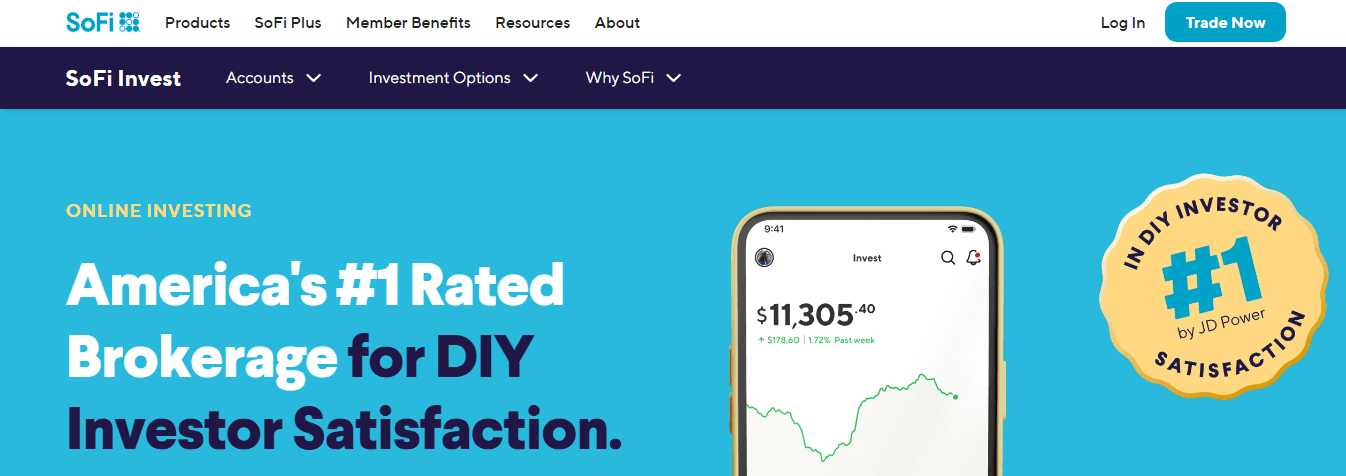
SoFi brings together banking and investing to eliminate fragmented experiences, offering personalized guidance and automation that address emotional trading and incomplete financial oversight for beginners.
Key Features for Beginners
- Automated investing with robo-advisor elements.
- Access to human financial planners.
- Commission-free stock and ETF trades.
- Educational content and career tools.
- Fractional shares starting low.
- High-yield cash management.
- Goal-based tracking in one app.
Pros
All-in-one solution reduces administrative burden; human support addresses safety and strategy concerns; automation promotes disciplined habits.
Cons
Some advanced features require a paid upgrade.
Accessibility
User-friendly mobile app with easy signup and no minimums for basic investing.
6. E*TRADE
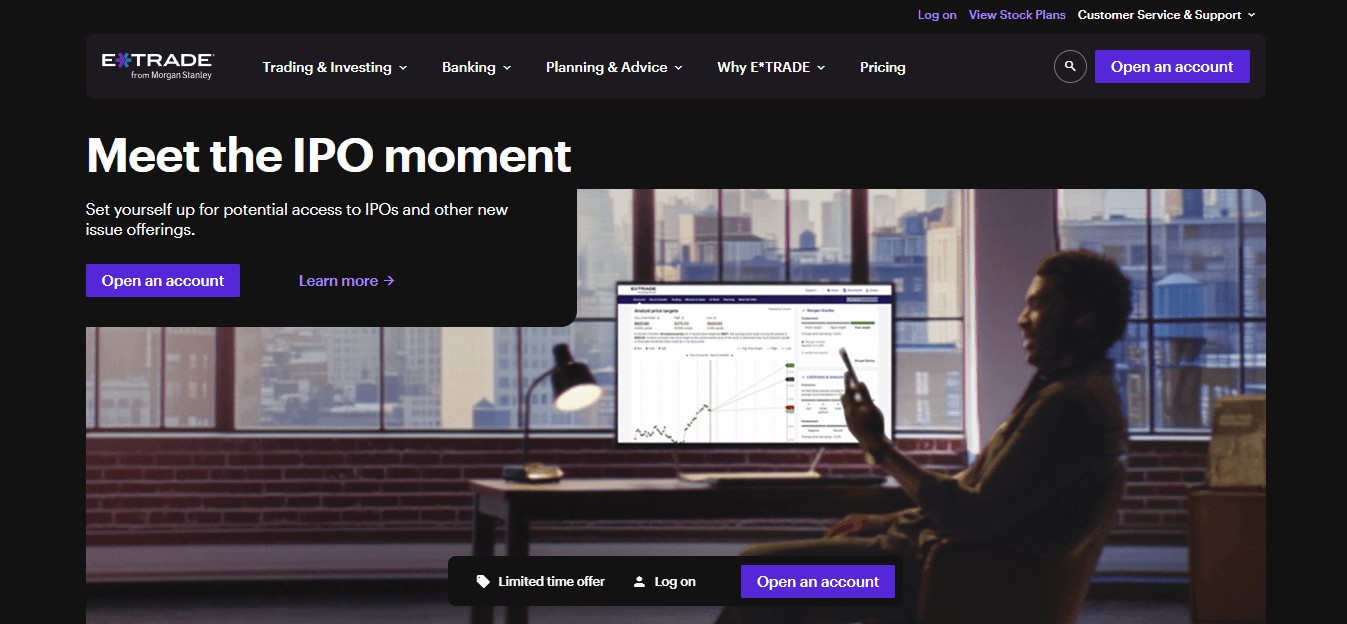
E*TRADE gives beginners the tools and knowledge to learn investing step by step, combining educational resources with features that build skills over time while keeping your account secure.
Key Features for Beginners
- A complete learning center with videos, articles, and live events available on demand.
- Power E*TRADE platform where you can customize your dashboard.
- Fractional shares let you start investing with smaller amounts of money.
- A practice trading environment where you can learn without risking real money.
- Research from Morgan Stanley to help you make decisions.
- Education and tools for options trading.
- Tools to help you plan your financial goals and retirement.
Pros
The educational library is extensive and fills knowledge gaps; trades execute reliably without technical frustration; research tools support confident decision-making.
Cons
Some advanced screens can look overwhelming if you're new to investing.
Accessibility
The mobile app and website are easy to use with low barriers to entry.
7. Public
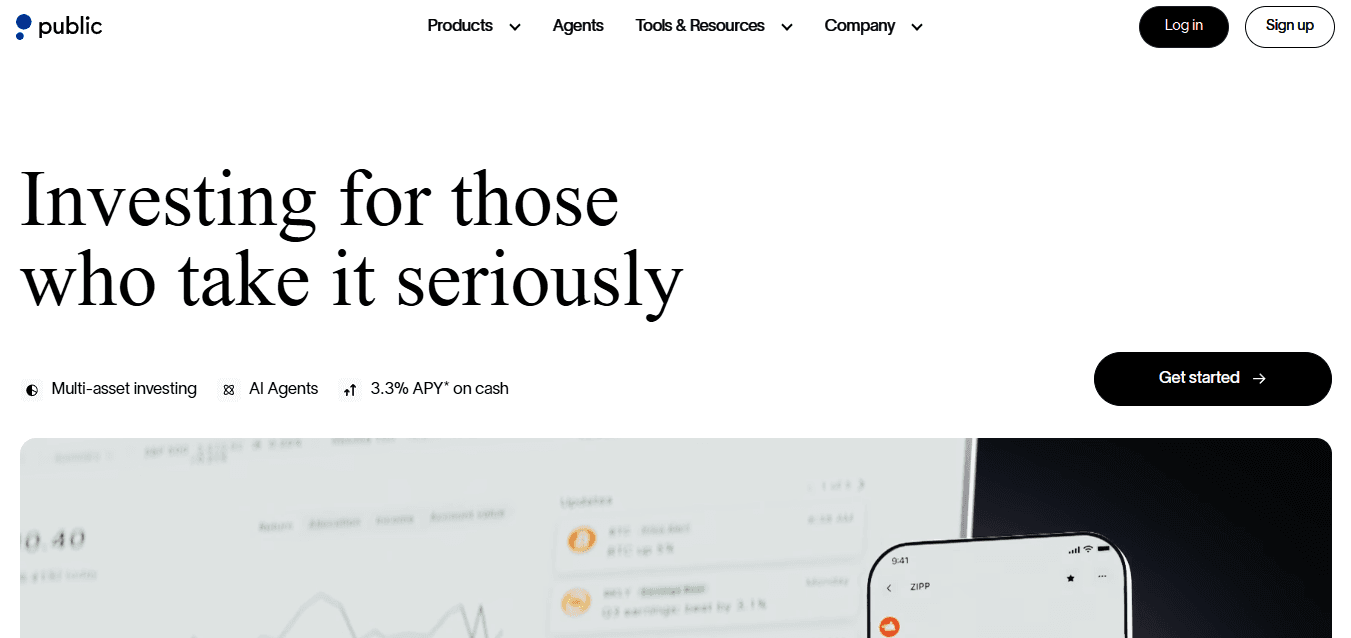
Public blends social elements with simplicity, helping beginners learn through community transparency and low-commitment investing, which counter FOMO-driven errors and limited starting capital.
Key Features for Beginners
- Social feed for following investors and discussions.
- Fractional shares with $5 minimums in some cases.
- Commission-free trading on stocks and ETFs.
- Thematic investing collections.
- Educational resources and market news.
- Community transparency on holdings.
- Easy portfolio sharing and insights.
Pros
Social learning reduces isolation, low entry barriers promote experimentation without significant risk, and a transparent community builds realistic expectations.
Cons
Less emphasis on deep technical analysis.
Accessibility
Clean mobile app with no account minimums, focused on ease of use.
How We Chose the Best Stock Trading Apps for Beginners to Try
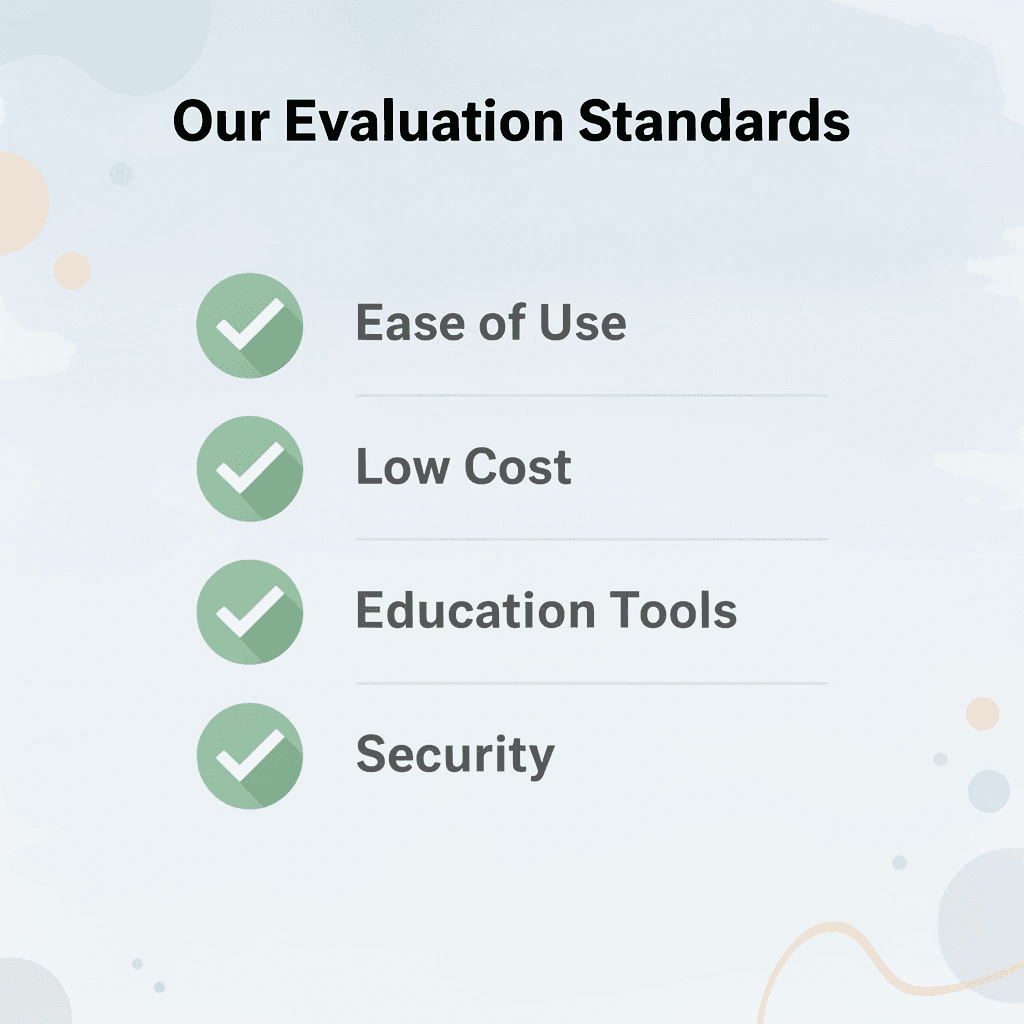
We looked at each platform based on features that help new investors learn about the market, avoid common mistakes, and build good investing habits. Every app in this guide met high standards for ease of use, cost, education, security, and overall value.
"Every app in this guide met high standards for ease of use, cost, education, security, and overall value — the five pillars that matter most to beginner investors."
- Ease of Use: Lowers the barrier to entry by minimizing the technical learning curve.
- Cost: Preserves your starting capital by eliminating unnecessary fees.
- Education: Accelerates your mastery of market mechanics and strategy.
- Security: Provides critical protection for your assets and sensitive personal data.
- Overall Value: Ensures the platform’s feature set justifies your time and investment.
🎯 Key Point: Our selection process was deliberately rigorous — only apps that excelled across all five criteria made the final cut.
💡 Tip: As a beginner, always prioritize platforms that score high on education and ease of use before worrying about advanced trading features you may not need yet.
Rigorous Criteria for Evaluation
We set up clear standards focused on what beginners need: platform accessibility, educational resources, intuitive interfaces, and features like fractional shares that lower barriers to entry. Each app underwent review to ensure it empowers users without unnecessary hurdles. Platforms needed strong regulatory compliance and protective features such as SIPC coverage and advanced security protocols. We prioritized those with transparent fee structures and reliable execution to avoid hidden costs or execution issues that erode trust and returns.
In-Depth Research and Data Sources
Our process combined independent testing of mobile apps and web platforms with cross-referenced data from FINRA BrokerCheck, SIPC reports, and recent industry analyses. We examined user experiences and expert reviews to assess how well each app supports progressive learning, from basic concepts to practical applications, while addressing behavioral pitfalls such as impulsive trading through alerts, simulators, and structured content.
Which platforms stand out as the best stock trading apps for beginners based on verified data?
We confirmed platforms like Fidelity and Charles Schwab for their extensive educational resources and strong customer support, which help combat isolation and decision fatigue. Features such as paper trading on Webull and community insights on Public were verified through official documentation and performance metrics.
Focus on Beginner-Specific Pain Points
We weighted criteria toward solutions for missed opportunities and learning curves, favoring apps with real-time data, customizable alerts, and goal-based tools that keep users engaged without overload. SoFi and E*TRADE stood out for integrating automation and planner access, which helps maintain discipline amid market volatility. Safety and accessibility ranked high, with biometric logins, encryption, and low or no minimum deposits across Robinhood and Public. This allows beginners to start small and scale safely as they build knowledge.
Comparative Analysis and Final Selection
We scored each candidate on a balanced rubric covering usability, education, costs, security, and growth potential, then cross-checked against 2026 reviews and regulatory standings. Fidelity, Robinhood, Charles Schwab, Webull, SoFi, E*TRADE, and Public emerged as clear leaders.
Why Goat Funded Trader Is the Next Step After Learning With a Stock Trading App
Stock trading apps teach how markets move, but disciplined traders hit a wall: capital. The gap between meaningful position sizes and what beginners can realistically risk becomes the limiting factor.
"The gap between meaningful position sizes and what beginners can realistically risk is the defining obstacle separating serious traders from those who plateau." — Core Trading Principle
🎯 Key Point: Stock trading apps are an essential first step — but they can only take you so far. When real capital constraints become your ceiling, it's time to explore funded trading programs like Goat Funded Trader.
💡 Tip: If you've been consistently practicing on a stock trading app and find that limited personal capital is holding back your position sizing and true growth, a prop firm challenge may be your next logical move.
- Learning Phase: Uses Stock Trading Apps to build foundational skills, limited by small or simulated capital.
- Growth Phase: Transitions to Goat Funded Trader to scale your strategy using larger firm-provided capital once you have proven your discipline.
- Advanced Phase: Operates a Full Funded Account to execute meaningful position sizes backed by the firm’s resources.

What changes when capital stops being the constraint
Most traders handle this gap by grinding slowly, adding small amounts over months, and watching meaningful opportunities pass because their account size makes the math work against them. Your skill development outpaces your ability to use it: you build a sharp eye for setups, manage risk correctly, track entries with discipline, and then place a position so small that even a clean 3% move barely registers in your account balance.
Can the best stock trading app for beginners work at real position sizes?
Skill without scale is like knowing how to drive but only being handed a bicycle. According to Goat Funded Trader, traders can access up to $2M in simulated trading capital after passing a structured evaluation. This allows strategies refined on a stock trading app to be tested at the position sizes for which they were designed.
Why does a single evaluation change the math entirely
Goat Funded Trader's one-step evaluation model requires only a 1-phase evaluation to access a funded account, with profit splits up to 90%: a fundamentally different relationship between effort and reward from what retail trading apps offer.
How do you separate trustworthy prop firms from the rest?
The trading community's skepticism of prop firms is warranted. Veteran traders consistently warn about platforms with manufactured reviews, sudden rule changes after challenges are completed, and payout structures that collapse under scrutiny. Track record, verified payouts, and transparent rules matter more than any headline number.
Is the best stock trading app for beginners really the ceiling?
The real ceiling for a developing trader was never the app they chose to learn on, but access to capital large enough to make their edge meaningful. Once you clear that ceiling with Goat Funded Trader, the question shifts from "how do I learn to trade?" to something far more interesting.
Get 25-30% off Today - Sign up to Get Access to Up to $800K Today
Goat Funded Trader solves this problem by offering simulated accounts with up to $2 million in trading capital, profit splits up to 100%, and payouts within two business days, or an extra $1,000 if delayed.
"Over $20 million has been paid out to funded traders, averaging $2,180 per payout." — Goat Funded Trader
🎯 Key Point: With profit splits up to 100% and a guaranteed $1,000 penalty if your payout is late, Goat Funded Trader prioritizes your earnings over theirs.
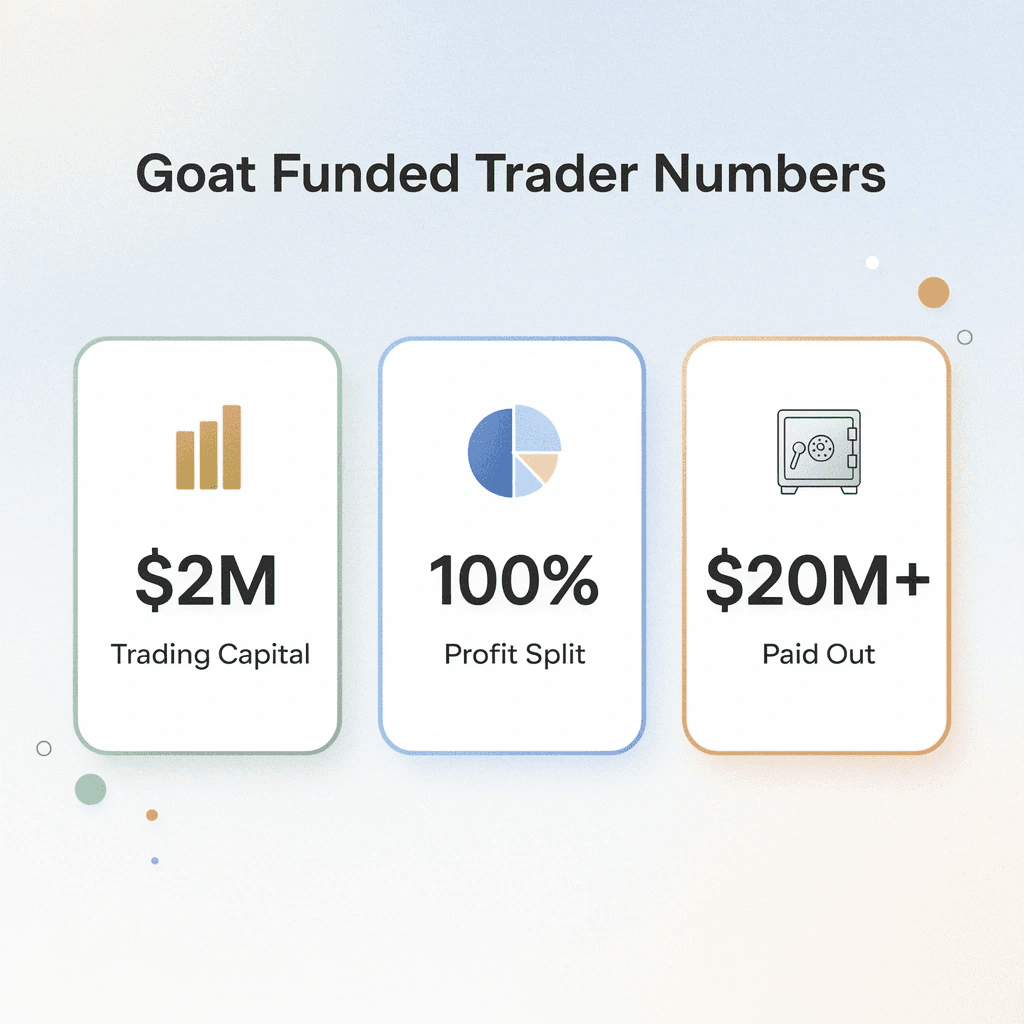
Visit Goat Funded Trader today, choose your account size, and use code FIRSTGFT for 50% off your first challenge. Fees are 100% refundable, rules are refreshingly straightforward, and news trading is fully allowed with no time restrictions.
- Max Funding: Access up to $2,000,000 in simulated trading capital.
- Profit Split: Retain up to 100% of the profits generated.
- Payout Speed: Receive your earnings within 2 business days.
- Late Payout Bonus: Guaranteed $1,000 payment if your payout is delayed.
- Daily Loss Limit: Strict 3% limit to manage daily risk.
- Max Loss Limit: 6% limit on total account drawdown.
- Fees: 100% refundable upon meeting program requirements.
- Discount Code: Use FIRSTGFT for 50% off your initial challenge.
- Total Paid Out: Over $20 million distributed to traders to date.
🔑 Takeaway: With over $20 million paid out and an average payout of $2,180, Goat Funded Trader has a proven track record of rewarding serious traders.
💡 Tip: Don't miss using code FIRSTGFT at checkout—it's the fastest way to cut your entry cost by 50% and get access to up to $800K in simulated capital today.
Related Reading
- How To Read Crypto Charts For Day Trading
- Best Day Trading App For Beginners
- Best Crypto Trading App
- Best Stock Trading App For Beginners
- Best Trading Apps For Beginners
- Risk Management In Stock Trading
- How Do You Manage Risk In Futures Trading
- Best Demo Trading Account
- How To Learn Crypto Trading
Be Great and get the App