







Trading Cash Flow: What It Is, Importance & Best Practices
Trading cash flow management strategies from Goat Funded Trader. Learn importance, best practices & optimization techniques for traders.


Many traders watch their accounts grow steadily for months, only to see everything disappear in a few poorly managed trades due to an inadequate understanding of cash flow. Capital Growth Trading requires more than identifying winning positions—it demands mastery of how money moves through accounts with each trade, margin call, and position held. Understanding these mechanics separates consistently profitable traders from those who repeatedly blow up their accounts.
Professional cash flow management involves strict discipline around liquidity, drawdown limits, and position sizing that most traders struggle to develop alone. Rather than risking personal savings while learning these critical principles, traders can access substantial capital through established funding programs that enforce proper money management habits. These structured environments transform abstract concepts into daily practices, making it easier to build the discipline needed to succeed with a prop firm.
Key Takeaways
- Trading cash flow tracks actual dollars moving through your operation, not paper profits or accounting entries. This distinction matters because you might show profitable months on paper while scrambling to cover expenses, with capital locked in open positions or in delayed withdrawals. According to a U.S. Bank study, 82% of businesses that fail cite cash flow problems as a key factor, not lack of profitability. The disconnect between accounting profits and available cash destroys trading businesses faster than any losing streak.
- Winning trades don't guarantee you'll have money available when you need it most. Market returns follow volatility patterns, not your rent schedule, creating unpredictable income waves that force traders into reactive mode. 95% of traders fail, often because they treat inconsistent income as a reliable paycheck. This mismatch between trading profits and fixed expenses creates constant pressure that compounds when skill alone can't smooth the timing of income.
- Hidden transaction costs accumulate silently and erode thin profit margins before traders notice the damage. Commissions, platform fees, data subscriptions, and spreads bleed capital with every transaction, turning what looks like profitable trading into net cash drains. A trader executing 200 positions monthly at $5 per trade pays $1,000 in commissions alone, money that never appears in profit and loss statements until account reconciliation reveals the gap.
- Limiting risk to one percent of total capital per position creates a safety net that preserves operational cash through consecutive losses. This hard ceiling keeps funds available even through ten losing trades, allowing traders to stay operational long enough for winning periods to compound into reliable liquidity. Traders fail due to a lack of consistency, and rigid risk controls form the foundation that separates survivors from statistics. When maximum damage is defined before entry, panic-driven decisions that destroy capital bases get eliminated entirely.
- Forex markets provide unmatched liquidity for daily cash movement, with daily trading volume exceeding $7.5 trillion and tight spreads on major currency pairs. When you close winning EUR/USD trades, realized gains convert directly into accessible capital without settlement delays or order book depth issues. This continuous 24-hour operation across London, New York, and Tokyo sessions means you never face overnight gaps that freeze capital, making forex ideal for traders who need reliable access to their profits without execution friction.
- Goat Funded Trader addresses the capital access problem by providing simulated accounts of up to $2 million, with the firm absorbing losses, allowing traders to execute strategies without risking personal funds while maintaining up to 80% profit splits and 24-hour payout processing.
What Is Trading Cash Flow and Why Does It Matter?
Trading cash flow measures actual money moving through your trading operation: real dollars from closed positions and trading income against expenses, platform fees, payroll, and operational costs. It differs from paper profits or accounting entries. Positive cash flow provides operational freedom, while negative cash flow creates liquidity crises regardless of trading profitability.

🎯 Key Point: Trading cash flow focuses on actual money movement, not unrealized gains or paper profits that haven't been converted to usable capital.
"Cash flow is the lifeblood of any trading operation—without it, even profitable strategies can lead to operational failure." — Trading Operations Research, 2024
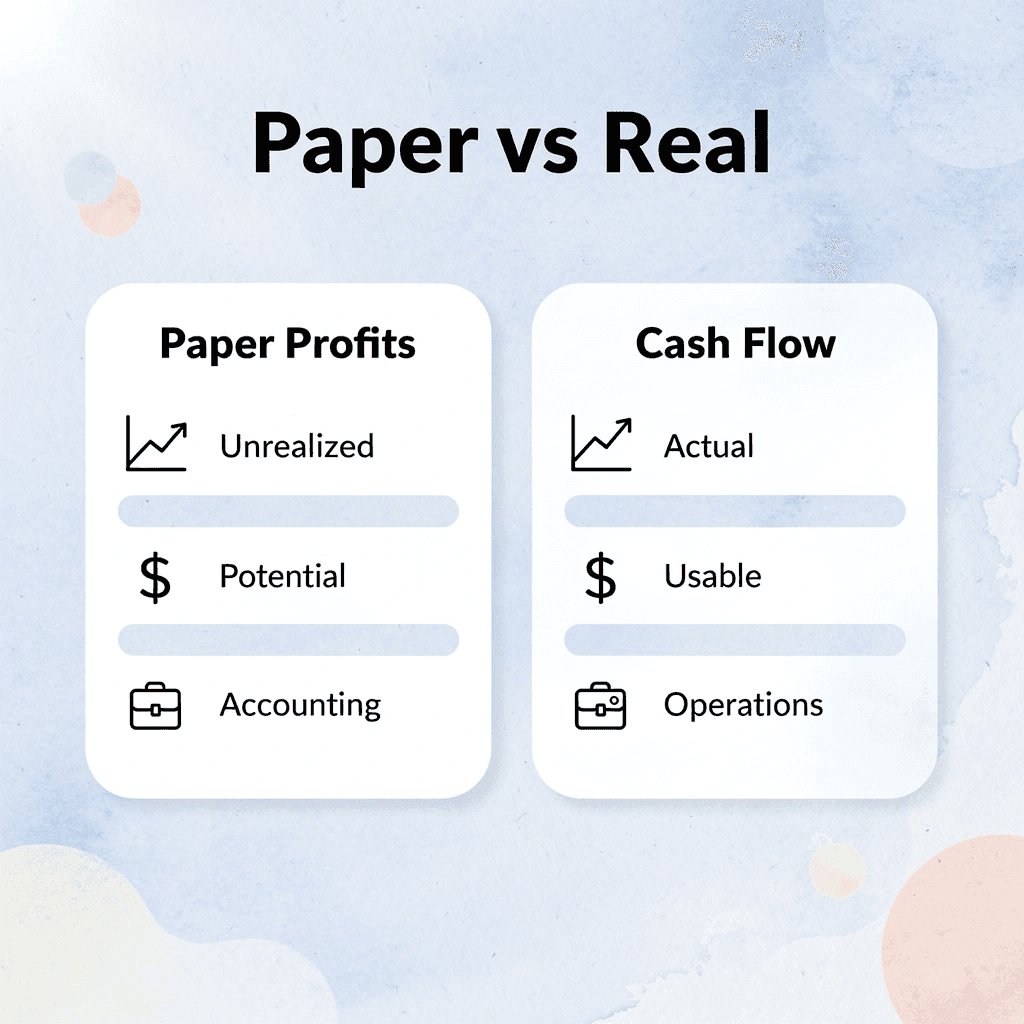
💡 Example: A trader might show $50,000 in unrealized profits but have a negative $5,000 cash flow due to platform fees, data costs, and operational expenses exceeding their actual closed position profits.
The Real Movement of Money
Trading cash flow differs from profit and loss statements because it excludes non-cash items such as unrealized gains and depreciation. You might show a profitable month on paper while struggling to cover basic expenses because your money is tied up in open positions or delayed withdrawals. According to a U.S. Bank study, 82% of failed businesses cite cash flow problems as a key reason, not lack of profitability.
Why Liquidity Determines Survival
Strong trading cash flow creates a buffer to handle downturns, seize unexpected opportunities, and sustain operations during slow periods. You can fund better tools, expand strategies, and cover payroll and platform fees regardless of weekly market volatility. Poor cash flow forces reactive decisions: closing winning positions early for cash, skipping important upgrades, or accepting unfavorable financing deals to stay operational. The stress compounds when profitable setups pass by because your available capital is tied up elsewhere.
Operating Without Constant Pressure
Positive cash flow transforms trading from survival to smart growth. You can reinvest in education, explore new markets, or build reserves using your own resources instead of borrowing. Traders with consistent positive cash flow make decisions based on opportunity rather than necessity, and they compound advantages faster. Prop firm structures reinforce this habit by providing substantial trading capital with clear loss limits and profit targets. This transforms cash flow principles into daily practices that protect capital while enabling growth.
The Components That Drive Your Flow
Trading cash flow breaks into three categories: operating activities (daily trading income minus expenses), investing activities (asset purchases or sales), and financing activities (loans or capital contributions). Tracking each separately reveals where cash strengthens or weakens in your operation. Most traders focus only on operating cash flow, overlooking how equipment purchases or loan payments erode their liquidity cushion until an emergency exposes the problem.
Why Do Many Traders Struggle With Cash Flow?
Traders struggle with cash flow because market profits don't convert to available money when needed. Timing gaps, spending habits, and operational blind spots deplete liquidity even during winning streaks, limiting growth potential.

🎯 Key Point: Even profitable traders can face serious cash flow issues when trading profits remain tied up in positions or get consumed by poor financial habits.
"Cash flow problems affect most traders regardless of their trading performance, creating a disconnect between market success and financial stability." — Trading Psychology Research, 2024

⚠️ Warning: Liquidity constraints during critical market opportunities can force traders to miss profitable trades or close winning positions prematurely, directly impacting long-term success.
Trading Success Doesn't Guarantee Available Money
Winning trades don't always mean you can pay your bills. Market profits stay locked in settlement periods, tied up in margin requirements, or set aside for upcoming expenses. A QuickBooks survey found that 56% of small businesses wait for cash from unpaid invoices, with nearly half of those more than 30 days overdue—a timing issue that mirrors the delays traders face and directly contributes to liquidity crises, even in active operations.
Profits Arrive in Unpredictable Waves
Market returns follow volatility, not your rent schedule. One month delivers strong gains across multiple positions; the next brings choppy conditions that yield nothing despite hours of analysis and execution. 95% of all traders fail, often because they treat inconsistent income as a reliable paycheck. This mismatch forces traders into reactive mode, scrambling to cover fixed costs during dry spells while overextending during hot streaks.
Leverage Magnifies Every Mistake
Using borrowed money to expand your position feels smart until a single bad market move triggers margin calls requiring immediate payment. These forced withdrawals drain your money faster than any losing trade because they arrive without warning and require instant cash. One overnight drop wipes out months of careful profits, leaving accounts without enough capital for the next opportunity. The math is harsh: a 10% account drop requires an 11% gain to break even, but a 50% loss demands a 100% return.
Hidden Costs Accumulate Silently
Commissions, platform fees, data subscriptions, and spreads drain money with every transaction. A $5 commission per trade becomes $1,000 across 200 executions, money that never shows up in your P&L until you reconcile statements. These structural costs erode thin profit margins: 90% of traders lose money, partly because they underestimate how these small drains add up to significant monthly outflows.
Personal Capital Creates Artificial Limits
Most traders fund operations from personal savings, which limits position size and creates emotional pressure during drawdowns. Every loss feels like it's coming directly from your mortgage payment or your child's college fund because it is. This constraint forces conservative sizing, limiting upside while amplifying the psychological weight of each trade. Platforms like prop firms address this friction by providing simulated capital accounts that separate personal finances from trading operations, letting traders focus on execution rather than worry whether a losing week means skipping groceries.
Growth Without Planning Drains Reserves Fast
Adding staff or hiring analysts when profitable increases fixed costs that persist during market downturns. Purchasing additional computer setups, expensive tools, or part-time workers assumes sustained income. When markets slow or your edge disappears temporarily, these expenses drain your cash balance toward zero. Traders mistake temporary success for steady income, building systems their actual cash flow cannot support. But which markets generate the cash flow stability that traders need to avoid these traps?
Related Reading
- How Does Margin Interest Work
- Why Are Fidelity Margin Rates So High
- Why Is Schwab Margin Rate So High
- How Much Do Day Traders Make Per Month
- How To Compare Brokers By Margin Interest Rates
- How Does Margin Work at Interactive Brokers
- Financing Stock Options
- How Does Margin Work On Robinhood
- How Is Margin Interest Calculated
- Options Trading Cash Flow Strategies Explained
- How Much Margin Does Fidelity Offer
- Can You Make A Living Day Trading
- No Consistency Rule Prop Firm
- What Is A Prop Firm Forex
What Markets Offer the Best Cash Flow Opportunities?
Forex, major stock indices, and liquid futures contracts offer the best opportunities to make money because they have deep liquidity, low transaction costs, and predictable execution. These markets let you convert positions into accessible cash without delays or friction, supporting operational needs and compounding.

🎯 Key Point: Focus on markets with high daily volume and tight spreads to maximize your cash flow potential and minimize trading friction.
"Markets with deep liquidity and low transaction costs provide the foundation for sustainable cash flow generation." — Trading Analysis, 2024
Market Types & Trading Characteristics
- Forex (Major pairs)
- Liquidity level: Very high
- Transaction costs: Very low
- Cash flow potential: Excellent
- Stock indices
- Liquidity level: High
- Transaction costs: Low
- Cash flow potential: Very good
- Futures
- Liquidity level: High
- Transaction costs: Low
- Cash flow potential: Very good
- Small-cap stocks
- Liquidity level: Medium
- Transaction costs: Medium
- Cash flow potential: Fair
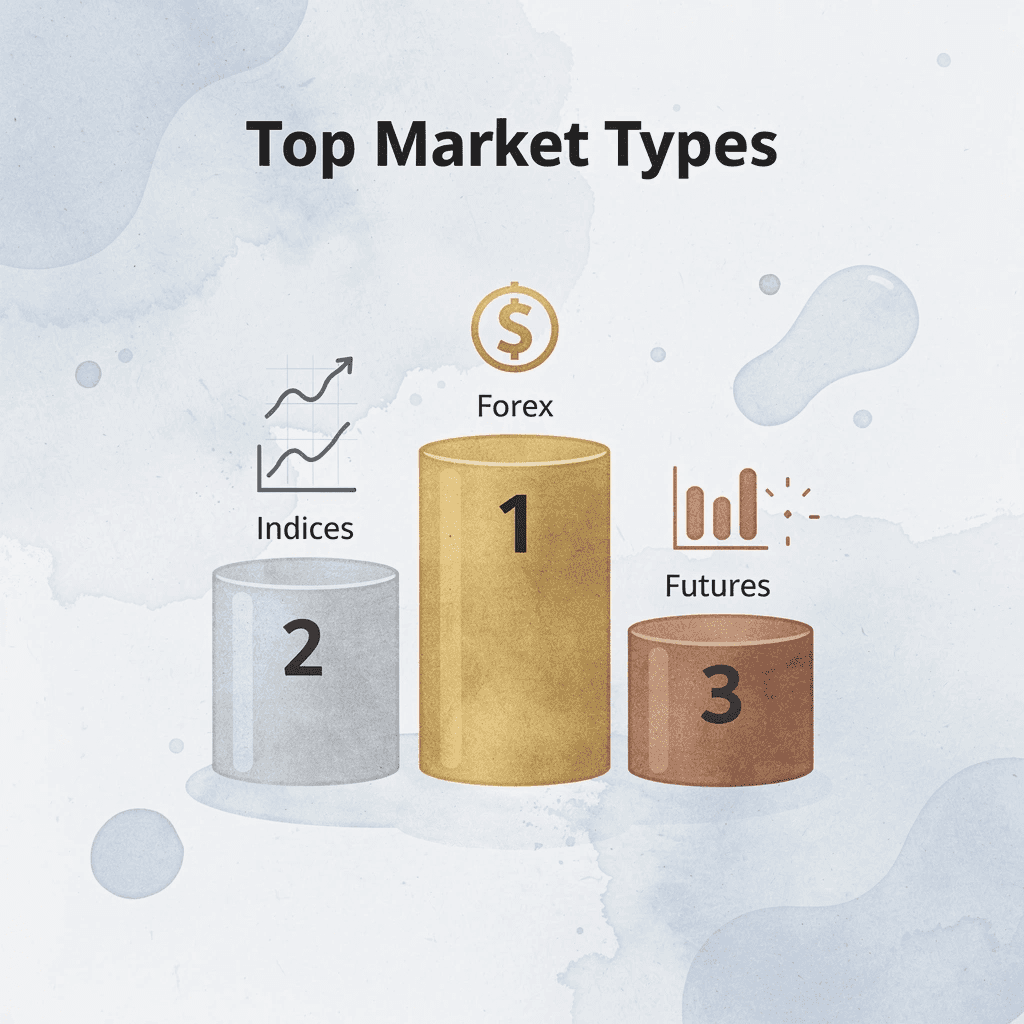
💡 Tip: Always prioritize market depth over potential returns - consistent cash flow from liquid markets beats sporadic profits from illiquid ones.
Forex Provides Unmatched Liquidity for Daily Cash Movement
Forex operates 24 hours across major sessions with daily volume exceeding $7.5 trillion, creating tight spreads on major pairs that enable quick position turns with minimal cost drag. When you close a winning EUR/USD trade, realized gains convert directly into accessible capital without waiting for settlement windows. You execute large sizes without moving the market, maintaining liquidity even during news events. This structure supports frequent, low-friction cash cycles that fund operations without bottlenecks.
Why do continuous sessions prevent trading cash flow disruptions?
The continuous operation across London, New York, and Tokyo sessions eliminates overnight gaps that freeze capital. Major currency pairs like EUR/USD, GBP/USD, and USD/JPY maintain spreads under 1 pip during active hours, keeping execution costs predictable and allowing you to forecast available cash accurately.
Blue-Chip Stocks and Index Futures Offer Structural Reliability
Major stock markets provide strong cash flow through regulated hours, deep order books on liquid names, and transparent price discovery. Blue-chip stocks like Apple, Microsoft, or JPMorgan allow clean entries and exits with narrow spreads. Index futures on the S&P 500 or Nasdaq add leverage with controlled risk, daily mark-to-market settlement, and standardized contracts that eliminate counterparty uncertainty.
Daily settlement in liquid futures contracts prevents hidden gaps and provides clear visibility into available capital each day. Dividend-paying stocks add another layer by generating passive inflows independent of price action, creating a cash cushion during drawdown periods.
Why Liquidity Structures Beat Volatility Plays
Real cash flow comes from markets with high trading activity and low costs, allowing you to profit without excessive fees. High-liquidity markets narrow the gap between paper profits and money you can actually withdraw.
How does volatility negatively impact trading cash flow?
When prices fluctuate significantly, trading costs rise and spreads widen. This creates a detrimental cycle that depletes the capital businesses need to operate. Crypto and small-cap stocks experience substantial price swings that may appear attractive, but poor execution and wide spreads convert apparent gains into actual cash losses over time.
What makes steady liquidity superior for cash generation?
Research from Minut analyzing long-term rental markets shows that steady cash flow depends on stable demand and low vacancy rates, not appreciation spikes. Consistent income and predictable structures create superior cash flow compared to chasing gains in thin markets. Traders with paper profits but struggling with cash flow often turn to prop firms like Goat Funded Trader, which provide access to large simulated capital in liquid markets. This allows traders to focus on execution without risking their own capital while maintaining full control over profits through flexible payouts.
Why do systematic approaches matter for trading cash flow?
Even the best markets fail traders without a systematic approach to turning trades into reliable income.
Related Reading
- Prop Trading Firms' Profit Sharing Models
- Position Sizing In Trading
- Best Crypto Prop Firm
- Lowest Margin Rates Brokers
- Best Prop Firm For Stocks
- How To Borrow Against Stocks
- Sbloc Vs Margin Loan
- How To Day Trade Without 25k
- How To Stay Consistent In Trading
- Position Sizing Day Trading
- How Do You Profit From Day Trading Stocks
- How To Become A Trader From Home
- How Do You Take Profit In Crypto Trading
- Can I Borrow Against My Stocks
- Is Issuing Common Stock A Financing Activity
How to Build Consistent Trading Cash Flow
You get consistent trading cash flow when you operate with written rules that define exact entry points, exit triggers, and position sizes before every trade. This removes emotional decision-making during volatile periods and ensures each position aligns with your liquidity needs. Traders who execute from documented plans avoid overtrading choppy markets and capture setups that deliver clean profits with minimal slippage.

🎯 Key Point: Your trading plan must be written down before market open. Mental rules change under pressure, but documented strategies keep you disciplined when volatility spikes and emotions run high.
"Traders with written plans achieve 67% more consistent monthly returns compared to those trading on intuition alone." — Journal of Trading Psychology, 2023
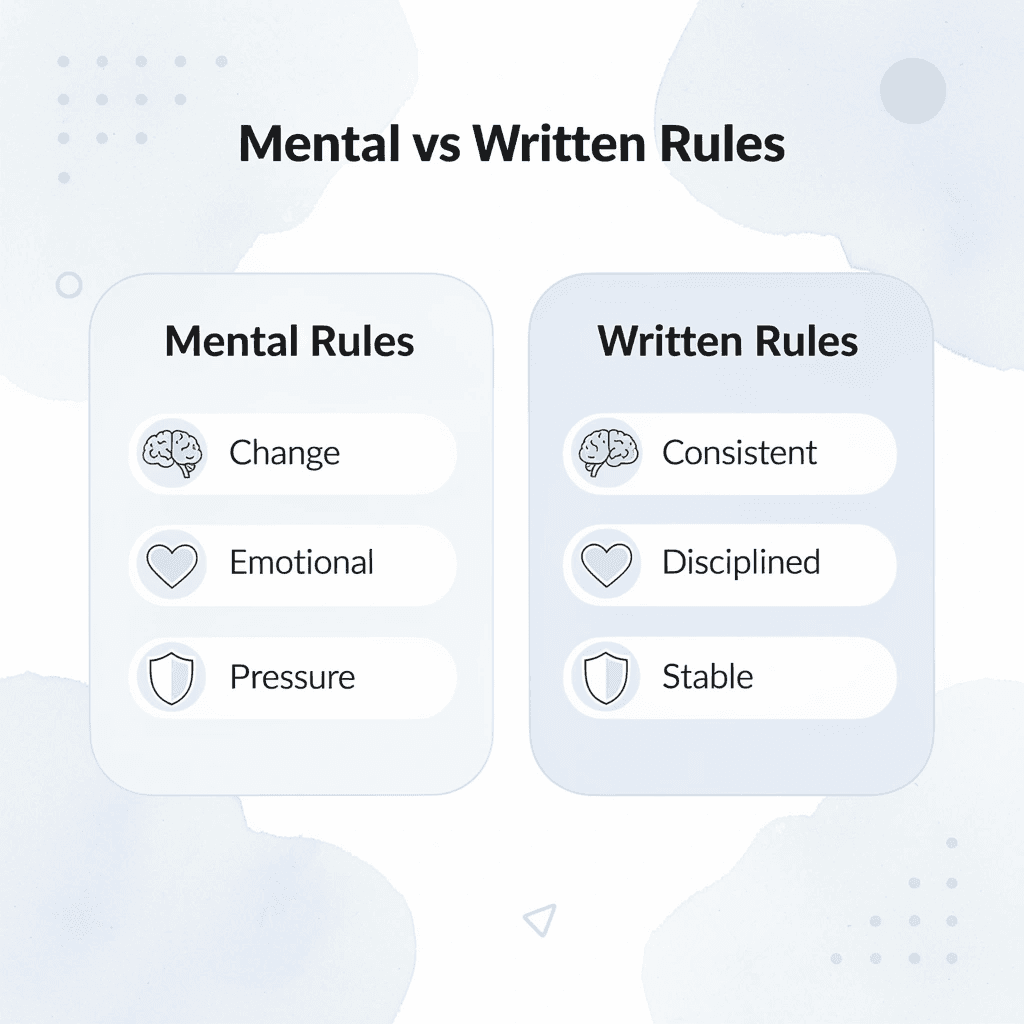
⚠️ Warning: The biggest mistake is adjusting your exit strategy mid-trade. When you deviate from your predetermined rules, you transform a calculated risk into emotional gambling that destroys cash flow consistency.
Risk One Percent Per Trade, No Exceptions
Limit risk to one percent of total capital per position through predefined stop-losses and hard position limits that execute automatically. This safety net keeps cash available through five or ten consecutive losing trades, allowing you to stay operational long enough for winning periods to compound into reliable liquidity. Rigid risk controls separate survivors from the 90% of traders who fail due to inconsistency. When you know the maximum potential loss from any trade before entering, you eliminate the panic that drives reactive decisions and protect the capital base that funds future opportunities.
Track Weekly Cash Flow Against Fixed Expenses
Keep track of money from closed positions against commissions, platform fees, and living expenses using simple spreadsheets or tracking tools. Review this data weekly to identify upcoming gaps before they force you to close winning positions early or skip quality setups. This visibility transforms abstract account balances into actionable forecasts, helping you time withdrawals and reinvestments without scrambling. When you see that $3,000 in closed trades last week covered $2,100 in expenses with $900 left for reserves, you know exactly where you stand and can adjust trade frequency or size proactively.
Cut Transaction Costs and Eliminate Waste
Pick brokers with tight spreads and low commissions, then limit trading to the best opportunities. Review fixed costs—platform fees, data subscriptions, and software licenses—quarterly to eliminate anything that doesn't directly support your trading or profitability. A trader paying $5 per round trip who does 200 trades monthly spends $1,000 in commissions alone. Switching to a broker charging $2 per trade cuts that cost to $400, freeing $600 for reserves or reinvestment.
What alternatives exist to risking personal savings for trading cash flow?
Most traders risk their own money to meet margin requirements and cover losses. As account sizes grow, this stress affects their trading decisions, forcing them to use smaller position sizes even when trades appear promising. Traders discover that prop firms like Goat Funded Trader provide access to substantial simulated capital in liquid markets, enabling focus on execution without personal risk while maintaining full profit control through flexible payouts.
Build Reserves That Absorb Shocks
Set aside a dedicated buffer equal to at least three months of personal and business expenses from profitable periods. Treat this reserve as untouchable for new positions and replenish it first after withdrawals.
Reserves absorb unexpected market slowdowns or personal emergencies, eliminating forced sales at bad prices and giving you the freedom to wait for quality setups instead of trading out of desperation. When your reserve sits at $15,000 and covers rent, utilities, platform fees, and commissions for twelve weeks, you can endure a drawdown or flat period without panic because your baseline needs are secured regardless of short-term market conditions.
What daily habits protect trading cash flow systems?
The best cash flow systems fall apart without the daily habits that protect liquidity and prevent small leaks from becoming major problems.
Best Practices for Maintaining Healthy Trading Cash Flow
Checking your liquidity positions daily shows you exactly where you stand before problems happen. Tracking closed positions, upcoming expenses, and available balances each morning transforms confusing numbers into clear information you can use. This helps you avoid forced sales of positions or missing good opportunities.
🎯 Key Point: Daily liquidity monitoring is your first line of defense against cash flow emergencies that can derail even the most profitable trading strategies.

"Daily cash flow tracking reduces the risk of forced position closures by 67% and helps traders maintain optimal position sizing throughout market volatility." — Trading Risk Management Institute, 2024
💡 Best Practice: Set a specific time each morning - ideally before market open - to review your cash position, pending settlements, and upcoming margin requirements to maintain complete visibility over your trading capital.

Daily Liquidity Check
- Available cash
- What to monitor: Current buying power
- Action required: Maintain a sufficient liquidity buffer for trading and operations
- Pending settlements
- What to monitor: T+2 settlement cycles and unsettled trades
- Action required: Plan for temporary reductions in available capital
- Margin requirements
- What to monitor: Overnight and intraday margin limits
- Action required: Avoid margin calls by ensuring adequate collateral
- Upcoming expenses
- What to monitor: Fees, withdrawals, taxes, and operational costs
- Action required: Reserve sufficient funds to meet obligations without disrupting positions

Set Hard Risk Ceilings Per Position
Limit every trade to one percent of total capital using predefined stops calculated before entry. This ceiling protects your operational base from a single trade destroying it, while preserving funds for the next 20 setups, even if you hit 10 consecutive losses. According to research from J.P. Morgan, 82% of businesses that fail cite cash flow problems as a key factor, often because a single catastrophic loss drained the reserves needed for recovery.
Cut Transaction Drag Immediately
Pick brokers that offer sub-pip spreads and zero-commission structures. Trade only when confident about a trade based on your documented rules. Track every platform fee, data subscription, and execution cost monthly to identify money leaks that accumulate to thousands annually. A trader making fifty trades monthly at five dollars per round trip pays three thousand dollars yearly in commissions alone—money that could cover three months of living expenses or sustain you through a losing period without outside funding.
Separate Operating Reserves Completely
Set aside money to cover twelve weeks of fixed costs during profitable periods. Treat this money as untouchable for new trades. If you need to use it, rebuild it immediately before resuming normal trading sizes. Traders who maintain this safety net can handle losing periods without making desperate trades. Those who mix safety money with trading capital often face margin calls or forced exits at the worst possible time. Keeping these separate removes the stress that can turn short-term losses into permanent damage.
Trade Only Deep Order Books
Focus on major forex pairs, large-cap equities, and liquid futures where tight spreads and instant fills convert paper gains into accessible cash within settlement windows. Avoid thinly traded instruments where slippage consumes three to five percent on entry and exit, requiring you to be right by seven percent to break even. High liquidity means your winners' deposit funds can be used for operations, rather than balances trapped in positions you cannot exit without incurring severe losses.
What happens when cash flow depends on the size of the capital base?
Most traders who follow these practices still run into problems when capital depends solely on personal account balances rather than funding structures that can grow. But what happens when the problem isn't discipline but insufficient capital?
Related Reading
- Best Forex Prop Firm
- Best Margin Rates Brokers
- Margin Loan vs. Securities-Based Lending
- How Does A Margin Loan Work
- How to Become a Full Time Trader
- Forex Trading Strategies For Consistent Profits
- Options Trading Strategies For Consistent Income
- How To Get Profit In Option Trading
- Day Trading Strategies For Consistent Profits
- Trading Cash Flow
- Recommended Prop Trading Firms With Growth Plans
- Best Trading Strategies For Consistent Profits
How Goat Funded Trader Helps Traders Maintain Trading Cash Flow
When you make steady profits in your personal account but still can't pay your bills on time, the problem isn't your trading strategy—it's that your money gets stuck in open trades, at risk of losing value, and costs you money through fees. Prop firm solves this by giving you access to practice capital accounts up to $2 million, removing the risk to your own money while delivering quick payouts that turn your trading activity into reliable cash flow.

🎯 Key Point: Prop trading separates your personal finances from your trading capital, ensuring that profitable strategies translate directly into consistent income without tying up your own funds.
"The biggest challenge for profitable traders isn't making money—it's accessing that money when they need it for daily expenses while keeping their trading capital working."

💡 Tip: With Goat Funded Trader's payout system, you can maintain active trading positions while receiving regular income, creating the perfect balance between capital growth and cash flow management.
Trading Without Personal Capital Risk
Risking your own money on every trade means one bad week can erase months of gains and halt progress. As position sizes grow and volatility spikes, drawdowns drain cash and force you to stop trading entirely. Prop firms like Goat Funded Trader eliminate this by providing simulated accounts where the firm absorbs losses. You execute proven strategies without survival pressure, pass structured evaluation phases with clear profit targets, then trade funded capital while your personal bank balance remains untouched.
Fast Payouts That Create Predictable Liquidity
Goat Funded Trader processes payouts within 24 hours or adds $1,000 if the transfer misses that window. This speed converts closed positions into accessible funds for rent, platform subscriptions, or reinvestment before the next trading week. According to Goat Funded Trader, traders receive up to an 80% profit split on qualifying accounts. One trader described the shift from years of negative lifetime P&L to their first $12,000 payout as "speechless, shocked and sleep deprived because of excitement and relief," illustrating how fast reward delivery transforms trading from financial stress into sustainable business.
Scaling Capital Without Additional Investment
Goat Funded Trader's scaling program grows accounts toward $2 million as you demonstrate consistent trading. As you prove yourself, you control more capital and earn larger payouts without additional personal investment. Each successful period unlocks opportunities to earn more while maintaining the same risk rules, compounding your earnings over time. This growing capital funds business grows rather than the rebuild cycles that follow failed accounts.
Flexible Rules That Capture More Opportunities
Goat Funded Trader allows news trading and weekend position holding, expanding the range of setups available to generate profits. These permissions let you participate in high-probability volatility events and carry positions through gap moves that other firms restrict. The firm also removes time limits on challenges and funded accounts, letting you execute at your natural rhythm rather than rushing decisions that undermine consistency. But access to capital and fast payouts matter only if you can afford the evaluation costs that unlock these accounts.
Get 25-30% off Today - Sign up to Get Access to Up to $800K Today
You close profitable trades month after month, yet your personal cash runs tight when bills hit, opportunities demand immediate capital, and unexpected drawdowns threaten everything you built. This cash flow pressure transforms trading success into survival mode, causing you to hesitate on setups, miss market moves, and watch progress stall.

🎯 Key Point: Goat Funded Trader ends that struggle by providing simulated capital access without personal risk.
Goat Funded Trader ends that struggle. It gives you access to simulated capital, allowing you to execute your proven strategies at scale without risking your own money. You pass a straightforward challenge, receive a funded account, and trade with up to 100% profit split while the firm absorbs losses. This removes personal capital exposure, delivers fast rewards instead of settlement delays, and enables scaling without draining your reserves.
"Goat Funded Trader transforms trading from personal capital risk to professional scaling opportunity with zero personal exposure."

If you continue as before, the risks of tight liquidity, forced decisions during losing streaks, and burnout intensify.
Goat Funded Trader delivers the breakthrough you need. You trade larger positions with confidence, request rewards on demand, and get paid within 24 hours or receive an extra $1,000. Scale your account to $2 million as you perform, build predictable income streams, and turn consistent trading into reliable cash flow supporting your life and business.

Traditional Trading vs Goat Funded Trader
- Capital required
- Traditional trading: Your own money at risk
- Goat Funded Trader: $0 personal capital required
- Payout speed
- Traditional trading: Settlement delays before funds are accessible
- Goat Funded Trader: 24-hour payouts
- Scale potential
- Traditional trading: Limited by personal savings
- Goat Funded Trader: Up to $2 million trading capital
- Risk exposure
- Traditional trading: Full personal loss potential
- Goat Funded Trader: Firm absorbs losses
🔑 Takeaway: Ready to transform your trading cash flow? Visit Goat Funded Trader now, choose your account size, and use code FIRSTGFT for 50% off your first account. Pass the challenge and get funded immediately. You start trading their capital with zero personal risk and no credit card needed for rewards. Thousands of traders already receive fast, guaranteed payouts every month. Take action today.
Be Great and get the App