







25 Options Trading Strategies for Consistent Income in 2026
Discover 25 options trading strategies for consistent income that work in 2026. Goat Funded Trader reveals proven techniques to generate steady profits.


Most traders chase quick wins and explosive returns, but building a reliable income stream offers a different path forward. Capital Growth Trading, through options strategies, offers the potential for steady cash flow via premium collection, covered calls, and systematic approaches that deliver consistent results. These income-focused strategies prioritize reliability over speculation, allowing traders to generate revenue while managing risk intelligently.
Access to sufficient trading capital often prevents traders from implementing these strategies effectively, regardless of their level of knowledge. Funded trading accounts solve this challenge by providing the resources needed to execute spreads, iron condors, and premium selling techniques at scale. This approach transforms theoretical knowledge into actual monthly income while traders demonstrate their strategy's effectiveness through a prop firm.
Key Takeaways
- Options trading volume reached 15.2 billion contracts in Q3 2025, marking a 26% increase from the previous year, according to Cboe Global Markets. This surge reflects both retail traders seeking leverage and institutions hedging risk, demonstrating that options serve multiple purposes across experience levels and market conditions.
- Only 10% of options traders achieve consistent profitability, while the majority who chase premium strategies end up net negative, according to industry data. The gap between expectation and outcome stems from overconfidence in short-term decay without accounting for volatility spikes that render probability calculations worthless during adverse market moves.
- The CBOE S&P 500 BuyWrite Index, which tracks covered call strategies, delivered an annualized return of approximately 8.6% with lower volatility compared to the S&P 500's higher long-term returns. This exposes the core trade-off where traders sacrifice meaningful upside in strong bull markets for premium income, resulting in total returns that lag plain stock ownership during periods when growth accelerates most.
- Capital constraints create an income ceiling that is unrelated to the quality of strategy. A trader running iron condors or covered calls on a $5,000 account collects $150 in premium, while the same setup on a $100,000 account generates $3,000, proving that the strategy works identically, but payouts cannot scale without larger position sizes.
- Major index ETFs like SPY and QQQ eliminate single-company risk by trading against the collective movement of hundreds of companies rather than betting on individual corporate events. Their massive trading volume allows traders to scale positions to six figures without slippage eating into returns, and tight bid-ask spreads ensure that every dollar of premium collected actually reaches accounts rather than disappearing into market friction.
- Prop firms address the capital scaling problem by providing simulated accounts up to $2,500,000, allowing traders to execute proven income strategies at an institutional scale without risking personal funds while earning profit splits that reach 100%.
What Is Options Trading, and How Does It Work?
Options trading involves contracts that give you the right, but not the obligation, to buy or sell an asset at a specific price before a set deadline. Each contract typically controls 100 shares, creating leverage that lets you profit from price movements while using less money than buying the stock outright. Your maximum loss as a buyer is the premium you pay upfront.

"U.S. listed options volume hit 15.2 billion contracts in Q3 2025, a 26% jump from the year before." — Cboe Global Markets, 2025
According to Cboe Global Markets, U.S.-listed options volume hit 15.2 billion contracts in Q3 2025, a 26% jump from the prior year. This reflects strong participation from both retail traders seeking leverage and institutions hedging risk.

🎯 Key Point: Options contracts control 100 shares each, giving you significant leverage to profit from price movements without the full cost of buying stocks outright.
💡 Tip: Your risk as an options buyer is limited to the premium paid, making it a defined-risk way to gain market exposure with less capital.

Call Options Betting on Upside
A call option gives you the right to buy shares at a set price called the strike price. If the stock rises above that strike price plus the premium you paid, you can exercise it to buy shares or sell the contract for a profit. This limits your risk to the premium while leaving your upside potential unlimited, making calls attractive when you expect significant price increases.
Put Options Profiting from Declines
A put option gives you the right to sell shares at the strike price, even if the market price drops below it. When the stock falls, the put increases in value because you can sell at a higher price than the current market price. Traders use puts to hedge positions or bet on downturns, with maximum loss capped at the premium paid.
The Three Components That Define Every Contract
Every options contract includes a strike price, expiration date, and premium. The strike sets the transaction price, the expiration defines your deadline, and the premium is what you pay—determined by the distance between the current and strike price, time remaining, and expected volatility. These variables shift constantly, creating opportunities and risks that demand precise timing.
Buying Versus Selling: Two Sides of the Same Coin
Buying options limits your downside to the premium while giving you exposure to large price swings. Selling options flips the equation: you collect the premium as income but accept the obligation to fulfill the contract if exercised. Buyers need significant directional movement to overcome the premium cost; sellers profit when prices stay stable or move minimally. Each side requires a different risk tolerance and market outlook.
Leverage Amplifies Both Gains and Losses
Options give you leverage by allowing you to control 100 shares per contract at a fraction of the cost of the underlying stock. A small payment can generate significantly larger returns if the asset price moves in your favor than you could achieve by buying the stock directly with the same amount of money.
If the market moves against you, your payment disappears completely when the contract expires, turning potential gains into total losses. Precision in timing, direction, and the magnitude of price movement separates profitable trades from worthless contracts.
How do prop firms enable options trading strategies for consistent income
Prop firms address capital constraints by providing simulated capital accounts, enabling you to implement spreads, iron condors, and premium-selling techniques at scale without risking personal funds. Our platform at Goat Funded Trader helps traders access this capital efficiently so you can focus on strategy execution.
You prove your strategy works, earn profit splits up to 100%, and withdraw income on demand while the firm absorbs downside risk. That structure transforms theoretical knowledge into withdrawable earnings, removing the barrier between understanding options and generating consistent income from them. But knowing how options work matters only if you choose the right underlying assets to trade.
What Assets Work Best for Options Income Trading?
Picking the right underlying assets determines whether options income trading becomes a predictable cash flow system or a series of frustrating surprises. The best choices combine deep liquidity, stable fundamentals, and option chains that price fairly without excessive spreads. These qualities let you enter and exit positions cleanly, collect meaningful premiums consistently, and avoid binary risks like earnings surprises that wipe out months of gains.
🎯 Key Point: The three pillars of successful options income trading are liquidity depth, fundamental stability, and fair option pricing - without all three, your strategy becomes gambling instead of systematic income generation.

"Deep liquidity and tight bid-ask spreads can improve options trading profitability by 15-25% compared to illiquid underlyings." — Options Industry Council Research
💡 Best Practice: Focus on high-volume ETFs like SPY, QQQ, and IWM, or blue-chip stocks with consistent daily volume above 1 million shares - these provide the liquidity foundation that makes options income trading actually work.

Major Index ETFs Anchor Reliable Income Strategies
Broad market ETFs like SPY and QQQ are popular in options-income portfolios because they reduce the risk of individual company failures. Selling covered calls or cash-secured puts on SPY trades against 500 companies rather than betting on a single CEO or product launch. This diversification smooths price swings and creates predictable patterns where time works in your favor week after week. Their huge trading volume lets you grow positions to six figures without slippage, and tight bid-ask spreads ensure the premium reaches your account rather than disappearing into market friction.
Blue-Chip Stocks Deliver Premium Without the Drama
Well-known companies like Apple, Microsoft, and Nvidia let you own specific companies while earning income from shares you already have. These stocks remain easy to trade even during market downturns, and their strong fundamentals support monthly income strategies without the risk associated with smaller companies. Selling covered calls against these positions converts idle holdings into income generators, limiting some gains in exchange for immediate cash that compounds faster than waiting for stock appreciation alone. Their stability means they rarely drop suddenly overnight, so your price targets won't be bypassed by surprise events that turn winning trades into forced sales at unfavorable prices.
High-Volatility Names Boost Premiums When Used Selectively
Assets like Tesla generate premiums two or three times larger than stable dividend payers because uncertainty inflates option prices. Cash-secured put strategies work well when you're willing to own shares at prices 10–15% below current levels, converting potential ownership into a paid event. The key distinction between growth-driven volatility and distress-driven chaos is that you want stocks where price swings reflect investor disagreement about future prospects, not fundamental threats to the business model. Higher premiums let you hit monthly income targets with fewer contracts and less capital at risk, though you must exit when the stock breaks its tradable range and premiums decline.
Dividend-Paying Stocks Stack Income Layers
When you combine covered call writing with quarterly dividend payouts, you create a compounding effect that plain stock ownership cannot deliver. Established dividend payers in stable sectors show moderate volatility that supports out-of-the-money call sales without frequent early assignments, preserving your shares for ongoing dividend collection while you pocket option premium every 30 days.
This dual-income structure outperforms buy-and-hold strategies in sideways markets, where capital gains stall while time decay and dividends continue to flow. It also provides downside protection when prices dip because your effective cost basis drops with every premium and payout you receive.
How do prop firms scale income generation without personal risk?
Prop firm structures provide simulated capital accounts of up to $2M to execute covered calls, cash-secured puts, and spread strategies without risking your own money. With Goat Funded Trader, you prove your approach works through evaluation periods, then earn profit splits up to 100% on income generated at scale.
This separation between trading skill and personal financial risk removes the barrier that prevents most traders from scaling income strategies beyond their savings account limits. But selecting the right assets only matters if the income they generate shows up consistently, month after month.
Related Reading
- How Does Margin Interest Work
- Why Are Fidelity Margin Rates So High
- Why Is Schwab Margin Rate So High
- How Much Do Day Traders Make Per Month
- How To Compare Brokers By Margin Interest Rates
- How Does Margin Work at Interactive Brokers
- Financing Stock Options
- How Does Margin Work On Robinhood
- How Is Margin Interest Calculated
- Options Trading Cash Flow Strategies Explained
- How Much Margin Does Fidelity Offer
- Can You Make A Living Day Trading
- No Consistency Rule Prop Firm
- What Is A Prop Firm Forex
Is Options Trading a Reliable Way to Generate Consistent Income?
Options income trading gives steady results only for traders who treat it like a business that needs strict discipline, not a shortcut to easy money. Uneven risk structures mean that a single bad move can wipe out months of premium gains faster than most traders can recover from. Success depends on careful risk management, realistic expectations about decay versus volatility, and recognizing that high-probability setups can fail when unexpected, large risks emerge.
🎯 Key Point: The most critical factor in options income success is treating it as a systematic business rather than a passive income stream. Traders who approach it casually often underestimate the discipline required for long-term profitability.
"High-probability setups can still result in significant losses when market volatility exceeds expectations, making risk management the cornerstone of sustainable options trading."
⚠️ Warning: One bad trade can eliminate weeks or even months of premium collection. This asymmetric risk profile makes position sizing and stop-loss strategies absolutely essential for consistent income generation.

The Income Fantasy Meets Market Reality
Retail traders picture selling covered calls or cash-secured puts as a reliable side hustle that beats stagnant savings accounts. Data shows roughly 70% of options traders lose money overall, with only about 10% achieving consistent profits. The gap stems from overconfidence in short-term decay without accounting for volatility spikes that render probability calculations unreliable. Small premiums accumulate slowly, but directional errors and poor position sizing trigger account-draining losses that grow faster than income ever builds.
How do covered calls limit your gains during market rallies?
The CBOE S&P 500 BuyWrite Index delivered an annualized return of about 8.6% with lower volatility than the S&P 500. This illustrates the core trade-off: you sacrifice significant gains in strong bull markets to capture premium income, resulting in total returns that lag regular stock ownership during periods of accelerated growth. The requirement to sell calls limits your gains when the market rewards waiting, transferring wealth to more experienced players through bid-ask spreads and timing disadvantages.
Why do options trading strategies for consistent income often fail?
Traders who treat options income as a skill-based business with strict rules can generate returns, but those chasing easy monthly payouts discover that reliable-looking income erodes capital before compounding occurs. The failure point is asymmetric risk exposure: rare but severe adverse moves can wipe out multiple months of gains, and most participants lack the edge to repeatedly select winning setups across changing volatility regimes.
How can prop firms help scale options trading strategies for consistent income without personal risk?
Most traders hit a limit when they lack sufficient capital for larger trades. Prop firm structures separate trading skill from personal financial risk by providing simulated capital accounts up to $2M, allowing disciplined traders to deploy covered calls, cash-secured puts, and spread strategies at scale without risking personal savings. You prove your approach works through evaluation periods, then earn profit splits up to 100% on income generated from strategies otherwise limited by personal account size.
What do retail trader losses reveal about income collection strategies?
A London Business School study found that retail options traders lost more than $2 billion in premium between 2019 and 2021, with most losses occurring in short-dated trades. This demonstrates that collecting steady income transfers wealth to experienced traders through bid-ask spreads, timing disadvantages, and repeated small losses that erode capital before growth can occur.
How do you turn trading skill into withdrawable cash flow that compounds?
But even with access to money and proven strategies, one question determines whether your income grows or stalls: how do you convert trading skill into sustainable, withdrawable cash flow?
Related Reading
- Prop Trading Firms' Profit Sharing Models
- Position Sizing In Trading
- Best Crypto Prop Firm
- Lowest Margin Rates Brokers
- Best Prop Firm For Stocks
- How To Borrow Against Stocks
- Sbloc Vs Margin Loan
- How To Day Trade Without 25k
- How To Stay Consistent In Trading
- Position Sizing Day Trading
- How Do You Profit From Day Trading Stocks
- How To Become A Trader From Home
- How Do You Take Profit In Crypto Trading
- Can I Borrow Against My Stocks
- Is Issuing Common Stock A Financing Activity
25 Options Trading Strategies for Consistent Income in 2026
Options trading now goes beyond guessing about price changes. Traders use structured strategies to create regular income, reduce risk, and achieve steady results regardless of market conditions.

🎯 Key Point: The best strategy for you depends on what you think the market will do, how much risk you can handle, and how much money you have to invest. Below are the first five options trading strategies that professionals and retail traders use to make a steady income and control their returns.
💡 Tip: Successful options traders always match their strategy selection to their market outlook and risk tolerance rather than chasing the highest potential returns.

1. Covered Call Strategy
A covered call means you own 100 shares of stock and sell call options against them to collect premiums. This converts static positions into active income producers by lowering your effective cost basis.
How do you execute covered calls for consistent income?
Buy or hold 100 shares per contract, then sell an out-of-the-money call option with a strike above the current price and near-term expiration. Keep the premium and repeat after expiration if the call expires worthless.
When should you deploy this options trading strategy?
Use this strategy in neutral-to-mildly bullish markets where the stock trades within a predictable range and volatility remains moderate. This lets you collect premium without frequent assignment. This strategy works best for stock owners seeking to increase yields on long-term holdings, particularly blue-chip names with steady price action and dividend payments.
2. Cash-Secured Put Strategy
This strategy involves setting aside cash to buy shares if assigned while selling put options to collect premium. You get paid to potentially purchase a stock at a discount.
How do you execute this options trading strategy for consistent income?
Pick a stock you want to own. Sell an out-of-the-money put option. Set aside enough cash to buy the stock if assigned. Let time work in your favor: as the stock stays above the strike price, the put loses value.
When should you apply this strategy for optimal results?
Use this strategy during sideways or slightly bullish periods on assets you consider undervalued at the strike price, particularly when implied volatility inflates premiums. This strategy works well for investors comfortable buying shares at specific entry points while earning income, particularly when building positions slowly in quality companies.
3. Iron Condor Strategy
The iron condor creates a neutral range-bound position by simultaneously selling a call spread and a put spread. This strategy profits when the underlying asset remains within defined boundaries. Sell a call spread and a put spread, both out-of-the-money with the same expiration date. You collect a net credit while buying further protection on both sides to cap your risk.
Use this strategy in low-volatility environments or when the market shows no strong directional bias, such as during consolidation phases after earnings. This strategy works best for traders who prefer non-directional income with defined risk, particularly on liquid index ETFs that move within predictable ranges.
4. Bull Put Spread Strategy
A bull put spread profits by selling a put option at a higher strike price and buying a put option at a lower strike price, creating a credit position that gains when prices remain stable or rise.
How do you execute this options trading strategy for consistent income?
Sell a put at a strike price below the current price and simultaneously buy a further out-of-the-money put for protection. You keep the difference as credit while managing the position until expiration or early closure.
When should you apply this strategy in different market conditions?
Use this strategy in moderately bullish or neutral markets where you expect the asset to remain above the short strike through expiration. This strategy works best for traders with a positive outlook seeking limited risk and a defined maximum loss. It suits individual stocks or ETFs with upward momentum.
5. Bear Call Spread Strategy
This credit spread profits from falling or stable prices. You sell a call at a lower strike price and buy a call at a higher strike price to cap your losses. Sell a call option above the current price and buy another call option further out of the money. You collect money upfront, and your position benefits from time decay if the price stays below the short strike.
Use this strategy when you expect prices to stay neutral or decline slightly, or when you think resistance levels will hold, particularly around overbought technical setups. This strategy suits investors who expect limited upside and want to earn income with capped risk, rather than using naked short calls.
6. Short Straddle Strategy
The short straddle profits by selling both a call and a put at the same strike price, typically at-the-money, when the underlying asset experiences low volatility and remains near that strike price through expiration.
How do you execute a short straddle for consistent income?
Sell a call option and a put option, both at-the-money, with the same expiration date on a liquid asset. Collect the combined premium upfront and aim to have both options expire worthless or close the position early to capture profits as time decay accelerates.
When should you deploy short straddle strategies?
Put your plan into action during periods of expected price stability, such as after major company earnings announcements or during calm market conditions.
Who benefits most from short straddle options trading strategies?
Best for experienced traders comfortable with undefined risk who target high-premium environments on stable assets and maintain strict stop-loss rules to manage sudden moves.
7. Short Strangle Strategy
This neutral strategy involves selling an out-of-the-money call option and an out-of-the-money put option to capture premium from price action that stays within a range while benefiting from time decay on both sides.
How do you execute the short strangle strategy?
Pick strikes equidistant from the current price on both sides. Sell the call above and the put below, collecting the net credit. Watch the position closely and adjust or close it if the price approaches either short strike.
When should you apply this options trading strategy?
Use this strategy when the market is calm and not expected to move significantly. It works best on large groups of stocks or ETFs that tend to stay within their normal trading ranges without major news or events that would push prices up or down.
Who benefits most from short strangle strategies?
Best for traders seeking higher premiums than iron condors while accepting an undefined risk profile, particularly those focused on non-directional income in stable markets.
8. Iron Butterfly Strategy
The iron butterfly combines selling an at-the-money straddle with buying protective wings on both sides, creating a position with defined risk that profits from minimal price movement around the central strike.
How do you execute the iron butterfly setup?
Sell an at-the-money call and put while buying further out-of-the-money call and put options at equal distances. The net credit received represents the maximum potential profit if the underlying expires near the body strikes.
When should you use this options trading strategy for consistent income?
Use this strategy when you expect the price to remain stable or when volatility is low. It works best when the asset stays near an important technical level until expiration. This strategy works best for traders seeking steady income who prefer knowing their maximum loss upfront. It offers a high probability of small, consistent wins on assets that tend to revert to their average price.
9. Wheel Strategy
The wheel rotates between selling cash-secured puts and covered calls on the same underlying to generate ongoing income while potentially acquiring shares at favorable prices.
How do you implement the wheel strategy effectively?
Start by selling cash-secured puts until you get assigned shares, then sell covered calls against those shares. Repeat the cycle by selling puts again once calls expire or shares get called away, maintaining continuous premium collection. Use this strategy on high-quality stocks you want to own long-term in neutral-to-bullish conditions, allowing for repeated premium harvesting over months.
Who benefits most from wheel options trading strategies for consistent income?
Best for patient investors building positions in strong companies while generating monthly income, particularly those with sufficient capital to handle possible assignments.
10. Calendar Spread Strategy
A calendar spread exploits the fact that options lose value at different rates. You sell a near-term option and buy a longer-dated option at the same strike price. The strategy profits because the sold option decays faster than the purchased option.
How do you execute a calendar spread for consistent income?
Sell a short-term at-the-money or slightly out-of-the-money option while buying a longer-dated option at the same strike. Close or roll the position as the front-month contract expires to capture the decay differential.
When should you apply calendar spreads in options trading strategies?
Use this strategy when you expect the underlying asset to remain stable in the short term but has the potential to grow over a longer period. This works best when volatility is moderate and contracting. This strategy suits traders seeking positive theta exposure and directional flexibility. It works well with liquid underlyings that have predictable short-term behavior.
11. Poor Man's Covered Call Strategy
The poor man's covered call mimics the returns generated by a traditional covered call but requires significantly less capital. Instead of owning actual shares, it uses a long-term call option.
How do you implement this options trading strategy for consistent income?
Buy a deep in-the-money long-dated call (LEAP) to replicate stock ownership, then sell shorter-term out-of-the-money calls against it each month. Collect premiums from the short calls while the long call provides delta exposure.
When should you apply this strategy for optimal results?
Use this strategy in neutral-to-mildly bullish stock markets with moderate volatility, where you expect to collect a steady premium without sharp downward moves that could reduce the long call's value.
Who benefits most from this capital-efficient approach?
Traders who want to generate income like covered calls but lack capital for shares can use this strategy, which works especially well for smaller accounts.
12. Diagonal Spread Strategy
A diagonal spread combines calendar and vertical spreads by using different strikes and expiration dates, benefiting from time decay differences while maintaining directional flexibility for income.
How do you execute diagonal spreads for consistent income?
Buy a longer-term option at one strike price and sell a shorter-term option at a different strike price, typically collecting a net debit or small credit. Manage the trade by rolling the short leg forward as it approaches expiration to continue harvesting premium.
When should you deploy diagonal spread strategies?
Use this strategy when you expect the underlying asset to trade slowly in one direction, such as a slow uptrend. It works best when short-term decay outpaces the long leg while volatility remains controlled.
Who benefits most from options trading strategies for consistent income using diagonals?
Best for intermediate traders seeking positive theta with adjustable bias. Ideal for liquid underlyings where repeated short-leg rolls generate ongoing monthly income.
13. Jade Lizard Strategy
The jade lizard is a credit strategy that sells an out-of-the-money put and a call spread on the same side, creating a position with no upside risk and premium collection focused on one-directional protection.
How do you structure a jade lizard position?
Sell an out-of-the-money put and simultaneously sell a call spread above the current price, collecting a net credit. This structure eliminates naked call risk while generating a profit if the price remains above the short put's strike at expiration.
When should you implement this options trading strategy?
Use this strategy when markets are slightly positive or flat, and when there is high uncertainty about future prices. It works best on assets with support levels—price points where the asset tends to stop falling.
Who benefits most from jade lizard strategies?
Traders seeking regular income from credit spreads while controlling risk can use this strategy, which works well for those who don't need to remain completely neutral.
14. Broken Wing Butterfly Strategy
The broken wing butterfly is an uneven butterfly variation that generates premium through an unbalanced risk-reward profile, often tilted to favor one direction while maintaining a defined overall risk. Buy one in-the-money option, sell two at-the-money options, and buy one further out-of-the-money option on the same side with uneven wing widths. Enter for a net credit or small debit and profit from time decay if the price stays near the body.
When should you use this options trading strategy for consistent income?
Use this during times when the market is not moving much or is moving a little, like after prices drop back down to where you expect them to return to normal levels, but they don't have to be perfectly balanced. Best for experienced traders seeking high-probability setups with limited risk, particularly on indices or ETFs, for consistent small wins.
15. Double Calendar Spread Strategy
The double calendar spread uses two calendar spreads at different strike prices to widen the profitable range. This strategy leverages time decay across multiple levels to increase income potential.
How do you execute the double calendar spread?
Sell short-term options at two separate strikes (one call, one put) while buying longer-term options at the same strikes. Collect faster decay from the front-month contracts and adjust or close based on price movement.
When should you apply this options trading strategy for consistent income?
Use this strategy when prices are stabilizing or before events unlikely to cause significant moves. It works best when the underlying asset is expected to move gently within a wider range for several weeks. This strategy works best in range-bound markets, where traders seek larger profit areas than single calendar spreads provide. It is especially useful for heavily traded assets with predictable short-term behavior.
16. Collar Strategy
The collar strategy combines owning stock with buying a protective put and selling a call to offset the put cost, creating a low-cost hedge that generates limited income from the call premium.
How do you implement the collar strategy effectively?
Keep the shares you own, buy a put option that is out-of-the-money for protection against losses, and sell a call option that is out-of-the-money to pay for most or all of the put cost. This strategy limits both gains and losses while generating income or lowering your cost basis when the call premium exceeds the put cost.
When should you deploy collar strategies for consistent income?
Use this strategy in uncertain or slightly bullish markets when you want to protect gains on existing positions without paying full insurance costs. It works especially well around earnings announcements or economic events.
Who benefits most from collar trading approaches?
Best for careful investors who want to protect their stock holdings while earning extra income. It works well for retirement accounts seeking to preserve capital while generating additional returns.
17. Ratio Call Spread Strategy
A ratio call spread buys one call at a lower strike and sells two or more calls at a higher strike with the same expiration date. The extra-short calls generate net credit income and increase premium collection beyond simple credit spreads, but create unlimited risk on sharp upside moves, requiring careful management.
Use this strategy in neutral-to-slightly bullish conditions with limited expected upside, where the underlying is likely to remain below the higher short strikes through expiration. This strategy works best for advanced traders comfortable with ratio mechanics who seek higher premium collection on stocks with capped near-term upside potential.
18. Put Ratio Spread Strategy
The put ratio spread sells more puts at a higher strike and buys fewer puts at a lower strike, collecting net premium while offering downside protection if the price drops sharply.
How do you execute put ratio spreads effectively?
Sell one or more puts at a higher strike price and buy a smaller number of puts further out-of-the-money. You enter this trade for a credit and profit if the underlying stock stays above the short strike price. The long puts protect you from larger declines.
When should you use put ratio spreads in options trading strategies for consistent income?
Use this strategy when you expect the market to remain stable or decline slightly, particularly when an asset has support levels that prevent significant downside. This strategy works best for traders seeking income with built-in protection against significant drops. It suits those who expect prices to rise over time but want to earn extra money in the short term.
19. Protective Collar on ETF
This variation applies the collar to broad ETFs like SPY. You own the ETF shares while buying puts and selling calls to generate income and limit portfolio volatility.
How do you implement protective collar options trading strategies for consistent income?
Buy ETF shares, get protective puts below the current price, and sell calls above the current price to offset costs. Adjust strikes and expirations monthly to maintain a steady premium flow while keeping the position protected.
When should you use this strategy for optimal results?
Use this strategy during unpredictable or sideways market conditions, where the main stock indexes lack clear direction. It lets you collect premiums while maintaining built-in risk controls. Investors who prefer a hands-off approach and those with retirement accounts seeking steady income from a diversified mix of investments benefit most from this strategy.
20. Credit Spread Ladder Strategy
A credit spread ladder stacks multiple vertical credit spreads at different strikes and expirations to create layered income streams that mature sequentially for smoother cash flow.
How do you implement options trading strategies for consistent income using ladders?
Sell multiple bull put or bear call spreads with staggered strikes and short-term expirations. Collect credits across the ladder, rolling or closing winning legs while time decay works on each layer independently.
When should you apply credit spread ladder strategies?
Use this strategy in stable, low-volatility environments where the underlying asset trades within a broad range, allowing you to repeatedly layer positions without predicting price direction. This strategy works best for traders building diversified income portfolios, spreading risk across multiple positions rather than concentrating on single monthly trades.
21. Credit Put Butterfly Strategy
The credit put butterfly is a defined-risk neutral strategy that sells two at-the-money puts and buys protective puts on both sides, profiting from time decay when the underlying stays near the middle strike.
How do you execute this options trading strategy for consistent income?
Sell two puts at the same middle strike and buy one put above and one put below at equal distances. Enter for a net credit and hold to expiration or close early when most of the premium has decayed, maximizing theta while keeping maximum loss defined.
When should you use this strategy for optimal results?
Use this strategy in low-volatility, range-bound markets where the asset is expected to stay around a support level with minimal movement through expiration. This strategy works best for traders seeking high-probability income with symmetrically defined risk, particularly on liquid ETFs during quiet market periods.
22. Covered Strangle Strategy
A covered strangle means you own shares of stock and sell both an out-of-the-money call option and an out-of-the-money put option. This strategy lets you earn premiums from both options while retaining ownership of the stock.
How do you execute this options trading strategy for consistent income?
Hold 100 shares of the underlying stock, sell an out-of-the-money call above the current price, and sell an out-of-the-money put below. Collect both premiums and manage positions by closing or rolling them as expiration approaches to continue the income cycle.
When should you apply covered strangles in market conditions?
Use this strategy when market conditions are calm, and the stock price fluctuates within a clear range. You should feel comfortable holding or buying additional shares.
Who benefits most from this income generation approach?
Best for experienced investors who own quality stocks and want to maximize premium collection beyond what standard covered calls offer.
23. Post-Earnings Credit Spread Strategy
This approach exploits the sharp drop in implied volatility after earnings by selling credit spreads while option premiums remain elevated ahead of the volatility crush. Sell bull put spreads or bear call spreads on the underlying with short-term expirations right after earnings announcements to collect high premiums and benefit from both time decay and falling implied volatility. Use this on companies with predictable reactions and strong liquidity in their option chains. It works best for traders who monitor earnings calendars and want to profit from volatility contraction for quick, high-yield income setups.
24. Rolling Income Strategy
The rolling income strategy involves systematically closing and reopening options positions before expiration to capture remaining premium and reset for new income cycles without assignment. Sell short-term credit spreads or covered calls, then roll the position to the next expiration week or month when 50–70% of the premium is captured. Adjust strikes based on current price action to maintain a favorable probability.
Implement continuously in stable or trending markets where you can repeatedly find high-probability setups without major directional shifts. Best for disciplined traders building a business-like monthly income stream who actively manage positions rather than holding to expiration.
25. Diversified Options Portfolio Strategy
A diversified options portfolio spreads income generation across multiple uncorrelated underlyings and strategies, creating smoother, more reliable monthly cash flow. Allocate capital across 8-12 positions: covered calls on blue chips, iron condors on indices, and cash-secured puts on growth names. Rebalance monthly by closing winners and opening new trades to maintain balanced exposure. Apply this as a core year-round approach, especially in mixed-market environments where focusing on a single asset or strategy increases risk. This strategy suits serious income investors who treat options as a professional endeavor and prioritize risk-adjusted consistency over individual high-reward trades.
How to Choose the Best Options Strategy for Consistent Income Trading
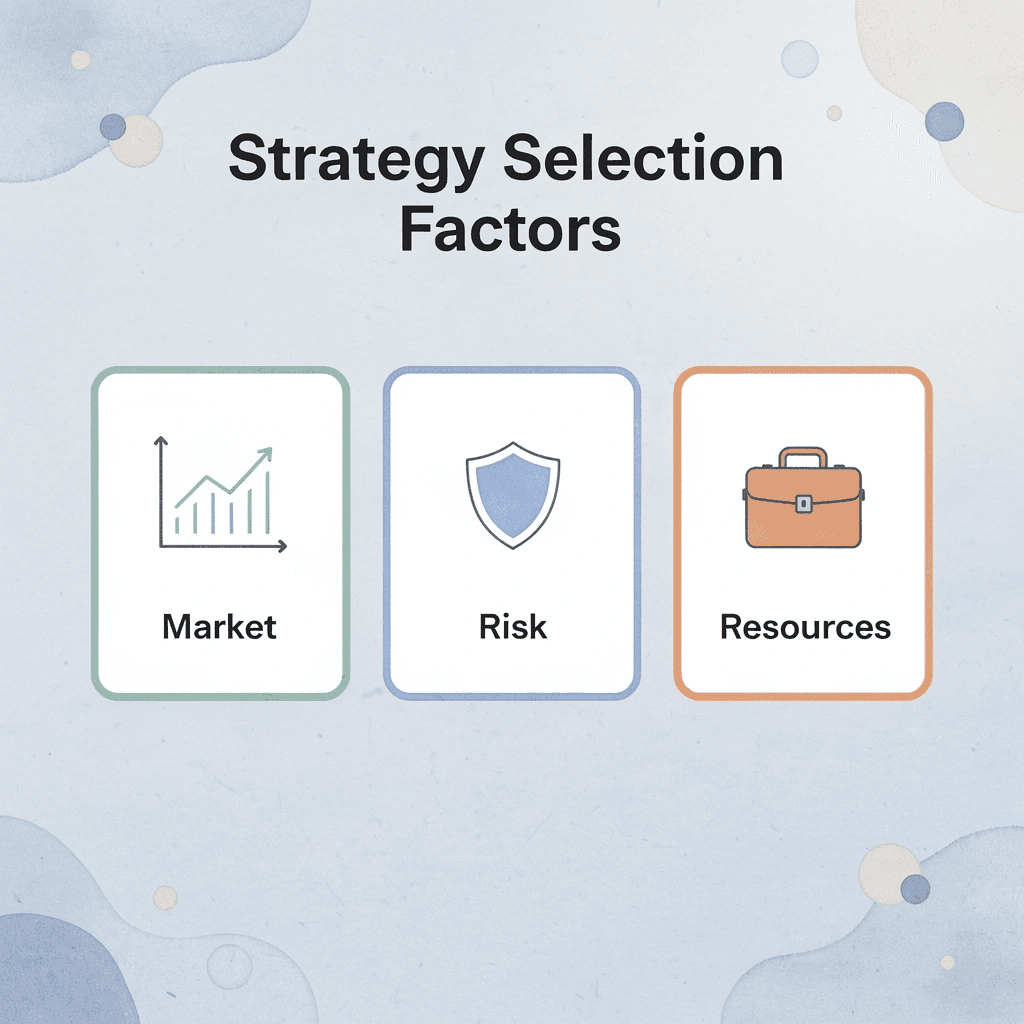
Picking the right options strategy for steady income means matching your personal situation to current market conditions. The approach depends on your market outlook, risk tolerance, and available resources, not merely pursuing the largest premiums.

🎯 Key Point: The most profitable income strategy isn't always the one with the highest premium - it's the one that consistently aligns with your risk tolerance and market outlook.
"Successful options income trading requires matching strategy selection to market conditions and personal risk parameters, not chasing the highest premiums." — Options Trading Research, 2024
⚠️ Warning: Never select an options strategy based solely on premium size - this approach often leads to outsized losses that can wipe out months of steady gains.
Assess Your Market Outlook First
Your view of how the underlying asset will move determines which strategy you should pick. If you think the price will stay about the same or rise slightly, covered calls or cash-secured puts work well for collecting steady income. If you think the price will rise significantly, bull put spreads are a good choice. If you think the price will stay within a certain range, iron condors or short straddles work better. A clear outlook prevents you from using the wrong strategy, which can lead to excessive adjustments and losses.
Evaluate Implied Volatility Levels
Implied volatility directly impacts option prices and strategy performance. High IV increases option prices, making credit strategies such as iron condors or short strangles more attractive to sellers, who benefit when volatility declines. Low volatility favors debit spreads or calendar strategies. Ignoring volatility risks, poor premium collection, or excessive risk exposure.
Determine Your Risk Tolerance
Risk tolerance determines whether you choose a defined-risk or an undefined-risk approach. Conservative traders prefer credit spreads and iron butterflies that cap maximum loss to the net debit or credit received. Those with higher tolerance handle covered calls or the wheel strategy, accepting potential assignment or stock ownership. Honest self-assessment prevents drawdowns that force emotional decisions and break income streaks.
Consider Available Capital
Capital requirements vary widely across strategies. Cash-secured puts require full reservation for potential assignment, while poor man's covered calls or diagonal spreads work with smaller accounts by leveraging. Larger portfolios support diversified ladders or multiple iron condors for smoother monthly cash flow. Matching strategy to actual buying power prevents margin calls and enables proper position sizing.
Factor in Your Time Horizon
The time until expiration affects how fast options lose value and how you manage them. Weekly options suit active traders who monitor positions daily and trade frequently for additional income. Options expiring in 30 to 45 days work better for part-time investors seeking a balance between time decay and minimal monitoring. Matching expiration to your schedule helps you avoid closing positions early, which reduces total returns.
Align with Your Experience Level
Beginners should start with straightforward covered calls on blue-chip stocks or basic credit spreads. Intermediate traders can add iron condors and calendars, while advanced traders can use jade lizards or ratio spreads to optimize yields. Starting simple builds skills and confidence before layering complexity that could amplify losses.
Review Liquidity and Assignment Comfort
Liquidity ensures tight spreads and easy entry and exit from trades. Focus on high-volume ETFs like SPY or QQQ, as well as liquid blue-chip stocks with active option chains. Comfort with potential assignment matters: wheel strategy users must welcome share ownership, while pure credit spread traders avoid it entirely.
Set Clear Income and Portfolio Goals
Decide what monthly income you want from options and what role they will play in your overall portfolio. For extra income, conservative strategies like covered calls on stocks you already own work well. For more aggressive growth, combine income with building positions through the wheel strategy. Clear goals help you select the right strategies and stick to your plan when market conditions tempt you to change course.
Leverage Prop Firm Funding
Prop firm funding lets traders grow income strategies with larger simulated capital without risking their own money. Goat Funded Trader provides access to simulated funded accounts up to $2 million, evaluates traders through flexible challenges or instant funding options, and covers losses while traders keep up to 100% of profits on demand with fast payouts. Choosing the best income strategy requires careful evaluation rather than emotion or hype. Use these factors consistently, test with smaller amounts, and improve based on real results.
How Goat Funded Trader Helps Options Traders Scale Their Strategies for Consistent Income
The limit on how much money you can make from options income isn't about how good your strategy is—it's about how much money you have to invest. A trader running iron condors or covered calls on a $5,000 account collects $150 in premium, while the same setup on $100,000 generates $3,000. Most traders can't risk their savings to scale positions and test if their approach works with larger amounts of money.
🎯 Key Point: Your capital limitations are the real bottleneck preventing you from scaling profitable options strategies to generate meaningful income.

"The difference between a $150 monthly return and a $3,000 monthly return isn't strategy—it's available capital for position sizing."
💡 Tip: Goat Funded Trader eliminates this capital constraint by providing traders with funded accounts ranging from $25,000 to $200,000, allowing you to scale your proven strategies without risking your personal savings.

Capital Access Without Personal Risk
Goat Funded Trader funds accounts offering up to $2,500,000 in funding, enabling traders to execute proven strategies at an institutional scale without personal capital. A trader managing consistent credit spreads can control positions worth 20 times their personal account size, collecting premiums in weeks that previously took six months. The firm absorbs all simulated losses, so adverse earnings moves or volatility spikes don't affect your personal finances.
Profit Splits That Reward Execution
Most prop firms cap trader earnings at 70-80% splits with no improvement. Goat Funded Trader starts at 80% and increases to a 100% profit split as traders demonstrate consistency. Payouts process on request, often within 24 hours, so profits can fund new positions instead of sitting in withdrawal queues for weeks.
Rules Built for Income Strategies
Traders often fail evaluations because random time limits force early exits or news restrictions stop earnings plays mid-cycle. Rules designed for day traders punish the patience that options income requires. Goat Funded Trader removes these obstacles with unlimited trading periods and clear guidelines that let you hold positions through expiration, roll for additional credit, and manage multi-leg structures without artificial pressure to hit daily targets.
Scaling Infrastructure and Support
Managing ten iron condors across multiple expirations on a $200,000 account requires advanced tools beyond most retail platforms. Goat Funded Trader provides an advanced dashboard, reliable execution infrastructure, and responsive support for larger capital allocations, allowing you to focus on premium collection rather than platform troubleshooting during market hours. Getting funded and scaling capital matters only if your income strategies survive real market conditions and deliver repeatable cash flow month after month.
Get 25-30% off Today - Sign up to Get Access to Up to $800K Today
You've explored 25 powerful options strategies for consistent income in 2026, yet without proper capital and risk controls, these remain theoretical. Trading small size with limited funds means watching potential monthly checks slip away while losses erode your account. Without scaling, you cap your income potential and remain exposed to personal financial risk on every trade.
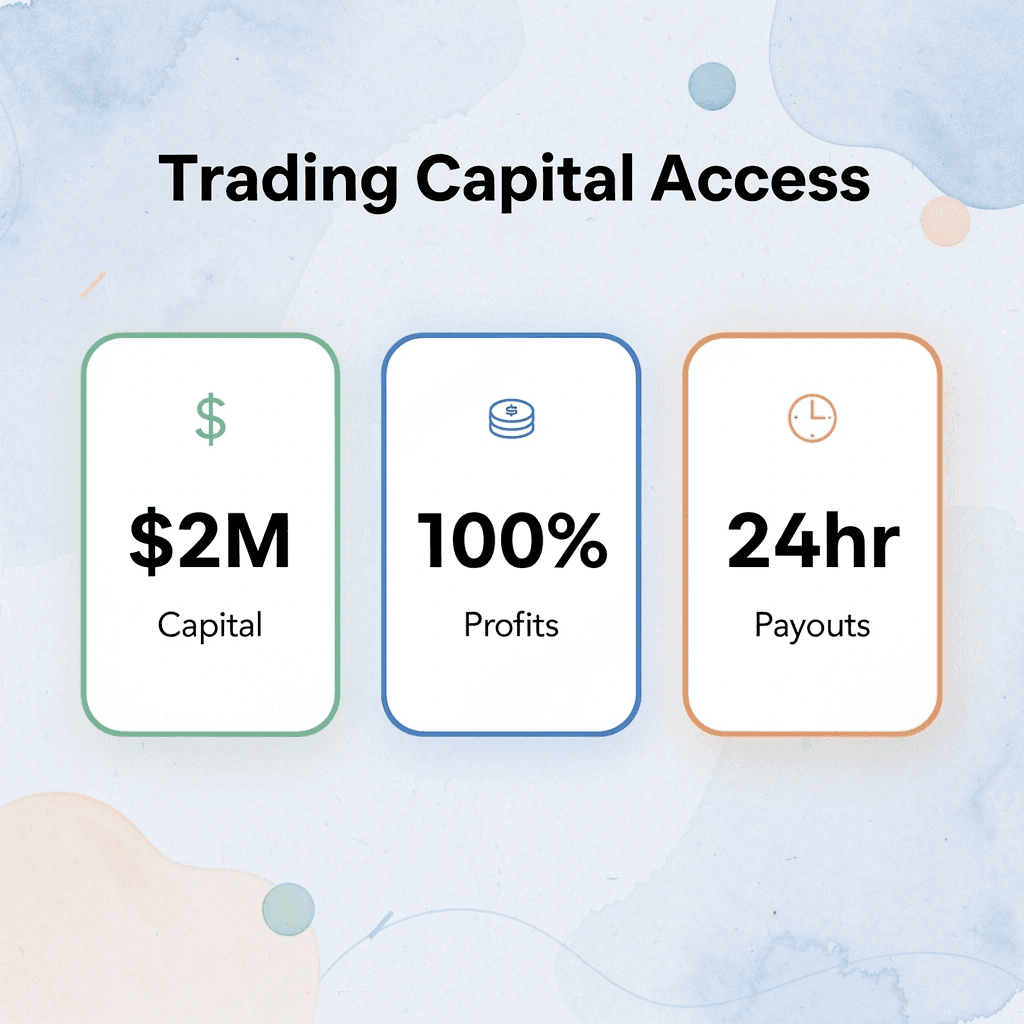
Goat Funded Trader gives you access to simulated funded trading accounts up to $2 million to apply these strategies with meaningful size. Trade the firm's capital on your favorite platform with no personal risk. Pass a straightforward challenge or choose instant funding, then keep up to 100% of your profits with on-demand payouts, often within 24 hours. Our scaling program lets you grow to $2 million with flexible rules: no time limits and news trading allowed.

"Trade the firm's capital on your favorite platform with no personal risk and keep up to 100% of your profits with on-demand payouts, often within 24 hours." — Goat Funded Trader, 2026
🎯 Key Point: Goat Funded Trader eliminates the biggest barrier to profitable options trading—insufficient capital. With access to up to $2 million in trading capital, you can finally implement these 25 strategies with the proper position sizing they require.
Account Features & Benefits
- Up to $2M capital
- Trade with meaningful position sizes and scale strategies effectively
- 100% profit share
- Keep all earnings from successful trades
- 24-hour payouts
- Fast access to profits with minimal withdrawal delay
- No time limits
- Trade at your own pace without evaluation pressure
- News trading allowed
- Maximum flexibility to trade around high-impact events
Ready to turn these 25 strategies into real monthly income? Visit Goat Funded Trader now. Use code FIRSTGFT for 50% off your first account. Choose your challenge or instant funding option and start in minutes. No credit card required, no experience barriers: proven strategies and capital to make them work.
🔑 Takeaway: Your next funded account and first profit payout are waiting. Don't let limited capital keep you from the consistent income these options strategies can provide.
Your next funded account and first profit payout await.

Related Reading
- Best Forex Prop Firm
- Best Margin Rates Brokers
- Margin Loan vs. Securities-Based Lending
- How Does A Margin Loan Work
- How to Become a Full Time Trader
- Forex Trading Strategies For Consistent Profits
- Options Trading Strategies For Consistent Income
- How To Get Profit In Option Trading
- Day Trading Strategies For Consistent Profits
- Trading Cash Flow
- Recommended Prop Trading Firms With Growth Plans
- Best Trading Strategies For Consistent Profits
Be Great and get the App